Welcome to Law and Disorder Radio
Law and Disorder is a weekly independent civil liberties radio program airing on more than 150 stations and on Apple podcast. Law and Disorder provides timely legal perspectives on issues concerning civil liberties, privacy, right to dissent and practices of torture exercised by the US government and private corporations.
Law and Disorder May 1, 2023
Podcast: Play in new window | Download
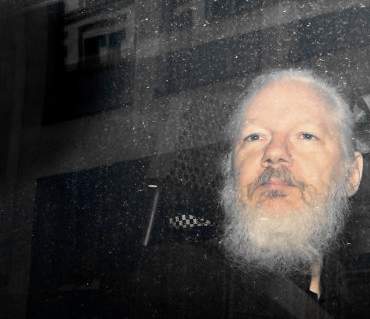
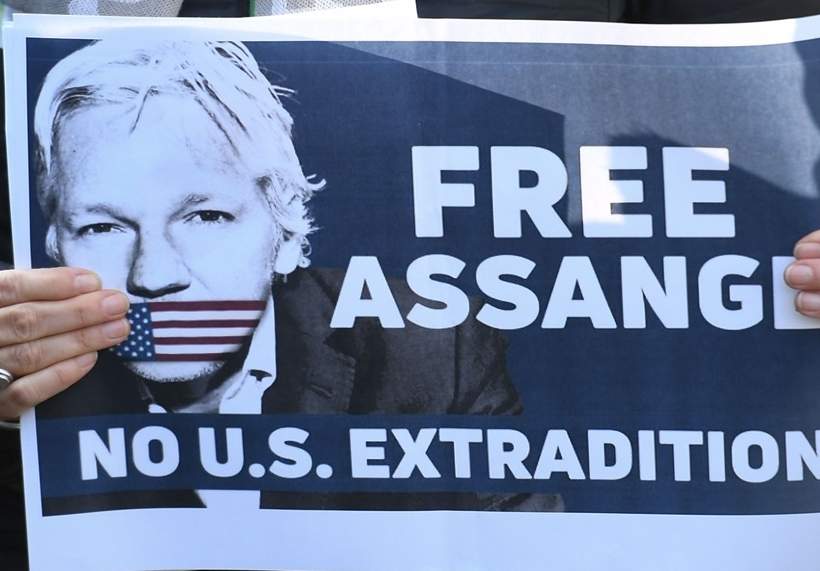
Biden Hypocritically Slams Arrest of US Journalist in Russia But Pursues Assange
May 3rd marks the 30th anniversary of World Press Freedom Day, established by the UN to remind governments about the necessity to respect their commitment to freedom of the press.
The Biden administration touts press freedom but continues the Trump administration’s efforts to extradite Julian Assange from the UK to the United States for trial on Espionage Act charges that could lead to 175 years in prison. Assange is being prosecuted for obtaining and publishing classified military and diplomatic documents evidencing US war crimes in Iraq and Afghanistan. He is the first publisher to be charged under the Espionage Act for revealing state secrets.
The Biden administration hypocritically criticizes Russia for arresting Evan Gershkovich, a US journalist, for espionage while trying to extradite and try Assange, who is an Australian citizen. Both men are journalists detained in a foreign country on espionage charges for doing what journalists do.
Julian Assange Fact Sheet: Why Julian Must Be Freed
Guest – Marjorie Cohn is a member of the national advisory board of Assange Defense. She is professor emerita at Thomas Jefferson School of Law and former president of the National Lawyers Guild. Her new article about Assange and Gershkovich was just published by Truthout.
—-
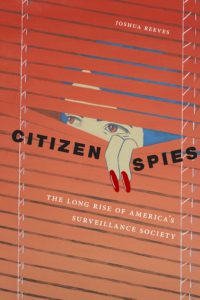
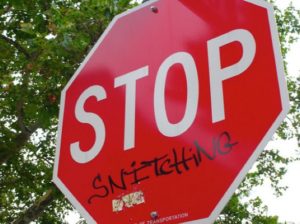
Citizen Spies: The Long Rise of America’s Surveillance Society
The U.S. Department of Homeland Security’s program “If You See Something, Say Something,” launched in 2010, urges citizens to be aware of and to report, potential threats. Examples of suspicious activity include unattended packages or baggage; circumstances that appear out of the ordinary, like an open door that is usually closed; a person asking for detailed information about a building’s layout or purpose, and changes in security protocol or shifts. Also of concern is any person seen loitering around a building, writing notes, sketches, and taking photographs or measurements.
The DHS website is careful to note that, “Factors such as race, ethnicity, and/or religious affiliation are not suspicious.” Yet as listeners know, incidents of ethnic profiling are many, including one in which a Southwest Airlines passenger was taken off a flight for speaking Arabic.
The history of citizen spying and reporting on others is not new in this country. And the “See Something” campaign isn’t the only civilian spying program around. Many jurisdictions have Neighborhood Watch programs. The U.S. Department of Justice’s National Neighborhood Watch initiative enlists community members to assist crime prevention and to prepare neighborhoods for disasters and emergency response.
Guest – Joshua Reeves author of Citizen Spies, The Long Rise of America’s Surveillance Society . He is associate professor of New Media Communications and Speech Communication at Oregon State University, where he’s also a fellow in their Center for the Humanities. An associate editor of the journal Surveillance and Society, he’s also written the just-released book, Killer Apps: War, Media, Machine.
Hosted by attorneys Heidi Boghosian, Marjorie Cohn and Julie Hurwitz

—————————–
Law and Disorder April 24, 2023
Podcast: Play in new window | Download
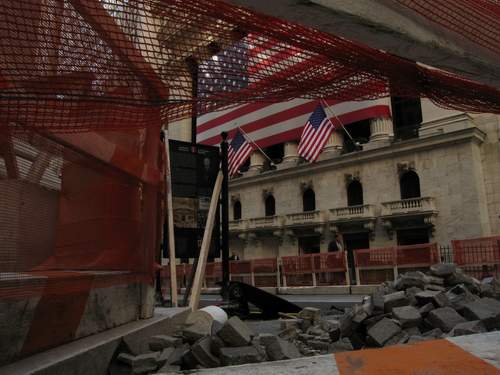
Workers’ Rights And Leadership Moving Forward
Ex-president Donald Trump was indicted three weeks ago in New York City by progressive prosecutor Alvin Bragg on 34 separate counts for paying hush money to two women before the 2020 election. The charges are serious and provable. These are the first; there will likely be three even more serious indictments in other jurisdictions. Although Trump looks like the Republican nominee for the 2024 presidential election, the accumulation of charges against him will both narrow but harden, invigorate, and mobilize his political support.
Trump is the most prominent figure in what has quite accurately been described as an American version of fascism called white Christian nationalism. These forces have captured half the state houses in the country, many courts, and many local governments all the way down to school boards. Bertold Brecht, the great German playwright and political thinker, observed during the rise of Hitler and fascism in Germany that in order to understand fascism you must understand capitalism from which it springs.
Under a viral form of capitalism. known as neoliberalism, inequality of wealth has reached enormous proportions. Half the population of our country are poor or near poor. Healthcare, education and housing go abegging with 15 million people about to lose their health care and hundreds of thousands of others sleeping on the streets
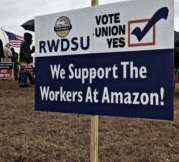
Sections of the American working class are fighting back. Workers are organizing in Amazon and Starbucks. 9000 of them are on strike at Rutgers University. United Automobile Workers are gearing up for a strike. Polls show that most working people would like to be in a union.
But Americans are fighting back with one hand tied behind their backs. They have no independent working class party that defends their interests Both the Republican and Democratic parties are Corporate capitalist parties. In fact, last year, the Democratic Party received more massive dark money than Republicans.
Fascism is characteristically antiworker, anti-democratic, racist, nationalistic, misogynist, and violent. It is irrational. It believes in a make-believe past when America was once great.
Guest – Paul Street, historian and activist has written 10 books, most recently “ This Happened Here : Neoliberalis, Amiericaners, and the Trumping of America”. He wrote the introduction to “Imagine: Living in a Socialist USA“ co-edited by Law And Disorder cohost Michael Steven Smith. He writes regularly for “Counterpunch“ and manages “The Paul Street Report” on Substack.
—-
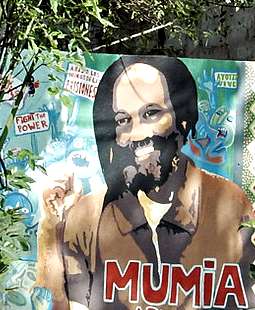
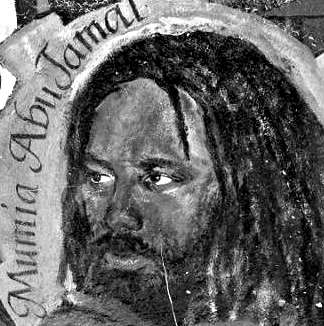
Mumia Abu Jamal’s New Trial, Exculpatory Evidence
American political prisoner Mumia Abu-Jamal has served over 40 years in Pennsylvania’s harshest prisons; 16 of them on death row -for the murder of a
Philadelphia police officer that he did not commit. His trial was a sham from day one. The judge who convicted him was overheard promising, “I’m going to help fry the N-word“.
Before Mumia’s conviction, he was a nationally broadcast, award winning radio journalist, and the head of the Philadelphia Association of Black Journalists. He reported on the murderous racial violence of the Philadelphia police department and its notorious Police Chief, and later Mayor, Frank Rizzo. Mumia had been a member of the Philadelphia chapter of the Black Panther Party. While in prison, Mumia has written 13 books and had a weekly radio show, “Live from Death Row“. He holds a master’s degree and is working on a PhD in history.
Most recently, Mumia’s attorneys have sought a new trial for him based on their discovery of exculpatory evidence clearly supporting his innocence. The newly discovered evidence had been wrongly kept from Mumia’s lawyers at the time of his trial, being deliberately buried in the prosecutor’s files. This evidence documented that key witnesses had received promises of money and favorable treatment in their own criminal cases, in exchange for their perjured testimony in Mumia’s original trial. The petition also documented the unconstitutional practice of striking Black jurors during Mumia’s original trial.
But sadly, despite the obvious significance of this newly discovered evidence, his petition for a new trial has been denied.
Guest – Noelle Hanrahan, is a Pennsylvania attorney and longtime supporter of Mumia, and the producer the long-running radio show, “Prison Radio“. She was in the courtroom when the newly discovered evidence was presented in support of Mumia’s petition for a new trial, and again when it was recently denied. Prison Radio
Hosted by attorneys Michael Smith and Jim Lafferty
—————————-
Law and Disorder April 17, 2023
Podcast: Play in new window | Download
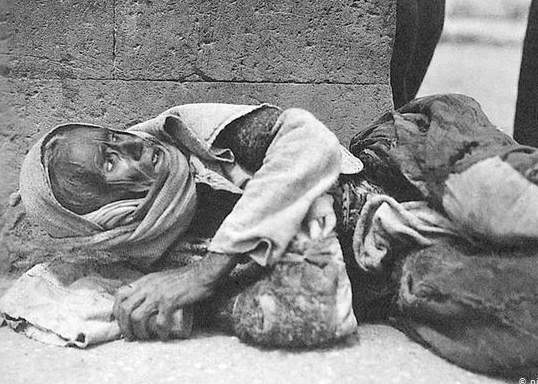
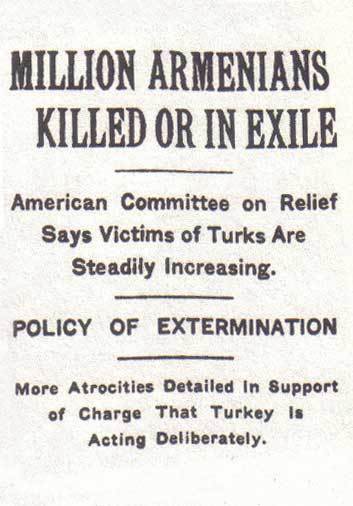
It Was Genocide: Armenian Survivor Stories
Around the world, April 24 marks the observance of the Armenian Genocide. On that day in 1915 the Interior Minister of the Ottoman Empire ordered the arrest and hangings of Armenian intellectuals and community leaders in Constantinople. It was the beginning of a systematic and well-documented plan to eliminate the Armenians, who were Christian, and who had been under Ottoman rule and treated as second class citizens since the 15th century.
The unspeakable and gruesome nature of the killings—beheadings of groups of babies, dismemberments, mass burnings, mass drownings, use of toxic gas, lethal injections of morphine or injections with the blood of typhoid fever patients—render oral histories particularly difficult for survivors of the victims.
Why did this happen? Despite being deemed inferior to Turkish Muslims, the Armenian community had attained a prestigious position in the Ottoman Empire and the central authorities there grew apprehensive of their power and longing for a homeland. The concerted plan of deportation and extermination was effected, in large part, because World War I demanded the involvement and concern of potential allied countries. As the writer Grigoris Balakian wrote, the war provided the Turkish government “their sole opportunity, one unprecedented” to exploit the chaos of war in order to carry out their extermination plan.
As Armenians escaped to several countries, including the United States, a number came to New Britain, Connecticut in 1892 to work in the factories of what was then known as the hardware capital of the world. By 1940 nearly 3,000 Armenians lived there in a tight-knit community.
Pope Frances calls it a duty not to forget “the senseless slaughter” of an estimated one and a half million Armenians by the Ottoman Turks from 1915 to 1923. “Concealing or denying evil is like allowing a wound to keep bleeding without bandaging it,” the Pope said just two weeks before the 100th anniversary of the systematic implementation of a plan to exterminate the Armenian race.
Special thanks to Jennie Garabedian, Arthur Sheverdian, Ruth Swisher, Harry Mazadoorian, and Roxie Maljanian. Produced and written by Heidi Boghosian and Geoff Brady.
—————————————–