Welcome to Law and Disorder Radio
Law and Disorder is a weekly independent civil liberties radio program airing on more than 150 stations and on Apple podcast. Law and Disorder provides timely legal perspectives on issues concerning civil liberties, privacy, right to dissent and practices of torture exercised by the US government and private corporations.
Law and Disorder December 26, 2022
Podcast: Play in new window | Download

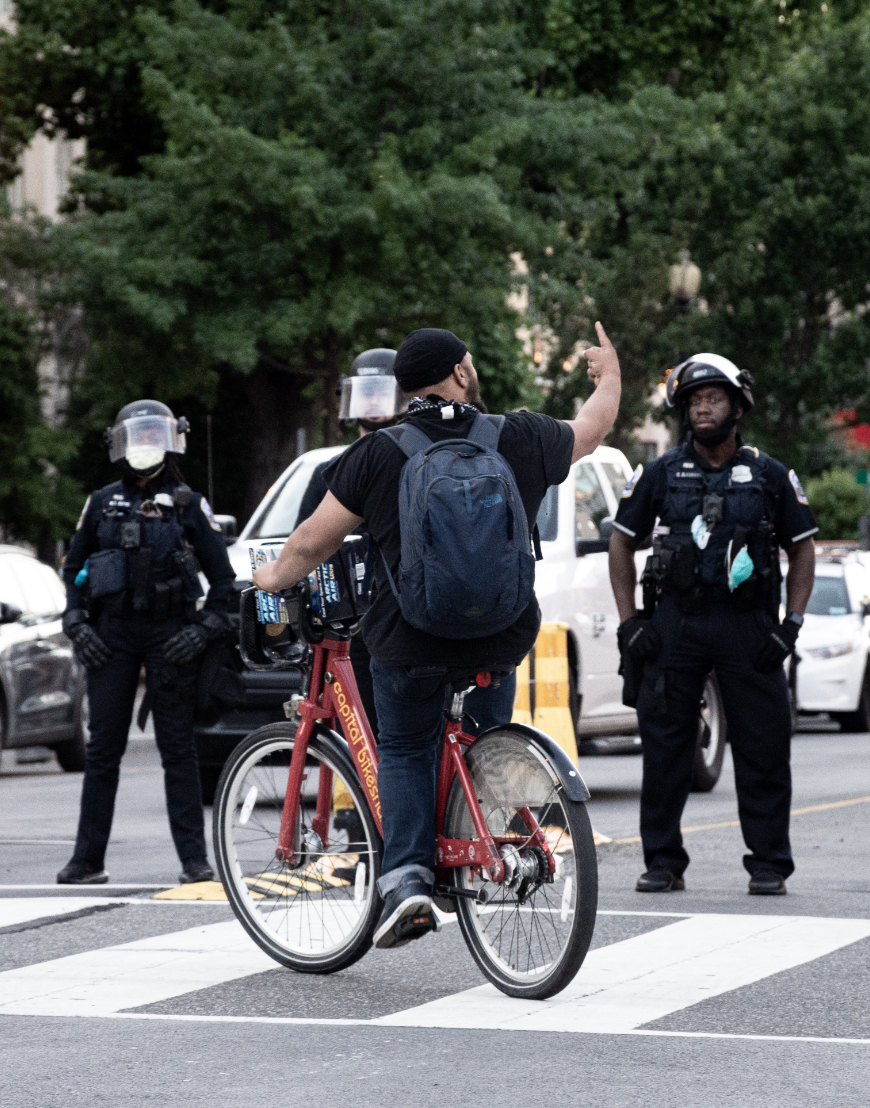
Alternatives to Policing
One of the pressing issues of the day is policing in America, notably how to confront the disproportionate unconstitutional use of force, shootings, arrests and prosecutions of Black African Americans and other people of color, with impunity. Can it be reformed? Or, must it be dismantled? On December 6 our own Julie Hurwitz facilitated a panel discussion at Wayne State Law School called “Alternatives to Policing.” It was sponsored by the NLG, Mich Coalition for Human Rights, Coalition for Police Transparency and Accountability and the Damon J. Keith Center for Civil Rights.
The panelists at this event:
Erin Keith: Managing Policy Counsel for Detroit Justice Center and an outspoken advocate on behalf of the Abolition/Defund movement, presents a thoughtful and clearheaded analysis of the fact-based evidence in support of this movement.
Michigan Congresswoman Rashida Tlaib: Discusses her efforts to fight from within US legislature to redirect resources away from policing and toward a broader understanding of “public safety” to include the need to confront head-on poverty, homelessness, health care, mental illness and the criminalization of people of color.
Andrea Ritchie: Attorney, writer, gay activist, and nationally recognized expert on policing and criminalization; Addresses the particular impact that policing in America has on Black/Women/Queer/trans people, and discusses her recently released book “No More Police.”
Michigan State Senator Stephanie Chang: discusses her efforts within the Michigan legislature to introduce state-wide laws that would create a modicum of accountability around: the use of force, decertification of “bad cops”, choke holds, no-knock warrants, foot pursuits and body worn cameras.
Alternatives To Policing Video
Hosted by Attorneys Heidi Boghosian and Julie Hurwitz

——————————-
Law and Disorder December 19, 2022
Podcast: Play in new window | Download
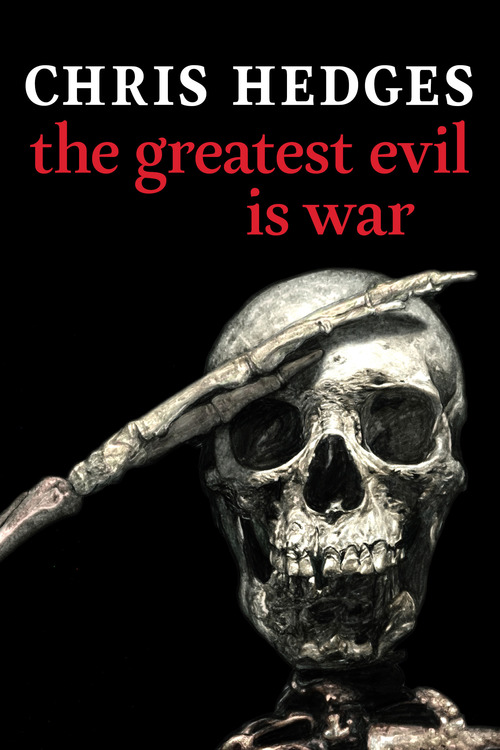
United States has been at war almost continuously over the last 80 years. Chris Hedges has titled his latest book, The Greatest Evil is War. He is our guest today. What is the driving force behind this nearly a century of war? Who is responsible? What are the institutions in United States that carry it on? What is to be done about it?
What forces in our country can stop the slaughter and the constant waste of resources that is consuming us and threatening us with the possibility of nuclear war, which would wipe out all life on our planet. Today we will explore the economic, institutional, and ideological underpinnings of the American war machine. We will talk about the military industrial complex about which Eisenhower warned us. We will talk about its handmaidens, the media, Congress, the universities and the think tanks which advocate for war.
We will talk about the political consequences of permanent war and the fascist direction America is increasingly going in. Most profoundly we will talk about capitalism and fascism from which it springs. And finally we will talk about the social forces necessary to stop and reverse war.
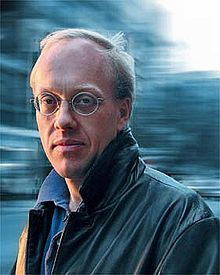
Guest – Chris Hedges spent two decades as a foreign correspondent, 15 of them with The New York Times, covering conflicts in Central America, the Middle East, Africa and the former Yugoslavia. He learned overseas that the evils of empire are the external expression of white supremacy, just as mass incarceration, which he describes as the civil rights issue of our age, is the most brutal internal expression of white supremacy. Prisons , he writes, are the modern iteration of slave plantations. Hedges is the author of 14 books, The winner of a Pulitzer Prize for journalism, a graduate of Harvard Divinity school, and an ordained Presbyterian minister. chrishedges.substack.com
—-
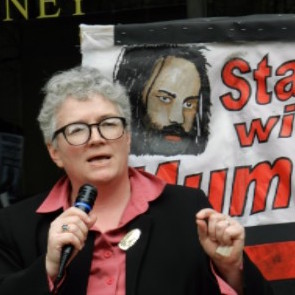
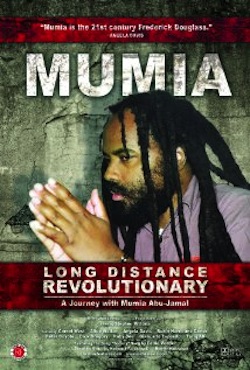
American political prisoner Mumia Abu-Jamal has served 40 years Is Pennsylvania’s harshest prisons-16 of them on death row -for the murder of a Philadelphia police officer which he did not commit
The judge who convicted him was overheard promising“I’m going to help fry the N-word“.
Mumia is an important figure in African-American history. Before his conviction he was a nationally broadcast award winning radio journalist and the head of the Philadelphia Association of Black journalists. He reported on the murderous racial violence of the Philadelphia police department and it’s notorious Police Chief and then Mayor Frank Rizzo.
He had been a member of the Philadelphia chapter of the Black Panther Party. While in prison Mumia has written 13 books and had a weekly radio show “ Live from Death Row“. He holds a masters degree and is working on a PhD in history.
On October 26, 2022 Mumia’s attorneys appeared in court in an effort to get him a new trial. His defense petition included newly discovered evidence that had been buried in the prosecutor’s files. This evidence documented a key witness receiving promises of money for their testimony and evidence of favorable treatment of another in a criminal case. The petition also documented the unconstitutional practice of striking Black jurors during Mumia’s original trial.
Judge Lucretia Clemons preliminarily denied his constitutional right to present this information. She is likely to finalize this ruling on his upcoming court date in Philadelphia on December 9, 2022.
Guest – Noelle Hanrahan is the director of Prison Radio, a multimedia production studio that brings to the public the voices of incarcerated women, men and children. She seeks to honor the agency and humanity of prisoners by bringing their uncensored essays into mainstream discourse. She has produced over 3,500 multimedia recordings from over 100 prison radio correspondents, including the critically acclaimed work of Mumia Abu-Jamal. In 1995, she brought out of prison his first book, Live From Death Row (Harper Perennial), which became a best seller. In 2013, she co-produced the theatrically released feature documentary Mumia: Long Distance Revolutionary (Street Legal Cinema/First Run Features). She received her BA in Gender, Race and Class in the 19th and 20th Centuries from Stanford University, and an MA in Criminal Justice from Boston University. She also holds private investigator licenses in Pennsylvania and Rhode Island.
————————————–
Law and Disorder December 12, 2022
Podcast: Play in new window | Download
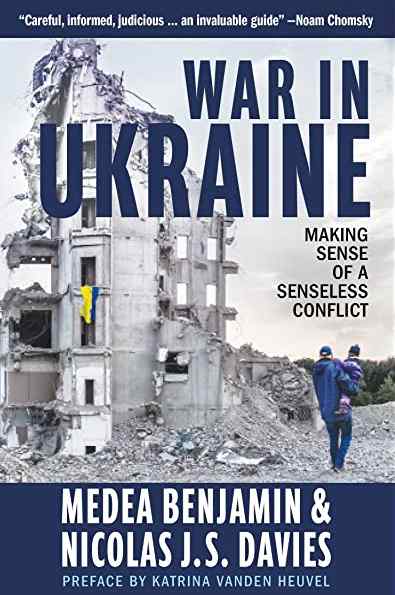

War in Ukraine: Making Sense of a Senseless Conflict
Since February 24, 2022, the day that Russia illegally invaded Ukraine, hundreds of thousands of Ukrainians and Russians have been killed or otherwise become casualties. Eight million Ukrainians have been forced to flee their homes, and hundreds of thousands of Russians have fled conscription. Millions of people in Ukraine have no heat, electricity or water and temperatures are below freezing. The war has devastated 35% of Ukraine’s economy.
Western sanctions on Russia have led to skyrocketing inflation in Europe, and a dangerous squeeze on energy supplies is crippling manufacturing. The war has also devastated infrastructure, reducing electrical grids, railways, apartment buildings and oil depots to rubble. It has filled the air with pollutants and toxic waste that is contaminating rivers and groundwater.
The war is also exacerbating the climate crisis. The fossil fuel industry is profiting from the sanctions which provide it with an excuse to increase dirty energy exploration and production.
The Western media portrays the war as a conflict between the evil empire Russia and the innocent Ukraine. Lost in the heartbreaking images, however, is a nuanced understanding of the context for the war, what caused it, and how it can be ended. The role of the United States in the historical backdrop to the war and the current U.S. resistance to a peaceful settlement are absent from the coverage in the corporate and even much of the alternative media.
Guest – CodePink co-founder Medea Benjamin, who has co-authored with Nicolas Davies the new book, “War in Ukraine: Making Sense of a Senseless Conflict.” Medea is one of the leading activists of our time. Wherever people are hurting, we can expect to see Medea and CodePink there.
—-
Disengaging from Violent Far Right Extremism
Since 2019, the number of white nationalist networks in the United States has been declining. More centralized ones, however, are supplanting them. An example of this, according to the Southern Poverty Law Center, is how founders of the podcast platform The Right Stuff have switched from organizing “pool party” groups to focusing on building the racist and antisemitic National Justice Party.
Many prominent leaders in this new iteration of white nationalism say their primary goal is to challenge “Conservatism, Inc.” Live-streamer Nick Fuentes is one. He recently dined with Donald Trump and Kanye West at Mar-a-Lago and was present outside the U.S. Capitol on Jan. 6, 2021. Fuentes seeks to harness the grievances of Trump supporters into an overtly ethno-nationalist political movement, forming the Republican party’s core.
Ideas once confined to the organized white power movement are now openly discussed within the broader political right. The so-called “great replacement” conspiracy, holding that white people are being systematically replaced across the Western world by “multiculturalists” and Jews, is routinely cited as a reality by some elected officials and media pundits.
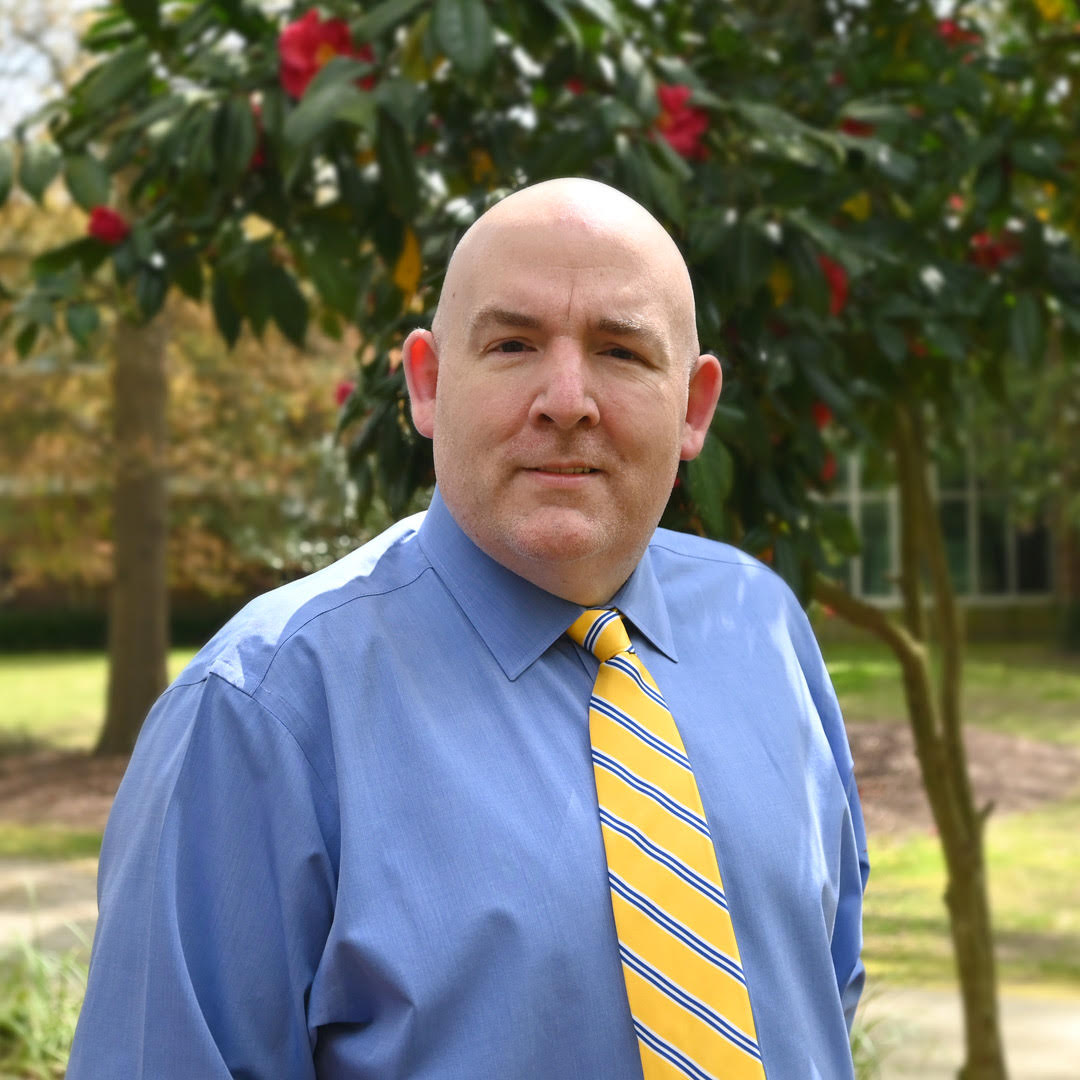
Guest – Patrick Riccards is the CEO of Life After Hate, an organization that helps people leave the violent far right. Founded in 2011 by former violent extremists, it’s the only nationally recognized and federally funded nonprofit positioned to assist those wishing to disengage from violent far right extremism. An expert in education, Patrick also founded the Driving Force Institute for Public Engagement, an initiative aimed at transforming how U.S. history and civics are taught. An award-winning writer, Patrick serves on the boards of several nonprofits.
Hosted by attorneys Heidi Boghosian, Marjorie Cohn and Julie Hurwitz
—————————————————