Welcome to Law and Disorder Radio
Law and Disorder is a weekly independent civil liberties radio program airing on more than 150 stations and on Apple podcast. Law and Disorder provides timely legal perspectives on issues concerning civil liberties, privacy, right to dissent and practices of torture exercised by the US government and private corporations.
Law and Disorder October 24, 2022
Podcast: Play in new window | Download
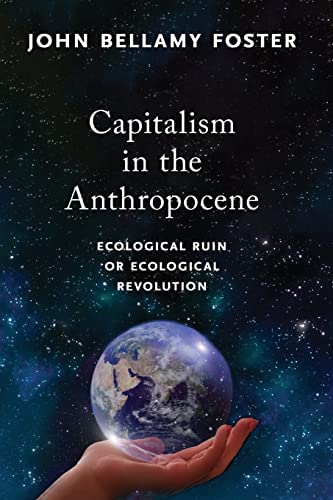
Capitalism in the Anthropocene: Ecological Ruin or Ecological Revolution
Time is running out for humanity to avoid a catastrophic planetary tipping point. The globalized system of capital accumulation has induced humanity to foul it’s on nest. The result is a planetary emergency that threatens all present and future generations and thrown into question the continuation of civilization and ultimately the very survival of humanity itself. Only by addressing the social aspects of the current planetary environment is it possible to develop the ecological and social resources for a new journey of hope.
The United Nations international panel on climate change, the IPPC, predicts that as a result of the increase in greenhouse gases by the year 2050 there will be 1 billion climate refugees. Temperatures must be held within a 1.5 Celsius increase. If it goes up, as predicted, an increase of 4 degrees would end civilization.
The crises we are in our multiple. Species extinction, ocean acidification, sea level rise depletion of soil, forest fires, broiling heat waves, hurricanes and drought have plagued us in the last few years. One third of Pakistan was underwater.
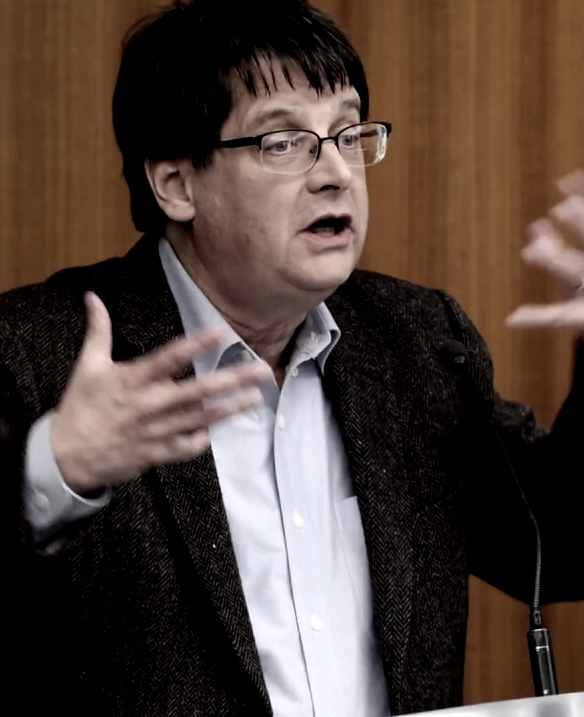
Guest – John Bellamy Foster, editor of Monthly Review magazine and a professor emeritus of sociology at the University of Oregon. He has written many books including The Robbery of Nature“ and “The Return of Nature. His most recent book is Capitalism in the Anthropocene: Ecological Ruin or Ecological Revolution.
—-
Impending Threats To American Democracy
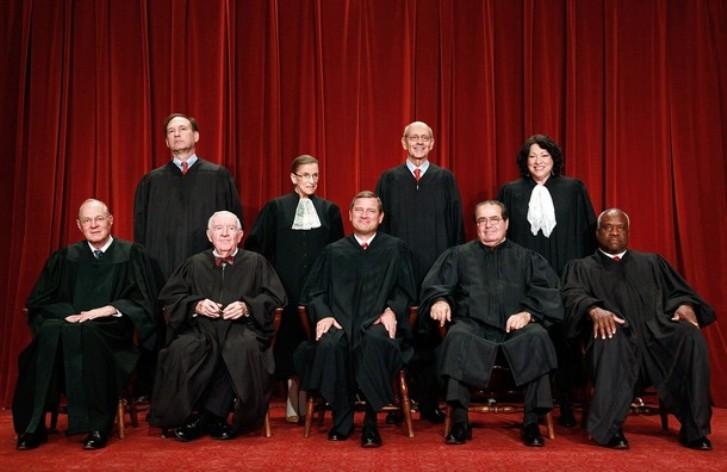
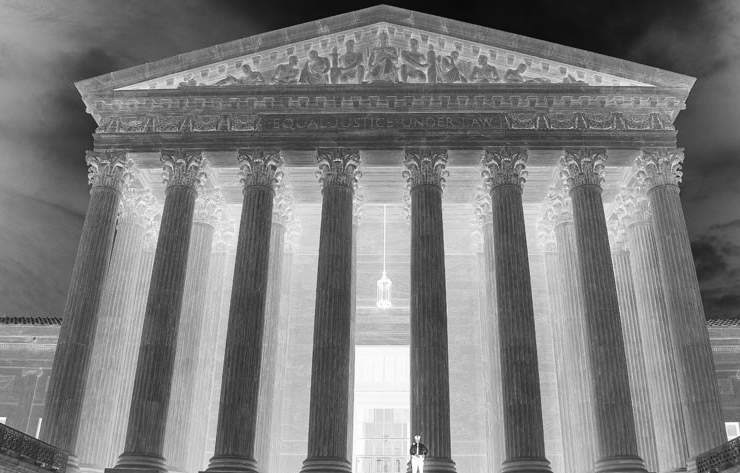
In a recent New York Times article, by David Leonhardt, titled A Crisis Coming: The Two Twin Threats to American Democracy, Leonhardt, after first identifying the first threat being that things are now in place where for the first time in U.S. history, a legitimately elected president will not be able to take office, he identifies the second threat, as follows: “The second threat to democracy is chronic but also growing: the power to set government policy is becoming increasingly disconnected from public opinion. The run of Supreme Court decisions—both sweeping and, according to polls, unpopular—highlight this disconnect. Although the Democratic Party has won the popular vote in seven of the past eight elections, a Supreme Court dominated by Republican appointees seems poised to shape American politics for years, if not decades.”
And another headline in a recent edition of the New York Times reads, “Three Huge Supreme Court Cases That Could Change America.” And that article is simply one of many, of late, warning of how the ever-more conservative, indeed one could say, “reactionary” Supreme Court, in its just opened fall term, may well change America in a number of vastly different ways…and ways inconsistent with the majority political views of the American people.
Guest – Steve Rohde is the past chair of the ACLU Foundation of Southern California, the founder and current chair of Interfaith Communities United for Justice and Peace. He is a widely recognized expert on the U.S. Constitution, as well as a political activist. He is a prolific author. His books include American Words of Freedom and the book Freedom of Assembly. He has written numerous book reviews and articles on civil liberties and constitutional law, and his book reviews can be found frequently in the Los Angeles Review of Books.
Hosted by Attorneys Michael Smith and Jim Lafferty

————————————————-
Law and Disorder October 17, 2022
Podcast: Play in new window | Download
Supreme Court May Outlaw Affirmative Action
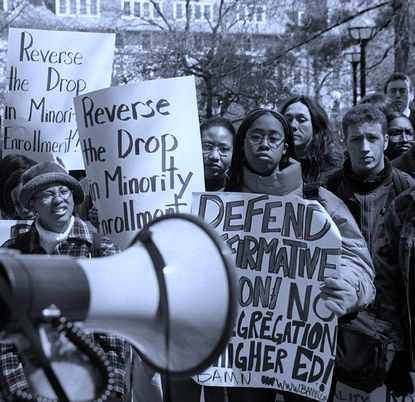
In 2003, the Supreme Court held in the case of Grutter v. Bollinger that the 14th Amendment allows public universities to consider race as a factor to assemble a diverse student body. The Court reaffirmed that holding in 2016. There are now two cases pending on the Court’s docket that it may well use to overrule Grutter and gut affirmative action. The Court will hear oral argument in these two cases on October 31.
The Students for Fair Admissions is suing Harvard and the University of North Carolina-Chapel Hill, asking the Court to overturn Grutter. The group says its mission is helping “to restore colorblind principles to our nation’s schools, colleges and universities.”
“Colorblind” is a euphemism for allowing the conditions that created the racial inequality and unequal opportunity to continue.
UNC-Chapel Hill, wrote education journalist Nick Anderson in the Washington Post, was “founded to educate the enslaving elite of this Southern state, allied for generations with the cause of white supremacy, roiled by racial tensions in recent years over the fate of a Confederate monument and treatment of Black faculty members.”
On October 4, the Court heard oral argument in Merrill v. Milligan, which the conservative majority will likely use to uphold Alabama’s racist gerrymandered district map. During the argument, Justice Ketanji Brown Jackson mentioned the “race-conscious” goal of the drafters of the 14th Amendment, who were “trying to ensure that people who had been discriminated against … were actually brought equal to everyone else in society.” “That’s not a race-neutral or race-blind idea,” Jackson said.
With the radical right-wing supermajority on the Supreme Court, it is likely that the Court will outlaw affirmative action, using the so-called “colorblind” rationale.
Guest – Jason Williamson is Executive Director of the Center on Race, Inequality, and the Law at New York University School of Law. He teaches a course in Social Justice Lawyering and runs the Racial Justice Clinic.
—-
Up Against the Law: Radical Lawyers and Social Movements, 1960s-1970s
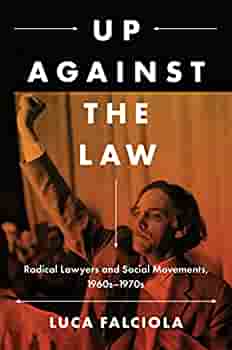
The 1960s and 1970s weren’t just the time when protesters took to the streets to fight for civil rights, and against the Vietnam War. It was also a period when radical lawyers defended dissidents and worked closely with them to bring their messages into the nation’s courtrooms and into the public sphere.
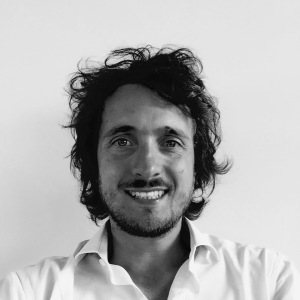
Luca Falciola has just published a book about the militant attorneys who fought for social change arm-in-arm with activists. Breaking from the traditional role of attorneys, they identified with their clients and their causes, and challenged the conservative rules and trappings of the legal profession. The book is titled Up Against the Law: Radical Lawyers and Social Movements, 1960s-1970s, published by the University of North Carolina Press.
At the heart of this work is the history of the National Lawyers Guild. Founded in 1937, the Guild was established as an alternative to the American Bar Association which was not racially integrated. Since Law & Disorder Radio began airing in 2005, its cohosts have been longtime Guild members and leaders. Many of our guests are Guild members as well.
Guest – Luca Falciola is a lecturer at Columbia University. His publications include the award-winning book about the Movement of 1977 in Italy, and several articles on various aspects of contentious politics between the 1960s and the 1980s.
Hosted by Attorneys Heidi Boghosian and Marjorie Cohn
—————————————
Law and Disorder October 10, 2022
Podcast: Play in new window | Download
A Unified Movement of Peace
The world today is threatened with war, poverty, displacement and hunger like no other time since 1937 when World War II began with the Japanese invasion of China. Within four years the war had spread leading to the death of tens of millions of people. This included 50 million Russians, 400,000 Americans and finally hundreds of thousands of Japanese civilians in 1945 when the US initiated the nuclear age with the bombing of Hiroshima and Nagasaki demonstrating American power to the Russians. This initiated the Cold War which is now in a second stage. It must be stopped.
The American wars in Vietnam and Iraq were based on lies. We were told in 1965 by President Lyndon Johnson that the Vietnamese had attacked American ships in the Gulf of Tonkin. This was a lie. In 2003 we were lied to by President George W. Bush who told us that Saddam Hussein had weapons of mass destruction.
The proxy war in Ukraine against Russia is based on the ubiquitous lie that the Russians were unprovoked. It threatens to spin out of control. Why are we again in this situation and what can we do about it? What is desperately needed is a unified American peace movement.
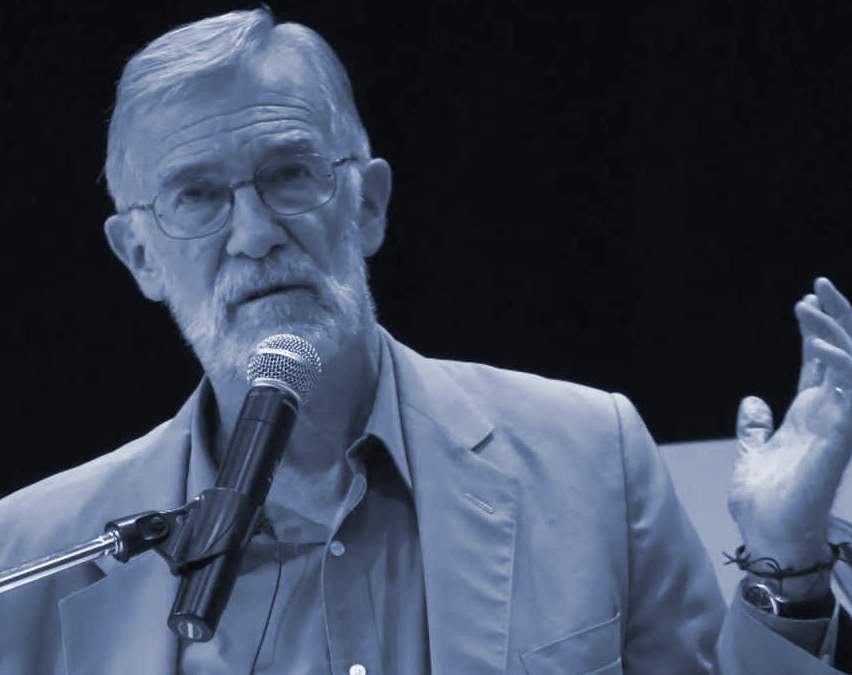
Guest – Ray McGovern former CIA intelligence analyst, Ray briefed President George H. W. Bush every morning on intelligence matters, particularly with respect to Russia. He is a founder of VIPS, Veteran Intelligence Professionals for Sanity and a contributor to the blog Common Dreams.
—-


Doctors Lose Licenses For Properly Prescribing Opioids
The CDC wrongly thought pain management doctors were over prescribing opioids. The CDC issued guidelines in 2016 put limits on the amount of opioids doctors could prescribe thinking that high doses of Oxycontin lead to addiction and death. These guidelines were disastrous for chronic pain patients. Many were driven to buy illegal drugs on the street which were laced with poisonous fentanyl. In 2021 this led to 100,000 deaths in the United States.
Several insurance companies encouraged the CDC to impose limits on doctors prescribing Oxycontin and to taper their patients. Opioids are very expensive. The insurance companies were fortified in their erroneous belief by the efforts of a certain organization of doctors who are not pain management specialists.
When the CDC guidelines were exceeded, the Department of Justice threatened to indict doctors and got them to stop practicing medicine. The doctors gave up their medical licenses and licenses to prescribe narcotics. Some were prosecuted. Some went to prison. Some endured large fines. Seventeen hundred out of 6000 pain management doctors were removed from the practice of medicine.
Doctors who refused to taper were victimized. These doctors correctly believed that their patients were dependent on high dosages of opioids but were not drug addicts. These doctors understood that denying their patients high dosages of opioids would lead to suicides and deaths by overdose from street drugs.
The United States Supreme Court recently ruled in the case of The United States v Ruan that doctors have the right to treat their patients as they see fit without government interference, they ruled 9 to 0 that doctors who prescribed opioids in good faith did not have the requisite mindset, mens rea, to be found guilty of over prescribing.
Guest – Kelly Dineen Gillespie is a professor of law and the Director of the health law program at Creighton University School of Law. She teaches health law and bioethics. Dr. Gillespie holds a PhD in health care ethics as well as a law degree. Before attending law school she worked as a nurse in neurosurgery and transplant ICUs. She co-wrote two friend of the court briefs in the significant Ruan v United States case on behalf of professors of health law and policy before the US Supreme Court regarding criminal distribution under the Controlled Substance Act as applied to doctors‘ prescriptions. In June 2022, the Supreme Court adopted much of the reasoning advanced in these briefs in a unanimous decision supporting doctors.
————————————