Welcome to Law and Disorder Radio
Law and Disorder is a weekly independent civil liberties radio program airing on more than 150 stations and on Apple podcast. Law and Disorder provides timely legal perspectives on issues concerning civil liberties, privacy, right to dissent and practices of torture exercised by the US government and private corporations.
Law and Disorder October 3, 2022
Podcast: Play in new window | Download
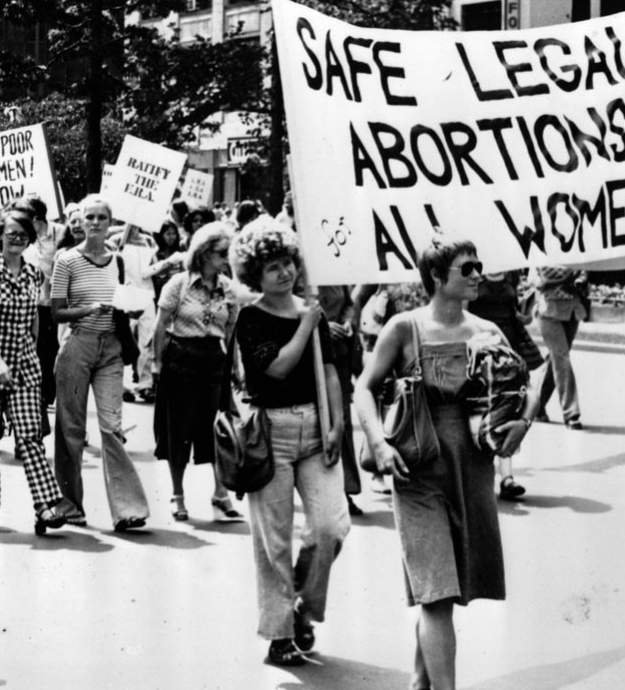

Analysis: States Respond To Overruling Of Roe v. Wade
Since June, when the right-wing majority of the U.S. Supreme Court overruled Roe v. Wade and retracted the constitutional right to abortion, many states have enacted onerous restrictions or outright bans on abortion. In states like California, the right to abortion has been safeguarded by legislation and judicial interpretations of the California Constitution. But if in the future, Republican governors in California appoint a majority of conservative “justices” to the state supreme court, the right to abortion will be imperiled.
On November 8, voters in three states – California, Michigan and Vermont – will decide whether to enshrine the right to abortion in their state constitutions. People in Kentucky will vote on an amendment that specifically excludes the right to abortion from constitutional protection. In August, Kansas voters rejected a similar amendment that would have explicitly said that its constitution does not provide the right to abortion.
Guest – Law and Disorder co-host and legal scholar Marjorie Cohn discusses why it’s crucial that states amend their constitutions to protect the right to abortion. Marjorie is professor emerita at Thomas Jefferson School of Law and former president of the National Lawyers Guild, who writes a regular column at Truthout called “Human Rights and Global Wrongs.” She has published several books and does political and legal media commentary for local, national and international media outlets.
—-


Attorney Deborah LaBelle: Planned Parenthood v. State of Michigan
Deborah LaBelle is a Michigan attorney and writer whose work centers on constitutional and civil rights in class actions and community representation utilizing a human rights framework. Ms. LaBelle has been lead counsel in over a dozen class action lawsuits that have successfully expanded the civil and constitutional rights of her clients in both federal and state courts, including before the U.S. Supreme Court and in international fora.
Ms. LaBelle has been the recipient of numerous awards, including the National Lawyers Guild’s Law for the People Award, the National Trial Lawyer of the Year Award from Public Justice Foundation, and the Federal Bar Association’s Wade McCree Jr. Award; Michigan ACLU Civil Libertarian of the Year Award; as well as several others too long to list here.
She is currently co-counsel (with me and others) on the Flint Water class action litigation – a case in which we successfully argued to the Michigan Supreme Court that our state constitution has embedded within it the fundamental due process right to bodily integrity.
What brings her here today, is Ms. LaBelle’s most recent involvement in the historic case of Planned Parenthood v. State of Michigan. This case was triggered by the nation-wide crisis created by the U.S. Supreme Court in its reversal of Roe v. Wade in Dobbs v. Jackson. Dobbs awoke a long-dormant 1931 felony statute in Michigan which criminalizes all medical and legal actions taken to support a person who seeks or needs an abortion. This month, in the Planned Parenthood case, the Michigan Court of Claims issued a historic state-wide injunction against that criminal law, holding that it violated the now-recognized Michigan constitutional right to bodily integrity. While this injunction is still in effect (and inevitably on its way to being appealed), we have seen another pro-choice victory in Michigan, that is, successfully getting Proposition 3, a constitutional amendment referendum, on the ballot that would explicitly recognize the constitutional right to abortion in Michigan.
Hosted by Attorneys Heidi Boghosian, Marjorie Cohn and Julie Hurwitz

——————————
Law and Disorder September 26, 2022
Podcast: Play in new window | Download

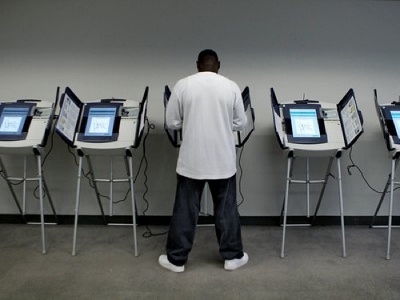
Chris Hedges: Social Change And Democracy 2022
You can’t have organized activity for social change without democracy. Social change and democracy are bound up with one another. But America is not a democracy. This is by design. It was never intended to be. The founding fathers – there were no founding mothers – wrote a document 245 years ago in Philadelphia that excluded more Americans than it included.
The Supreme Court ruled in the Citizens United case that corporations are people entitled to free speech rights. So they can give as much money as they want to political campaigns. Last month an industrialist gave $1.6 billion to the Republicans. Like Bob Dylan wrote, “money doesn’t talk it swears.“ It is impossible to have a democracy in a country like ours with such vast income and wealth disparity.
The Democratic Party and the Republican Party have a lock on the political process. It is nearly impossible to start a third-party. When Ralph Nader ran the Democrats did everything they could to stop him, launching many lawsuits trying to knock him off state ballots.
Since its founding, the ever-growing effects of unlimited money in elections, the partisan gerrymandering of legislative districts, the fraudulent removal of poor and minority voters from voter registration rolls, reduction in the number of voting locations in minority districts, the unfair advantage given to Canada is favored by corporate America, including America’s corporate media, all combine to leave us with a very unfair and very undemocratic system of governance in America
Guest – Chris Hedges, the most penetrating journalist we have. He once worked for the New York Times and even won a Pulitzer Prize. But he was forced out. He had a show on our RT which was closed down by our government and some 600 of his show “On Contact” were taken off of YouTube.
—-
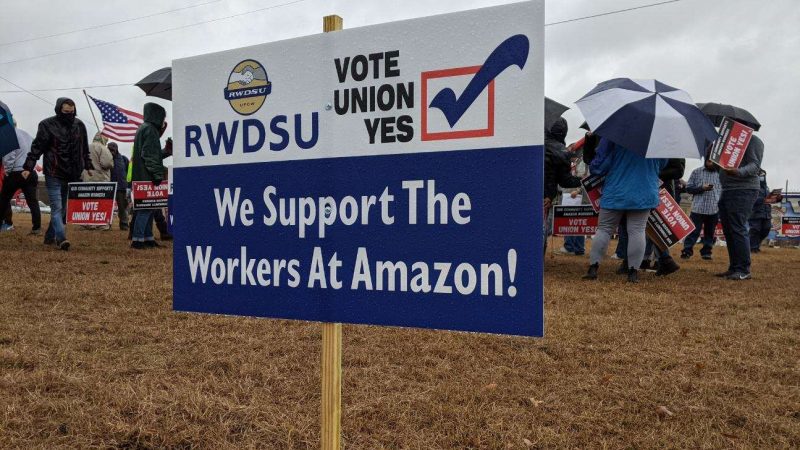
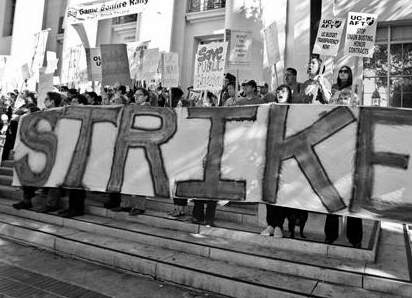
The State of Labor Unions And Recent Worker Strikes
For decades now only about 11% of workers in America have been members of unions, whereas previously more than 35% were union members. Various pieces of pro-management legislation and court opinions caused this diminution in union membership and, as a consequence, a weakening of the rights of American workers. But in recent years, as a result of militant fight back efforts by exploited workers in many industries, unions have once again been having some success in organizing efforts at various workplaces, like Amazon, Starbucks, Apple, and Trader Joe’s.
But federal and state laws still create an up-hill fight for those seeking to organize workers into unions, and to win good labor contracts. So today we ask: do these few but growing number of recent labor union victories truly represent a new day for American workers and the unions that serve them? Do these localized labor victories suggest that more and bigger victories for workers are now within reach? Or, have these recent victories been simply exceptions to the still dismal overall state of union organizing in America? Are either of the two capitalist political parties sufficiently committed to advancing the right of workers to organize unions, or is an independent political movement or party needed to make significant union/worker gains? And what about the pending threat of a nation-wide railway worker’s strike? And if the railroad companies and their workers cannot reach a negotiated settlement acceptable to the railway workers, could President Biden step in and use the Railway Labor Act in an effort to prevent a railway strike with its devastating consequences for the U.S. economy?
Guest – Alan Benjamin, long-time union organizer and workers’ advocate. A leader in his own union, he has served on the Executive Council of the San Francisco AFL-CIO Labor Council. He is also one of the principal organizers of the organization known as Labor and Community for an Independent Party, or LCIP.
—————————————-
Law and Disorder September 19, 2022
Podcast: Play in new window | Download


CCR And Others Issue Complaint Against U.S. Death By Incarceration
The United States condemns one out of every seven prisoners–or more than 200,000 people– to die in prison, over two-thirds of them people of color. “Death by Incarceration,” or DBI, includes extreme sentences such as life, and life without possibility of parole. DBI violates two treaties the U.S. has ratified, the Convention Against Torture and the Race Convention. DBI “is the devasting consequence of a cruel and racially discriminatory criminal legal system that is designed not to address harm, violence, and its root causes, but to satisfy the political pressure to be tough on crime,” according to a complaint filed with UN special rapporteurs on September 15.
Valerie Kiebala helped bring together organizations including the Center for Constitutional Rights, the Drop LWOP Coalition, and the Abolitionist Law Center, to file the 31-page complaint.
Related Article: Human Rights Groups Urge UN to Call for Abolition of Death by Incarceration by Marjorie Cohn.
Guest – Valerie Kiebala is a writer, organizer, and artist. She is the communications director for Straight Ahead, a nonprofit lobbying organization fighting for the human rights and liberation of incarcerated people. Valerie previously worked as an editorial manager and staff writer for Solitary Watch, a nonprofit organization documenting and exposing the use of solitary confinement across the U.S. Her work has appeared in the Root, the Appeal, Truthout, the Chicago Reporter, and Shadowproof.
—-

Fog Data Science: Constant Surveillance
Each time we access the internet, we open the door for companies to track our behavior and our location. This information is gathered and sold by data brokers, but not just for the purpose of helping marketers send us targeted ads. Our movement data is also marketed to law enforcement agencies around the nation. State sheriffs, highway patrol, and local police now can trace millions of Americans’ everyday movements dating back several years. One Virginia data broker contracts to sell telephone geolocation data to state and local law enforcement, according to an investigation by the Electronic Frontier Foundation, or EFF.
EFF Staff Technologist Bennett Cyphers led the investigation. He and his team found that Fog Data Science sells access to a database with information about where a person was at any point in time over the past several years. The surveillance isn’t limited to possible crime scenes. It includes homes, churches, workplaces, health clinics—places in which we have constitutionally-protected expectations of privacy.
Guest – Bennett Cyphers is a staff technologist on EFF’s Tech Projects team. He focuses on consumer privacy, competition, and state legislation. He also assists with development of Privacy Badger, a browser add-on that stops advertisers and trackers from secretly tracking your movements.
Hosted by Heidi Boghosian and Marjorie Cohn
——————————————