Welcome to Law and Disorder Radio
Law and Disorder is a weekly independent civil liberties radio program airing on more than 150 stations and on Apple podcast. Law and Disorder provides timely legal perspectives on issues concerning civil liberties, privacy, right to dissent and practices of torture exercised by the US government and private corporations.
Law and Disorder April 4, 2022
Podcast: Play in new window | Download
The Supreme Court Nomination of Judge Ketanji Brown Jackson
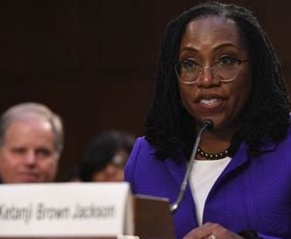
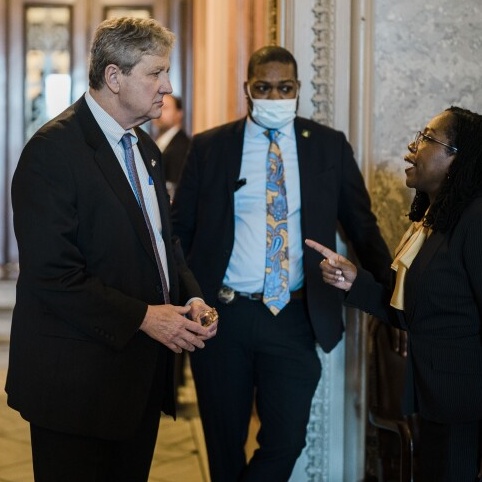
During vicious, racist questioning by Republican members of the Senate Judiciary Committee, Judge Ketanji Brown Jackson remained dignified, poised and unruffled. Jackson’s record is impeccable. No nominee for the Supreme Court has had stronger credentials.
GOP senators on the committee leveled racist and sexist attacks against Jackson, playing to their radical right-wing base. Many of the questions mirrored QAnon talking points. GOP committee members apparently sought to peel off votes for Jackson’s confirmation while appealing to right-wing voters in their forthcoming congressional and presidential campaigns.
Ted Cruz attacked Jackson with charges about critical race theory. Josh Hawley tried to paint Jackson as “soft on crime.” And Lindsey Graham accused Jackson of aiding terrorism by representing Guantánamo detainees.
Nevertheless, it appears that Jackson will be confirmed to the Supreme Court, the only Black woman ever to serve as a justice on the high court. Although Jackson’s confirmation will not change the skewed ideological balance of the court, she and Sonia Sotomayor will comprise a strong progressive wing of the court.
Guest – Attorney Marjorie Cohn, who is a co-host on Law and Disorder. Marjorie is professor emerita at Thomas Jefferson School of Law, former president of the National Lawyers Guild, and a former criminal defense attorney. Her books include The United States and Torture: Interrogation, Incarceration, Abuse, and she writes a regular column for Truthout.
—-



Basic Legal Rights For Animals: Activists and Advocates
Discussions over whether animals are sentient beings, capable of feeling pain, pleasure or suffering, date back as far as ancient thinkers such as Plutarch, Hippocrates and Pythagoras. They all advocated for the fair treatment of animals. The term animal rights stands for the proposition that non-human animals have the right to be treated, not as property, but rather as the individuals they are, with their own desires and needs.
Animal law is now widely taught in law schools across North America. There are 167 law schools in the U.S. and Canada, and 11 in Australia and New Zealand, teaching courses in animal law. Several legal scholars support extending basic legal rights and to personhood to non-human animals.
Critics of animal rights argue that nonhuman animals are unable to enter into a social contract, and thus cannot have rights. Another argument is that animals may be used as resources as long as they don’t undergo unnecessary suffering.
Certain forms of animal rights activism, such as the destruction of fur farms and animal labs by the ALF or Animal Liberation Front, have also attracted criticism, and prompted Congressional reaction by enacting of harsh laws allowing these activities to be prosecuted as terrorism. These laws include the Animal Enterprise Terrorism Act.
Guest – Attorney Tamara Bedic, chairperson of the National Lawyers Guild Animal Rights Project. She is a graduate of the University of Virginia School of Law and a masters degree from Columbia University-NY University. Tamara practices employment law with a focus on women and harassment in the workplace.

————————–
Law and Disorder March 28, 2022
Podcast: Play in new window | Download

Russia, Deescalation And Nuclear Disarmament
If the U.S. nuclear policy doesn’t change immediately and rapidly we are in a lot of trouble. Seventy-seven years ago, the United States became the first, and so far the only, country to use nuclear bombs when we destroyed the two Japanese cities of Hiroshima and then Nagasaki to frighten the Russians and secure an immediate and unconditional surrender of Japan in World War II. The dropping of these bombs was the first move against Russia that would devolve two years later in 1947 into the Cold War.
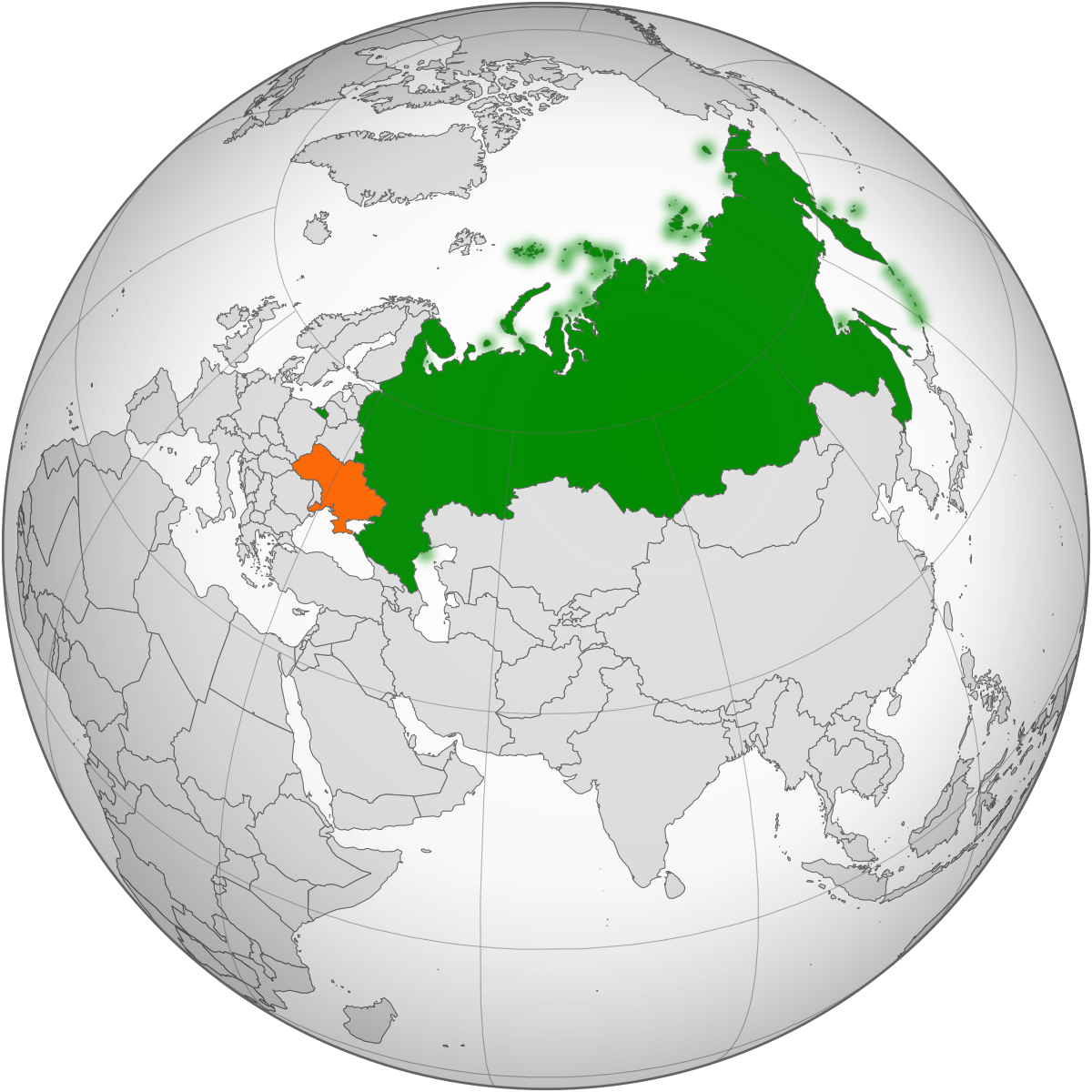
The threat of nuclear war has never eased and it is now imminent with the fighting in the Ukraine which could draw the U.S. and NATO into a direct conflict with Russia. We are now in a new stage of this war. It has become hot and so perilous it threatens all of humanity, all of earth’s creatures, with annihilation. Any mistake, any miscalculation would quickly and irretrievably doom us all. This almost happened during the Cuban Missile Crisis where nuclear war was avoided, according to scholars, by luck and decent leadership.
What has been the history of attempts to contain and roll back the threat of nuclear war? What has been tried and what is failed? What will it take to get the nine countries who possess nuclear weapons to give them up?
The Veterans for Peace organization spelled it out clearly. There should be a “no first use” policy and nuclear missiles must be taken off hair trigger alert. The United States should rejoin the Anti-Ballistic Missile Treaty and the Intermediate-Range Nuclear Forces Treaty, from which George W. Bush and Donald Trump withdrew, respectively. The U.S. should sign the Treaty on the Prohibition of Nuclear Weapons. Our country should initiate negotiations to reduce and eventually eliminate all nuclear weapons, as required by the Nuclear Non-Proliferation Treaty, to which the U.S. is a party.
To start, there must be a cease-fire in the Ukraine, the withdrawal of Russian forces, and guarantees of Ukrainian sovereignty and Russian security.
Peter’s recent article – Beijing should help mediate to end the Russia-Ukraine crisis
Guest – Peter Kuznick is a professor of history at American University and directs the Nuclear Studies Program. at that institution. Peter and Oliver Stone wrote The Untold History of the United States and also produced a showtime documentary series based on the book.
—-
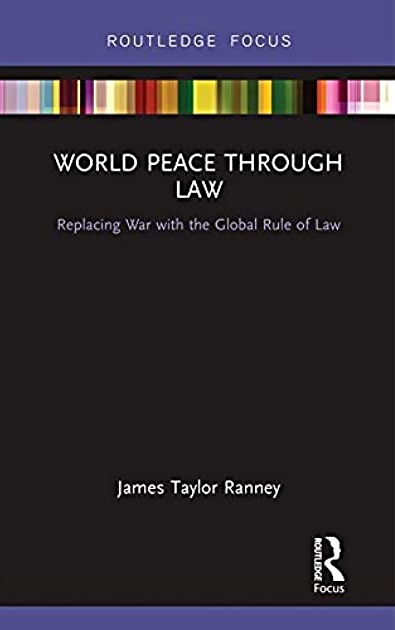
World Peace Through Law: Replacing War with the Global Rule Of Law
In 1945, following World War I and World War II, wars that claimed millions of lives, the nations of the world enacted the United Nations Charter “to save succeeding generations from the scourge of war.” The Charter prohibits the use of military force except in self-defense after an armed attack by another state or when the Security Council approves it. The five victors of World War II, who became the permanent members of the Security Council, agreed to the Charter because they each received a veto over matters of war and peace.
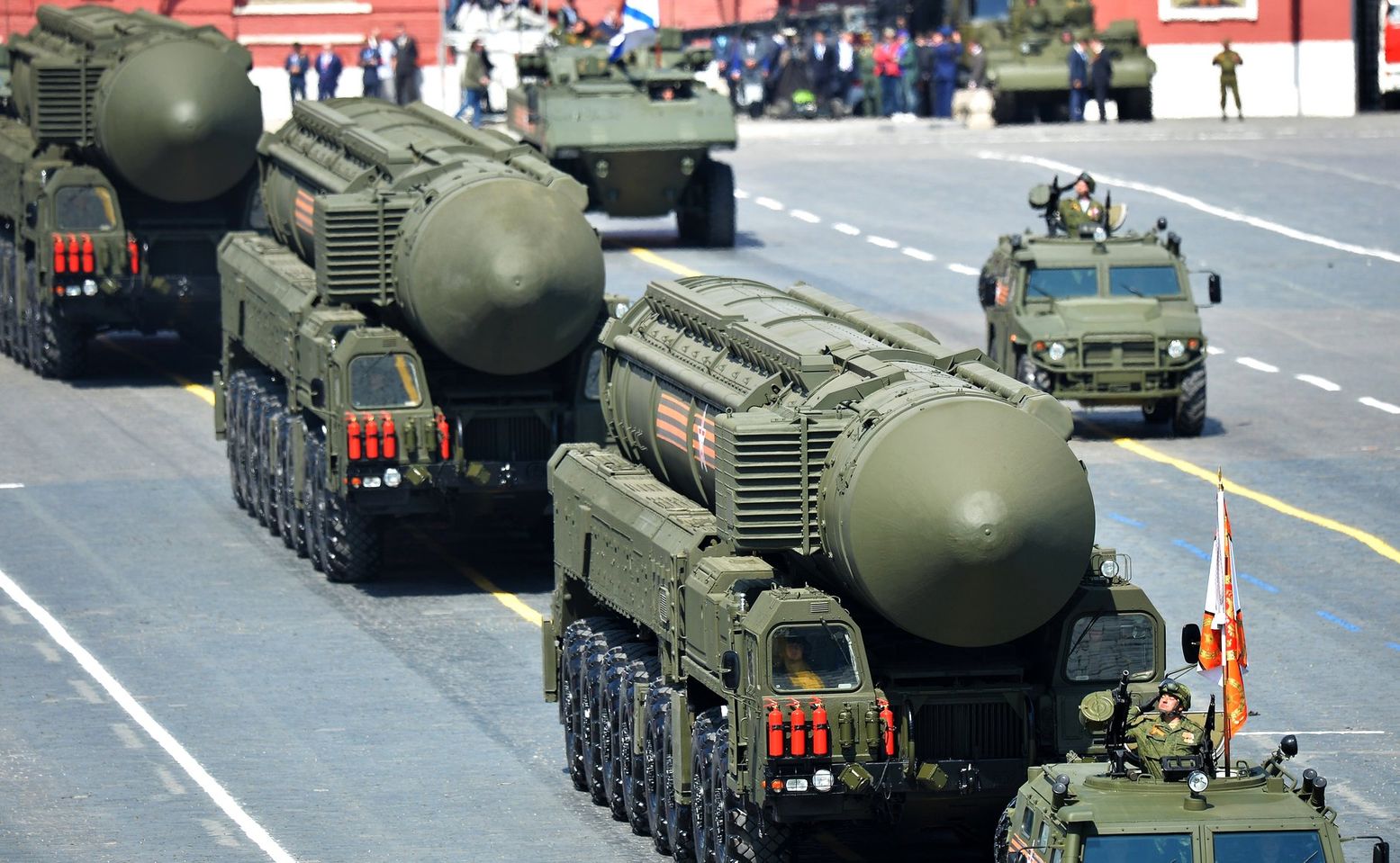
The United States is a party to the 1970 Nuclear Non-Proliferation Treaty. Nevertheless, it continues to violate the provision of that treaty that requires the parties to move toward the elimination of nuclear weapons. Although he won the Nobel Peace Prize, Barack Obama’s administration advanced a policy, which Donald Trump and Joe Biden continued, to develop leaner and meaner nuclear weapons. The proposed U.S. budget calls for nearly $2 trillion over the next 30 years to build two new bomb factories, missiles, planes, submarines and redesigned warheads. In spite of the UN Charter and the Nuclear Non-Proliferation Treaty, we are now facing the most dangerous threat of nuclear war in the last 60 years.
Guest – James Ranney is a retired Adjunct Professor at Widener Law School, co-founder of the Jeanette Rankin Peace Center, a legal consultant to the UN International Criminal Tribunal for the Former Yugoslavia, and a board member of the Project for Nuclear Awareness. Professor Ranney has written a book called “World Peace Through Law: Replacing War with the Global Rule of Law.” In this book, he calls for arms reduction, including the abolition of nuclear weapons, and global alternative dispute resolution mechanisms, with enforcement mechanisms.
—————————
Law and Disorder March 21, 2022
Podcast: Play in new window | Download


Ukraine, Russia, NATO and United States Conflict Analysis
As attacks escalate in Ukraine, the push for a no-fly zone over the country grows stronger. However last week there were indicators that top Ukrainian negotiators are moving toward a cease-fire deal. This comes as we’ve reported last week that the United States has baited the Russian bear repeatedly, starting in 1990 with the breakup of the Soviet Union. At that time, US Secretary of State James Baker promised the Russian leader Mikhail Gorbachev that the US-led NATO organization would not move “one inch” east towards Russia. This promise was broken.
The Russians were betrayed.Since then, NATO has recruited 11 former Soviet bloc and Warsaw Pact countries into its military organization. Led by the United States, NATO is an organization has played an aggressive role, having carried out the bombings of Serbia, Iraq, Syria, Somalia, and Libya.
NATO has placed missiles in Poland within 100 miles of the Russian border. Missiles on the long border between Ukraine and Russia could hit Moscow in 10 minutes making it impossible for Russia to defend itself. Russia’s attempts to make United States understand that they have crossed a red line has been consistently rejected.
This is not to defend Russia’s actions but to place them in historical context. The world now has come to the edge of an abyss. A nuclear war could easily be started, annihilating all of humanity. The rule of law must be restored.
Russia must honor a cease-fire and withdraw. The United States must forswear arming Ukraine and recruiting the Ukraine into NATO. Ukraine must go forward as a neutral country like Austria or Finland.
Guest – Chris Hedges spent two decades as a foreign correspondent, 15 of them with The New York Times, covering conflicts in Central America, the Middle East, Africa and the former Yugoslavia. He learned overseas that the evils of empire are the external expression of white supremacy, just as mass incarceration, which he describes as the civil rights issue of our age, is the most brutal internal expression of white supremacy. Prisons , he writes, are the modern iteration of slave plantations. Hedges is the author of 14 books, The winner of a Pulitzer Prize for journalism, a graduate of Harvard Divinity school, and an ordained Presbyterian minister. chrishedges.substack.com
—-


Assata Taught Me: State Violence, Racial Capitalism, and the Movement for Black Lives
Assata Shakur is an inspiration to many young Black and brown activists today. She was a Black Panther Party member in New York in 1968 when FBI Director J. Edgar Hoover said that the Panthers were the single “greatest threat to the internal security of the country.“ Hoover launched the Cointelpro program to eliminate the Black Panthers.
When the Panthers broke up, Assata became a member of the Black Liberation Army. She was seriously wounded and apprehended in 1973 by state troopers in a shoot-out on a New Jersey highway. She was tried and convicted of murdering a state trooper even though the medical evidence showed that she was badly injured and could not have fired a gun.
Assata escaped from prison in 1979 and five years later, she was given political asylum in revolutionary Cuba where she lives today. The FBI has put a $2 million bounty on her head. She has a target on her back inasmuch as she is wanted dead or alive.
Guest – Donna Murch, associate professor of history at Rutgers University in New Jersey. Professor Murch, who specializes in African-American and US History, Black Radicalism, and History of Mass Incarceration, is known as the historian of the Black Panther Party. She has recently written the book “Assata Taught Me: State Violence, Racial Capitalism, and the Movement for Black Lives” published by Haymarket Books. In it, she analyzes the forces giving rise to Black Power and Black radicalism, mass incarceration, the militarization of the police who target people of color, and the genesis of Black Lives Matter.
————————————–