Welcome to Law and Disorder Radio
Law and Disorder is a weekly independent civil liberties radio program airing on more than 150 stations and on Apple podcast. Law and Disorder provides timely legal perspectives on issues concerning civil liberties, privacy, right to dissent and practices of torture exercised by the US government and private corporations.
Law and Disorder January 24, 2022
Podcast: Play in new window | Download
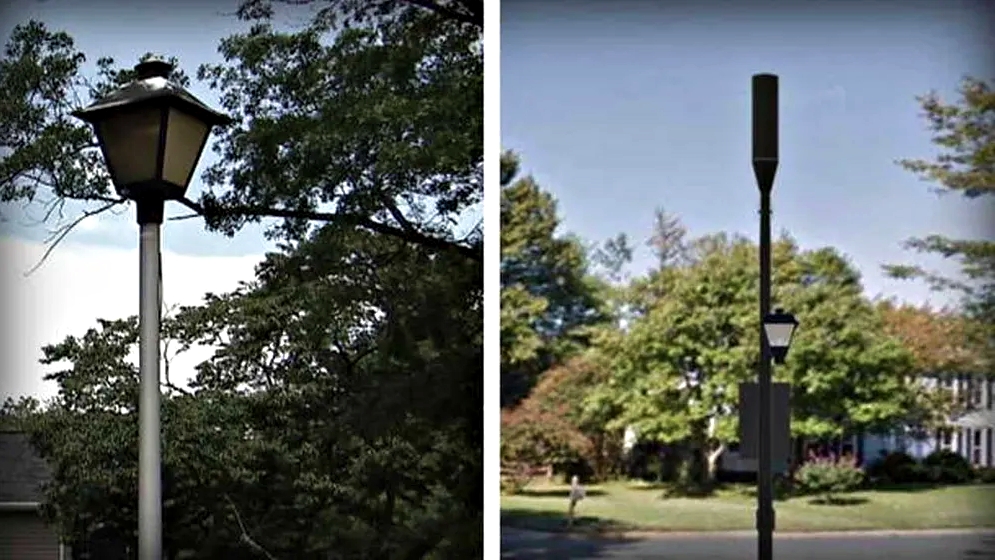
5G Millimeter Wave Exposure And Human Health
Most listeners, if they’re like Americans in general, are tethered to their cell phones and other devices with built-in antennas that communicate with cell towers. And most don’t give a second thought to whether these omnipresent devices are safe for humans. The telecom wireless industry tout cellphones as the greatest modern achievement, and uniformly pledges that the radiation they expose us to is safe.
Scientists, on the other hand, caution that cell phones AND the antennas that power them, expose humans and wildlife to a level of radiation that can result in brain and thyroid cancers along with a host of other diseases. The advent of 5G, the 5th generation of mobile networks, will require more cell towers within smaller distances. Researchers and health experts are worried that the public will have even greater exposure to dangerous radiation.
Powerful forces in the industry and government, however, have a stranglehold on how safety information is disseminated to the public. As sales soared worldwide–in 2019, around 1.52 billion smartphones were sold-the industry has even more incentive to ensure that scientific research is withheld from consumers. And last week AT&T and Verizon finally agreed to delay expansion of 5G service near some airports out of potentially catastrophic safety concerns repeatedly voiced by airlines and aviation regulators.
Guest – Barbara Koeppel is a Washington D.C.-based investigative reporter who writes for The Nation, Washington Spectator, and other outlets about social, economic, political, and foreign policy issues.
—-
Lawyers Beyond Borders: Maria Armoudian
Over the years Law & Disorder has interviewed dozens of “people’s lawyers” about the seemingly intractable social justice cases they bring to the courtrooms, nationally and abroad. These intrepid mavericks toil far from the limelight, often for little remuneration. Despite international conventions and human rights declarations designed to protect world citizens from illegal and degrading treatment, millions of people and communities suffer at the hands of ruthless government and corporate actors. Most have no remedy or recourse as they endure extreme and ongoing violence including torture, slavery, or violent deaths. They exist outside of the laws’ protections, or as scholar Maria Armoudian puts it, “below the law.”
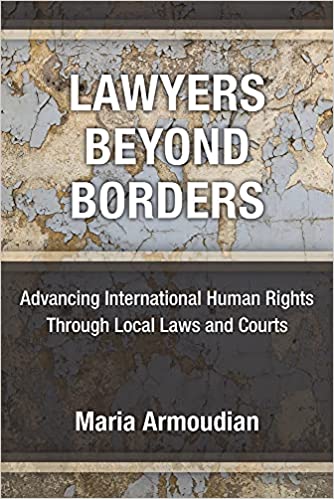
How can these victims seek justice? Armoudian has some answers to that question. In her new book Lawyers Beyond Borders: Advancing International Human Rights Through Local Laws and Courts, she presents a 40-year examination of the movement, the cases, and their backstories. Her book reveals the struggles, impediments to justice, and the process of solving those problems. It chronicles little covered accounts about the politics of “people’s lawyering” while shares intimate accounts of how cause-related advocates craft creative strategies to propel injustices into the public arena. Lawyers Beyond Borders reveals how the process of litigation has value for many in restoring a sense of agency to survivors of psychological trauma.
Guest – Maria Armoudian has written two other books, Reporting from the Danger Zone: Frontline Journalists, Their Jobs and an Increasingly Perilous Future and Kill the Messenger: The Media’s Role in the Fate of the World. She is a senior lecturer at the University of Auckland in New Zealand, and produces and hosts the syndicated radio program, The Scholars’ Circle. Maria served as an environmental commissioner for the City of Los Angeles for five years, and on the Board of Taxi Cab Commissioners for two. She also worked for eight years on environmental protection, government oversight, poverty reduction, civil rights, and corporate reform legislation for the California State Legislature.

————————–
Law and Disorder January 17, 2022
Podcast: Play in new window | Download
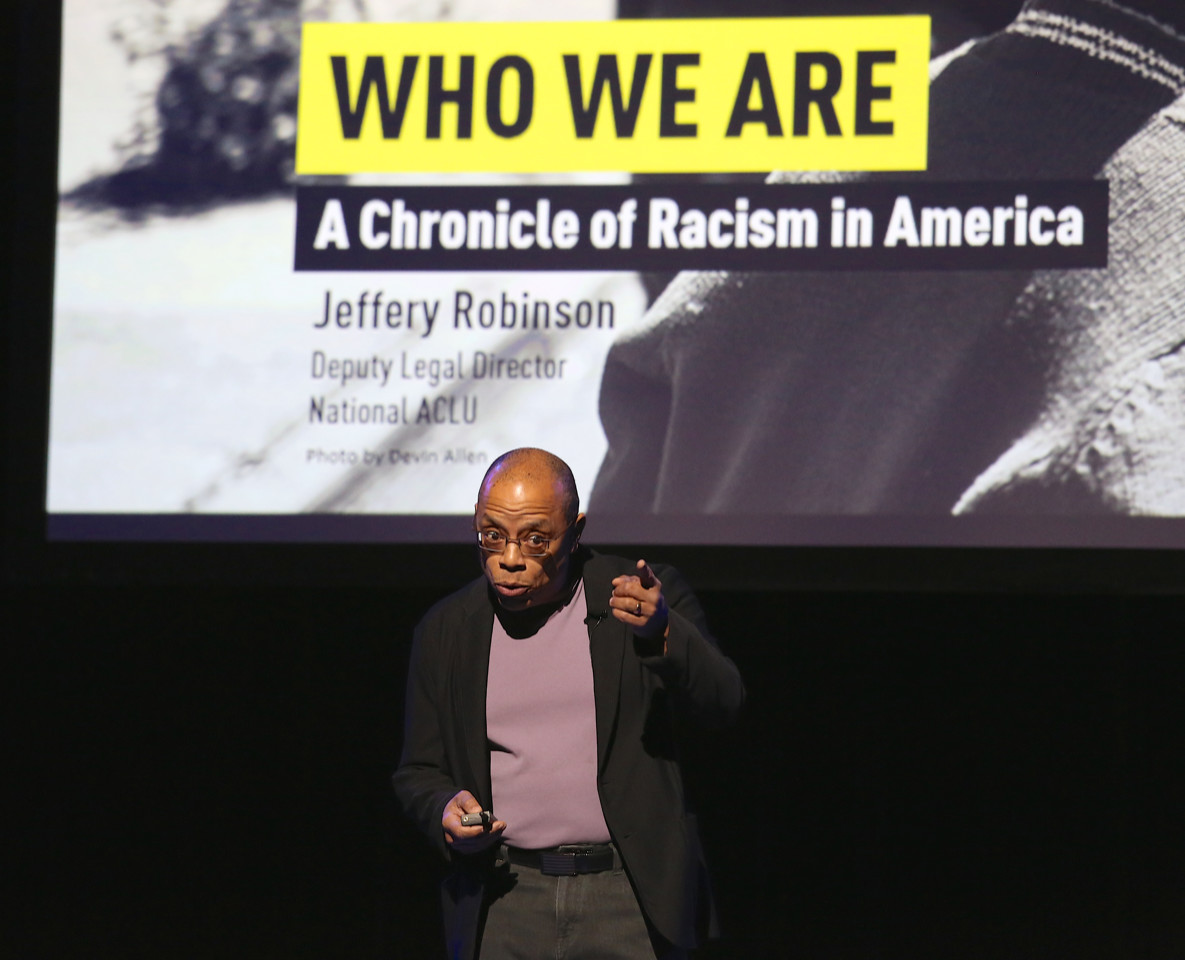
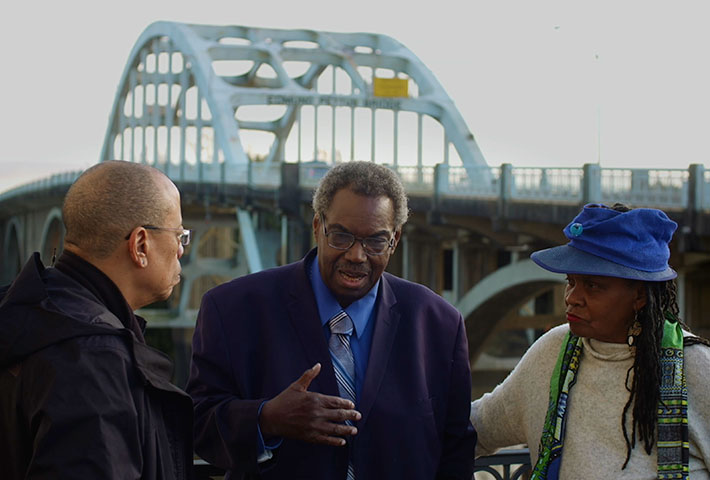
Who We Are: A Chronicle of Racism in America
Americans have very little understanding of their own history and the Right wants to make sure they never will. Laws are now being passed in a number of states forbidding educators from presenting an accurate portrayal of the racist past of the United States. Critical Race Theory, which is nothing more than a truthful accounting of U.S. history, is under attack.
The documentary, “Who We Are: A Chronicle of Racism in America,” has just been released in New York City and Los Angeles and will soon be available at theaters around the country. It has been featured at several film festivals and won many awards.
This film is an important contribution to U.S. history. People will be enlightened about their roots. They will gain a deeper understanding of what was done to them and how they survived. “Who We Are” arms us with knowledge which is crucial for human progress because it informs and encourages struggle.
When people understand their own history, they are empowered. That is what accounts for the tremendous popularity of Howard Zinn‘s book, “A People’s History of United States.“ “Who We Are” interweaves lectures, personal anecdotes, interviews, and shocking revelations. Like the Zinn book, it is also empowering.
Guest – Attorney Jeffery Robinson, is the central figure, writer, and narrator of Who We Are. Jeffery Robinson was a criminal defense lawyer in Seattle for decades before becoming a Deputy Legal Director at the ACLU National Office in New York. In 2021, he left the ACLU, completed the documentary, and launched “The Who We Are Project” to widely disseminate the true history of African-Americans and anti-Black racism in the United States.
As Jeffery Robinson observes, his documentary was made with the goal which was underscored by George Orwell, that “Those who control the present control the past, those who control the past control the future.” We talk with Jeffery about the movie and his collaboration with directors Sarah Kunstler and Emily Kunstler. They previously made the widely-acclaimed documentary about their father, the great civil rights attorney William Kunstler. That film is called “William Kunstler: Disturbing the Universe.”
—-
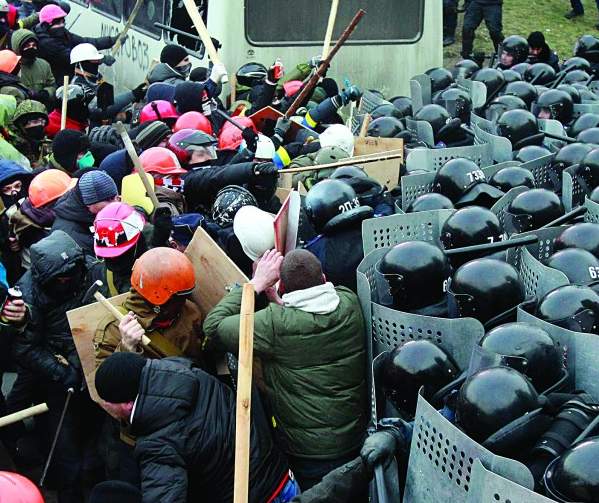
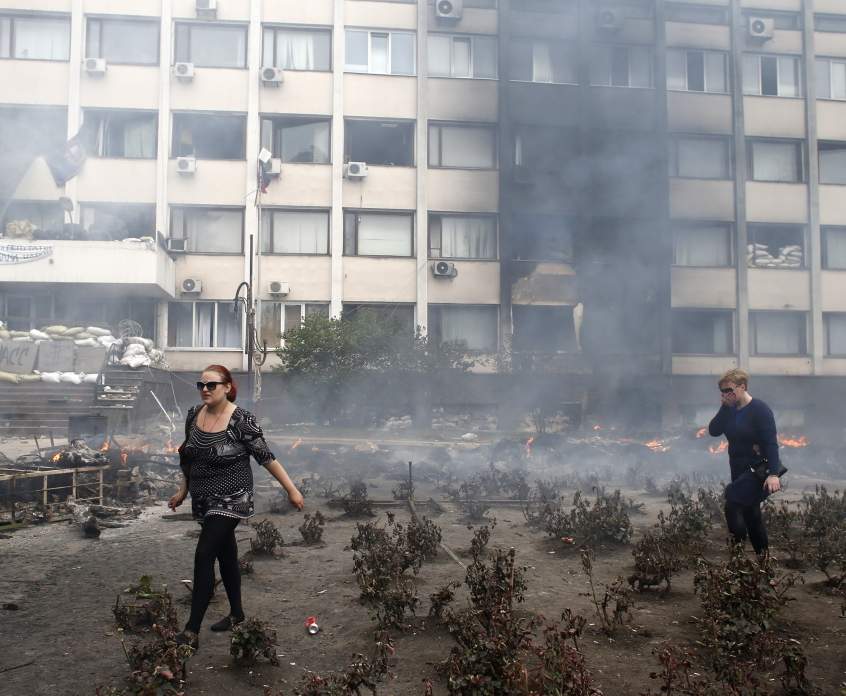
The Escalating Crisis in Ukraine Poses an Imminent Threat to World Peace
By way of introducing our discussion on the escalating crisis in Ukraine, and the imminent threat to world peace that it poses, I can think of no better way to do so than to read the short, opening two paragraphs of the January 2nd statement on the crisis issued by
The U.S. Peace Council. It reads, in part, as follows: “ For weeks, the US corporate media have been shrill in declaring that Russia, having positioned tens of thousands of Russian troops on the border, may be about to invade Ukraine. US State Department spokesmen have been threatening Russia with punishing economic sanctions if there is an invasion.” And a bit later it goes on to say: “The cold war with Russia, festering since 2014 and the US backed coup in Ukraine, may be potentially even more menacing than the new cold war with China. If the armed standoff between the Ukrainian military and the Russian supported separatist forces in eastern Ukraine, becomes—by miscalculation or design—a conventional war between Russia and NATO, it could escalate into nuclear war.”
This week the two sides have been meeting to see if a peaceful resolution can be found. But this Thursday morning, as our show is being recorded, both Russia and the US announced the talks were at an impasse. What is causing this impasse? What are Russia’s key demands and what are those of the United States. And what is the likelihood of war breaking out?
Well, I can think of no one any better to discuss this topic with than our guest today, who is one of the authors of the US Peace Council’s statement.
Guest – Joseph Jamison is a long-time peace activist and a member of the Executive Committee of the U.S. Peace Council. He is also the Coordinator of the Peace Council’s Move the Money to Human Needs Campaign, and very active in his local Move the Money Campaign in New York City.
———————————-
Law and Disorder January 10, 2022
Podcast: Play in new window | Download
Dark Money, Corporate Corruption And Right Wing Networks
We are at a pivotal moment in this country and the coming year may will decide whether we can right the course of history. Nancy MacLean’s important book Democracy in Chains revealed the Rights‘ decades long stealth campaign to reverse engineer America back to the days when the robber barons reigned supreme and rigged the legal and constitutional rules to work in their favor.
Professor MacLean wrote that “Trump and the forces of the right are actively trying to rig the conducting and counting of elections, state by state, as they create a frightening autocratic, post truth society few would have ever thought possible in America.”
The January 6th insurrection was a dress rehearsal for a Trump coup attempt in 2024. If he loses the election Trump and his far right supporters are laying the groundwork in state legislatures to take control of the electoral process to reverse the loss and claim a victory.
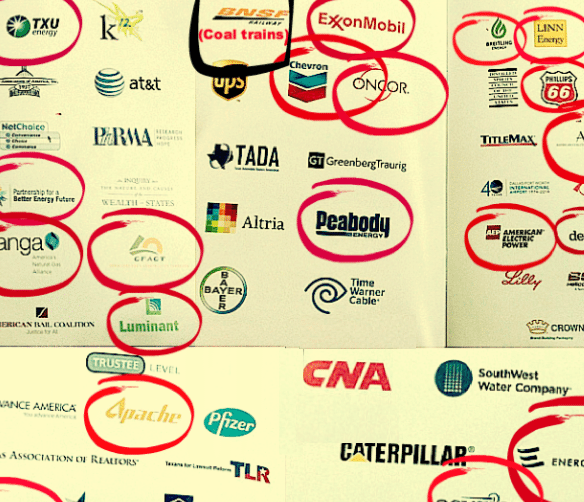
The alliances between the corporate state, Trump, and white nationalists have seen a flood of dark money to subvert free and fair elections, block climate and economic justice legislation, push for a constitutional convention to permanently guarantee the rule of the rich, and the crippling of the federal government’s ability to protect working families, the environment, and promote equity for all.
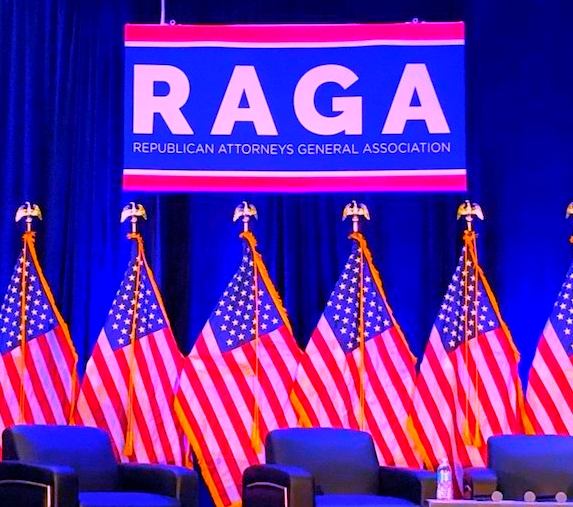
The investigative journalism published by the Center for Media and Democracy has exposed groups on the far right like the American Legislative Exchange Council (ALEC), Heritage Action, and the Republican Attorneys General Association (RAGA) which are working hard to suppress the vote, tear down the firewall to protected our democracy in 2020 and put Trump acolytes in positions of power where they can subvert future elections.
Guest – David Armiak who is Research Director with the Center for Media and Democracy. He has conducted extensive investigations on dark money, corporate corruption, and right wing networks, and is responsible for filing and analyzing hundreds of public records request every year.
—-
The US Supreme Court And US Democracy Going Forward
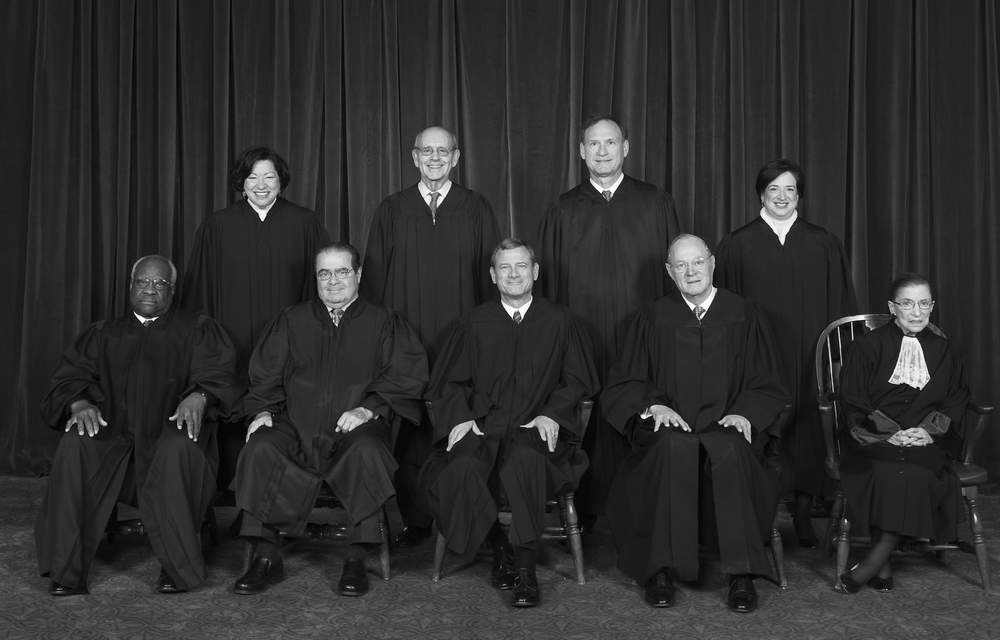
The Supreme Court as presently constituted has six reactionary judges and three liberal minded ones. Progressive people are alarmed by its recent decisions and fearful of what it will do in the future.
One of the liberals on the court is Steven Breyer. He’s 83 years old. Should he retire, it would give the Democrats the opportunity to try to appoint a replacement who is not a reactionary. This will be an uphill battle, but it is a fight well worth it.
A right-winger will certainly get the job if a Republican president and a Republican controlled Senate in the year 2024 choose a successor to Breyer if he dies or retires
When Barack Obama was president, he hinted to the liberal Ruth Bader Ginsburg, who was 80 years old and a two-time cancer patient, to step down but she declined. Ginsburg died while still serving as a Justice of the Supreme Court. Republicans in the Senate would not allow a vote for Judge Merrick Garland, whom Obama had nominated for the Supreme Court seat. Ginsburg was then replaced by the young right-winger Brett Kavanaugh who joined two other young right-wing Trump judges.
The Trump-dominated Republican party is well aware that to topple democracy they must take over the courts. The current Roberts Court has for more than a decade consistently leveled this attack on democracy by eviscerating the Voting Right Act, unleashing unlimited corporate monies into elections, allowed clearly partisan gerrymandering of elections, and is now training its sights against reproductive choice by severely restricting abortion rights.
Yale historian Jason Stanley has recently written, “There is every reason to believe that the court will allow even the simplest of democracy to crumble as long as laws are passed by gerrymandered republican state houses that make anti-democratic practices, including stealing elections, legal.”
Guest – attorney Martin Garbus, a constitutional litigator who has represented Steven Donziger, Nelson Mandela, Daniel Ellsberg, and Lenny Bruce.
———————————————-