
Welcome to Law and Disorder Radio
Law and Disorder is a weekly independent civil liberties radio program airing on more than 150 stations and on Apple podcast. Law and Disorder provides timely legal perspectives on issues concerning civil liberties, privacy, right to dissent and practices of torture exercised by the US government and private corporations.
Law and Disorder January 3, 2022
Podcast: Play in new window | Download
Code Pink: U.S. Military’s Unwarranted Influence
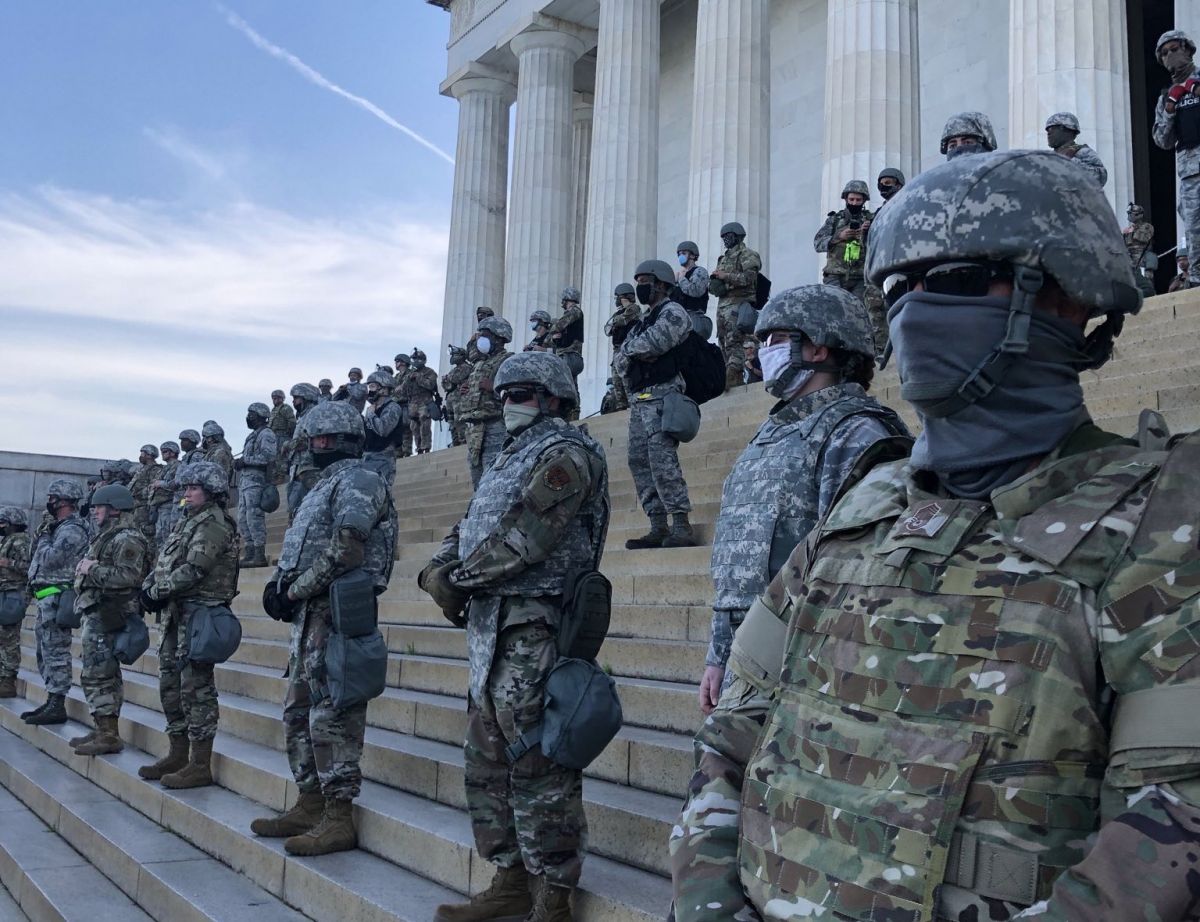
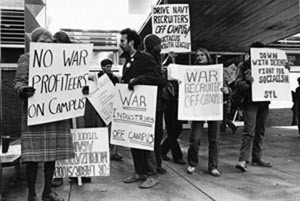
In 1961, President Eisenhower warned America of the “unwarranted influence of the military-industrial complex. Later in the ‘60’s Senator J. William Fulbright spoke of what he named the “military-industrial-academic complex.” And he was both prescient and wise to do so, for today colleges and universities in America receive nearly 200 Billion dollars annually from the Department of Defense to do research and development for the military. And this money plays an oversized role in how our colleges and universities are funded today.
Indeed, as you will hear in a few moments from today’s guest on this topic, the influence of this DoD money on what is researched and taught at America’s colleges and university is profound. And it contributes greatly to our pro-war politics while denying money and research for addressing problems like climate change, and curing new diseases, or finding new ways to fight poverty, or better educate our children. And with this year’s Pentagon budget topping $768 billion, this should concern all who seek a more peaceful world and a world where economic and social justice prevail.
Currently, 2,500 of the main institutions of higher learning in America receive this DoD’s blood money for military related research. And often little is known by way of just what is being researched and developed for the military on our campuses; of knowing what new ways to kill people are on the drawing board. For example, I must confess that in preparing for today’s show I learned, to my utter disgust, that the University of Michigan, my undergraduate alma matter, ranks 2 or 3 among the American universities receiving money from the Department of Defense.
Guest – Marcy Winograd is the Coordinator of CODE PINK CONGRESS, Co-Chair of the Progressive Democrats of America’s End Wars and Occupations Team, and herself a former candidate for Congress. She is an expert on the military-industrial-academic complex, as well as a long-time activist for peace and social justice.
—-
The U.S. Military And Climate Change
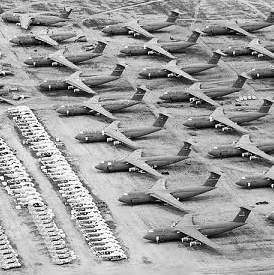
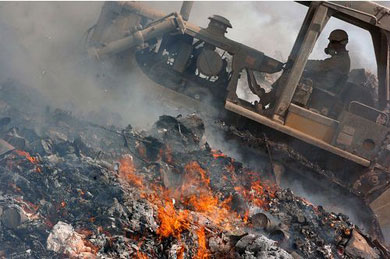
Although the U.S. military has called climate change an “existential” threat to national security, its actions belie its words. The U.S. military is the largest institutional source of greenhouse gases in the world. But due to a loophole in the 2015 Paris climate agreement and the Kyoto Protocol, it is not required to disclose the extent of its pollution. Moreover, the 2021 budget calls for the Pentagon to report on the U.S. greenhouse gas emissions for the past 10 years. But the Pentagon missed its July deadline.
In 2020, the U.S. military emitted 51 million tons of carbon dioxide, primarily from fuel and the maintenance of over a half million buildings, according to the Cost of War Project at Brown University. Significantly, the U.S. wars in Iraq and Afghanistan emitted 1.2 billion tons of greenhouse gases between 2001 and 2017. Those wars cost U.S. taxpayers $8 trillion and killed 900,000 people.
But the U.S. government’s commitment to reduce emissions falls short of the goals of the Paris agreement. The U.S. efforts were rated “insufficient” by the Climate Action Tracker. If other countries follow suit, the temperature would rise by 2 to 3 degrees Celsius, which would prove disastrous.
In November, more than 100,000 people participated in demonstrations at the United Nations Climate Change Convention (COP 26) in Glasgow, Scotland. Upwards of 500 delegates to the convention had ties to the fossil fuel industry. The watered-down statement that came out of COP 26 called for a “phase-down of unabated coal power and inefficient fossil fuel subsidies” rather than the “phase-out of fossil fuels.”
Dr. Jim Rine is an adjunct professor of geology at Wayne State University, who for decades has published his research on marine geology, environmental geology, and the potential interactions of the U.S. petroleum industry to climate change. In 2019, he helped form the Veterans for Peace Climate Crisis and Militarism National Project. The project helped draft H. Res. 767, which Rep. Barbara Lee (California) introduced in the House of Representatives in November.
Veterans For Peace Climate Crisis Take Action
H. Res. 767, which has 31 co-sponsors, calls on the Defense Department to report on its emissions, to set “clear” annual emissions reductions targets, and to pledge to conduct “strict, transparent, and independently verified reporting” on emissions. The resolution also incorporates the House version of the 2022 National Defense Authorization Act that says, “DoD should lower its emissions to prevent exceeding an increase in global temperature by 1.5 degrees Celsius.”

—————————-
Law and Disorder December 27, 2021
Podcast: Play in new window | Download
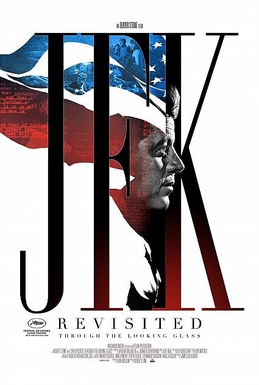
JFK Revisited: Through the Looking Glass
President John F. Kennedy was assassinated on November 22, 1963, 58 years ago. Assassination is a political murder. His murder was a turning point in American history. The first question needed to be ask in a murder case is why. The second question is who.
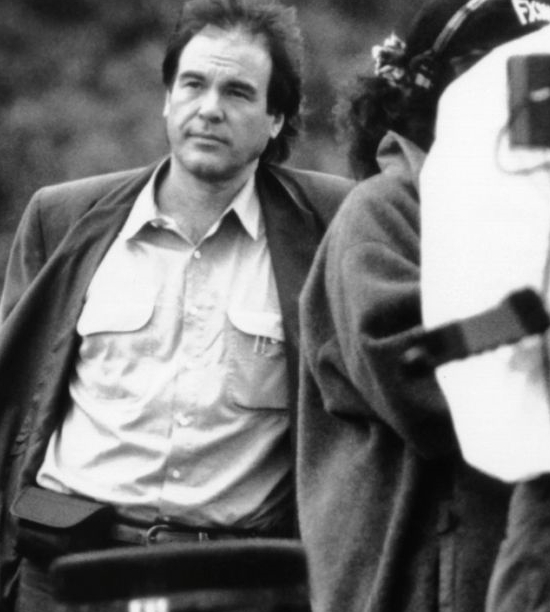
Today we discuss this catastrophic turn in American history with filmmaker Oliver Stone who directed his just released new documentary JFK Revisited: Through the Looking Glass. Stone uses evidence from the “Assassination Record Review Board“ to bolster our understanding that the assassination was not accomplished by a lone individual, Lee Harvey Oswald.
Kennedy was killed because he was pushing for the detente. He wanted to end the nuclear arms race with the Soviet Union. He wanted to get American troops out of Vietnam and end its counterrevolutionary involvement.
President Kennedy wanted to re-establish relations with Castro and revolutionary Cuba. He wanted to support the independent former colonial countries like the Congo. It was for this that he was murdered and the course of American history was changed.
One of the first things the new president Lyndon Johnson did – he had been Kennedy‘s Vice President – after he was installed, was to reverse Kennedy‘s order initiating the withdrawal of American troops in Vietnam. Instead Johnson escalated the war, eventually putting a half million American soldiers on the ground in that tragically ravished country, killing some 3 million Vietnamese people, including 53,000 American soldiers.
Guest – Oliver Stone, filmmaker, author, his 1991 movie “JFK“ was nominated for four Oscars, winning two of them. His new documentary JFK Revisited : Through the Looking Glass has been pretty much ignored by the mainstream American media.
—-
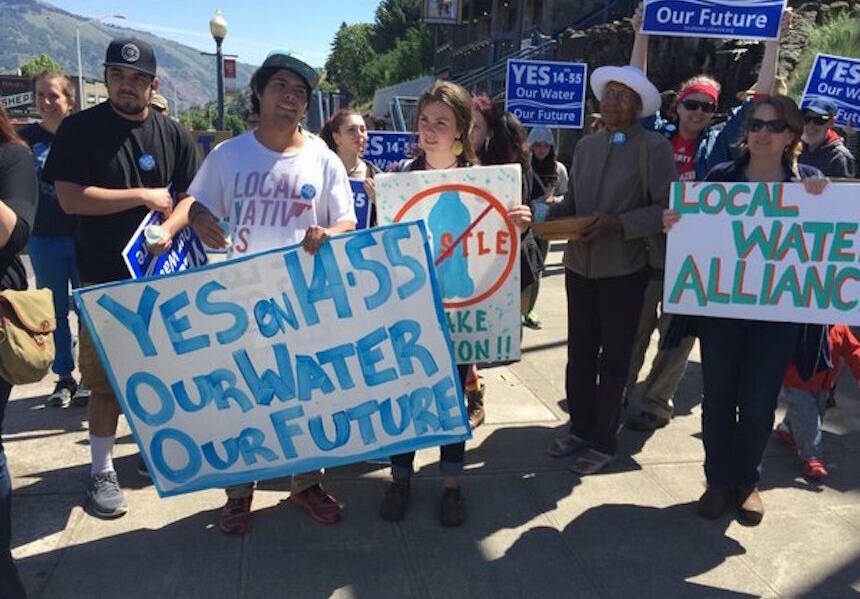
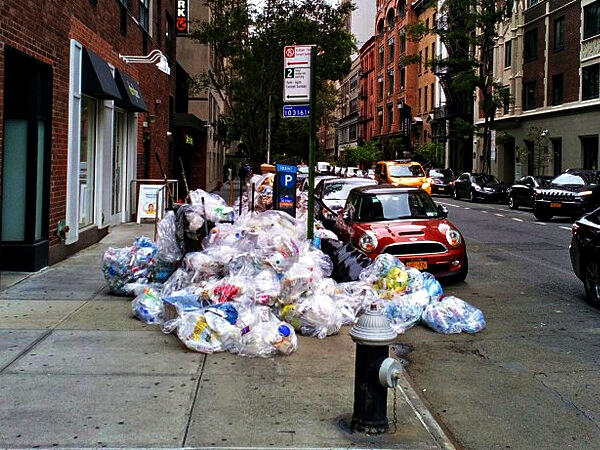
The Trend Toward Water And Waste Privatization
By 2025, two-thirds of the world’s population will be out of fresh drinking water, according to the World Bank. Fortune magazine recently called water “the oil of the 21st century.”
This situation has private companies flocking to privatize water delivery in areas parched for water. Rather than helping to protect existing water supplies, increase conservation measures, stem pollution, and assist needy populations, pressure mounts to commodify and profit from this natural resource and most fundamental human need.
Similarly, the National Waste and Recycling Association supports privatizing waste and recycling collection services at all levels of government. And Americans produce a lot of waste: on average at least 4.4 pounds each a day, or at least 728,000 tons total per day.
Private water companies have existed in the US for more than 200 years; today there are thousands serving more than 73 million Americans. And as of 1995, half of the nation used private waste management companies. But that’s one of the most dangerous jobs in the nation, with often lax job safety: in NYC private sanitation trucks killed 7 people in 2017; city municipal sanitation trucks haven’t killed anyone since 2014.
Privatization often brings rate hikes, decreased water quality, less reliability, and poor customer service. The average US community with privatized water paid 59 percent more than those with government supplied water. New Jersey has more private water systems than most states, and they charged 79% more. In Illinois, they charged 95% more.
Private water corporations have also been implicated in environmental disasters. The French multinational, Veolia, issued a report in 2015 certifying that Flint, Michigan’s water system met EPA standards, but neglected to mention high lead concentrations.
Guest – Attorney Terry Lodge is from Toledo where he specializes in environmental and energy issues. He is associated with the nonprofit Community Environmental Legal Defense Fund, which offers free and affordable legal services.
Guest – Lindsey Schromen-Wawrin an attorney at Shearwater Law PLLC also affiliated with Community Environmental Legal Defense Fund since 2013, He serves as a city councilor in Port Angeles, Washington, and is a member of the International Parliamentary Alliance for the Recognition of Ecocide.
——————————————-
Law and Disorder December 20, 2021
Podcast: Play in new window | Download
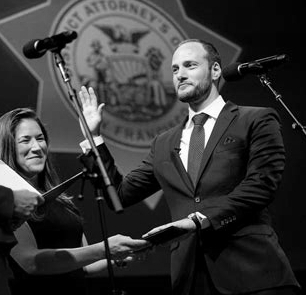
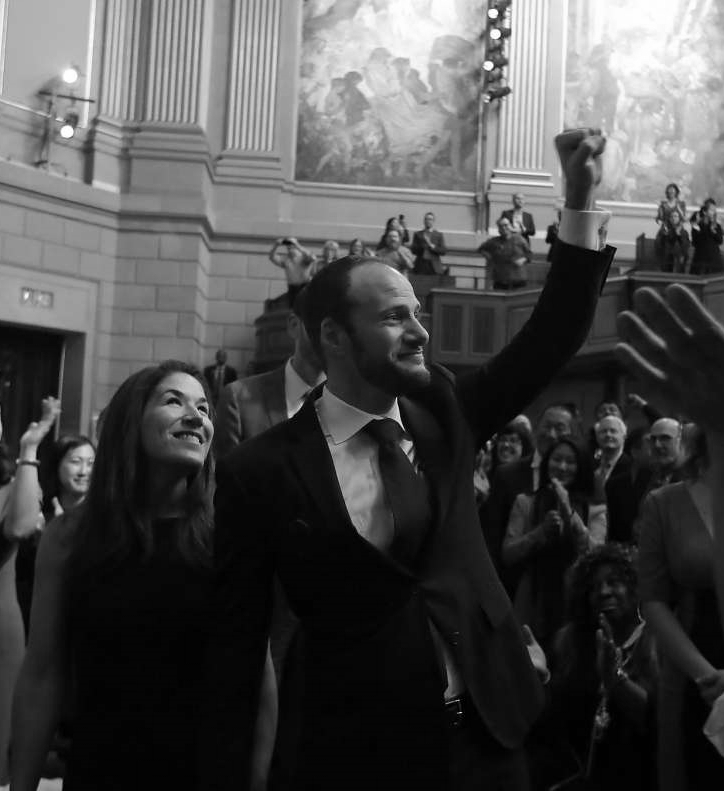
Recalling San Francisco District Attorney Chesa Boudin
Chesa Boudin has been serving San Franciscans as their district attorney for nearly 2 years. He is a leading progressive in what has been called the progressive prosecutors’ movement. Other progressive district attorneys in that small cohort are George Gascon in Los Angeles and Larry Krasner in Philadelphia.
In Berger v. United States, the Supreme Court said that the duty of a prosecutor “in a criminal prosecution is not that it shall win a case, but that justice shall be done.” Yet all too many prosecutors are more concerned with winning cases than doing justice, which includes the protection of constitutional rights.
Chesa campaigned by proposing solutions to the disaster of mass incarceration, the civil rights issue of our time. He introduced policies of diversion and no cash bail. He put fewer juveniles behind bars. He opposed the death penalty and focused his efforts on helping victims of crimes. Chesa Boudin said that the recall effort is about criminal justice reform, that it is “a question of whether we are going to go forward and continue to implement data driven policies that center on crime victims, that invest in communities impacted by crime, and that use empirical evidence to address root causes of crime in our communities or if we are going to go back to the failed policies of Reagan and Trump.”
Chesa’s efforts are now being challenged. A claimed 83,000 signatures were gathered in San Francisco by paid workers to put a recall Boudin question on the San Francisco county ballot in June. Even Donald Trump has injected himself into the campaign in what has become a national well-funded Republican putsch.
Fear mongering is employed to create a false conception that crime in San Francisco is rising. Today, my co-host Marjorie Cohn, a former criminal defense attorney and law professor, and I talk with Chesa Boudin about his philosophy and successful efforts as a progressive prosecutor.
—-
Decision To Not Extradite Julian Assange To U.S. Reversed
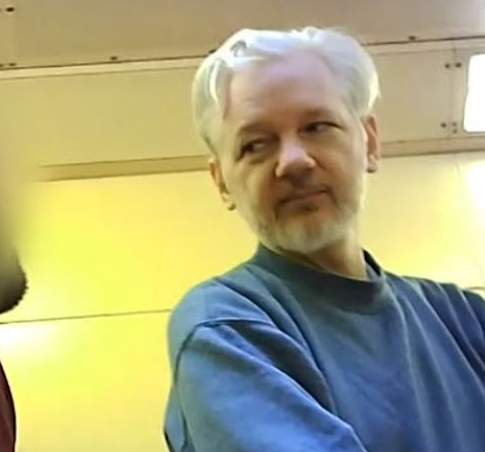
A devastating decision, the worst decision against free journalism in modern U.S. history came down on December 10th from a British appellate court against Julian Assange. It will abolish “National security“ journalism everywhere giving United States the power to reach across oceans and indict journalists and publishers who publish stories exposing and embarrassing the U.S. government. This is what Julian did.
The horrible but not unexpected decision reversed the decision of Vanessa Baraitser, the lower court judge who had refused a U.S. Government request to extradite Julian and send him to the Eastern District of Virginia where he will be put on trial for 17 counts under the 1917 Espionage Act. The charges stem from WikiLeaks’ 2010 revelations of U.S. war crimes. It is unlikely he could receive a fair trial in that most conservative district where most of the so-called War on Terror cases have been tried.
The lower court judge had ruled that the conditions of imprisonment in a U.S. prison are so egregious that Assange, who is in very frail mental health, would likely take his own life. He had already tried to do so in the wretched London Belmarsh prison where he is now being held in torturous solitary confinement.
When Baraitser’s decision came down, the United States was quick to offer so-called “assurances“ to the appellate court that Assange would not be sent to the maximum security prison in Florence, Colorado and would not be subjected to special administrative measures which would cut him off from human contact. It was these assurances on which the appellate court relied in overturning the lower court’s decision.
Julian Assange was a young computer genius, an Australian citizen, who figured out a way to receive information from whistle blowers and publish that truth telling material anonymously in order to protect them.
When he began publishing WikiLeaks, Assange won awards for his journalism. He exposed U.S. war crimes in Afghanistan, Iraq, and Guantánamo. He embarrassed the Democratic Party by showing how Hillary Clinton stole the nomination from Bernie Sanders.
When Mike Pompeo was Trump’s CIA director, he called WikiLeaks “a hostile non-state intelligence agency” and CIA officials suggested that Assange be kidnapped from the Ecuadorian embassy in London, where he had received political asylum, and assassinated.
It was to the United States that the British High Court had no hesitation in sending Julian. So can the U.S. government’s assurances be trusted? Probably not, as they have reneged on nearly identical assurances in the past.
Meanwhile Julian Assange sits in isolation in Belmarsh prison in failing physical and mental health. His lawyers will appeal the decision to the British Supreme Court. But in the meantime, the United States has Julian exactly where they want him in the upcoming months or years that an appeal would take.
U.S. smearing, persecution, and isolation of Julian Assange has been going on now for 10 years. The sordid story began a decade ago when the US Department of Defense took the position that Julian should be discredited and slandered. He was falsely blamed for sexual misconduct in Sweden involving two women who never wanted Julian targeted. But the United States was able to get a prosecutor who did. A warrant was sent from Sweden to England requesting that Julian be sent to Sweden for questioning.
Our own Michael Ratner was representing Julian at the time. In an attempt to avoid being sent to Sweden, which would have extradited Julian to the United States for trial under the Espionage Act, Julian was granted political asylum in the tiny apartment that serves as the Ecuadorian embassy in London. He remained there for seven years under the direct video surveillance 24 hours a day by the CIA
Then the U.S. bribed and bullied its way to reverse the grant of asylum after a U.S.-friendly president assumed the helm of the Ecuadorian government. The British police brutally extracted him from the embassy and put him in solitary confinement in the notorious London Belmarsh prison, where he has remained for nearly 3 years.
Then the Trump administration brought the Espionage Act charges against him. Biden had referred to Julian as “a high-tech terrorist,” and his administration continued Trump’s historically unprecedented pursuit of Assange.
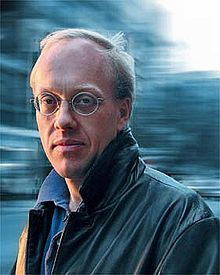
Guest – Chris Hedges whose many books and brilliant journalism have caused him to be respected as a moral philosopher. He is a regular columnist for Scheerpost” and is host of the show On Contact. Chris’ most recent article on the decision to extradite Julian Assange.
——————————————-