Welcome to Law and Disorder Radio
Law and Disorder is a weekly independent civil liberties radio program airing on more than 150 stations and on Apple podcast. Law and Disorder provides timely legal perspectives on issues concerning civil liberties, privacy, right to dissent and practices of torture exercised by the US government and private corporations.
Law and Disorder October 11, 2021
Podcast: Play in new window | Download
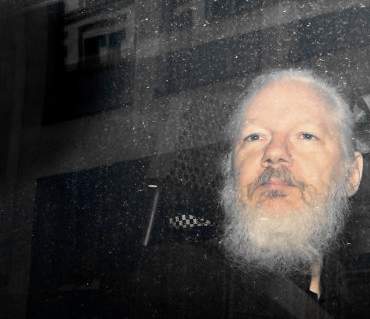
Julian Assange: October 26 Appeal
Julian Assange was a young computer genius, an Australian citizen, the publisher of Wiki leaks, an award-winning journalist, and the person responsible for embarrassing the United States by publishing material on American war crimes in Iraq and Afghanistan. He figured out a way to receive information from whistle blowers and publish the information anonymously in order to protect them.
When Mike Pompeo was Trump’s Director of the CIA he called WikiLeaks, which was founded by Julian Assange, “a hostile non-state intelligence agency.” Pompeo suggested that Julian Assange be kidnapped from the Ecuadorian embassy in London, where he had received political asylum, rendered, and assassinated.
What has been the reaction of the major news media to this extraordinary revelation? Will this affect the US governments continued efforts to have him extradited to the United States where he would be tried for espionage?
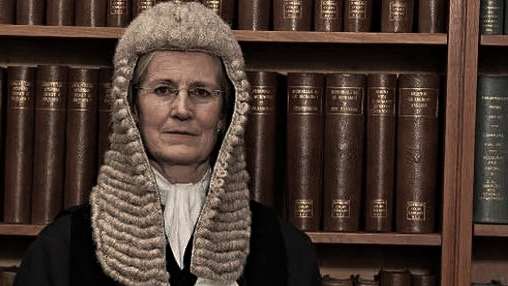
Assange is presently being held in solitary confinement in London‘s infamous Belmarsh prison. In earlier developments, Judge Vanessa Baraitser ruled that he could not be extradited to United States in defiance of the American request because she feared his prison confinement in an American maximum-security prison might cause him to commit suicide.
Her decision is on appeal by the Biden U.S. Justice Department and will be heard by the British High Court on October 26th.
In response to the revelations about Pompeo, Julian’s American attorney Barry Pollack said that “the extreme nature of the type of government misconduct that Yahoo News reported would certainly be an issue and potentially grounds for dismissal.“ He believes that Assange was targeted by both Trump and Biden like Nixon had targeted Daniel Ellsberg for his release of the Pentagon during the Vietnam war. In Ellsberg’s case the presiding judge dropped all charges against him.
@defenseassange – Nathan Fuller twitter
Guest – Attorney Nathan Fuller who has been attending Julian Assange’s extradition hearing in London. He leads the London-based Courage Foundation and the director of the newly formed Committee to Defend Julian Assange and Civil Liberties.
—-
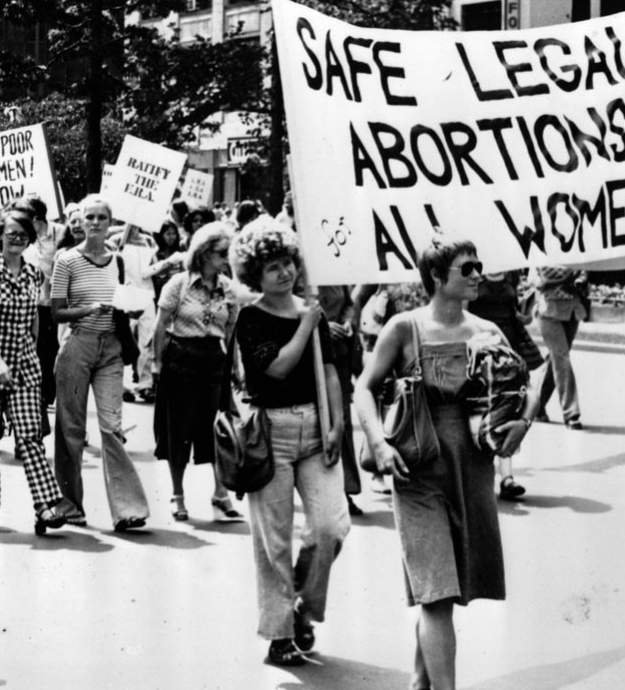
Host Discussion: Challenges To Roe v. Wade And Donziger Case Updates
Last week thousands demonstrated across the country over woman’s right to choose. The demonstrations took place one month after Texas had enacted its infamous heart beat law which is nearly a total ban on abortion. It prohibits abortion after 6 weeks, when most women don’t know they’re pregnant. Currently the law established by Roe v Wade, defends women and affords them to get an abortion during the first two trimesters of their pregnancy. One in four women in the United States has had an abortion. The first thing the fascist Hitler government did in 1933 when in came to power was to lock up all the family planning clinics. Anti-abortion laws disproportionately attack black, brown and poor women. The Women’s Health Protection Act which would codify Roe v. Wade has passed the House and is now in the Senate where it will likely lose. Coming up in the Supreme Court is the Jackson Healthcare Case which originated in Mississippi. That state passed a law limiting the first 15 weeks of pregnancy. The first direct challenge to Roe v. Wade.
Guest – Marjorie Cohn, former criminal law defense attorney and professor emeritus at the Thomas Jefferson school of Law. She was the past president of the National Lawyer Guild and is a member of the bureau of the International Association of Democratic Lawyers. Professor Cohn has published four books about the war on terror. Last week she had published an article in the prestigious online magazine Jurist titled Samuel Moyn’s Unprincipled Attack on Human Rights Giant Michael Ratner is Shameful.

—————————————-
Law and Disorder October 4, 2021
Podcast: Play in new window | Download

Post Occupation Afghanistan 2021
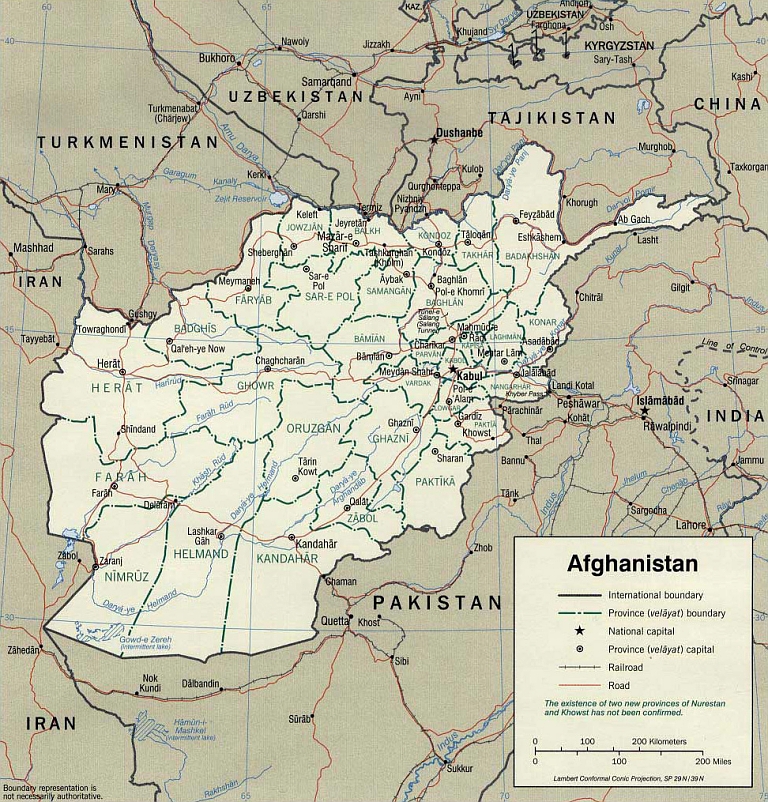
Afghanistan had a progressive modernizing government in the 1970s. It was headed by the Afghan Communist Party which was semi-independent of the Soviet Union. Women had the right to go to school. They did not wear burkas. They wore blue uniforms. Women had the right to a job. The infrastructure in Afghanistan was being built up with a lot of money from the Soviet Union.
But the Afghan people fell victim to the Cold War against Communism. The United States armed the Islamic fundamentalist Mujadaheen, in what became a full-scale civil war. They got help from the reactionary Pakistanis. The Afghan government invited the Soviet Union into Afghanistan. The Soviet Union got tied down in the battle and eventually withdrew. It so exhausted the Soviet Union economically and politically that by 1991, the Soviet government collapsed. President Jimmy Carter’s Secretary of State Zbignew Brzezinski, bragged about this as a great success for US policy.
The Taliban won the civil war, including with a promise to end the shelling of Kabul, and came to power in Afghanistan. Osama bin Laden located himself and his Al-Qaeda followers in that country. When the Twin Towers and the Pentagon were struck by Al-Qaeda on 9/11, and so many people in the US were paralyzed with grief and fear, the only response offered to the American people was revenge. This paved the way for the US invasion of Afghanistan, which soon won overwhelming popular support.
The US government was not really interested in bringing democracy to or preserving women’s rights in Afghanistan. The United States allied with the warlords of the Northern Alliance, showering them with money. Afghanistan became a tremendous supplier of heroin to the world market. Thousands of US soldiers died, tens of thousands were wounded, trillions of dollars were spent. The war was unwinnable. First Donald Trump announced he would withdraw US forces, then Joe Biden took US troops out of that country. What does the future hold for Afghanistan?
Guest – Phyllis Bennis is a fellow of the Institute for Policy Studies, where she is she is the director of the New Internationalism Project and works on anti-war, US foreign policy and Palestinian rights issues. She has worked as an informal adviser to several key UN officials on Palestinian issues. Her books including Calling the Shots: How Washington Dominates Today’s UN, and Understanding the Palestinian-Israeli Conflict.
————–
Law and Disorder September 27, 2021
Podcast: Play in new window | Download
- Alarming Growth In Urban Homeless: Commentary by Attorney Jim Lafferty
—-

Judge Rules Attorney Donziger Guilty of Six Contempt Charges; Faces Jail Time
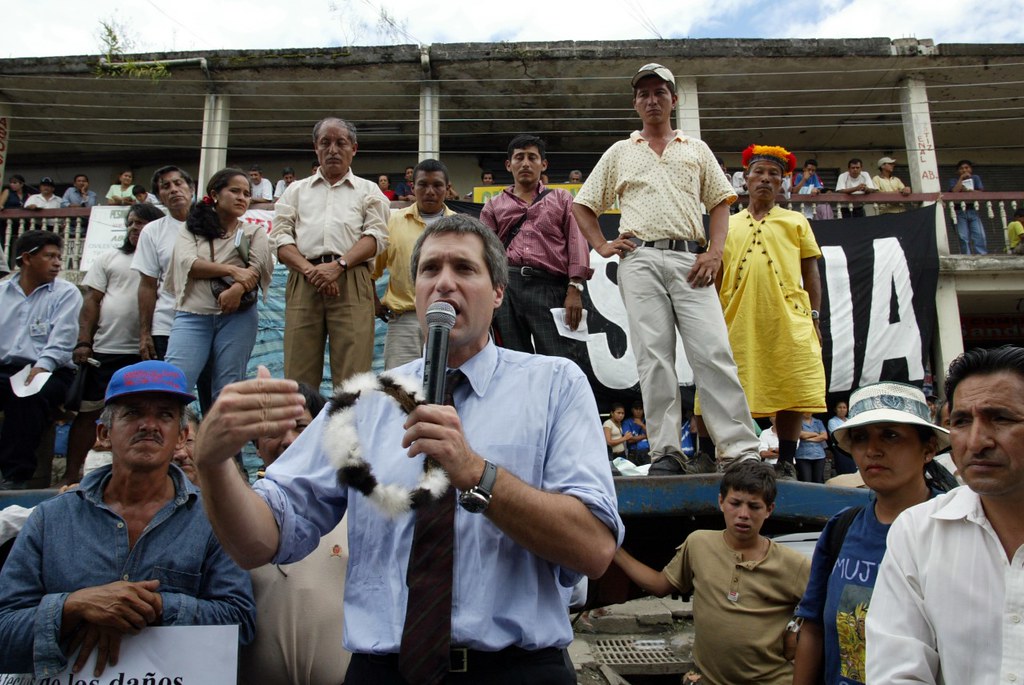
Steven Donziger, who listeners will recall has been embroiled in a decades long fight against Chevron over their pollution in the Amazon rainforest the size of Rhode Island, was found guilty this July of criminal contempt by US district judge Loretta Preska. She ruled that Steven was guilty of six contempt charges for refusing to turn over evidence in a complex legal case that has pitted the lawyer directly against Chevron.
In a 245-page judgement, Judge Preska said Steven had “repeatedly and willfully” defied court orders adding that “it’s time to pay the piper,” with Steven facing six months in jail.
It has now been two years since Steven has been wearing a monitoring bracelet and under house arrests in his NYC home. He said he expected the decision and will appeal.
In 2016, US judge Lewis Kaplan granted Chevron seizure of the lawyer’s laptop and phone. When Steven appealed, he was slapped with the contempt charges and placed under house arrest.
Judge Preska’s judgment explicitly denies the lawyer has been the victim of a conspiracy, however. “Contrary to Mr Donziger’s assertion that his conviction was ‘pre-ordained’, the court finds him guilty on each count for one reason and one reason only: Mr Donziger did that with which he is charged. Period,” she wrote.
Guest – Attorney Martin Garbus, one of three pro bono lawyers representing Donziger in an attempt to get his law license restored. Garbus has a long and distinguished career as a civil rights and first amendment litigator. Attorney Martin Garbus has represented Nelson Mandela, Daniel Ellsberg, and Cesar Chavez and worked in Rwanda, China, and the Soviet Union, among other countries.
—-
Samuel Moyn’s Unprincipled Attack on Human Rights Giant Michael Ratner is Shameful
A controversy was ignited two weeks ago when the New York Review of Books published an article by Yale Law Professor Samuel Moyn. The article singled out human rights attorney Michael Ratner, the cofounder of Law Disorder Radio. Ratner was the longtime president of the Center for Constitution Rights. He died five years ago. Professor Moyn uses him as a whipping boy to support his bizarre theory that punishing war crimes prolonged the wars in the Middle East by making them more palatable.
Professor Moyn disingenuously claims that enforcing the conventions against torture and opposing illegal war are mutually exclusive.
Moyn’s book Humane: How the United States abandoned Peace and Reinvented War was recently published. It was a chapter from this book that appeared in the New York Review of Books. Moyn makes the false and astonishing claim that “no one perhaps has done more than Ratner to enable a novel sanitize version of permanent war.”
Moyn wrote that Ratner and the CCR prolonged the Middle Eastern wars by suing the Bush- Cheney administration to stop them from abolishing the right of habeas corpus for Muslims the American government had imprisoned on its offshore prison in Guantánamo. The right of habeas corpus is ancient. It allows for a person held by the government to be informed of the charges against him, to be allowed to have a lawyer, and to be given a trial.
Guest – Marjorie Cohn, former criminal law defense attorney and professor emeritus at the Thomas Jefferson school of Law. She was the past president of the National Lawyer Guild and is a member of the bureau of the International Association of Democratic Lawyers. Professor Cohn has published four books about the war on terror. Last week she had published an article in the prestigious online magazine Jurist titled Samuel Moyn’s Unprincipled Attack on Human Rights Giant Michael Ratner is Shameful.
———————————————-