Welcome to Law and Disorder Radio
Law and Disorder is a weekly independent civil liberties radio program airing on more than 150 stations and on Apple podcast. Law and Disorder provides timely legal perspectives on issues concerning civil liberties, privacy, right to dissent and practices of torture exercised by the US government and private corporations.
Law and Disorder August 30, 2021
Podcast: Play in new window | Download
David Gilbert Granted Clemency
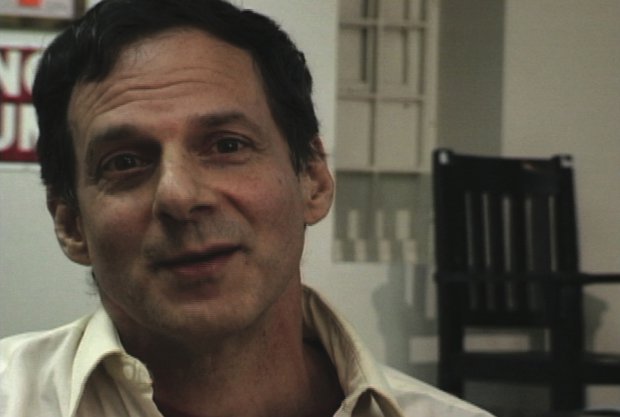
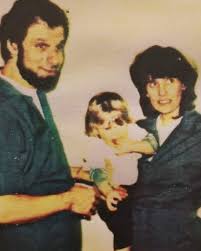
My 77 year old friend David Gilbert was granted clemency by Governor Cuomo on August 23, 2021. David had served 40 years in almost every maximum-security prison in the state of New York. He had been sentenced to 75 years to life for his role as a getaway driver in the infamous 1980 Brinks armored truck robbery in in Rockland County. He was convicted of felony murder. Though he didn’t shoot anybody. Two Policeman and a security guard were killed. The law of felony murder states that if you are part of the crime even though you didn’t kill anybody you are also guilty of murder.
Cuomo granted clemency when he had one foot out the door with a moving van at the governor’s mansion and only five hours left as governor. David had support from many people including many influential people like two Nobel prize winners; one of them was Bishop Desmond Tutu, a hero of the South African anti-apartheid movement.
David’s great achievement was keeping his revolutionary politics and his health both mental and physical while serving those four decades of confinement, torment, and poor food. He wrote two books including one titled No Surrender. When my wife Debby and I would visit him it was always an up for us. He kept our spirits up. He would bound in to the visiting room and give us a hug. We will talk politics straight through for five hours. He was up to the minute on political events in America and around the world. He read widely. He subscribed to the New York Times which came three days late. A friend of his sent him a one hundred page collection of articles from the Internet every month. David never got a disciplinarian infraction over the course of all those years. He mentored many young people with whom he would correspond. Many would come visit him. Sometimes all the way to Wende Prison in Buffalo or to Dannemora in the Finger Lakes.
Because of the grant of clemency David is now eligible for parole and will soon come up before the parole board. They don’t necessarily have to let him out. We will keep up support and hope that sooner rather than later David Gilbert will be home and present amongst us. He is the real thing: A revolutionary leader and thinker. David, I’m behalf of all your friends and supporters we congratulate you.
—-
Remembering The Life Of Glen Ford
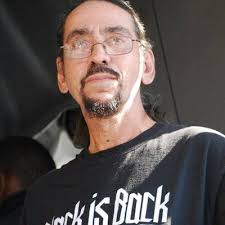
Glen Ford died last July 28 of lung cancer. I knew Glen the last seven years of his life. I first met him in 2014 after a speech that he gave at Harlem’s Riverside Church church on the occasion of the 7th anniversary of the Black Agenda Report of which he was the executive editor. The two other editors were Margaret Kimberley, who has taken over as the editor, and the late Bruce Dixon of Chicago who died two years ago. They were a formidable threesome. That night he spoke about what he called the Black misleadership class, a description he coined, and how it was an enemy of the movement. He said the Democratic party, which they populate, was not the lesser of two evils but the most effective of two evils.
In particular, he zeroed in on New Jersey Senator Cory Booker. I kept in touch with Glen. He was a guest on Law And Disorder several times.
I helped assemble a selection of his writings titled The Black Agenda which will very soon be published by OR books. Two months ago the publisher of OR books, Colin Robinson and I drove out to New Jersey to visit Glen.
He had just got out of the hospital where they took fluid out of his cancerous lung. He was somewhat frail but pretty chipper. We ate bagels and cream cheese at the dining room table and talked politics for two hours. As we left Colin remarked that it was a shame we hadn’t recorded our conversation. Glen was brilliant. Glen was the real thing. A Black nationalist and a socialist, as he described himself. He was a former Black Panther and usually wore a black beret when he spoke. He ended his speeches with his right arm held high in the air saying “power to the people.“
—-
The Black Misleadership Class Versus the Movement and its Legacy
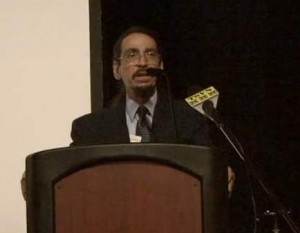
We go now to hear Glen Ford speaking at the Black Agenda Report 7th anniversary gathering at Harlem’s Riverside Church. The theme of the event was ““The Black Misleadership Class Versus the Movement and its Legacy.” Ford gives strong criticism of newly elected New Jersey Senator Cory Booker as the essence of Black misleadership, showing the many ties of the current Newark mayor to corporate America.
Glen Ford is the Black Agenda Report executive editor Glen Ford can be contacted at Glen.Ford@BlackAgendaReport.com.
—-
American Spring: Unfolding Crisis
The Chinese word for crisis consists of two characters. One means danger, the other means opportunity. We currently are in an historically unprecedented situation fraught with both danger and possibilities. Russian revolutionary Vladimir Lenin once remarked that sometimes nothing happens in decades and other times decades happen in a few weeks. This is our situation now. We see an American spring unfolding.
The public lynching of George Floyd has triggered massive outpourings in several thousands of American cities, both large and small. Black Lives Matter is supported by a majority of Americans including a majority of whites. This kind of broad solidarity was absent during the time of Rev. Martin Luther King Jr.
The demonstrations are in large part led by people of color, mostly young people. Elected officials and traditional civil rights leaders are not leading the current uprising. As the L.A. Progressive has written, “The gross underlying inequality, racially and more broadly economically, affects every aspect of life in the US. and is the root cause of the volcanic anger irruption against the veneer of obsolete institutions.“
Guest – Glen Ford, editor of the Black Agenda Report. Ford founded the Black Agenda Report and has edited it since 2006. He was a founding member of the Washington chapter of the National Association of Black Journalists and he has delivered presentations at many colleges and universities.

——————————————–
Law and Disorder August 23, 2021
Podcast: Play in new window | Download
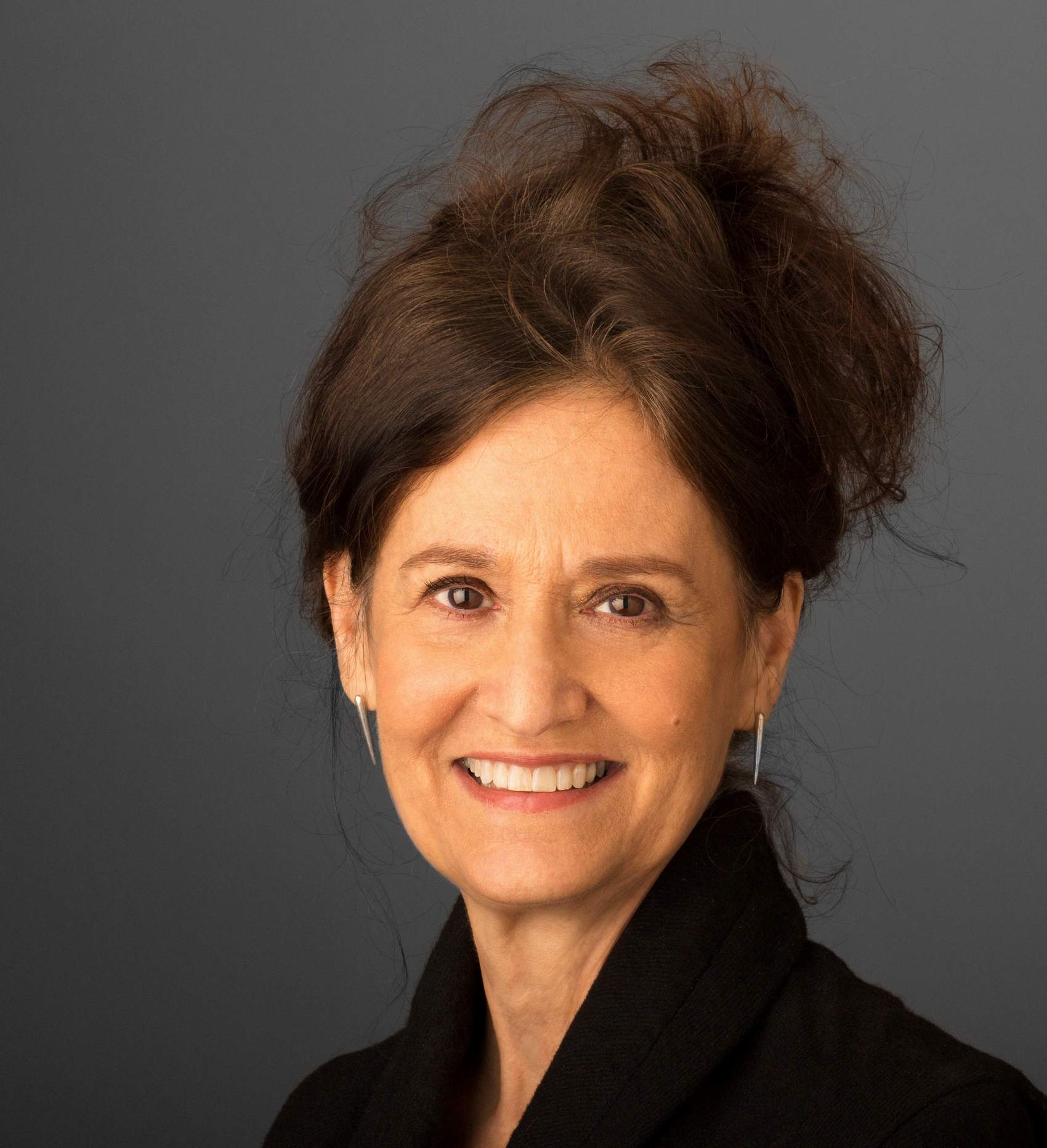
“I Have Nothing to Hide” and 20 Other Myths About Surveillance and Privacy
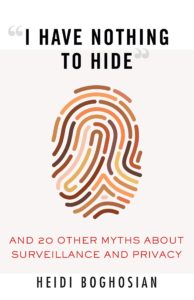
Should we give up our privacy all together because we think we have nothing to hide? This is the perhaps the most pervasive of the myths about surveillance and privacy that Heidi Boghosian explores in her new book titled I Have Nothing to Hide and 20 Other Myths About Surveillance and Privacy.
Other popular misconceptions detailed in the book include the notion that surveillance makes the nation safer, no one wants to spy on kids, police don’t monitor social media, metadata doesn’t reveal much about me, Congress and the courts protect us from surveillance, and there’s nothing I can do to stop surveillance.
Privacy is a fundamental right, and one that we often take for granted in the digital era. In her new book from Beacon Press, Heidi debunks some of the reasons these myths have evolved and why we unquestioningly believe them. She warns of the dangers they present to our freedoms and suggests ways to protect ourselves from the government and corporations.
Guest – Attorney Heidi Boghosian is a New York City attorney, activist, and nonprofit director. She currently runs the A.J. Muste Memorial Institute, a charitable organization providing support to activist organizations. Before that she was executive director of the National Lawyers Guild. Her book I Have Nothing to Hide: And 20 Other Myths About Surveillance and Privacy was published in July 2021 (Beacon Press) and her earlier book Spying on Democracy was published in 2013.
—-
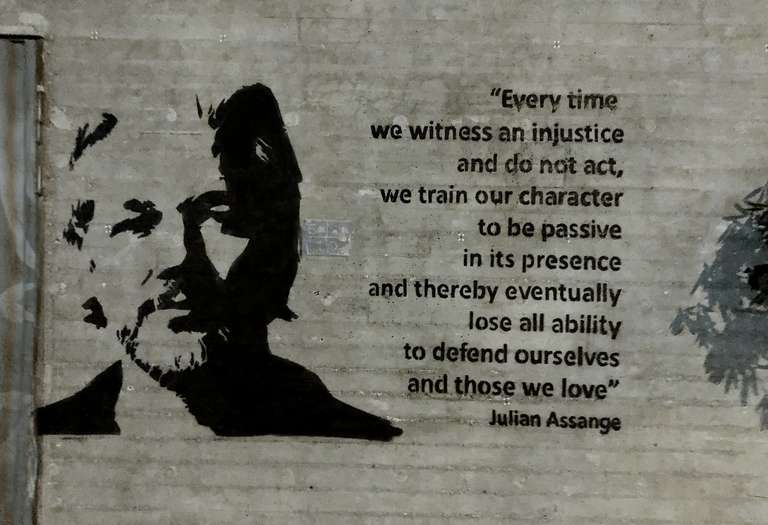
Julian Assange Update: Attorney Marjorie Cohn
The Julian Assange case is the most important civil liberties first amendment freedom to write/freedom to learn case of our times. Democracy cannot thrive without a free press that watches over the government and tells the truth. The government wants secrecy. We need transparency.
Julian Assange was a young Australian computer genius when he figured out a way for whistle blowers to reveal truths of government corruption, duplicity, and war crimes. Whistleblowers could report these things with anonymity.
The great Australian journalist John Pilger describes his accomplishments: “ WikiLeaks, of which Assange is founder and publisher, exposed the secrets and lies that led to the invasion of Iraq, Syria, and Yemen, the murderous role of the Pentagon in dozens of countries, the blueprint for the 20-year catastrophe in Afghanistan, the attempts by Washington to overthrow elected governments such as Venezuela‘s, the collusion between nominal political opponents (Bush and Obama), and the CIA Vault campaign that turned your mobile phone, even your TV set, into a spy in your mitts. And there is much more.“
The US government soon realized Julian Assange had to be crushed and silenced. Years ago the Department of Defense issued orders to smear his name. He was falsely accused of everything from rape to abusing his pet cat. Their smear campaign was largely effective with many leftists and liberals give only lukewarm support to Julian who now sits in solitary in Britain’s infamous Belmarsh prison awaiting extradition to a court in eastern Virginia which will certainly convict him and imprison him for the rest of his life. He faces charges of spying under the 1917 Espionage Act, which was never intended to be used against journalists but is now used regularly against whistleblowers.
He is in terrible physical and psychological shape. A lower court judge in Great Britain recently ruled that it’s likely that he will commit suicide and refused America’s request to extradite him. But an appeals court in Britain wants to take another look at the lower court’s evaluation. A hearing is scheduled for October 27th.
Guest – Attorney Marjorie Cohn is a retired constitutional law professor from the Thomas Jefferson School of Law in San Diego. She is a past president of the National Lawyers Guild and a regular columnist in the online magazine ”Truthout” where she has a recent column on Julian Assange.
————————————————–
Law and Disorder August 16, 2021
Podcast: Play in new window | Download
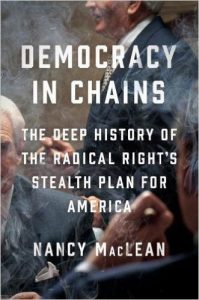
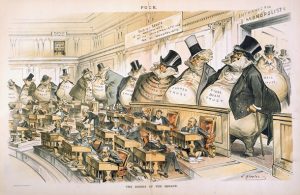
Democracy in Chains: The Deep History of the Radical Right’s Stealth Plan for America
The spectacle of President Donald Trump and the palace intrigue in the White House has served daily to distract people from the political strategy and accomplishments of the radical right, which is taking over the Republican Party.
Over time, the GOP has been transformed into operation conducting a concerted effort to curb democratic rule in favor of capitalist interests in every branch of government, whatever the consequences. It is marching ever closer to the ultimate goal of reshaping the Constitution to protect monied interests. This gradual take over of a major political party happened steadily, over several decades, and often in plain sight.
Duke University Professor Nancy MacLean exposes the architecture of this change and it’s ultimate aim. She has written that “both my research and my observations as a citizen lead me to believe American democracy is in peril”.
Guest – Professor Nancy MacLean, whose new book, Democracy in Chains: The Deep History of the Radical Right’s Stealth Plan for America, has been described by Publishers Weekly as “a thoroughly researched and gripping narrative… [and] a feat of American intellectual and political history.” Booklist called it “perhaps the best explanation to date of the roots of the political divide that threatens to irrevocably alter American government.” The author of four other books, including Freedom is Not Enough: The Opening of the American Workplace (2006) called by the Chicago Tribune “contemporary history at its best,” and Behind the Mask of Chivalry: The Making of the Second Ku Klux Klan,named a New York Times “noteworthy” book of 1994, MacLean is the William H. Chafe Professor of History and Public Policy.
—-
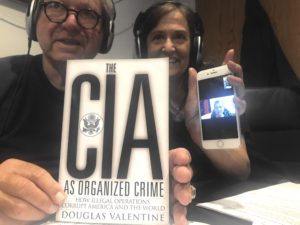
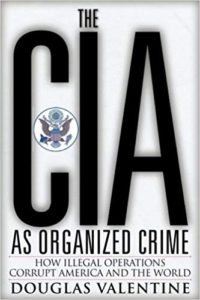
The CIA as Organized Crime: How Illegal Operations Corrupt America and the World
In 1947 Congress passed the National Security Act which led to formation of the National Security Council and, under its direction, the CIA. Its original mandate was to collect and analyze strategic information for use in war. Though shrouded in secrecy, some CIA activities—such as covert military and cybersecurity operations—have drawn public scrutiny and criticism.
In 1948 the Security Council approved a secret directive, NSC 10/2, authorizing the CIA to carry out an array of covert operations. This essentially allowed the CIA to become a paramilitary organization. Before he died, George F. Kennan, the diplomat and Cold War strategist who sponsored the directive said that “in light of latter history, it was the greatest mistake I ever made.”
Since NSC 10/2 authorized violation of international law it also established an official policy of lying so as to cover up the lawbreaking.
Guest – Douglas Valentine, author of The CIA as Organized Crime: How Illegal Operations Corrupt America and the World. Mr. Valentine’s rare access to CIA officials has resulted in portions of his research materials being archived at the National Security Archive, Texas Tech University’s Vietnam Center and John Jay College. He has written three books on CIA operations, including The Phoenix Program which documented the CIA’s elaborate system of population surveillance, control, entrapment, imprisonment, torture and assassination in Vietnam. His new book describes how many of these practices remain operational today.
———————————