Welcome to Law and Disorder Radio
Law and Disorder is a weekly independent civil liberties radio program airing on more than 150 stations and on Apple podcast. Law and Disorder provides timely legal perspectives on issues concerning civil liberties, privacy, right to dissent and practices of torture exercised by the US government and private corporations.
Law and Disorder June 7, 2021
Podcast: Play in new window | Download
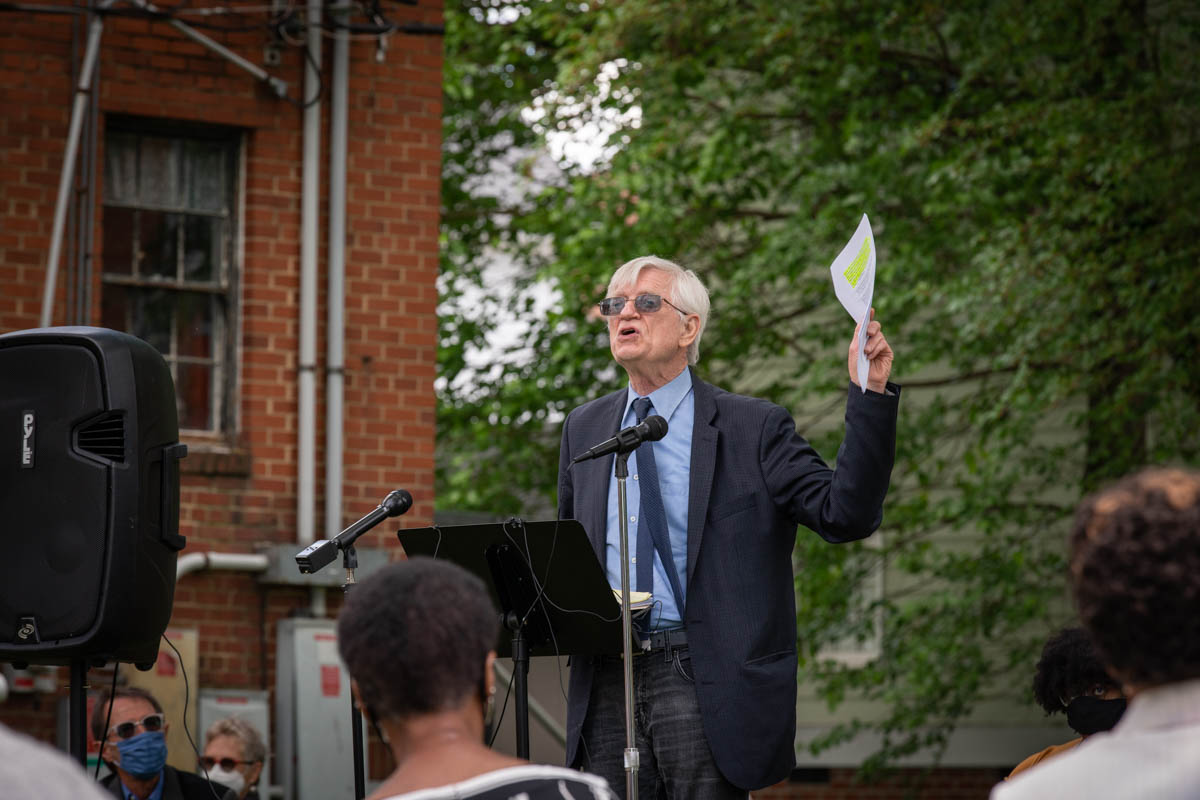
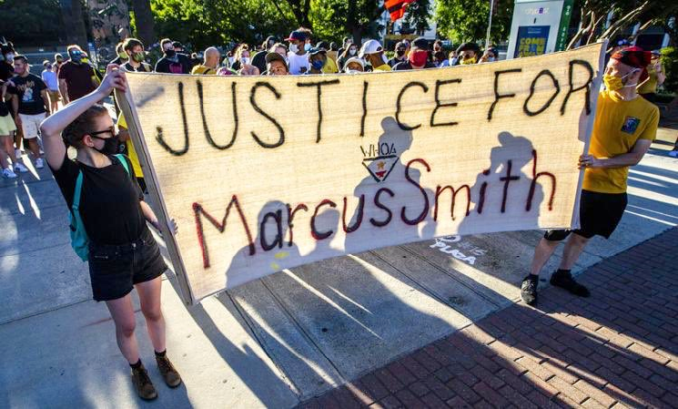
Attorney Flint Taylor Update On The Marcus Smith Case In Greensboro, NC
Police in America kill more than 1500 citizens a year. That’s more than three a day and they’re disproportionately Black. Police killed more than 1500 people the year before the murder of George Floyd and in the year since his murder they’ve killed another 1500.
The latest outrageous case has come to the national fore in Greensboro, North Carolina where eight white cops killed Marcus Smith two years ago by hogtying him causing him to suffocate to death . Now they are being sued and they’re trying to cover it up and trying to silence the Smith family’s attorney Flint Taylor, drive him out of the state, and sanction him with heavy financial penalties.
So instead of banning hogtying, settling the case with the Smith family and issuing an apology, they are trying to silence the messenger.
Hogtying can be lethal. It’s done by handcuffing the victim behind his back, shackling his feet, and then tying the handcuffs to the feet bending him over backwards, chest first, in the street. Marcus Smith’s died of asphyxiation within a minute.
On September 8, 2018 Marcus Smith was suffering from a mental health crisis. He was brutally hogtied by the Greensboro North Carolina police officers. The family’s civil rights case is being litigated by Chicago Peoples Law Office attorneys Flint Taylor and Ben Elson, and by Greensboro lawyer Graham Holt. It is worthy of national attention.
The cops’ lawyers have been paid more than $1 million of taxpayer money to date to defend the case. They have escalated their attacks on the Smith family and are seeking to suppress all the damaging evidence that has come to light during the pretrial discovery in the case.
Guest – Flint Taylor of the Peoples Law Office. Taylor is a nationally recognized civil rights attorney. He represented the family of Fred Hampton demonstrating that the Chicago Police Department and the FBI were responsible for the assassination of the young Black Panther leader. He’s written the book “The Killing Machine: Racism and Police Violence in Chicago”. He is one of the editors of the “Police Misconduct Law Reporter.
His recent publication The Torture Machine: Racism And Police Violence In Chicago.
—-

Phyllis Bennis: The Influence Of Think Tanks And IPS
With the growth of globalization on the heels of the Cold War, entities called Think Tanks grew rapidly during the late 1980s. Now, there are nearly 2,000 think tanks in the United States alone. Not surprisingly, more than 400 are located in the nation’s capital, with ready access to key policymakers. These entities play an outsized role in shaping the world we live in.
From national defense and technology, to social policy and economics, think tanks perform in-depth research on a range of topics. Some think tanks advocate for change by using this research and analytical reports to influence public opinion and help decision makers create policy agendas. It follows that many think tanks align along party lines. Funding for think tanks usually comes from endowments, government contracts, private donations, and sales of their reports.
While many think tanks are nonprofit organizations, some especially high-profile ideological ones advocate solutions that benefit their corporate donors. Often they are criticized for crossing the line between research and lobbying. Think tanks are classified according to their sources of funding and intended customers. Some think tanks, such as the Rand Corporation, receive direct government assistance; most others are funded by private individuals or corporate donors.
Guest – Phyllis Bennis is a fellow of the Institute for Policy Studies, where she is she is the director of the New Internationalism Project and works on anti-war, US foreign policy and Palestinian rights issues. She has worked as an informal adviser to several key UN officials on Palestinian issues. Her books including Calling the Shots: How Washington Dominates Today’s UN, and Understanding the Palestinian-Israeli Conflict.

———————————-
Law and Disorder May 31, 2021
Podcast: Play in new window | Download


Palestine Legal Director Speaks On Recent Israel-Palestine Conflict
Zionism, the idea of creating a Jewish homeland in Palestine, was and is a settler colonial project that started 100 years ago. But Zionism had a problem. It’s illustrated by the story of an early Zionist Congress in Vienna sending three rabbis to Palestine to report on what they saw. The rabbis went and reported back that “the bride is beautiful but she’s married to another man.” Palestine was densely populated and had been for thousands of years. It was not, as Zionist propaganda would have it, a land without a people for a people without a land.
The Zionist goal then and now was to get rid of the Arabs. In this they have almost succeeded. But not quite.
The recent 11 day horrific slaughter of Palestinians in Gaza, approved in advance by the Biden administration and conducted by Israel with American supplied weapons started when Israel Prime Minister Benjamin Netanyahu in an effort to consolidate right wing support evicted Palestinians from their homes in a Palestinian neighborhood in Jerusalem. The Prime Minister also had his military invade and shoot up the Al-Asqua mosque in Jerusalem while 300 Palestinians were there praying on the last day of Ramadan. In response on May 18th the Palestinians staged a general strike in Israel proper, the West Bank, and Gaza. This was the first time a general strike had been conducted by the Palestinians against their Zionist and British oppressors since 1936 which which was broken by the British and the Zionists.
The Zionist apparatus in the United States is extremely strong. Through lawsuits and political pressure they have carved out what Michael Ratner called – the Palestine exception to the First Amendment. Telling the Palestine story is quite difficult. To counter this Michael Ratner set up the organization Palestine Legal in Chicago. It is headed by Palestinian American attorney Dima Khalidi. Before the cease-fire, 1700 people in Gaza were injured and 210 killed, including 65 children.
Guest – Dima Khalidi, founder and Director of Palestine Legal. Her work includes providing legal advice to activists, engaging in advocacy to protect their rights to speak out for Palestinian rights, and educating activists and the public about the repression of Palestine advocates. She most recently has an article published online in Truthout.
—-

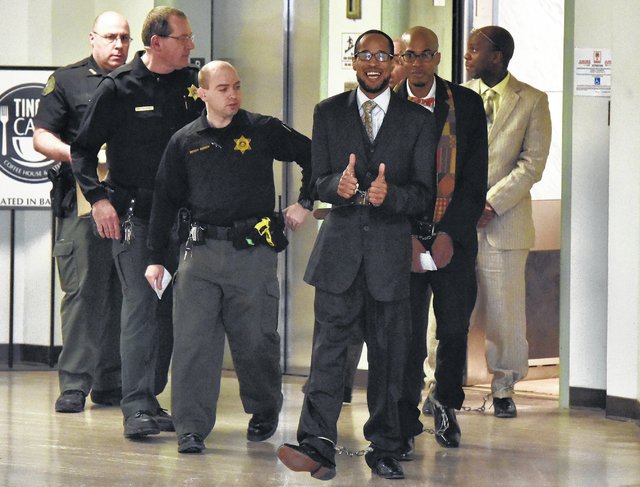
The Dallas 6: Andre Jacobs
In 2014 and 2016, Law and Disorder covered the case of the Dallas 6. They’re a group of prisoners who in 2010 protested the ongoing abuse from prison guards while locked in solitary confinement at the SCI Dallas prison in Pennsylvania. Abuse there included tasering genitals, being hog tied, cutting off of clothes and leaving the men in cages for hours at a time.
They witnessed another prisoner, Isaac Sanchez, being strapped into a restraint chair for hours even overnight. When guards threatened to do the same to them, the men tried to cover their cell doors with their bedding and refused to leave their cell in an effort to protect themselves and gain the attention of authorities. Prison guards stormed the six cells, armed with batons and electrified equipment. They left the men beaten, bloody, naked, eyes burning, their flesh scorched with pepper spray.
The Dallas 6 are Andre Jacobs, Anthony Kelly, Anthony Locke, Dwayne Peters, Derek Stanley, and Carrington Keys. The six men were forced to remain in the Restrictive Housing Unit, or solitary confinement for up to ten years.
Guest – Andre Jacobs, Andre served more than two decades in prison, was the victim of prolonged and tortuous prison guard abuse, became a successful jailhouse lawyer, and has been released from prison. He started the business Supreme Network Global to help and guide young men and women who have been in similar circumstances.
—————-
Law and Disorder May 24, 2021
Podcast: Play in new window | Download
- Commentary: Jim Lafferty On Israeli – Palestinian Conflict
—-
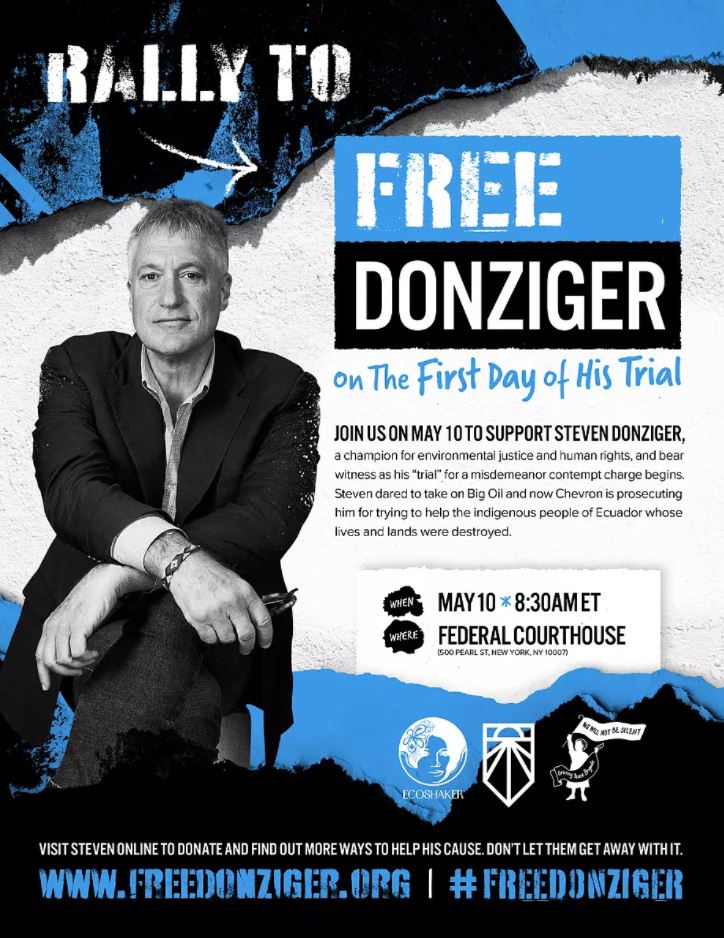
Steven Donziger Trial: Continuing Coverage Part 2
After five days in court and 650 days on house arrest, environmental lawyer Steven Donziger chose not to take the stand and testify in his own defense. As listeners will recall, Steven was on trial for criminal contempt of court charges. In August 2019, he refused to turn over his computer, cellphone and other electronic devices and he has been detained pretrial for a misdemeanor offense. If convicted, he faces six months in prison.
The attorney who won a multi-billion-dollar settlement against Chevron oil for polluting an area Ecuador the size of Rhode Island and causing the indigenous people thousands of injuries and deaths by cancer and other illnesses, told The Intercept about the decision: “My lawyers said you’d be crazy to testify, so we decided to cut the case short. No need to continue to legitimize what’s essentially a charade.”
Judge Loretta Preska denied Steven a trial by jury, and many contend that a jury of his own peers might have acquitted the human rights defender of all six counts. Attorney and Harvard Law School professor Charles Nesson agrees. “This is a story of the denial of jury trial,” Nesson said. “He’s been effectively convicted and disbarred and more or less bankrupted without any jury. And now he’s about to be convicted. And all of this without a jury.”
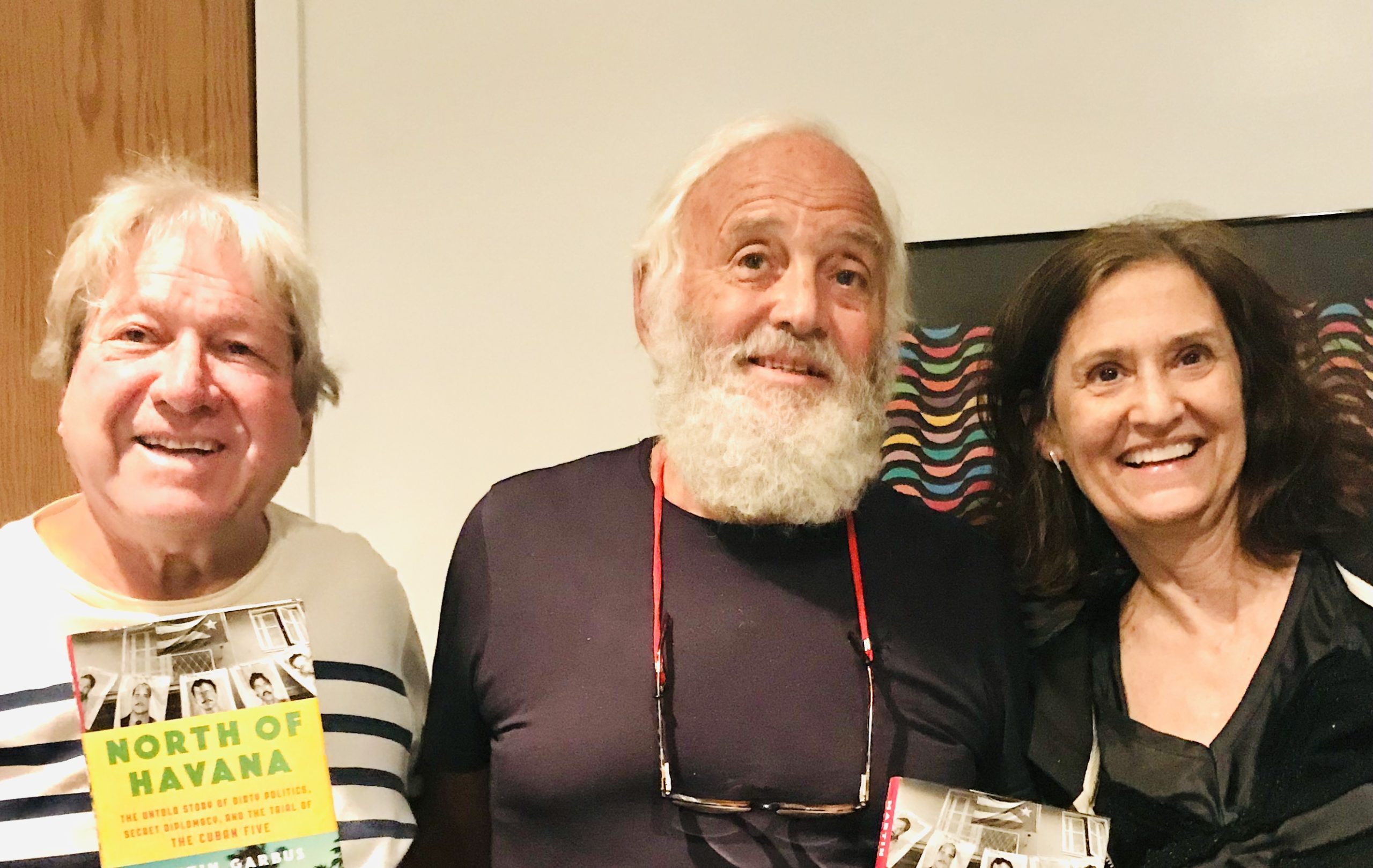
Guest – Attorney Martin Garbus, one of three pro bono lawyers representing Donziger in an attempt to get his law license restored. Garbus has a long and distinguished career as a civil rights and first amendment litigator. Attorney Martin Garbus has represented Nelson Mandela, Daniel Ellsberg, and Cesar Chavez and worked in Rwanda, China, and the Soviet Union, among other countries.
—-
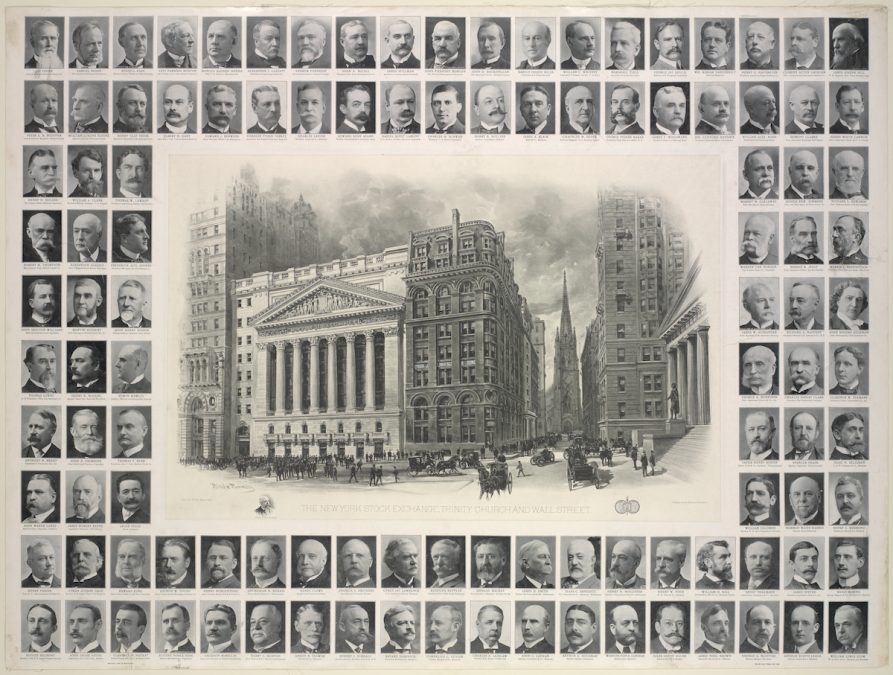

Take Me To Your Leader: The Rot of the American Ruling Class
We need to know our enemy because the task of changing society begins with understanding who holds power. In 1915 the great Irish socialist James Connolly said, “O, yes! The ruling class are worthy of study. The natural history of the ruling class is a fascinating interest. You begin with interest, you proceed with awe and admiration, you deepen into hatred, and you wind up with contempt for the nature of the beast. You realize that – the capitalist class is the meanest class that ever grasped the reins of power”. Jacobin magazine’s Spring 2021 issue is devoted entirely to an examination of the ruling class.
Guest – Doug Henwood who has an article in Jacobin titled Take Me To Your Leader: The Rot of the American Ruling Class. Doug Henwood is the editor of Left Business Review and the host of the radio program Behind the News.
————————————————