Law and Disorder August 11, 2025
Podcast: Play in new window | Download

The Trump Administration and ACLU Legal Counteraction Strategy
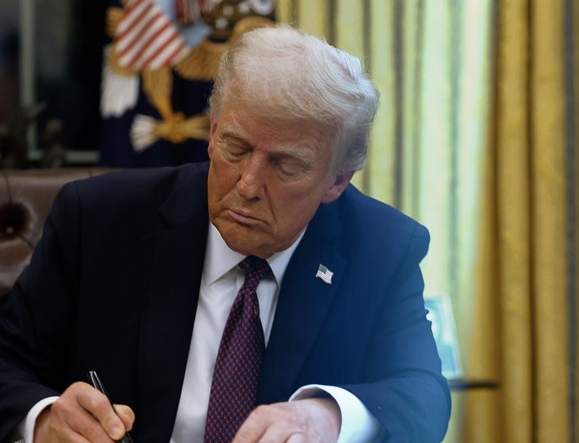
The very day President Donald Trump returned to the White House on January 20, 2025, the American Civil Liberties Union celebrated the beginning of its 106th year. Based on its long experience combating repressive governments, the ACLU had been carefully planning for the possibility of Trump’s reelection. That day it announced that it was fully prepared for the threat Trump posed to our constitutional democracy.
The ACLU recalled that “Since first leaving office in 2020, Trump has threatened to enact policies that would endanger immigrant families, further restrict reproductive health, and weaponize the federal government against protesters and political opponents. Now that he has returned to the White House and will be buoyed by many allies in his cabinet and in Congress, these threats could become real.” And they certainly have.
During the first Trump’s administration, the ACLU took legal action more than 430 times. In the last six months, they have followed a clear playbook to fight back – and win – challenging a wide range of Trump’s policies that are aimed at destroying our civil rights and civil liberties.
Guest – Ben Wizner, Deputy Legal Director of the ACLU, and Director of the ACLU’s Center for Democracy, which encompasses the organization’s work on free speech, privacy, immigrants’ rights, voting rights, human rights, and national security. For more than two decades at the ACLU, Ben has litigated cases involving the right to protest, freedom of expression online, government surveillance practices, airport security policies, targeted killing, and torture. Since July of 2013, he has been the principal legal advisor to NSA whistleblower Edward Snowden and advised Julian Assange. I’ve known Ben since he started at the ACLU of Southern California over 20 years ago. I witnessed how he devotes his keen legal mind and deep compassion to defending the people he represents who are struggle to vindicate their constitutional rights.
—-
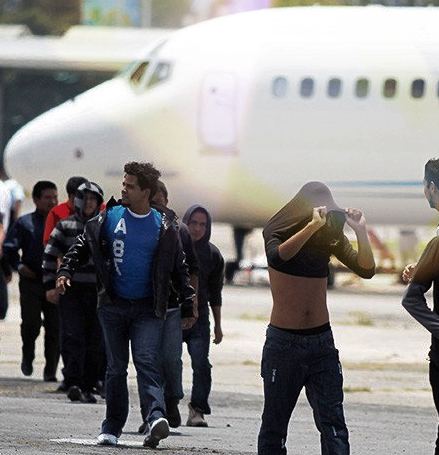
The Mexican Reintegration Project
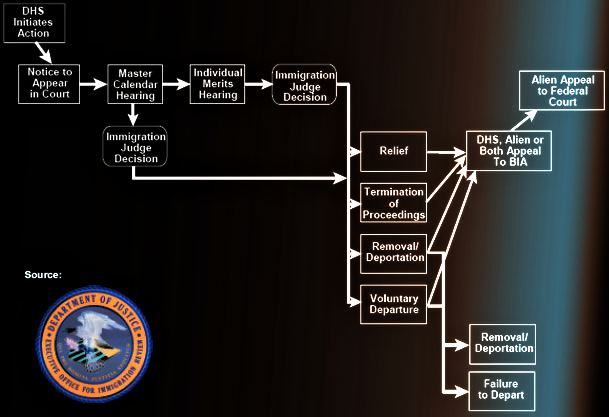
Immigration news continues to dominate headlines: from the approval of the bill that provides another $170 billion for immigration enforcement to the images of masked men in unmarked vehicles roaming around cities like Houston, Los Angeles, New York and Chicago… and arresting people from their homes, workplaces, or even just off the street.
Now, these controversial strong-arm tactics haven’t been a total success: court battles, community opposition, and even ICE officer burnout are throwing a wrench into the administration’s deportation goals. Yet still, for millions of noncitizens living in the US, it is impossible not to wonder: what happens if I — or my loved one – is taken from our family and home here without notice…. And transplanted to a country where we no longer have roots? Or community? Or safety?
Our guests today, Professors Luz Herrera and Nancy Plankey-Videla, are among a team of researchers who studied what happens when people are deported or otherwise return to Mexico after they’ve made their home in the US. Were they able to find work? Reunite with family? Find support?
Guest – Luz Herrera is an attorney and Law Professor at Texas A&M University Law School. Her roots are in Los Angeles: In 2005, she co-founded Community Lawyers, Inc. in Compton which – 20 years later – continues to provide access to justice and legal help to under-served communities.
Guest – Dr. Nancy Plankey-Videla is associate professor of sociology at Texas A&M University and currently coordinates the Latino/a and Mexican American Studies Program. She’s also the Director of Graduate Studies in the Sociology Dept. and has a joint appointment in the School of Law. Her research and teaching is informed by a global perspective on inequality and agency.