Civil Liberties, Habeas Corpus, Human Rights, Surveillance
Podcast: Play in new window | Download
Updates:
—
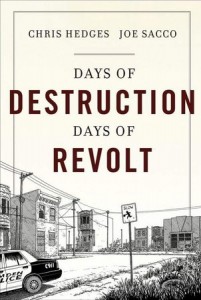
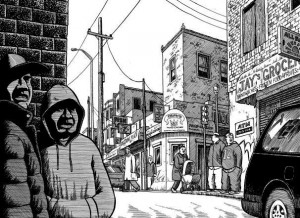
Days of Destruction Days of Revolt – Chris Hedges
We go now to an interview with Pulitzer-Prize winning author and journalist Chris Hedges. His latest book Days of Destruction Days of Revolt sends a powerful message about the perils of staying on the current destructive track in post capitalist America. The book is also filled with line drawing graphics, illustrating some of the most depraved areas in the United States. The book explores what Chris describes as the country’s sacrifice zones, areas that have been torn apart in the name of greed, progress and technological advancment. These areas include the streets of Camden New Jersey, the coal fields of West Virgina, the Lakota reservation of Pine Ridge in South Dakota. This interview was recorded live during a WBAI fund raiser.
Chris Hedges:
- One of my frustrations is the people who keep plowing back their hopes into the democratic party and the formal structures of power. If you challenge the approved narrative (political debates) you’re out.
- When you look at the structures of power and you grasp what we’ve undergone is a corporate coup de tat in slow motion, starting with the Reagan Administration.
- It’s utterly impossible within the system to vote against the interest of Goldman Sachs.
- Karl Marx: his analysis of capitalism is pretty remarkable.
- They understand that unfettered, unregulated capitalism is a revolutionary force. It knows no limits. It will commodify everything until it destroys it – until exhaustion or collapse.
- Since there are no impediments within the mechanisms of power to disrupt essentially a corporate cannibalization then the only thing to impede that is popular unrest.
- Book – Anatomy of Revolution
- What they (Occupy Movement) fundamentally wanted was something the power elite couldn’t hear.
- They wanted to rest power back from the hands of a corporate oligarchy class and put back in the hands of citizens.
- A democratic administration was behind a coordinated federal effort to shutdown the Occupy Encampment.
- When Marx and Engels did their work they did a very close study of the Iroquois in how they governed themselves and functioned as a society.
- We begin with an indigenous culture essentially about breaking a culture replacing a self sufficiency and dignity with a culture of dependence.
- What that engenders is this horrific despair that consumes to this day in indigenous communities.
- The average expectancy for males in Pine Ridge is 48. That’s the lowest in the Western hemisphere except for Haiti.
- We are fed this utopian ideology that if somehow we build our culture and society around the demands of the marketplace we’ll get some sort of utopian heaven on Earth.
- We didn’t want a book of polemics, you couldn’t argue with what’s taken place.
- Immokalee becomes emblematic with what the corporate state wants.
- Workers are told they have to be competitive in a global market place which means being competitive with sweat shop workers in Bangladesh.
- It’s only through acts of disobedience and civil resistance that we have any hope.
- The decision to completely erase the Occupy Encampment exposed their hand.
- There is a backlash outside the traditional mechanisms of power.
- Hundreds of thousands of Americans have lost their unemployment benefits.
Guest – Chris Hedges, Pulitzer-Prize winning author and journalist. He was also a war correspondent, specializing in American and Middle Eastern politics and societies. His most recent book is ‘Death of the Liberal Class (2010). Hedges is also known as the best-selling author of War is a Force That Gives Us Meaning (2002), which was a finalist for the National Book Critics Circle Award for Nonfiction.
—
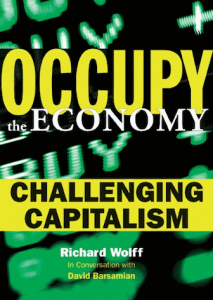
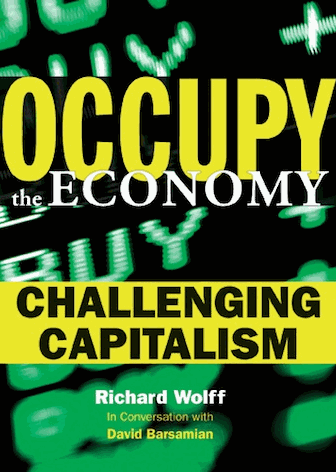
Occupy the Economy: Challenging Capitalism PART 2
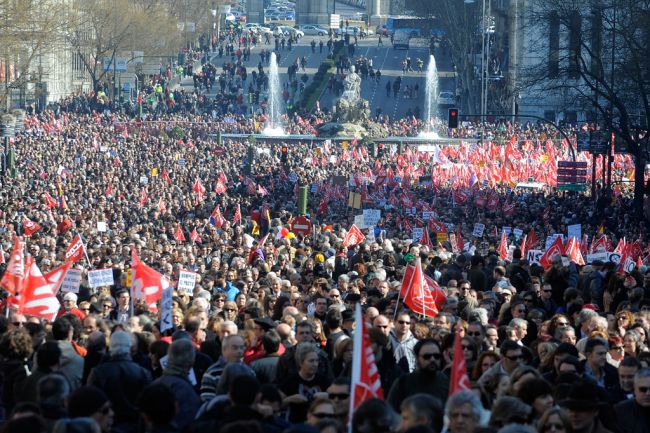
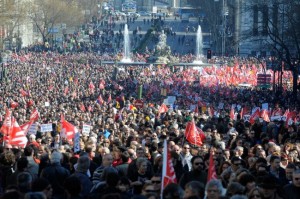
Occupy the Economy: Challenging Capitalism is the title of Professor Rick Wolff’s new book. After more than a dozen interviews with Rick Wolff since 2008, the theme is consistent, beyond the corrupt banks and stock markets is a flawed economic system. A system that at worst needed to change direction in the 1970s when wages stopped increasing and the cost of living continued to rise. As we look around, the collapse has been coming down in steps, and many have been trying to dial back, save and prepare. This, as millions have lost their jobs, 401ks, pensions, and homes. Overseas, the waves of austerity continue to push through Europe as protests have erupted again in Spain.
Professor Rick Wolff:
- The book is an interesting venture for me, it’s done with David Barsamian, with Alternative Radio.
- He did 3 major interviews with me, the response was so heartwarming, we published a written version of them.
- The book is an overview of how we got into this mess, why it’s lasting so long, why it’s hurting so badly, why government policies have in fact, not succeeded.
- A number of the economies in Europe are on the edge of major breakdown. Spain is already in that situation, Italy is right on its heels. This is not like Greece or Portugal, Ireland or Hungary who are smaller economies, these are major economies.
- There is active debate in the highest circles of Europe, both critics of capitalism and its leaders, questioning whether the European Union can survive . . its a measure of how serious the problem is.
- China, by its own announcing running at a rate of growth of 7- 8 percent which is half of what it had very few years ago.
- It can’t also escape the effect of Europe which is its second most important market.
- China is trying to reorient the economy away from their dependence from exports to the rest of the world because frankly that’s not a reliable situation for them. To give you one index.
- As wages in the United States stagnated, wages in China have gone up 20 percent.
- The slow downs in India, very sharp. The slow downs in Brazil, very sharp.
- The consensus is what Bernanke said. Things are very poor, very weak and we really have to be alert.
- The situation is only going to deteriorate over the rest of 2012 and into early 2013.
- When a capitalistic economic system begins to unravel. . . we’re in the fifth year of this crisis. It officially began in December 2007.
- Every major government program, the bailouts, the stimulus has not achieved the goals it said it could and would.
- The biggest capitalist institutions in this country at this time, the banks. . .are in such trouble are so worried about their own prospects in an economy in such difficulty that what they are doing is taking excessive risks, pushing the envelope of what’s ethical and moral and crossing the thin and blurry lines of legality.
- LIBOR – London Interbank Offered Rate – Starting in the 1980s, London which had been the financial center of the world economy realized what we all understood at that time which was the world economy was becoming dependent on credit.
- Every corporation was borrowing money all the time, every government was borrowing money on a scale we’ve never seen before, the really innovative thing was the development of consumer credit.
- The LIBOR became the benchmark for the world.
- Everyday the British Bankers Association polls the 16 biggest banks who have offices in England, what they are charging each other.
- It takes an average and it announces that. That number is a standard number for example, variable rate mortgages in the US where the mortgage goes up and down those are based on LIBOR.
- It’s factored into everybody’s borrowing. If you’re going into store to buy a pair of pants, that store also borrowed money which is also shaped by a relationship to LIBOR.
- These banks are the biggest holders of debt instruments. Derivatives of all kinds, mortgages of all kinds. You are relying on information from somebody who has an active interest in the information they’re supplying.
- What we now know is these banks often reported an interest rate different from what they were actually charging.
- There was no oversight.
- The world of superbanking is a very cozy world. Barclay’s had admitted to reporting a number that was actually the case. . . and had paid fines now totalling 450 million dollars to both US and British authorities.
- To be blunt they screwed everybody to save themselves.
- How could we defend private banking on this scale ever again?
- The big ones are Bank America and Wells Fargo.
- Both of them have both agreed to pay fines. Bank of America – 300 million. Wells Fargo 175 million.
- Here was what their fine was for. They went and charged African American and Hispanic families more interest for mortgages than they did for whites who had identical credit scores.
- Five of the biggest banks in the world Barclays, Wells Fargo, HSBC, and JP Morgan Chase have all admitted major breaches of minimal ethics, minimal morality, legality all to advantage themselves at the expense of the public.
- Private monster banks are an unsafe way for any society to manage the credit that has now become central to the economy. It is inappropriate for us to have banks that have more money than the government supposedly regulating them.
Guest – Richard D. Wolff is Professor of Economics Emeritus, University of Massachusetts, Amherst where he taught economics from 1973 to 2008. He is currently a Visiting Professor in the Graduate Program in International Affairs of the New School University, New York City. He also teaches classes regularly at the Brecht Forum in Manhattan.
Civil Liberties, Criminalizing Dissent, Human Rights, Truth to Power, War Resister
Podcast: Play in new window | Download
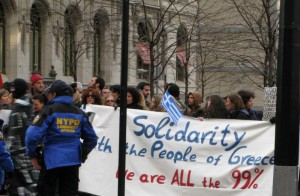
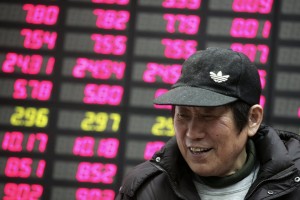
Greece, the EU, the United States and Fight Back
The huge and sustained fight back against massive austerity cuts continues in Greece, in that small southern European country of 11 million people, half of whom live in Athens, there’s been a wave of general strikes going back to August of last year. Not only are the economic powers that be particularly in Germany forcing terrible cut backs on the standard of living of the Greek people, there also hollowing out democracy in that country. The country, after all, the birth place of democracy. Despite their efforts, the Left in Greece has grown enormously and now rivals in size the combination of the right wing parties. What happens in Greece is going to have a ripple effect in other European countries particularly, Portugal, Italy, Spain, Ireland and Hungary.
Professor Rick Wolff:
- In Europe, we see the rich countries working really hard to punish the debtors.
- Not to ask what the conditions were that got them into debt, not to admit that for the years these people were in debt, they paid off handsomely to the creditors in high interest rates.
- Nor is there any examination of the conditions under which this happened so that there’s nothing being done to change those conditions.
- We are instead engaged in a vicious punishment of a small country, 11 million people. It’s attempt to terrorize the rest of Europe into thinking of not resisting.
- Those that are closest to Greece that are in trouble are the following: Portugal, Spain, Ireland, Italy, Hungary.
- How did it come that the Germans are doing so well and the Greeks so badly?
- The Europeans as a people had gone through 2 of the worst wars human beings had ever experienced, fought overwhelmingly on European soil.
- So they embarked on a unity starting in 1945 and came about in the 1990s. Took them a long time.
- In order for a unified Europe to be, a source of peace and prosperity, it’d have to balance out the rich and the poor.
- Who were the poor ones coming into the European Union. Greece and Portugal and Spain, and later eastern Europe.
- None of that was done under the unified Europe the equalizing process. The Germans the French and the Dutch were terrified of unity, they wanted the big market, but they were afraid that businessmen would move production from the high wage parts of Europe, Germany, Scandinavia, etc. to the poorer places where wages were lower.
- The extreme example is Greece. They lost out, they had to pay high European prices, they are stuck with the currency of Europe, they’re buying more German products, as their own industries disintegrate.
- German wealthy people took the profits they earned and lent them to the Greeks and the other southern Europeans. To blame the borrower and exonerate yourself as the lender is to not see the entire disaster.
- This is capitalism delivering a disaster to the majority of people.
- Greece is also a population coming out of shock and its very very angry.
- A socialist party that imposed austerity on the mass of the people has now got the people’s response, 8 percent support you.
- It’s hard to imagine that you’re not moving toward a fundamental civil conflict.
- Workers taking over the enterprises is number one. Number two there ought to be a nationalization of wealth in this society, so that its redistributed in a way that makes society fair and equitable.
- Socialism has its problems too, but we have a capitalism that is becoming intolerable for tens of millions of people.
- We have to recognize that not making a dramatic break is plunging people into an even greater degree of risk.
- The Iowa Farmer’s Militia issued a decree. The next judge that authorizes a foreclosure, we’re going to kill him.
- Roosevelt had to mobilize the Army and the National Guard to protect the judges.
- This is a re-run of an old movie and it never ends well.
Guest – Richard D. Wolff is Professor of Economics Emeritus, University of Massachusetts, Amherst where he taught economics from 1973 to 2008. He is currently a Visiting Professor in the Graduate Program in International Affairs of the New School University, New York City. He also teaches classes regularly at the Brecht Forum in Manhattan.
——-
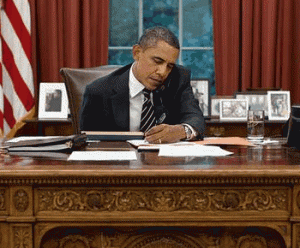
Why I’m Suing Barack Obama: Chris Hedges
In March of this year, the latest version of the National Defense Authorization Act signed by President Barack Obama on Dec 31, 2011 will take effect. As many listeners know, this act authorizes the military for the first time in more than 200 years to begin domestic policing. That means the military can indefinitely detain without trial any US citizen deemed to be a terrorist or an accessory to terrorism. You could then be shipped to a black site or offshore prison. We’ve discussed in past shows the vague premise of materially aiding terrorism or in this bill the terms “substantially supported,” “directly supported” or “associated forces.” We’re joined today by returning guest Chris Hedges to talk about his recent article Why I’m Suing Barack Obama which examines why the National Defense Authorization Act was passed.
Chris Hedges:
- It turns over almost 200 years of legal precedence so that the military is allowed to engage in domestic policing.
- Diane Feinstein had proposed that US citizens be exempt from this piece of legislation both the Obama Whitehouse and the Democratic Party rejected that.
- Obama issued a signing statement saying this will not be used against American citizens.
- That fact is that it can be legally used against American citizens.
- There was an opportunity to protect American citizens and due process, the chose not to do that.
- It expands this endless war on terror.
- There are all sorts of nebulous terms such as associated forces, substantially supported.
- When you look at the criteria by which Americans can be investigated by our security and surveillance state, its amorphous and frightening.
- People who have lost fingers on a hand, people who hoard more than 7 days of food in their house, water proof ammunition. I come from rural parts of Maine, that’s probably most of my family.
- Its a very short step to adding the obstructionist tactics to the Occupy Movement.
- The very agencies that are being pulled into domestic policing, especially the Pentagon, didn’t push for the bill.
- They approached me and said they needed a credible plaintiff, because I had been the Middle East Bureau Chief for the New York Times.
- I spent considerable time with both individuals and organizations that are considered by the US State Department to be either terrorists or terrorist groups.
- I’m trying to be proactive, I’m trying to fight it while we can still fight it. The reason we filed in the Southern District Court is because they have a fairly good record of at least being open to issues of civil liberties.
Guest – Chris Hedges, American journalist, author, and war correspondent, specializing in American and Middle Eastern politics and societies. His most recent book is ‘Death of the Liberal Class (2010). Hedges is also known as the best-selling author of War is a Force That Gives Us Meaning (2002), which was a finalist for the National Book Critics Circle Award for Nonfiction.
——-
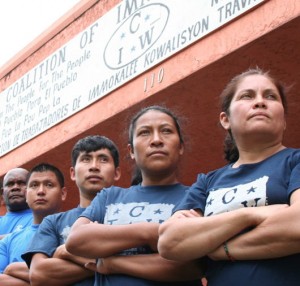
Immokalee Workers: Trader Joe’s Victory, Campaign Turns To Publix Supermarkets
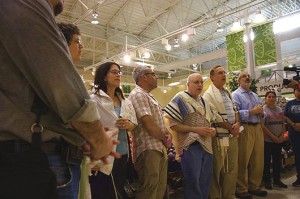
Earlier this month, Trader Joe’s and the Coalition of Immokalee Workers (CIW) announced they have signed an agreement that will formalize the ways in which Trader Joe’s will work with the CIW and Florida tomato growers to support the CIW’s Fair Food Program. The efforts to push the farm worker living standards above slave labor is gathering momentum in Florida. Now efforts turn to Publix supermarkets. The 28 billion dollar supermarket giant has refused to pay a single penny more to help end farm worker poverty. The Fair Food Program campaign has shifted its focus onto Publix and we get an update from Jake Ratner and CIW member Elbin Perez.
Elbin Perez:
- We finally won with Trader Joe’s and its extremely important for us.
- One of the main tactics we use is protest. We were planning an enormous protest the day Trader Joe’s opened their first Florida store about 30 miles from Immokalee in Naples.
- With that pressure, the day before they opened the store, they signed an agreement with us.
- Historically some received some poverty wages there are no rights in the fields and workers have had no voice in the work place. What are rights without enforcement.
- Workers are now seeing an increase in their paychecks in the form of a bonus that they are receiving from companies like Trader Joe’s.
- Currently we’re also asking Publix to do the same thing and to sign on to the Fair Food Agreement.
- What we’re calling for is a fast. A fast to begin outside of the Publix headquarters which is located in Lakeland Florida. There refusal to participate in these agreements will result in more hunger from more workers.
Guest – Elbin Perez, Coalition of Immokalee Workers member.
Translator: Jake Ratner -son of co-host Michael Ratner. Jake graduated from the University of Pennsylvania. He’s traveled and studied in Cuba and Bolivia, South America. He now works with the Coalition of the Immokalee Workers.
Civil Liberties, Human Rights, Truth to Power
Podcast: Play in new window | Download
Updates:
—-
Chris Hedges – Death of the Liberal Class
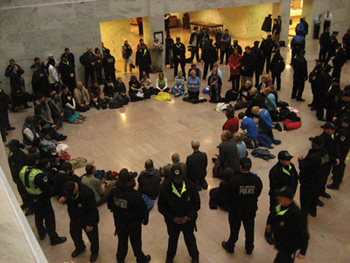
We are pleased to have with us returning guest Chris Hedges. We talk with him about his new book Death of the Liberal Class. This scathing narrative cuts to heart of how the corporate state has claimed the liberal class as one of its victims. Chris calls the liberal class ineffectual, out of touch with reality by not acknowledging that corporations have wrested power from citizens. The death of the liberal class means there is no check to a corporate apparatus designed to enrich a tiny elite that plunder the nation. The book lists the pillars of the liberal class that have been bought off with corporate money such as the media, the church, the university, the Democratic Party, the arts, and labor unions. Chris describes these harsh reality and sets them against the functions of a healthy liberal class in a traditional democracy. Chris Hedges articles.
Chris Hedges:
- The pillars of liberal establishment, liberal religious institutions, labor, public education, esp. public universities, culture, the press and finally the Democratic Party, which made incremental or piecemeal reform possible. – which watched out for the interest and the grievances of those outside of the narrow power elite – no longer function.
- The term neo-liberalism is a reconfiguring of what it means to be a liberal in a democratic society.
- We have figures like Bill Clinton, Barack Obama, Pelosi and others that continue to speak in those values but betrayed everyone of those values.
- The subservience to Wall Street, the slavish catering to the permanent war economy, the failure to defend basic civil liberties, including habaes corpus. All of these have been embraces so that a liberal is ultimately on the core structural issues indistinguishable from a conservative.
- The liberal class and liberal institutions are traditionally allowed to function in a capitalist democracy because when there is a crisis within the society the perform a formal channel or mechanism within power structure in which injustices can be alleviated.
- The New Deal: perfect example of how the liberal class functions.
- They have corporatized all of the pillars of the liberal establishment.
- What kept the liberal class honest were these populist movements which held fast to moral imperatives.
- Everything shifts in American society because you enter a culture of permanent war psychosis.
- With the gradual coup, the corporations have carried out in the United States beginning with Reagan, accelerated by Clinton and Bush, and certainly further by Obama, we’re left powerless, we have no mechanism to fight back.
- They understood that people were not moved to act primarily by fact or reason but could be manipulated through emotion. This is the result, we live in a society utterly saturated with lies.
- The liberal class has been reduced the status of courtiers.
- The corporate state is rapidly reconfiguring society into a form of neo-feudalism, where you have these speculators on Wall St earning 900 thousand dollars an hour, where you have families of four barely able to feed and sustain themselves and forget the ability to pay medical bills.
- The elite institutions of education which charge astronomical sums essentially provide education for the elite, while we gut public education.
- People are trained to work as cogs in the corporate structure. Inner city schools are turned into boot camps, that’s what charter schools are about, along with the ability to break teacher’s unions.
- Everybody has there place, it solidifies a caste system. There’s no hope for escape. We are fed endless stories of few exceptions, to somehow make us think that we’re responsible for our own predicament.
- It’s one of the most vicious things that have been visited upon the working class.
- The liberal class is tolerated by the power elite because it castigated radicals. The figure that liberals hate most is not Glen Beck, it’s Noam Chomsky because calls out their cooperation with the power elite.
- When the liberal class is discarded, that is how we can stand by passively as 3 million people are forced from their homes, through foreclosures and bank repossessions last year, and another 3 million this year and do nothing.
- As these grievances mount, there is no mechanism within the structures of power or traditional institutions by which these injustices can be ameliorated.
- They become expressed in these very frightening proto-facist movements, such as the Tea Party or demagogues like Glen Beck or Sarah Palin who give legitimacy to this anger, rage and sense of betrayal.
- Part of their anger is directed at government and cleverly deflected away from Wall Street but at liberals. Not wrongly, the hypocrisy of the liberal class, is readily apparent from those on low end of the economic spectrum.
- I think we should begin to engage in acts of civil disobedience because we are the last thin line of defense between a complete collapse of society.
- The only thing we have left are physical acts of non-violence. I think its extremely important that we stop living with the illusion that we’re going to reform the Democratic Party.
Guest – Chris Hedges, American journalist, author, and war correspondent, specializing in American and Middle Eastern politics and societies. His most recent book is ‘Death of the Liberal Class (2010). Hedges is also known as the best-selling author of War is a Force That Gives Us Meaning (2002), which was a finalist for the National Book Critics Circle Award for Nonfiction. A quote from the book was used as the opening title quotation in the critically-acclaimed and Academy Award-winning 2009 film, The Hurt Locker. The quote reads: “The rush of battle is often a potent and lethal addiction, for war is a drug.”
———–
Federal and State Budget: Economic Analysis
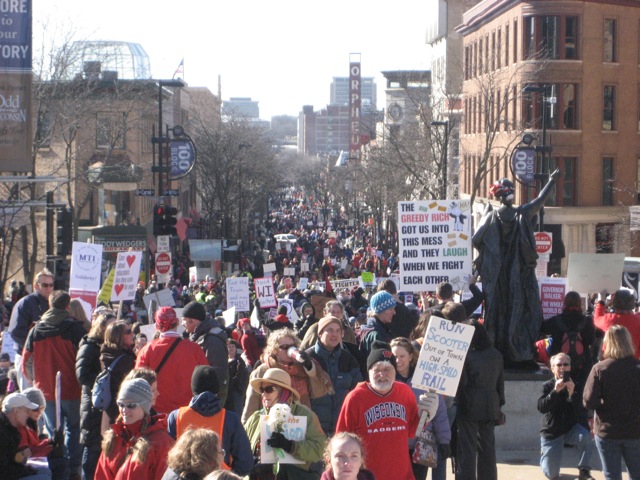
We welcome returning guest Economics professor Rick Wolff. A lot of his current writing and lectures can be found at Rdwolff.net. In one of his latest articles, The Revenge of Trickle Down Economics: Differences between Democrats and Republicans, he says both are committed to a broken, corrupt system. Rick also points out that the US government plans to spend about 3.5 trillion dollars from the federal budget to shore up a dangerously slumped economy while collecting 2 trillion dollars in tax revenue – which will leave a deficit of 1.5 trillion.
Meanwhile the Democrats and Republicans debate over spending cuts that are around 40 to 60 billion. Rick says the debate is inconsequential, when the federal budget’s projected deficit of $1.5 trillion will carry an annual interest cost of $40-60 billion. We get an update on the budget, the current economic conditions in the United States and discuss possible alternatives with Professor Rick Wolff.
Professor Rick Wolff:
- As the government continued to borrow in record amounts never before seen except in war time. The question was never asked, if the government is borrowing like crazy how it going to manage to pay the interest costs.
- Here we are a couple years later and the problem has arrived. The government now faces rising costs to cover this debt, to free up money, cut spending, lay off people, and cut programs. That money is given to the people who lent the money.
- In the United States it’s mostly large corporations and wealthy individuals.
- The money they lent to the government, let’s remember is the money the government didn’t tax from them.
- Then you see the debate of who do you cut.
- What’s off the table is the question of taxing the people who’ve become wealthy in the last 30 years. Who have profited from the stock market booms, and the stock market recoveries. You might say those folks owe a little bit to bail us out of a national crisis.
- In every city, the economic crisis is the key. Employed people don’t earn income tax because they don’t earn income. People who are losing their houses aren’t buying very much so the sales tax goes down.
- The governments either have to tax corporations or the rich, OR they can start cutting.
- What you have in Wisconsin is the extreme version of that. Indiana, Ohio, Tennessee, New Jersey
- The decision to cut is a decision taken without debating the alternative that’s available which is to tax the wealthy and the business community.
- Taxing the rich: You’d only have to bring the taxes back to where they were, not raise them above any historic level. The greed and the power of the corporations is so obvious, that they’ve gotten not even to be debated.
- The elected officials of this country act as if it weren’t there.
- During WWII the corporate sector contributed 50 percent more in taxes than what individuals were asked to pay. Now, individuals pay four times more into the federal government than the entire corporate income tax.
- All the Republicans and Democrats are debating is how much and who to cut.
- But the decision of whether to cut is always there. The American people are finally discovering that what they thought happens elsewhere, what they thought couldn’t happen here has arrived.
- We have two political parties performing an obvious theater that has no relevance to the actuality that they’re dealing with.
- There is no disagreement on the larger picture which is bailout the corporations, don’t tax the rich, put the burden on the mass of people, keep borrowing like there’s no tomorrow.
- It’s a 30 year process we’re coming to the end of, of squeezing people and moving wealth upward. When you add to that a sudden serious crisis, you’re pushing the people in the middle and the bottom over the edge.
Guest – Richard D. Wolff is Professor of Economics Emeritus, University of Massachusetts, Amherst where he taught economics from 1973 to 2008. He is currently a Visiting Professor in the Graduate Program in International Affairs of the New School University, New York City. He also teaches classes regularly at the Brecht Forum in Manhattan.
—————————————————————-