Civil Liberties, Criminalizing Dissent, Habeas Corpus, Human Rights, Iraq War, Supreme Court, Truth to Power, War Resister
Podcast: Play in new window | Download
Updates:
——–
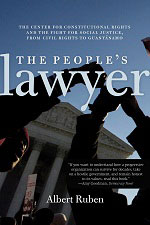
The People’s Lawyer: The Center for Constitutional Rights and the Fight for Social Justice, From Civil Rights to Guantánamo
The People’s Lawyer by author and Guild writer Albert Ruben, is the first comprehensive history on the Center For Constitutional Rights and tells the Center’s story from the civil rights era to today’s legal battles on habeas corpus, torture and Guantanamo Bay Prison. The book highlights critical legal fights taken on by CCR revealing innovative tactics that have evolved within the radical organization. Albert Ruben points how the Center for Constitutional Rights continues to fight with the same spirit, audacity and courage it was founded with. As many listeners may know, CCR has been an important corner stone to this radio show because our own Michael Ratner has been with the Center for 4 decades.
Albert Ruben:
- The founders (of CCR) were 4 in number. They were Arthur Kinoy, Morton Stavis, Bill Kunstler and Ben Smith. Smith was a Southerner, he had an office in New Orleans, and Stavis, William Kunstler, and Arthur Kinoy were northerners who were working for civil rights in the South.
- They were all working their separate beats, they all knew each other and were in communication about the work they were doing. They decided that they needed something, primarily financially, to keep their work going.
- So they got in touch with a lawyer they all knew with financial means named Robert Boem. They incorporated it in New Jersey, and it became ultimately the Center for Constitutional Rights.
- They had a very small office at the beginning with one lawyer in Newark.
- The anti-war movement, the McShirley Case. It threw the Center into the government misconduct orbit. It was in the course of litigating that the Center became aware that the Federal Government was not going to be on the side of the angels.
- (From Wikipedia) Dombrowski alleged that members of his organization, the Southern Conference Educational Fund, were subjected to continuous harassment, including arrests without intent to prosecute, and seizures of necessary internal documents. Furthermore, the State was threatening to use anti-subversion statutes to prosecute the organization, which was a group of Southern liberals dedicated to fighting for civil rights for Blacks in the South.
- The Dombrowski case, allowed the Center and a lot of lawyers to use that decision to challenge cases that brought against civil rights attorneys and a lot of people who were working in the South and caught up in state laws, that were using anti-red laws to take them out of state courts and bring them into federal courts.
- So, the Center lawyers were very acutely aware that they had on their side the federal courts. What happened with McShurley, was that it overturned that faith in the federal court system. The case led the Center to realize that government misconduct was an area that would be of interest. They could no longer count on federal court to be their allies.
- There were women on the staff of the Center who were both Center lawyers as their occupation but they were also women, and as women they were caught up in the womens movement. They brought the two together.
- It was the early days of the womens movement. The Center didn’t see itself as a place that would take on criminal law, it was more of a movement organization. The politics of the founders were central to their beings. They made their politics guide them in whether a case was something that they should adopt.
- Part of the Center for Constitutional Right’s mission was educational, that’s not understood I think.
Guest – Albert Ruben, screen and television writer and has served as an officer of the Writers Guild of America East.
—

TO END ALL WARS: A Story of Loyalty and Rebellion 1914-1918
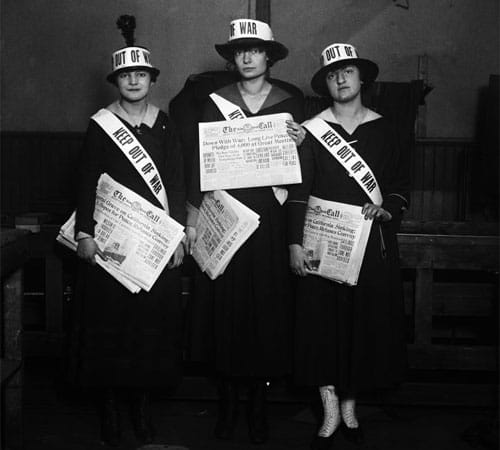
We welcome returning guest Adam Hochschild, historian and author of the new book TO END ALL WARS: A Story of Loyalty and Rebellion 1914-1918. In the book, Hochschild has focused on the antiwar movement in Great Britain. Near the beginning of World War I, 20 thousand British men refused the military draft on principle, others were conscientious objectors and nearly 6 thousand of the men were sent to prison. Hochschild relied on personal letters, diaries and memoirs to assemble this unique historic report on Britain’s powerful anti-war movement. The book also unearths how anti-war activists were monitored constantly by civilian and military intelligence as agent provocateurs bragged about their accomplishments. To End All Wars is a compelling account of the heroic anti-war struggle while top writers in that period such as Rudyard Kipling and H.G. Wells, contributed rhetoric to support the war propaganda.
Adam Hochschild:
- I always like to think we can learn things from history. I think you learn to be inspired by people who stuck to their ideals, even in very difficult times,
- I thought it would be a challenge to write a book centering around people who I admire tremendously although they lost, the cause that they were struggling for. I’ve always been fascinated by the first World War, which remade the world for the worst in every conceivable way and killed around 20 million people in the process.
- I’ve been particularly struck by those resisted that war on both sides, who said this war is not worth these millions of lives and we’re not going to fight.
- I wanted to talk about 2 different people in this war, the generals who fought this terrible war filled with illusions, that the next battle would bring a great victory, and then I was also fascinated by these pacifists and war resistors.
- 20 thousand men of military age, refused to go into the British Army. The largest outright refusals in any of the warring countries. Of that number many of them accepted alternative service under conscientious objector. Driving ambulances, or work in war industry factory.
- Many men refused that and more than six thousand went to prison.
- Aggression among Germany and Austria-Hungary did really ignite the war. You can’t really say its a war between good guys and bad guys, because the allies at first were Britain and France allied with Russia. The absolute last remaining monarchy in Europe.
- Wonderful trilogy of novels by Pat Barker, The Eye In the Doors. Had I been alive in that time in 1917, I would like so many people did at that time, who greeted the Russian Revolution with enormous hope.
- I guess I’m thinking more than anything else, of the way the first world war, made the second world war almost certain. There was something about the way the war ended that gave rise to bitterness and the Nazis in Germany.
- Right up to the very last minute, the German people were fed a diet of totally triumphant propaganda.
- Eugene Debbs got up of his sick bed to do a speaking tour against the war. The Wilson administration charged him with subversion, he was still in prison when got nearly a million votes for president of a Socialist party ticket.
- Illusion that the war is going to solve more problems than it causes. Another illusion is that it will be over quickly, you remember George Bush on the aircraft carrier.
Guest – Adam Hochschild, award-winning author and journalist who has written for The New Yorker, Harper’s, The New York Review of Books, and The New York Times Magazine. His books, King Leopold’s Ghost: A Story of Greed, Terror, and Heroism in Colonial Africa (1998) and Bury the Chains (2005) were finalists for the National Book Award and have won numerous other prizes. Hochschild teaches narrative writing at the Graduate School of Journalism at the University of California at Berkeley.
—————————————————-
CIA Sponsored Terror, Civil Liberties, Crony Capitalism, Human Rights, Hydraulic Fracturing, Targeting Muslims, Truth to Power
Podcast: Play in new window | Download
Updates:
—-
Natural Gas Drilling Moratorium To Be Lifted in New York
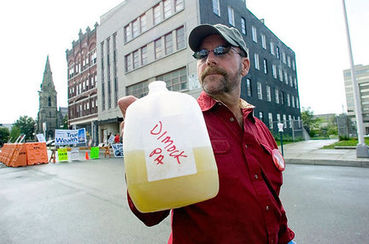
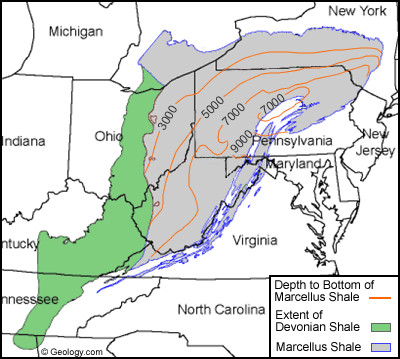
New York Governor Andrew Cuomo is pushing to lift the moratorium on natural gas drilling, known as hydraulic fracturing in New York State. Hydro-fracking as its called is in many opinions an environmentally wreck-less technique to extract natural gas from shale. While the lifting of the moratorium is still months away, it comes despite the massive efforts from environmental and community groups in New York, New Jersey and Pennsylvania who have protected the Marcellus Shale watershed.
In a statement released by the State Department of Environmental Conservation, there will be environmental restrictions placed on the natural gas drilling permits in New York State, such as no drilling within 2000 feet of a public reservoir.
However, ninety percent of the New York City’s drinking water comes from ground zero of where various oil companies want to drill into the Marcelle Shale for natural gas. Every time a well is drilled, the companies use an estimate of 5 to 9 million gallons of water. Each time a well is fractured, it’s another 5-9 million gallons of water, a well can be fractured multiple times. Up to 275 different toxic chemicals are used in the process and after the well is drilled, there are millions of gallons of industrial waste, it’s essentially radioactive water. 40-70 percent of this water stays underground.
The watershed is 13 thousand square miles and includes four and those that want to mine this resource say it will reduce dependence on foreign oil and boost the economy. However, many have shown this statement to be false as the natural gas from the United States is being sold to foreign countries such as Norway and France.
Meanwhile, a lawsuit is pending against several federal agencies affiliated with the Delaware River Basin Commission to block final regulations on hydro-fracking until a full environmental review can be conducted. Past shows on hydro-fracking: Law and Disorder March 21, 2011 / Law and Disorder March 29, 2010
Attorney Jordan Yeager:
- Hydro-fracking is part of a broader industrial practice. Basically what we’re doing is allowing companies to drill down a mile deep through our aquifers, which we all depend on for our drinking water.
- Once they get down there, they start to drill horizontally, they’re aiming for the shale formations underground.
- In order to release the gas from the shale, they blast it with this nasty stuff, chemicals that they don’t want to disclose.
- They’re also developing and industrializing large swaths of land. When they do that they’re polluting the waters of New York and Pennsylvania and every place where this is happening.
- Generally what is proposed is to allow around 85 percent of New York State that has Marcellus Shale to be open to drilling that they would not allow drilling to take place in the New York City and Syracuse watersheds. And they would not allow it to take place within what they primary aquifers and state owned game land.
- But all other places and private land, they would allow it to happen.
- Those people who live in New York City, and in Syracuse, those people would be protected from this activity, but the people in the rest of the state would be subjected to it.
- For every 17 or 18 gas wells that you drill, you can expect to see water contamination from that.
- But then we’d ask why would we allow the rest of New York to be exposed to it?
- In Pennsylvania, its completely ruining the roads in the northern half of the state, its tearing up communities. In Bradford County we had a blowout, not too long ago, which caused damage not only to streams but to drinking water in that area.
- We are going to see continued failures wherever this happens. The question is . . . are we going to allow it to happen? Are we going to force this practice to follow the science and only allow it to happen if the science says it can be done safely? We’re simply not there.
- In Pennsylvania, what we’re seeing is most of those jobs they’re talking about are going to folks outside the state. They’re bringing in people from the western states, who have experience in drilling. You to also look at the broader economic impact. When a community loses its water supply, that is bigger impact than a handful of jobs.
- If we don’t have clean water in order to live and for other businesses to operate, we’re going to see much greater economic damage.
- We’ve been dealing with the Delaware Water Basin Commission to make sure they don’t allow the Delaware River to be poisoned by these activities.
- When the people of Pennsylvania, the people of New York and New Jersey, are fully awakened to the dangers of this activity, we’ll be able to build a movement and reign it in.
- There are dangers associated with these industrial activities, and we have to look at the dangers in the broadest sense.
- Natural gas has been identified by some as a clean fuel, but that’s when they compare it to how it burns and how coal burns. That’s one part of the natural gas story.
- You have to also look at the dangers in the process of extraction. When we drill down a mile deep, we’re finding naturally occurring radioactive material and as part of the drilling process, we’re then bringing that up to the surface.
- Look, we need energy. We need to decide what level of risk we’re comfortable with. In my opinion, we need to be looking at renewable energy, like solar, like wind, get investments, and get them to a larger scale.
- With this new direction from New York, we need to make sure there’s adequate time public participation and what was announced last week, is they would only allow a 60 day public comment period. That’s simply not enough. They haven’t looked at the research that’s been established since they closed the record in 2009.
- The public needs more than 60 days to educate the folks at the state level about what we’ve been learning since December 2009. We ought to be looking at a 6 month period on what was proposed for New York State.
Guest – Attorney Jordan Yeager, a National Lawyers Guild member, a cooperating attorney with the Center for Constitutional Rights and member of Damascus Citizens. Curtin & Heefner LLP recently elected leading public interest attorney Jordan B. Yeager to its partnership. Mr. Yeager is a member of the firm’s Employment and Public Sector Section. Formerly in private practice as the named partner in a public interest law firm, Mr. Yeager served successfully as counsel in several groundbreaking cases, including matters involving constitutional rights issues; claims of reasonable accommodation against a municipal defendant; and the right to a jury trial in a whistle-blower retaliation case.
——
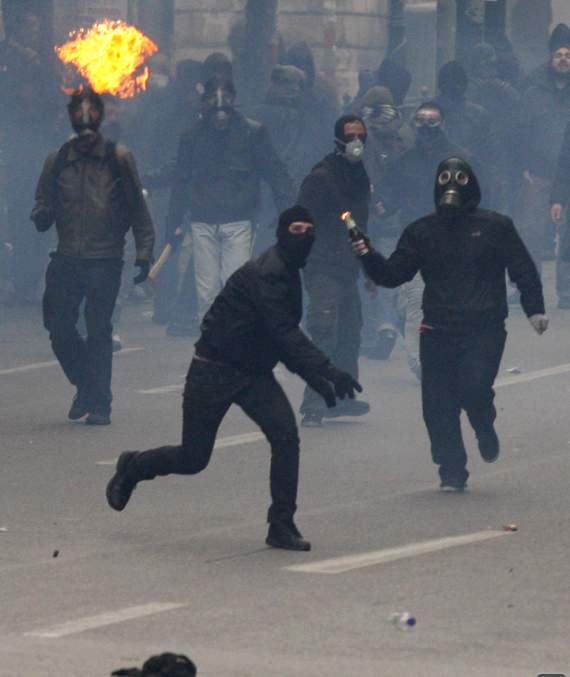
Second Austerity Measure Imposed On Greece
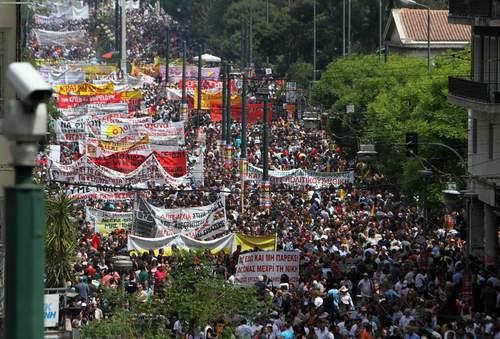
Protests and demonstrations continue to erupt in Greece as demonstrators rise up in the streets against deep cuts in services and jobs from austerity. Austerity is the name of the government’s response to the demand of its creditors. Austerity imposes on society a severe regimen of rising taxes, or cut government spending to please and satisfy creditors. Greece as predicted by Economics professor Rick Wolff a year ago has been hit the hardest by the global economic disaster. Why? For many reasons, it has a strong working class, socialist roots and a public sector made primarily of union jobs. The austerity has cut into the working class jobs as the country privatizes the post office, gas, water works and railway. Meanwhile, the wealthy continue to evade taxes in Greece and in the United States. Past shows on Greece: Law and Disorder
Professor Costas Panayotakis:
- I was in Athens that last few days, what you have in the European Union is imbalances that resulted partly from the introduction of the Euro, but also, by the general phenomena in the division of the world of some countries more technologically advanced and others that are not.
- Right now you have a crisis, partly a European crisis, its not that the Greek culture is a pathological culture, as the mainstream media sometimes presents. Each crisis has its specifics, Ireland, Portugal, in Greece, the specificity is that the wealthy are not paying taxes.
- There are tax evasion problems, the problem in Greece is of primarily of revenues rather than spending.
- The mainstream media talks about the “bloated” public sector of Greece. The public sector is aligned with other public sectors in other countries. Now what they’re trying to do of course, traffic out jobs from the public sector to make Greece a public sector a small part of the economy as it is in developing countries in Africa.
- Because its debt has become so unmanageable, there was an austerity pack that was adopted last year that 110 billion dollars. Drastic cuts in public spending, welfare state,
- Now what’s happened as is often the case, with IMF problems, the program didn’t work the way they said it was going to. Now Greece needs another loan to keep servicing its debt. One of the conditions is that Greece has this huge fire sale of all its public assets. The hope is that its going to raise 50 billion Euros.
- Because values in all the public companies have shrunk rapidly, whoever buys them will buy at a really low price. Many Greeks are up in arms about that. Now they see the banks wanting to follow up with more of the same, that’s why 80 percent of the Greeks oppose this policy.
- We had a 2 day general strike last week, a 48 hour general strike had not happened in Greece for decades.
- You also have a demand for real democracy, direct democracy. One of the demands was not to pass the austerity package.
- Every 3 months there are news measures that have to be adopted in order for Greece to get the next installment of the loan. If Greece defaulted on their loan, it would effect the Eurozone in a very direct way, it would effect European banks.
- I think the lesson to take away from this is fighting back is necessary.
Guest – Costas Panayotakis, a professor at the New York City College of Technology.
———————————————–
Civil Liberties, Climate Change, Crony Capitalism, Supreme Court, Truth to Power
Podcast: Play in new window | Download
Updates:
- Food Not Bombs Plans To Sue Orlando Mayor
- Pelican Bay Hunger Strike
——–
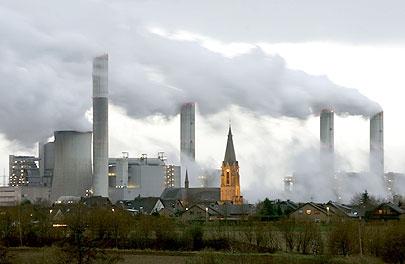

Supreme Court Decision On Climate Change
Last month the Supreme Court, reaffirmed that it is the job of the Environmental Protection Agency to curb carbon pollution under the Clean Air Act. This was decided in the Connecticut v. American Electric Power case which doesn’t allow states to directly bring a lawsuit against five of the largest power companies to regulate their emissions as a public nuisance. As many listeners may know, power plants are the nation’s biggest climate polluters. They can pump more than two billion tons of carbon dioxide into the air each year. Other polluters include automobile emissions and housing stock. Some of the world’s top scientists report that pollution has been linked to climate change.
Law Professor Eleanor Stein:
- In the 2004 case, the court decided the EPA had to assess any air pollutant and decide whether it endangered public health and welfare and if it found that it did, it would have to set limits on that pollutant.
- The EPA had refused to do that, this is the Bush era EPA and said we don’t have the authority under the Clean Air Act to do it, and even if we did, this is essentially a problem for the president to solve, and he’s doing a great job.
- The court found that unsatisfactory and held that the EPA had an obligation to regulate if it found endangerment.
- This case 2011, reaffirmed the central core of the Massachusetts decision, which is the EPA has the authority and the responsibility to regulate green house gases.
- The 2nd Circuit in a ringing militant statement on climate, reversed the district court and squarely held that states could bring this lawsuit which is against the five biggest CO2 emitters in the country, under a common law theory of public nuisance.
- The heart of the petitioners camp were a group of attorneys generals from several states, the fundamental authority of an attorney general is to bring lawsuits in a state against public nuisances of all kinds.
- So they had this idea to elevated this authority into a federal common law claim.
- The court endorses no particular view of the complicated issues related to carbon dioxide emissions.
- For this they cite an article in the New York Times 2 years from Princeton physicist Freeman Dyson who said a lot of climate denier stuff and is kind of a gadfly, who is not a climate scientist.
- In New York City for example, we burn a great deal of natural gas to heat our houses. #6 heating oil both heavy emitter of CO2
- We’re creating a layer that is preventing reflection of solar rays back out into space.
- Much more of it is being trapped into the atmosphere than pre-industrial times.
- There’s uncertainty about how fast and what kind of changes, but there are some things that are confidently predicted. We’re already seeing tremendously fast melting of ice in Greenland and the polar cap.
- There’s no question that this is a product of both rapid industrial development, of uncontrolled growth policies, without any consideration of the impacts of growth, especially when you talk about the disparity of impact.
- www.350.org
Guest – Law Professor and Attorney Eleanor Stein teaches the Law of Climate Change: Domestic and Transnational at Albany Law School and SUNY Albany, jointly with the Environmental and Atmospheric Sciences Department at SUNY.
—–
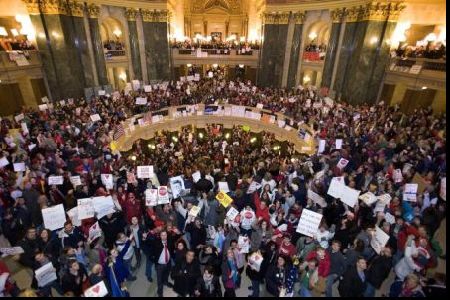
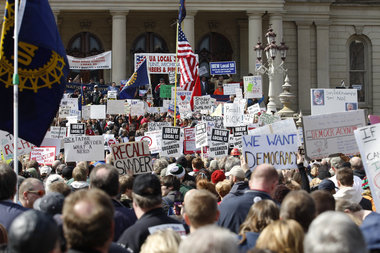
Michigan Citizens File Suit Challenging Unconstitutional Emergency Manager Law
Twenty-eight citizens of Michigan have filed a lawsuit in an effort to bring down the recently signed Emergency Manager Law, claiming it will give Governor Rick Snyder and his appointees vast, unlawful power over financially struggling cities and school districts. Bill Goodman, an attorney with the Sugar Law Center of Detroit, the firm that filed the lawsuit called it a power grab by Lansing politicians. Goodman also said the law violates the state constitution by giving Snyder powers over cities normally granted to the state Legislature. Those powers include replacing elected officials, nullifying collective bargaining agreements, privatizing public services and dissolving cities. Earlier this year we interviewed Zainab Akbar, Legal Fellow at the ACLU of Michigan about the same law being used the mostly black community of Benton Harbor. Democracy Emergency
Attorney John Philo:
- We think this is an important issue, not just for Michigan but nationally. We think this is so viable to our notion of fundamental constitutional rights that we could not let this pass without a legal challenge.
- The first constitutional law violation that we see is that it attacks what is known as the democratic form of government. We all believe we have a right to a democratic form of government, that we can elect our officials at the local, state and federal level. This lawsuit is testing, where is that in the Constitution, where is it recognized?
- We think that people would find it in absurdity that they don’t have that right to vote for their local officials.
- We have a provision in our constitution that says that can’t pass unfunded mandates. They can’t put costs on a local government without providing some revenue stream or providing some mandatory adjustment.
- This legislation puts all the costs on the local government that already find to be in distress.
- In Benton Harbor alone, the salary of the “emergency manager” is running 11 thousand a month.
- That’s before we even get to the consultants and the financial review people that they bring in, the staff.
- There are a number of states looking to pass the emergency managers law.
- This is a nationwide problem that everyone recognizes to regulate banks, and Wall St., and national economic policies that have hit the Midwest hardest and we would say below the belt.
- What will the law do to pensions? Contract rights and pension funds.
- There is a provision that says the state treasurer can request the communities to sort of enter into a consent agreement, before they’ve even been found in financial distress.
- There are citizens, conservation folks, in various places who’ve request the state appoint an emergency manager in their community. This sends the mayor and the city council reeling because they don’t feel they have to.
- They’re acting to prevent this because of the broad discretion given to treasurer and the governor, whether there is a financial situation where they could appoint a manager.
- We’re asking for an order of the court that declares the provisions of Public Act 4 unconstitutional and then an injunction that prevents any further implementation.
- I think people would be shocked if they realize people don’t have a right to elected government.
——————
Tova Perlmutter:
- We see this litigation as one tool in a broader people’s movement. Here in Detroit we have some phenomenal leaders. The first day we filed was the biggest day in my career.
- We with a lot of help with allies and friends held seven press conferences in cities across the state.
- We blanketed the airways and the press, that’s how we got national coverage as well.
- The Maurice & Jane Sugar Law Center for Economic & Social Justice
- We’ve been around for 20 years, based in Detroit but we do serve folks nationally, our mission is to use legal and other public advocacy to advance the rights of working people and their communities.
- One of the cities that has had the most extreme emergency managers is Pontiac.
- There’s no coincidence here, this is a very clear effort to exert a paternalistic and corporate friendly control over communities that might otherwise be speaking out and exerting autonomy.
- www.democracyemergency.org
Guest – Attorney John Philo -Sugar Law’s Legal Director, is responsible for litigation, legal research, delivery of training, and supervision of all staff and interns working on legal tasks. John is an attorney with over 18 years of experience representing and advocating for workers and other disenfranchised people.
Guest – Tova Perlmutter – Executive Director, has over 20 years experience in administration, communications, fund raising and public education for nonprofit organizations. She obtained professional certification as a Senior Human Resources Professional while working to promote fair employment practices at a major corporation.
————————————————————–
CIA Sponsored Terror, Civil Liberties, Gaza, Human Rights, Targeting Muslims, Truth to Power
Podcast: Play in new window | Download
Updates:
—

US to Gaza: Flotilla 2011
The Turkish Islamic group, IHH The Foundation for Human Rights and Freedoms and Humanitarian Relief have organized another flotilla carrying letters of support for the Palestinian people and bring attention to blockade on the Gaza Strip. As many listeners may know, last year’s flotilla ended with the death of nine activists when the Israeli Navy intercepted the Mavi Marmara. Meanwhile, the Israeli Navy is training to confront this years humanitarian effort. Turkish Foreign Minister Ahmet Davuto?lu warned Israel not to “repeat the same mistake” – in using force against the flotilla. Last week, Israeli Deputy Foreign Minister Danny Ayalon said that IHH was deliberately provoking Israel and setting the stage for a confrontation, making it responsible for any clashes that happen, according to an Israeli newspaper. Past Law and Disorder shows last year’s flotilla. June 7, 2010 / June 21, 2010 / October 2010
Felice Gellman:
- I went to Gaza right after the 2008-2009 attack thinking naively that something could be done to rebuild Gaza.
- When I got there, I grew up very quickly and realized the Israeli blockade would prevent any rebuilding from this horrific attack.
- Last year there was a flotilla that sailed at the end of May that was brutally attacked and nine civilians were murdered by Israeli commandos. There will be an American flagged boat and the passengers will be American citizens, and that is to specifically confront the US covert support for the siege of Gaza.
- The flotilla has been very much on the minds of the Israelis because it was not received well to murder nine civilians. One of them was an American citizen and the United States has done near zero to support the family.
- The initial Israeli attack strategy was to use attack dogs and snipers. Israel signed a deal with Cyprus making it the main transshipment point of natural gas from Israels natural gas development out there.
- The next day the prime minister of Cyprus announced he would not allow the flotilla to sail from Cyprus. Israel asked the Greeks not to intervene.
- The idea was to make this as diverse as possible, as representative of America as possible.
- I’ve been to Gaza twice and people say to me over and over, please we want our freedom.
- They’re saying the same thing that people are saying Egypt, Syria, Bahrain. They don’t want to live in a hand out society.
- The Rafah crossing being open doesn’t end the siege of Gaza.
—-
Attorney Richard Levy:
- As an American Jew, I feel a special responsibility to do something around this issue. When Israel first came about and we knew so little about what happened. there. The first reaction was, well this wonderful homeland.
- And then as we grew and the years past and their conduct in the West Bank, their conduct in Gaza, in trapping people, and imposing these horrible checkpoints and settlements that take away the land and take away the water.
- We met with the State Department 2 weeks ago, and pointed out to the State Dept that while the president is applauding peaceful demonstrations across the Middle East, we too are planning a peaceful demonstration.
- Instead of getting a nod and an assurance, we got an email several days later, saying that there was a maritime warning and that people should not go into the zone, everyone can expect interference by the Israelis.
- The thing that is terrible about that we all know if the US said don’t do it, Israel wouldn’t do it. As a recipient of 3 billion dollars annually of US aid, on which it is totally dependent.
- I think the problem with Israel is we’re letting AIPAC be the voice of Jewish people everywhere. We gotta get up and say, they don’t speak for us.
- You take a place like Gaza where more than 40 percent of the population is under the age of 14. It’s kids, its women, they don’t have schools, they don’t have food, they don’t have medical care.
- 90 percent of the people (in Gaza) depend on charitable donations to live at all. The fact that we’re not getting up and being heard on this, is allowing only one voice to be heard.
- And that is a very conservative pro-Israeli voice that I don’t think speaks for the American people at all.
- My optimistic side says we’re going to be massively inconvenienced.
- I think we want to call attention to the Palestinian people that they’re not completely alone. The US boat is going to be carrying a cargo of letters. From Americans to Palestinians saying we understand your plight, we support your effort to live in peace and to live without these horrible restrictions on your life.
- There was so much fear of over reaching by the US government under the Terrorism Support Act that if you brought over the most innocent product, and it found its way into the hands of Hamas, some hyped up prosecutor could go after you in this country under this very draconian statute.
- In Turkey, the Turkish boat had a million applicants to be passengers on this flotilla.
Guest – Felice Gellman, member of the Wespac Middle East Committee and a member of the Steering Committee that organized The Gaza Freedom March. She has traveled to Gaza twice since the Israeli invasion.
Guest – Attorney Richard Levy, a labor and civil rights attorney. (Cornell, B.A., 1964, NYU School of Law, J.D., 1968) is a senior partner at LR. He has practiced labor, employment, employee benefits and civil rights law since 1971. During law school he was associate editor of the Annual Survey of American Law. A member of the United States Supreme Court Bar, Levy has lectured at conferences for the NLRB, AFL -CIO, Practicing Law Institute and has published articles on labor law and civil rights litigation. He has served on the Lawyers Advisory Panel of the AFL – CIO.
—
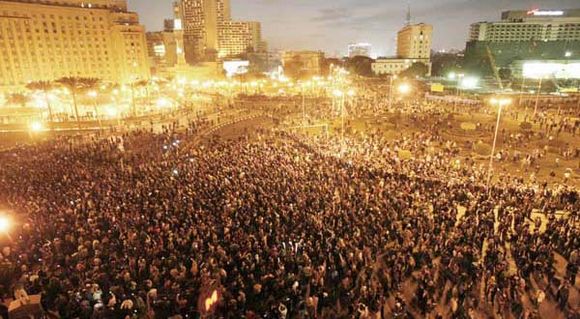

The Arab Revolt and the Imperialist Counterattack by Jim Petras
The Arab Revolt and the Imperialist Counterattack is the title of Jim Petras’ timely new book. It was rushed to print and chronicles the growing militarization of US policy in North Africa and the Gulf region. The essays also give an important historic narrative of the long over due Arab democratic revolution and the popular uprisings. Now as the empire’s crumbling dictatorships began to spread, the United States, France and the UK race to intervene. NATO is deployed using its new “responsibility to protect” doctrine authorizing “humanitarian intervention.”
Professor James Petras:
- Obama supported Mubarak since he (Obama) entered office, and only when it was absolutely clear there were millions of people in the street, the military was divided, there was absolutely no future for Mubarak, Washington then began to leverage Mubarak into a departure which would retain the entire economic, police and military apparatus intact.
- Essentially, sacrifice the dictator to save the neo-liberal, pro-Israeli state.
- The Egyptian economy has been part of a pillage, the US has been giving Egypt, 2 billion a year for decades. This is bribe money so that Egypt will continue collaborating with Israel in keeping the Palestinians under Israeli control.
- Participating in the blockade of Gaza. That’s part of the economy. The other part is that Mubarack family and cronies have essentially run the economy into the ground.
- Egypt draws its income from the Suez Canal, tourism, visiting the pyramids, on a minor scale, agriculture and textiles. But there are enormous disparities in wealth, the per capita of about 40 percent of Egyptians is 2 dollars per day.
- Egypt has a handful of billionaires all organized around the regime.
- It’s a big country with great potential but it was run into the ground by this corrupt family dictatorship.
- The picture now is the ousting of Mubarak has not amounted to substantial change in the governing class. Essentially, the military took over and kept many of the Mubarak personalities in position of power. The minister of the interior is still there, the generals are still there. They’ve been arresting and disappearing some of the pro-democracy people.
- The struggles in Egypt haven’t ended. The Washington Post and the New York Times keep talking as if the democracy process has reached its culmination.
- The surveys show that a vast amount of Egyptians want to renegotiate the arrangement the Egyptians had with the Israelis.
- This is a hot potato because the military wants to continue to get the hand outs from the US.
- The Egyptian military is trying to make a deal with the Muslim brotherhood, especially the elder statesmen.
- There is an attempt here to substitute elections for social changes and economic improvements.
- The business men who’ve been so accustomed to having everything their way are calling on the military to clamp down. To arrest the strikers. There’s been a proliferation of strikers in the hotel industry, manufacturing, public employees.
- We don’t read about those unless you go into some of the Egyptian newspapers.
- The Obama Administration and the Europeans are going to pump in 2 billion dollars on condition that these social reforms are not carried out. That there isn’t any effort to redistribute income. Washington is jumping in at this moment with taxpayer’s money to try to head off any real democratization that effects the great majority of the people.
- You have an opposition that’s divided, you still have the old patronage apparatus of Mubarak. Mubarak had a program of hand outs, never any substantial changes in people’s condition.
- On Libya: This is a war on Libya with the United States and Europe, there’s no question about it.
- The issue here is that Libya has enormous oil and gas wells. We are trying to control Africa through our military operations, while the Chinese are in there making massive investments, establishing economic presence which far surpasses what Washington can imagine.
- This costs the tax payers billions. We don’t get anything back. This isn’t an investment into a coal mine, or diamond mine where you would get returns.
Guest – James Petras, author and former Professor of Sociology at Binghamton University, New York.
—————————————-
Civil Liberties, Criminalizing Dissent, Gaza, Human Rights, Targeting Muslims, Truth to Power
Podcast: Play in new window | Download
Updates:
——
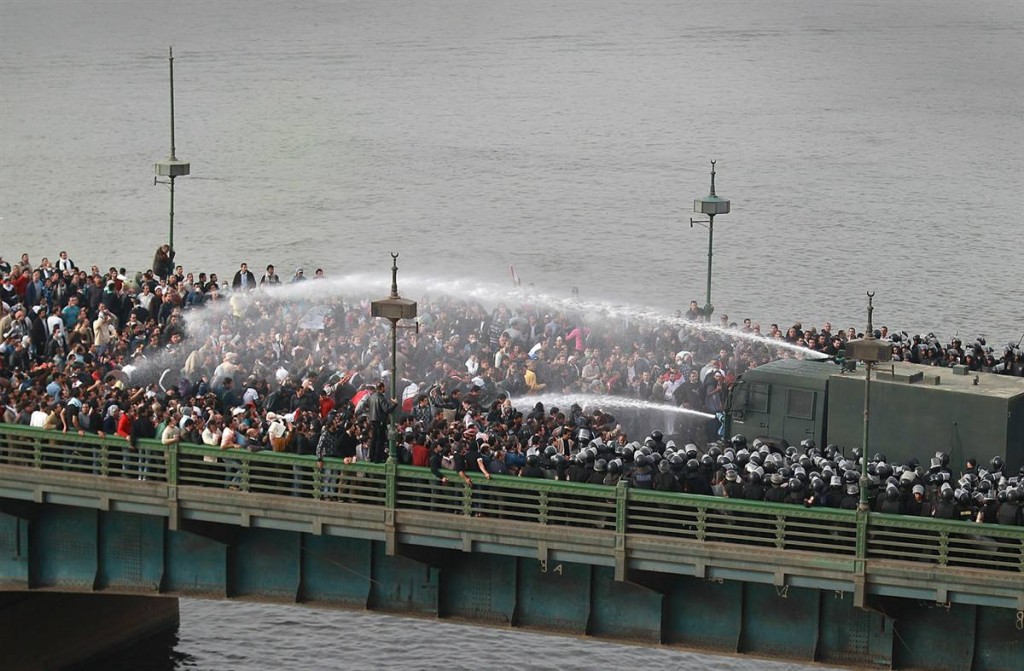

Middle East Update: Egypt, Israel and the United States
Labor strikes continue in Egypt as tourism declines and the crime rate increases. There have been many strikes including Egyptian police unions who are demanding higher wages. We’re joined by writer and Middle East activist Phyllis Bennis. She is the director at the New Internationalism Project at the Institute for Policy Studies. Phyllis has recently returned from Egypt and she joins us today for an update and analysis. Update on Egypt Gaza Border
Phyllis Bennis:
- The trip to Egypt merged my work with the Israel-Palestine issue and my broader work in the region of US policy towards the Arab Spring.
- There are no guarantees that the incredible accomplishments of the Arab Spring will lead to the new democratic opening in Egyptian society let alone the Egyptian economy, that people are working for.
- Everybody agrees that the wall of fear that made possible the kind of Mubarak dictatorship, that led to the collaboration of Egypt and Israel, under US auspices in repressing Palestinians and imposing the siege on Gaza, that that’s no longer going to be possible.
- The widespread use of arrests and torture, torture was far more prevalent and routine in Egypt. I’ve studied the region for years, and I didn’t know how ordinary it was.
- Every sector in society in Egypt, were engaged in meetings. Women’s organizations, privacy rights groups, trade unions, the labor movement.
- There’s a lot of fear, but also a sense of excitement in the ability for people to fight back and new levels of unity across sectarian lines, across generational lines, across class.
- The question of the role of the US remains very key. Egypt’s new foreign minister Nabil al-Arabi, says the siege of Gaza must end. Permanently opening the border to Gaza.
- Egypt’s military will play a role in the border to Gaza. Now the foreign minister position is up for grabs again.
- The media in Egypt is overwhelmingly in Arabic. Al-Aron, the flagship daily newspaper in Egypt, longest state run newspaper, now reflects the interest and approach of the new government.
- Regarding elections, I don’t think there was a unified left position and a right.
- If the elections were held soon, there is a sense that Mubarak’s NDP, National Democratic Party and the Muslim Brotherhood, those existing parties would trounce everyone else.
- Many support quick elections which are due to be held next month.
- Anytime you have a progressive revolutionary process underway that’s being guaranteed by the old military, you’re kind of in trouble.
- I heard one Egyptian commentator exalted about one of Mubarak’s son being in the same jail cell that he spent many months in. This has not been a economic revolution, we have not seen an overturning of the neo-liberal economic policies.
- Israel and Palestine: The code for land swaps is that Israel gets to keep the 3 main settlement blocks as a starting point.
- We’re talking 40 percent of the land in the West Bank. Obama’s soaring rhetoric, “we stand with the impoverished fruit seller in the streets of Tunisia, rather than with the dictator”
- Obama’s main challenge was how do we position ourselves to be a friend of democracy while maintaining our strategic alliances with the existing dictators.
Guest – Phyllis Bennis, directs the New Internationalism Project at IPS. She is also a fellow of the Transnational Institute in Amsterdam. She has been a writer, analyst, and activist on Middle East and UN issues for many years. In 2001 she helped found and remains on the steering committee of the U.S. Campaign to End Israeli Occupation.
—–
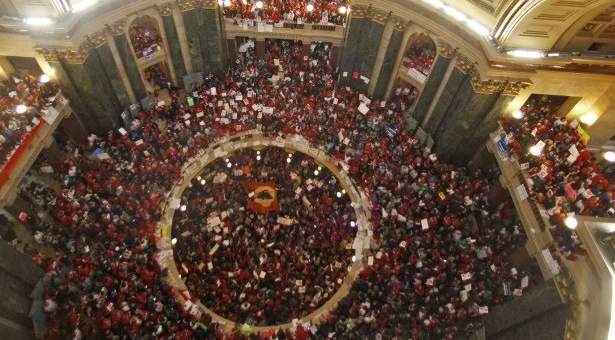
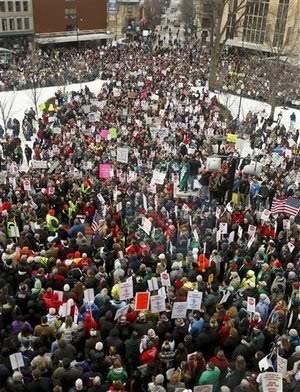
Resistance Maintains In Wisconsin
Protests continue in Wisconsin against the union busting bill signed by Governor Scott Walker in March. The demonstrations are also aimed at the anti-people measures contained in the budget proposal that would cut more than 3.5 billion dollars from services that help the poor and working class. There is still a chance that this bill will not become law. An injunction is in place because of the people’s massive resistance. The movement demands are full legalization for immigrants, oppose budget cuts, keep in state tuition for immigrant students and oppose any legislation that targets immigrants in Wisconsin.
Professor Paul Buhle:
- The new governor announced drastic changes under the “budget repair” bill. Virtually a bargaining rights of public union employees would be rescinded.
- Basic environmental laws would be repealed, and communities that came up with a minus budget would fall under the control of political appointees who could replace them.
- As this was attempted to being passed in the Senate, 14 Democrats fled the state and remained sequestered for a couple of weeks.
- While in Madison, crowds ranging from 1000, to 100 thousand, circled the Capitol on an almost daily basis, and sat in, slept in on the Capitol rotunda for 2-3 weeks.
- As in other states and in Congress, the Republicans insist that pay and benefits of public workers were greater than those in private sector, factories have fled and private sector workers are doing so much worse,
- The idea of public unions was illogical and needed to be cut back because they were a powerful voting block.
- The response from the unions was if belt tightening is necessary we expect everyone to do it, but don’t take away our bargaining rights and our basis for dignified labor.
- Not when huge tax benefits are being delivered to corporations. Its not a mystery that the Koch Brothers from Kansas were the major backers of Scott Walker’s campaign. They set up an office only a block from the Capitol. They are very likely the architects of the ideas and the plans.
- Public resources are being sold off with no bid contracts.
- Both sides are geared up around current and ongoing legal processes that are beyond the ken of the ordinary Wisconsinites.
- Some members of the Democratic party were not happy with the mass demonstrations.
- Wisconsin protests effected most emphatically Ohio, Pennsylvania and New Jersey, Maine.
- There has been an occupation at the Capitol of Washington State It was incumbent to us to show up once a day, some of us twice a day, to march around the Capitol. There’s a deep ambiguity here, on the one hand the Republicans have to be smashed.
- The Obama signs all went down from the yards a long time ago. There’s an ambivalence here, and its reflected nationally.
Guest – Paul Buhle, senior lecturer at Brown University, a historian of American radicals, a former member of Students for a Democratic Society and author of many books including images of American Radicalism, Che, A Graphic Biography, and Isordore Duncan, a graphic biography by Sabrina Jones.
—————————————————-