Extraordinary Rendition, Guantanamo, Habeas Corpus, Human Rights, Supreme Court, Surveillance, Targeting Muslims, Torture, Truth to Power
Podcast: Play in new window | Download
Updates:
——-
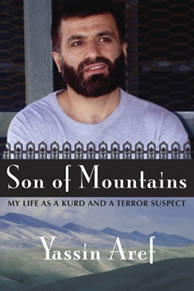
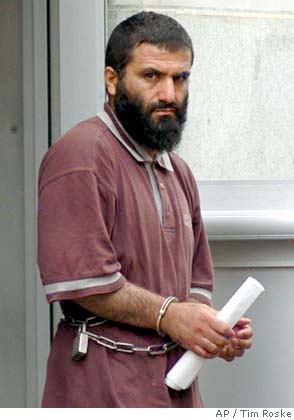
Steve Downs: The Yassin Aref Story and Muslim Database, Project Salam
Imam Yassin Aref is among numerous Muslim men in the United States who were targeted by the FBI framed and wrongly convicted. Aref is Iraqi Kurd who came to Albany, New York in 1999 as refugee from Kurdistan. He later became the leader at a local mosque. After 9/11 the FBI began to illegally wiretap and eavesdrop on the mosque and Yassin. It was later reported in the New York Times that these wiretaps were conducted without court approval. As retired attorney Stephen Downs explains, Yassin is one of 400 in a database site, Project Salam that keeps track of Muslim men in United States prison.
Stephen Downs:
- Whatever it was that triggered suspicion, the FBI decided they wanted to convict Yassir
- So, they set up sting operation, it was run by a guy who was convicted of a number of felonies.
- Yassin was convicted and sentence to 15 years in communication management units at Terra Haute Prison, Indiana,
- They’re trying to seal them off from the prison population and society at large.
- They’re being treated like they have some horrible disease and would infect anyone that they’d come in contact with.
- I have a suspicion that the Bush Administration was thinking of closing Guantanamo and I can’t help thinking that because the size of this place is about right, that they’d consider transferring prisoners there, but that didn’t happen.
- There is room for 400 prisoners, there are 50 or 60.
- We began to realize that all over the country there were groups that were forming around certain people in their communities that had been simply, locked away.
- So, we got together at Albany Law School and decided to set up a database of all the Muslims in the country who had been improperly gone after. They were under suspicion from the government for some reason.
- We just wrote to President Obama and Attorney General Holder regarding what has happened under the Bush Administration in that we change the paradigm in how we prosecute people.
- Now we’re going to be writing letters about specific cases. We got 900 people to sign the first letter.
- We are asking people to adopt a defendant.
- We have about 400 Muslims in the database. We can’t say that all 400 are innocent. Some people are overcharged.
- We appealed and lost. There was a secret appeal and a top secret brief that even the prosecutor wasn’t allowed to see.
- The appellate decision was harsh, it either mischaracterized what we had to say or brushed them aside immediately.
- We thought it was a victory because the standard is a 30 year prison sentence, based on the all the “enhancements” that they added.
Guest – Stephen Downs, a retired New York State attorney and a volunteer attorney for the Yassin Aref case.
———————————————–
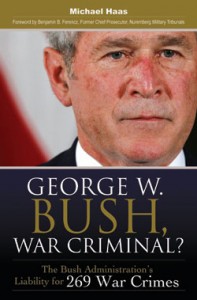
George W. Bush, War Criminal ? by Michael Haas
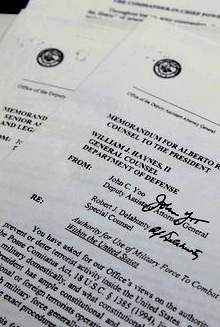
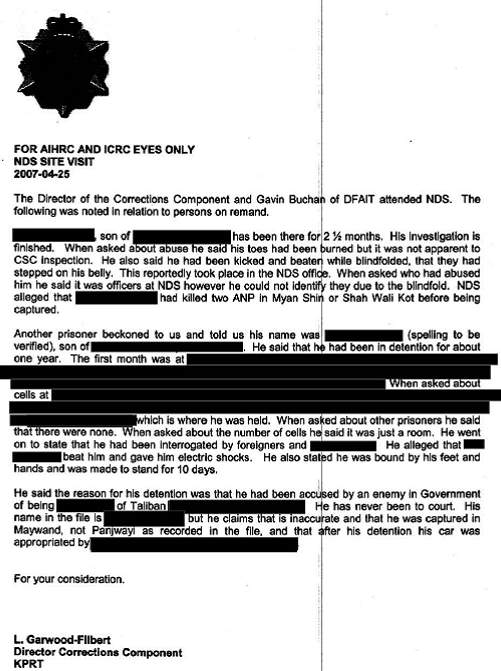
In the book titled George W. Bush, War Criminal? author Michael Haas counts 269 war crimes that the Bush Administration are liable to be prosecuted for. He itemizes each war crime into a specific category of four classes, such 36 war crimes committed in the conduct of war, 175 war crimes committed in the treatment of prisoners and so on. This book carefully documents the war crime evidence, making it quick work to investigate how George W. Bush, the military officers under his command and the staff in his administration can be brought to justice.
Michael Haas:
- The illegality of the war.
- The misconduct during war, militarily, the mistreatment of prisoner.
- The misgovernment of the occupations of Iraq and Afghanistan.
- The decision to indiscriminately bomb without giving proper notice to the civilian population and then the use of illegal weapons such as Daisy Cutters, White Phosphorous and Depleted Uranium Weapons which not only affected the civilian population in Iraq, but the American soldiers who came in to occupy.
- I have a table in the book indicating 40 international agreements that are war crimes treaties.
- The most prominent to begin with is the Red Cross Convention of 1864 and then going on to the Hague Conventions, the Geneva Conventions before and after WWII and then the subsequent conventions against torture and forced disappearances.
- Any kind of torture is illegal involving prisoners of war.
- When they couldn’t get information out of Guantanamo prisoners, the Geneva Convention orders to not torture prisoners was countermanded to try other techniques by then Secretary of Defense Donald Rumsfeld – by executive order through George Bush.
- Most of the war crimes are from the mistreatment of prisoners, because the Geneva Convention is very detailed and specific about what cannot be done.
- The Bush executive order details what had happened and in fact is an admission of abuse.
- Extraordinary renditions, to send someone to another country to be tortured is itself a war crime.
- War crimes are ongoing now, they’re happening under the Obama Administration.
- If we can’t focus on now, which apparently isn’t happening, then we can’t learn lessons from the past.
- At Guantanamo, the following war crimes are taking place: Failure to transmit legal documents to prisoners, secret judicial proceedings, refusal to cooperate in investigations and prosecution of torturers. The wreckless endangerment of health in prison, the violation of medical ethics, that is the force feeding. Indefinite imprisonment of children, cruel treatment, that is the beatings after force feedings.
- These are what I’ve counted to be 22 war crimes since the inauguration of President Obama.
- The thesis of the book is to have a truth commission on the war crimes published in this book so that people know, the public what is a war crime, what is not a war crime.
- Some of the war crimes are only heresay right now, so we need sworn testimony, though some of the war crimes are signed by George W Bush. www.uswarcrimes.com
- I was writing a textbook on human rights, I’m a scholar, political scientist, while I was reading the Geneva Conventions to summarize them for the purpose of a chapter, I was also reading the newspaper, I realized that the violations of the Geneva Conventions, and reading them item by item – its very dry reading, but I can make it much more interesting.
- I quit my job as a professor, and relentlessly began getting up at 5 AM and going to bed at 1AM day after day to finish this book, so it would be coming out just a few days before the inauguration of the new president.
Guest – Michael Haas, has written more than 30 books on human rights, he is currently Professor Emeritus of Political Science at the University of Hawaii and the Chairman of the International Academic Advisory Board of the University of Cambodia. He played a role in stopping the secret funding of the Khmer Rouge by the administration of President George H. W. Bush. He has taught political science at the University of London, Northwestern University, Purdue University, and the University of California, Riverside.The argument is that all 4 types of war crimes were violated with great impunity by George W Bush and members of his administration.
——————————————-
Civil Liberties, Criminalizing Dissent, Extraordinary Rendition, Guantanamo, Habeas Corpus, Human Rights, Iraq Veterans, Iraq War, Military Tribunal, Supreme Court, Surveillance, Targeting Muslims, Torture, Truth to Power
Podcast: Play in new window | Download
The First 100 Days: Dismantling the Police State in a New Presidency – Part 1
This is the first of a three part special. Law and Disorder hosts bring a series of interviews with key attorneys, authors and activists from the front lines such as the Center For Constitutional Rights, Universities of Law and the National Lawyers Guild. Some of the police state policies are beginning to be reversed such as closing down secret CIA sites, a timeline to shut down Guantanamo, and mandating everyone CIA included follow US Army Field Manual Interrogation tactics.
We define the current laws in place that now constitute a police state. Then we look at the steps the Obama Administration must take to turn back the major breaches in civil liberties such as the Patriot Act One and Two, the Military Commissions Act, FBI Guidelines and legal provisions that allow for torture. As you’ll hear, some attorneys believe much of the dismantling can be done by executive order.
We begin with a description of what we have seen since September 11, 2001 and precursors such as the Effective Death Penalty Act, the earlier renditions under Clinton’s administration. Then, right after 9/11 came the overreaching of executive power in the form of signing statements that misuse the war powers resolution to detain, torture and try so_called enemy combatants. This includes racial profiling against Muslims here and abroad, massive surveillance capacities and warrant_less wiretapping.
The dismantling of police state blocks in the new presidency will take attention to detail to ensure a full restoration of democracy that will ultimately allow for social progress. In the next hour we look at some remedies and solutions to reverse laws that have created domestic enemy combatants, Guantanamo Bay prison, Renditions, Secret CIA sites, Torture, Kangaroo Courts: Special Trials, FISA, domestic surveillance, private military contractors.
——————————————————————

Executive Director of the Center for Constitutional Rights, Vince Warren discusses the abuse of preventive detention, torture, rendition and states secrets. Hosts cite recent examples of deep surveillance on peaceful protesters and the unprecedented collusion between federal, state and local law enforcement. Warren points out the importance of rolling back the police state measures put in place by the Bush administration, in that No president has ever given back the power a previous president has given him.
Vincent Warren:
- Torture/rendition/states secrets / right to dissent / the abuse of preventive detention.
- Torture top of list, the export of torture and CIA black sites.
- torture crimes at this time are unprosecutable adn its up to the president to
- Close Guantanamo prison – send prisoners back to countries they came from, repatriate.
- CCR and civil proceedings – hold accountable, the Bush administration to declare what they’ve done unconstitutional, damages to clients CCR represents and injunctive relief, future deterrents
- Universal jurisdiction stems from the Nuremberg principles that say a crime that is committed against a person anywhere is prosecutable anywhere.
- Countries such as Germany Spain and France have statutes for human rights abuse survivors to bring cases for prosecution.
- States secrets privilege, the privilige that the government has routinely invoked in a range of CCR cases, whenever the government says states secrets, the courts, including the supreme courts usually kick the case. The remedy?
- Congress can create a statute that limits the use of a states secrets power in order to make it consistent for truth telling and accountability.
- No president has ever given back the power a previous president has given him.
- The abuse of preventive detention, fusion centers – intelligence gathering and data mining – the concern is that no one can monitor and again its done in secrecy. no oversight, more preemptive law enforcement
- The irony here is that government usually acts as if one hand doesn’t know what the other hand is doing, unless they’re coming down on our constitutional rights, then they’re all on the same page.
——————————————————-
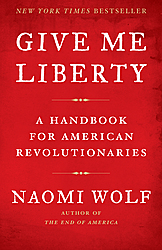
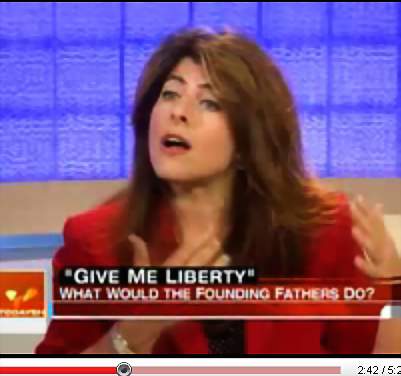
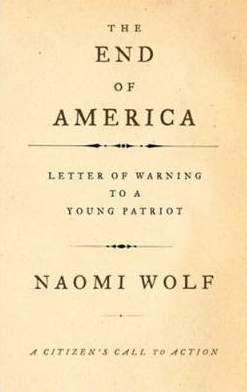
Naomi Wolf : 10 Steps
We’re joined by author and activist Naomi Wolf. She is the author of seven books, and the groundbreaking book The End of America: A Letter of Warning To A Young Patriot. In the book, Naomi addresses ten steps that societies, dictators, and sometimes democracies use to close an open society to move it toward facsism. We want to re-visit those ten steps.
Naomi Wolf:
- A small group of people used the law to subvert the law. Reichstag Fire, then disembowel their own Constitution.
- Initial thinking inspired from my friend who is the daughter of holocaust survivors, she said the Bush strategies echo early 1930s Germany.
- Enabling Acts in Germany gave the power to the state to read a person’s mail, listen to their phone calls and read their telegrams. This, in the alleged interest of national security and the fight against terrorism.
- Nazis used to unload the coffins of the war dead at night.
- A would-be dictator sought to close an open society or crush a democracy movement. Mussolini in 1920, the great evil pioneer. Hitler studied Mussolini, Stalin studied Hitler.
- I looked at Russia, studied Czechoslovakia in the 60’s, Pinochet’s coup in 1973, the Chinese crackdown on democracy in the 80s.
- What I saw was there was a blueprint. The blueprint has 10 steps. The 10 steps have been codified, they teach them at the School of the Americas.
- To help would be Latin-American dictators to overthrow their own governments. What terrified me is that those ten steps are being put in place by the Bush Administration.
- Invoke a terrifying internal and external enemy
- Create a gulag
- Develop a thug caste
- Set up an internal surveillance system
- Harass citizens’ groups
- Engage in arbitrary detention and release
- Target key individuals
- Control the press
- Dissent equals treason
- Suspend the rule of law
———————————————————
Civil Liberties, Human Rights, Impeachment, Surveillance, Targeting Muslims, Torture, Truth to Power
Podcast: Play in new window | Download
Host Updates:
Related News Stories:
————–
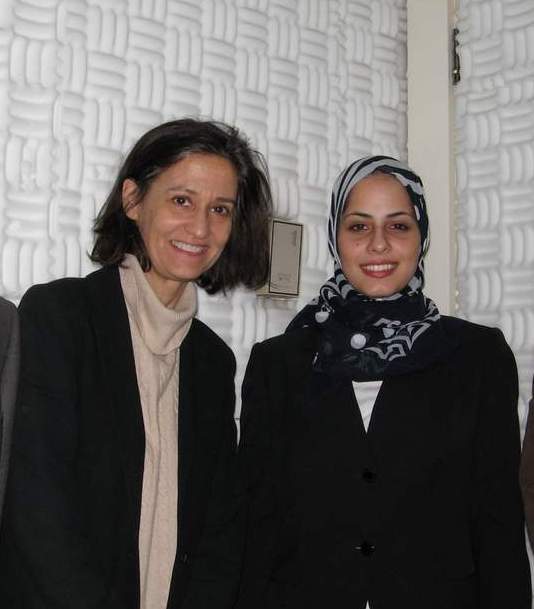
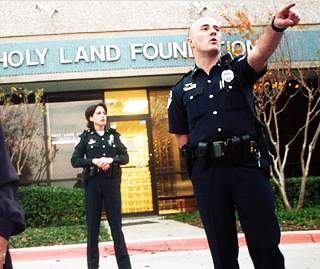
Verdict Against Holy Land Charity Could Have a Chilling Effect on the Muslim Community
Last month, a jury in Dallas, Texas found five Palestinian men guilty of more than 100 charges in the nation’s largest terrorism financing trial since 9/11. We talk with Laila Al-Arian, a Washington based journalist, who recently wrote a powerful Alternet article about this case and its impact on Muslim charities.
As many listeners may know, Holy Land was the largest Muslim charity in the United States, the the Bush administration shut it down after the September 11th attacks, and arrested five officials from the charity. In her article Al-Arian describes how the prosecution use unrelated video of suicide bombers to emotionally sway the jury. We’re later joined by Linda Moreno, a defense attorney in the case.
Laila Al-Arian:
- One of the witnesses (in this recent case) was an expert witness, he was a Shin Bet agent.
- The way the US government is trying to prove that these Zakaat Committees are funding Hamas is through the testimony of this Israeli witness. The testimony can’t be authenticated.
- The first time in a US court room that an expert witness, not a fact witness, testified under a pseudonym.
- How do you detect perjury, or how does the defense cross-examine without background.
- Expert witness lied to the jury about the Zakat committees being tied to Hamas
- What you’re really doing is prosecuting an Israeli Palestinian conflict in an American courtroom.
- For Muslims giving charity is a religious obligation.
- There will be an appeal on the grounds of the expert witness Shin Bet agent.
- Joe Lieberman and George Bush commented on the verdict of this case.
- All this does is punish people who are suffering, and punishing those who want to help them.
Linda Moreno:
- The government began its exhibit with a photograph of a bombed out bus, which had nothing to do with the accused in the Holy Land case.
- They also showed video of children doing skits, an art form that is a result of culture under occupation.
- Children in the US get to play violent video games, but they get to turn that off and go back to the safety of their home, go into your bedroom and shut the door. When you’re a Palestinian child, you don’t have that luxury.
- We know because we proved in both trials, that the US Government through USAID and other organizations was giving to the exact same Zakat Committees that were at issue in the indictment of this case.
- And the notion that you have to vet the recipient of charitiable donations, I believe is un-American.
- There’s just something wrong about criminalizing humanitarian aid. Charities under fire.
Guests – Laila Al-Arian, a Washington DC based journalist. Linda Moreno, high profile defense attorney.
———–
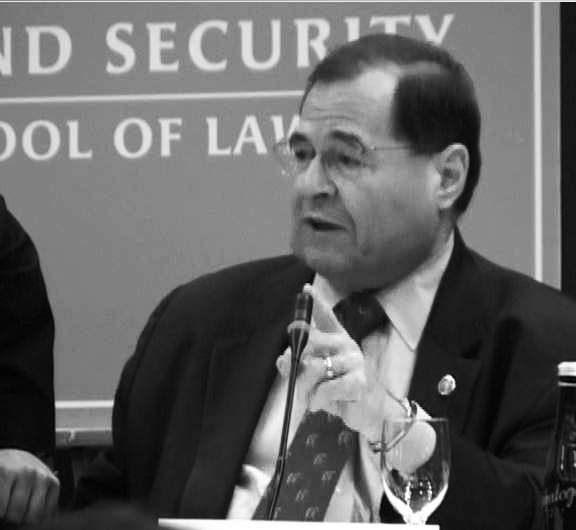
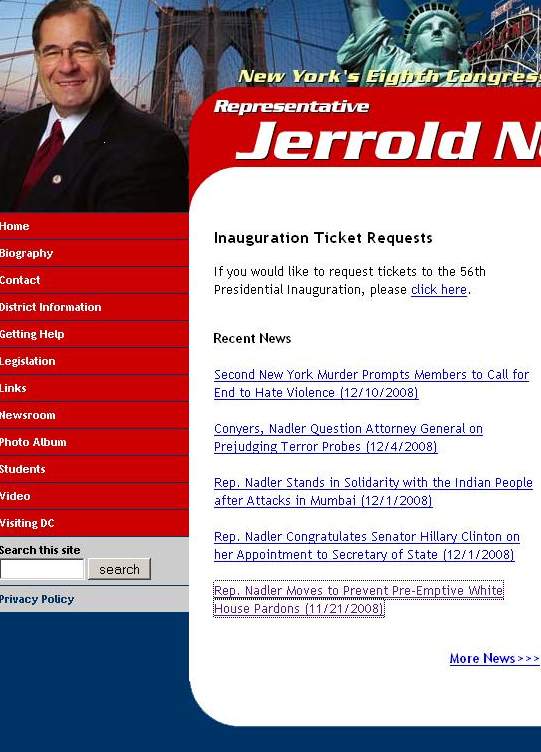
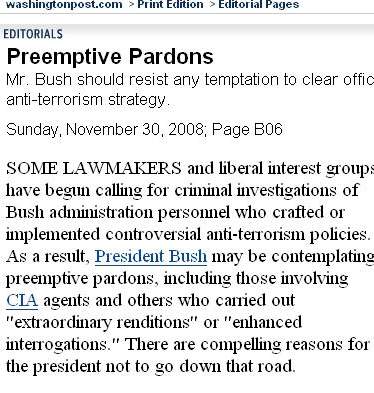
Legislation To Stop Preemptive Pardons
So far George W Bush has issued nearly 170 pardons, they include a Missouri farmer who unintentionally poisoned three bald eagles. Pardons give the recipients greater leeway to find jobs, live in public housing and vote. Many expect that President Bush will pardon himself and other high officials as a shelter from criminal charges and that’s what New York Congressman Jerrold Nadler is trying to prevent. Nadler is the Chair of the Judiciary Subcommittee on the Constitution, Civil Rights, and Civil Liberties, and he’s recently introduced House Resolution 1531 demanding that Bush refrain from issuing pre_emptive pardons of senior officials in his Administration during the final 90 days of office.
New York Congressman Jerrold Nadler:
- No pre-emptive pardons, the president should not do it, it’s a dangerous abuse of pardon power.
- HR 1531 also says that we believe an attorney general should appoint an independent counsel to investigate alleged various crimes, such as warrantless wiretapping, torture, renditions and so forth committed during the Bush administration.
- Premptive Pardons: President Ford pardoned Nixon, for any crimes that he might have committed.
- President H W Bush pardoned Casper Weinberger and various other people for any crimes they might have made. President Carter pardoned anyone who violated the draft laws in evading the draft during the Vietnam War.
- My feeling is the reason for pardons or give the pardon power in the first place is you want to temper justice with mercy.
- It would be an abuse of power before they get convicted of a crime. If he pardoned all the people well, then how do you develop a case.
- I think there should be a commission with supoena power, that can get at the facts, that can have people testify, that can develop more information for prosecutors to use.
- Right now the narrative will be: Nobody did anything wrong, we protected the American people from terrorism.
- We need to educate the American people about why these prosecutions must be done.
- It’s very important for the people in a democratic country to know what was done in their name.
- One of the problems we have in this country today is that everything is secret.
- The resolution will not be passed in this Congress. If Bush exercises pardons, then there’s very little we can do about those pardons. I’m going to introduce a constitutional amendment to restrict the pardon power in the future.
Guest – Congressman Jerrold Nadler – He represents New York’s Eighth Congressional district. The Eighth, one of the most diverse districts in the nation, includes Manhattan’s West Side below 89th Street, Lower Manhattan, and areas of Brooklyn including Borough Park, Coney Island, Brighton Beach, Sea Gate, Bay Ridge, and Bensonhurst.
—
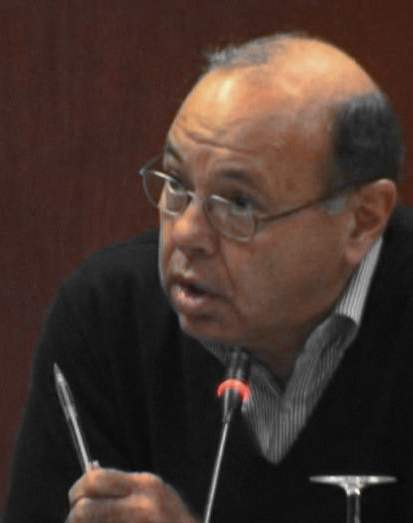
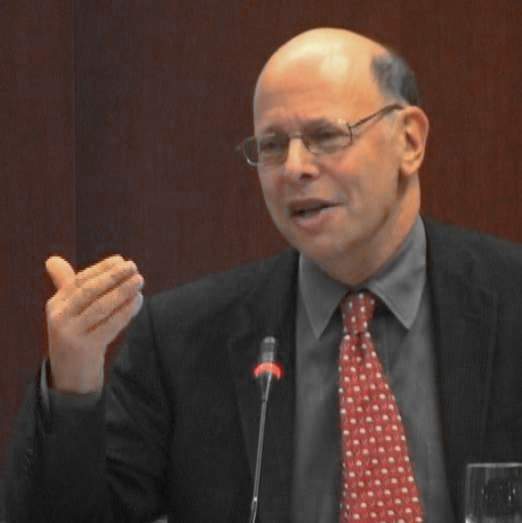
Harpers Magazine Panel: Justice After Bush: Prosecuting an Outlaw Administration
We hears excerpts from 2 speakers in the panel. Our own Michael Ratner President, Center for Constitutional Rights and Burt Neuborne, Legal Director, Brennan Center for Justice, New York University. The event discussed methods available to a democracy to prosecute high officials in the Bush Administration and responded to Scott Horton’s Harper’s Magazine cover story called “Justice After Bush: Prosecuting an Outlaw Administration.” We will hear more from the other speakers in the coming weeks.
- Elizabeth Holtzman, Author, The Impeachment of George W. Bush
- Scott Horton, Contributing Editor, Harper’s Magazine
- Jerrold Nadler, Chairman, House Subcommittee on the Constitution
- Antonio Taguba, Major General (U.S. Army Ret.)
—————————————————————————-