CIA Sponsored Terror, Civil Liberties, Guantanamo, Supreme Court, Targeting Muslims, Torture, U.S. Militarism, Violations of U.S. and International Law, worker's rights
Podcast: Play in new window | Download
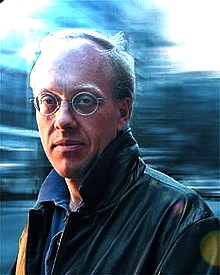

Present Danger Of Fascism In The United States
The rise of Donald Trump and his MAGA supporters has transformed American politics, perhaps more than anything else has since the gathering of forces of the rebellious slave owners in the south, a century and a half ago. His first four years in office were chaotic, uninformed programmatically, and not animated by any kind of cadre of capable administrators. It was, instead, full of his statements and actions that many critics deemed to be racist, sexist and Xenophobic.
He lost the election in 2020, although he received 74 million votes! As he runs for the Presidency again, this time he is talking rather openly about wanting dictatorial authority, if he is elected again.
And this time if he does win, he now has the aid of the right-wing Heritage Foundation, which has produced the 900-page “Project for 2025” document on how to radically change our country so as to make it far, far more conservative, providing far fewer rights to the American people, and allowing any president so inclined, to run the country as an authoritarian, a virtual dictator. He has an authoritarian right wing Supreme Court, which in its latest decision, aptly named “Donald Trump versus the United States of America,” has given the presidency carte blanche immunity, placing the president above the law, allowing the president to do almost anything he or she wants to do, as long as it’s deemed to be “an official presidential act”.
Today’s program is the lead off to a series of shows on fascism, how to resist it, and how to defend against it. I will be conducting this series with my co-host, Michael Smith, who cannot be with us today due to illness.
Guest – Chris Hedges, the journalist and author spent two decades as a foreign correspondent serving as the Middle East Bureau Chief and Balkan Bureau Chief for The New York Times where he was awarded the Pulitzer Prize. He is the author of 14 books including War is a Force That Gives us Meaning, Days of Destruction, Days of Revolt, which he co-wrote with the cartoonist Joe Sacco, and The Death of the Liberal Class.
—-

![]()
![]()
![]()
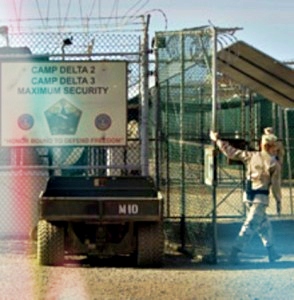
Guantanamo Bay Prison: 30 Suspects Remain
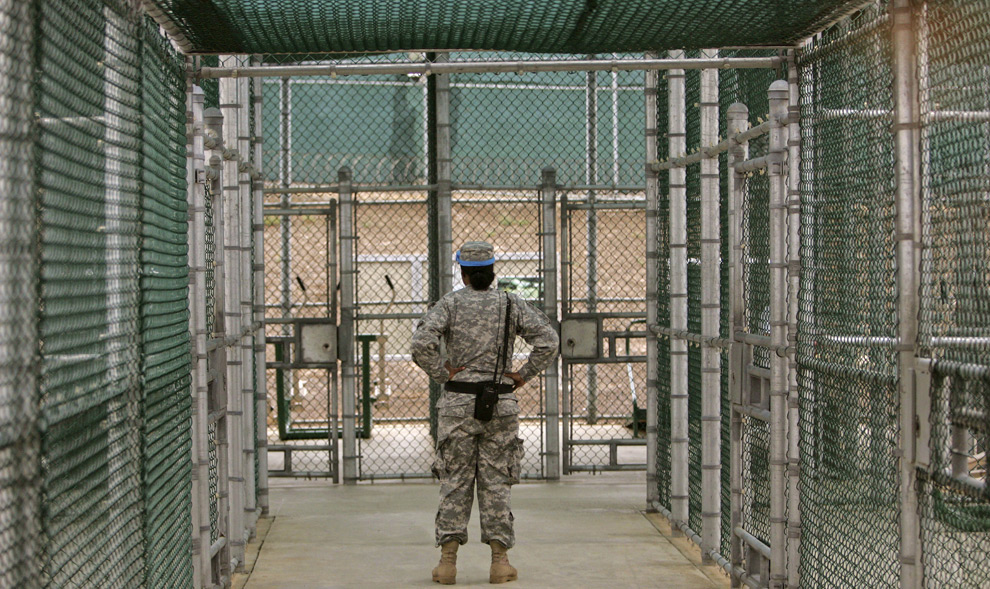
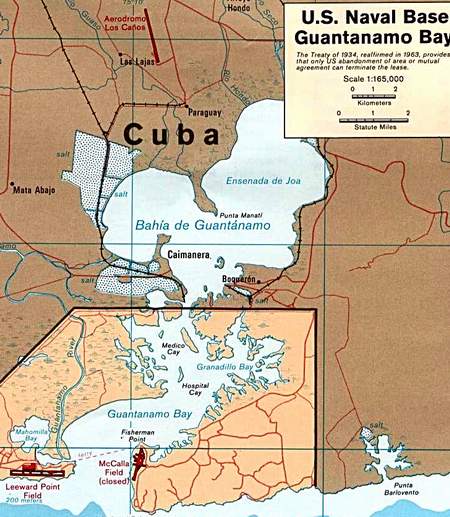
Once a front-page story, the U.S. prison on Guantanamo Bay is seldom in the news these days or, apparently, on the minds of the American people. But it certainly should be. Because the history and on-going operation of Guantanamo Bay Prison, or “GITMO” as it is often called, exposes the lie behind our claim to be a nation governed by the “rule of law”. Condemned by Human Rights Watch, Amnesty International, and many other such groups, it is a permanent stain on the character of the American people.
Since 2002, at the height of its operation, close to 800 captives from many different Muslim nations were held there under tortuous conditions as “suspects” rather than being classified as “prisoners of war”, which they clearly were, and accorded all of the rights they were entitled to as prisoners of war. The youngest was 13 years old! In fact, 21 of the detainees were children. All of the detainees were subjected to barbaric forms of torture. Some committed suicides. Hundreds were convicted in sham trials and in illegitimate military tribunals. Many, if not most suspects, clearly bore no responsibility for combat operations in the Muslim nations where we were waging war.
Today, about 30 suspects remain in the U.S. prison on Guantanamo Bay. Sixteen are “cleared for release”, but it has not yet been made clear to what country they can be released. Three have not been charged, nor have they been cleared for release. And nobody can reasonably predict when, if ever, they will be freed. And in the latest shameful twist, Defense Secretary Lloyd Austin has now upended a plea deal for the three prisoners accused of plotting the 9/11 attacks. It would have allowed the men to plead guilty and be sentenced to life in prison…and instead, given Austin’s intervention, they will now face the death penalty if they are tried and convicted.
Clearly, GITMO is a consequence of America’s imperialist wars in Muslim countries, wars for those Muslim countries’ oil, and for geopolitical gain. Of course, over the many years of these wars, U.S. presidents have repeatedly claimed that we are not at war with Islam. Well, tell that to the families of the millions of dead and wounded Muslims our bombing and invasion of Iraq and Afghanistan caused; tell it to the thousands of Muslims forbidden to enter America through travel bans; tell it to the countless numbers of Muslim citizens and residents of America, who’ve been discriminated against at work or in public; tell it to the Muslim children attacked on their way to school and called “terrorists;” or, tell it to the Muslim worshipers whose mosques have been infiltrated by government spies.
And…for that matter… tell it, as well, to the Palestinian Muslims. Because America’s desire for Mideast oil is also a big reason why Israel exists in the Middle East. A big reason why the United States has partnered with it in its war on the Palestinian people, and why we’ve sent billions in military aid to Israel over the years to keep Israel secure in its role as our “advanced military force” in the oil rich Middle East.
Guest – Shane Kadidal, a Senior Managing Attorney of the Guantanamo Project, at the famed Center for Constitutional Rights in New York, where he has worked on several significant cases arising in the wake of 9/11, including the Center’s legal challenges to the indefinite detention of men at Guantanamo.

—————————
Censorship, Civil Liberties, Civil Rights, Freedom Of Speech, Human Rights
Podcast: Play in new window | Download

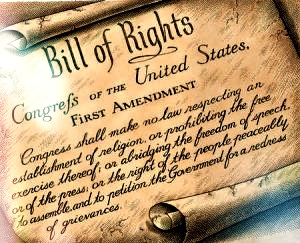
Book Banning, Censorship And Freedom Of Speech
Americans have a love-hate relationship with freedom of speech: They love to protect their own free speech and they hate to protect the free speech of those they disagree with. The First Amendment to the US Constitution was intended to protect freedom of speech and freedom of the press, yet throughout American history, governments at all levels have censored speech and tried to muzzle the press.
The anti-censorship group PEN America, in a survey of the 2022-23 school year, found that “freedom to read is under assault in the United States — particularly in public schools — curtailing students’ freedom to explore words, ideas, and books.” Authors whose books are targeted are most frequently female, people of color, and/or LGBTQ+ individuals.
According to the American Library Association, the number of titles targeted for censorship surged 65 percent in 2023 compared to 2022, reaching the highest levels it has ever documented. According to Deborah Caldwell-Stone, director of ALA’s Office for Intellectual Freedom, “Each demand to ban a book is a demand to deny each person’s constitutionally protected right to choose and read books that raise important issues and lift up the voices of those who are often silenced.”
Guest – Robert Corn-Revere is Chief Counsel for the Foundation for Individual Rights and Expression, known as “FIRE.” He has practiced First Amendment law for 40 years. From 1989 to 1994, Corn-Revere served as legal advisor and later chief counsel to the Chairman of the Federal Communications Commission.
Corn-Revere is a prominent writer, thinker, and advocate on free expression issues and is regularly listed as a leading First Amendment and media lawyer by various national publications. He co-authored the three-volume treatise, “Modern Communication Law.” In 2021, Cambridge University Press published his book, “The Mind of the Censor and the Eye of the Beholder: The First Amendment and the Censor’s Dilemma,” which explores how free expression became a part of America’s identity. I reviewed “The Mind of the Censor” for Los Angeles Review of Books and called it an “entertaining, enlightening, and timely book.”
Another form of censorship – Report: Record Number of Journalists Killed in Gaza by Stephen Rohde
—-
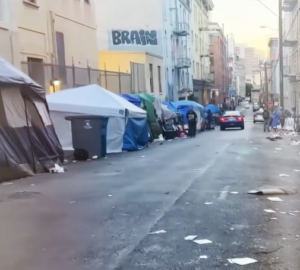
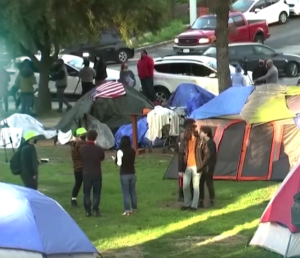
Disappeared: Criminalizing The Unhoused
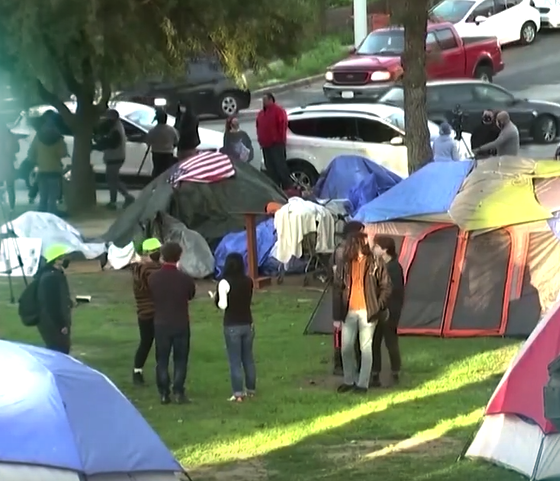
Late this June, the U.S. Supreme Court ruled that cities can punish people for sleeping in public places. In a 6-3 decision along ideological lines, the Court overturned lower court rulings that held it is cruel and unusual punishment under the Eighth Amendment to penalize people for sleeping outside if they had nowhere else to go. This ruling now allows localities the right to dismantle encampments of tents and cardboard coverings, even when there is no locally available housing or shelter.
Human Rights Watch has condemned this ruling and released a comprehensive report titled, You Have to Move! The Cruel and Ineffective Criminalization of Unhoused People in Los Angeles. The report documents the experiences of persons living on the streets, in vehicles, in temporary shelters, and in parks as they struggle to survive. In Los Angeles alone, tens-of-thousands of people are living in the streets, with death rates among the unhoused population reaching alarming levels. Governor Gavin Newsom, a supporter of the Court’s decision, has urged all local jurisdictions in California to destroy unhoused encampments. Several cities in the state have already begun doing so.
Western Regional Advocacy Project
The lack of housing is a national crisis, and this ruling raises the risk of increased use of such punitive tactics not only in Los Angeles but across the entire country.
Guest – John Raphling, Senior Researcher in the U.S. Program of Human Rights Watch and author of the report we’ve mentioned. Before joining Human Rights Watch, John spent years as a Deputy Public Defender in Los Angeles. He has represented political and community activists targeted for their activism, and homeless people prosecuted for crimes related to their status. John is also a member of the National Lawyers Guild.
———————————–
Civil Liberties, Civil Rights, Gaza, genocide, Human Rights, Targeting Muslims, U.S. Militarism, Violations of U.S. and International Law, War Resister
Podcast: Play in new window | Download

Separation of Powers And Project 2025
The US Constitution created the three branches of the federal government to serve as a check on one another. In particular, the judiciary was intended to ensure that the actions of the Executive and Legislative branches did not violate the Constitution.
But what happens when the Supreme Court is in the grip of a highly partisan, result-oriented super-majority half of whom were appointed by a President who has been convicted of 34 felonies and faces 57 more felony charges in three different criminal prosecutions, but claims absolute immunity for whatever he did while in office?
And on top of all that, this ex-President – Donald Trump – is a nominee for President of the United States and has promised to “terminate” the Constitution.
Meanwhile, in an almost 1000 page blueprint for the next conservative President titled Project 2025, a group of conservative organizations spearheaded by the Heritage Foundation, has laid out a detailed plan under which the President would acquire almost dictatorial power over the entire federal government.
Guest – Marjorie Cohn is professor of law emerita at Thomas Jefferson School of Law and former president of the National Lawyers Guild. She is also Dean of the People’s Academy of International Law and a member of the Bureau of the International Association of Democratic Lawyers. She writes frequent articles about the Supreme Court for Truthout.
—-

Larry Hebert’s Hunger Strike Against US Weapons To Israel
Israel’s deadly and unrelenting assault on Gaza following Hamas’ October 7 attack on Israel has had repercussions around the world. In Gaza itself the death toll is approaching 40,000 and the humanitarian crisis worsens every day. In the United States, as students are headed back to campus, colleges and universities are bracing for a new round of protests and counter protests. Israel’s war in Gaza is dividing the Democratic Party just as Kamala Harris and Tim Walz are seeking to unite their party to stop Donald Trump from returning to the White House. Recent surveys show that 48% of Americans oppose Israel’s military action in Gaza, while 42% support it.
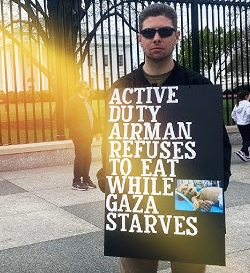
Guest – Larry Hebert [pronounced eh-BEAR], a very unlikely candidate to become an outspoken protestor against US military support for Israel, who would gain nationwide and international attention. Larry Hebert is a 26-year old U.S. Air Force Senior Airman and avionics technician assigned to Naval Station Rota in Spain, having served for 6 years in the military. At 10:00 am on Easter Sunday, March 31, 2024 on Pennsylvania Avenue in front of the White House, Hebert began a hunger strike during an authorized leave from his post. Shortly before his hunger strike, he joined Veterans for Peace, an organization that opposes U.S. military actions.
The organization argues that U.S. weapons shipments to Israel is a violation of U.S. law. In a press release issued by Veterans for Peace, the purpose of Hebert’s hunger strike was described as highlighting “the plight of the starving children of Gaza.” Hebert wore a sign that read, “Active duty airman refuses to eat while Gaza starves,” with a photograph of an emaciated Palestinian infant. Hebert said he was inspired by the self-immolation of 25-year old serviceman Aaron Bushnell, who died on February 25, 2024 outside the Israeli embassy in Washington. Before he died, Bushnell declared he would “no longer be complicit in genocide” in Gaza. Hebert’s hunger strike lasted 9 days but ended abruptly on April 9, when he was ordered to report immediately to Andrews Air Force Base for a return flight to his post in Spain. Hebert is pursuing a release from active duty as a Conscientious Objector.
———————–
Civil Rights, Death Penalty, Human Rights, Prison Industry
Podcast: Play in new window | Download
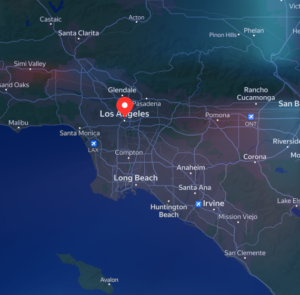
The California Criminal Legal System Reconsideration
In recent years, District Attorneys around the country in Los Angeles, Philadelphia, San Francisco, and elsewhere have broken the law and order mold as they look for better ways to address public safety, crime, prosecution, and sentencing in America, including a wholesale reconsideration of the death penalty.
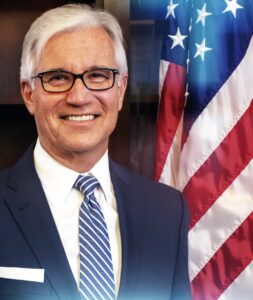
To examine the criminal legal system in the United States, we’ve invited one of the leading progressive prosecutors in America, George Gascon, the District Attorney of Los Angeles County, to join us.
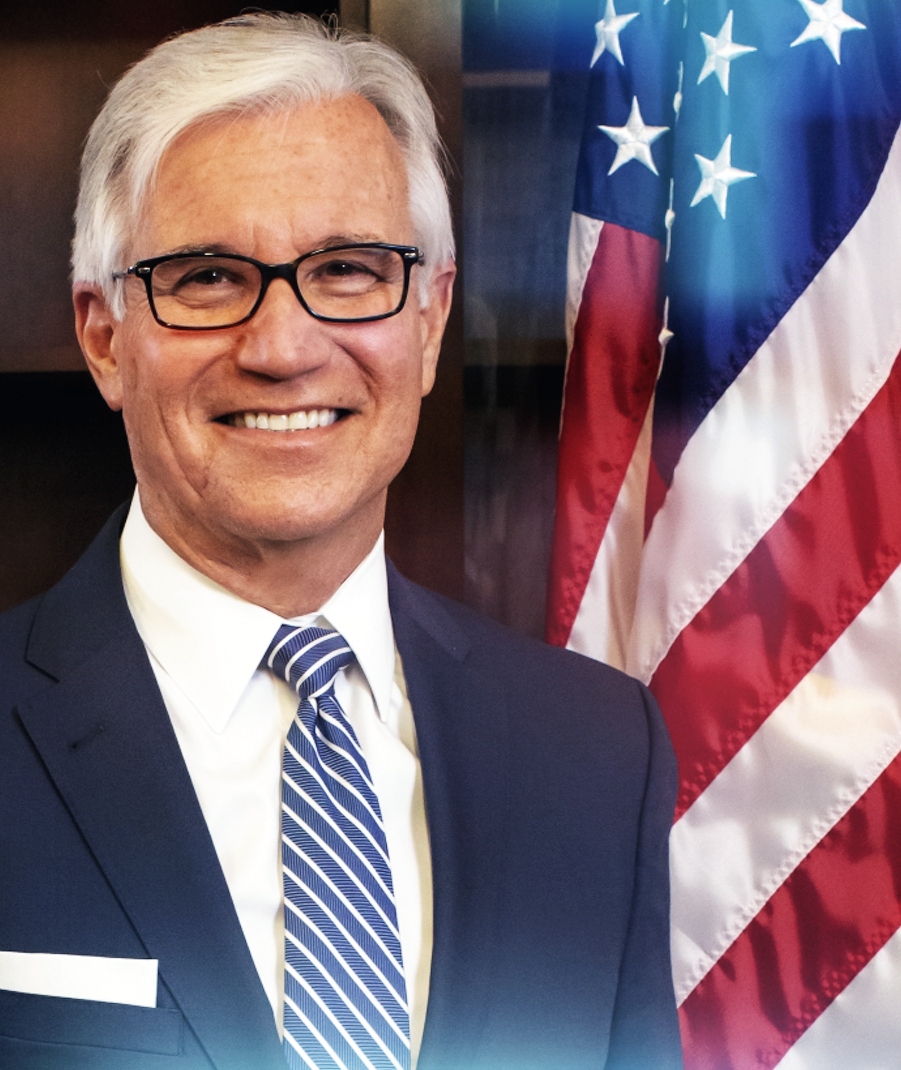
Guest – Attorney George Gascon began his career in law enforcement at the Los Angeles Police Department where he worked his way up the ranks from patrol officer to Assistant Chief of Police, overseeing operations for the more than 9,000 LAPD officers Then, in 2006, he was tapped to be Chief of Police in Mesa, Arizona, where he stood up to the hateful and anti-immigrant policies of then-Maricopa County Sheriff Joe Arpaio. In 2009, then-Mayor Gavin Newsom appointed Gascón to be San Francisco’s Chief of Police. Two years later, Newsom again turned to Gascón to fill a vacancy created when then-District Attorney Kamala Harris was elected California Attorney General. Gascón was re-elected San Francisco District Attorney twice.
He was the first Latino to hold that office, and the nation’s first Police Chief to become District Attorney. On December 7, 2020, he took office as the DA of LA County. He is also a former board member of the Council of State Governments Justice Center, a graduate of the FBI’s National Executive Institute and a former member of the Harvard University Kennedy School of Government’s Executive Session on Policing and Public Safety.
—-
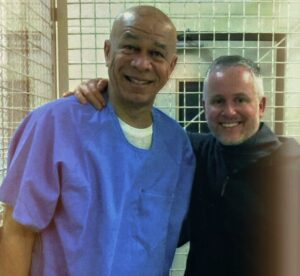

Maintaining Innocence Under Threat Of Execution: Bill Clark
We may be witnessing the dying days of the death penalty in the United States. 23 states have ended the use of capital punishment, while it remains on the books in 27 states, yet the number of executions are in decline. The U.S. public sector and political leaders are beginning to understand what abolitionists have always known: The death penalty is a relic of our racist past yet discrimination on the basis of race continues to plague the system. 55.8 percent of those executed are white, but 33.9 percent are Black and 8.4 percent are Latino/a, which is gruesomely out of proportion to the national population. Currently, 42 percent of death row inmates are white but a shameful 41 percent are Black.
Today, on Law and Disorder we are focusing on the state of California, where there are 650 inmates on death row, the largest number in the Western Hemisphere. 13 men have been executed since 1978. The last execution was in 2006. Due to a combination of court rulings and a moratorium imposed by Gov Gavin Newsom in 2019, there have been no executions in California in the last 18 years. Five inmates have been officially found innocent, all of whom were people of color. They join the 200 exonorees nationwide. Despite the moratorium in California, 17 people have still been sentenced to death in California — 80% of whom are Black or Latino.
The California Supreme Court is currently deciding whether to take up a historic petition filed in April by a coalition of civil rights and justice organizations arguing that racial discrimination in the administration of the death penalty in California violates the equal protection guarantee of the state constitution. The petition to the state Supreme Court cites more than a dozen studies showing race discrimination. One looked at more than 55,000 homicide cases in California between 1979 and 2018 and found that Black individuals were more than twice as likely to receive a death sentence as white individuals, while Hispanic individuals were 1.5 times more likely to receive a death sentence. California Attorney General Rob Bonta agreed in his response to the petition that the evidence of racial discrimination in capital punishment is “profoundly disturbing.”
So those are some of the facts which describe the capital punishment system in California and the Nation. But today on Law and Disorder we want to go beyond those raw statistics and take a look at the human cost of the death penalty by talking to someone who has been living under the threat of execution for 33 years. Bill Clark’s Film Project
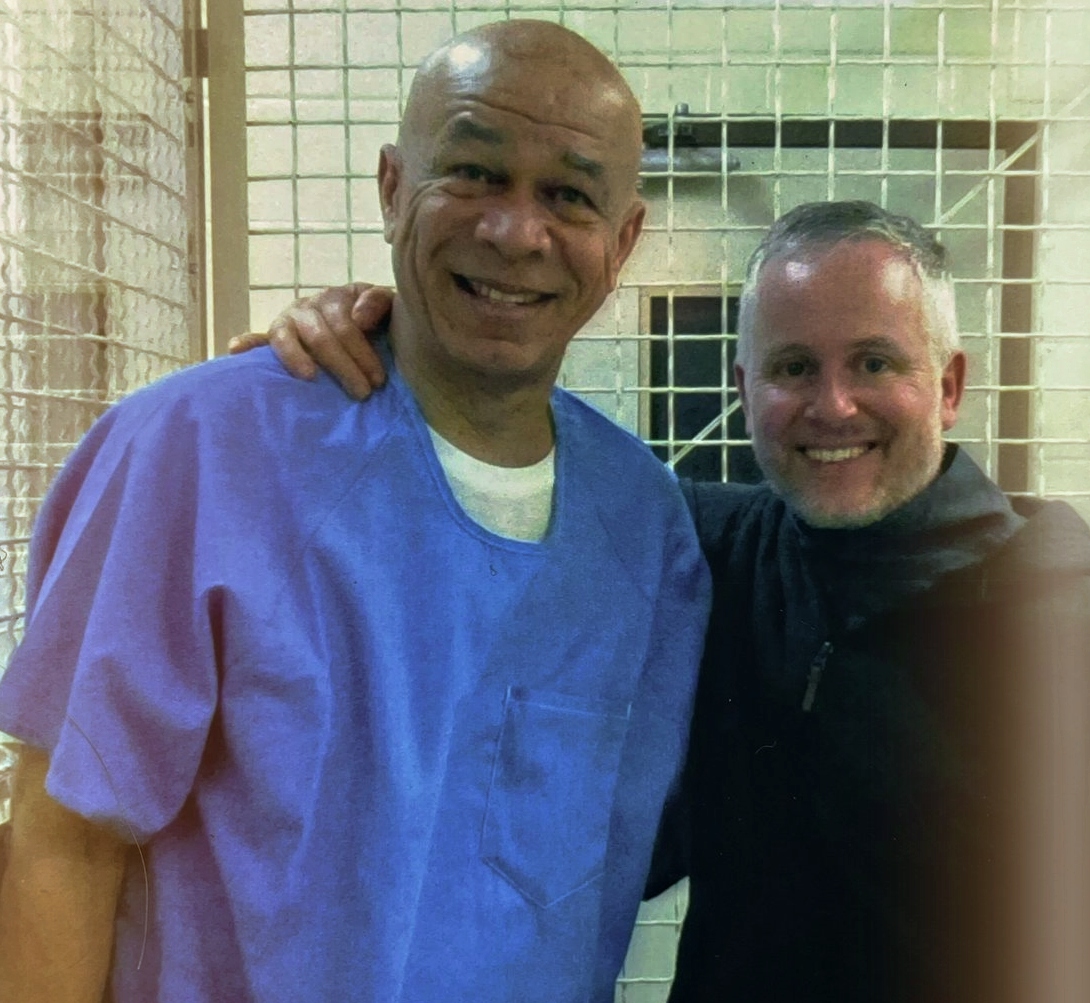
Guest – Bill Clark joins us by phone from prison in Vacaville, California, where he has been housed since March of this year after his transfer from San Quentin, where he was incarcerated for 26 years. I have known Bill for 24 years. Despite his situation, he is a hopeful, resilient and creative person. He was convicted of two murders in the early 1990s and has steadfastly maintained his innocence as he continues to challenge his convictions and death sentences.
————————————
Gaza, genocide, Human Rights, Targeting Muslims, U.S. Militarism, Violations of U.S. and International Law, War Resister
Podcast: Play in new window | Download
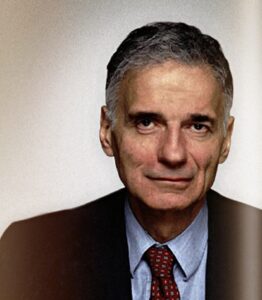

Ralph Nader On Continuing War In Gaza
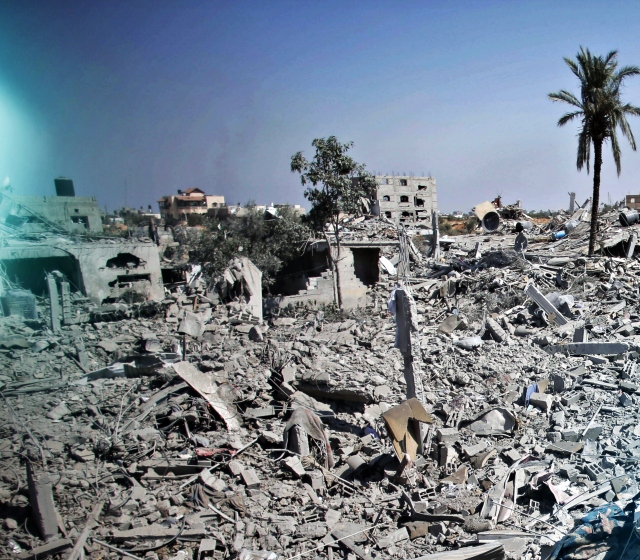
The American supported Israeli war against the 2.3 million Palestinians living in Gaza continues on since last October. The area, the size of Philadelphia, has been partially obliterated by American fighter planes, bombs, tanks, artillery shells, and bullets.
The number of dead Palestinians is at least 186,000 according to a recent article in the prestigious British medical journal The Lancet.
Israeli Prime Minister Benjamin Netanyahu recently left Washington DC where he came to solidify support in our Congress. It was his fourth visit. Biden’s support for the genocide has been vigorously challenged by Kamala Harris, his choice to replace him. Her election is doubtful. Donald Trump has vowed to “finish the job.”
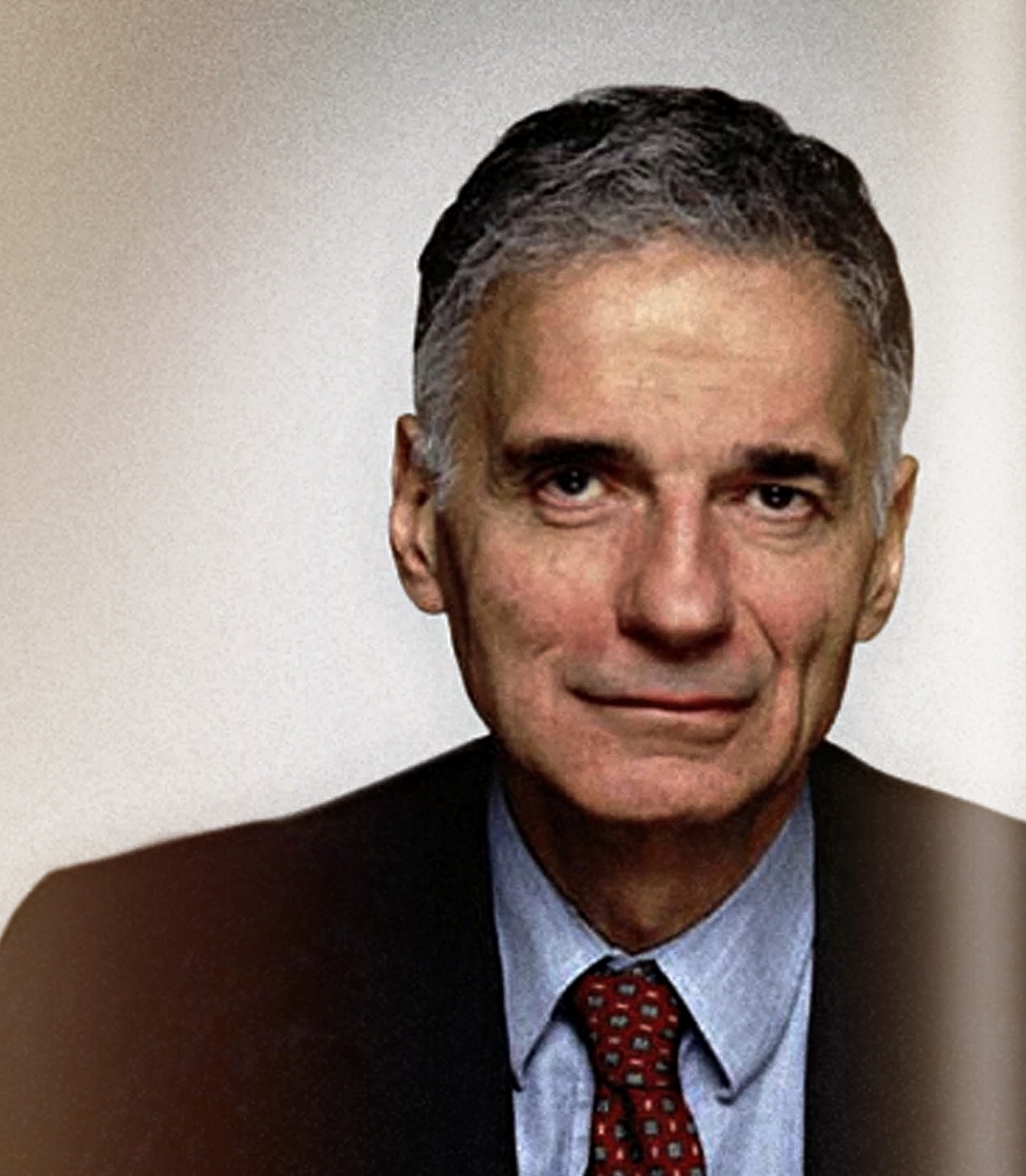
Guest – Ralph Nader, in a recent article wrote that the number the number of dead is higher than the 39 thousand figure set by Israel, America, and Hamas. Ralph Nader is an attorney, a significant figure in American politics, and a four-time presidential candidate in parties independent to the Republicans and Democrats. Ralph Nader one of the nation’s most effective and well-known social critics. He has raised public awareness and increased government and corporate accountability. As a young lawyer in 1965 he made headlines with his book Unsafe at Any Speed, leading to congressional hearings and passage of a series of life-saving auto safety laws in 1966. His example has inspired a generation of consumer advocates, citizen activists and public interest attorneys. Full biography.
—-
![]()

![]()
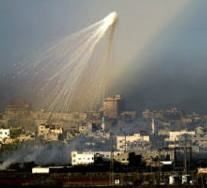
Humanitarian Emergency In Gaza
As of June 19, 2024, 37,396 people had been killed in Gaza according to the Gaza Health Ministry, as reported by the UN Office for the Coordination of Humanitarian Affairs. According to a report in Lancet, that number is likely an underestimate. Furthermore, the UN estimates that, by Feb 29, 2024, 35% of buildings in Gaza had been destroyed, so the number of bodies still buried in the rubble is likely substantial, with estimates of more than 10,000.
Even if the conflict ends immediately, there will continue to be many indirect deaths in the coming months and years from causes such as reproductive, communicable, and non-communicable diseases. The total death toll is expected to be large given the intensity of this conflict; destroyed health-care infrastructure; severe shortages of food, water, and shelter; the population’s inability to flee to safe places; and the loss of funding to UNRWA, one of the very few humanitarian organizations still active in Gaza. Experts believe it is not implausible to estimate that up to 186,000 or even more deaths could be attributable to the current conflict in Gaza.
Human rights groups believe an immediate and urgent ceasefire in Gaza is essential, accompanied by measures to enable the distribution of medical supplies, food, clean water, and other resources for basic human needs.
Guest – Professor David Myers is Distinguished Professor of History at UCLA and holds the Sady and Ludwig Kahn Chair in Jewish History. He serves as the director of the UCLA Luskin Center for History and Policy and he also directs the UCLA Initiative to Study Hate. He is the author or editor of many books in the field of Jewish history, including, with Nomi Stolzenberg, American Shtetl: The Making of Kiryas Joel, a Hasidic Village in Upstate New York published by Princeton University Press in 2022. It was awarded the 2022 National Jewish Book Award in American Jewish studies. From 2018-2023, he served as president of the New Israel Fund.
————————