Civil Liberties, Civil Rights, Human Rights, Truth to Power, U.S. Militarism, War Resister, Whistleblowers
Podcast: Play in new window | Download
Attorney Jim Lafferty Commentary On Rittenhouse Case
—-


Victims of Agent Orange Relief Act of 2021
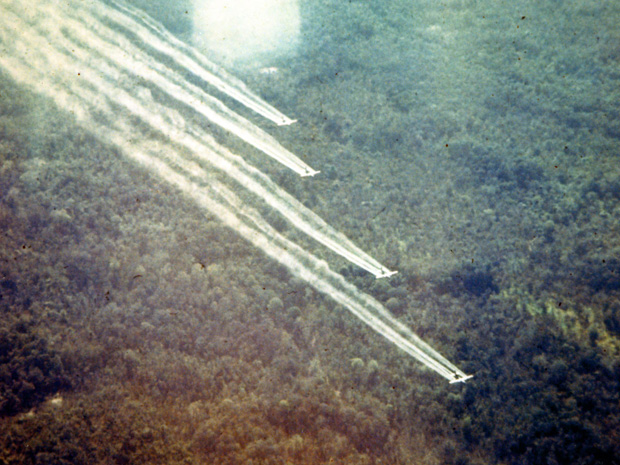
The Vietnam War ended in 1975, but Vietnamese people today continue to suffer the effects of Agent Orange, the deadly dioxin-containing chemical weapon that the U.S. sprayed over 12 percent of South Vietnam from 1961-1971, poisoning both the people and the land. The defoliant was used to more effectively prosecute the war against the Vietnamese people, exposing their hideouts, destroying their crops and food.
Descendants of approximately 2 to 4 million Vietnamese people, hundreds of thousands of U.S. Vietnam veterans, and Vietnamese-Americans who were exposed to the toxin continue to record disproportionate rates of congenital disabilities and higher rates of many diseases.
U.S. veterans receive some compensation from the U.S. government, but very little assistance has been given to the Vietnamese people, who were the intended victims of the defoliant Agent Orange. Thus, on May 25, Rep. Barbara Lee (D-California) introduced H.R. 3518, the Victims of Agent Orange Relief Act of 2021, in the House of Representatives. The Vietnam Agent Orange Relief & Responsibility Campaign (for which I serve as co-coordinator) assisted Lee in drafting the bill.
Lee said, “The United States has a moral responsibility to compensate the victims of the Agent Orange campaign. In the same way we are focused on beginning to repair the damage of systemic racism in the form of reparations, and the war on drugs with restorative justice, it is also our responsibility to try and atone for this disgraceful campaign during the Vietnam War.”
Susan Schnall is co-coordinator of the Vietnam Agent Orange Relief and Responsibility Campaign. She was an active duty Navy nurse during the conflict in Vietnam and in 1969, she was tried and found guilty by general court martial of conduct unbecoming an officer for dropping anti-war flyers over military bases in the San Francisco Bay area and an aircraft, and wearing her uniform in the GI and Veterans March for Peace demonstration in San Francisco.
Guest – Susan Schnall is a member of Vietnam Veterans Against the War and the American Public Health Association. She is also President of the New York City Veterans for Peace chapter and a board member of national Veterans For Peace. Susan organized and led a delegation of Science/Public Health professionals to Vietnam in 2013 to survey the land that had been contaminated by the US use of Agent Orange/dioxin and visit the people who had been harmed by the chemicals. In 2006, Susan was awarded the medal for peace and friendship between peoples by the Vietnam Union of Friendship Organizations.
—-

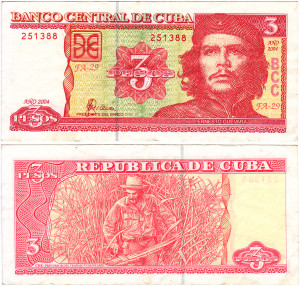
The U.S. Role In Cuba Destabilization
First the Trump and now the Biden administration have accelerated their efforts to destabilize and overthrow the Cuban socialist government with the aim of reestablishing capitalism on the island.
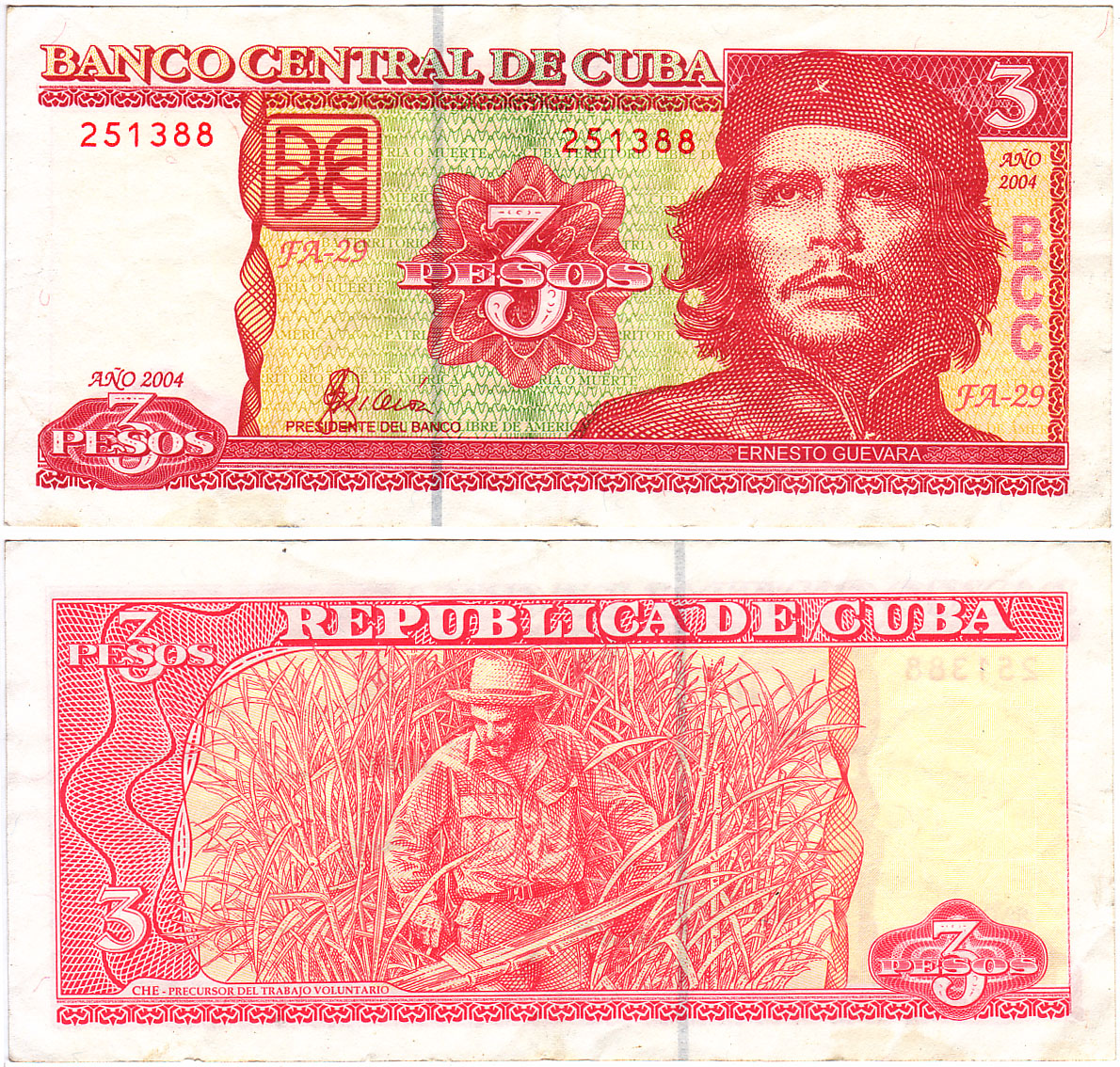
This effort is 62 years old going back to 1959 when a popular revolution lead by Fidel Castro and Che Guevara succeeded in getting rid of the U. S. imposed dictator Batista. The still popular revolution has improved the lives of the Cuban people. Back in 1959 Cuba was a U S. colony. Its resources were owned by US corporations, its dictatorial government was a puppet of the United States.
The population, both urban and rural, was desperately poor. These were the people who made the revolution. The new government instituted land reform. They offered to pay the US corporations for the value of the land. The corporations refused so the Cuban government nationalized the land and re-distributed it to the peasantry, as was their legal right.
In retaliation, the US-owned oil refinery was shut down, crippling the Cuban economy. So the Cubans nationalized the oil refinery, the telephone company, the nickel mines and so on. This all came under control of the Cuban people. This is the essence of the Cuban revolution. The US Government immediately instituted its policy, which continues to this day, of isolation and aggression. It started in 1960, a year after revolution. President Dwight D Eisenhower, pursuant to a 1960 memo written by a senior state department official, the US Government instituted a financial, economic, and commercial blockade of Cuba which is enshrined in our law and continues to this day.
Trump introduced some 200 new measures to overthrow the Cuban revolution. Biden continued this effort with even more measures. The US government and its counter-revolutionary supporters in South Florida promoted the recent July 11 demonstrations in cities throughout the island. These demonstrations were joined by many Cubans who have valid criticisms about bureaucracy, mismanagement, and corruption in the Cuban government. For example, there are long lines people have to wait in to buy food and a lot of items are unavailable.
The situation of the Cuban people is one of hardship brought about by the 60 year old commercial and economic blockade set up at United States. Their suffering has been further exacerbated of course by the pandemic. Cubans suffer a shortage of food and medicine and a blow to the economy which was largely based on tourism. The US counter-revolutionary efforts involve a massive spending of money on social media and a direct role in organizing opponents of the Cuban government. After the July demonstrations a new one was planned for November 15. It was a total flop.
Guest – Attorney Art Heitzer, author and head of the Cuba subcommittee of the National Lawyers Guild.
—–
Civil Liberties, Civil Rights, Human Rights, Political Prisoner, Prison Industry, Torture
Podcast: Play in new window | Download
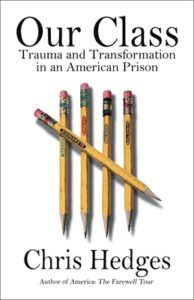

Our Class: Trauma and Transformation in an American Prison
American society is in an ever deepening crisis. Half the population is poor or near poor. Three men including Jeff Bezos of Amazon own as much as all these tens of millions of people combined. Climate catastrophe threatens life on our planet. Equally threatening is a very real potential for a nuclear war. Democracy and the rule of law are in free fall.
A manifestation of this societal crisis is our system of mass incarceration. It is the largest in the world, warehousing well over 2 million people. It is, along with militarized police, the primary form of social control, especially for poor people of color, in de-industrialized cities where the poor have been abandoned and are treated little better than human refuse.
Black Americans have especially suffered. They are incarcerated in state prisons at nearly 5 times the rate of white Americans. Nationally, one in 81 Black adults in the U.S. is serving time in state prison. Wisconsin leads the nation in Black imprisonment rates; 1 of every 36 Black Wisconsinites is in prison. In 12 states, more than half the prison population is Black: Alabama, Delaware, Georgia, Illinois, Louisiana, Maryland, Michigan, Mississippi, New Jersey, North Carolina, South Carolina, and Virginia.
Seven states maintain a Black/white disparity larger than 9 to 1: California, Connecticut, Iowa, Maine, Minnesota, New Jersey, and Wisconsin. Chris Hedges has taught in the college degree program offered by Rutgers University in the New Jersey prison system for over a decade.
His new book Our Class: Trauma and Transformation in an American Prison, is the story of a class he taught in East Jersey State Prison. His 28 students, who collectively had spent 515 years in prison, wrote a play about their lives called “Caged.”
The process of writing the play, which was eventually performed at The Passage Theatre in Trenton, New Jersey to sold out audiences and was published by Haymarket Books, ripped down the emotional walls most erect in prison and allowed his students to express in heartbreaking detail the trauma, grief, loss and violence that marked their, as well as the institutionally racist structures, often unseen by those on the outside, which keep the poor poor. And yet, the play they wrote was, at its core, about radical love, the solidarity and bonds that keep them human outside and inside prison walls.
Guest – Chris Hedges spent two decades as a foreign correspondent, 15 of them with The New York Times, covering conflicts in Central America, the Middle East, Africa and the former Yugoslavia. He learned overseas that the evils of empire are the external expression of white supremacy, just as mass incarceration, which he describes as the civil rights issue of our age, is the most brutal internal expression of white supremacy. Prisons , he writes, are the modern iteration of slave plantations. Hedges is the author of 14 books, The winner of a Pulitzer Prize for journalism, a graduate of Harvard Divinity school, and an ordained Presbyterian minister.

———————-
CIA Sponsored Terror, Civil Liberties, Civil Rights, Human Rights, Targeting Muslims, U.S. Militarism, Violations of U.S. and International Law, War Resister
Podcast: Play in new window | Download
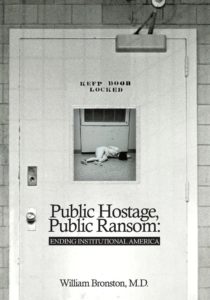
Public Hostage, Public Ransom:, Ending Institutionalization in America
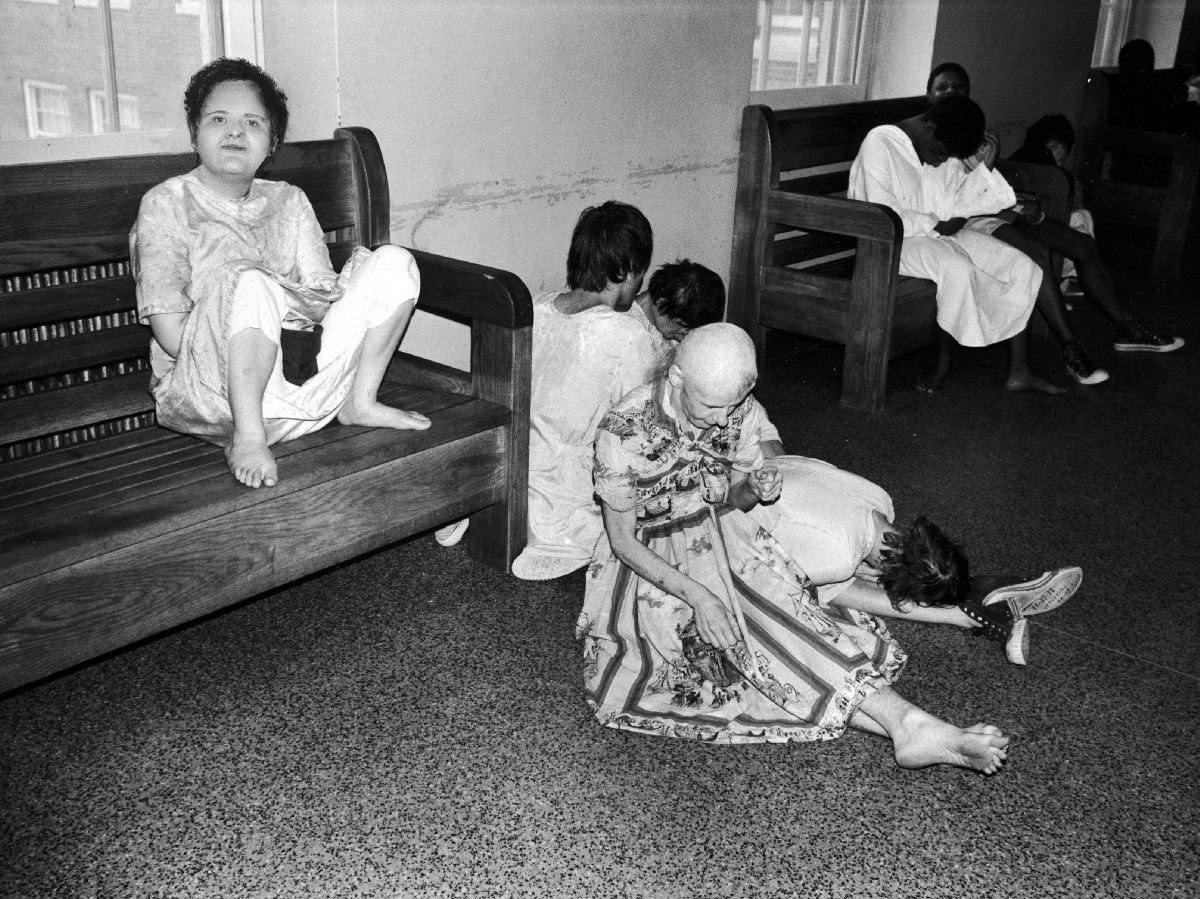
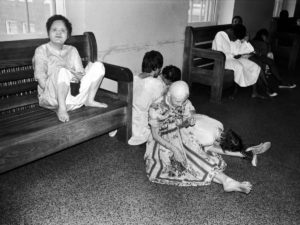
In the 1970s the shocking horrors of Willowbrook State School on Staten Island in New York City were exposed to the entire world. Some 30,000 disabled people lived in an isolated place segregated from the rest of society and horribly abused and neglected daily.
Dr. William Branston worked there and blew the whistle, telling the truth about this horrific place, the Willowbrook hell hole.
The mistreatment of disabled people and elderly persons’ mistreatment is facilitated because the institutions that has them get Medicaid funding. It is a national scandal. Willowbrook is seen as a turning point in the beginning of the disability rights movement in the United States.
The ancient Greek philosopher Aristotle said “life in the community is a necessary condition for a persons complete flourishing as a human being.“ This Is what needs to be done. Re-integrating these people into the community is the goal today across the USA.
We are joined in this interview by my friend and colleague attorney Richard Levy. It was Richard‘s law firm, Eisner and Levy represented Dr. Branston in a class action lawsuit against the state of New York.
Guest – Dr. William Bronston, author of Public Hostage, Public Ransom:, Ending Institutionalization in America. Dr. Bronston is an advocate for deinstitutionalization. He was a physician at Willowbrook State School in New York; medical director and consultant for the California Department of Developmental Services.
—-
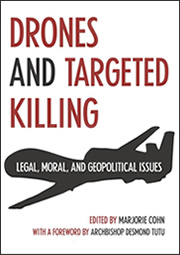
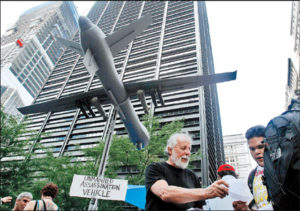
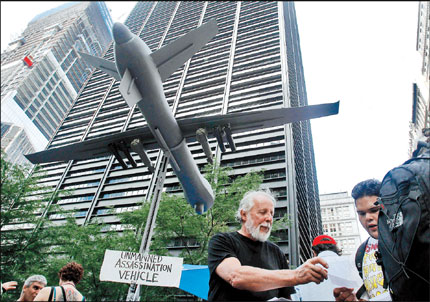
The Movement To Ban Killer Drones
On October 29, as Joe Biden pulled U.S. forces out of Afghanistan, his administration launched a hellfire missile from an MQ-9 Reaper drone in Kabul that killed 10 civilians, including seven children, and then lied about it. They called it a “righteous strike” conducted in self-defense.
Nearly three weeks later, an extensive investigation by The New York Times revealed that the target of the drone strike, Zemari Ahmadi, was a U.S. aid worker, not an ISIS operative, and the “explosives” in the Toyota that the drone targeted were most likely water bottles.
Now an “independent Pentagon review” has concluded that no crimes were committed by U.S. forces, even though footage showed a child present minutes before the drone attack. The Air Force Inspector General admitted that 9 seconds before the strike, the surveillance video showed the presence of 4 children in the strike zone. But under international law, a targeted killing is only legal if it’s necessary to protect life, and no other means — including capture or nonlethal incapacitation — is available to protect life.
Nick Mottern is co-coordinator of Ban Killer Drones.org. He said, “The Pentagon’s assertion that no one did anything illegal to cause the drone deaths of the Ahmadi family members is a shameful side-stepping and a further cover-up of who made what decisions and why in this horrible slaughter. We need to see all the records surrounding this incident, including those that may help us to know the role of President Biden, if any.”
Ban Killer Drones.org is calling for reparation payments of at least $3 million for each of the 10 members of the Ahmadi family.
Meanwhile, although Biden withdrew the troops from Afghanistan, he has pledged to continue “over-the-horizon” operations from afar. Biden is following in the footsteps of his predecessors who all used drone strikes which killed untold numbers of civilians.
The drone that killed the Ahmadi family was operating out of Creech Air Base in Nevada. Ban Killer Drones helped organize the annual Shut Down Creech Week from Sep. 26 through Oct. 2.
Guest – Nick Mottern. Nick has been an tireless organizer of the movement to ban armed drones.
————————–
Civil Liberties, Civil Rights, Criminalizing Dissent, Human Rights, Right To Dissent, Supreme Court, Truth to Power
Podcast: Play in new window | Download
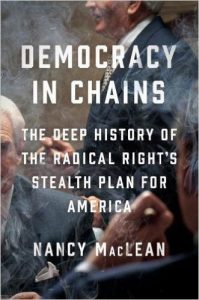
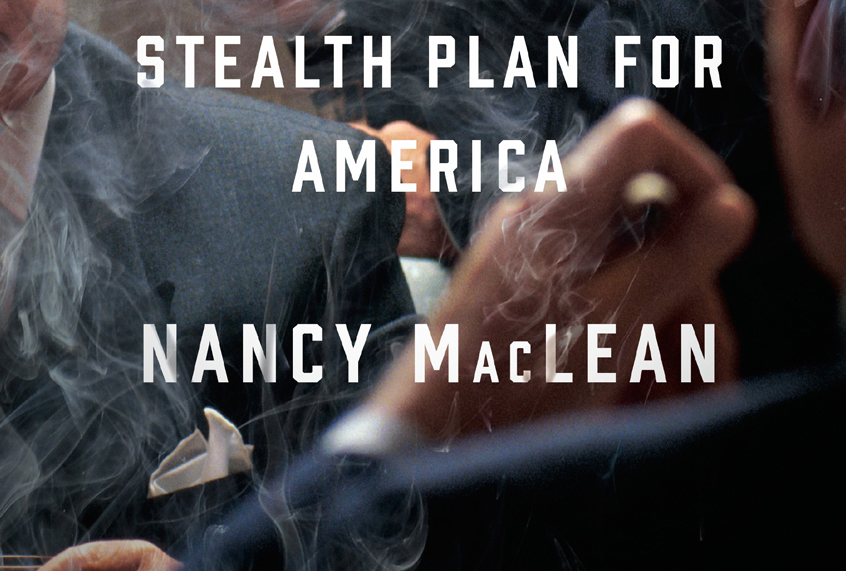
Democracy in Chains: The Deep History of the Radical Right’s Stealth Plan for America
The spectacle of President Donald Trump and the palace intrigue in the White House has served daily to distract people from the political strategy and accomplishments of the radical right, which is taking over the Republican Party.
Over time, the GOP has been transformed into operation conducting a concerted effort to curb democratic rule in favor of capitalist interests in every branch of government, whatever the consequences. It is marching ever closer to the ultimate goal of reshaping the Constitution to protect monied interests. This gradual take over of a major political party happened steadily, over several decades, and often in plain sight.
Duke University Professor Nancy MacLean exposes the architecture of this change and it’s ultimate aim. She has written that “both my research and my observations as a citizen lead me to believe American democracy is in peril”.
Guest – Professor Nancy MacLean, whose new book, Democracy in Chains: The Deep History of the Radical Right’s Stealth Plan for America, has been described by Publishers Weekly as “a thoroughly researched and gripping narrative… [and] a feat of American intellectual and political history.” Booklist called it “perhaps the best explanation to date of the roots of the political divide that threatens to irrevocably alter American government.” The author of four other books, including Freedom is Not Enough: The Opening of the American Workplace (2006) called by the Chicago Tribune “contemporary history at its best,” and Behind the Mask of Chivalry: The Making of the Second Ku Klux Klan,named a New York Times “noteworthy” book of 1994, MacLean is the William H. Chafe Professor of History and Public Policy.
—-
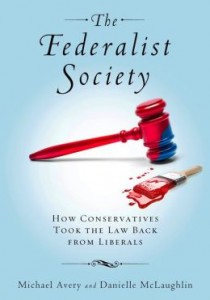
The Federalist Society: Shifting the U.S. Legal Landscape to the Right
With the recent nomination of conservative attorney Brett Kavanaugh to replace Justice Anthony Kennedy, the United States Supreme Court will have a majority of authoritarian anti-democratic jurists who support a powerful executive. At the same time, Donald Trump has wasted no time in appointing more conservatives to federal judgeships.
More and more we’re hearing that the once little-known Federalist Society is behind these appointments. But it’s now a new development. The Society was formed at Yale University in 1981, and has steadily and quietly been placing its lawyer members in positions of power in the government and judiciary.
In their 2013 book, The Federalist Society: How Conservatives Took the Law Back from Liberals, attorneys Michael Avery and Danielle McLaughlin track the movements of this small group of conservative law students and lawyers and their increasing influence. The Federalist Society has lawyer chapters in every major city in the United States and student chapters in every accredited law school. Members include economic conservatives, social conservatives, Christian conservatives, and libertarians. One of the things that has made the Federalist Society so very effective is their big picture agenda. While they may have differences of opinion on a range of issues, they have successfully put those aside to advance a far-reaching, long-lasting, and broad conservative agenda. Their agenda is chipping away at social gains made since the 1930s. Medicare and Medicaid and Social Security are on the block. So is Roe v. Wage. Citizen United, holding that corporations are persons and money is free speech, and the union-breaking Janus decision are just the beginning. Other attacks on democracy include voter suppression, voter ID laws, and gerrymandering.
Guest – Attorney Michael Avery, the former president of the National Lawyers Guild, and is an expert in the areas of constitutional law and police misconduct.
———————
CIA Sponsored Terror, Civil Liberties, Civil Rights, Human Rights, U.S. Militarism, Violations of U.S. and International Law, War Resister
Podcast: Play in new window | Download
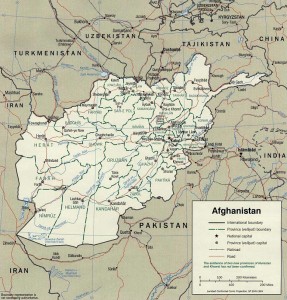

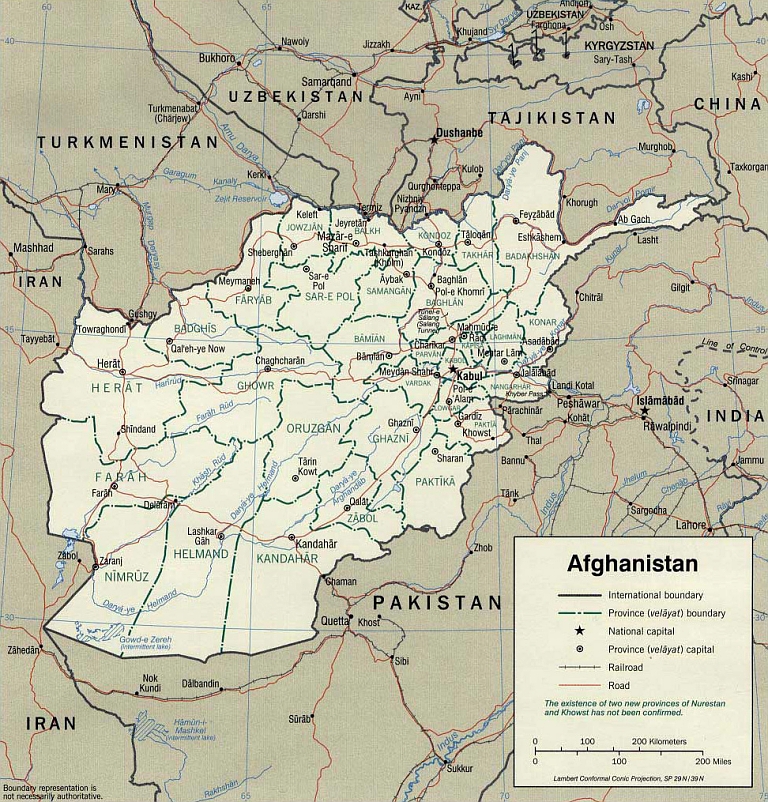
Post Occupation Afghanistan 2021
Afghanistan had a progressive modernizing government in the 1970s. It was headed by the Afghan Communist Party which was semi-independent of the Soviet Union. Women had the right to go to school. They did not wear burkas. They wore blue uniforms. Women had the right to a job. The infrastructure in Afghanistan was being built up with a lot of money from the Soviet Union.
But the Afghan people fell victim to the Cold War against Communism. The United States armed the Islamic fundamentalist Mujadaheen, in what became a full-scale civil war. They got help from the reactionary Pakistanis. The Afghan government invited the Soviet Union into Afghanistan. The Soviet Union got tied down in the battle and eventually withdrew. It so exhausted the Soviet Union economically and politically that by 1991, the Soviet government collapsed. President Jimmy Carter’s Secretary of State Zbignew Brzezinski, bragged about this as a great success for US policy.
The Taliban won the civil war, including with a promise to end the shelling of Kabul, and came to power in Afghanistan. Osama bin Laden located himself and his Al-Qaeda followers in that country. When the Twin Towers and the Pentagon were struck by Al-Qaeda on 9/11, and so many people in the US were paralyzed with grief and fear, the only response offered to the American people was revenge. This paved the way for the US invasion of Afghanistan, which soon won overwhelming popular support.
The US government was not really interested in bringing democracy to or preserving women’s rights in Afghanistan. The United States allied with the warlords of the Northern Alliance, showering them with money. Afghanistan became a tremendous supplier of heroin to the world market. Thousands of US soldiers died, tens of thousands were wounded, trillions of dollars were spent. The war was unwinnable. First Donald Trump announced he would withdraw US forces, then Joe Biden took US troops out of that country. What does the future hold for Afghanistan?
Guest – Phyllis Bennis is a fellow of the Institute for Policy Studies, where she is she is the director of the New Internationalism Project and works on anti-war, US foreign policy and Palestinian rights issues. She has worked as an informal adviser to several key UN officials on Palestinian issues. Her books including Calling the Shots: How Washington Dominates Today’s UN, and Understanding the Palestinian-Israeli Conflict.
————–