Civil Liberties, Criminalizing Dissent, Human Rights, Surveillance, Truth to Power
Podcast: Play in new window | Download
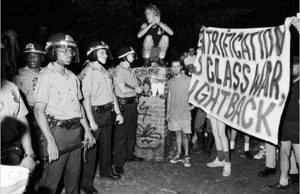
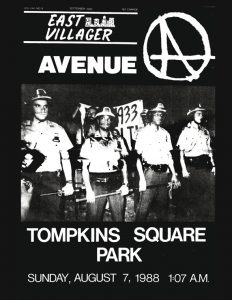
Tompkins Square Park Police Riot 30th Anniversary Special
Thirty years ago, a singular event occurred in Manhattan’s East Village that would prove transformative to many lives for years to come. Today on Law and Disorder we bring you a special program on the August 1988 Tompkins Square Park Police Riot as recounted by several individuals who were there for the entire event. We share firsthand observations of unbridled police violence, talk about how we came to be there, and discuss how the riot marked the linchpin to transform an entire neighborhood from a mecca of creativity and political activism, to the new home of TARGET, Starbucks and other hallmarks of American gentrification.
Tompkins Square Park is bounded on the West and East by Avenues A and B, and on the North and South by 10th Street and 7th Streets. It falls in the part of that neighborhood often referred to as Alphabet City, named for its 4 Alphabet numbered avenues, that in the 1960’s and 1970’s were a haven for drug sellers and squatters and a large Puerto Rican community. The park had a history of activism as it was the site of a riot in 1874 on behalf of the city’s labor movement.
In 1988, a homeless encampment was erected in the park, attracting a wide range of activists, squatters, and homeless persons. Several local residents complained and in a controversial move, the local governing body, Community Board 3, on June 28, approved a 1 AM curfew from what had long been a 24-hour open park. The Avenue A Block Association supported the curfew as it represented the few local businesses that existed then. Many residents opposed the curfew, including those who would have to take a longer walk around the park to get home.
The New York City City Parks Department agreed to enforce the curfew, and on July 31, 1998 protesters gathered at a rally there. Police, responding to alleged noise complaints, entered the park. A skirmish ensued, and several civilians and six officers were treated for injuries. Four men were arrested on charges of reckless endangerment and inciting to riot.
Guests – Susan Howard, East Village Community Activist, John McBride, Photographer and Arthur Nersesian, East Village Writer.
Written by Attorney Heidi Boghosian and produced by Geoff Brady
————
————
Civil Liberties, Criminalizing Dissent, Human Rights, Political Prisoner, Targeting Muslims, War Resister
Podcast: Play in new window | Download
First Amendment: Separation of Church and State
On the final day of the Supreme Court term last week, Justice Elena Kagan said that conservatives are “weaponizing the First Amendment” and turning it into a sword.”
Many on the left who once held absolutist views on free speech are realizing that certain court victories may actually bring harm to women, or gay and lesbian couples and others, rather than advancing their causes. The same is true with some cases involving religious freedom.
The Washington DC-based group Americans United for the Separation of Church and State reads, in part on its website that: “Religion is often uses as an excuse to discriminate against LGBTQ people, women, religious minorities, non-believers and others. Some want to use their religious beliefs as as excuse to deny health care, refuse to provide goods and services, and disobey laws protecting Americans from discrimination.”
Guest – Attorney Richard Katskee, Legal Director at Americans United for Separation of Church and State. Richard has litigated First Amendment cases in appellate and trial courts throughout the country, including challenging creationism in the public schools, religiously based discrimination against same-sex couples and much more.
—-
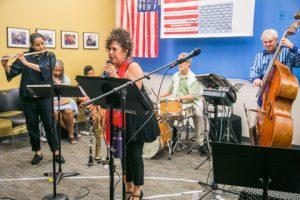
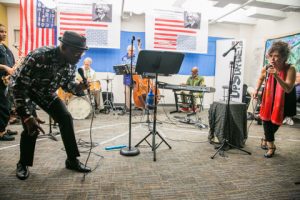
Alternative 4th of July celebration in NYC commemorated Frederick Douglass
Last week an Alternative 4th of July celebration in NYC commemorated Frederick Douglass an his Independence Day Speech at the Rochester Ladies’ Anti-slavery Society in 1852.
The event was organized by poet Raymond Nat Turner, who has been a guest on Law and Disorder, and held at the NY Chapter of the National Writers Union on July 3, 2018.
The celebration included performances by UpSurge! NYC, solidarity poems, and Frederick Douglass readers Ralph Poynter of the Lynne Stewart Organization and the New Abolitionist Movement, Margaret Kimberly from the Black Agenda Report, Diane Ward form the NWU Steering Committee and our own Heidi Boghosian. We are pleased to bring you some of the music, poetry and the readings.
———————–

———————–
Civil Liberties, Criminalizing Dissent, Human Rights, Surveillance, Truth to Power, War Resister
Podcast: Play in new window | Download
Legislation Criminalizing Protests
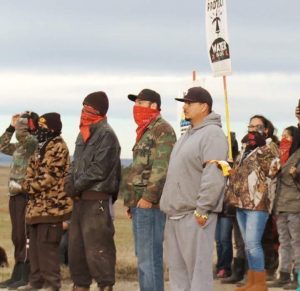
Throughout the nation, a rash of new bills are being introduced that increase the criminal penalty for the act of protesting. They have been in part inspired by the high-profile protests at Standing Rock, and also by model legislation drafted by the conservative and influential American Legislative Exchange Council. ALEC’s bills are designed to protect corporate interests. A new report from Greenpeace USA reveals how Energy Transfer Partners or ETP, the company behind the Dakota Access pipeline, with the fossil fuel industry, lobbied for legislation aimed at restricting and criminalizing protest. The report finds abuses on human rights, freedom of speech and faulty operations from the company.
ETP practices are destructive for the planet, for communities and for the health of democracy in the US. They have hired private security firms that surveil and infiltrate activist groups, advocated for laws that restrict the right to protest, or moving forward with pipeline projects against the will of Indigenous people and landowners, ETP is the poster child for unchecked corporate power. Annie Leonard, Executive Director at Greenpeace USA calls their projects lightning rods for controversy.
The report, Too Far, Too Often: Energy Transfer Partners’ Corporate Behavior On Human Rights, Free Speech, and the Environment, details how ETP lobbied for anti-protest legislation. It also shows how the company uses the courts and Strategic Lawsuits Against Public Participation (SLAPPs) to intimidate opponents of the Dakota Access pipeline project. In August 2017, ETP sued Greenpeace entities and others for USD $900 million, using RICO laws to claim that a collection of environmental groups and Indigenous allies constituted a criminal enterprise.
Guest – Attorney King Downing, seasoned civil liberties lawyer who has worked with activists for decades. King is the National Mass Defense Coordinator at the National Lawyers Guild.
—-

Big Pharma 101 and Affordable Prescriptions Made by Advancing the CREATES Act
It is estimated that the United States spends more than $500 billion dollars on prescription medicines each year. Total spending on drug therapies is about $371 billion dollars, including over-the-counter drug remedies, valued at 31 billion. A poll by the Kaiser Family Foundation found that 76% of Americans overall – and across party lines – say their top health care priority is ensuring that high-cost drugs for chronic conditions, such as HIV, hepatitis, mental illness and cancer, are affordable.
In a long overdue move, the U.S. Senate Judiciary Committee recently voted to advance the CREATES Act. It would prevent prescription corporations from abusing regulatory rules to deny generic medicines and biosimilar manufacturers access to product samples that allow these groups to obtain U.S. Food and Drug Administration approval and bring affordable products to market.
Corporations have long used this practice to delay the introduction of price-lowering generic and biosimilar competition. Brand-name manufacturers use it to inappropriately extend their monopolies. The Act aims to curb these abuses and promote competition. The U.S. Congressional Budget Office claims the Act will save $3.8 billion over the next 10 years.
Americans overwhelmingly support disciplining Big Pharma to help rein in pharmaceutical prices. The DC based group Public Citizen says that the CREATES Act begins to do that and cites it as a key structural reform that we can pass this year. It urges Congress should pass this legislation without delay.
Guest – Steven Knievel, Steven Knievel is a researcher and campaign organizer with Public Citizen’s Global Access to Medicines Program. He works with governments and public interest groups around the world to promote the use of flexibilities in patent and trade rules to promote access to medicines for all. He also works to mitigate the deleterious effects of corporate influence in trade negotiations on public health.
———
CIA Sponsored Terror, Civil Liberties, Criminalizing Dissent, Gaza, Human Rights, Iran, Iraq War, Supreme Court, Truth to Power
Podcast: Play in new window | Download

Middle East Round Up: Brian Becker
Iran and Gaza are at both at critical and potentially catastrophic junctures. Iran faces new challenges due to because of Donald Trump’s denunciation of the 2015 nuclear deal with Iran and the re-imposition of sweeping sanctions. As well, recent elections in Iraq pushed Iran’s allies in Iraq’s Shia militias–the Popular Mobilization Forces—into second place by nationalist Moqtada al-Sadr.
The element within the Republican Party with deep pockets is the Republican Jewish Committee. They support Netanyahu and his Likud party. The RJC supported both the blowing up of the Iran deal and the move of the Embassy to Jerusalem. Now they support Netanyahu’s crushing of the Palestinians in Gaza.
Iran also risks being diplomatically out-maneuvered. Israel Prime Minister Benjamin Netanyahu was in Moscow recently, aligning his interests in Syria with Vladimir Putin’s. In what is becoming routine coordination, Israel forewarned Russia of its attacks on Iran. Viewed from Tehran, Russia, Iran’s ostensible brother-in-arms in Syria, is more and more unreliable. Its Saudi foes are greatly encouraged by Trump’s offensive.
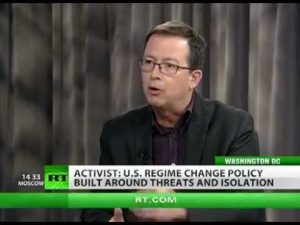
Guest – Brian Becker, the National Coordinator of the ANSWER Coalition and a leader of the Party for Socialism and Liberation. Brian has been a central organizer of the mass anti-war demonstrations that have taken place in Washington, D.C. in the past decade.
—-
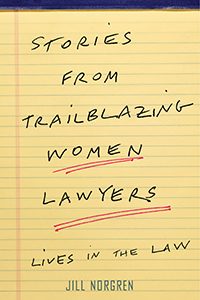
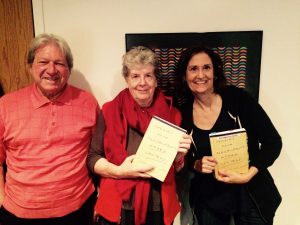
Stories From Trailblazing Women Lawyers
Before the Civil War there were six women lawyers in the entire United States of America. By 1890 there were about 200 and by 1900 about 1000. Women then could not even vote.
It was nearly impossible for a woman to get admitted to a law school or find a job when she graduated. Things did not qualitatively change until the late 1960s and 1970s.
By then, as a consequence of a number of factors including the great civil rights movement, the women’s movement, and the empty law school seats created by drafting men to serve in the Vietnam War, women were able to fight discrimination and win law school admission first by protesting in the streets and then through legislation, court decisions, and the actions of a few forward looking politicians.
Now half of the students in American law schools are women. They are professors in those very same places, indeed, the deans of the two most prestigious law schools in America, Harvard and Yale, are women. They are partners in law firms, hold important positions and governmental agencies, and are judges on the bench.
They have made a difference in the measure of social justice obtained by people in this country by advancing peoples’ and women’s rights in education, healthcare, employment, discrimination, family life, and violence against women.
Guest –Jill Norgren, the author of the just published book Stories From Trailblazing Women Lawyers. Ms. Norgren is Professor Emerita of Political Science at John Jay College and the Graduate Center, the City University of New York. She is the author of several books including Rebels at the Bar.
————————
Academic Freedom, Civil Liberties, Criminalizing Dissent, Human Rights, Truth to Power, War Resister
Podcast: Play in new window | Download
North and South Korea Diplomacy
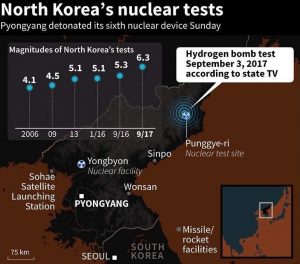
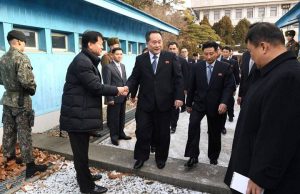
In a historic diplomatic break-through the leaders of North Korea and South Korea met earlier this month. The North Korean leader Kim Jung-Un promised to give up his country’s nuclear weapons declaring that its not necessary to have them if the United States formally ends it’s provocations and promises not to launch any military aggression against his country. He promised that North Korea will dismantle is nuclear test site in Punggye-ri in May.
The Korean War which began in 1950 came to an end in 1953. An armistice was signed but peace was never officially declared and the two countries have been officially at war ever since.
This state of affairs will hopefully be resolved. At the meeting, South Korean President Moon Jae-in embraced North Korean leader Kim Jong-un after signing the Panmunjom Declaration for Peace, Prosperity, and Unification of the Korean Peninsula.
Guest – Attorney Jim Lafferty is one of the leaders of the anti-Vietnam War movement and has remained a peace activist for five decades. Jim Lafferty is currently the head of the Los Angeles chapter of the National Lawyers Guild and an organizer of and speaker at last week’s Los Angeles teach-in on the Korean situation.
—-
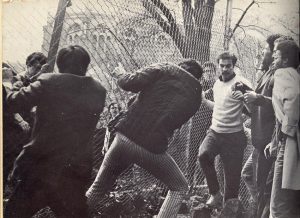
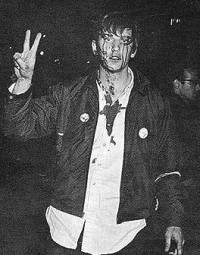
Columbia University Protests of 1968: Fifty Years Later
1968 was a momentous year. Huge historical events happened in the USA, Latin America, Europe, and Asia fifty years ago that shaped the course of history.
In France the students and workers came close to overthrowing capitalism in an advance capitalist country.
In Eastern Europe the Czechoslovakian people would’ve installed a democratic socialism, what they called socialism with a human face, but for the intervention by the power of Soviet Union which sent in troops to crush the uprising.
In Vietnam, the American war effort to prevent the Vietnamese people from determining their own destiny showed the world to be a losing proposition by the Tet Offensive. The Vietnamese National Liberation Front and the Hanoi coordinated military strikes throughout the south of their country, temporarily took over the southern capital of Saigon including the American Embassy.
Martin Luther King Jr. was assassinated in Memphis, Tennessee on April 4, 1968 provoking rebellion in the inner cities of the USA. Two weeks later the students, both black and white, rose up at Columbia University in New York City.
The African-American students demanded that the university stop encroaching in neighboring Harlem, where the university was planning to build a gymnasium for its students in a public park. They took over Hamilton Hall, a classroom building on the campus and received wide support from the Harlem community. The white students supported this demand. They took over four other buildings, including the administration building (Lowe Library) demanding that the University end its complicity in doing research that supported the American imperial war in Vietnam.
After a week of the student occupation, the New York City Police on behalf of the administration descended on the campus, violently beat the students, and arrested some 700 of them. They were defended by members of the National Lawyers Guild. After the arrests, the students went on strike. In the end the university’s complicity with the war in Vietnam and it’s landgrab in Harlem were ended.
Guest – Attorney Eleanor Stein, she was a law student at Columbia at the time and a participant in the student strike. She teaches a course called the Law of Climate Change: Domestic and Transnational at Albany Law School and SUNY Albany, in conjunction with the Environmental and Atmospheric Sciences Department at SUNY. Eleanor Stein is teaching transnational environmental law with a focus on catastrophic climate change. For ten years she served as an Administrative Law Judge at the New York State Public Service Commission in Albany, New York, where she presided over and mediated New York’s Renewable Portfolio Standard.
Guest – Professor Stefan Bradley whose primary research area is recent African-American history. He is the author of Harlem versus Columbia University: Black Student Power in the Late 1960s. Professor Bradley teaches at Loyola Marymount University in Los Angeles and is the chairperson of the African American studies department. He was a much appreciated participant in last weeks conference on the Columbia strike.
—————————————-