Uncategorized
Podcast: Play in new window | Download
Judge Thomas Griesa : Socialist Workers Party v Attorney General
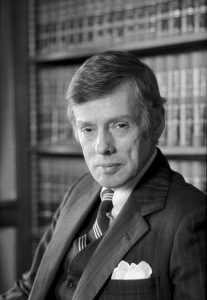
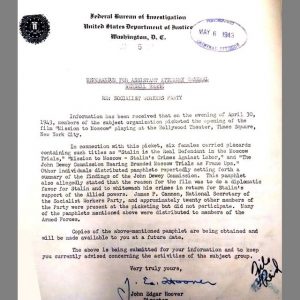
Retired federal Judge Thomas Griesa died two weeks ago in New York City at age 87. He presided over the historic case Socialist Workers party vs Attorney General. Leonard Boudin, the great leftist constitutional lawyer of his time, was chief counsel for the SWP in the 15 year litigation which ended in an historic victory in 1986 and which is extremely relevant for today.
Leonard wrote that “This lawsuit represented the first wholesale attack upon the entire hierarchy of so-called intelligence agencies that had attempted to infiltrate and destroy a lawful political party.” Further, “for the first time, a court has thoroughly examined the FBI’s intrusions into the political system of our nation and, in unmistakable language, has condemned the FBI activity as patently unconstitutional and without statutory or regulatory authority. The decision stands as a vindication of the first and fourth amendment rights that only of the Socialist Workers Party but of all political organizations in activists in this country to be free of government spying and and harassment.”
The Nation magazine appreciated the significance of the litigation and wrote that “ for the first time the FBI’s disruptions, surreptitious entries and use of informers have been found unconstitutional. All in all, it amounted to a domestic contra operation against a lawful and peaceful political organization, for no reason other than it’s ideological orientation.“
Guest – Jeff Mackler, a longtime socialist activist in California and the West Coast head of The Committee to Free Mumia Abu-Jamal. Jeff Mackler was a plaintiff in the successful 15-year-old battle. Jeff is also the director of The Mobilization to Free Mumia Abu-Jamal in Northern California and also the National Secretary of Socialist Action and its candidate for the U.S., presidency in 2016.
—-
Awad, et al. v. Fordham University
Israel’s enablers in the United States ramped up their efforts to shut down the growing Boycott, Divestment, and Sanctions movement known as BDS. Many states including New York have passed laws against businesses who would boycott Israel as a way of protesting Israel’s colonization of the Palestinian people. An anti-boycott bill is currently before the United States Congress.
In New York City, Fordham University is attempting to prevent Students for Justice in Palestine, a group that supports the boycott, from forming a campus group. The students brought a lawsuit seeking an injunction against the university to enable them to establish a SJP chapter there. Keith Eldridge, the Dean at Fordham University took the position that a SJP group would create polarization on campus and run contrary to the mission and values embraced at the university located in the Bronx.
The students got help from the Center for Constitutional Rights and Palestine Legal. A suit was brought on their behalf in April of last year. Two weeks ago a hearing was held in Civil Court in New York where the students demanded an injunction against Fordham University to permit them to form a chapter.
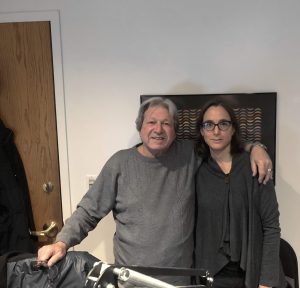
Guest – Maria LaHood, one of the student’s attorneys and Deputy Legal Director at the Center for Constitutional Rights with expertise in constitutional rights and international human rights. She works to defend the constitutional rights of Palestinian human rights advocates in the United States in cases such as Davis v. Cox, defending Olympia Food Co-op board members for boycotting Israeli goods; Salaita v. Kennedy,representing Steven Salaita, who was terminated from a tenured position for tweets critical of Israel; and CCR v. DOD, seeking U.S. government records under the Freedom of Information Act (FOIA) regarding Israel’s 2010 attack on the flotilla to Gaza. She works closely with Palestine Legal to support students and others whose speech is being suppressed for their Palestine advocacy around the country. She also works on the Right to Heal initiative with Iraqi civil society and Iraq Veterans seeking accountability for the lasting health effects of the Iraq war.
——————
CIA Sponsored Terror, Civil Liberties, Criminalizing Dissent, Death Penalty, FBI Intrusion, Habeas Corpus, Human Rights, Political Prisoner, Prison Industry, Supreme Court, Surveillance, Torture, Truth to Power
Podcast: Play in new window | Download
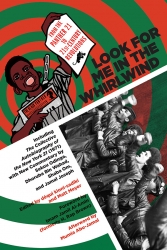
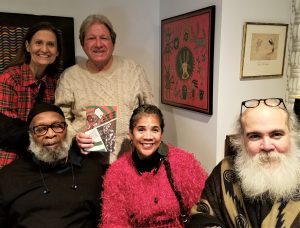
Look for Me in the Whirlwind: From the Panther 21 to 21st-Century Revolutions
The Black Panther Party was formed by community college students in Oakland California in 1966, the year after Malcolm X was murdered in New York City. It’s original name was the Black Panther Party For Self Defense.
The Black Panther Party set an example by its community programs and courage in declaring that it would defend itself against police brutality. The Black Panther Party spread westward from California to New York where chapters were organized in Brooklyn and Harlem, where Malcolm X was from. The Panthers frightened America’s elite. J Edgar Hoover and the FBI set out to destroy them and eventually succeeded. A great courtroom battle took place place in New York City shortly after the establishment of the chapters. Twenty one Black Panthers were framed up on baseless conspiracy charges.
They spent two years in prison including one year on trial. The jury was out for only one hour and acquitted them totally of all the baseless charges. The collective story of the New York City black panthers and their trial is told in the newly re-issued book Look For Me In The Whirlwind. The book is edited by Dequi Kioni-sadiki and Matt Meyer. It has a forward by Imam Jamil Al-Amin (formerly H. Rap Brown), the former head of the Student Nonviolent Coordinating Committee now in prison for life in Georgia and it contains an afterword by Mumia Abu-Jamal.
Guest – Matt Meyer is a New York City–based educator, organizer, and author who serves as War Resisters International Africa Support Network Coordinator, and who represents the International Peace Research Association at the United Nations Economic and Social Council. A former draft registration resister, Meyer’s extensive human rights work has included support for all political prisoners and prisoners of conscience, solidarity with Puerto Rico and the Black Liberation Movement, and board membership on the A.J. Muste Memorial Institute.
Guest – déqui kioni-sadiki is the chair of the Malcolm X Commemoration Committee and was a leader of the Sekou Odinga Defense Committee, which waged a successful campaign for the release of her husband. A tireless coalition-builder and organizer, déqui is a radio producer of the weekly show “Where We Live” on WBAI-Radio, Pacifica; an educator with the NYC Department of Education; and a member of the Jericho Movement to Free All Political Prisoners.
Guest – Sekou Odinga was a member of Malcolm X’s Organization of Afro-American Unity, a founding member of the New York chapter of the Black Panther Party as well as the Black Panther International Section, and was a member of the NY Panther 21. A citizen of the Republic of New Afrika and combatant of the Black Liberation Army, Sekou was captured in October 1981, mercilessly tortured, and spent the following thirty-three years behind bars—a prisoner of war and political prisoner of the U.S. empire. Since his release in November 2014, he has remained a stalwart fighter for justice and for the release of all political prisoners.
—-
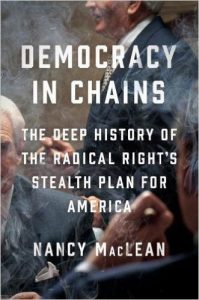
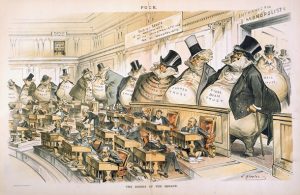
Democracy in Chains: The Deep History of the Radical Right’s Stealth Plan for America
The spectacle of President Donald Trump and the palace intrigue in the White House has served daily to distract people from the political strategy and accomplishments of the radical right, which is taking over the Republican Party.
Over time, the GOP has been transformed into operation conducting a concerted effort to curb democratic rule in favor of capitalist interests in every branch of government, whatever the consequences. It is marching ever closer to the ultimate goal of reshaping the Constitution to protect monied interests. This gradual take over of a major political party happened steadily, over several decades, and often in plain sight.
Duke University Professor Nancy MacLean exposes the architecture of this change and it’s ultimate aim. She has written that “both my research and my observations as a citizen lead me to believe American democracy is in peril”.
Guest – Professor Nancy MacLean, whose new book, Democracy in Chains: The Deep History of the Radical Right’s Stealth Plan for America, has been described by Publishers Weekly as “a thoroughly researched and gripping narrative… [and] a feat of American intellectual and political history.” Booklist called it “perhaps the best explanation to date of the roots of the political divide that threatens to irrevocably alter American government.” The author of four other books, including Freedom is Not Enough: The Opening of the American Workplace (2006) called by the Chicago Tribune “contemporary history at its best,” and Behind the Mask of Chivalry: The Making of the Second Ku Klux Klan,named a New York Times “noteworthy” book of 1994, MacLean is the William H. Chafe Professor of History and Public Policy.
CIA Sponsored Terror, Civil Liberties, Criminalizing Dissent, Death Penalty, FBI Intrusion, Habeas Corpus, Human Rights, Surveillance, Targeting Muslims, Torture, War Resister
Podcast: Play in new window | Download
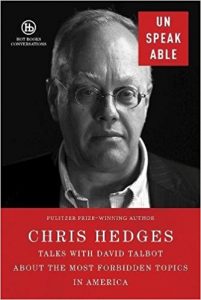
Chris Hedges – Unspeakable
The year 2017 has seen a qualitative acceleration and consolidation of power by the forces on the right which have been accurately described as a form of fascism. Three significant books were published this year addressing this phenomena, where it came from, and how to fight it. We have interviewed Nancy MacLean on her book Democracy in Chains about the origins and organization of the billionaire forces like the Koch brothers who have orchestrated the takeover of 25 state legislatures and who are attacking every institution of what is left of American democracy. We interviewed John Bellamy Foster on his book Trump in the White House about who supports the Trump agenda and why.
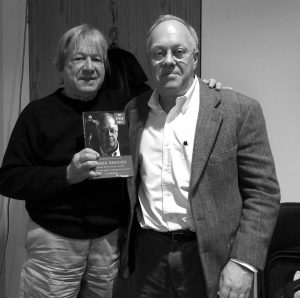
Guest – Chris Hedges, Pulitzer-Prize winning author and journalist. He was also a war correspondent, specializing in American and Middle Eastern politics and societies. His most recent book is ‘Death of the Liberal Class (2010). Hedges is also known as the best-selling author of War is a Force That Gives Us Meaning (2002), which was a finalist for the National Book Critics Circle Award for Nonfiction. The recent book Unspeakable consists of talks with David Talbot about the most forbidden topics in America. Chris Hedges teachers at two prisons in New Jersey. He was active in the Occupy movement, writes a weekly column for Truthdig and is also the author of American Facism: The Christian Right and the War on America.
—-
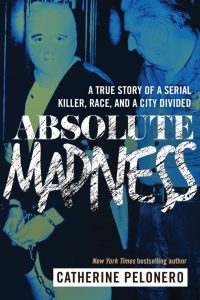
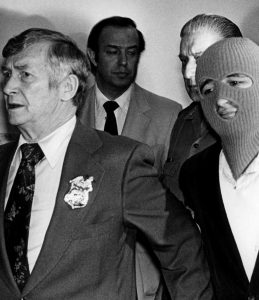
Absolute Madness by Catherine Pelonero
The new book Absolute Madness details the true story of a serial killer in New York whose targets were African American males. A young, white Joseph Christopher struck fear into the residents of Buffalo and New York City in the 1980s. This former Army private, who was dubbed both the .22-Caliber Killer and the Midtown Slasher, murdered at least 17 men in a four-month spree across the state.
Christopher, suffered from paranoid schizophrenia, had tried to admit himself to the Buffalo Psychiatric Center in September 1980, but was told he was not a danger to himself or others so could not be admitted. Two weeks later, the killings began.
Noted FBI profiler John Douglas assisted in the investigation that drew national attention and criticism from Jesse Jackson and other civil rights leaders. When the killer was finally found, he seemed on the surface to be an unlikely person to have held New York in such a grip of terror.
But Douglas’s capture would not be the end of the story. Racial discontent heightened during a series of prosecutions and judicial rulings that prompted cries of a double standard within the criminal justice system. Absolute Madness also chronicles one vulnerable man’s descent into madness and how the United States mental health system ignored his many pleas for help.
Guest – Catherine Pelonero, true crime author and commentator. Her book Kitty Genovese: A True Account of a Public Murder and Its Private Consequences was a New York Times bestseller. She is a contributing writer for Investigation Discovery’s CrimeFeed and has appeared on episodes of A Crime to Remember and Fox Files, among others. She lives in Los Angeles, California.
———————————–
Academic Freedom, Civil Liberties, Criminalizing Dissent, Human Rights, Political Prisoner, Prison Industry, Targeting Muslims, Truth to Power
Podcast: Play in new window | Download
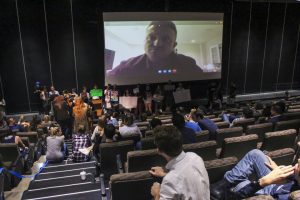
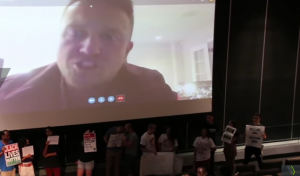
Columbia University Protesters Charged For Disrupting Controversial Speaker
On October 10, 2017 the notorious British anti-Semite and Islamophobe Tony Robinson appeared by Skype on the Columbia university campus. He was invited by the College Republican Club.
Many Columbia University students registered for the event and protested the things he said. The protesters did not disrupt the event but rather engaged the speaker’s comments.
17 students were investigated and interrogated and charged with Columbia University rules violations for “briefly interrupting a university function“ or “ disrupting a university function or rendering it’s continuation impossible.“
Guest – Columbia Law Professor Attorney Katherine Franke about the commission’s findings and recommendations and the objections to the reports conclusions. Katherine Franke is a former executive director of the National Lawyers Guildthe and chair of the board of the Center for Constitutional Rights. She is the Sulzbacher Professor of Law at Columbia Law School, and also the Faculty Director of the Public Rights/Private Conscience Project, a think tank that brings legal academic expertise to bear on the multiple contexts in which religious liberty rights are in tension with other fundamental rights to equality and liberty. Her book is titled “Wedlocked: The Perils of Marriage Equality”.
Guest – Kayum Ahmed is a Doctoral Fellow in International and Comparative Education at Teachers College, Columbia University, and an Adjunct Faculty member at Columbia Law School. Before joining Columbia, Kayum served as Chief Executive Officer of the South African Human Rights Commission from 2010 to 2015. During this period, he led a team of 178 colleagues to monitor, protect and promote human rights in South Africa, and oversaw the management of nearly 45,000 human rights cases.
—-

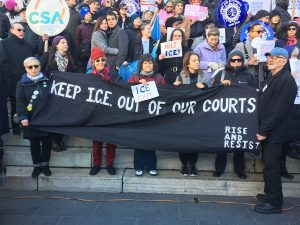
Immigration Defense Project: ICE Arrests Increase
Although they have yet to hunt down undocumented people in churches, hospitals, and schools, ICE is now arresting people inside of our state courthouses. Making people afraid to enter court houses is another indication of the further disintegration of democracy which has rapidly accelerated under the Trump administration.
There have been 900 incidences of ICE arresting people inside of a courthouse in America this year, 70 in New York City. Just two weeks ago in Brooklyn a rebellion of legal aid attorney’s occurred when ICE tried to arrest a client of Brooklyn Attorney Rebecca Kavanaugh‘s who was there appearing on an order of protection matter.
The persons arrested in court houses are people that are free to leave, not in jail, not held on any charges – in all kinds of court houses including where people are coming to seek protective orders in domestic violence situations, special human trafficking courts, and family courts. There has been a 900% increase in court house arrests in New York City alone this year. In response to this, there has been much organizing going on to get ICE out of the courthouses.
Guest – Andrew Wachtenheim – Supervising Attorney at IDP. He works with IDP’s non-profit and pro bono partners on litigation before the federal courts and Board of Immigration Appeals, and provides technical assistance, litigation support, and training to immigration and criminal law practitioners on the immigration-criminal law intersection. Andrew came to IDP from the immigration practice at The Bronx Defenders, where he represented noncitizens in immigration-related proceedings primarily at the agency level, and consulted with noncitizen defendants and criminal and family defense attorneys about the potential immigration consequences of contacts with the criminal justice and child welfare systems. Andrew is a graduate of Wesleyan University and Fordham Law School.
———————————————–
CIA Sponsored Terror, Civil Liberties, Criminalizing Dissent, Human Rights, Political Prisoner, Truth to Power, War Resister
Podcast: Play in new window | Download
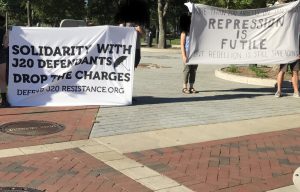
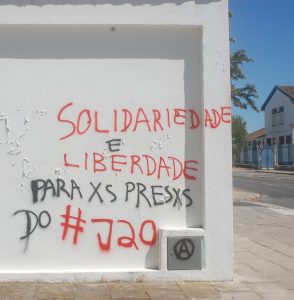
Defend J20: First Protestors
Last January, at Donald Trump’s Inauguration, over 230 people—some protesters, some not—were trapped and arrested by police. Federal prosecutors charged them with a crime that actually doesn’t exist in DC: “felony rioting.” Armed with secret warrants, prosecutors then probed deeply into the defendants’ personal lives.
Charges were dropped for some arrestees, including journalists and legal observers. Over 200, however, saw their charges increased to felony rioting, felony incitement to riot, conspiracy to riot, and property-damage crimes related to broken windows. Each defendant is facing over 60 years in prison.
Prosecutors obtained warrants focused on anti-Trump organizers. Warrants sought a list of visitors to a protest-related website and the Facebook friends and related communications of two organizers, the host of a coalition Facebook page, and those who had “liked” that page.
This prosecution follows a change in local law enforcement’s response to protest that we covered years ago on Law and Disorder. The mass arrests and harsh charges are precisely what new DC policies were designed to avoid. A 2002 mass-arrest and subsequent lawsuit by the Partnership for Civil Justice resulted in the District paying over $10 million in settlements and changing its crowd control policies.
Trials for the inauguration protesters begin mid-November and are expected to continue for a year.
Guest – Yael Bromberg, Yael is a supervising attorney and teaching fellow with the Institute for Public Representation at the Civil Rights Clinic of Georgetown University Law Center. defendj20resistance.org
—-
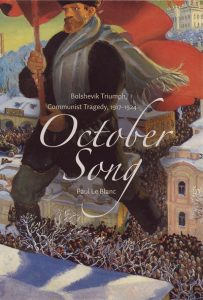
October Song: Bolshevik Triump, Communist Tragedy 1917-1924
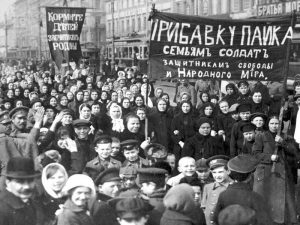
This year marks the 100th anniversary of the Russian Revolution of October, 1917. The revolution changed the course of history and determined world politics internationally and in the United States of America for most of the 20th century, until finally, under the unrelenting onslaught of the west and principally the USA, the revolution was overthrown in 1991 when capitalism was restored to that country.
Before the revolution, Russian was a feudal monarchy, headed up by a czar in a country where most of the population were peasants working the land under near slave-like conditions.
World War I started in 1914 and Russia allied with France and Great Britain against Germany and other countries. It was a war for foreign markets, resources, and colonies. By 1917, 30 million people have been killed. In one week alone 250,000 soldiers died.
The Russian revolution was nearly bloodless and nonviolent. The first thing the revolutionary government did was to end their country’s participation in the war, which ultimately ended the war.
The second thing they did was to redistribute the land to the peasants who worked it. Then they nationalized industry under control of the workers in the plants. Thus, the 1% of the Russian elite were dispossessed and the 99% took control of the institutions of their country and ran them through councils of workers and peasants and soldiers, which had been organized prior to the revolution and which were led by socialists.
The Russian revolution inspired the hopes of humankind throughout the industrial and under-developed colonial world. The peasants were given land, women gained equal rights and the right to vote and to get an abortion. Homosexualty was made legal. Minority rights were guaranteed. Education, the arts, and culture received government support. For a period Russia was the most democratic country on the planet.
We speak today with history professor Paul LeBlanc about the Russian revolution and the lessons it teaches for social change activists in America today.
Guest – Professor Paul LeBlanc is the author of the just published book October Song: Bolshevik Triumph, Communist Tragedy, 1917-1924. He is the author of a number of widely read studies including Lenin and the Revolutionary Party and Marx, Lenin, and the Revolutionary Experience. He teaches at Laroche college in Pittsburgh.
Follow Heidi Boghosian on Twitter – @HeidiBoghosian