Civil Liberties, Criminalizing Dissent, Human Rights, Political Prisoner, Prison Industry, Supreme Court, Truth to Power, War Resister
Podcast: Play in new window | Download
Updates:
- University of Illinois Reaches Tentative Settlement With Professor Steven Salaita
—-
Wedlocked: Law Professor Katherine Franke
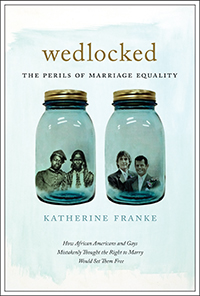
While the movement for marriage equality by the LGBT rights community has been a leading civil rights issue of the 21st century, it’s not the first movement seeking the right to marry. Slaves who were freed in the 1860s also organized for, and ultimately won, the right to marry at the end of the Civil War. As Professor Katherine Franke argues in her new book, WEDLOCKED: The Perils of Marriage Equality: How African Americans and Gays Mistakenly Thought the Right to Marry Would Set Them Free, tying the definition of free and equal citizenship so intimately to the institution of marriage presents its own set of problems.
In Wedlocked, Professor Franke meticulously compares firsthand accounts of African Americans’ struggle for freedom and civil rights with lessons for today’s marriage equality movement. This association offers two lessons: first, be careful what you wish for, as the backlash against new rights holders may set back the larger cause for equality; and second, the two movements for marriage rights may help expose the differences between racism and homophobia.
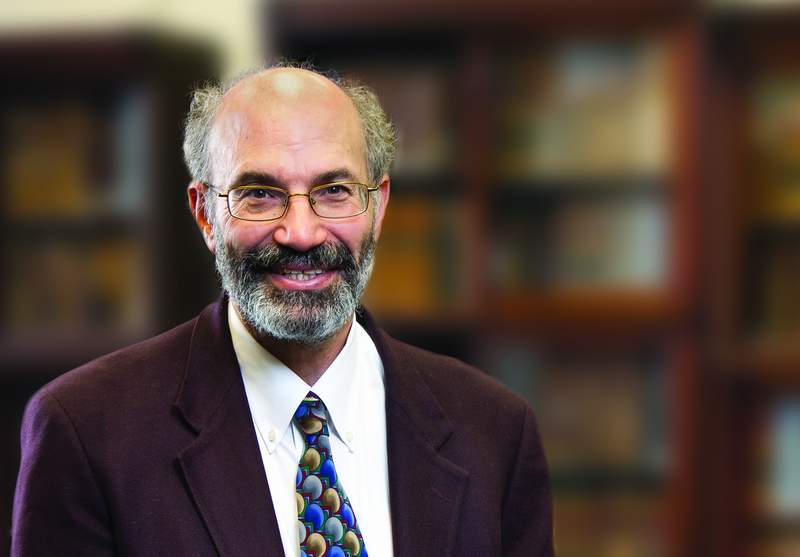
Guest – Professor Katherine Franke is the Isidor and Seville Sulzbacher Professor of Law at Columbia Law School, where she directs the Center for Gender and Sexuality Law. She is among the nation’s leading scholars in the area of feminism, sexuality and race.
—-
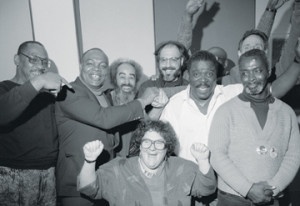
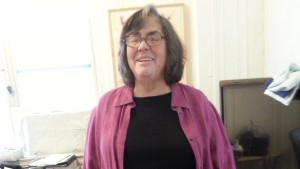
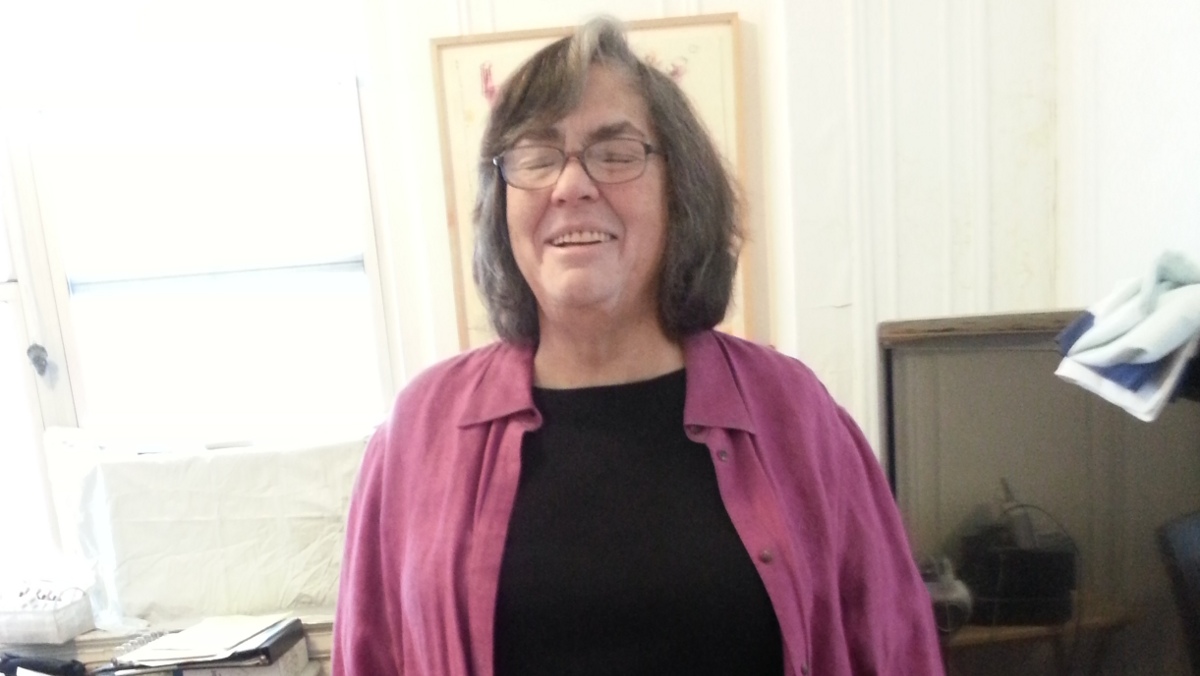
Remembering Attorney Liz Fink
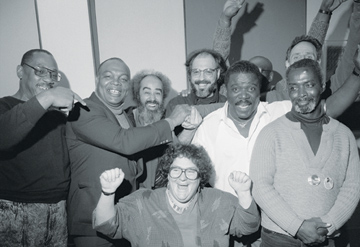
Civil rights and criminal defense attorney Liz Fink was remembered last week at the Union Theological Seminary in New York City. She was best remembered for the work she began as a young woman when prisoners rioted and took over a part of Attica Prison in 1971. Liz got involved when Senator Nelson Rockefeller, who was running for president and didn’t want anything unseemly to happen in his state, ordered the retaking of the Attica Prison. Forty-three people were killed including a number of prison guards.
Liz Fink was on the defense team for those charged with crimes and then she brought an offensive civil suit against Rockefeller and the other state and prison officials who were responsible for these murders. Three decades later the suit was settled for $12 million. Liz Fink was also a long time member of the National Lawyers Guild. We hear selected speeches from the event remembering Attorney Liz Fink.
————————————————————-
CIA Sponsored Terror, Civil Liberties, Criminalizing Dissent, FBI Intrusion, Habeas Corpus, Human Rights, Targeting Muslims, Torture
Podcast: Play in new window | Download
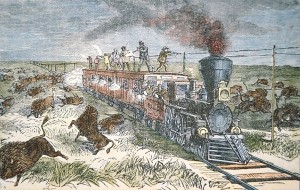
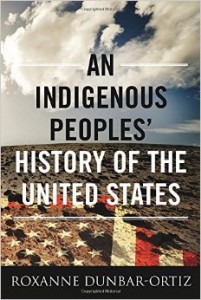
An Indigenous Peoples’ History of the United States
In the United States today, there are more than 500 federally recognized indigenous communities and nations comprising nearly three million people. These are the descendants of the 15 million people who once inhabited this land and are the subject of the latest book by Roxanne Dunbar-Ortiz. In An Indigenous Peoples’ History of the United States, Dunbar-Ortiz challenges the founding myth of the United States and shows how policy against the indigenous peoples was genocidal and imperialist—designed to crush the original inhabitants. Spanning more than 300 years, this classic bottom-up history significantly reframes how we view our past. Told from the viewpoint of the indigenous, it reveals how Native Americans, for centuries, actively resisted expansion of the U.S. empire.
Roxanne Dunbar-Ortiz:
- It’s absolutely necessary to know this history of settler colonialism and how it effects consciousness today of U.S. people and in the world because everyone is convinced of this myth of the United States and somehow its always going off the path of this destiny that has never been true in the first place.
- It’s like a fairy tale except its extremely deadly and dangerous.
- Other countries have romantic myths as their form of nationalism but they don’t control the world with this ideology.
- The myth is that it was a birth of settler democracy but we know from apartheid South Africa, we know from colonialism, particularly settler colonialism such as Israel.
- There are so many parallels with Israel because the Puritans and this became embedded in all settlers, had this idea of the new Jerusalem of Zion. They used that terminology.
- That God had given them this land to settle, it wasn’t just a right it was a responsibility to destiny, to the world.
- This made the native farmer and fisherman, ordinary people like other people in the world into savages and monsters, sort of like the Israelis to do the Palestinians today.
- Throughout the book I have a theme of the militarism and the counterinsurgency that attacks civilians and a food fight they call it, burns the food, supplies, the crops, burns the houses of the people in their towns, creates refugees. This then becomes the pattern.
- Every generation there is this Indian war. Vietnam looked like an Indian war, even the language they use – Indian country for enemy territory, all of the weapons they name after native people.
- This is not how we think of the United States, supposedly a civilian country, the military is always under control of civilians but that civilian president is commander and chief of the armed forces.
- There’s also a theory, the Bering Strait the one entrance to the whole continent, which is absurd because all of the people on the coast were great seafaring people.
- A part of European imperialism say as the beginning of everything that it connected people up. Actually what it did was separate people each other and their tradition.
- My specialization is the southwest and central Mexico, Central America. I knew there were complex trade routes and roads all over the place, irrigation canals, how they developed agriculture.
- The first chapter, Follow the Corn, I did just that. I followed out of Mexico, the dispersion of corn agriculture all the way to Tierra Del Fuego to the sub Arctic and coast to coast.
- What you find in the Americas is when they get to the point of abusing the environment and become dictatorial, there tends to be revolts to overthrow, that was happening when Cortez came to Mexico.
- The Quetzalcoatl cult that took over the Aztec government became abusive and was doing slave raiding. Had done a wonderful job of dispersing trade routes. Cortez simply allied with the rebels and overthrew the central government.
- Course they couldn’t know his intentions of simply wiping out their civilization.
- When British colonialism came to North America with these peculiar characteristics of the puritan ideology settling in. With 2 centuries of settler colonialism they developed this idea of ownership.
- It went from owning human beings to the idea of owning the land.
- George Washington was a surveyor and you have to ask why was such a super wealthy – a lowly surveyor?
- Surveyors got to choose the best land, and got to mark it up. They had already developed this idea of a Platte, creating territories that would then become states once they had a majority settler population.
- That’s why it took so long for Oklahoma, Oklahoma was the 47th state, New Mexico, Arizona, these places that had a majority native population.
- It was rough being native in the United States, it still is. I grew up in Canadian county Oklahoma, my dad sharecropped, and was a tenant farmer throughout that area until the depression wiped it out.
- The people went to California as refugees.
- I’m cautious about the identity because native nationalism Cherokee or Onondaga or Shawnee or Creek Muskogee
- There was an instance in 1917, I think its one of the most important moments in US history and hardly anyone knows about it. Jack Womack and I had written about it Monthly Review, it was called the Green Corn Rebellion.
- That is the main demand, land base, nationhood, the ability to prosper and exist as people, not just as individuals being assimilated out, that’s another form of genocide.
Guest – Roxanne Dunbar-Ortiz, grew up in rural Oklahoma, the daughter of a farmer and half-Indian mother. She has been active in the American Indian Movement for more than four decades and is known for her lifelong commitment to national and international social justice issues. After receiving her PhD in history at the University of California at Los Angeles, she taught in the newly established Native American Studies Program at California State University and helped found the departments of Ethnic Studies and Women’s Studies. Her 1977 book The Great Sioux Nation was the fundamental document at the first international conference on Indians in the Americas, held at the United Nations’ headquarters in Geneva. She is the author or editor of seven books.
—-
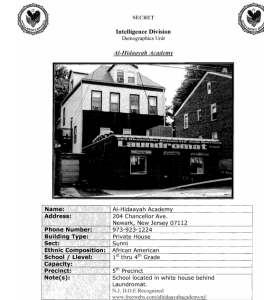

NYPD Muslim Surveillance Case Reinstated
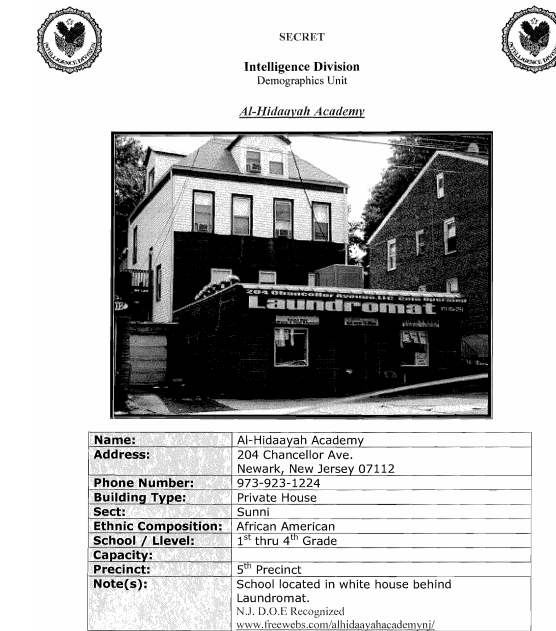
After the 9/11 attacks, the New York City Police Department created a vast and covert suspicion-less surveillance program targeting Muslim American communities in New York, New Jersey, and beyond. The federal lawsuit Hassan v. City of New York challenges the constitutionality of this program. The original complaint was filed by Muslim Advocates in the District Court of New Jersey and later joined by the Center for Constitutional Rights. The lawsuit seeks an end to the program and destruction of any records gathered. Our client Zaimah Abdur-Rahim was spied on by the NYPD because she operates a grade-school for Muslim girls. NYPD officers recorded details about the school, such as the fact that it was run from Abdur-Rahim’s home and that its students were predominantly African-American. As the Associated Press reported in an award-winning series, the NYPD monitored and/or infiltrated almost every aspect of Muslim life, from mosques and student associations, to halal butcher shops, restaurants, and private citizens. Internal NYPD documents confirm that the program produced zero leads to terrorist activity after more than a decade in operation.
Guest – Ghita Schwarz, a senior staff attorney at the Center for Constitutional Rights. She works on racial justice, immigrants’ rights and government misconduct cases. Her current cases include the Freedom of Information Act cases Detention Watch Network v. ICE and Immigrant Defense Project v. ICE, seeking government transparency about controversial immigration detention and enforcement practices; Hassan v. City of New York, challenging the NYPD’s discriminatory program of surveilling Muslims; and United States and Vulcan Society v. City of New York, challenging long-term employment discrimination by the New York City Fire Department. Ghita’s past work includes Aguilar v. ICE, fighting ICE’s practice of warrantless home raids, and NDLON v. ICE, challenging government secrecy regarding DHS’ Secure Communities program. Prior to coming to the Center for Constitutional Rights, she worked at LatinoJustice PRLDEF, the Door Legal Services Center, and Legal Services for New York City. Ghita graduated from Harvard College and Columbia Law School. Ghita’s recent writing includes “Why New York is Still the Capital of Immigrant America,” published in The Nation.
—-
CIA Sponsored Terror, Civil Liberties, Criminalizing Dissent, Human Rights, Political Prisoner, Prison Industry, Surveillance, Targeting Muslims, Torture, Truth to Power
Podcast: Play in new window | Download
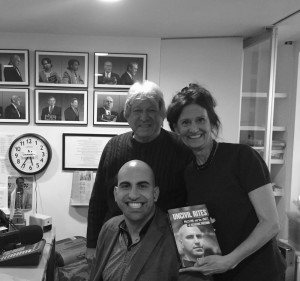
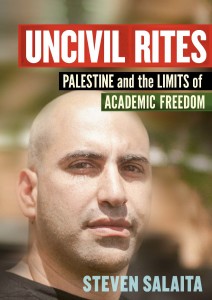
Uncivil Rites: Palestine and the Limits of Academic Freedom
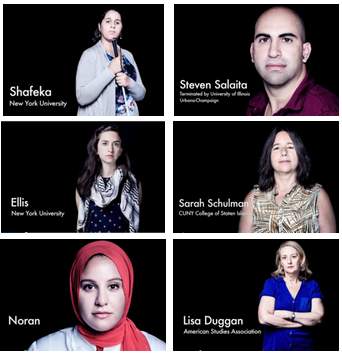
Just before the start of the 2014 academic year, the board of trustees at the University of Illinois at Urbana-Champaign revoked a tenured professorship of renowned American Indian studies professor Steven Salaita. The abrupt termination of employment was in response to Salaita’s public tweets criticizing the Israeli government’s summer assault on Gaza. Enormous public outcry followed the scholar’s firing, with thousands petitioning for his reinstatement, and more than five thousand scholars pledging to boycott UIUC. The case raises significant questions about academic freedom, free speech on campus, and the growing movement for justice in Palestine. In his new book Uncivil Rites, Salaita brings personal reflection and political critique to bear on his high-profile and controversial termination. He deftly positions his case at the intersection of important issues affecting higher education and social justice activism.
Guest – Steven Salaita holds the Edward W. Said Chair of American Studies at the American University of Beirut. The author of six other books, he is a columnist for Electronic Intifada and a member of the Organizing Committee of the US Campaign for the Academic and Cultural Boycott of Israel (USACBI).
—-
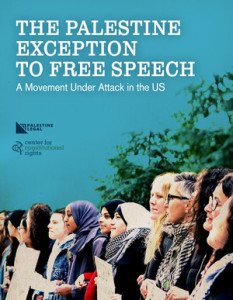
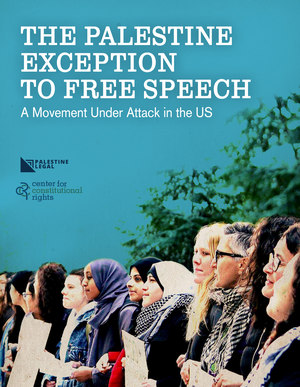
The Palestine Exception to Free Speech: A Movement Under Attack in the US
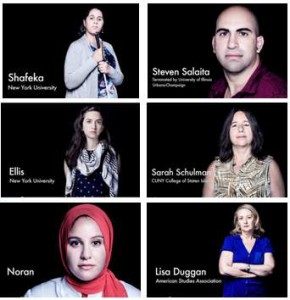
A new report, “The Palestine Exception to Free Speech: A Movement Under Attack in the US,” released by Palestine Legal and the Center for Constitutional Rights, documents for the first time the widespread and growing suppression of Palestinian human rights advocacy in the US. A companion video features students and scholars discussing the backlash they have experienced for engaging in Palestine advocacy.
Palestine Legal, a nonprofit organization dedicated to protecting the civil rights of people in the U.S., responded to nearly 300 incidents over an 18-month period. Eighty-five percent of the incidents—which included baseless legal complaints, administrative disciplinary actions, firings, harassment, and false accusations of terrorism and antisemitism—targeted students and scholars. Driven by a network of Israel advocacy organizations, these efforts target the movement for Palestinian rights in the U.S., which has grown significantly over the last decade.
The report includes case studies and testimony from advocates targeted for their speech. It outlines a notable increase in federal and state legislative efforts to condemn or restrict advocacy for Palestinian human rights, including legislation that conflates criticism of Israeli policy with antisemitism.
Guest – Dima Khalidi is the founder and Director of Palestine Legal and Cooperating Counsel with the Center for Constitutional Rights (CCR). Her work includes providing legal advice to activists, engaging in advocacy to protect their rights to speak out for Palestinian rights, and educating activists and the public about the repression of Palestine advocates. Dima has a JD from DePaul University College of Law with a concentration in International Law, an MA in Comparative Legal Studies from the University of London – School of Oriental and African Studies, and a BA in History and Near Eastern Studies from the University of Michigan.
———————————————
Civil Liberties, FBI Intrusion, Habeas Corpus, Human Rights, Political Prisoner, Prison Industry, Surveillance, Targeting Muslims, Truth to Power, War Resister
Podcast: Play in new window | Download
Updates:
- Hosts Remember People’s Lawyer Liz Fink
—-
The American Museum of Tort Law
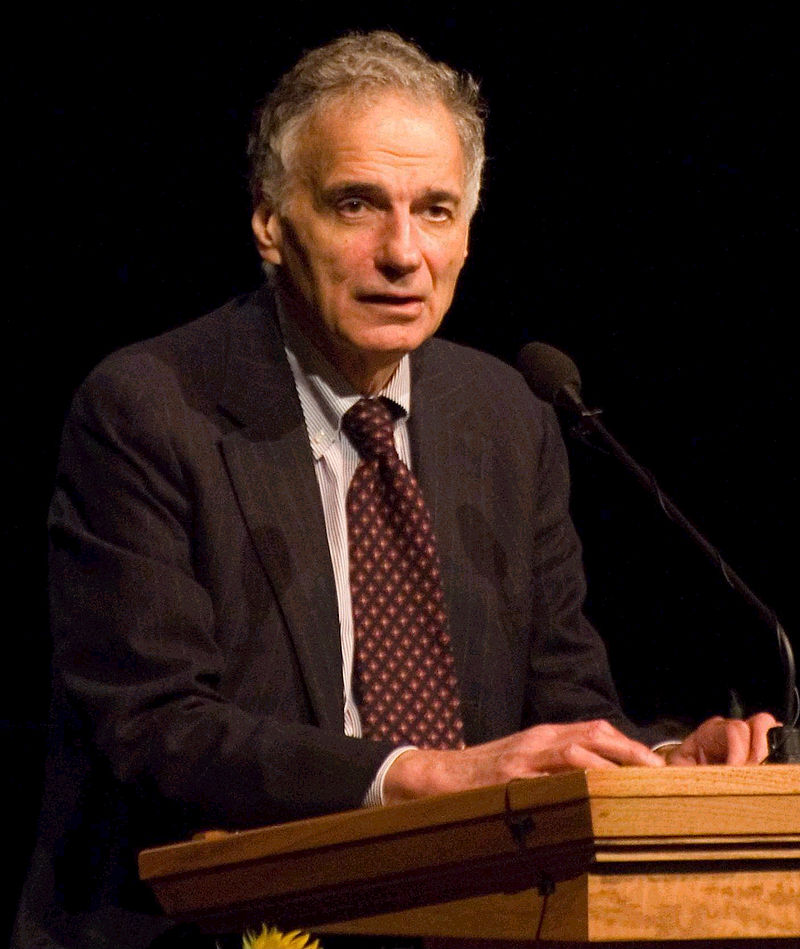
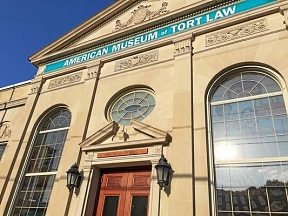
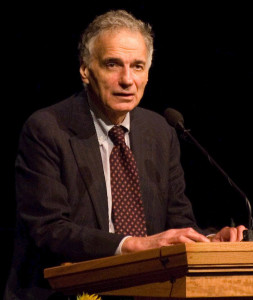
After trial lawyers told him they had no place to display exhibits they had used in court, Ralph Nadar realized that there isn’t a single museum devoted to the law in the United States. That’s about to change. The consumer advocate is opening the American Museum of Tort Law in his hometown of Winsted, Connecticut to celebrate victories of the law over corporate power. The museum will span the history of tort law – civil law that seeks relief for people injured by wrongful acts of others – and host exhibits on significant cases such as the 1998 national settlement with tobacco companies. Nader said it may also host artifacts including a Chevrolet Corvair – the car featured in his 1965 book “Unsafe at Any Speed,” which made him a household name.
Guest – Ralph Nader, attorney, political activist, consumer advocate, presidential candidate and author who among many accomplishments is responsible for 8 major federal consumer protection laws and helped established the PIRGS – Public Interest Research Groups.
—-
The Library Freedom Project Protects Library From DHS Surveillance
With a population just above13,000 people, the quaint town of Lebanon, New Hampshire is nestled not far from the Connecticut river in the northwest corner of the state – a few miles from Dartmouth College. In July, the local library set up a system to protect the privacy of patrons using its computers by installing Tor, the platform that routes users’ Internet traffic through various relay points, making warrantless surveillance of browsing habits and traffic more difficult. The Kilton Library’s Tor relay node attracted the attention of the Department of Homeland Security, which contacted local officials and law enforcement, warning that Tor could aid criminal behavior. In response, the library intially took down the relay, but later changed its mind and reinstalled it.
Guest – Alison Macrina is a librarian, privacy rights activist, and the founder and director of the Library Freedom Project, an initiative which aims to make real the promise of intellectual freedom in libraries by teaching librarians and their local communities about surveillance threats, privacy rights and law, and privacy-protecting technology tools to help safeguard digital freedoms.
——————————————-
Civil Liberties, Criminalizing Dissent, Human Rights, Political Prisoner, Surveillance, Targeting Muslims
Podcast: Play in new window | Download
Updates:
- Heidi Boghosian Reports Back On A Visit With Mumia Abu-Jamal
- ACTION: Please call Secretary of Pennsylvania Corrections John E. Wetzel 717-728-2573
- Also call John Kerestes Superintendent At SCI Mahanoy 570-773-2158
—-


Recent Victory In Washington State Outlawing Charter Schools
After nearly a year of deliberation, the Washington State Supreme Court recently ruled 6-3 that charter schools are unconstitutional. The ruling is believed to be one of the first of its kind in the country and overturns the law voters narrowly approved in 2012 allowing publicly funded, but privately operated, schools. The parties have 20 days to ask the court for reconsideration before the ruling becomes final. In the ruling, Chief Justice Barbara Madsen wrote that charter schools aren’t so-called “common schools” because they’re governed by appointed, rather than elected, boards. Therefore, she wrote: “money that is dedicated to common schools is unconstitutionally diverted to charter schools.” The ruling represents a victory for the coalition that filed the suit in July 2013, asking a judge to declare the law unconstitutional for what they described as improperly diverting public-school funds to private organizations that are not subject to local voter control. Lawyers from the Attorney General’s Office are reviewing the decision, as is the governor’s office.
Guest – Michelle Fein, author of “Charter Schools and the Corporate Makeover of Public Education: What’s at Stake?” Michelle Fein has a Master’s degree in Education with a specialty in interdisciplinary curriculum, social studies and science. She has taught for more than 15 years in private, charter and public schools and was the director of a local charter school for four years.
—-
Ending Long Term Solitary Confinement in California Prisons
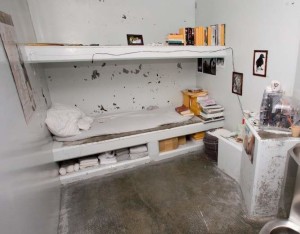
After years of litigation by the Center for Constitutional Rights, hunger strikes and protracted debate, the state of California has finally agreed to move thousands of prison inmates out of solitary confinement. Last week a legal settlement between the state and a group of inmates held in isolation for a decade or more at Pelican Bay State Prison will end the use of solitary confinement to control prison gangs. Jules Lobel, the lead attorney and president of CCR, calls this a dramatic step forward. Legal challenges to the states’ reliance on solitary confinement have been mounted since a panel of experts told the state corrections department that the high numbers of inmates in lengthy isolation did little to improve prison security. The state has agreed to create small, high-security units that house inmates deemed most dangerous in a group setting where they are entitled to many of the same privileges as other prisoners: contact visits, phone calls and educational and rehabilitation programs. Inmates found guilty of specified offenses — including murder, attempted murder, drug trafficking, arson, and extortion — are confined in security housing at Corcoran State Prison.
Large isolation units such as the one at Pelican Bay were built in the 1980s in response to high rates of inmates and officers being killed. California has moved over 1,000 prisoners from solitary into general population in the last two years, with little problem.The majority of the several thousand gang-associated prisoners who have been either kept in isolation a decade or more, or have gone at least two years without a major rule violation, will move back to general population. The state prison guard union, which tried unsuccessfully to intervene in the case, says the state may return to the 70s and 80s environment where inmates and staff were killed at high rates. California once led the nation in the use of solitary confinement but Texas is no #1. California has some 6,400 inmates in isolation units, a number that shrank for two years as the state changed its criteria for behavior considered gang activity and began removing prisoners. California has segregation units at several prisons, but the largest and most notorious is at Pelican Bay, near the Oregon border. Inmates spend nearly 23 hours a day in windowless cells that face a concrete wall. Forensic psychiatrists testified on behalf of the inmates that such conditions cause psychological damage. The UN has called it torture. Joining us to discuss this hard-won victory is Jules Lobel.
Guest – Attorney Jules Lobel, has litigated important issues regarding the application of international law in the U.S. courts. In the late 1980’s, he advised the Nicaraguan government on the development of its first democratic constitution, and has also advised the Burundi government on constitutional law issues. Professor Lobel is editor of a text on civil rights litigation and of a collection of essays on the U.S. Constitution, A Less Than Perfect Union (Monthly Review Press, 1988). He is author of numerous articles on international law, foreign affairs, and the U.S. Constitution in publications including Yale Law Journal, Harvard International Law Journal, Cornell Law Review, and Virginia Law Review. He is a member of the American Society of International Law.
——————————————————–