CIA Sponsored Terror, Civil Liberties, Criminalizing Dissent, Habeas Corpus, Human Rights, Iraq Veterans, Iraq War, Military Tribunal, Political Prisoner, Targeting Muslims, Torture, War Resister
Podcast: Play in new window | Download
Updates:
—–


ISIS and The Anti-War Movement
Last June, the United States sent more military soldiers to Iraq and carried out airstrikes to stop the advance of the Islamic State of Iraq and the Levant known as ISIS. The US, Western Europe, Saudi Arabia and Arab Gulf policy is to overthrow Syrian President Bashar al-Assad which is also the goal of ISIS and other jihadis in Syria. ISIS’s membership may be close to 15 thousand members, half of what the CIA estimates. ISIS is led by a core of people who fought the U.S. in Iraq, fought the Iraq Army back in 2003 and then in 2011 fought in Syria. Last week our own Michael Ratner reported how the U.S. could be given leave to make war everywhere if President Obama’s request for AUMF is granted by a US Congress. What are the demands of the US peace movement?
Attorney Jim Lafferty:
- It was U.S. military strategy in the Middle East to begin with and past U.S. military action in that part of the world, especially in Iraq that provided the primary catalyst for the growth of ISIS.
- We destroyed the secular governments in Iraq and Libya that created the political space for ISIS and other right wing forces to grow.
- ISIS filled the governing vacuum took advantage of these ethnic divisions angered at the U.S. and steadily gained strength thereafter.
- If you think about it, we spent the last 40 or 50 years destroying leftist and secular, anti-imperialist movements all over that region of the world.
- Two weeks ago the Pentagon announced their sending 4000 troops with very heavy weaponry to Kuwait.
- The U.S. Army has already set up a division headquarters in Iraq. A division consists of 20 thousand troops.
- The people that are having the most success in fighting a Syrian government right now is ISIS.
- The question is not should they be stopped. The question is what will be effective in stopping them.
- There is great unity in the anti-war movement. They’ve got unified actions planned for later this month in Washington DC.
- The anti-war movement is going to be tough for the anti-war movement because the propaganda machine, the mainstream media in this country has done its job in pandering by showing despicable pictures.
- What we don’t see is Saudi Arabia our staunchest ally, executes 20-25 people by beheading every month.
- Cindy Sheehan, is setting up a Camp Casey at the Capitol. All the anti-war groups are holding a mass teach in on this very issue we’re talking about now.
- First of all a nuclear power like Israel getting all exorcised about the fact that somewhere down the road a neighboring country might have the same weapons it has.
- Pardon me if I can’t get terribly excited about that. We shouldn’t have any country in the world with nuclear weapons.
- In addition to everything else (Netanyahu) is lying about the threat if it were a threat. To come to the U.S. Congress to give that bloviating speech where he offers nothing new.
- He offers no alternative to what the administration is trying to do and is apparently making some progress in doing and is hailed as a hero by one side of the aisle is really quite appalling.
- Answer.org
Guest- Attorney Jim Lafferty, Executive director of the National Lawyers Guild in Los Angeles and host of The Lawyers Guild Show on Pacifica’s KPFK 90. 7 FM.
—-

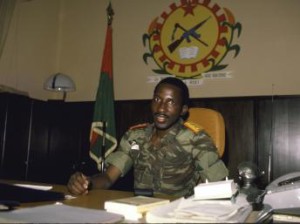
Thomas Sankara: An African Revolutionary
As president of the Burkino Faso, one of Africa’s poorest countries, Thomas Sankara was often called the African Che Guevara. In 1987, he was assassinated during a military coup that took down his government. However, Sankara’s economic and social policies left an important mark not only on his country but across Africa. Sankara was a Marxist and openly sought independence from France and at the same time he was building a pan-African unity.
Professor Ernest Harsch:
- He was the president of Burkino Faso from 1983 to 1987, a very short period of time.
- He was a revolutionary. Everybody acknowledged that at the time especially the French who greatly disliked him.
- The U.S. wasn’t too happy with him. He wanted to stop in Atlanta to meet with Andrew Young during his visit to the UN General Assembly. They didn’t allow him to make that stop. So he spoke in Harlem instead.
- It’s a small west African country, not even that many experts on Africa know that much about it. He was in power for about 4 years and he was overthrown by a military coup.
- I think for people that are interested in progressive change its always useful in seeing how others elsewhere in the world are fighting against oppression, are fighting for their rights and occasionally actually able to make some change.
- It’s also useful to learn about what kind of leadership can help people do that.
- He wasn’t a grassroots activist. He came out of the military. He was a captain. He got radicalized in the military and because of the context of his country which was extremely poor and under-developed, backward and subservient to the French who been their formal colonial power, very corrupt both military and civilian politicians over the decades.
- He’s representing a newer generation where that initial idealism about independence will bring all sorts of changes. He’s speaking to the ills of formally independent countries that are still subservient to their colonial masters and still haven’t found a way to break out of the trap of underdevelopment and external economic domination.
- He’s speaking to a new generation that still resonates today which is young people who are fed up with the way things are.
- They’re fed up with the corruption of their leaders whether they’re elected or not elected.
- You travel through west Africa you see Sankara t-shirts.
- The first time I met him was in New York. The guy was direct. He listened to what you had to say. He thought about it. I’ve never met anybody who was so quick. I mean he was witty.
- The other times I met him in Burkina. The first time was a long interview. The other times he didn’t want to be interviewed, he just wanted to talk about politics.
- Up to that time, nobody hand promoted or named so many women to cabinet position. One of them now is the current minister of justice.
- They tried to tackle some restrictions on women at the local level. It’s hard they made a small dent in it. They fought against female genital mutilation, the right to divorce by mutual consent.
- It (the country) was called Upper Volta which was a colonial name. They wanted something African and Burkina Faso, the words are from two local African languages basically means the land of the upright, or the uncorruptible people. The people are known as Burkinabe and Burkinabe comes from a third African language.
- Before he became president he was briefly a prime minister in a coalition government. His first trip was to Libya.
- Then he went to the non-alliance summit in New Delhi and gave this very fiery speech basically solidarizing with the Cuban revolution, with the Nicaraguans, with the Western Saharans, with the new Calidonians. He clearly aligned himself with the anti-imperialist, pro-third world, pro-development wing, within the non-alliance movement.
- The French didn’t like that. So, they told some their people locally, look let’s get rid of this guy.
- They had an internal coup. He was arrested. He was in prison for a while but they couldn’t sustain that. He was too popular. He became president.
- He was only 33 when he became president, so this was a youthful leadership.
Guest – Professor Ernest Harsch has taught courses on African development and political instability in the Sahel and is a research scholar affiliated with the University’s Institute of African Studies. He earned his PhD in Sociology from the New School for Social Research in New York. Throughout a professional career as a journalist, he wrote mainly on international events, with reporting on Asia, the Caribbean, and Eastern Europe, but most extensively on Africa.
—————————————————–

Please help support Law and Disorder by clicking on Fractured Atlas graphic. This radio show is now a sponsored project of Fractured Atlas, a non-profit arts service organization. Contributions for the charitable purposes of Law and Disorder must be made payable to Fractured Atlas only and are tax-deductible to the extent permitted by law. You can donate as little as 5.00 a month.
CIA Sponsored Terror, Criminalizing Dissent, Guantanamo, Human Rights, Political Prisoner, Prison Industry, Torture, Truth to Power
Podcast: Play in new window | Download
Updates:
- Michael Ratner: Palestine Not Recognized As State By U.S. Thus Allowed To Be Sued In Federal Court For Attacks on Israel
- Michael Ratner: Why Is Obama Trying To Get An AUMF When The U.S. Is Already At War With ISIS? If Passed, The U.S. Under This Act Can Make War Everywhere
- ICC En Vogue? – Hosts Talk About NBC Drama “Crossing Lines.”
—–
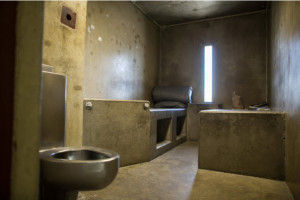
Pelican Bay Solitary Confinement Case Update
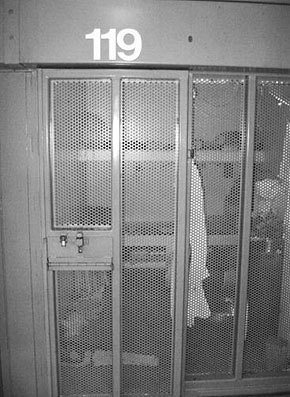
We bring you an update on the Pelican Bay Prison Solitary Confinement Case. As you may recall Pelican Bay Prison had more than 1000 prisoners in long term solitary confinement at 10-20 years or more. The Center for Constitutional Rights and its lead attorney Jules Lobel have been challenging this practice for a number of years since 2012. Recently, the state of California in an effort to blunt the lawsuit has transferred some of the named plaintiffs to other prisons. Their theory, once we’re rid of the plaintiffs maybe we’re rid of the lawsuit. CCR and Jules Lobel went out to California to argue that this is not a Constitutional practice. That transferring a person from Pelican Bay to another prison in California should not blunt the lawsuit and in fact CCR we should be able to challenge solitary confinement in those prisons as well. The judge agreed and now the CCR case will not just challenge Pelican Bay Prison solitary confinement practices but those in other prisons throughout California.
Attorney Jules Lobel:
- Because of 3 hunger strikes and our litigation the California prison officials are now instituting reforms. They realize they have to do something.
- There are over 1000 people in solitary. When we started the case 500 people were there for over 10 years.
- Because of the reforms they’ve made under pressure from our litigation there are now only 230. Still 230 people for over 10 years is a huge amount.
- They’re also moving people out not only to general population prisons, but to other solitary units in other prisons. Other SHOES, its called Special Housing Unit.
- Four of our ten plaintiffs are moving to another SHOE to a place called Tahachapi and the defendants say, they’re no longer part of your case.
- That’s what the argument was about. The argument was about whether or not you can expand the case beyond Pelican Bay.
- If you were at Pelican Bay and transferred to another prison, still in solitary, you’re still part of our class.
- The judge accepted that we can expand the case, rejecting the state’s argument.
- We bifurcated the trial so we could have a relatively quick trial on Pelican Bay. The fundamental question for Pelican Bay trial is whether keeping people for a prolonged period of time in solitary confinement at Pelican Bay is cruel and unusual punishment.
- We also have a claim in that way that they are placed there. It violates due process.
- These guys only get reviews every six years. So, you stay in your cell for six years and then after six years somebody comes and reviews whether you should be kept in solitary.
- No state in the country has six years. Usually its 30 days, 90 days, six months, maybe at most a year.
- California unlike most states puts people into solitary simply because they’re a member of a gang or associated with a gang.
Guest – Attorney Jules Lobel, has litigated important issues regarding the application of international law in the U.S. courts. In the late 1980’s, he advised the Nicaraguan government on the development of its first democratic constitution, and has also advised the Burundi government on constitutional law issues. Professor Lobel is editor of a text on civil rights litigation and of a collection of essays on the U.S. Constitution, A Less Than Perfect Union (Monthly Review Press, 1988). He is author of numerous articles on international law, foreign affairs, and the U.S. Constitution in publications including Yale Law Journal, Harvard International Law Journal, Cornell Law Review, and Virginia Law Review. He is a member of the American Society of International Law.
——

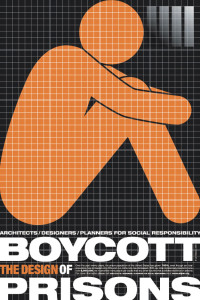
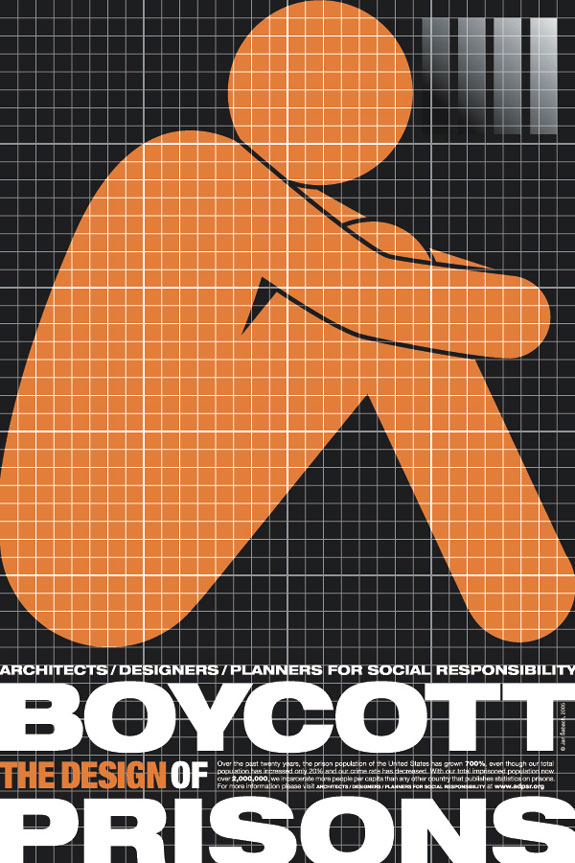
Architect’s Human Rights Code of Ethics Petition
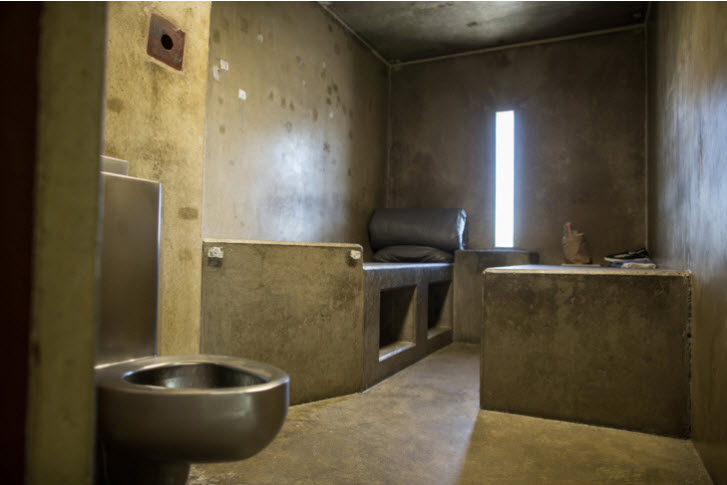
In our coverage of psychologists involved with torture continuing to hold their professional licenses to practice we look at a similar concern with licensed architects who design prisons, solitary confinement cells and death chambers. Research has show that the design of a prison can influence many aspects of prisoners lives including recidivism rates. Recently, the American Institute of Architects rejected a petition to censure members who design solitary confinement cells and death chambers.
Raphael Sperry:
- In 2013 when the UN Special Rapporteur on Torture announced that spending more than 15 days in solitary confinement was a human rights violation and we’re aware that people in the United States are routinely held in solitary for years if not decades, and that there had been dozens of supermax prisons that housed thousands of people in those conditions, specially designed for that purpose, that really tipped the scales.
- That was really shocking to realize the same tools that architects use everyday trying to make the world a better place for people can be used to torture and kill people.
- The question of what constitutes a torture chamber is complicated. There are many buildings that have been used to house prisoners in solitary confinement that were never designed for that purpose.
- There are a subset of prisons that are designed for solitary confinement. They’re usually called administrated segregation units.
- Supermax prisons are the most egregious. There’s no space for people to eat together. There are no tables with seats clustered around them even.
- The recreation spaces that prisoners have a right to go into for an hour a day, are shrunk down to size that they’re for just one person.
- You guys are probably familiar with ADX Prison in Florence, the Federal Supermax which is supposed to be the most secure supermax in the United States.
- In that facility they actually have showers in every cell. The prisoners then actually don’t have to get into the hallway. They might walk by somebody elses’ cell or walk by somebody elses’ cell to get to a shower.
- The AIA has a code of ethics for members and it already had a statement saying members should uphold human rights in all their professional responsibilities.
- It’s not directly enforceable. If members set out to design a space intended to kill somebody or to torture them or degrade them which is a human rights violation. AIA is not prepared to take any disciplinary action to someone who does that.
- We were asking them to simply add a rule that clarified if a member designed a space that is intended for human rights violations specifically execution and prolonged solitary confinement that it would be clear they’re in violation of the code of ethics and then AIA could take disciplinary action that include censure and expelling them from the institute.
- The National Board of Directors gets to set the ethics code for the whole organization including all the chapters. They took in our petition. They took in all the letters of support we sent in.
- Then they didn’t communicate with us . . they referred it to an internal group. They never let us know who was on that panel. They sent a brief letter back to me head of the ADPSR saying that they weren’t going to make the change and they were concerned about potential anti-trust violations and how hard it would to enforce.
- Lastly, they don’t want to restrict their members from designing any particular building type. I just found that to be the worst.
- To me if you’re going to be a professional and take on the responsibility of protecting public health, safety and welfare every time you put your pencil down then there should be limits to what you do with that specialized knowledge.
- To us its not a political issue, its a human rights issue and they said they’re an organization that’s for human rights. It didn’t seem right to us that they should pick and choose which human rights they’re ok with and which ones they would restrict.
Guest – Raphael Sperry, president of Architects / Designers / Planners for Social Responsibility (ADPSR), a 32-year old independent non-profit organization. He researches the intersection of architecture and planning with human rights with a special focus on prisons and jails, and advocates for design professionals to play a larger role in supporting human rights in the built environment. He directs ADPSR’s human rights advocacy, including ADPSR’s petition urging the AIA to amend their Code of Ethics and Professional Conduct to address buildings that violate human rights. He was the first architect to receive a Soros Justice Fellowship from the Open Society Foundations, hosted jointly by the University of California at Berkeley College of Environmental Design and Berkeley Law School, in 2012. He is an active member of the AIA Academy of Architecture for Justice and a leader of its subcommittee on sustainability.He holds an M.Arch. from the Yale School of Architecture and a BA summa cum Laude from Harvard University.
—————————————
Please help support Law and Disorder by clicking on Fractured Atlas graphic. This radio show is now a sponsored project of Fractured Atlas, a non-profit arts service organization. Contributions for the charitable purposes of Law and Disorder must be made payable to Fractured Atlas only and are tax-deductible to the extent permitted by law. You can donate as little as 5.00 a month.
CIA Sponsored Terror, Civil Liberties, Criminalizing Dissent, Crony Capitalism, Human Rights, Political Prisoner, Prison Industry, Surveillance, Targeting Muslims, Truth to Power
Podcast: Play in new window | Download


City and County of San Francisco v. Sheehan
In early December of 2014, the Supreme court agreed to hear the case City and County of San Francisco v. Sheehan. The case involves San Francisco police officers who reported to a group home to transport Teresa Sheehan, who was known to be mentally ill, to mental health facility. The situation ended with police firing six shots on Sheehan. She survived and filed a lawsuit arguing that officers had a responsibility under federal law to consider her mental disability. The case is not about police criminal liability, this one is about whether police are obligated to take special precautions in using deadly force, and also in entering an individual’s home without a warrant or permission. Read Michael Avery’s observation about details of case.
Attorney Michael Avery:
- Teresa Sheehan is a woman in her mid-fifties who was living in a group home in San Francisco, a home for people with mental disabilities.
- Officers came to the house and ended up shooting her five times at point blank range.
- The case raises some issues for the federal courts in which the lower courts are in disagreement, and the court (Supreme Court) took the case hoping to resolve those disagreements.
- The police came because the social worker had become concerned with Ms Sheehan, and wanted to send her to a hospital for 72 hours of evaluation and requested the assistance of the police in transporting her to the hospital.
- Ms. Sheehan on the other hand didn’t want to be taken to the hospital, didn’t want the social worker in her room, did not want the police in her room, she just wanted to be left alone.
- In the course of asserting her right to be left alone, she threatened the police and the social worker with a knife.
- The police then ended up breaking through her door. Forcing open her door and when she was standing there with the knife, they tried to pepper spray her. That didn’t seem to have much effect on her and so they shot her five times.
- Miraculously she survived but now she’s permanently disabled and disfigured. One of the bullets entered the left side of her temple, shattered her eye socket and then exited through her mouth causing serious injuries to her jaw.
- Officers encounter people with mental disabilities extremely frequently. In large cities and towns in the United States its estimated 1 out every 15 people that the police interact with has some form of mental illness.
- Officers are trained to try to diffuse the incident, not to threaten the person, to ask open ended questions, to listen to what the person has to say, try to establish some rapport with the person, respect the person’s space and not crowd the person, and at the same allow the incident to go on as long as it has to in order to have a peaceful resolution.
- Several years ago I wrote an article called Unreasonable Seizures of Unreasonable People making the point that officers ought to be held to standard that requires them to follow their own training.
- When I saw this case was in the courts, I volunteered to provide some assistance to the lawyers in connection with the brief they were writing.
- There are two claims in the case. One is a claim under the Fourth Amendment of the Bill of Rights, which is the part that says government cannot make unreasonable searches of our home or seizures of our person and the other is a claim under the Americans With Disabilities Act.
- In effect they discriminated against her on the basis of her disability by not following their training and not making the accommodations that they were trained to make for a mentally ill person.
- Secondly, the argument is, when they forced open the door to her apartment and entered and used deadly force against her, they were not behaving reasonably and that again is based on the same idea it would have been reasonable to follow their training. Frankly, they just threw their training out the window.
- Oral argument is scheduled for March 23, 2015.
Guest – Civil rights lawyer Michael Avery, professor at Suffolk University Law School and former president of the National Lawyers Guild from 2003 to 2006. He’s also worked with the National Police Accountability Project.
—-
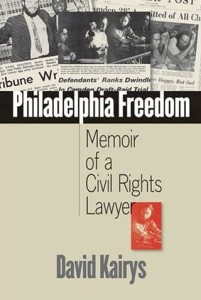
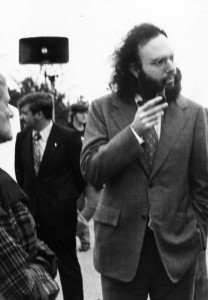
Lawyers You’ll Like: David Kairys
David Kairy began his career at the Philadelphia public defender’s office in the late 1960s. Since then, he’s been a leader in effort to fight discrimination and protect individual rights, now he’s regarded as one of the nation’s preeminent civil rights attorneys. David is a professor at the University of Temple Law School, where he teaches civil rights and constitutional law. He has written several books, including Philadelphia Freedom: Memoir of a Civil Rights Lawyer, which was published last year.
David Kairys:
- We were of a number of young firms dedicated to civil rights and representation of progressive groups.
- The Camden 28, caught in the act of breaking into a Camden, New Jersey draft board and destroying all of the files. This was a Catholic Left action.
- FBI had informant in the group, who the FBI was paying on an hourly rate. The informant supplied the means to make the action happen.
- One hundred FBI agents sat around and waited til they destroyed all the files in the office. Many of the 28 were priests. There were more than 300 draft board raids during Vietnam.
- Father Michael Doyle said when your government is napalming children, the place you should be is in jail.
- Father Doyle and I strategized a way to start talking to the FBI informant Bob Hardy and eventually got an affidavit saying that the FBI manufactured this crime.
- I filed the affidavit and it was on the front page of the New York Times.
Guest – David Kairys, Professor of Law, the first James E. Beasley Chair (2001-07), and one of the nation’s leading civil rights lawyers. He authored Philadelphia Freedom, Memoir of a Civil Rights Lawyer and With Liberty and Justice for Some and co-authored the bestselling progressive critique of the law, The Politics of Law, and authored With Liberty and Justice for Some and over 35 articles and book chapters. His columns have appeared in major periodicals, and he has been profiled in the Chronicle of Higher Education, Wall Street Journal, and Philadelphia Inquirer Sunday Magazine. Kairys’s Public Nuisance Theory.
——————————————————-
Please help support Law and Disorder by clicking on Fractured Atlas graphic. This radio show is now a sponsored project of Fractured Atlas, a non-profit arts service organization. Contributions for the charitable purposes of Law and Disorder must be made payable to Fractured Atlas only and are tax-deductible to the extent permitted by law. You can donate as little as 5.00 a month.
CIA Sponsored Terror, Civil Liberties, Criminalizing Dissent, Crony Capitalism, Habeas Corpus, Human Rights, Political Prisoner, Prison Industry, Supreme Court, Surveillance, Torture
Podcast: Play in new window | Download

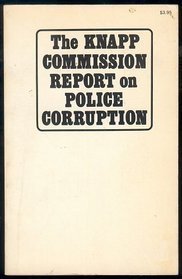
Blood On Their Hands: The Racist History of Police Unions
The NYPD police officer union’s outrageous assertion that New York Mayor Bill de Blasio had “blood on his hands” in the murder of two NYPD officers, is consistent with the reactionary role of police unions across the country. They came to prominence in the wake of the civil rights movement. Police unions have played a powerful role in resisting all manner police reforms and in defending police officers no matter how outrageous and racist their actions. Attorney Flint Taylor brought an analysis of police unions playing a major role in defending cops throughout the last few decades in his article Blood On Their Hands: The Racist History of Police Unions.
Attorney G. Flint Taylor:
- I started to look at this because I had been in battle with the union here in Chicago, the Fraternal Order of Police, since I’ve been a lawyer which is almost 45 years.
- After I saw what was happening in New York, I did some research on New York as well as brought back to memory a lot that had happened here in Chicago.
- In New York I took it all the way back to Mayor Lindsey when he attempted to deal with and bring about a civilian review agency of the police department.
- One of the instances (in New York) police showed their displeasure by running through the black community banging on the tops of garbage cans, waving their guns around and Abe Beame had to get a restraining order to stop them.
- The racism of it all became more apparent under Mayor Dinkins reign in the 90s, when he again revisted the idea of strengthening the civilian review agency.
- Sometimes you find that the union is to the right of the police hierarchy.
- When I put together the article and studied New York over the last 50 years and brought together my understanding here in Chicago, is that they’re so fundamentally racist. They don’t even represent all of the cops.
- They represent the white power structure, the most reactionary aspects of the department.
- Whenever racism is at the heart of police actions, you’ll find the union shoulder to shoulder defending those actions by those cops.
- In Chicago it started around the Democratic National Convention in 1968. The murder of Fred Hampton and Mark Clarke, the Black Panther leaders.
- Of course the FOP became extremely actively involved in defending the indefensible in the Jon Burge police torture cases and has been at the heart of it here in Chicago for 20-30 years in resisting all forms of justice in the Burge torture cases.
- Right after he (Burge) was fired by the police department in the mid-nineties, the union had the temerity to organize a float to honor Burge and the two other officers who were found to have tortured . . . in the St. Patrick’s Day parade.
- The union here again is a white officers union – not only that – the white officers union, it represents the racist interests of a certain click of police officers that patrol the communities of color here in Chicago.
- Until there’s a fundamental change in policing and the justice system, the union is going to have that kind of power and is going to continue to flank on the right, what already a reactionary, military force which is the police department.
- It’s basically universal maybe more so in the big urban areas.
- We have to educate our brothers and sisters in the broader labor unions like the SEIU and the unions that support the correctional officers.
- Police unions reflect police departments, police departments are occupying forces. They were created to put down the working class. They were created to protect the interest of what is now the one percent.
- So, how could they be part of the movement that deals with workers’ rights and fights against racism when that’s what they’re defending?
Guest – G. Flint Taylor, a graduate of Brown University and Northwestern Law School, is a founding partner of the People’s Law Office in Chicago, an office which has been dedicated to litigating civil rights, police violence, government misconduct, and death penalty cases for more than 45 years.
—–
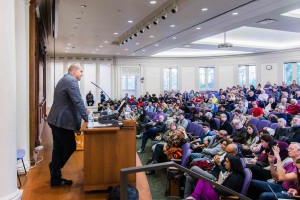
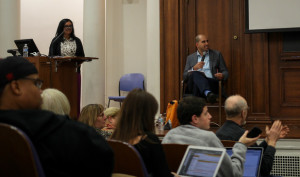
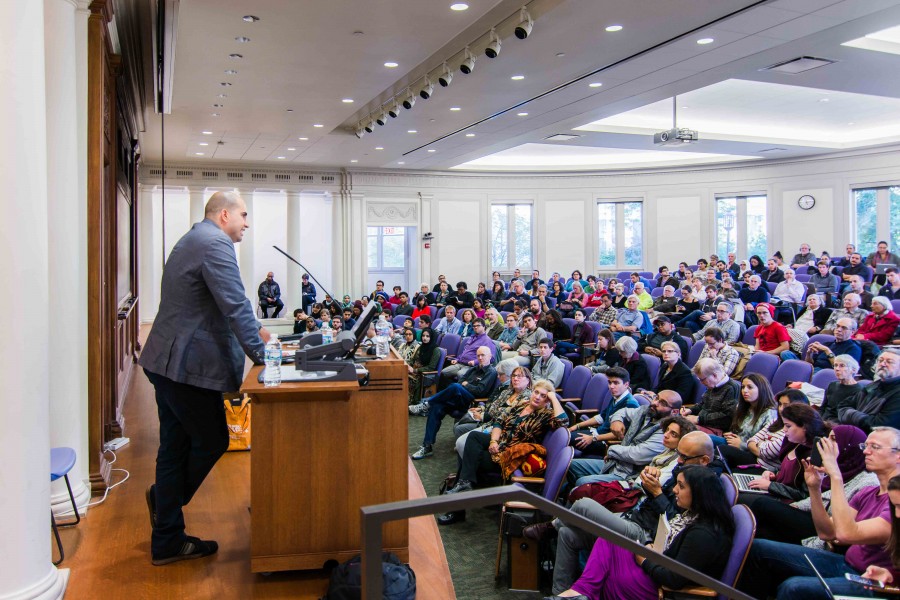
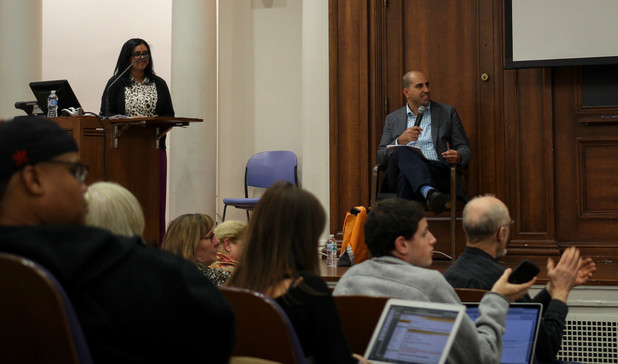
Inter-Nationalism: Encountering Palestine In American Studies
Professor Steven Salaita at age 39 had already written 6 outstanding books. He was a tenured professor at Virginia Tech University. He was offered a job with tenure at the University of Illinois in their American Indian Studies program. He accepted the job, and quit his other job, left his house, his wife did the same, left her job. They were enroute to Illinois for him to start working when he was told by Chancellor Phyllis Wise that he was not going to be hired. He was fired from a tenured job he had been offered at the University of Illinois because of his tweets criticizing Israel’s murderous war on the people of Gaza last summer .
Why? The university was under tremendous pressure as documentary evidence shows by private donors who said, you hire Salaita, we won’t give you money. The university caved. Salaita didn’t get his job. He’s now out of work and he’s about to file or will have filed a lawsuit trying to get his job back and reassert the principles of academic freedom, academic shared government and free speech. We hear a presentation by Steven Salaita titled Inter-Nationalism: Encountering Palestine In American Studies delivered at New York University November 2014.
——————————————————————-
Please help support Law and Disorder by clicking on Fractured Atlas graphic. This radio show is now a sponsored project of Fractured Atlas, a non-profit arts service organization. Contributions for the charitable purposes of Law and Disorder must be made payable to Fractured Atlas only and are tax-deductible to the extent permitted by law. You can donate as little as 5.00 a month.
CIA Sponsored Terror, Civil Liberties, FBI Intrusion, Human Rights, Political Prisoner, Prison Industry, Surveillance, Torture
Podcast: Play in new window | Download

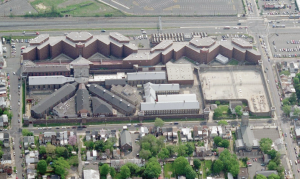
Prison State of America: Chris Hedges, Earl Amin, Amos Caley
Today we hear from 3 extraordinary people that will move you to anger, tears and outrage. Chris Hedges is an award winning journalist and former New York Times Middle East bureau chief . His recent article is Prison State of America outlines in detail how prison workers are gouged by corporate run private prisons. Earl Amin is a former Black Panther who was sentenced to life in prison for conspiracy to commit robbery and served 35 years which is the longest sentence in the state of New Jersey. Amos Caley is with the Interfaith Prison Coalition and a graduate student in the School of Social Work and is with the National Religious Campaign Against Torture, that exposes the abusive practice of solitary confinement in New Jersey prisons
Chris Hedges:
- What we’ve seen in the last few years is a steady assault, economic assault against prisoners and their families.
- Your minimum wage is about $1.30 a day. 8 hours of work, you’re doing prison labor, you work for the state. You’re paid a 1.30.
- They pay you for 5 days a week. That’s about 28 dollars a month.
- Deodorant, stamps, toothpaste, all of this stuff has risen by in many cases over 100 percent.
- Wages in the society at large have remained stagnant and in real terms declined and yet the commissary items have gone through the roof.
- The standard footwear are Reeboks, which cost 45.00. If you don’t have 45.00, they will sell you these sneakers with cardboard soles. The first time you go out in the yard, they’re shredded.
- If you don’t have any money, the prison system has thoughtfully provided a loan system so you can go into debt peonage.
- We have seen private corporations take over the phone system.
- We have seen the removal of other items like thermals. They used to give two blankets, now they give one.
- They’ve also privatized the system where you put money on a prisoners account. Jpay. Again charging draconian fees.
- Remember, we’re talking about very very poor families.
- What we’re seeing now is larger and larger numbers of people within the system who are not only broken, because most families don’t have the resources to send money in those incarcerated, because most of the incarcerated were the primary wage earner, people are going into debt.
- You have a 10 thousand dollar fine imposed on you when you’re sentenced. You’re earning 28 dollars a month, you have no outside resources.
- 25 years later, this is an actual case, you still owe 4 thousand dollars.
- People are finishing prison in debt. The very forces of predatory capitalism that are destroying working men and women outside the walls of prison, are running rampant inside the walls of prison.
- That is a kind of window of what’s going to happen to rest of us.
- Much of the military equipment is produced by federal prisoners – Kevlar jackets, body armor, canteens, etc
Guest – Chris Hedges, Pulitzer-Prize winning author and journalist. He was also a war correspondent, specializing in American and Middle Eastern politics and societies. His most recent book is ‘Death of the Liberal Class (2010). Hedges is also known as the best-selling author of War is a Force That Gives Us Meaning (2002), which was a finalist for the National Book Critics Circle Award for Nonfiction.
—–
Earl Amin:
- In 1967, I was drafted right out of high school into the Army.
- I met this white kid from Boston and he said Earl let’s go into town tonight which is Augusta, they some bad cats out there, I want you to meet them.
- I thought he was talking about Motown, Temptations, I never thought he’d talk about the Black Panthers. I went out there and heard these guys talking about the government.
- Later on I was transferred to Fort Dix, New Jersey – went to Central Park with my sister, Angela Davis was speaking. I had on my Army uniform. She said brother are you in the Army, I said yea. You been to the South? She said you don’t need to be this army you need to be in our army.
- I went AWOL that day. I joined the panthers that day until the FBI caught up with me six months later and charged me with being AWOL and sent me to Fort Leavenworth.
- I stayed there about nine months and they released me, went back to being a panther again, came home.
- Later on I was involved with something called Operation Breadbasket out of Chicago. We was out there feeding the poor people. I was out there when Fred Hampton was killed.
- I got arrested for guns. I went back to prison for a few months and came out.
- Then I got arrested for conspiracy to commit bank robbery, just talking about it. I was given a life sentence.
- I went to New Jersey State prison, Trenton.
- I started doing a lot of para-legal work and helping a lot of other people get out of prison.
- One judge told me if I was sentencing you today, I would give you 3 years.
- I was the first person in the history of the state to be sentenced to life for a robbery charge.
- Being 65, I took a job as a construction worker working 2 days a week, barely enough.
- I was listening to POP, Peoples Organization for Progress, with Larry Ham.
- For years and years I’ve earned a dollar thirty a day.
- That’s one of the problems, I’m comin home. I can’t get social security cause I ain’t paid nothing into social security.
- I can’t get a job because of my age, so what am I supposed to do?
- If you didn’t work, you didn’t get no toothpaste, you didn’t get no coffee.
- I personally, filed my own divorce.
- Rubin Hurricane Carter was my hero. Rubin resisted everything.
Guest – Earl Amin, a former Black Panther who was sentenced to life in prison for conspiracy to commit armed robbery. Earl has been released from prison after 35 years.
—–
Amos Caley – Interfaith Prison Coalition
- We’re realizing that talk is cheap. Looking at people who are most affected, and what they’re doing in terms of mobilizing themselves around this, is really a key to creating a sustained grassroots effort against the (predatory capitalist) system.
- We really have to organize around the demands of the families and the victims.
- That’s what the Interfaith Prison Coalition is about.
- One of things we’re doing is mounting a campaign to make it so that prisoners are paid minimum wage.
- We’re talking about a minimum wage for service workers on the outside, which will have a huge impact.
Guest – Amos Caley, a graduate student in the School of Social Work and is with the National Religious Campaign Against Torture, that exposes the abusive practice of solitary confinement in New Jersey prisons.
————————————————————
Please help support Law and Disorder by clicking on Fractured Atlas graphic (link is fixed). This radio show is now a sponsored project of Fractured Atlas, a non-profit arts service organization. Contributions for the charitable purposes of Law and Disorder must be made payable to Fractured Atlas only and are tax-deductible to the extent permitted by law. You can donate as little as 5.00 a month.