Civil Liberties, Human Rights
Podcast: Play in new window | Download
Updates:
- PFCJ Challenge Sidewalk Arrests During Occupy Wall Street Anniversary
- Insane Clown Posse To Sue The FBI
- Texas Policeman Shoots Wheelchair Bound Man In The Head
———–

ACLU Issues Statement In Response to Father-Daughter Dance Controversy
In Rhode Island, the Cranston School Department recently announced that it is banning traditional “father-daughter” and “mother-son” activities. citing a violation of federal law. The controversy arose when a local parent-teacher organization with support from the school, organized a “father-daughter” dance for female students and a “mother-son” outing to a Pawtucket Red Sox baseball game. When a single mother complained that her daughter could not attend the dance because her father was not a part of their life, the ACLU notified the school district they were suing for gender discrimination under Rhode Island law. The Rhode Island ACLU posted a statement noting that “This type of gender stereotyping only perpetuates outdated notions of ‘girl’ and ‘boy’ activities and is contrary to federal law.”
Attorney Steven Brown:
- Title IV is a federal law, a really crucial law promoting fairness and equality on the basis of gender in the school setting.
- There are certain exemptions, one in particular says its ok for schools to have father-son and mother-daughter events without violating this general ban on sex discrimination in school activities.
- Back in the 1980s, Rhode Island passed its own version of Title IV.
- In April or May of this year, we did receive a complaint from a parent, a single mother who has a daughter in the Cranston School district, and she received a notice of a “Me and My Guy Dinner Dance” for girls attending the school.
- There is no adult male in her life, she’s raised her daughter by herself. When she got this notice she was concerned that she wouldn’t be able to attend. She was also concerned about the mothers and sons event, she was barred from that as well.
- She also pointed out that the PTO was reverting to an old type of tradition that they’d actually stopped a few years previously. Nonetheless the PTO said we want to bring back this father-daughter dance and that’s what we’re doing.
- We very quickly got a letter back from the superintendent not only agreeing with us, but they notified the PTOs previously that they should not be holding these types of events.
- It was a rogue PTO president deciding to bring back this father-daughter dance after it had disappeared for some time. We thought that it was all resolved, until a candidate for state office in Cranston decided to turn it into a political issue.
- If their name (ACLU clients) were out there (in the public) based on what we’ve seen here, I would expect based on some of the vitriol we’ve seen here but also vitriol we’ve experienced in another case in the same school district, that there would be some adverse consequences.
Guest – Attorney Steven Brown, Executive Director of the Rhode Island Civil Liberties Union.
———

Wisconsin Dept of Transportation And Federal Civil Rights Violations
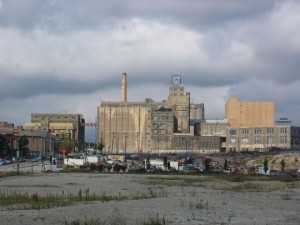
The Federal Highway Administration’s Office of Civil Rights is moving to hold Wisconsin transportation officials accountable for allegedly discriminated against minorities. Though the state says it’s in compliance, a lawsuit proceeds on the legal basis of Title VI of the Civil Rights Act of 1964 which prohibits agencies that receive federal funds from discriminating on the basis of race, color, national origin, gender, age or disability. The lawsuit could freeze construction on a major Wisconsin freeway interchange known as the Zoo Interchange. Meanwhile, the ACLU of Wisconsin and the Black Health Coalition of Wisconsin continue to issue complaints that the Wisconsin DOT has allegedly failed to address their requirements to gather data about the impact their actions have on minorities.
Attorney Kayrn Rotke:
- Title VI – If you get federal money you can’t discriminate on the basis of race.
- Most if not all federal agencies have civil rights offices or units or divisions that enforce those Title VI requirements.
- It prohibits actions that have a discriminatory effect.
- Milwaukee and the counties around it are the most racially segregated region in the United States.
- The other issue if you have job growth in these overwhelmly white suburbs and absolutely no transit access.
- Its making a transportation system that benefits commuters who are disproportionally white.
- At the same time the transit system is biting the dust.
- We see that as a program that is clearly having a discriminatory effect on people of color.
- I think there are hooks that you can look at to try to challenge this.
- State Departments of Transportation have to update Title VI annually.
- This is taking a step back and looking at it in an environmental justice way.
- You can’t have healthy people in a sick community.
Guest – Karen Rotke, senior staff attorney for the ACLU of Wisconsin.
———


The Democrats: A Critical History
As we near the 2012 Presidential election, many are complacent about what they see as having to choose between the lesser of two evils. By choosing political heads of the false left right political paradigm, where third party candidates are marginalized, sidelined or altogether pushed out or sidelined what are are we really supporting? We talk today with author Lance Selfa, who wrote the book The Democrats: A Critical History. It offers a realistic assessment of the Democratic Party and examines the nature of the party beyond the campaign rhetoric and media hype. Lance joins us today to talk about his book, the Democratic Party and the upcoming election.
Lance Selfa:
- I would describe it as one of the two big business parties that runs the American political system that trades off between itself and the Republican Party.
- Though many people don’t see it that way because it has the image of the party of the people. It’s the party that most African-Americans vote for, union members voter for.
- Really what controls it is big business interest.
- It was the party that tied together and held the southern slave holding class with northern financial interest and western farming interest.
- The Democratic Party combined the sense in which it was looked on as the party of social security and medicare and so on, but that was always coupled with commitment of the Democratic Party of an aggressive foreign policy that actually got us into wars like Vietnam.
- There’s a real bipartisan commitment to that empire.
- Both of them Republicans and Democrats answer to big business interests.
- The way Wall Street money is shifting support to Romney shows that business tries to play both parties to insure it’s interests are preserved.
- The Democrats are sort of like the “plan B” party for capital.
- Capital would prefer to have a party that’s just big business that doesn’t have to make any attempt to say that they’re in favor of any kind of programs for the poor.
- The Democrats at least have those rhetorical commitments. They have a social base that they have to placate.
- Business finds out in periods such as the end of the Bush Administration, the most unpopular administration since Richard Nixon that Republicans were going to get turfed out of office so business starts to move their money over to Democrats.
- If one succumbs to the idea that there are only two choices and the only thing anyone can do politically is to choose the lesser of two evils. Will voting for Obama actually advance an agenda of social movement? I would argue no.
Guest – Lance Selfa, author of The Democrats: A Critical History. Lance is a frequent contributor to the International Socialist Review, and writes a column on U.S. politics in Socialist Worker newspaper.
—————————————————————
Civil Liberties, Criminalizing Dissent, Gaza, Human Rights, Targeting Muslims, Torture, Truth to Power, War Resister
Podcast: Play in new window | Download
Updates:
—–
The Russell Tribunal on Palestine
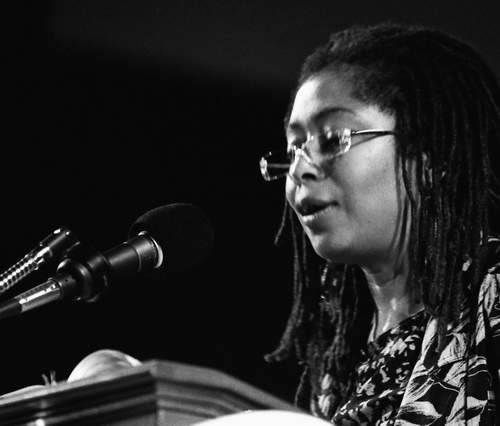
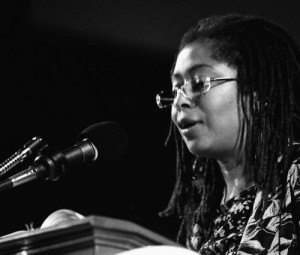
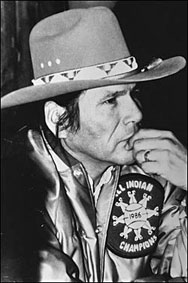
The Russell Tribunal on Palestine is holding its fourth and last session in New York City, October 6 through the 7th. This public session focuses on the denial of the Palestinian right to self determination and the role of the US and the United Nations. This tribunal will draw attention to the ongoing Israeli occupation of Palestinian Territories and how Israel continues to act with impunity under international law. There will be many speakers at this event including Ilan Pappe, Noam Chomsky, and Cynthia McKinney. We talk today with Pulitzer Prize winning novelist and poet Alice Walker and Dennis Banks, a Native American leader, activist and author. Both of whom will be speaking at the tribunal.
Alice Walker:
- Citizens around the world are very concerned that nothing seems to move forward between the Israelis and the Palestinians.
- The traditional one (tribunal) that came into being because of Vietnam and the American war against the Vietnamese people.
- I was in Gaza shortly after the bombing and that would’ve made anyone want to have a tribunal because it was so completely devastating and horrible.
- The Israelis just sailed along as if everything was ok to kill 1400 people and 300 children, destroy the water system. We don’t have a lot of power in terms of making things change, but I think consciousness is our only hope in any case.
- The UN has been relatively helpless against the US and Israeli veto of their resolution. We want to look at – Why is that?
- How is it that we can’t get any movement in the UN toward justice for the Palestinian people?
- I think the United States and Israel are in agreement they want that territory.
- We have to remember this is an entrenched long standing pattern of how you treat indigenous people when you want what they have.
- In this country what they did is destroy the Indians.
- The Palestinians are just seen as obstructions to this grand vision. When people say real politic, they mean no matter what they have to do to implement their plan. Their plan whatever it is is supreme.
- They just gonna do that if it takes 100 years, 200 years.
- I remember sitting in Gaza after the bombing. The thing that got me was they bombed this school, not only a school but it was the American school.
- We must as human beings gather together. Gather ourselves and address these issues of destruction and they’re coming faster and faster.
Guest – Alice Walker, American author, poet, and activist. She has written both fiction and essays about race and gender. She is best known for the critically acclaimed novel The Color Purple (1982) for which she won the National Book Award and the Pulitzer Prize.
——
Dennis Banks:
- It seems that they’re taking a page out of Native American history and using it over there.
- You look at the burning of the sweat lodges. The whole experiment to take Native people away their parents and destroy them, put them in foster homes, boarding schools, military boarding schools.
- And keep them there for five, six, seven years. In my case it was six years before I was even allowed to see my parents.
- The whole thing is all over again.
- What can I say to warn people, to warn people about the future?
- I know they’re gonna dispossess the land from the Palestinians.
- I will not forgive the government for what it did not only to me but to thousands of thousands of young Native children.
- I’m speaking against the American people, I’m speaking against the policies of the American government.
Guest – Dennis Banks, a Native American leader, teacher, lecturer, activist and author, is an Anishinaabe born on Leech Lake Indian Reservation in northern Minnesota. Banks is also known as Nowa Cumig (Naawakamig in the Double Vowel System). His name in the Ojibwe language means “In the Center of the Ground.” He has been a longtime leader of the American Indian Movement, which he cofounded in 1968 with Native Americans in Minneapolis.
——
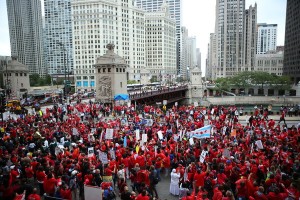
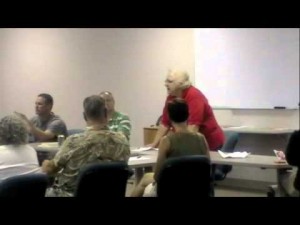
Chicago Teacher Strike
The Chicago teachers, with deep community support, have won a good victory last week in their ten day strike. their victory, while not complete, defends one of the great gains of the American people, public education, against the neo-liberal goal of supplanting it with private for profit non union charter schools. The teachers strike was about more than wages and hours. They fought against the dismantling of public schools in favor of for profit charter schools, a project that both the democrats from Obama down to Chicago Mayor Rahm Emannuel, champion.
The teachers demanded smaller class size, school aids, school supplies, and an end to the use of standardized tests. The new leadership of the teachers union gained its strength by being democratic and being rooted in the community, largely Black and Latino, and allied with the families of the students they teach. They began organizing in defense of their students 3 years ago.
Debby Pope:
- I started out the week as a strike coordinator. We went out and worked with 8 to 12 schools in a particular area on the picket lines and then someone else moved in to a communications role.
- Right now I’m working in a grievance department working on contract enforcement issues.
- I think the fundamental issue is the defense of public education and the defense of teaching as a profession.
- Let me make it clear that we were not legally able to bargain on some of the issues I talk about due to restrictive labor laws in Illinois.
- They have made over a hundred charter schools in Chicago in the last decade or so.
- They’ve eliminated bargaining in those schools, they’ve eliminated Chicago Teacher’s Union membership, they’ve eliminated the decent working conditions and the rights that we’ve fought for.
- They’ve given the billionaire business men a huge control over their schools.
- They have systematically defunded neighborhood schools.
- They allowed our buildings to crumble. They’ve given us computers that are decades old.
- This is an example of how they’ve been starving the public schools and then blaming us when the schools don’t work.
- We went out to the schools. We started contract action committees in all the schools. We helped teachers to understand what their rights were.
- We resumed our place as one of the largest unions in Illinois as a part of the labor movement.
- Is a teacher’s effectiveness related to his or her class size?
- Can a teacher teach 40 kids as well he or she can teach 25 kids?
- We want a better school day with a richer curriculum with art, music and drama.
- The enemies of poor children, the enemies of public education, the enemies of giving every child an opportunity are within both parties.
- We put ourselves in a position where the schools are failing.
- We blamed the schools for failing when in fact as a society set them up to fail.
- Then of course the billionaire rescuers . . . came in and said Oh my God look at what a mess the schools are. We have to privatize them, we have to charter them. We have to turn them into little business models.
- These people believe in factory schools.
- The next fight on the horizon is against school closings.
Guest – Debby Pope, member of the executive board Chicago Teachers Union and delegate. Debby Pope is a retired teacher and currently works on the CTU grievance board in contract dispute.
———————————————————————–
CIA Sponsored Terror, Civil Liberties, Guantanamo, Habeas Corpus, Human Rights, Political Prisoner, Prison Industry, Targeting Muslims, Torture, Truth to Power
Podcast: Play in new window | Download
Updates:
- US Refuses To Extradite Former Bolivian President
- Jose Padilla Re-Sentencing
- Ward Churchill Case Update – Are University Board of Regents Immune?
- Armenia Protests Extradition of Axe Murderer
——

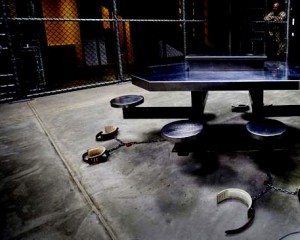

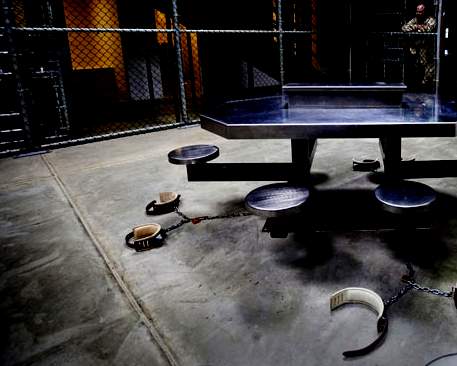
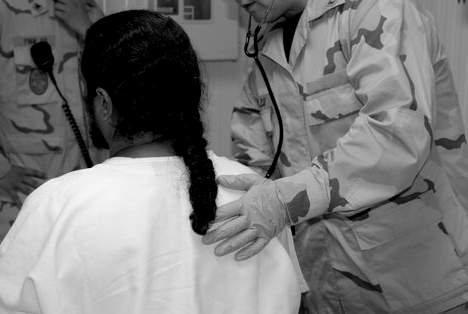
Department of Defense Declassifies Report on Alleged Drugging of Detainees
Hosts discuss a recently declassified report on alleged drugging of Guantanamo detainees with Attorney Shane Kadidal.
Guest – Attorney Shane Kadidal, senior managing attorney of the Guantánamo Global Justice Initiative at the Center for Constitutional Rights in New York City. He is a graduate of the Yale Law School and a former law clerk to Judge Kermit Lipez of the United States Court of Appeals for the First Circuit. In his eight years at the Center, he has worked on a number of significant cases in the wake of 9/11, including the Center’s challenges to the detention of prisoners at Guantánamo Bay (among them torture victim Mohammed al Qahtani and former CIA ghost detainee Majid Khan), which have twice reached the Supreme Court, and several cases arising out of the post-9/11 domestic immigration sweeps.
——
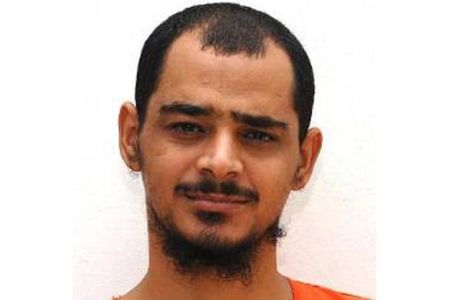
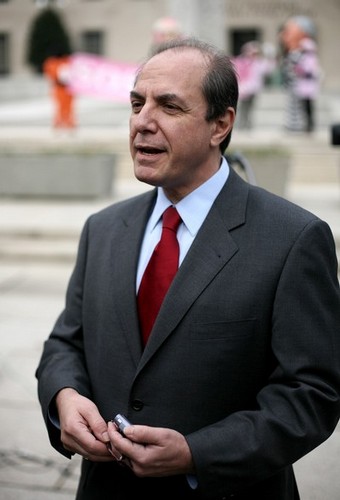
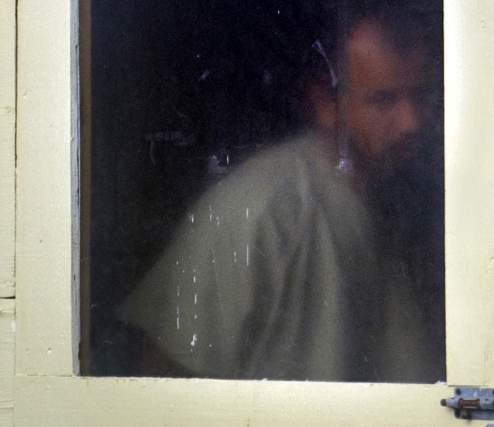
Adnan Latif – the Face of Indefinite Detention – Dies at Guantánamo
A prisoner held at Guantanamo Bay Naval Base since 2002 died last week. Adnan Farhan Abdul Latif was a 32 year old from Yemen who was allegedly suicidal and mentally ill. Latif won a U.S. court order for his release but it was overturned on appeal. In 2009, President Obama imposed a moratorium on Guantanamo prisoners from Yemen after a Yemeni trained Nigerian was found with a bomb in his underwear on a Detroit bound plane in 2009. Latif is the ninth prisoner to die at Guantanamo Bay prison.
Attorney David Remes:
- We decided to put out a statement by the lawyers. We wanted to call his family but the government said let the ICRC do it.
- He was approved in 2004, he was approved in 2007, and approved in 2009 for transfer out of Guantanamo.
- Adnan filed a habeas corpus petitions in 2004. In 2008 those cases began to move forward, Adnan was among them. He won his habeas case. The whole case against him hinged on an intelligence report that the district court judge said was unreliable. The case was appealed by the Obama Administration.
- He was a very sweet man, he was small, he was thin.
- He was very sensitive and a fine poet. He felt everything more keenly, perhaps more keenly than any of the other detainees.
- He felt that his spirit was being crushed. That he was always being roughed up by the guards. He was on long hunger strikes, he was held in isolation for the majority of his time in Guantanamo.
- He was mentally very fragile.
- At one point in my representation of him in 2009, he slit his wrists as I was speaking with him . . by chipping formica from under the table and cutting into his vein let the blood drip into a little cup and then threw his blood on me.
- I took an inventory of his various bumps, bruises and swellings. It was almost like a doctor’s visit.
- He was a small guy.
- He could be very lucid, he was very intelligent.
- You just have to question the NCIS reports from the beginning.
- Whatever the conclusions that were announced it was Guantanamo that killed Adnan. It ruined his health, it ruined his spirit, it may have led him to suicide.
Guest – Attorney David Remes, a human rights lawyer who has been deeply involved in the litigation on behalf of Guantanamo prisoners since 2004. He represents 16 Yemenis and has made several visits to Yemen to press for his clients’ release and brief their families. He was among the first lawyers to visit Guantanamo after the Supreme Court ruled in Rasul v. Bush in 2004 that the prisoners had a right to legal counsel.
————————————————————————–
Civil Liberties, Criminalizing Dissent, FBI Intrusion, Habeas Corpus, Human Rights, Military Tribunal, Political Prisoner, Supreme Court, Torture, War Resister
Podcast: Play in new window | Download
Updates:
- Bradley Manning Public Access Case: Amicus Brief Filed by Reporters’ Committee for Freedom of the Press
- Southern Poverty Law Center Lawsuit Against Chemically Spraying Students
———
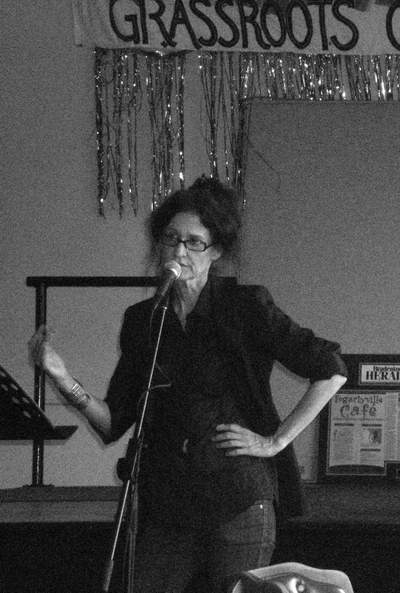
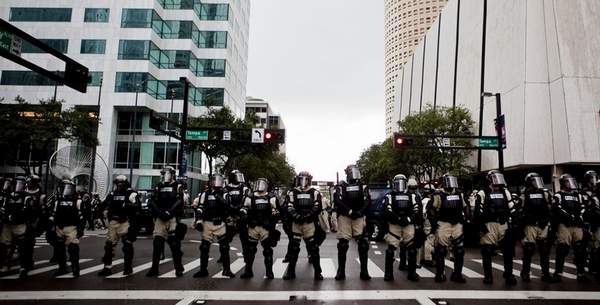
Attorney Heidi Boghosian Speech: National Special Security Events – RNC / DNC
We hear a presentation by our own Heidi Boghosian. Heidi spoke at an event sponsored by station affiliate WSLR FM 96.5 – Sarasota, Florida. As the executive director of the National Lawyers Guild, Heidi had coordinated and organized legal observers during the Republican National Convention in Tampa and the Democratic National Convention in Charlotte. While in Florida, Heidi delivered a talk about the eroding civil rights of protesters during National Special Security events, pre-event surveillance and tactical strategies deployed by police.
Heidi Boghosian is the executive director of the National Lawyers Guild, a progressive bar association established in 1937. She has published articles on policing, protest and the First Amendment including Punishing Protest and The Assault on Free Speech, Public Assembly, and Dissent (North River Press, 2004). Her book reviews have been published in The Federal Lawyer magazine and the New York Law Journal.
———

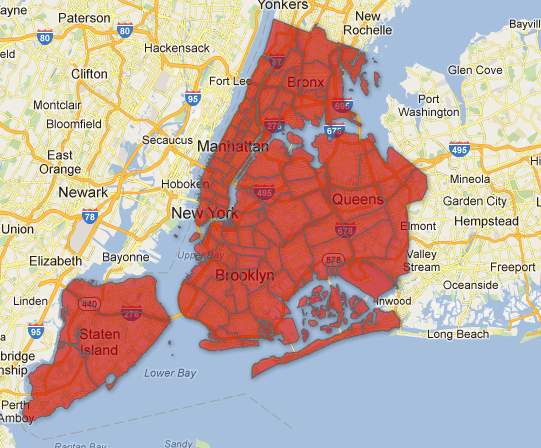
CCR Stop and Frisk Suit NYC: Floyd et al. v. New York City
Last month, a federal judge excluded portions of proposed testimony from New York City’s key witness in the Center for Constitutional Right’s Stop and Frisk class action lawsuit Floyd v. City of New York. Judge Shira A. Scheindlin of the U.S. District Court for the Southern District of New York ruled the defendants’ testimony untested and unreliable. The ruling supports that there isn’t evidence that the “Stop and Frisk” practice reduces crime.” said CCR Legal Director Vince Warren (quote) “The ruling soundly rejects the false choice propounded by the NYPD, between living in a safe city and being free of unconstitutional, racially discriminatory policing.”
In 2009 New York City, a record 576,394 people were stopped, 84 percent of whom were Black and Latino residents — although they comprise only about 26 percent and 27 percent of New York City’s total population respectively. Ten years of raw data obtained by court order from the New York City Police Department (NYPD) showed that stop-and-frisks result in a minimal yield of weapons and contraband.
Attorney Darius Charney:
- When we say “stop” were really talking about a detention of somebody’s liberty by the police. Frisk is a pat down of the outside of somebody’s clothing.
- For purposes of the 4th Amendment we are talking about a seizure when somebody is stopped, their liberty is taken away from them for a period of time and when they’re frisked, they’re searched.
- About 99.3 percent of the time the police find no gun.
- According the Supreme Court in a case they decided about 44 years ago, called Terry v. Ohio, for a police officer to stop someone on the street they have to have what’s called reasonable, articulatable suspicion.
- It has to be more than a hunch, or a whim or a subjective belief that somebody’s doing something wrong. It has to be articulatable specific facts that the officer is aware of that would cause him or her to reasonably believe that this person has committed a crime, is in the process of committing a crime or is about to commit a crime.
- If they have reasonable suspicion and they stop to ask you questions, you’re supposed to answer the questions.
- They may ask you for identification, that’s not against the law in New York state. You don’t have to provide it to them.
- You’re free to not answer but depending on what the questions are and if you don’t answer them, that may give the officer a basis to have probable cause to arrest you.
- For the officer to then put their hands on you, they have to have reasonable suspicion that you’re armed and dangerous.
- It can’t be that they think you have drugs in your pocket. Officers often get angry or irritated if you assert the rights that you have.
- What commonly happens in New York and other places is that somebody does assert their rights the officer may retaliate against them by issuing them a ticket for disorderly conduct.
- The person has a right to say “show me your badge” to a plain clothes police officer.
- Stop and Frisk has increased over 600 percent in New York City.
- In New York police are arresting 50 thousand people a year with small amounts of marijuana.
- The New York Police Department Stop and Frisk practices are literally going to be put on trial in a federal court in Manhattan this coming Spring.
- We were certified for a class action in May, so we have a website for class members. Stopandfrisk
- In order to fight crime you need to work together with the community and if the community doesn’t trust you, fear you, that’s not going to happen.
Guest – Attorney Darius Charney, senior staff attorney in the Racial Justice/Government Misconduct Docket. He is currently lead counsel on Floyd v. City of New York, a federal civil rights class action lawsuit challenging the New York Police Department’s unconstitutional and racially discriminatory stop-and-frisk practices, and Vulcan Society Inc. v. the City of New York, a Title VII class action lawsuit on behalf of African-American applicants to the New York City Fire Department which challenges the racially discriminatory hiring practices of the FDNY.
—————————-
Afghanistan War, CIA Sponsored Terror, Civil Liberties, Criminalizing Dissent, Extraordinary Rendition, FBI Intrusion, Guantanamo, Habeas Corpus, Human Rights, Iraq War, Military Tribunal, Political Prisoner, Targeting Muslims, Torture
Podcast: Play in new window | Download
Updates
- Michael Ratner: Update on Verdict – Corrie v State of Israel
- Cardinal Dolan Who Approved Payoffs For Priests Accused of Sex Abuse To Leave Priesthood Gives Speech At RNC and Closing Speech for DNC
—–
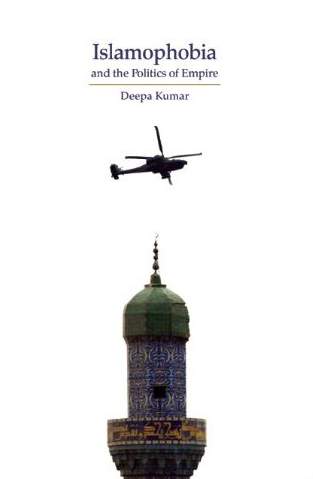
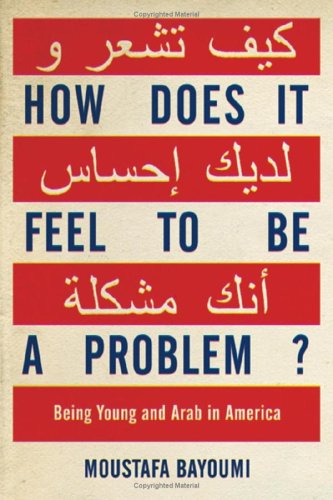
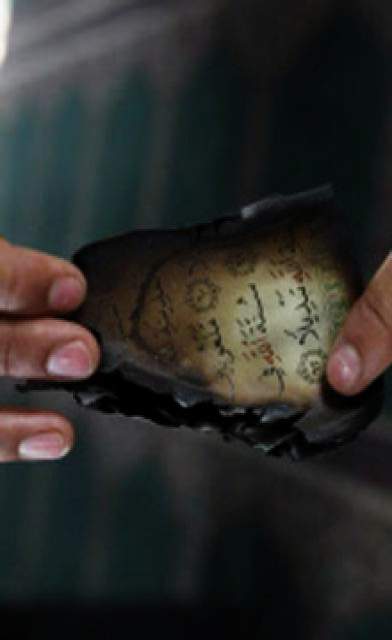
Islamophobia: Anatomy of an American Panic
In the last few weeks, 8 places of worship connected with South Asians or Middle Easterners have been targets in the United States. As many listeners know, six people were murdered at a Sikh temple in Oak Creek, Wisconsin but later that evening a mosque in Joplin Missouri was burned down. Other targets recently included mosques in Rhode Island, Southern California, Oklahoma City and Dearborn, Michigan. These tragic events mark another wave of existential Muslim threats inciting fear and violence against Middle Eastern people while helping to justify the ongoing war on terror.
According to the University of Maryland’s National Consortium for the Study of Terrorism and Response to Terrorism, since 9/11 to 2010 there have been 155 terror incidents in the U.S., and exactly two of them or 1.3 percent have been attributed to international Islamist terror groups. The majority of events involved individuals such as anti-abortionists, right-wing extremists, or extreme animal rights activists.
The Nation Magazine has highlighted the disproportional focus put on Muslim communities in a special issue titled “Islamophobia: Anatomy of an American Panic.” We talk with journalist Lizzy Ratner and authors Deepa Kumar and Moustafa Bayoumi who contributed articles to the Nation Magazine special.
Lizzy Ratner:
- The Nation did a special issue about Islamophobia. It came out in the beginning of July. You can still find the majority of the articles online. The real credit has to go to Abdeen Jabara whose idea this really was.
- The civil rights attorney came to me last year and said the anti-Arab, anti-Muslim has reached fever-pitch.
- So I began to do some research about what exactly was going on and very quickly compiled a massive roster of possible articles.
- For the most part, the Left and Progressives have been far too quiet.
- This bigotry that is flourishing right now has a real history, it’s not a just a product of 9/11 and the post 9/11 era.
- Some of the seeds of bigotry have to do with the role of the United States historically in the Middle East.
- Islamophobia served an agenda and a number of purposes.
Guest – New York City journalist Lizzy Ratner has written extensively for the Nation and Alternet on issues involving Islamophobia. Lizzy is also co-editor of The Goldstone Report: The Legacy of the Landmark Investigation of the Gaza Conflict.
——
Moustafa Bayoumi:
- I was happy to see that the Nation was happy to take on the question of Islamophobia for a double issue.
- There’s been a shift in the last ten years from paranoia around security to a paranoia about the basic facts of Muslim life in the United States.
- In a way you can say it’s a shift from security to culture.
- At any stage, anything that has to do with a daily concerns about living a life as a Muslim American, somehow now becomes charged with sedition. Part of the funding of the anti-Muslim movement in the United States is basic conservative politics and extreme conservative politics.
- And also due to the Israel-Palestine conflict. So people who want to come aboard Israel will make a very distorted picture of what Muslim life is like.
- The NYPD has now a decade long history of “othering” the Muslim-American community.
- The NYPD had been screening The New Jihad for its new recruits.
- It’s a crazy film saying that all of the American Muslims are here as a fifth column ready to pounce. It’s a training film for new recruits. That’s true for the Pentagon and the FBI.
- Muslim Americans are still seen as perpetual foreigners.
- That Muslim American rights are different than everyone else’s rights.
- You’re average American consumer of media does not relate to the victims of the Oak Creek massacre because they don’t see them as being part of the American family.
- They asked American’s in this poll, and 62 percent of the population has never met a Muslim.
- If you’ve never met a Muslim then it’s very easy to believe all these boogey man ideas. That’s why media plays an important role in this issue.
- The FBI (training manual) said that it was in the nature of Muslims to try to take over this country.
Guest – Author Moustafa Bayoumi wrote Fear and Loathing of Islam joins us, his book : Being Young and Arab in America, won an American Book Award and the Arab American Book Award for non-fiction. He is also a professor of English at Brooklyn College, City University of New York.
——
Deepa Kumar:
- As of late the anti-Muslim statements coming from Michelle Bachmann, Joe Walsh, all of whom are Republicans, there is a sense of which it is the Republicans who are responsible for Islamophobia, for the demonization of Muslims and so on.
- This brand of the war on terror gets hatched and part of that was language developed in the 1990s, called the Clash of Civilizations. It was a man named Bernard Lewis who first penned this term.
- It’s not so much we’re going to carry out revenge on Osama Bin Laden but that we’re going to rescue Afghan women. In the case of Iraq, we’re going to bring democracy when no weapons of mass destruction were found.
- This rhetoric has a long history it goes back to the 19th century.
- Both presidents need Islamophobia. They need to generate this fear and hatred of the “Muslim other.”
- Operation Boulder
- The Jonathan Institute holds this conference in Jerusalem . . Islamofacism, the roots are sown at that conference.
- The idea of this menacing Muslim enemy is not new. It was not something created after 9/11 but in fact it goes back a millennium.
- It’s about political goals but religious rhetoric gets used. Same thing with the re-conquest of Spain.
- The Islamophobic rhetoric is one that’s mobilized by the elite.
- I hold both Republicans and Democrats responsible. These rabid right wingers get their confidence from mainstream figures like Walsh, like Bachmann and others.
- The sad reality is that the Democrats have done nothing to counter this.
- The Democrats are not an ally in this fight.
- I take inspiration from 2 movements in the sixties, the civil rights movement and the anti-war movement. I think these 2 strategies need to come together in fighting Islamophobia.
- We have to take on both the far right and challenge the priorities of empire and bring together a multiracial coalition that can actually change a generation.
- It was President Clinton with Anti-Terrorism and Effective Death Penalty Act in 1996 which made it legal to actually deport people with secret evidence. We know this lays the basis for the Patriot Act. This has really been a bipartisan project in the interest of empire.
Guest – Deepa Kumar, an Associate Professor of Media Studies and Middle Eastern Studies at Rutgers University. Her work is driven by an active engagement with the key issues that characterize our era–neoliberalism and imperialism. Her first book, Outside the Box: Corporate Media, Globalization and the UPS Strike (University of Illinois Press, 2007), is about the power of collective struggle in effectively challenging the priorities of neoliberalism.
———————————————–