CIA Sponsored Terror, Civil Liberties, Guantanamo, Habeas Corpus, Human Rights, Torture, Truth to Power
Podcast: Play in new window | Download
Updates:
——


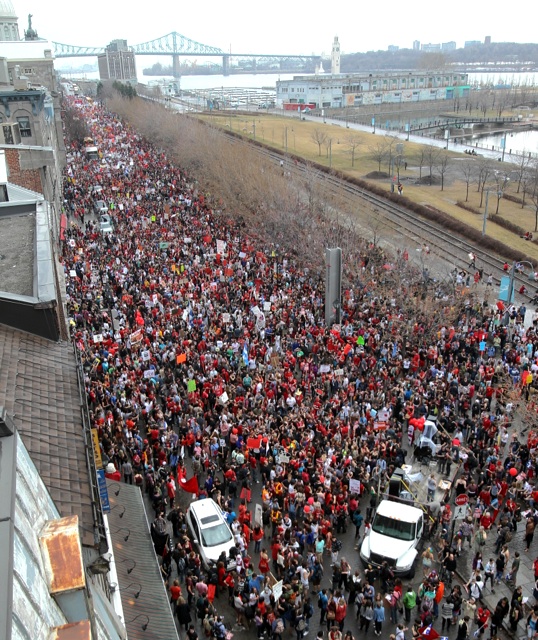
Quebec Students Protests: Largest Act of Civil Disobedience In Canadian History
Social unrest in Montreal continues unabated with nightly protests as thousands fill the streets in what is now the largest act of civil disobedience in Canadian history. Protests against tuition hikes and austerity are evolving into community assemblies, and also into increasingly popular pots and pans protests. These larger protests against tuition hikes and austerity turn into community assemblies and also the loud pots and pans protests. In response, police randomly searching and detaining people wearing the red square in solidarity of the movement and try to break up each emerging protest.
Gabriel Nadeau – Dubois:
- The strikes started in the beginning of February, and the debate about tuition hikes became a larger debate about privatization. It started as a student strike and is now a popular movement.
- The context in Quebec is the reason we were able to build a movement. There has been so much dissatisfaction toward the government in the last 10 years.
- Many other workers saw an opportunity to go into the street because a lot of people were very angry.
- Bill 78 is a special law. This bill has 3 major sections.
- The first section suspends the Winter semester with the objective to stop the student strikes.
- Now we’re in sort of a lock out these days. The Winter semester will start in August.
- The main objective of the bill is to break the mobilization.
- We have seen thousands of illegal protests of civil disobedience.
- Last week there were hundreds of police in the subway station, who were systematically and illegally searching the students and the citizens who were wearing the red square.
- The bad thing about too many protests is the citizens get used to seeing police brutality.
- We currently contesting the law in front of the court. We are trying to suspend the law and declare it unconstitutional.
- We are planning 2 major protests this summer one on June 22, 2012 and one on July 22.
- What we’re asking for is still very simple stop the increase of tuition fees in order to keep the universities accessible to everyone
Guest – Gabriel Nadeau – Dubois, the co- spokesperson of the Coalition off the Solidarity Trade Union Association for Student (aka CLASS), which is opposed, since the beginning of this year , with rising tuition fees in Quebec decreed by the Jean Charest government.
——-
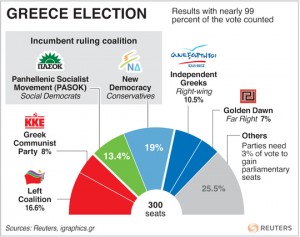
Austerity and Second Round of Elections in Greece
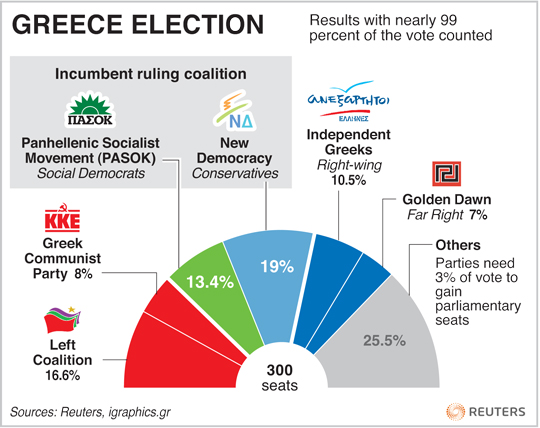
The elections in Greece have just occurred. We talk with Greek-American National Lawyers Guild attorney Eric Poulos about the left, right and center parties in Greece. Eric explains party platforms and makes a few predictions on election outcomes.
Attorney Eric Poulos:
- Greece has got money from the European Union, not to bail out Greece, it’s a misnomer in the press, it’s to bail out the banks. It’s going to pay off debt service to banks.
- There’s no stimulus to create jobs in Greece, jobs are being lost.
- Unemployment is up 20-25 percent, among youth it’s 50 percent.
- If they can, Greeks are leaving the country, taking their money out of the banks.
- Pharmacies are not filling prescriptions, doctors are not getting reimbursed from the state.
- Political party Syriza emerged from the last election. This is run off election from one that occurred in May where there was no clear victor.
- Syriza’s a left wing party that emerged from almost obscurity. Syriza is made up of many forces. It’s a coalition.
- Looks like the right wing party might be gaining votes. Syriza wants to cancel the memorandum which triggered the loan from the EU.
- It wants a moratorium on the payment of the debt, and it has various measures to deal with corruption, it wants remove immunity.
- The memorandum imposed austerity measures which Greece has tried to fulfill, and has resulted in devastation.
- Even the mainstream parties that agreed with the memorandum say they want to renegotiate that agreement.
- Greece has huge military contracts with German and French defense contractors, which they will not let Greece out of. The far left says to cancel those contracts.
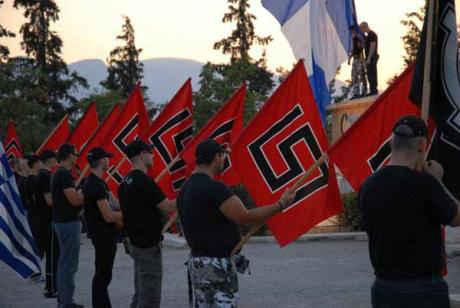
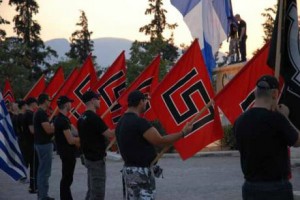
- There is an out and out fascist party that got almost 7 percent of the vote. Golden Dawn.
- There’s a huge anti-immigrant sentiment that these far right parties have tapped into.
- I think conservatives will gain. I think Syriza will gain
Guest – Attorney Eric Poulos, writer and National Lawyers Guild member.
———–
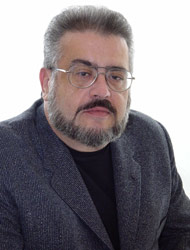
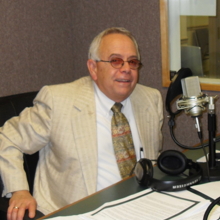
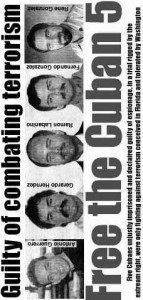
Cuban Five Case Update: Government Paid Media Helped Shape Public Perception
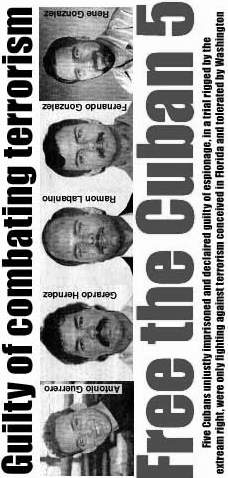
The Cuban Five were convicted 14 years ago this month on conspiracy to commit espionage at some time in the future. Recently, prominent First Amendment attorney Martin Garbus joined the case of the five. He’s concentrating his legal efforts on US government paid journalists in Miami who received hundreds and thousands of dollars of payments from the office of Cuba broadcasting. A fact unknown to the defense at the time of the trial. The reporters covered the case in an almost hysterical and prejudicial fashion.
Attorney Martin Garbus:
- We’re trying to get all the facts nailed down on the paid journalists issue.
- The motion is to get discovery of those facts and then to proceed to the hearings to reverse the convictions.
- What we’ve been trying to do for the last 15 years is trying to get these facts and we’ve failed to do it.
- What you have is a cauldron, when this is in the public debate. It’s not the just the question of the media being influenced, not just the question of the jury pool being saturated,
- its not just the question of the jurors themselves being saturated.
- We understand that the government was paying people who were on major newspapers, major media, substantial sums of money to write stories to get indictments, as well as convictions, and to influence the whole question of how you charge people.
- In a normal world, these defendants would not have been charged.
- It’s not just the question of the media effecting the jury pool, it goes long before that.
- Given the circumstances, one would expect the prosecutors to try and get the highest charges that they could.
- It’s government legal influence at every single part of the legal process.
- You had both governments trying to de-fang very bad situations.
- Instead of stopping the planes, they chose instead 18-17 months later, they chose to arrest these five people whose names they knew because it was part of the cooperation pact.
- There were many people in Miami who didn’t like the idea of the Cuban government and the American government through government representatives, trying to cut back the Miami terrorists.
- A lot of them became rogue agents and trying to ruin whatever cooperation there was.
- Its seems apparent that it was purely a political prosecution.
- There’s a reason why the government has been withholding documents.
- I don’t know of any other case where you’re going to get an accumulation of facts in a situation that’s as explosive as this, given the traditional historic politics as what was going on at that time.
- You had two judges saying this was a fire storm.
Guest – Attorney Martin Garbus, one of the country’s leading trial lawyers. He has appeared before the United States Supreme Court and the highest state and federal courts in the nation. Time Magazine has named him “legendary . . . one of the best trial lawyers in the country.” He’s also known as the most prominent First Amendment lawyer.
————————————————————–
Civil Liberties, Criminalizing Dissent, FBI Intrusion, Habeas Corpus, Human Rights, Prosecution of the Bush Administration, Targeting Muslims, Torture, Truth to Power, War Resister
Podcast: Play in new window | Download
Updates:
—–
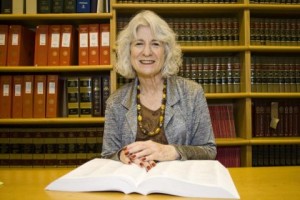
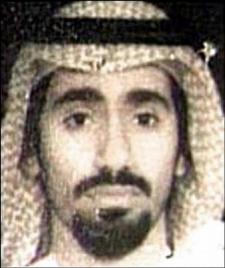
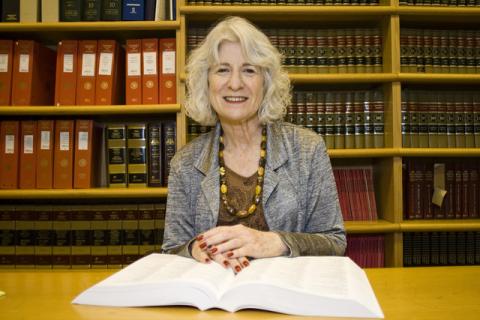
Lawyers You’ll Like: Attorney Nancy Hollander
In this week’s Lawyers You’ll Like series, we’re joined by attorney Nancy Hollander. Nancy has been a member and partner with Freedman Boyd Hollander Goldberg Ives & Duncan P.A. since the early 80s. Her practice is devoted to mostly criminal cases including those involved with national security. Ms. Hollander has also argued and won a religious freedom case in the US Supreme Court. She’s served as a consultant to the defense in a high profile terrorism case in Ireland – and she represents 2 prisoners at Guantanamo Bay Naval Base.
Attorney Nancy Hollander:
- I was a community organizer with JOIN, Jobs or income now.
- We organized Appalachian migrants to Chicago. I wrote a book that I co-authored with Todd Gitlin called Uptown.
- I became a photographer, I learned how to develop film in the basement of Jessie Jackson’s church. I was in Cleveland for a time and then came to New Mexico, became the Executive Director of the New Mexico Civil Liberties Union, then went to law school.
- I worked as a riveter in a football equipment factory.
- It looked like that whole began when I met with Vietnamese women in Indonesia 1964. I met with women from North and South Vietnam.
- We all met at the embassy, and I thought, that was odd meeting, and that was the beginning of my CIA file.
- I represent 2 people (in Guantanamo Prison) one is Mohamado Ould Slahi, he’s a Mauratanian citizen, he was there from almost the beginning.
- We won his habeas case, the judge ordered him almost immediately released.
- After ten years, the government said they didn’t have the preponderance of evidence to keep him.
- The government appealed, the case got remanded, and we’re essentially starting over.
- They changed what they accused him of continuously. He’s never been tried, he was tortured.
- The rule of law has become the law of changing rules.
- I got a security clearance and learned about SEPA and OFAC, the Office Of Foreign Asset Controls.
- We originally represented the Holy Land Foundation in its fight against the designated and some other civil litigation.
- They were charged and convicted of providing charity.
- The law is very fluid and lawyers have a lot of power. Our power is to make change and to create miracles in some cases. There have been something like 100 terrorism cases tried in New York alone since 9/11
Guest – Attorney Nancy Hollander has been a member of the firm Freedman Boyd Hollander Goldberg Ives & Duncan, P.A. since 1980 and a partner since 1983. Her practice is largely devoted to criminal cases, including those involving national security issues. She has also been counsel in numerous civil cases, forfeitures and administrative hearings, and has argued and won a case involving religious freedom in the United States Supreme Court. (see decision) Ms. Hollander also served as a consultant to the defense in a high profile terrorism case in Ireland, has assisted counsel in other international cases and represents two prisoners at Guantanamo Bay Naval Base. Nancy is co-author of WestGroup’s Everytrial Criminal Defense Resource Book, Wharton’s Criminal Evidence, 15th Edition, and Wharton’s Criminal Procedure, 14th Edition. She has appeared on national television programs as PBS Now, Burden of Proof, the Today Show, Oprah Winfrey, CourtTV, and the MacNeill/Lehrer News Hour.
—–
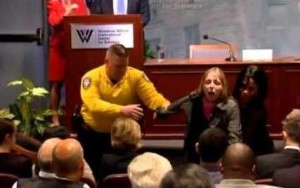
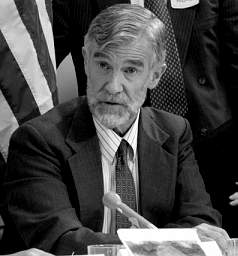
The Moral Challenge of ‘Kill Lists’ by Ray McGovern
The Obama Administration has conducted hundreds of drone strikes in several countries, killing civilians and a US citizen. Critics point out that as the Obama Administration assassinates its’ suspects, it also avoids the legal complications of detention. In last week’s New York Times, authors Jo Becker and Scott Shane expose the priest-like role of counter terrorist adviser John Brennan as he provides Mr. Obama with the moral justification for extrajudicial murder. The framing of John Brennan’s role of priestly adviser caught Ray McGovern’s attention. His recent article The Moral Challenge of Kill Lists, dissects the New York Times story.
Ray McGovern:
- There has been a geometric increase in the number of drone strikes against Pakistan and of course Somalia and Yemen.
- London based bureau for investigative journalism estimates that about 830 civilians including women and children may have been killed by drone attacks in Pakistan. 138 in Yemen, and 57 in Somalia. It’s incredibly naive to think that this helps in any way in the war on terrorism.
- This wonderfully insightful and dangerous New York Times article a week ago talked about the conundrum of aligning these activities with US legal and moral principles. Conundrum? That’s an impossibility.
- The Fifth Amendment prevents this sort of thing if you take the interpretation we’ve always had.
- As the New York Times article mentions 1 out of 30 assassinations that are known about just one escaped assassination and was brought before a court. It’s much easier to kill them.
- If you wanted to learn about al-Qaeda, don’t you think Osama Bin Laden could’ve told us some stuff about al-Qaeda?
- Any military aged male in the area of a “bad guy” is fair game.
- Maybe I can draw from my own experience in the CIA, I know about lists. I know that when there was a coup attempt in Indonesia in 1965, that there were lists given to the Indonesian authorities of communists. How many communists on that list? A million. How many were killed, were murdered? 500 thousand plus. How many were put in prison? The other 500 thousand.
- The drones are really accurate but the target information is notoriously inaccurate.
- I love Fordham and I hate to see the administration and the very wealthy trustees who have lots of money to give to Fordham, determine who comes in to give the commencement address.
- I think that you have to have some kind of personal involvement with innocent suffering. I think that you have to have some sense of the injustice others suffer to let your heart be touched by this direct experience.
- Obama’s fallen in with a rough crowd.
- I was attracted to getting outside of my Catholic walls. There’s a small church down in Washington DC called the Church of the Savior.
- I found out they were doing wonderful things like preventing housing from being gentrified so poor people can still live there. Healthcare, jobs, addictions, a hospice for people to sick to be on the street.
- There’s been one major change for the good in this country. That is Occupy.
- When you look for proof that Occupy has incredible potential, look no farther than what the president and the top senators thought necessary to inject into the NDAA on New Year’s Eve, which allows them to use the US Army of all things to wrap us all up without charge, without court proceedings.
Guest – Raymond L. McGovern, retired CIA officer turned political activist. McGovern was a Federal employee under seven U.S. presidents in the past 27 years. Ray’s opinion pieces have appeared in many leading newspapers here and abroad. His website writings are posted first on consortiumnews.com, and are usually carried on other websites as well. He has debated at the Oxford Forum and appeared on Charlie Rose, The Newshour, CNN, and numerous other TV & radio programs and documentaries. Ray has lectured to a wide variety of audiences here and abroad. Ray studied theology and philosophy (as well as his major, Russian) at Fordham University, from which he holds two degrees. He also holds a Certificate in Theological Studies from Georgetown University. A Catholic, Mr. McGovern has been worshipping for over a decade with the ecumenical Church of the Saviour and teaching at its Servant Leadership School. He was co-director of the school from 1998 to 2004. Ray came from his native New York to Washington in the early Sixties as an Army infantry/intelligence officer and then served as a CIA analyst from the administration of John F. Kennedy to that of George H. W. Bush. Ray’s duties included chairing National Intelligence Estimates and preparing the President’s Daily Brief, which he briefed one-on-one to President Ronald Reagan’s most senior national security advisers from 1981 to 1985.
—————————————————————————–
Civil Liberties, Criminalizing Dissent, Human Rights, Surveillance, Torture, Truth to Power, War Resister
Podcast: Play in new window | Download
Updates:
- Law and Disorder Tip of the Hat Award – EPIC – DHS Words
- Julian Assange Case Update – Extradition In Sweden – Hillary Clinton Going To Sweden
- Bradley Manning Support Committee
————–
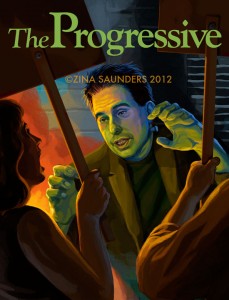
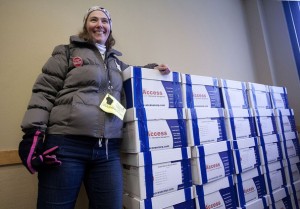
Wisconsin Governor Recall Election
As many listeners may know, it’s a crucial week for Wisconsin and perhaps the country. Since February of last year, Wisconsin’s left leaning capitol city has been filled with demonstrations, mass mobilization, and amazing citizen activism that has led up to the Governor’s recall election this week. This also comes after 30 thousand volunteers throughout the state gathered more than a million signatures on recall petitions. It’s been framed by United Wisconsin, the group who organized the recall, as the ability of the people in Wisconsin to control their own destiny versus money from millionaires outside the state. Governor Walker has made deep cuts to public education, he’s taken away public worker bargaining rights, and has moved to take away state legislature open meetings.
Ruth Conniff:
- What’s going on here is a grassroots rebellion of a corporate take over of our state.
- It’s been a really dramatic time here beginning Walker in his own words, dropped the bomb by ending public employees collective bargaining rights, etc.
- It’s been out and out war on society here.
- What we’ve seen in response to this very right wing radical take over is a democratic movement that is almost unprecedented. Hundreds of thousands of people in these mass rallies a year ago and now this grass roots petition drive
- There was so much pressure from grassroots volunteers and neighbors to gather signatures, to recall our governor and now we’re going to have an election.
- Governor Walker actually wrote a piece of legislation for pharmacists to decide whether to dispense birth control to women.
- He’s pushed through a variety of his agenda items that include closing Planned Parenthood clinics across our state which provide basic healthcare, very often the only healthcare provider to rural women in Wisconsin.
- He’s criminalized abortion doctors whose patients fail to jump through some onerous hoops which has made medical abortion a thing of the past in Wisconsin.
- He rolled back our pay equity law here.
- I think women in particular have been hurt by Walker’s agenda, and have led a lot of the rebellion against Walker.
- A lot of these are ALEC American Legislative Exchange Council bills that are being pushed nationally and in states across the country. Walker himself was a member of ALEC, where we have a number of state legislators who are members of ALEC so its been quite aggressive.
- There’s a sense that the grassroots is really dragging the leadership along on this.
- This is really about a fight over democracy and whether citizens have a voice in their democracy.
- We’re expecting a turnout on par with a presidential election on this recall race.
- It’s a battle between the citizen uprising and the incredible power of all this money. It’s a multi-front attack, the electoral part is a piece of it.
- There was a really spontaneous thing that happened, it wasn’t such a coordinated, planned event and it was incredibly thrilling to be part of it with my kids and their teachers.
- By re-opening the Las Vegas loophole in Wisconsin which allows corporations to hide their profits out of state and pay no corporate income tax, our state has lost the same amount of money that Walker took out of our technical college system.
- We (Wisconsin) are transferring wealth to corporations. Undoing the damage in Wisconsin is going to take a lot of time.
Guest – Ruth Conniff, Political Editor of the Progressive Magazine, a native of Madison, WIsconsin, she first joined the magazine when she was hired as a summer intern by the late Erwin Knoll after her sophomore year at Yale. Shortly after graduating from college in 1990, she came to work as Associate Editor for the Progressive, becoming Washington Editor and opening the Progressive’s Washington, DC, office in 1997. During the 1990s, Conniff covered welfare reform in Wisconsin and around the country, as well as the drug war in Colombia, and other topics, including women’s sports (an avid runner, Conniff coached her old high school track and cross-country teams at Madison East High School for many years).
————-

ACLU Tries To Halt Single-Sex Classes In Maine
Single-gender classes may violate federal law by relying on gender stereotypes. That’s what the ACLU is saying in several states, including Massachusetts, Indiana, Idaho, Washington, Illinois and Maine. The Maine ACLU is calling for the Sanford school district to stop offering single gender classes which they say may violate Title IX, the federal law that addresses gender equity in federally funded education programs.
Examples of improper gender stereotypes include sixth-grade girls discussing current events over cocoa while boys create an exercise area in the classroom and earning points toward prizes from the National Football League.
The ACLU has asked for public request requests public records requests and is reviewing records or has pending requests in other states, including Alabama, Wisconsin, North Carolina, South Carolina and Virginia.
Zachary Heiden:
- All children are entitled to equal access to education regardless of their sex, that’s what the law says, that’s what the Constitution says.
- These same sex classrooms have a danger of reinforcing stereotypes about learning. They separate kids out by sex, and then apply these outmoded stereotypes.
- In terms of how they conduct those classes, and that does a terrible disservice to both boys and girls.
- In the boys program, the boys have signed up for this exercise program called NFL experience where the boys could do exercise in the morning and earn different points, depending on how much exercise they do. In the girls class, no NFL experience the girls have hot cocoa, read the local newspaper and discuss current events.
- There’s a national organization that’s been promoting these same sex programs around the country. They have this totally unscientific idea about how their brains develop and the scientific literature is very clear, that same sex classes don’t actually connect well with the physiology of boys or girls.
- We’re seeing it play out across the country, where people object to these program, because they are being excluded, and that’s what Title IX says – you can’t exclude students from educational programs on the basis of sex.
- I think what we are seeing, the large trajectory of public education in this country has been toward breaking down these stereotypes, of more opportunities for girls who have been traditionally excluded because of these stereotypes.
- In Wood County WV, for example, the girls sit in their class room in circular tables and the boys sit in rows – then you look at the reasoning why they do that.
- Boys apparently if they have to look at each other in the eyes, they will become aggressive.
- Girls don’t learn well under pressure, they don’t respond well to deadlines.
- You start telling girls from a young age you don’t respond well under pressure, guess what they’re not going to learn how to deal with pressure as well, and that is dangerous.
- ACLU – Women’s Rights Project
Guest – Zachary Heiden, Legal Director of the Maine Civil Liberties Union Foundation, the Maine state affiliate of the ACLU. He received his A.B. from Bowdoin College, his M.A. in English from the University of Florida, and his J.D. from Boston College Law School, where he was the managing editor of the International and Comparative Law Review.
———
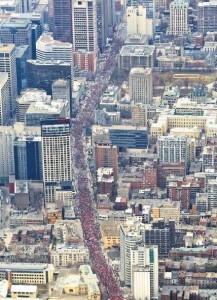

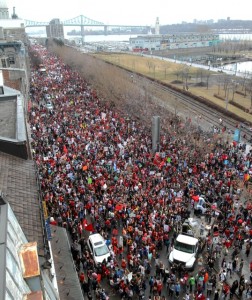
Quebec Students Protest Against Tuition Hikes and Bill 78
Austerity is taking its toll in many countries, as public services are cut, federal jobs are slashed and tuition hikes are pushed onto the younger generations. Canada is no exception. For the past 3 months, students in Montreal, Quebec, Canada have poured into the streets waging a massive strike against rising college tuition fees. Last week, the government proposed an offer to end the strike but student leaders have so far refused to recommend the deal to students.
Meanwhile, the Quebec government introduced an emergency legislation Bill 78 – the bill would suspend the academic year and make demonstrations of more than 50 people illegal unless police had been served with an itinerary 8 hours in advance. The new law, however hasn’t stopped the unpredictable pots and pans demonstrations as protesters on balconies around the city make noise to express solidarity in opposing tuition hikes.
Guest – Beatrice Vaugrante, Amnesty International Canada, Francophone Branch Director.
————————————————————-
CIA Sponsored Terror, Civil Liberties, FBI Intrusion, Habeas Corpus, Human Rights, Surveillance, Targeting Muslims, Torture, Truth to Power, War Resister
Podcast: Play in new window | Download
Updates:
- Michael Smith and Heidi Boghosian Discuss May Day Events
- Michael Smith Reads A May Day Letter From Lynne Stewart
- Retired Chemistry Professor Tried For Jury Tampering Represents Self and Wins.
- Federal Lawsuit Filed Against NYPD For Improper Use Of Barricades
- Four City Council Members File Suit Against NYPD For Police Abuse
—–
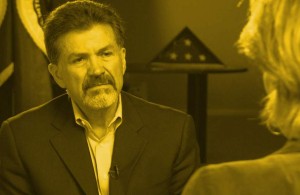
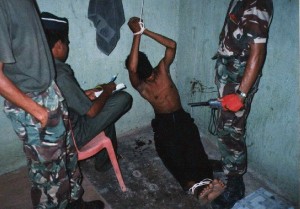
Former Head of CIA Clandestine Service Justifies Torture On CBS 60 Minutes
In a recent interview on CBS news, former head of the CIA’s clandestine service Jose Rodriguez discussed the destruction of 92 tapes in which terrorism suspects were subjected to water boarding and other forms of torture. Rodriguez told CBS that he destroyed the tapes to protect the people who worked for him at various black sites. But critics say Rodriguez is afraid of criminal prosecution because those 92 tapes contained compelling evidence of criminality and are a threat to Rodriguez and those who approved the use of torture. Rodriguez, a thirty-year veteran of the CIA, and spent most of his entire career in Latin America, supports the idea that torture works to get information.
Attorney Scott Horton:
- We know the government in response to FOIA requests, and litigation requests has released photographs and tapes repeatedly in the past, and always obliterates the faces involved, so of course the identities are not released.
- Obama announced in his speech from Kabul, al-Qaeda’s been defeated. It’s a faint shadow of what it was before.
- The tapes contained evidence of crimes, it showed water boarding and other torture techniques. It documented those techniques, and that presented a risk to Jose Rodriguez and to the the people up above Rodriguez who are responsible for putting through torture policy.
- George Tenet was involved, Bybee, a judge in the Ninth Circuit in Las Vegas, John Yoo who is a professor at the University of California, Steven Bradbury who is now a partner in a law firm in Washington DC and then it went into the White House where it went into the National Security Council.
- The trail consistently leads straight into the office of former Vice President Dick Cheney. He was the key mover for the introduction of torture policy.
- Domestically, we have an anti-torture statute that includes for conspiracy to torture, both of those things were violated. They apply outside of the United States, so they would have applied to the conduct of a CIA agent operating in Poland or Thailand for instance.
- Jose Rodriguez: He’s trying to make money, he’s selling a book, what you saw was a 36 minute advertisement for his book, published by an affiliate of CBS.
- Beyond that I’d say he’s trying to build sympathy and beat back calls for his own prosecution.
- I think this was an ill advised strategy and I think he confessed to criminal conduct in the course of this interview.
- At one point they claimed that they were able to track down and pick up Jose Padilla through the use of water boarding, which is very very interesting because Padilla was arrested and in custody before the first case of water boarding was applied.
- Mitt Romney has been out there punching away constantly on the advocacy of torture and the response from the Obama campaign has been silence. Silence.
- The guy came across to me as something of a psychopath (Jose Rodriguez)
Guest – New York attorney Scott Horton, Scott is known for his work in human rights law and the law of armed conflict. Scott is also the contributing editor to Harper’s Magazine.
—–
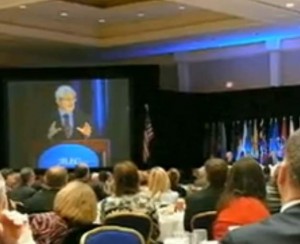
Common Cause Files IRS Whistleblower Complaint Against ALEC
The American Legislative Exchange Council, or ALEC, is a tax exempt charity that spends millions of dollars annually to lobby for hundreds of bills in state legislatures around the United States. It came to the attention of the public for having drafted and pressured passage of the so-called stand your ground legislation after the shooting death of Trayvon Martin in February. The watchdog group Common Cause has asked the IRS to review ALEC’s status claiming that ALEC is “a corporate lobby masquerading as a charity,” and that contributors should not be allowed to claim the gifts as charitable contributions.
Nick Surgey:
- ALEC describes itself as nonpartisan although the majority are members of the Republican Party.
- It’s concerning from a tax perspective, ALEC is operating as 501c non-profit, which means its a charity.
- Therefore corporations who are members of ALEC are allowed to take a tax deduction, when they contribute up to hundreds of thousands of dollars.
- If Visa, Verizon or Amazon then those lobbying would not be tax deductible, they would be subject to tax, but they do the same lobbying through ALEC.
- All of those contributions are subsidized by us – the tax payer. And that’s wrong.
- We shouldn’t be subsidizing the activities of any corporation.
- Until recently ALEC operated 9 Task Forces, they were forced to close one 2 weeks ago.
- Stand Your Ground Bill / Drafted by the NRA, lobbied by them and presented to legislators in Florida 2005.
- The NRA took it to ALEC, who they’re a member of, Walmart chaired the taskforce. Walmart the largest retailer of weapons in the United States.
- The Stand Your Ground bill is now law in 20 states.
- ALEC organizes around these 9 task forces. They have bills that really cover almost every policy area.
- Other areas include rolling back environmental protection, they have a commerce task force, where a lot of anti-union bills, the right to work legislation, it comes from that task force.
- Corporations will use the state essentially to lobby on their behalf.
- Common Cause has a very good picture of what ALEC has been doing in the last 2 years and this formed the basis of this massive IRS submission.
- One document are these scorecards which they send to their corporate members, where they celebrate the success that they have. Some of the early scorecards, they mapped out the complete picture of the United States and where all of their model bills have been introduced.
- A source provided us with emails going between ALEC and state legislators. We were very greatful to be represented pro-bono by one of the country’s leading whistle-blower firms, Phillips and Cohen.
- Voter ID has been increasingly connected to ALEC.
- We believe the bigger fraud is disenfranchising millions of predominantly African American, elderly or young student voters. In wasn’t until 2009 when ALEC took it up, that it really injected energy into it at the state level and its been introduced in 34 states. (Voter ID)
- ALEC has an ability to take a law, not always a new law and sell it to their almost 2000 state legislator members.
- ALEC has about a third of all state legislators in the entire country as members.
- There was a fracking bill, and it was sponsored by Exxon Mobile.
- ALECExposed.org
Guest – Nick Surgey, Nick conducted the research helping to expose the American Legislative Exchange Council. Nick joined Common Cause in March 2011 as a Legal Associate. He formerly worked at the British Refugee Council in Leeds, England, where he advocated on behalf of asylum seekers. He previously worked at an immigration law firm, as an elected student union officer and as a paid campaigner. Nick holds an undergraduate degree in History and Politics and a post-graduate diploma in law.
—————————————–
Afghanistan War, Civil Liberties, Criminalizing Dissent, Human Rights, Iraq War, Prison Industry, Supreme Court, Surveillance, Targeting Muslims, Torture, Truth to Power, War Resister
Podcast: Play in new window | Download
Updates:
————
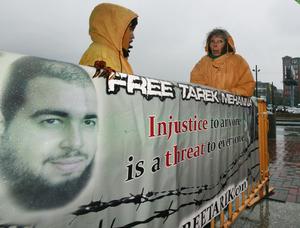
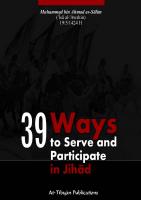
39 Ways To Limit Free Speech
39 Ways To Limit Free Speech is the title Law Professor David Cole’s recent article. Earlier this month, a 29-year old citizen from Sudbury, Massachusetts named Tarek Mehanna was sentenced to seventeen and a half years in prison for translating a document. The text he translated from Arabic is “39 Ways to Serve and Participate in Jihad” and its all over the internet, you can read it says David Cole, but don’t try to translate it. One issue in the government’s prosecution of this case is the use of the decision from the Brandenburg v. Ohio case in which the Supreme Court established that standard in ruling that the First Amendment protected a Ku Klux Klansman who made a speech to a Klan gathering advocating “revengeance” against blacks and “Jews.”
Professor David Cole:
- He was accused of providing material support to al-Qaeda by translating various documents and videos from Arabic into English. There’s no allegations that Mehanna ever met with or even talked to a member of al-Qaeda. There are no allegations that the translations were delivered to or provided to al-Qaeda which was the designated group.
- The government argued that because he translated these documents and put them up on the web and hoped to encourage people to support jihad and support al-Qaeda, that’s enough to constitute material support.
- Here’s an instant in which the government is prosecuting pure speech but no showing that the speech was connected to illegal conduct, no showing that it was intended to produce eminent lawless action, which the Supreme Court said is required to produce under Brandenburg.
- It’s enough that he put it up on the web and wanted to support al-Qaeda.
- If that’s a crime what about the New York Times when it does a report on one of the many messages Osama Bin Laden put after 9-11?
- I represented the Humanitarian Law Project in the case that went to the Supreme Court in 2010, in which the HLP was in engaging in advocacy of human rights and peace, clearly non-violent, non-criminal conduct.
- But because they wanted to do it to and with the Kurds in Turkey and particularly the political representatives of the Kurds in Turkey which is the Kurdistan Workers Party (designated as a terrorist organization) the government argued that it was a crime to teach the KWP to bring human rights claims in Geneva and work with them in peace overtures to the Turkish Government.
- The Supreme Court upheld that, but doesn’t apply to independent advocacy. (until now)
- Now if you wanted your speech to support terrorist organizations, even if you did it independently of that organization, even if you never met or talked to anyone in that organization, we can make it a crime.
- Very much about declaring a “new front” in the war on terror and the front is going after internet propaganda.
- To me it recalls the kind of aiding the enemy prosecutions we saw in World War 1.
- We as citizens need to be active in monitoring and pushing back against this material support statute.
Guest – Professor David Cole teaches constitutional law, national security, and criminal justice at Georgetown University Law Center. He is also a volunteer attorney for the Center for Constitutional Rights, the legal affairs correspondent for The Nation, a regular contributor to the New York Review of Books, and a commentator on National Public Radio’s All Things Considered. He has been published widely in law journals and the popular press, including the Yale Law Journal, California Law Review, Stanford Law Review, New York Times, Washington Post, Wall Street Journal, and Los Angeles Times.
——————-

FAA Releases Lists of Drone Certificates—Many Questions Left Unanswered
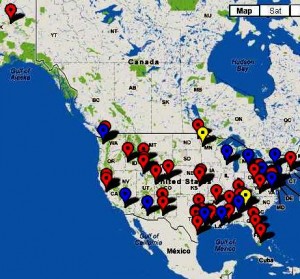
Earlier this year we discussed the partnership with Cornell University and Technion-Israel Institute of Technology. The two institutions are working together to build a campus in New York City. Technion is involved with developing robotic weapons systems, which include aerial drones, and unmanned combat vehicle technology. There are many more universities involved with drone technology. Through a series of Freedom of Information requests by the Electronic Frontier Foundation, the FAA has been forced to reveal approximately 63 active drone sites. These sites are located in 20 states and their owners include military and universities. Universities include Cornell, (which we just mentioned) the University of Colorado, Georgia Tech, Eastern Gateway Community College and many more.
Attorney Jennifer Lynch:
- We filed a FOIA request with the FAA last April asking for copies of all the certificates of authorization and the special air-worthiness certificates that the FAA issues to anybody to wants to fly a drone in the US.
- We asked for these lists which are called COAs, or Certificates of Authorization. The COAs apply to public entities like state and local law enforcement, universities, the federal government.
- We got two lists from the FAA and the FAA says these cover all of the entities that applied for an authorization to fly a drone in United States.
- They’re very interesting, the COA list includes some unsurprising entities like DARPA, DHS, Customs and Border Protection, the FBI, various branches of the military. We already knew those entities were flying drones.
- What was more surprising was the number of universities and colleges on the list.
- Universities that have an aerospace engineering program they may be seeking authorization so the students can learn about and design drones.
- The Electronic Frontier Foundation is a civil liberties non-profit, we focus on civil liberties and new technology, and we’re concerned about surveillance equipment used by the government.
- Drones are a duel use technology, they can be used for good or for bad.
- They can see inside buildings, survey an area at night with heat sensors, they also have the ability to carry communications intercept tools. You could swap out various payloads on a drone.
- Then of course these drones can carry weapons.
- You can build your own drone, DIYDrones.
- We don’t know too much about what’s going on now. The reason the EFF file the FOIA request in the first place is that we just don’t know how agencies are using these drones.
- What we found is that a lot of the police forces that have drones are required to fly them under 600 feet. If its something that flying under 600 feet you’re going to be able to see that.
- Congress was getting a lot of pressure, and the FAA was getting a lot of pressure from state and local law enforcement, the military and the federal government to authorize more drones to be used in the United States.
- We’ve heard from the Congressional Research Service that 1 in 3 warplanes right now is a drone.
- The wars are going to end and the military is going to want to something with these drones.
Guest – Jennifer Lynch, staff attorney with the Electronic Frontier Foundation and works on open government, transparency and privacy issues as part of EFF’s FOIA Litigation for Accountable Government (FLAG) Project. In addition to government transparency, Jennifer has written and spoken frequently on government surveillance programs, intelligence community misconduct, and biometrics collection. Prior to joining EFF, Jennifer was the Clinical Teaching Fellow with the Samuelson Law, Technology & Public Policy Clinic at UC Berkeley School of Law. At the Samuelson Clinic, Jennifer specialized in privacy and intellectual property issues, including investigations on social media, privacy and the smart electrical grid, digital books, and open source regimes for biotech. Before the Clinic, Jennifer practiced with Bingham McCutchen in San Francisco and clerked for Judge A. Howard Matz in the Central District of California. She earned both her undergraduate and law degrees from UC Berkeley.
—————————–