Censorship, CIA Sponsored Terror, Civil Liberties, Criminalizing Dissent, Human Rights, Iraq War, NSA Spying, Political Prisoner, Prison Industry, Torture, Truth to Power, War Resister
Podcast: Play in new window | Download
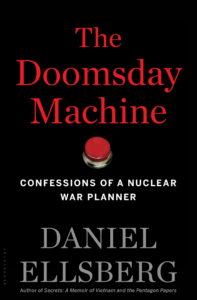
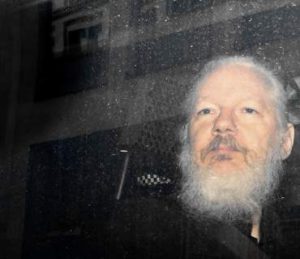
Daniel Ellsberg: Julian Assange’s Case And The Doomsday Machine
Two weeks ago the Trump administration announced it had indicted Julian Assange in the Eastern District of Virginia on 17 counts of violating the 1917 Espionage Act. Assange is currently in the Belmarsh prison hospital in London. If extradited, tried, and convicted he faces 175 years in prison.
The Espionage Act is a 102 year old law used initially to imprison the great socialist Eugene V Debs for an anti-World War I speech he gave in Canton, Ohio and also used to crush the industrial workers of the world, the IWW, a large antiwar union at the time.
In 1971 it was famously used against Daniel Ellsberg who released the Pentagon papers to the New York Times and other media outlets. Lately the Espionage Act has been used against many truth telling whistleblowers during the Obama and Trump administrations.
This is the first time it is being used against a journalist.
Wikileaks Defense Funds:
Guest – Daniel Ellsberg, educated at Harvard and Cambridge and has been an activist since the 1970s. Ellsberg’s latest book, The Doomsday Machine, is an extensive study of nuclear theory and nuclear policy. In 2018 he was awarded the Olaf Palme prize for his “profound humanism and exceptional moral courage.
From 1957-59 he was a Junior Fellow in the Society of Fellows, Harvard University. He earned his Ph.D. in Economics at Harvard in 1962 with his thesis, Risk, Ambiguity and Decision. His research leading up to this dissertation—in particular his work on what has become known as the “Ellsberg Paradox,” first published in an article entitled Risk, Ambiguity and the Savage Axioms—is widely considered a landmark in decision theory and behavioral economics.
———————-
———————-
CIA Sponsored Terror, Civil Liberties, Criminalizing Dissent, Human Rights, Political Prisoner, Supreme Court, Surveillance, Torture, Truth to Power, War Resister
Podcast: Play in new window | Download
Updates:
- Two MOVE9 Members Released From Prison
- Julian Assange Update
- Never Get Rid Of Newspapers…The Headlines Alone Make Them Worth Keeping
—
Suicide Increase In The United States
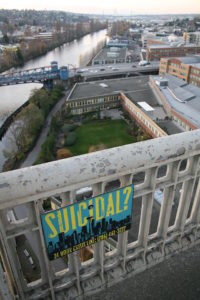
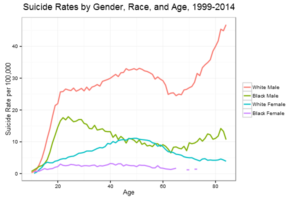
Suicide ranks among the top ten leading causes of death in the United States. As rates have generally fallen in other developed nations, the number of suicides per 100,000 rose over 30 percent between 1999 and 2015.
Those in midlife had the largest uptick in suicide. Researchers find that two social factors have contributed to this trend: the weakening of the social safety net and increasing income inequality.
One study of suicide in the U.S. found that the rising rates were closely linked with reductions in social welfare spending between 1960 and 1995. Such expenditures include Medicaid, a medical assistance program for low income persons; Temporary Assistance for Needy Families, which replaced Aid to Families with Dependent Children; the Supplemental Security Income program for the blind, disabled and elderly; children’s services including adoption, foster care and day care; shelters; and funding of public hospitals for medical assistance other than Medicaid.
While their suicide rates are on the decline, three European nations still have rates higher than the U.S. They are Belgium, Finland and France.
Guest – Stephen Platt, Emeritus Professor of Health Policy Research at the University of Edinburgh, UK. His research focuses on the social, epidemiological and cultural aspects of suicide, self-harm and mental health. He is an adviser on suicide prevention research and policy to NHS Health Scotland and the Scottish Government, the Irish National Office for Suicide Prevention and Samaritans.
——————–
——————–
CIA Sponsored Terror, Civil Liberties, Human Rights, Truth to Power
Podcast: Play in new window | Download

Museum of the City of New York
The Museum of the City of New York has two terrific exhibits, one permanent, on social change activism at the Puffin Foundation gallery, the other, just up on May 1st, called “city of workers, city of struggle“, also sponsored by the Puffin Foundation.
The great American social historian Howard Zinn wrote that significant social change comes from below. These two exhibits demonstrate this.
If you live in New York or plan to visit the city you might like to check them out. And for you far away listeners you’ll get a good virtual visit by going to the museums website at mcny.org
The permanent exhibit on social change activism is most relevant in today’s dire times of climate change and threatened nuclear catastrophe. The exhibits show by way of photos, documents, and videos how 14 past struggles were conducted and the gains that were won.
They include exhibits from the movement to abolish slavery, and the civil rights movement up to Black Lives Matter. Other exhibits bring to life anti-nuclear organizing, climate change activism, and the success of the mass mobilizations that won over public opinion and ended the war in Vietnam. Although the activism exhibit is permanent it is not unchanging. Right now a new section has been put up covering the struggle of trans people.
A second gallery exhibit, which opened on May 1, examines how the labor movement transformed New York. Called “city of workers, city of struggle” the exhibit shows how New York City, after two centuries of struggle, became the most unionized large city in the United States.
Guest – Steven H. Jaffe, Ph.D. the curator who organized the labor movement exhibit at the Museum of the City of New York.
—-
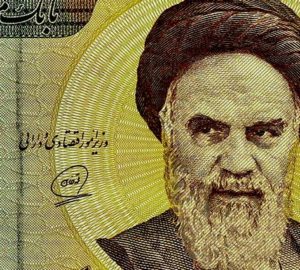
Current Analysis Of U.S. Threats Against Iran
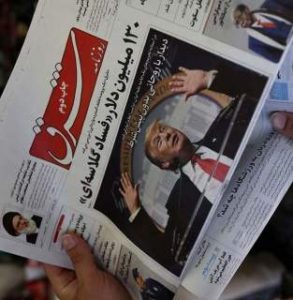
In late 2017 and early 2018 Iran was shaken by a wave series of protests. Economic hardships from austerity measures spawned demonstrations that spread to more than 80 cities and towns, in a public showing of discontent not seen since the 2009 presidential elections there. American policy is aimed at exacerbating the hardships.
After the signing of a historic nuclear agreement in 2015, American and Iranian diplomats grew acquainted in a departure from the past when they weren’t allowed to talk. Many were hopeful that more talks on other topics might happen, including conflicts in Afghanistan, Iran, Syria and Yemen.
But then Donald Trump became president he pulled out of the nuclear deal and blamed Iran for the Middle East’s problems. He added Iran to the list of countries whose citizens would be banned from entering the United States. He designated the Iranian revolutionary guard is a terrorist organization.
He put severe economic sanctions on Iran causing terrible hardships to its citizens. He is trying to limit their sale of oil. He sent an aircraft carrier to the region and recently threatened to obliterate the country.
Guest – Phyllis Bennis is a fellow of the Institute for Policy Studies, where she works on anti-war, US foreign policy and Palestinian rights issues. She has worked as an informal adviser to several key UN officials on Palestinian issues. Her books including Calling the Shots: How Washington Dominates Today’s UN, and Understanding the Palestinian-Israeli Conflict.
———————-
———————-
Afghanistan War, CIA Sponsored Terror, Civil Liberties, Supreme Court, Truth to Power
Podcast: Play in new window | Download
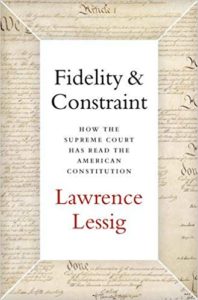
Fidelity and Constraint: How the Supreme Court Has Read the American Constitution
The U.S. Constitution is the oldest written constitution in the world. Interpreters of the Constitution are faced with the challenge of how, over time, to read a document that’s not only old but also inflexible.
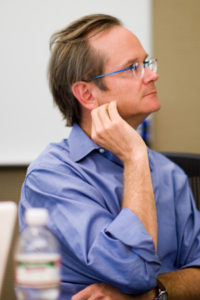
In his new book Fidelity & Constraint, by Oxford University Press, Lawrence Lessig, one of the nation’s leading legal minds, explains that a fundamental approaches to interpreting the constitution is a process he calls translation. In fact, some of the most significant shifts in constitutional doctrine are products of the evolution of the translation process over time. In each new era, judges understand their translations as instances of “interpretive fidelity,” framed within each new temporal context.
Throughout American history, there has been a second fidelity in addition to interpretive fidelity: what Lessig calls “fidelity to role.”
In each of the cycles of translation the role of the judge — the ultimate translator – has also evolved. Old ways of interpreting the text now become illegitimate because they don’t match up with the judge’s perceived role.
When that conflict occurs, the practice of judges within our tradition has been to follow the guidance of a fidelity to role. Ultimately, Lessig not only shows us how important the concept of translation is to constitutional interpretation, but also exposes the institutional limits on this practice.
The first work of both constitutional and foundational theory by one of America’s leading legal minds, Fidelity & Constraint maps strategies that both help judges understand the fundamental conflict at the heart of interpretation whenever it arises and work around the limits it inevitably creates.
Guest – Lawrence Lessig is the Roy L. Furman Professor of Law and Leadership at Harvard Law School. Prior to rejoining the Harvard faculty, Lessig was a professor at Stanford Law School, where he founded the school’s Center for Internet and Society, and at the University of Chicago. He clerked for Judge Richard Posner on the 7th Circuit Court of Appeals and Justice Antonin Scalia on the United States Supreme Court. Lessig serves on the Board of the AXA Research Fund, and on the advisory boards of Creative Commons and the Sunlight Foundation.
—-
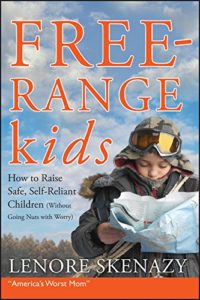
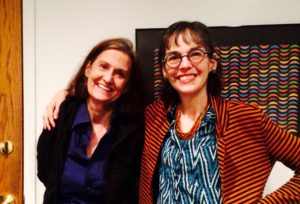
Free Range Kids
You may have heard about the shaming of parents who let their son or daughter walk to school by themselves, or ride public transportation alone. They’re often ridiculed on social media and cast as neglectful. But in some instances, the consequences have gone beyond public shaming.
In 2015 parents in Silver Spring, Maryland made national headlines they were investigated for child neglect for letting their children, ages 6 and 10, walk home from a park by themselves.
In another case Lenore Skenazy, a former New York Daily News columnist was called America’s worst mom after writing a column in 2008 about why she let her 9-year-old son ride the subway by himself.
Last year, Utah passed a law making it not a crime for parents to let their children play in a park without supervision or walk home alone from school. This is hopeful news for our guest Lenore Skenazy who has been advocating for so-called free range parenting laws for many years.
Under the law, neglect does not include allowing a child, whose basic needs are met and who is of sufficient age and maturity to avoid harm or unreasonable risk of harm, to engage in independent activities such as going to and from school by walking, running or bicycling, going to nearby stores or recreational facilities and playing outside.
A recent U.S. Census showed that 7 million of the nation’s 38 million children between the ages of 5 and 14 are left home alone on a regular basis, while the average time spent alone is six hours per week. Only a few states legislate an age under which kids may not be home alone.
Guest – Lenore Skenazy – New York City columnist-turned-reality TV show host got that title after letting her 9-year-old son take the subway, alone. In response to the enormous media blowback, she founded the book and blog, “Free-Range Kids,” which launched the anti-helicopter parenting movement. She has lectured internationally, including talks at Microsoft Headquarters and the Sydney Opera House, and has written for everyone from The Wall Street Journal to Mad Magazine. Yep. The Mad Magazine. And she’s a graduate of Yale.
———————
———————
CIA Sponsored Terror, Civil Liberties, Human Rights
Podcast: Play in new window | Download
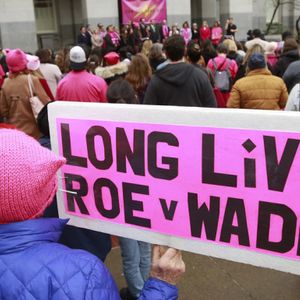
Roe v Wade And Recent State Abortion Legislation
In 1973 in the famous Roe versus Wade case the US Supreme Court ruled that a woman’s right to obtain an abortion was protected under the US Constitution.
The core holding in Roe, which remains the law today, is that the government may not prohibit a woman from obtaining an abortion prior to fetal viability and may do so after viability as long as abortion may be available to protect a woman’s life and health.
A woman’s right to make childbearing decisions is in essential part of women’s overall equality. Recent legislation in Ohio bans abortion as early as six weeks into a pregnancy, before many women even know they are pregnant. Kentucky and Mississippi have similar laws and 10 other states are considering them.
Will the Supreme Court take the Ohio case as an opportunity and use it to overturn the 45-year-old Roe versus Wade decision?
Guest – Dr. Vicki Breitbart in the last 40 years, Dr. Breitbart has worked as an educator, researcher, and activist, dedicated to sexual and reproductive justice. Presently, she is an Associate Professor at NYU Silver School of Social Work. Previously, she served as the Director of the graduate program in Health Advocacy at Sarah Lawrence College and has taught at Columbia and CUNY Schools of Public Health. She worked at Planned Parenthood of New York City for over 15 years in various roles including Senior Vice President and Director of the Clinician Training Initiative.
Guest – Lizzy Watson is a staff attorney at the ACLU’s Reproductive Freedom Project at the ACLU’s national office in New York. She litigates cases to defend the right to abortion and contraception for all people regardless of race, ethnicity, economic status, gender identity, or geographic location. Prior to joining the ACLU she provided legal services to low income individuals at the Homeless Action Center in Berkeley, CA.
—-
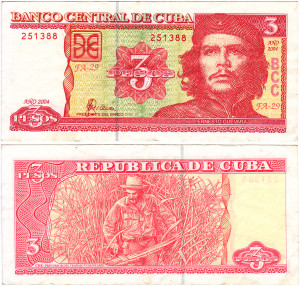

Recent United States Aggression Toward Cuba
The United States of America has ratcheted up its ongoing 60 year effort to overthrow the elected government of Cuba and restore an American dominated corporate capitalism to the island. This effort was relaxed a bit under the Obama Administration. That all has changed, dollar remittances from Cubans living in the U.S. to their relatives in Cuba have been drastically cut. Travel to Cuba by Americans which has been considerable is virtually banned.
The Helms-Burton Act of 1996 which was meant to strangle the Cuban economy wasn’t fully enforced until recently. Under the guidance of the ultra-right wing National Security Adviser John Bolton. A 23 year old dormant version of the Helms Burton Act has been invoked. It now allows Cubans who live in America to sue the government of Cuba in American courts to get back their estates, businesses and property holdings which were legally nationalized under the 1959 revolution.
This new aggression is meant to cause such severe hardship to the Cuban people that they will be willing to allow their government to be overthrown.
Guest – Walter Lippmann, editor of the Cuba News Yahoo News Group.
————-
————-
CIA Sponsored Terror, Climate Change, Guantanamo, Habeas Corpus, Human Rights, Political Prisoner, Prison Industry, War Resister
Podcast: Play in new window | Download
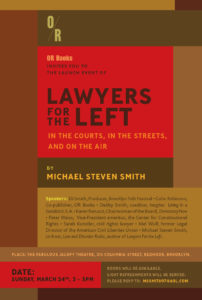
Lawyers For The Left: In The Courts, In the Streets And On The Air
Lawyers For The Left: In The Courts, In the Streets And On The Air is the title of the just published book by our own Michael Steven Smith. It profiles the some of the nation’s most effective agents of social change. Michael discusses how he came to write this book and previews several of the lawyers profiled therein.
As Chris Hedges quotes “The lawyers in this book valiantly fought the erosion of justice and assault on the court system.”
Portside Review by Bill Ayers:
Now open Michael Steven Smith’s smart and compelling Lawyers for the Left, and you’ll find yourself plunged into the contradictions and swirling through the vortex where that question—what is the law?—is on everyone’s mind all the time. It takes on a unique urgency and a fresh vitality as it’s debated case by case and issue by issue by these committed advocates battling against a system they see as deeply and unfairly stacked against their clients—Black freedom fighters, Puerto Rican independistas, Indigenous and immigrant rights activists, women warriors, anti-war militants, water defenders, dissidents and radicals. None of the lawyers you’ll meet here holds fast to the traditional view that the law is simply a civilized mechanism for resolving disputes in an intelligent and reasoned way. They agree, rather, that any honest analysis of the law begins elsewhere, noting that in all times and in all places, the law is constructed in the service of whatever social/economic system created it. In other words, the law is a mechanism of control that works to protect and perpetuate existing social relations.
—-

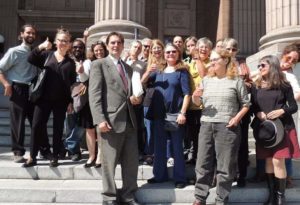
Necessity Defense Upheld In Climate Change Case
In a rare and heartening victory for climate change activists, a Washington state appeals court recently overturned the conviction of a man who employed the so-called necessity defense.
Activist Ken Ward said he had no alternative but to break into a pipeline facility to save the planet from global warming. While several lawyers and clients have presented this strategy in court, it is rarely allowed to proceed.
That’s because in most courts, including federal appeals courts, protesters are unable to meet the threshold burden of showing their actions were in reaction to an imminent threat, like fire chief Steve McQueen blowing up a skyscraper’s water tank to put out a fire in the film The Towering Inferno.
But in his April 8 decision, Judge David Mann ruled that Ward, quote, “reasonably believed the crimes he committed were necessary to minimize the harms that he perceived.”
Last year, Law and Disorder reported on how a Boston prosecutor reduced charges against 13 pipeline protesters who planned to mount a necessity defense, eliminating the possibility of a trial. Even so, West Roxbury Judge Mary Ann Driscoll still found them not guilty for reason of necessity.
In the Washington case, the Court of Appeals reversed the burglary conviction of Ken Ward, saying the trial court judge had violated his Sixth Amendment rights by refusing to allow him to present a “necessity defense” to the jury.
Guest – Ted Hamilton, co-founder and staff attorney of the Climate Defense Center. Ted has studied comparative literature and philosophy at Cornell and Yale, and written about books, politics, and climate change for a variety of publications. During law school he focused on protest defense and growing the climate movement through involvement in the Harvard divestment campaign and internships with the Civil Liberties Defense Center and Climate Disobedience Center.