Censorship, CIA Sponsored Terror, Civil Liberties, Criminalizing Dissent, Human Rights, Human Trafficking, Iraq War, Political Prisoner, Prison Industry, Surveillance, Truth to Power
Podcast: Play in new window | Download
Attorney James Goodale On Julian Assange Arrest
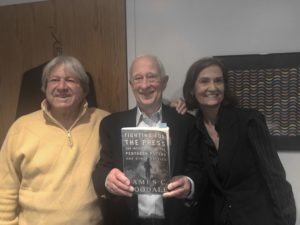
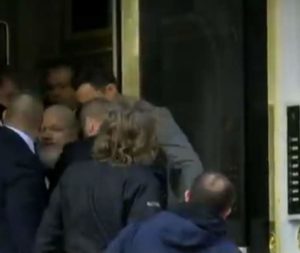
Last week, at the behest of the U.S. government, police entered the Ecuadorian Embassy and arrested Julian Assange on charges of espionage. This case promises to threaten the First Amendment rights of all journalists. We’re honored to have one of the nation’s foremost authorities on First Amendment law, Attorney James Goodale. In the April edition of the Atlantic, he wrote an article titled, Why Julian Assange deserves First Amendment Protection.
Listeners may recall that last fall, a court filing inadvertently suggested that the Justice Department had indicted WikiLeaks founder Julian Assange. The Wall Street Journal, the New York Times, and other outlets reported soon after that Assange had likely been secretly indicted for conspiring with his sources to publish classified government material and hacked documents belonging to the Democratic National Committee, among other things.
Assange started WikiLeaks in 2006 to provide a place for newsworthy information to be confidentially released. The site came gained prominence when Assange obtained thousands of classified documents relating to the Iraq War from US Army soldier Chelsea (born Bradley) Manning.
Guest – Attorney James C. Goodale has represented The New York Times in four of its cases to go to the Supreme Court: the Pentagon Papers case (The New York Times Co. v. The U.S.), The New York Times Co. v. Sullivan (libel), Branzburg v. Hayes (see below) and The New York Times Co. v. Tasini, (digital rights). He developed the argument that the Espionage Act does not apply to publishers or the press.
In a 6-3 decision, the Supreme Court ruled the U.S. Government could not stop the Times from publishing the Pentagon Papers, holding that prior restraints were barred by the First Amendment unless the publication “will surely result in direct, immediate, and irreparable damage to our Nation or its people.” He became known as the “father of the reporter’s privilege.” A prolific writer, he has written two books on the First Amendment, The New York Times v. The U.S. and All About Cable, and approximately 200 articles, particularly on the role of the press in the Information Revolution.
—-
Al Otro Lado and the Border Crisis
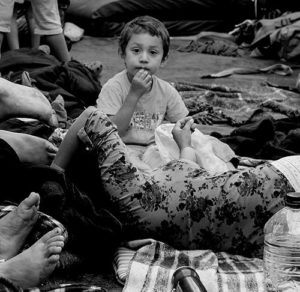
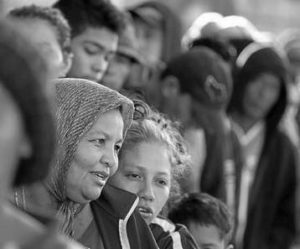
United States President Donald Trump said that we have a “crisis” on the border. He called it an “infestation” and said that “These aren’t people. These are animals.” Last week he fired Kirstjen Nielsen who as the head of the Department for Homeland Security pursued the most aggressive enforcement strategy of any secretary in the history of the organization. Nielsen and the Trump administration has separated children from their parents and instituted an illegal turn back policy using tactics to restrict the numbers of asylum-seekers who want to access the asylum process at points of entry like Tijuana and El Paso.
Tactics used by the administration include lies, intimidating coercion, verbal abuse, physical force, out right denial of access, unreasonable delay, threats, and family separation. The Center for Constitution Rights is currently representing Al Otro Lado, a legal and human rights organization that helps migrants at the border. They are challenging the U S. Customs and Border Patrol on its turnaround policy in a pending lawsuit.
Last month CCR’s chairwoman of the board and Columbia Law Professor Katherine Franke met six students in Tijuana Mexico, across the border from San Diego, California, to advise migrants on what they will face in the hands of US legal authorities.
- Al Otro Lado provides essential legal support to migrants to prepare them for the asylum process in the U.S. You can support here.
- Santa Fe Dreamers also provides free legal support to immigrants, with a particular focus on transgender immigrants.
- Please visit this site if you are interested in contributing to the parole/bail fund for detainees.
- If you are interested in serving as a sponsor for an asylum seeker.
- This video offers a very good portrait of the situation at Chaparral where La Lista is maintained and asylum seekers wait for their number to be called.
Guest – Attorney Katherine Franke, is the Sulzbacher Professor of Law, Gender, and Sexuality Studies at Columbia University, where she also directs the Center for Gender and Sexuality Law and is the faculty director of the Law, Rights, and Religion Project (Formerly the Public Rights/Private Conscience Project). She is a member of the Executive Committee for the Institute for Research on Women, Gender and Sexuality, and the Center for Palestine Studies. She is among the nation’s leading scholars writing on law, religion and rights, drawing from feminist, queer, and critical race theory.
——————
——————
CIA Sponsored Terror, Civil Liberties, Criminalizing Dissent, Guantanamo, Habeas Corpus, Human Rights, Iraq War, Political Prisoner, Supreme Court, Surveillance, Targeting Muslims, Torture, Truth to Power
Podcast: Play in new window | Download
Misuse of Grand Juries And The Prosecution Of Chelsea Manning
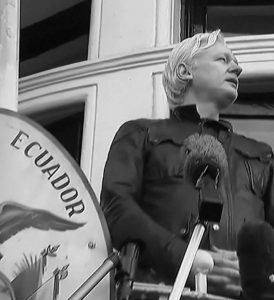
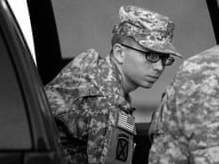
The Trump administration wants to prosecute the news organization Wikileaks and its founder Julian Assange. In order to do so they have recently jailed whistleblower Chelsea Manning, who has been in solitary confinement since March 8th, 2019 in hopes to squeeze her to get testimony that could be used against Assange. Prolonged solitary confinement is a form of torture.
Chelsea Manning has refused to answer questions of the Government Prosecutor in front of a grand jury. In 2010 Chelsea Manning, then in the Army, released documents to WikiLeaks known as the Iraq War Logs. One of them was a video showing a U.S. Apache attack helicopter killing 12 people, including two Reuters journalists, two children and a passerby who stopped his van to rescue the wounded. She maintains that there’s nothing new to be learned and that she’s already given full testimony.
Chelsea Manning was convicted and served 7 years of a 35 year sentence before her sentence was commuted by Barack Obama. The prosecution of WikiLeaks for accepting leaked secret documents is a threat to press freedom and would criminalize journalism. The government is trying to frame Assange charging him with actively colluding with Manning, not just being a passive recipient of the leak. Historically grand juries have been misused in order to suppress political dissent.
Write to Chelsea Manning in solitary confinement:
Chelsea Manning
Ao181426
William G. Truesdale Adult Detention Center
2001 Mill Rd.
Alexandria, VA 22314
Guest – Attorney Michael Deutsch, an expert on the misuse of grand juries. He is a partner in the Chicago law firm The People’s Law Office and a former director of litigation at the Center for Constitutional Rights. He has represented political activists and victims of government repression. Among his clients have been the Attica prisoners in the 1971 uprising, Puerto Rican independence fighters, members of the black liberation movement, grand jury resistors, and Palestinians falsely accused of terrorism.
—-
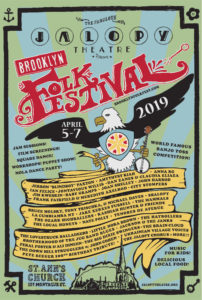
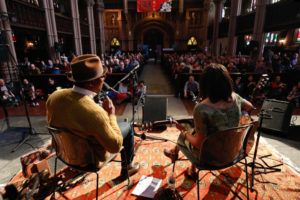
The Brooklyn Folk Festival April 2019
In the political radicalizations and social upheaval’s within the United States of America in the 30s and again in the 60s, we saw an increased interest in folk music. This phenomenon is repeating itself today. We speak today with Eli Smith, the producer of the Brooklyn Folk Festival. He is a banjo player, a folklorist, and a member of the string band The Downhill Strugglers. The Brooklyn Folk Festival is the largest of its type in the country and is now in its 11th year. It takes place in Brooklyn Heights at the historic Saint Ann’s Church this April.
Guest – Eli Smith, a musician, producer and activist from Brooklyn, who has helped organize the event. Eli Smith is also a folklorist and music producer who organizes the annual “Brooklyn Folk Festival.”
—-
U.S. Appeals Court Opens Abu Ghraib Prison Abuse Case
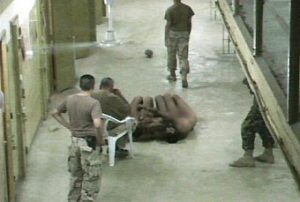
In 2016, the United States appeals court re-instituted the Abu Ghraib prison abuse case against a private military contractor CACI. Since that time, the plaintiffs have had multiple victories.
The Center for Constitutional Rights is representing the abused prisoners. CCR‘s legal director Baher Azmy said “There is no question that torture is unlawful under domestic, military, and international law. The only issue in this case is whether CACI Will be held accountable – or treated with impunity – for its role in torture at Abu Ghraib. Now, the case is set for trial in Alexandria, Virginia on April 23.
Guest – Attorney Katherine Gallagher filed the case nearly 11 years ago and she is a Senior Staff Attorney at the Center for Constitutional Rights. Katherine works on universal jurisdiction and international criminal law cases involving U.S. and foreign officials and torture and other war crimes, and cases involving private military corporations and torture at Abu Ghraib. Her major cases include Al Shimari v. CACI, the international U.S. torture accountability cases, and Survivors Network of those Abused by Priests (SNAP) v. Vatican, seeking accountability for the crimes against humanity of sexual violence by clergy and cover-up.
———————
———————
Afghanistan War, CIA Sponsored Terror, Civil Liberties, Criminalizing Dissent, Guantanamo, Human Rights, Iraq War, Political Prisoner, Surveillance, Targeting Muslims, Torture, Truth to Power, War Resister
Podcast: Play in new window | Download
U.S. Peace Council Returns From Venezuela
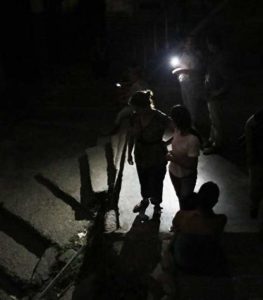
The Trump administration is attempting to illegally overthrow the democratically elected government of Venezuela and its president Nicolas Maduro.
The effort is being led by Trump’s recently appointed envoy Elliot Abrams, the notorious convicted perjurer who was complicit during the Reagan Administration in the massacre and cover up of the mass slaughter of indigenous people in central America.
John Bolton is working alongside Abrams. He recently showed the American government’s intent by flashing a hand written sign on a yellow pad stating “5000 troops to Venezuela.“ Showing his contempt for international law, he famously said that if the top part of the United Nations building was lopped off it would not make any difference.
So far the United States has been unable to topple all the Venezuelan government. Unable to win over the Venezuelan military the United States is now embargoing Venezuela, which is a form of a medieval siege, aimed at depriving Venezuelans of food and medicine. The U.S. government and its ally Great Britain have frozen Venezuelan assets held abroad and prevented trade with the country, whose economy has shrunk dramatically.
The United States has secured support for it’s coup attempt from the right wing governments in Argentina, Brazil, and Chile as well as the countries of the European Union.
Guest – Ajamu Baraka has recently returned from Venezuela. He is on the steering committee of the US Peace Council, which organized the trip. Baraka is the national organizer of the Black Alliance for Peace, writes for the Black Agenda Report, and was the 2016 Green party candidate for vice president.
—-
Reprieve: UK Human Rights Group
A year after the death penalty was abolished in the United Kingdom, in 1999, human rights attorney Clive Stafford Smith founded the nonprofit organization Reprieve. Smith has represented over 300 prisoners facing the death penalty in the southern United States and has helped secure the release of 65 Guantanamo Bay prisoners, and others internationally who claim that the United States government has tortured them.
Reprieve currently works to represent 15 prisoners in Guantánamo Bay, as well as an evolving caseload of death row clients around the world. It investigates international complicity in extraordinary renditions, and has recently started working in Pakistan with the Foundation for Fundamental Rights to begin discussions on the use of drones there.
Guest – Katie Taylor, a Deputy Director at Reprieve who coordinates the Life After Guantanamo Project. Katie has worked at WarChild UK and in Palestine on human and childrens’ rights issues for several local and international agencies.
—————–
—————–
Afghanistan War, CIA Sponsored Terror, Civil Liberties, Crony Capitalism, Human Rights, Iraq War, Political Prisoner, Prison Industry, Torture, Truth to Power, War Resister
Podcast: Play in new window | Download
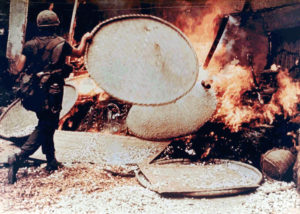
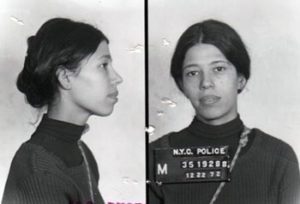
My Lai Memorial Exhibit
The aggressiveness of United States war machine has killed 500,000 people since 911, caused millions of people to be displaced, and all this at a cost of some $6 trillion.
President Trump has said that “all options are on the table” regarding sending troops to Venezuela. His National Security Adviser John Bolton said that Venezuela, Cuba and Nicaragua are part of the “troika of tyranny ” – in the US’s gun sites. After first promising to withdraw troops from Syria, Trump has reversed himself. Troops are still fighting in Afghanistan after 19 years. Iran remains the ultimate target in the Middle East. How did our country get to the state? What was done 50 years ago in the Vietnam era by millions of American citizens which help end in 1975 the American war in that country?
March 18 marks the 51st anniversary of the infamous My Lai Massacre in Vietnam. Their American troops murdered 504 Vietnamese women, old men, children and babies. It marked a turning point in the American peoples’ revulsion and consequent mobilization against the war.
Guest – former Navy Lieutenant Susan Schnall of Veterans for Peace. She became famous in 1968 when she dropped antiwar leaflets from an airplane on navy ships in San Francisco Bay.
Guest – Mac MacDevitt – is an associate member of Chicago Veterans for Peace and Committee Chair of the My Lai Memorial Project. He is an artist, storyteller and educator who came of age and was forever changed during the Vietnam War. He was radicalized by witnessing the wounded fellow protesters, beaten by US Marshals as night fell after the March on the Pentagon in 1967. In 1981 Mac did a social work internship at the VA Hospital in White River Junction, Vermont in the psych department where he experienced vets dealing with ghosts from Vietnam and earlier wars.
—-
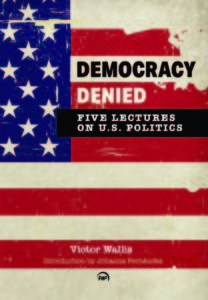
Democracy Denied: Five Lectures on U.S. Politics
The United States is unique among advanced countries in having the greatest inequality, highest poverty rate, highest portion of its population imprisoned, and highest proportion lacking healthcare.
Victor Wallis’ new book Democracy Denied offers a succinct history of several traits unique to the nation.
It came out of a lecture series in China and presents a historically grounded perspective on these traits, including chapters on “American exceptionalism,” on U.S. imperialism, the trajectory of African-descended people in the United States, efforts to develop a socialist alternative to the dominant institutions, and the current configuration of U.S. politics.
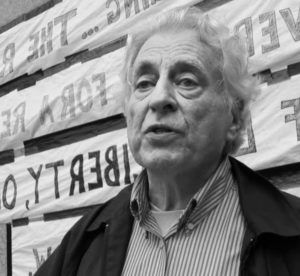
Guest – Victor Wallis is a professor in the Liberal Arts department at the Berklee College of Music in Boston. For twenty years he was the managing editor of Socialism and Democracy. He is the author of Red-Green Revolution: The Politics and Technology of Ecosocialism (2018) and of many articles on topics related to environmentalism, social justice, and radical politics. Victor’s activism dates from the 1960s and encompasses issues ranging from U.S. foreign intervention to prisoners’ rights.
———————–
———————–
CIA Sponsored Terror, Civil Liberties, Criminalizing Dissent, Human Rights, Political Prisoner, Prison Industry, Supreme Court, Surveillance, Targeting Muslims, Torture, Truth to Power, War Resister
Podcast: Play in new window | Download
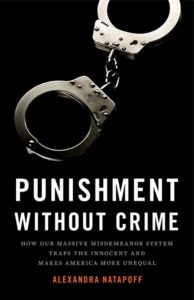
Punishment Without Crime: How Our Massive Misdemeanor System Traps the Innocent and Makes America More Unequal
In the overburdened U.S. criminal justice system, with its burgeoning prison population, we hear a lot about felony convictions. Felonies are crimes usually punishable by a term of more than one year, or the death penalty. What we don’t hear much about are misdemeanors, low level offenses punishable by fines or short terms of imprisonment in local jails.
With ten million petty cases filed annually, most U.S. convictions are misdemeanors. Unlike felonies, however, their processing is typically informal and deregulated. Much like fast-food justice, they have high-volume arrests, weak prosecutorial screening, an overtaxed defense bar, and high plea rates. There is often little meaningful scrutiny to see if convictions are supported by evidence. Innocent people who can’t afford bail often plead guilty just to get out of jail.
What the result of misdemeanor convictions? It’s pretty serious: stigma of a criminal record, misdemeanants are often heavily fined, incarcerated, and/or lose jobs, housing, and educational opportunities. Petty convictions are more frequent and burdensome even as we devote fewer institutional resources to ensuring their validity.
The misdemeanor phenomenon has profound systemic implications. It invites skepticism about whether thousands of individual misdemeanants are actually guilty. It reveals an important structural feature of the criminal system: that due process and rule-of-law wane at the bottom of the penal pyramid where offenses are pettiest and defendants are poorest. Misdemeanor processing is the way poor defendants of color are swept up into the criminal system with little or no regard for actual guilt.
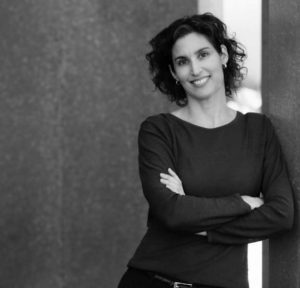
In her new book, Punishment Without Crime: How Our Massive Misdemeanor System Traps the Innocent and Makes America More Unequal, Law Professor Alexandra Natapoff takes an in-depth look at the misdemeanor process is an institutional gateway that explains many of the criminal system’s dynamics and dysfunctions.
Guest – Alexandra Napatoff, University of California Irvine law professor and a member of the American Law Institute. She’s also a former federal public defender, a community organizer, and the recipient of an Open Society Institute Community Fellowship.
—-
Kings Bay Plowshares 7
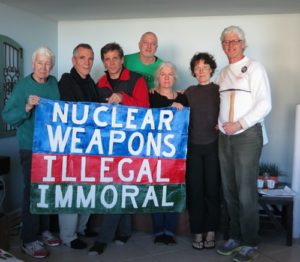
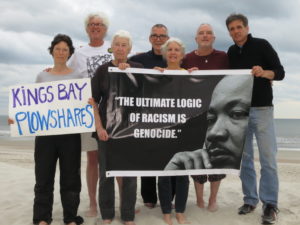
In our society nuclear weapons that can destroy all creation are taken as a normal, even an inevitable, part of life. In a dramatic action to break what they call “the crime of silence“ seven Catholic peace activists entered the Kings Bay trident submarine base in Georgia last April to perform an act of symbolic disarmament.
They used hammers to follow the prophecy of Isaiah “to beat swords into plowshares” and poured blood to make holy what was evil in a sacramental action.
Kings Bay is homeport to six ballistic missile trident submarines, each of which deploy 16 trident missile’s carrying four or more warheads of at least 100 kilotons. The Hiroshima bomb was 14 kilotons. Each submarine thus has the distructive power of at least 500 Hiroshima bombs.
The plowshares seven face up to 25 years in federal prison. Their trial is coming up in the next month. Theirs was the latest of 100 plowshares actions around the world since 1980.
Guest – Martha Hennessey, Kings Bay Plowshares 7 co-defendant, activist and volunteer with the New York Catholic Worker.
Guest – Carmen Trotta, Kings Bay Plowshares 7 co-defendant, activist and volunteer with the New York Catholic Worker.
——————
——————
CIA Sponsored Terror, Civil Liberties, Habeas Corpus, Human Rights, Supreme Court, Truth to Power
Podcast: Play in new window | Download
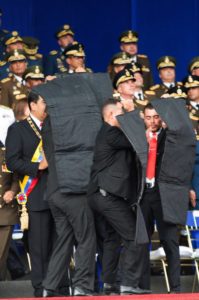
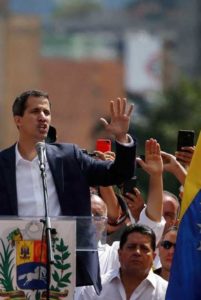
Venezuela Coup d’Etat
The last coup d’état the United States of America sponsored in 2009 in Latin America was under the Obama administration and supported by his Secretary of State Hillary Clinton when they overthrew a mildly social democratic president of Honduras. At that time the USA denied its role.
Today we are witnessing a quite open and blatant coup d’état in oil rich Venezuela against their recently and democratically elected socialist president Nicolas Maduro. The US boldly announced it no longer considered Maduro the legitimate president of his country.
In his stead the USA has recognized Jose Guida, an obscure legislator from the most right wing of the opposition parties after Vice President Mike Pence called him on the phone and gave him the blessings of United States government.
Venezuelan oil assets in the United States which amount to over $7 billion have been frozen. Likewise it’s $1 billion plus bank deposits in the United Kingdom have been seized. The United States has succeeded, in the infamous words of former Secretary of State Henry Kissinger, who engineered the coup against the elected Democratic Socialist President Salvador Allende in Chile on September 11 of 1973, “ to make their economy scream”.
The Venezuelan economy is now half its former size and hobbling along at a depression level. Food and medicine there is increasingly scarce. Tens of thousands of people have been forced to leave their country. Nevertheless, President Maduro has retained popular support including the support of the Venezuelan army.
Guest – Greg Grandin, a professor of history at New York University and a Nation editorial board member, is the author of a number of prize-winning books, including The Empire of Necessity, which won the Bancroft Prize; Fordlandia, which was a finalist for the Pulitzer Prize, the National Book Award, and the National Book Critics Circle Award; Empire’s Workshop; The Last Colonial Massacre; The Blood of Guatemala; and, most recently, Kissinger’s Shadow: The Long Reach of America’s Most Controversial Statesman. His new book, forthcoming this spring, is The End of the Myth: From the Frontier to the Border Wall in the Mind of America.
—-

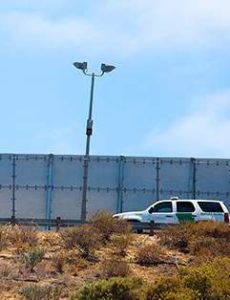
United States Executive Authority in Declaring Emergency Powers
U.S. presidents have the discretion to declare a “national emergency.” As soon as he does, he can sidestep many existing limits to presidential authority. In fact, 100 or more special provisions become available to him. Some provide reasonable responses to real emergencies, while others seem to bolster the power of a so-called unitary executive who wants to amassing or retain power. The president can activate laws allowing him to, for example, shut down many kinds of electronic communications inside the U.S. or to freeze Americans’ bank accounts. Other powers are available without a declaration of emergency, including laws that allow the president to deploy troops inside the country to subdue domestic unrest.
The rationale for having emergency powers is simple: The government’s ordinary powers may not be enough in times of crisis, and amending the laws to provide greater ones would take too long. Emergency powers are intended to give a temporary boost until the emergency passes or there is time to change the law through the regular legislative process. The problem comes when presidents don’t have the best interest of the country in mind.
Guest – Andrew Boyd, Counsel in the Brennan Center’s Liberty and National Security Program. Andrew spent 7 years prosecuting senior Khmer Rouge leaders on behalf of the UN for war crimes, crimes against humanity and genocide. He also worked on cases resulting from the 1994 Rwandan genocide at the International Criminal Tribunal for Rwanda.
———–
———–