Afghanistan War, Civil Liberties, Criminalizing Dissent, Extraordinary Rendition, Gaza, Guantanamo, Habeas Corpus, Human Rights, Military Tribunal, Political Prisoner, Targeting Muslims, Torture, Truth to Power, War Resister
Podcast: Play in new window | Download
Updates:
—
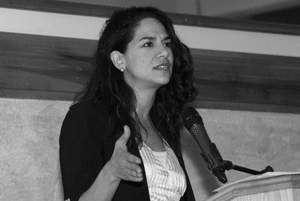
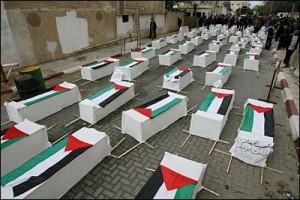
Russell Tribunal on Palestine Findings
We follow up on the findings of the Russell Tribunal on Palestine. As many listeners may know, the tribunal was created in response to the international community’s inaction regarding Israel’s recognized violations of international law. Jury and speakers included Angela Davis, Noam Chomsky, Ilan Pappe, Peter Hansen, Diana Buttu, Phyllis Bennis, Katie Gallagher and Russell Means.
Attorney Noura Erakat:
- Each of the sessions focuses on a different component of the problems that has led to a failure to achieve a solution to what some may describe as the Palestinian-Israeli conflict.
- More specifically to achieve Palestinian self-determination and equality with their Jewish-Israeli counterparts.
- The first tribunal explored the EU complicity. A condition for Israel’s acceptance into the United Nations was its acceptance of returning refugees to their homes per UN Resolution 194.
- Since the 1967 war they’ve been supported by unequivocal US financial, military and diplomatic support.
- Corporate complicity: The corporations that are involved in funding the Israeli military arsenal and its construction arsenal to expand its colonial settlements in the Occupied Territory as well as building a wall deemed illegal by the National Court of Justice.
- This fourth and final session brought everything back to the U.S.
- To New York specifically because the U.S. has proven to be the primary obstacle in resolving this conflict.
- Consider first that Israel has received 115 billion dollars in aid since World War 2. Making it the highest recipient of US foreign aid.
- In addition to that Israel receives approximately 3 billion dollars a year. It receives money without any review in US law, specifically the Arms Export Control Act which conditions that all US aid to foreign countries must be used to further human rights or in self defense.
- The US is shielding Israeli responsibility in the UN Security Council
- The resolution process is stonewalled internationally.
- One of the things that we’d love to do is remove the veto power from the five permanent members of the UN Security Council.
- BDS Movement: 2011 – Dock Workers refused unload Israeli products from a boat.
- EndtheOccupation.org
Guest – Attorney Noura Erakat, human rights attorney and activist. She is currently a Abraham L. Freedman Teaching Fellow at Temple University, Beasley School of Law and the U.S. based Legal Advocacy Consultant for the Badil Resource Center for Palestinian Refugee and Residency Rights. She has taught international human rights law in the Middle East at Georgetown University since Spring 2009. Noura also has helped seed BDS campaigns as a national grassroots organizer with the US Campaign to End the Israeli Occupation.
———-
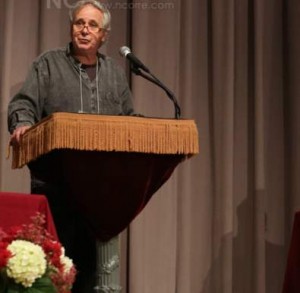
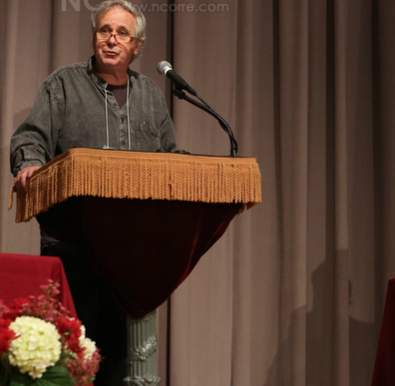
Russell Tribunal on Palestine: Ilan Pappé Speech
The final session of the Tribunal focused on the responsibility of the United States of America and the United Nations regarding the Israeli breaches of international law towards Palestine and Palestinians. There is now a situation in which Israel has achieved a status of immunity and impunity, facilitated by the US, despite its complete disregard for the norms and standards of international law.
Speaker – Ilan Pappé, an Israeli historian and activist. He is currently a professor with the College of Social Sciences and International Studies at the University of Exeter in the UK, director of the university’s European Centre for Palestine Studies, and co-director of the Exeter Centre for Ethno-Political Studies. He is the author of The Ethnic Cleansing of Palestine (2006), The Modern Middle East (2005), A History of Modern Palestine: One Land, Two Peoples (2003), and Britain and the Arab-Israeli Conflict (1988)
——————————————————————————-
Afghanistan War, Civil Liberties, Criminalizing Dissent, Human Rights, Iraq Veterans, Truth to Power, War Resister
Podcast: Play in new window | Download
Updates:
—-
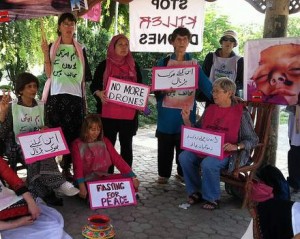
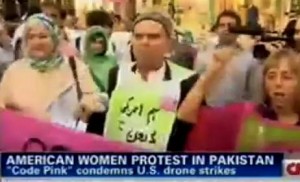
Anti-Drone Action: Code Pink Delegation to Pakistan
Two weeks ago a delegation of 40 members from Code Pink traveled to Pakistan protesting US drone strikes. The group is also visiting families of those injured or killed by drones and to encourage relations amid the broader Muslim world. The delegation is made up of students, doctors, veterans, retirees and artists. Recently the group set out on a massive anti-drone march in Waziristan where drones have killed many civilians. In one statistic, within two years more than 90 drone attacks have killed 5000 innocent Pakistanis. We get an update on the delegation from Code Pink member Rae Abileah. Rae is the co-director of CODEPINK Women for Peace. She is also a founding member of Young Jewish Proud, the youth wing of Jewish Voice for Peace. Rae has visited Israel and the West Bank several times, and has traveled to Gaza and Iran.
Rae Abileah:
- I’m the co-director of Code Pink nationally. Medea Benjamin, co-founder of Code Pink has been doing work on drones for the past year and a half. She recently wrote a book Drone Warfare: Killing By Remote Control
- She partnered with PTI, the Pakistani Political Party and their leader and a well known lawyer for drone victims.
- They got this delegation rolling and ended up with 35 Americans in Islamabad setting out on this caravan to march to a place where really in the past decade no Americans have gone to.
- They put their bodies on the line and joined these Pakistanis going on this march.
- People in Waziristan are living with drones overhead, they don’t know when the next attack is going to come.
- It started out as a car caravan with more than 100 vehicles, they drove for hours.
- The goal was to get to south Waziristan the epicenter of the US drone attacks.
- President Obama has declared all young men in Pakistan to be potential militants. It gives the green light to shooting civilians.
- These soldiers are sitting there all day looking at the screen as if its a video game.
- These military pilots are going to work all day, pressing buttons that kill people thousands of miles away and going home to their dinner table in Vegas at night.
- It’s a primary tool for attracting militants to join the Taliban.
- We’re continuing to build grassroots support to oppose Obama’s drone program.
- During the delegation we were actually able to deliver thousands of signatures collected on a stop drones petition directly to Obama at one of his fundraisers in San Francisco.
- In Congress there’s also a Drones Caucaus, the leaders such as Bill Buck McKeon are taking hundreds of thousands of dollars from drone manufacturers.
- Soda Stream is manufactured in an illegal settlement in the occupied territories.
Guest – Rae Abileah, co-director of CODEPINK Women for Peace and is a co-organizer of Occupy AIPAC, Stolen Beauty boycott of Ahava cosmetics, and Women Occupy. Rae is a contributing author to 10 Excellent Reasons Not to Join the Military; Sisters Singing: Incantations, Blessings, Chants, Prayers, Art and Sacred Stories by Women; Beyond Tribal Loyalties: Stories of Jewish Peace Activists; and Beautiful Trouble: A Toolbox for Revolution. She lives in San Francisco, CA.
——
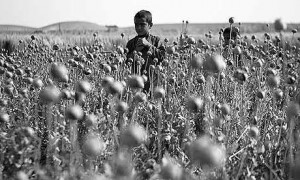
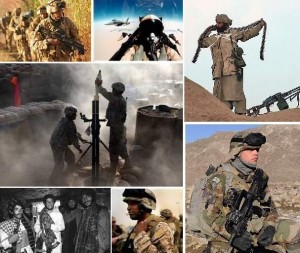
11 Years of War In Afghanistan
This month marks 11 years since the colonial war in Afghanistan was launched. Operation Enduring Freedom armed forces include the United States, the UK, Australia and the Afghan United Front. We’ve talked with past guests about how multi-national corporations are involved to integrate Afghanistan into the global system by building schools and infrastructure. We’ve also talked about the strategic energy alliances forming between Russia and China on one side and how three Caspian Sea oil companies continue to lock the US in to the war.
Phyllis Bennis:
- This already the longest war in history.
- We hear from President Obama that within the year 2014 combat troops will be withdrawn.
- We’re hearing new calls from different forces including most recently the Secretary General of NATO indicating there was a possibility that NATO may pull out its troops earlier then the end of 2014 because of the insider killings.
- The only figures we have began in 2007, they began counting some confirmed deaths. About 13 thousand Afghan civilians only since 2007.
- The US is there in two ways, the US has a commander happens to be the NATO commander. Other US troops are there separately. The US has almost 70 thousand troops there now, NATO has 40 thousand other troops and there are about 90 thousand US paid contractors.
- US troop casualties: Even that now is unclear.
- Last week a number of press outlets reported the 2000th US military casualty.
- Young people in Afghanistan join the military for the same reasons young people in the United States join the military, because they’re desperate for a job.
- Remember a couple of weeks ago 9 Afghan women and little girls were killed gathering wood before dawn to build a fire, to make breakfast.
- The Pentagon said, oh sorry, and somehow think that its going to make it ok.
- Add to that the lack of cultural sensitivity, the lack of language training so there’s no sense from soldiers on the ground that they have any idea what this culture is about, who these people are.
- Afghanistan is about 25 million people, the vast majority don’t live in the cities. They live in tiny hamlets and small towns, small villages, very scattered.
- What we’re seeing is an expansion of the global war on terror.
- There is an anti-war movement it’s just not as visible as we’ve seen in earlier times.
- That’s the hardest part of our work, its not building an anti-war movement, its making our government take into account the opinions of not only a movement but the American people.
- Understanding the Palestinian Israeli Conflict.
Guest – Phyllis Bennis, director of the New Internationalism Project at the Institute For Policy Studies. She is also a fellow of the Transnational Institute in Amsterdam. She has been a writer, analyst, and activist on Middle East and UN issues for many years. In 2001 she helped found and remains on the steering committee of the U.S. Campaign to End Israeli Occupation. She works closely with the United for Peace and Justice anti-war coalition, co-chairs the UN-based International Coordinating Network on Palestine, and since 2002 has played an active role in the growing global peace movement. She continues to serve as an adviser to several top UN officials on Middle East and UN democratization issues.
———————————————————————-
Afghanistan War, CIA Sponsored Terror, Civil Liberties, Criminalizing Dissent, Extraordinary Rendition, FBI Intrusion, Guantanamo, Habeas Corpus, Human Rights, Political Prisoner, Prison Industry, Prosecution of the Bush Administration, Supreme Court, Targeting Muslims, Torture
Podcast: Play in new window | Download
Updates:
——
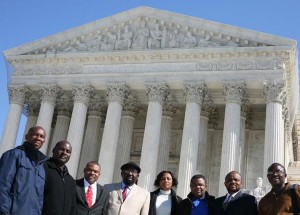
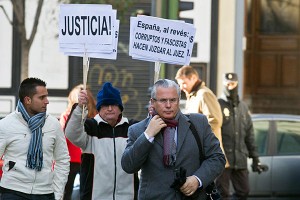
Universal Jurisdiction: Kiobel v. Royal Dutch Shell / Bush 6 Case In Spain
This week the US Supreme Court will decide if corporations could be held liable in U.S. courts for violations of international human rights law in the land mark case Kiobel v. Royal Dutch Petroleum. The case was brought by families of seven Nigerians who were executed by a former military government for protesting Shell’s exploration and development and is pushing to hold corporations accountable for human rights violations. The Supreme Court will also consider how the Alien Tort Statute Claim can be used the Kiobel case. A one sentence law that goes back to 1789 when the first judiciary act was brought in the United States. We’ve discussed this statute with several past guests including attorneys Peter Weiss and Rhonda Copeland who were instrumental in beginning the first cases in which human rights violations, taking place in other countries could actually be litigated in the United States.
We also discuss the recent amicus filing by a group of international human rights organizations and experts before the Spanish Supreme Court. The brief asks the Spanish Supreme Court to overturn a decision not to pursue a criminal case against six former officials from the Bush administration for their role in directing and implementing a systematic torture program. Past shows with Katherine Gallagher.
Attorney Katherine Gallagher:
- The Kiobel case has been in US courts since 2004.
- The claims were brought in the Southern District of New York, under a law from 1789, known as the Alien Tort Statute.
- This law allows non-US citizens to come into a US federal court and assert violations of the Laws of Nations or International Law.
- A recent precedence for this is Citizens United, what happened was that the Second Circuit ruled that corporations could not be held liable for these egregious human rights violations under the Alien Tort Statute.
- The question of corporate liability went up to the Supreme Court first.
- We had 2 judges from a 3 bunch panel in the Second Circuit suddenly come out in the fall of 2009 and say there is no corporate liability. That is the question that went up to the Supreme Court.
- Four other circuits had look at this question and they said of course corporations can be held as liable as an individual, a natural person.
- The Alien Tort Statute allows for a civil suit and civil liability rather than criminal liability.
- The key case from 1980 that CCR brought, the case of Filartiga, this case which the Supreme Court affirmed in 2004 as being on solid legal basis, claims by a Paraguayan, against a Paraguayan for actions that occurred in Paraguay.
- So its very strange that the Supreme Court was asking in a very broad fashion whether the ATS could apply to actions that occurred in another country. That is what the bulk of the cases brought under the ATS have been about.
- Some of the cases where the ATS is used are for some of the most serious violations. Cases of war crimes, crimes against humanity, torture, not your run of the mill case.
- What the justices seem to coalesce around was the issue of whether there’s an alternate forum. If the claims against Shell could have been brought in the UK or in the Netherlands, maybe they don’t need to be brought in the US.
- We’ve seen a trend in the last 20 years of other countries adopting stronger laws that allow for redress, and accountability, so we don’t have to be the world’s policeman.
- There have been 2 cases that percolated up in the last 4 years in Spain.
- The first is a widespread investigation of the torture program then Judge Balthazar Garzon. This is a case looking at torture in Guantanamo, and potentially in Iraq and Afghanistan, looking at the whole U.S. torture program. That case was brought on by 4 named plaintiffs.
- That case is very wide ranging, and willing to go up the chain of command as far as the evidence leads.
- There is a second case that was brought against specific U.S. individuals. They’re known as the Bush 6, including, Jay Bybee, John Yu, David Addington, Alberto Gonzalez. Six men who served as lawyers and argued to have essentially created both the legal structure that enabled the torture program, providing arguements for immunity and protecting participants of the torture program from accountability.
- Spain has a long and proud history of upholding International Law. Spain is where we had the case against Augusto Pinochet in the late 90s.
- We’ll be doing this as long as we need. We need to have accountability, its really critical.
Guest – Katherine Gallagher, Senior Staff Attorney at the Center for Constitutional Rights (CCR), where she focuses on holding individuals, including US and foreign government officials, and corporations, including private military contractors, accountable for serious human rights violations. Among the cases she has worked, or is working, on are international accountability efforts for U.S. officials involved in torture (Spain, Switzerland, Canada); ICC Vatican Officials Prosecution; Arar v. Ashcroft, Corrie v. Caterpillar, Matar v. Dichter, Saleh v. Titan, Al-Quraishi v. Nakhla and L-3, Estate of Atban v. Blackwater.
—————————————————————————————————
Civil Liberties, Criminalizing Dissent, Gaza, Human Rights, Targeting Muslims, Torture, Truth to Power, War Resister
Podcast: Play in new window | Download
Updates:
—–
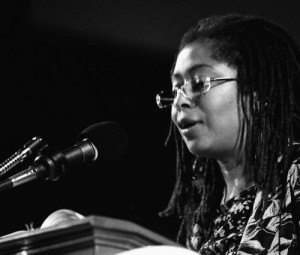
The Russell Tribunal on Palestine
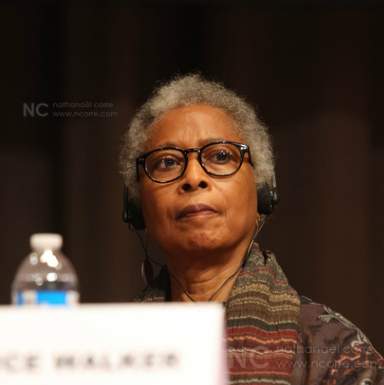
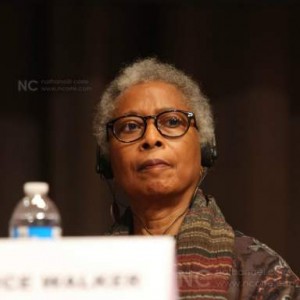
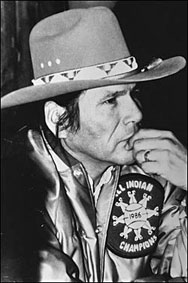
The Russell Tribunal on Palestine is holding its fourth and last session in New York City, October 6 through the 7th. This public session focuses on the denial of the Palestinian right to self determination and the role of the US and the United Nations. This tribunal will draw attention to the ongoing Israeli occupation of Palestinian Territories and how Israel continues to act with impunity under international law. There will be many speakers at this event including Ilan Pappe, Noam Chomsky, and Cynthia McKinney. We talk today with Pulitzer Prize winning novelist and poet Alice Walker and Dennis Banks, a Native American leader, activist and author. Both of whom will be speaking at the tribunal.
Alice Walker:
- Citizens around the world are very concerned that nothing seems to move forward between the Israelis and the Palestinians.
- The traditional one (tribunal) that came into being because of Vietnam and the American war against the Vietnamese people.
- I was in Gaza shortly after the bombing and that would’ve made anyone want to have a tribunal because it was so completely devastating and horrible.
- The Israelis just sailed along as if everything was ok to kill 1400 people and 300 children, destroy the water system. We don’t have a lot of power in terms of making things change, but I think consciousness is our only hope in any case.
- The UN has been relatively helpless against the US and Israeli veto of their resolution. We want to look at – Why is that?
- How is it that we can’t get any movement in the UN toward justice for the Palestinian people?
- I think the United States and Israel are in agreement they want that territory.
- We have to remember this is an entrenched long standing pattern of how you treat indigenous people when you want what they have.
- In this country what they did is destroy the Indians.
- The Palestinians are just seen as obstructions to this grand vision. When people say real politic, they mean no matter what they have to do to implement their plan. Their plan whatever it is is supreme.
- They just gonna do that if it takes 100 years, 200 years.
- I remember sitting in Gaza after the bombing. The thing that got me was they bombed this school, not only a school but it was the American school.
- We must as human beings gather together. Gather ourselves and address these issues of destruction and they’re coming faster and faster.
Guest – Alice Walker, American author, poet, and activist. She has written both fiction and essays about race and gender. She is best known for the critically acclaimed novel The Color Purple (1982) for which she won the National Book Award and the Pulitzer Prize.
——
Dennis Banks:
- It seems that they’re taking a page out of Native American history and using it over there.
- You look at the burning of the sweat lodges. The whole experiment to take Native people away their parents and destroy them, put them in foster homes, boarding schools, military boarding schools.
- And keep them there for five, six, seven years. In my case it was six years before I was even allowed to see my parents.
- The whole thing is all over again.
- What can I say to warn people, to warn people about the future?
- I know they’re gonna dispossess the land from the Palestinians.
- I will not forgive the government for what it did not only to me but to thousands of thousands of young Native children.
- I’m speaking against the American people, I’m speaking against the policies of the American government.
Guest – Dennis Banks, a Native American leader, teacher, lecturer, activist and author, is an Anishinaabe born on Leech Lake Indian Reservation in northern Minnesota. Banks is also known as Nowa Cumig (Naawakamig in the Double Vowel System). His name in the Ojibwe language means “In the Center of the Ground.” He has been a longtime leader of the American Indian Movement, which he cofounded in 1968 with Native Americans in Minneapolis.
——
Chicago Teacher Strike
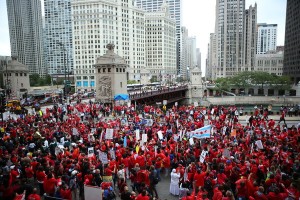
The Chicago teachers, with deep community support, have won a good victory last week in their ten day strike. their victory, while not complete, defends one of the great gains of the American people, public education, against the neo-liberal goal of supplanting it with private for profit non union charter schools. The teachers strike was about more than wages and hours. They fought against the dismantling of public schools in favor of for profit charter schools, a project that both the democrats from Obama down to Chicago Mayor Rahm Emannuel, champion.
The teachers demanded smaller class size, school aids, school supplies, and an end to the use of standardized tests. The new leadership of the teachers union gained its strength by being democratic and being rooted in the community, largely Black and Latino, and allied with the families of the students they teach. They began organizing in defense of their students 3 years ago.
Debby Pope:
- I started out the week as a strike coordinator. We went out and worked with 8 to 12 schools in a particular area on the picket lines and then someone else moved in to a communications role.
- Right now I’m working in a grievance department working on contract enforcement issues.
- I think the fundamental issue is the defense of public education and the defense of teaching as a profession.
- Let me make it clear that we were not legally able to bargain on some of the issues I talk about due to restrictive labor laws in Illinois.
- They have made over a hundred charter schools in Chicago in the last decade or so.
- They’ve eliminated bargaining in those schools, they’ve eliminated Chicago Teacher’s Union membership, they’ve eliminated the decent working conditions and the rights that we’ve fought for.
- They’ve given the billionaire business men a huge control over their schools.
- They have systematically defunded neighborhood schools.
- They allowed our buildings to crumble. They’ve given us computers that are decades old.
- This is an example of how they’ve been starving the public schools and then blaming us when the schools don’t work.
- We went out to the schools. We started contract action committees in all the schools. We helped teachers to understand what their rights were.
- We resumed our place as one of the largest unions in Illinois as a part of the labor movement.
- Is a teacher’s effectiveness related to his or her class size?
- Can a teacher teach 40 kids as well he or she can teach 25 kids?
- We want a better school day with a richer curriculum with art, music and drama.
- The enemies of poor children, the enemies of public education, the enemies of giving every child an opportunity are within both parties.
- We put ourselves in a position where the schools are failing.
- We blamed the schools for failing when in fact as a society set them up to fail.
- Then of course the billionaire rescuers . . . came in and said Oh my God look at what a mess the schools are. We have to privatize them, we have to charter them. We have to turn them into little business models.
- These people believe in factory schools.
- The next fight on the horizon is against school closings.
Guest – Debby Pope, member of the executive board Chicago Teachers Union and delegate. Debby Pope is a retired teacher and currently works on the CTU grievance board in contract dispute.
———————————————————————–
Civil Liberties, Criminalizing Dissent, FBI Intrusion, Habeas Corpus, Human Rights, Military Tribunal, Political Prisoner, Supreme Court, Torture, War Resister
Podcast: Play in new window | Download
Updates:
- Bradley Manning Public Access Case: Amicus Brief Filed by Reporters’ Committee for Freedom of the Press
- Southern Poverty Law Center Lawsuit Against Chemically Spraying Students
———
Attorney Heidi Boghosian Speech: National Special Security Events – RNC / DNC
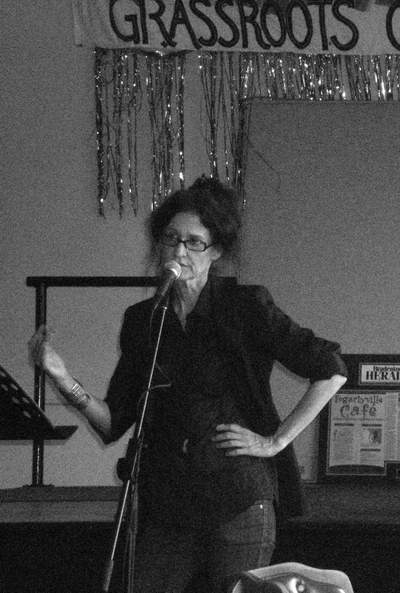
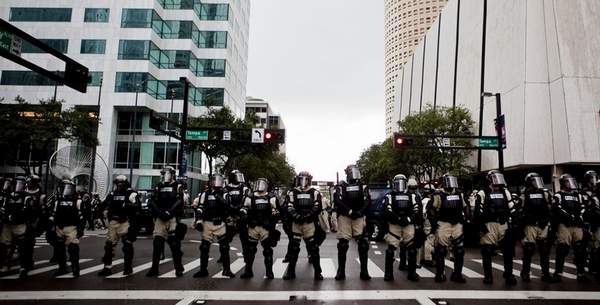
We hear a presentation by our own Heidi Boghosian. Heidi spoke at an event sponsored by station affiliate WSLR FM 96.5 – Sarasota, Florida. As the executive director of the National Lawyers Guild, Heidi had coordinated and organized legal observers during the Republican National Convention in Tampa and the Democratic National Convention in Charlotte. While in Florida, Heidi delivered a talk about the eroding civil rights of protesters during National Special Security events, pre-event surveillance and tactical strategies deployed by police.
Heidi Boghosian is the executive director of the National Lawyers Guild, a progressive bar association established in 1937. She has published articles on policing, protest and the First Amendment including Punishing Protest and The Assault on Free Speech, Public Assembly, and Dissent (North River Press, 2004). Her book reviews have been published in The Federal Lawyer magazine and the New York Law Journal.
———
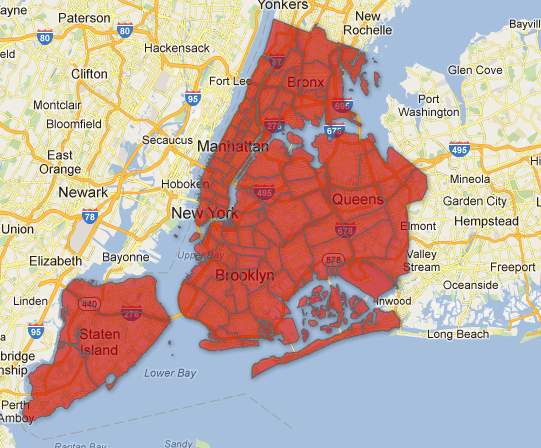
CCR Stop and Frisk Suit NYC: Floyd et al. v. New York City
Last month, a federal judge excluded portions of proposed testimony from New York City’s key witness in the Center for Constitutional Right’s Stop and Frisk class action lawsuit Floyd v. City of New York. Judge Shira A. Scheindlin of the U.S. District Court for the Southern District of New York ruled the defendants’ testimony untested and unreliable. The ruling supports that there isn’t evidence that the “Stop and Frisk” practice reduces crime.” said CCR Legal Director Vince Warren (quote) “The ruling soundly rejects the false choice propounded by the NYPD, between living in a safe city and being free of unconstitutional, racially discriminatory policing.”
In 2009 New York City, a record 576,394 people were stopped, 84 percent of whom were Black and Latino residents — although they comprise only about 26 percent and 27 percent of New York City’s total population respectively. Ten years of raw data obtained by court order from the New York City Police Department (NYPD) showed that stop-and-frisks result in a minimal yield of weapons and contraband.
Attorney Darius Charney:
- When we say “stop” were really talking about a detention of somebody’s liberty by the police. Frisk is a pat down of the outside of somebody’s clothing.
- For purposes of the 4th Amendment we are talking about a seizure when somebody is stopped, their liberty is taken away from them for a period of time and when they’re frisked, they’re searched.
- About 99.3 percent of the time the police find no gun.
- According the Supreme Court in a case they decided about 44 years ago, called Terry v. Ohio, for a police officer to stop someone on the street they have to have what’s called reasonable, articulatable suspicion.
- It has to be more than a hunch, or a whim or a subjective belief that somebody’s doing something wrong. It has to be articulatable specific facts that the officer is aware of that would cause him or her to reasonably believe that this person has committed a crime, is in the process of committing a crime or is about to commit a crime.
- If they have reasonable suspicion and they stop to ask you questions, you’re supposed to answer the questions.
- They may ask you for identification, that’s not against the law in New York state. You don’t have to provide it to them.
- You’re free to not answer but depending on what the questions are and if you don’t answer them, that may give the officer a basis to have probable cause to arrest you.
- For the officer to then put their hands on you, they have to have reasonable suspicion that you’re armed and dangerous.
- It can’t be that they think you have drugs in your pocket. Officers often get angry or irritated if you assert the rights that you have.
- What commonly happens in New York and other places is that somebody does assert their rights the officer may retaliate against them by issuing them a ticket for disorderly conduct.
- The person has a right to say “show me your badge” to a plain clothes police officer.
- Stop and Frisk has increased over 600 percent in New York City.
- In New York police are arresting 50 thousand people a year with small amounts of marijuana.
- The New York Police Department Stop and Frisk practices are literally going to be put on trial in a federal court in Manhattan this coming Spring.
- We were certified for a class action in May, so we have a website for class members. Stopandfrisk
- In order to fight crime you need to work together with the community and if the community doesn’t trust you, fear you, that’s not going to happen.
Guest – Attorney Darius Charney, senior staff attorney in the Racial Justice/Government Misconduct Docket. He is currently lead counsel on Floyd v. City of New York, a federal civil rights class action lawsuit challenging the New York Police Department’s unconstitutional and racially discriminatory stop-and-frisk practices, and Vulcan Society Inc. v. the City of New York, a Title VII class action lawsuit on behalf of African-American applicants to the New York City Fire Department which challenges the racially discriminatory hiring practices of the FDNY.
—————————-
Afghanistan War, CIA Sponsored Terror, Civil Liberties, Criminalizing Dissent, Extraordinary Rendition, FBI Intrusion, Guantanamo, Habeas Corpus, Human Rights, Iraq War, Military Tribunal, Political Prisoner, Targeting Muslims, Torture
Podcast: Play in new window | Download
Updates
- Michael Ratner: Update on Verdict – Corrie v State of Israel
- Cardinal Dolan Who Approved Payoffs For Priests Accused of Sex Abuse To Leave Priesthood Gives Speech At RNC and Closing Speech for DNC
—–
Islamophobia: Anatomy of an American Panic
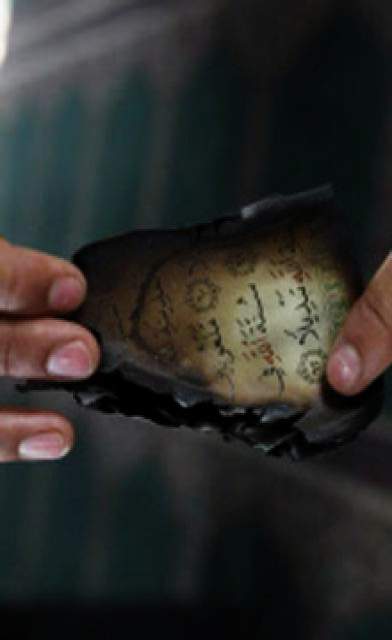
In the last few weeks, 8 places of worship connected with South Asians or Middle Easterners have been targets in the United States. As many listeners know, six people were murdered at a Sikh temple in Oak Creek, Wisconsin but later that evening a mosque in Joplin Missouri was burned down. Other targets recently included mosques in Rhode Island, Southern California, Oklahoma City and Dearborn, Michigan. These tragic events mark another wave of existential Muslim threats inciting fear and violence against Middle Eastern people while helping to justify the ongoing war on terror.
According to the University of Maryland’s National Consortium for the Study of Terrorism and Response to Terrorism, since 9/11 to 2010 there have been 155 terror incidents in the U.S., and exactly two of them or 1.3 percent have been attributed to international Islamist terror groups. The majority of events involved individuals such as anti-abortionists, right-wing extremists, or extreme animal rights activists.
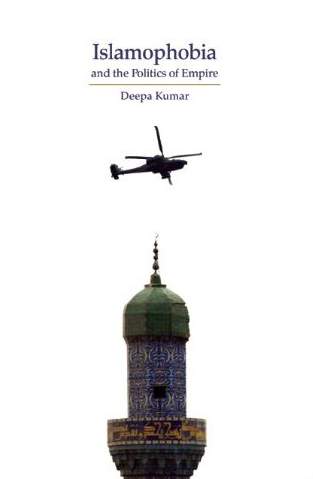
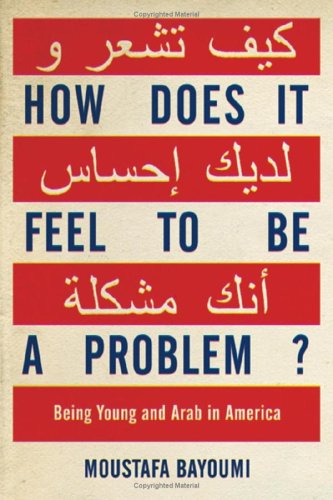
The Nation Magazine has highlighted the disproportional focus put on Muslim communities in a special issue titled “Islamophobia: Anatomy of an American Panic.” We talk with journalist Lizzy Ratner and authors Deepa Kumar and Moustafa Bayoumi who contributed articles to the Nation Magazine special.
Lizzy Ratner:
- The Nation did a special issue about Islamophobia. It came out in the beginning of July. You can still find the majority of the articles online. The real credit has to go to Abdeen Jabara whose idea this really was.
- The civil rights attorney came to me last year and said the anti-Arab, anti-Muslim has reached fever-pitch.
- So I began to do some research about what exactly was going on and very quickly compiled a massive roster of possible articles.
- For the most part, the Left and Progressives have been far too quiet.
- This bigotry that is flourishing right now has a real history, it’s not a just a product of 9/11 and the post 9/11 era.
- Some of the seeds of bigotry have to do with the role of the United States historically in the Middle East.
- Islamophobia served an agenda and a number of purposes.
Guest – New York City journalist Lizzy Ratner has written extensively for the Nation and Alternet on issues involving Islamophobia. Lizzy is also co-editor of The Goldstone Report: The Legacy of the Landmark Investigation of the Gaza Conflict.
——
Moustafa Bayoumi:
- I was happy to see that the Nation was happy to take on the question of Islamophobia for a double issue.
- There’s been a shift in the last ten years from paranoia around security to a paranoia about the basic facts of Muslim life in the United States.
- In a way you can say it’s a shift from security to culture.
- At any stage, anything that has to do with a daily concerns about living a life as a Muslim American, somehow now becomes charged with sedition. Part of the funding of the anti-Muslim movement in the United States is basic conservative politics and extreme conservative politics.
- And also due to the Israel-Palestine conflict. So people who want to come aboard Israel will make a very distorted picture of what Muslim life is like.
- The NYPD has now a decade long history of “othering” the Muslim-American community.
- The NYPD had been screening The New Jihad for its new recruits.
- It’s a crazy film saying that all of the American Muslims are here as a fifth column ready to pounce. It’s a training film for new recruits. That’s true for the Pentagon and the FBI.
- Muslim Americans are still seen as perpetual foreigners.
- That Muslim American rights are different than everyone else’s rights.
- You’re average American consumer of media does not relate to the victims of the Oak Creek massacre because they don’t see them as being part of the American family.
- They asked American’s in this poll, and 62 percent of the population has never met a Muslim.
- If you’ve never met a Muslim then it’s very easy to believe all these boogey man ideas. That’s why media plays an important role in this issue.
- The FBI (training manual) said that it was in the nature of Muslims to try to take over this country.
Guest – Author Moustafa Bayoumi wrote Fear and Loathing of Islam joins us, his book : Being Young and Arab in America, won an American Book Award and the Arab American Book Award for non-fiction. He is also a professor of English at Brooklyn College, City University of New York.
——
Deepa Kumar:
- As of late the anti-Muslim statements coming from Michelle Bachmann, Joe Walsh, all of whom are Republicans, there is a sense of which it is the Republicans who are responsible for Islamophobia, for the demonization of Muslims and so on.
- This brand of the war on terror gets hatched and part of that was language developed in the 1990s, called the Clash of Civilizations. It was a man named Bernard Lewis who first penned this term.
- It’s not so much we’re going to carry out revenge on Osama Bin Laden but that we’re going to rescue Afghan women. In the case of Iraq, we’re going to bring democracy when no weapons of mass destruction were found.
- This rhetoric has a long history it goes back to the 19th century.
- Both presidents need Islamophobia. They need to generate this fear and hatred of the “Muslim other.”
- Operation Boulder
- The Jonathan Institute holds this conference in Jerusalem . . Islamofacism, the roots are sown at that conference.
- The idea of this menacing Muslim enemy is not new. It was not something created after 9/11 but in fact it goes back a millennium.
- It’s about political goals but religious rhetoric gets used. Same thing with the re-conquest of Spain.
- The Islamophobic rhetoric is one that’s mobilized by the elite.
- I hold both Republicans and Democrats responsible. These rabid right wingers get their confidence from mainstream figures like Walsh, like Bachmann and others.
- The sad reality is that the Democrats have done nothing to counter this.
- The Democrats are not an ally in this fight.
- I take inspiration from 2 movements in the sixties, the civil rights movement and the anti-war movement. I think these 2 strategies need to come together in fighting Islamophobia.
- We have to take on both the far right and challenge the priorities of empire and bring together a multiracial coalition that can actually change a generation.
- It was President Clinton with Anti-Terrorism and Effective Death Penalty Act in 1996 which made it legal to actually deport people with secret evidence. We know this lays the basis for the Patriot Act. This has really been a bipartisan project in the interest of empire.
Guest – Deepa Kumar, an Associate Professor of Media Studies and Middle Eastern Studies at Rutgers University. Her work is driven by an active engagement with the key issues that characterize our era–neoliberalism and imperialism. Her first book, Outside the Box: Corporate Media, Globalization and the UPS Strike (University of Illinois Press, 2007), is about the power of collective struggle in effectively challenging the priorities of neoliberalism.
———————————————–