CIA Sponsored Terror, Civil Liberties, Criminalizing Dissent, Gaza, Habeas Corpus, Human Rights, Iran, Targeting Muslims
Podcast: Play in new window | Download
Updates:
—–
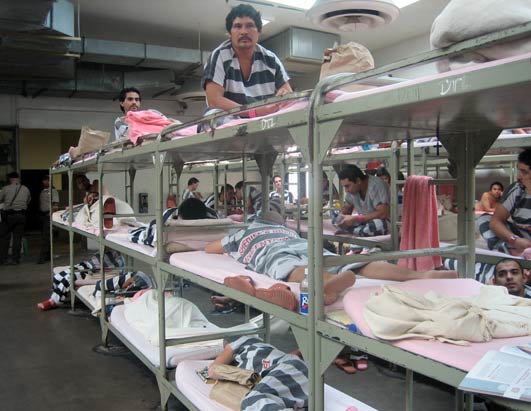

A Challenge to a Brutal Anti-Latino Law
Sheriff Joe Arpaio recently went on trial in Arizona for discriminating against Latinos and for usurping federal authority with roundups of undocumented immigrants. In a related action, a coalition of groups is asking a federal court to block enforcement of Section 2(B) of SB 1070, the Arizona law that compels all law enforcement agencies in that state to enforce the Arpaio model.
In June the Supreme Court rejected the premise of SB 1070 on grounds that making foreign policy – of which immigration law is a part – is a federal government’s domain. However, the Court upheld the law’s “show me your papers” section that requires officers to check the immigration status of anyone they stop, arrest or detain on another basis if the officer has a “reasonable suspicion” the person is in the country illegally.
The motion to block Section 2(B) “involves additional claims, evidence, and irreparable injuries beyond what the Supreme Court had before it.” The challenge explains harms so obvious and unconstitutional that the judge does not need extensive proof of the section’s impact to enjoin it. The Legislature “explicitly intended Section 2(B) to codify the practices” of Arpaio, the motion says, even after his powers had been restricted by earlier investigations into and challenges to his racial profiling. The practices include prolonged stops and detentions of Latinos to check their status or for other immigration-related purposes.
The plaintiffs are also asking the court to enjoin another Arizona law, which turns alleged violations of a federal anti-harboring law into a state crime. Courts have enjoined similar laws in Georgia, Alabama and South Carolina since, like Arizona’s, they were clearly pre-empted by federal law.
Lena Graber:
- The law enforcement in Joe Arpaio’s district have been really outspoken about their intention to stop Latinos and fight immigration.
- The issues around racial profiling are really huge. I think it’s worth separating out the different lawsuits that are going on.
- Sheriff Joe Arpaio runs this incredibly punitive jail where they barely feed people enough it’s a 120 degrees, and he’s been sued literally thousands of times for the conditions of his jail.
- Thats been going on since he was elected in the early nineties.
- In the last several years he’s really gotten on this tough on immigration, let’s do sweeps through the Latino neighborhood.
- The ACLU and other civil rights groups filed a lawsuit against him for racial discrimination, violation of equal protection, and violation of civil rights.
- They filed that 2007, about six months later the Department of Justice initiated a civil rights investigation into Joe Arpaio and his operations in Arizona.
- In the meantime the state of Arizona passed SB 1070.
- There are both civil rights groups and non profits filing one lawsuit and the federal government filing a parallel.
- The Arizona Supreme Court recently ruled on the Arizona law, not on Joe Arpaio, where they struck down most of the law and upheld “show me your papers.”
- The federal government did not argue that the law was unconstitutional because of racial discrimination.
- Litigation tends to effect the way law enforcement operate pretty dramatically.
- Joe Arpaio has been elected five times.
- The federal government has been very slow on the game to chastise Joe Arpaio.
- The Department of Homeland Security formed their largest 287G agreement with Sheriff Joe for his deputies to be trained to enforce federal immigration law. At that point the violations really started to go through the roof.
Guest – Lena Graber, a Soros Criminal Justice Fellow who focuses on detention and deportation and state and local enforcement. Lena Graber’s work seeks to reduce the government’s abuse of immigration detainers–a tool used to maintain custody of potentially deportable individuals in local jails or prisons nationwide. Lena previously worked at the National Immigration Forum in Washington, D.C.
—–


Mondoweiss: Israel Trip and the Future of Palestine
We welcome back returning guest Philip Weiss, the founder and co-editor of Mondoweiss.net, a news website devoted to covering American foreign policy in the Middle East. Philip has recently returned from a trip to Israel and was struck by the ongoing apartheid against Palestinians. During his trip, he traveled an Israeli’s only road. He saw the massive barrier in the West Bank. He toured many Israeli settlements, such as Ma’ale Adumim, the first settlement to be declared a city. Interestingly Philip also saw some of the fund raiser entourage of Republican presidential candidate Mitt Romney while in Jerusalem. We talk with him about his trip and the future of the Palestinian state.
Philip Weiss:
- The last few times I’ve come back I felt a real sense of bleakness.
- When you’re there and you see just how much force is arrayed on one side and the status quo is of complete inequality.
- The sense of martial law is overwhelming. Spiritually, it’s awful.
- When you’re over there you see there is very little left in terms of contiguous territory in the West Bank to create a viable state.
- You see the settlements all around you, giant swimming pools next to villages with walls around them, to separate themselves from Palestine villages in occupied land.
- Jeff Halper says the 2 state solution is dead.
- Area C is ours they say.
- I saw one ad on my commute here today that read – It’s Not Islamaphobia to Blame Islam for Terrorism.
- This is extremism, it’s intolerance, it’s racism.
- It’s statements that we would not accept, that have become off limits in American discourse in almost any other context.
- One thing I saw there was the separation, the complete separation of two societies.
- You really get a sense of ethnic purity at work.
- The denial of that humanity is so profound and offensive.
- I’ve been struck by the famous Arab hospitality in that region.
- The sense of sovereignty and domination is profound.
- It’s hard sometimes to meet people’s eyes, because you know that you’re an author of their humiliation and this human being with a lot of dignity has suddenly become humiliated before your eyes and it’s upsetting.
- John Brown said the idea that all people are created equal is the exact same idea as do unto others as you would have them do unto you.
- It’s kinda scary to think that a bunch of Americans to send a signal to Obama would have to go raise a million dollars at the King David hotel in Jerusalem and have Romney talk about Iran and he’s with Netanyahu on Iran. These were powerful political signals being sent while I was there.
- I think Romney is behaving in an irresponsible manner. It seems like he’s being used in this situation. Within the Israeli security establishment there is some sense it does not want this attack.
- They don’t care about Iran, they care about cleansing the West Bank of Palestinians.
- If there is a war with Iran it’s a perfect opportunity and a crisis to push more Palestinians out of area C into the cities.
- I’m for BDS. Every time I go there I’m upset by what I see. The question is that whether the South African connection is kicking in. (BDS Collective)
- I get a lot of criticism from Jews for exposing my people to danger.
- Jeff Halper studies the occupation and knows it in a granular way.
Guest – Philip Weiss, founder of Mondoweiss, longtime journalist and regular contributor to the Nation and a fellow at the Nation Institute. Philip is the author of two books a political novel, Cock-A-Doodle-Doo, and American Taboo, an investigative account of a 1976 murder in the Peace Corps in the Kingdom of Tonga. Weiss is one of the editors of The Goldstone Report: The Legacy of the Landmark Investigation of the Gaza Conflict.
————————————————————————–
Afghanistan War, CIA Sponsored Terror, Civil Liberties, Criminalizing Dissent, Habeas Corpus, Human Rights, Iraq War, Military Tribunal, Political Prisoner, Surveillance, Torture, War Resister
Podcast: Play in new window | Download
Updates:
—-

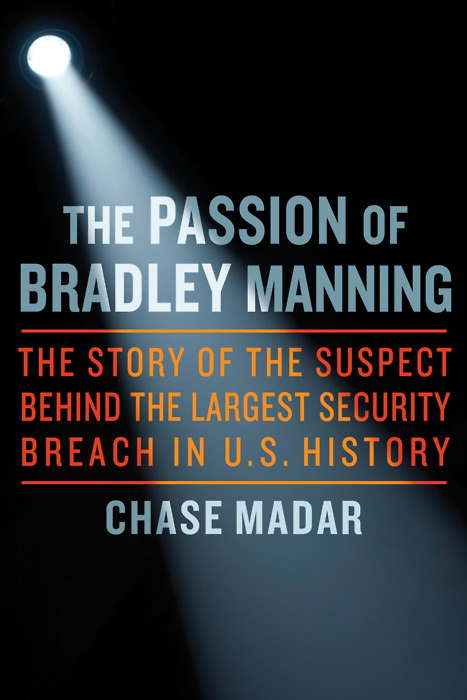

The Passion of Bradley Manning: The Story of the Suspect Behind the Largest Security Breach in U.S. History.
We continue to look into the the Bradley Manning story, the biggest whistle-blower case in US history. Attorney Chase Madar joins us in the studio, he’s the author of The Passion of Bradley Manning: The Story of the Suspect Behind the Largest Security Breach in U.S. History. The book moves through Manning’s childhood and up to what led him to allegedly upload volumes of classified secret information to Wikileaks. Madar highlights the value of publicly exposing the endless criminal and immoral actions while government secrecy spins out of control, classifying 77 million documents a year. He also asks what can be done to protect Bradley Manning as a whistle-blower. Since his arrest 2 years ago, Manning’s formal court martial proceedings are not scheduled to begin until February 2013, and as many listeners know the most lethal charge is aiding the enemy.
Attorney Chase Madar:
- I worked as a staff attorney for many years at a great non-profit in Bushwick section of Brooklyn doing all kinds of low tech services for Spanish speaking immigrants.
- I quit that and have been writing about foreign affairs. I got put on the sight of Bradley Manning by Tom Englehart, who edits the great TomDispatch web project.
- So many important issues collide in this case, whether its the comparative risk to our security of secrecy versus leaks. How we judge threats, how we misassess threats. How we use solitary confinement as punishment, is it an acceptable punishment?
- What power does information have anyway? A lot of intellectuals think that information has an incredible catalytic effect.
- Bradley Manning enlisted in the Army in October 2007. He’s deployed to Iraq after all kinds of training in Army intelligence in 2009.
- He allegedly begins leaking things in early 2010 and he’s arrested in late May 2010 over 2 years ago now. He was held in solitary confinement, very strict punitive isolation in Quantico Marine Corp base in Virginia, from July 2010 to April 2011.
- We’re looking at 2.5 years of pretrial confinement.
- You can divide up the Wikileaks leaks allegedly supplied by Bradley Manning in 3 categories. Iraq material, thousands of war logs: raw reports file by soldiers, Afghan war logs, it’s a composite of a war that’s weirdly aimless.
- Obama did campaign as the whistle-blower’s best friend, and he has prosecuted twice as many as all previous administrations.
- Here’s one theory I find persuasive. It’s important for Obama to have the intelligence services on his side. This was a way for him to show the CIA that he would go along them.
- I would like to see a serious change in foreign policy which has gone off the rails.
- We haven’t the kind of course correction with Obama that many had hoped for.
- I hope Wikileaks do disrupt foreign policy more. There’s been all kinds of smack talked about Bradley Manning, he’s a weirdo, a malcontent, he did what he did because he’s screwed up, he did because he’s gay.
- His motives are very plain to see in the chat logs between him and the informant.
- The Manning chat logs – they read like a tragic novella.
- So much of our secrecy law is designed to keep the American public in the dark.
- I think we have badly confused being clueless with being safe.
- He comes across as an immensely thoughtful, courageous and very principled young man. In some ways he’s an extreme version of the millennial generation who have a lot of education and potential but find themselves not doing too well.
- His father was in Naval Intelligence and he’d grown up with a sense of patriotic responsibilities.
- What makes him turn on the inside and leak these things?
- He’s asked to look into the arrest and capture by the Iraqi authorities a group of non-violent Iraqi protesters who were handing out pamphlets that were all about corruption in Iraqi government.
- We are light years away from total transparency.
- The main thing is to make records of the court proceedings publicly available.
- I think a guilty conviction and a heavy sentence of at least 50 years is a foregone conclusion.
- The wages of government secrecy, not security but disaster.
- It looks like the court martial won’t begin until January or February.
- Go to the Bradley Manning support network website. Send him a postcard.
- It’s your patriotic duty to browse the leaks.
- Legal Atrocities – by Chase Madar
Guest – Attorney Chase Madar , a TomDispatch regular and author of a new book, The Passion of Bradley Manning (OR Books). Madar tweets @ChMadar. He’s a contributor to the London Review of Books and Le Monde diplomatique and the author of a new book, The Passion of Bradley Manning (OR Books).
——————————————————-
Civil Liberties, Criminalizing Dissent, Human Rights, Political Prisoner, Supreme Court, War Resister
Podcast: Play in new window | Download
Updates:
- Maryland Law Allows Police To Collect DNA During Arrests
- Heidi Boghosian: National Lawyers Guild Monitoring RNC / DNC Demonstrations
- In Memory: Michael Nash
- In Memory: Alexander Cockburn
- In Memory: Professor John (Tito) Gerassi
- You Have The Right To Remain Silent Booklet
———–

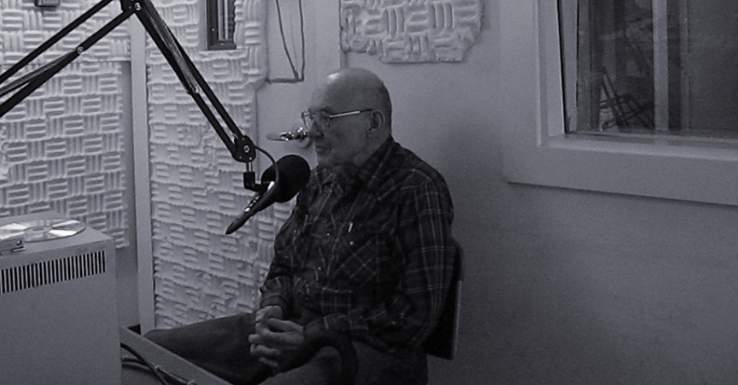
Unrepentant Radical Educator: The Writings of John Gerassi
Professor John (Tito) Gerassi, once an editor at Time magazine, then at Newsweek. He obtained his PhD at the London School of Economics and Political Science. He was a long time civil rights and anti-war militant and author / editor of ten books plus scores of articles and pamphlets published on both sides of the Atlantic. He was Professor of Political Science at the City University of New York. Professor Gerassi discussed his book, Unrepentant Radical Educator: The writings of John Gerassi, edited and with interviews by Tony Monchinski (Transgressions: Cultural Studies and Education) Indypendent Book Review
The book joins personal narratives from Gerassi’s days of journalism and activism, featuring Che Guevara, Fidel Castro, Jerry Rubin, Eldridge Cleaver and others of the era, with essays on figures such as Sartre, Camus, and Julius and Ethel Rosenberg. One review writes, (Especially fascinating are the tales of deliberate misreporting by the major media outlets for which he worked, epitomized by the words of owner Henry Luce when Gerassi was hired: “We here at Time believe that objectivity is neither feasible nor desirable.”)
John “Tito” Gerassi:
- Time Magazine: I hear you’re coming aboard Mr. Gerassi. In the long run, it was great that I got kicked out
- Met Che Guevara in Uruguay, as a journalist for the New York Times, there was a fight with anti-Castro students, the police were scared, one man fired his gun in the air, it ricocheted and hit and killed a USIS Cuban.
- Che told me I don’t talk to the imperialist press. At the hotel, they had reserved a large table where all the left-wing characters sat around with Che. Argentines say chez vous, that’s how Che got his nickname Che.
- The Great Fear in Latin America – John Gerassi
- Che Where Are You? Eventually there will be many Che’s.
Guest – Professor John Gerassi, once an editor at Time magazine, then at Newsweek, who obtained his PhD at LSE, is a long time civil rights and anti-war militant. He is the author or editor of ten books and scores of articles and pamphlets published on both sides of the Atlantic. He is currently Professor of Political Science at the City University of New York.
——————————————————
Civil Liberties, Criminalizing Dissent, Human Rights, Torture, Truth to Power
Podcast: Play in new window | Download
Updates:
- Bradley Manning Trial Update: System of a Star Chamber
- Julian Assange Extradition / Asylum
- Occupy Chicago Tribune WIPO Lawsuit Update:
- Donating to Wikileaks
—

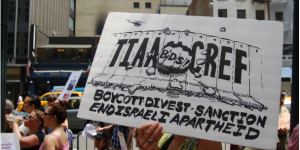
Judge Dismisses Lawsuit Filed Over Boycott of Israeli Goods
We follow up on the Olympia Food Co-op lawsuit filed over boycott of Israeli goods earlier this year. For listeners unfamiliar with the case, a judge in Olympia, Washington dismissed a lawsuit tailored to force the Olympia Food Co-op to rescind its boycott of Israeli goods. The judge ruled that the lawsuit brought by opponents of the boycott violated a Washington State law designed to prevent abusive lawsuits which are aimed at suppressing lawful public participation. Interestingly, an investigation by ElectronicIntifada had unearthed that the lawsuit against individuals with the Olympia Food Co-op Board was also planned in collusion with a national anti-Palestinian organization called StandWithUs that was working with the Israeli government. Lawyers with the Center for Constitutional Rights argued that the lawsuit qualified as a SLAPP, that stands for – – Strategic Litigation Against Public Participation. SLAPPs are lawsuits that target the constitutional rights of free speech and petition in connection with an issue of public concern. Recently, the five Olympia Food Co-op members who had sued to overturn the store’s boycott of Israeli goods must pay $160,000 in damages.
Attorney Barbara Harvey:
- The judge had before him the issue whether to assess a single statutory penalty of 10 thousand dollars on behalf of all 16 co-op members who served on co-op board members who were sued by the defendants, or would the judge order each individual statutory penalties to each defendant.
- He decided to order individual statutory penalties to each defendant for a total 160 thousand dollars.
- The plaintiff sued 16 board members past and present. Standwithus produced a youtube video of the five plaintiffs just before they filed the litigation.
- The five co-op members didn’t look upset given the judge’s decision. If they’re not upset, why not? – which suggests the costs will be covered but we really have no way of really knowing that.
- This victory discourages the opponents of the movement for Palestinians to engage in this kind of litigation.
- TIAA-CREF which manages financial assets of 470 plus billion dollars announced that they had decided to remove Caterpillar from their Socially Responsible Investing Accounts.
- That’s because Caterpillar supplies Israel with these militarized bulldozers that are sold under Department of Defense contracts to Israel which are used to tear down civilian homes in Palestine.
- Caterpillar is the poster child of divestment and boycott and TIAA-CREF has done that.
- All other customers that use that SRIA account will be divesting from Caterpillar.
- Our campaign is to persuade companies like TIAA-CREF to divest from companies around the world that profit from the occupation.
Guest – Barbara Harvey, a Detroit attorney who has worked with BDS activists and a former JVP Board Member
———


Occupy the Economy: Challenging Capitalism PART 1
Occupy the Economy: Challenging Capitalism is the title of Professor Rick Wolff’s new book. After more than a dozen interviews with Rick Wolff since 2008, the theme is consistent, beyond the corrupt banks and stock markets is a flawed economic system. A system that at worst needed to change direction in the 1970s when wages stopped increasing and the cost of living continued to rise. As we look around, the collapse has been coming down in steps, and many have been trying to dial back, save and prepare. This, as millions have lost their jobs, 401ks, pensions, and homes. Overseas, the waves of austerity continue to push through Europe as protests have erupted again in Spain.
Professor Rick Wolff:
- The book is an interesting venture for me, it’s done with David Barsamian, with Alternative Radio.
- He did 3 major interviews with me, the response was so heartwarming, we published a written version of them.
- The book is an overview of how we got into this mess, why it’s lasting so long, why it’s hurting so badly, why government policies have in fact, not succeeded.
- A number of the economies in Europe are on the edge of major breakdown. Spain is already in that situation, Italy is right on its heels. This is not like Greece or Portugal, Ireland or Hungary who are smaller economies, these are major economies.
- There is active debate in the highest circles of Europe, both critics of capitalism and its leaders, questioning whether the European Union can survive . . its a measure of how serious the problem is.
- China, by its own announcing running at a rate of growth of 7- 8 percent which is half of what it had very few years ago.
- It can’t also escape the effect of Europe which is its second most important market.
- China is trying to reorient the economy away from their dependence from exports to the rest of the world because frankly that’s not a reliable situation for them. To give you one index.
- As wages in the United States stagnated, wages in China have gone up 20 percent.
- The slow downs in India, very sharp. The slow downs in Brazil, very sharp.
- The consensus is what Bernanke said. Things are very poor, very weak and we really have to be alert.
- The situation is only going to deteriorate over the rest of 2012 and into early 2013.
- When a capitalistic economic system begins to unravel. . . we’re in the fifth year of this crisis. It officially began in December 2007.
- Every major government program, the bailouts, the stimulus has not achieved the goals it said it could and would.
- The biggest capitalist institutions in this country at this time, the banks. . .are in such trouble are so worried about their own prospects in an economy in such difficulty that what they are doing is taking excessive risks, pushing the envelope of what’s ethical and moral and crossing the thin and blurry lines of legality.
- LIBOR – London Interbank Offered Rate – Starting in the 1980s, London which had been the financial center of the world economy realized what we all understood at that time which was the world economy was becoming dependent on credit.
- Every corporation was borrowing money all the time, every government was borrowing money on a scale we’ve never seen before, the really innovative thing was the development of consumer credit.
- The LIBOR became the benchmark for the world.
- Everyday the British Bankers Association polls the 16 biggest banks who have offices in England, what they are charging each other.
- It takes an average and it announces that. That number is a standard number for example, variable rate mortgages in the US where the mortgage goes up and down those are based on LIBOR.
- It’s factored into everybody’s borrowing. If you’re going into store to buy a pair of pants, that store also borrowed money which is also shaped by a relationship to LIBOR.
- These banks are the biggest holders of debt instruments. Derivatives of all kinds, mortgages of all kinds. You are relying on information from somebody who has an active interest in the information they’re supplying.
- What we now know is these banks often reported an interest rate different from what they were actually charging.
- There was no oversight.
- The world of superbanking is a very cozy world. Barclay’s had admitted to reporting a number that was actually the case. . . and had paid fines now totalling 450 million dollars to both US and British authorities.
- To be blunt they screwed everybody to save themselves.
- How could we defend private banking on this scale ever again?
- The big ones are Bank America and Wells Fargo.
- Both of them have both agreed to pay fines. Bank of America – 300 million. Wells Fargo 175 million.
- Here was what their fine was for. They went and charged African American and Hispanic families more interest for mortgages than they did for whites who had identical credit scores.
- Five of the biggest banks in the world Barclays, Wells Fargo, HSBC, and JP Morgan Chase have all admitted major breaches of minimal ethics, minimal morality, legality all to advantage themselves at the expense of the public.
- Private monster banks are an unsafe way for any society to manage the credit that has now become central to the economy. It is inappropriate for us to have banks that have more money than the government supposedly regulating them.
Guest – Richard D. Wolff is Professor of Economics Emeritus, University of Massachusetts, Amherst where he taught economics from 1973 to 2008. He is currently a Visiting Professor in the Graduate Program in International Affairs of the New School University, New York City. He also teaches classes regularly at the Brecht Forum in Manhattan.
————————————————-
CIA Sponsored Terror, Civil Liberties, Criminalizing Dissent, Habeas Corpus, Human Rights, Political Prisoner, Prison Industry, Surveillance, Torture
Podcast: Play in new window | Download
Updates:
—

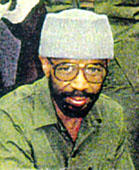
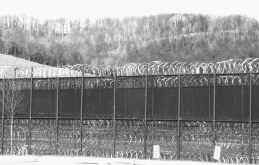
Campaign To Release Russell Shoatz From Solitary Confinement Into General Population
Last year, the National Lawyers Guild called on Superintendent Louis Folino to support the Program Review Board’s recommendation to release Russell Maroon Shoatz into the general prison population at SCI Greene in Waynesburg, Pennsylvania. As many listeners may know, Russell Maroon Shoatz has been held as a political prisoner under intense lockdown spending no more than one hour a day outside of his cell for the past 21 of those years. He was locked up in 1972 for his activity as a member of the Black Liberation Army. We follow up on the international campaign to release Shoatz. The effort was launched in New York City and London and sponsored by the Scientific Soul Sessions.
Theresa Shoatz:
- He goes before the Program Review Board every 90 days, its about 68 visits since he’s been in solitary confinement. He hasn’t had any infractions in 30 years.
- If you look at that, they don’t intend to release him into general population.
- It’s a check-off, how has response been around the guards? What’s your response when you’re taken to the shower?
- Russell had become disappointed with the Program Review Committee and said “I’m not going anymore.”
- I called the Program Review Committee at SCI Greene, and said we’re getting tired of this no-movement forward.
- They said they look down on that as not cooperating with the prison. We look at as they’re not cooperating with all the rules they set forth. There is a step down program, they don’t use it as much as they should.
- When you talk about holding one person in solitary confinement, he has to be transferred, whatever his movement, to the shower, to the one hour cage, it takes two guards.
- SCI Greene released at least 20 prisoners from solitary confinement who they had no intention of releasing but because the state budget is in jeopardy now.
- They left Daddy back there. Daddy’s approaching 70 years of age, he hasn’t had an infraction in 30 years, you would’ve thought he’d be the perfect person for this step down program, and we questioned that.
- When I talk to the staff in solitary confinement, they all say he needs to be general population.
- Superintendent Folino retires in 2 years and I think he may want to slide out without releasing him into population.
- Russell escaped in 1977, in the 80s, he was in population at SCI Pittsburgh.
- He had been voted the first black president of the Lifers Association.
- Folino states that he is a leader and he is to remain in solitary. The director of the Program Review Committee actually stated that he is a leader. Obviously Theresa, you don’t know he’s a leader?
- Outside of him being a leader, he’s been able to withstand this 23 hour a day lockdown.
- I do see there are some changes with Russell. I’m talking emotionally, he’s very distraught now.
- I’m shocked that he hasn’t totally broken down.
- He gets a lot of mail. He’s busy with letter writing.
- I found there have been a lot of suicides in SCI Greene’s solitary confinement unit. Boys in their twenties hanging themselves. You don’t hear about it.
- This is torture. In 2005, there were 80 thousand people in solitary confinement.
- Juan Mendez’s report on Russell Maroon Shoatz
- My focus is on getting Maroon into population. I’m concerned with stopping the expansion of prisons being built. It costs millions of dollars to build new prisons, instead of using that for education for prisoners being released.
- Put that money back into public schools instead of building new prisons.
- We’re being assaulted by this present day prison system and our government nor our state seems to mind locking up folks or taking away money from our public school education and putting it into prisons.
- Congressional Hearing on Solitary Confinement
- hrcoalition.org / Russell Maroon Shoatz
Guest – Theresa Shoatz, a Philadelphia-based prison justice activist and the daughter of Russell Shoatz.
—–

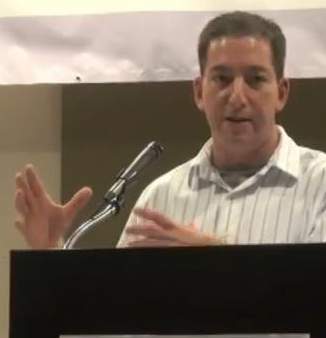
Glenn Greenwald: Challenging the Surveillance State, Breeding Conformists
Glenn Greenwald, author and contributor (columnist and blogger) to Salon.com. During his book tour for the release of With Liberty and Justice for Some, (paper back release) he gave a impactful speech in Chicago titled Challenging the Surveillance State.
—————————————
Civil Liberties, Criminalizing Dissent, FBI Intrusion, Habeas Corpus, Human Rights, RFID, Truth to Power
Podcast: Play in new window | Download
Updates:
- Supreme Court Decision on Immigration Discussion
—–

Supreme Court Decision on Immigration
Last week the Supreme Court delivered a split decision on Arizona’s 2010 immigration law, upholding the most controversial section of that law, “show me your papers” provision. The provision requires police officers to check the immigration status of all people stopped, detained, or arrested presumed there is “reasonable suspicion” to believe that the person is an undocumented immigrant. Reasonable suspicion can include objective factors but it also includes subjective factors, the person is nervous, doesn’t look the officer in the eyes. Despite people claiming the Supreme Court decision was a victory for immigration advocates, it wasn’t at all.
Attorney Cathy Albisa:
- My reaction is that we’re not having the right conversation.
- There was an involved technical decision regarding the federal government and the state government.
- The one thing that was lost except for a couple of lines, was the people at the heart of this problem.
- The people who’ve been displaced from their home countries through the global economy, and stripped of legal person hood, and now living in a constant state of fear. It’s a reflection of what a degraded state of politics we’re in.
- That if you pass a law that shocks the conscience, the fact that you got rid of some of it or most of it becomes a victory.
- The claims of victory are in themselves very troubling signs.
- Our expectations have become so low, that we consider it a step forward.
- At the heart of the law is an intent, to treat this group of people differently from other groups of people in the state of Arizona.
- What does that kind of racism do, what does that kind of living under constant threat do to a community, to a person and to a set of human rights, that we all should be defending?
- Immigration has always been a divide and conquer from the xenophobic side of the isle.
- If we assessed it that we live in a global economy, that rights cross borders. If people and capital can cross borders, protection can cross borders.
- Why are they here? If you look at the reason they cross borders, it’s economic.
- They’re displaced for economic reasons. We don’t look at the grinding poverty that displaces people as a rights question.
- The ones that want to hold are organizing and demanding their rights.
- www.nesri.org
- There are sheriffs across the country that object to these policies and refuse to implement these policies who say this does not keep our community safe.
- They (ICE) can literally create a life of ongoing terror for people, because they know they can be deported at any time.
Guest – Attorney Cathy Albisa, constitutional and human rights lawyer with a background on the right to health. Ms. Albisa also has significant experience working in partnership with community organizers in the use of human rights standards to strengthen advocacy in the United States. She co-founded NESRI along with Sharda Sekaran and Liz Sullivan in order to build legitimacy for human rights in general, and economic and social rights in particular, in the United States. She is committed to a community-centered and participatory human rights approach that is locally anchored, but universal and global in its vision. Ms. Albisa clerked for the Honorable Mitchell Cohen in the District of New Jersey. She received a BA from the University of Miami and is a graduate of Columbia Law School
————–


RFID: Microchips and US Soldiers / Search Engine Privacy
Today we get an update on the extent to which RFID technology is intruding in our daily lives. As many listeners may know, RFID stands for Radio Frequency Identification. In past shows we’ve discussed how big companies are embedding, or plan to embed, the so-called “Spychip” into clothes, credit cards, shoes and even into human flesh, all in the name of convenience, safety and commerce. The breach of civil liberties from spychip implantation is wide-reaching. Now, however, plans to develop implantable microchips for use in U.S. soldiers has taken a step forward. The U.S. military’s Defense Advanced Research Projects Agency, or DARPA, has confirmed plans to create nano-sensors to monitor the health of soldiers on battlefields.
Dr. Katherine Albrecht:
- What I discovered in 2003, some of the largest corporations, 500 of them had gotten together to come up with a plan to replace the barcode with tiny microchips hooked with tiny antennas.
- Now this initially was the brainchild of Proctor and Gamble to take the universal product code or the bar code and turn it into the EBC, the Electronic Bar Code. Their concept is that we would create, or the manufacturers and retailers of the world would create an internet of things.
- I was once going off to give a speech on RFID and I stopped and made an inventory of all the things I was wearing and carrying in their vision of the future, that would have an RFID tag. It was my shoes, the underwear, my stockings, my skirt, my purse, my briefcase, my notebook.
- Proctor and Gamble came up with an idea we detailed in our book to equip your refrigerator to the coming smart grid with RFID readers. They describe that – we would know when the consumer drank the last Pepsi and as if by magic ads on their TV would appear for Coke. The idea is that they would monitor what you’re eating.
- Monitor what you would run out of. There definitely are patents and plans, some of them creepier than others.
- I actually worked closely with the Associated Press to release the information that the microchip the implantable Verichip, you can take this microchip antenna and encapsulate in glass, and inject it into people.
- It’s the identical technology they put in to dogs and cats nowadays.
- There is a company that keeps changing its name – Verichip / Applied Digital Solutions / Digital Angel /
- They are trying to market this product for use in human beings. We did a 6 month investigation that revealed that these implantable microchips were causing cancer.
- We’ve got communities all around the country that have been mandated the use of microchips in dogs. There have been a number of dogs that have died from the microchip causing a cancerous tumor.
- ChipMeNot.com
- Privacy is not an ends. It’s a means. Privacy is a way of you maintaining control over your own information.
- Don’t put anything on facebook that you wouldn’t want put up on a billboard in Times Square.
- Where I get concerned is places where your privacy is invaded, that you don’t know what’s happening and you don’t have control over it.
- That’s not facebook, that’s getting in to Google.
- When you log on to Google, you think you’re logging on to a search engine that’s a helpful tool that’s going answer a question that you have.
- Google doesn’t view the google.com search box as a helpful tool for you.
- They’re not your Mom, they’re not your Dad, Google is a company that is in business to make money.
- The reality is if they came at us with guns and tanks, and laws and regulations forcing us to do that, we’d all say heck no,
- When Google gives us a little window that we type in what’s in our minds, we voluntarily do it and we thank them for it.
- Google is a multi-billion dollar corporation. When is the last time a multi-billion dollar corporation gave you all of its products for free? The answer is never, because those aren’t products they’re bait. You are the product.
- Every Gmail that you receive is read and copied and keywords are placed into the profile from both the sender and the recipient of every email. You’re not doing anything wrong but you certainly don’t that information out there in a giant database.
- If you’re using a Gmail account, if your client is using a Gmail account, and you don’t. If you are transmitting sensitive information I believe you’re not only in violation of attorney-client privileges but potentially even violation of the law.
- In exchange for that (free email service) you are allowing them to copy everything that you send.
- We recently ran across a (DARPA) proposal, a request for contractors to develop a system to inject micro-nano- chips into the bloodstream of soldiers that would allow them to remotely monitor the physiological processes of the soldier. Websites.
Guest – Dr. Katherine Albrecht, who along with Liz McIntyre authored “Spychips: How Major Corporations and Government Plan to Track your Every Move with RFID. We talk about DARPA and microchips and we’ll also get a preview about Katherine Albrecht’s research into exposing how Google email is a threat to privacy between attorney / client correspondence. www.startpage.com
————————————————————–