Civil Liberties, Criminalizing Dissent, Habeas Corpus, Human Rights, Iraq War, Supreme Court, Targeting Muslims, Torture, Truth to Power
Podcast: Play in new window | Download
Updates:
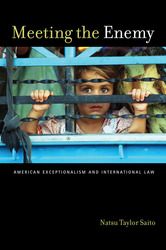
Natsu Saito, Meeting the Enemy: American Exceptionalism and International Law
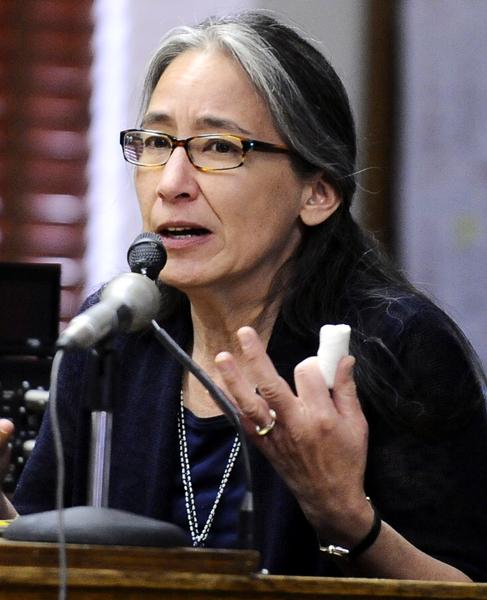
Meeting the Enemy: American Exceptionalism and International Law is the title of Natsu Saito’s recent book, Natsu is an attorney and professor of Law at Georgia State University’s College of Law in Atlanta. The book boldly points out how the United States violated international law since its declaration of independence. As often discussed here on Law and Disorder, international courts and institutions have been at the forefront of holding the torture conspirators accountable. Meeting the Enemy gives disturbing insight into the origins of American exceptionalism.
Natsu Saito:
- The duality is that the US does exempt itself (from international law) very consistently and very frequently and yet promotes international law very strongly and relies upon it.
- It has relied upon certain premises that are fundamental to the whole outlook and paradigm of colonialism – which is that there is a higher good, a more civilized approach the US embodies.
- The law doesn’t apply because we have a higher aim of civilization and that justifies not playing by the rules.
- The United States making others comply with human rights standards while exempting itself.
- Moving humanity toward this higher goal is so critical because if you strip that away and you look at the realities on the ground, you see what has been termed Western civilization has been incredibly barbaric.
- In order to get around that analysis, you have to say it was for a higher good.
- I think the “left” tends to accept the general framework, and to make particular criticisms of policies and practices that are obviously problematic. The US government engaging in torture for example, but each instant is accepted as anomalous instead of the larger picture.
- It is too frightening even for the people on the left to deal with the reality that this is a country that sits on occupied land, illegally occupied by its own rules. People on the left want to make it a kinder, gentler colonialism.
- I started out thinking I was writing a book about the failure of the United States failure to comply with international law, as I got into it, the more interesting questions were the push / pull dynamics between reliance on international law
- The current system of international law evolved from the international law which was the agreement between the European colonial powers of how they were not going to destroy each other in the process of taking over the rest of the world.
Guest – Natsu Taylor Saito teaches international law and human rights, race and the law, immigration, criminal procedure, and professional responsibility, and is an advisor to the Asian American Law Student Association and the Hispanic Student Bar Association. Professor Saito’s scholarship focuses on the legal history of race in the United States, the plenary power doctrine as applied to immigrants, American Indians, and U.S. territorial possessions, and the human rights implications of U.S. governmental policies, particularly with regard to the suppression of political dissent. Read more.
——-
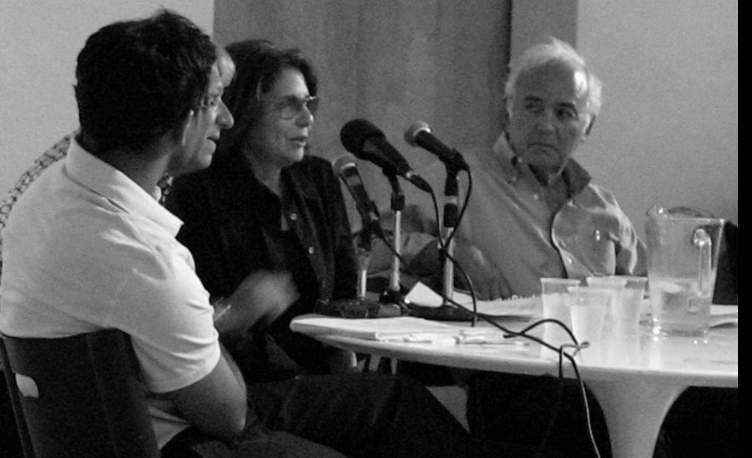
Elena Kagan and the Supremes – Brecht Forum
We hear excerpts from a discussion on the confirmation hearings of Elena Kagan, and how her position may influence the direction of the Supreme Court.
Panelists:
Martin Garbus – one of the country’s leading trial lawyers. Mr. Garbus aggressively represents his clients in the courts and in the media. He has appeared before the United States Supreme Court as well as the highest state and federal courts in the nation. His devotion to ethics, justice and the law has earned him respect among the legal community and beyond as well as prominent awards. Time Magazine has named him “legendary . . . one of the best trial lawyers in the country,” while Newsweek , the National Law Journal and other media agree that Mr. Garbus is America’s “most prominent First Amendment lawyer,” with an “extraordinarily diverse practice.” The National Law Journal named him one of the country’s top ten litigators.
Margaret Ratner Kunstler – former Educational Director at the Center for Constitutional Rights. She’s an attorney and leads the New York City chapter of the National Lawyers Guild and heads the William Moses Kunstler Fund for Racial Justice.
Anand Swaminathan – an associate at Vladeck, Waldman, Elias & Engelhard, P.C. He graduated from the University of Wisconsin in 2001 and the Harvard Law School in 2006. Prior to joining Vladeck he was a law clerk for the Honorable Theodore H. Katz of the United States District Court for the Southern District of New York.
Michael Steven Smith – Law and Disorder co-host, author and New York attorney. Michael Steven Smith is the author, editor, and co-editor of six books, including “The Emerging Police State,” by William M. Kunstler. He has testified before committees of the United States Congress and the United Nations on human rights issues. Mr. Smith lives and practices law in New York City with his wife Debby, where on behalf of seriously injured persons he sues insurance companies and occasionally the New York City Police Department.
———————
Afghanistan War, Civil Liberties, Criminalizing Dissent, Guantanamo, Human Rights, Iraq Veterans, Iraq War, Torture, Truth to Power, War Resister
Podcast: Play in new window | Download
Updates:
—–
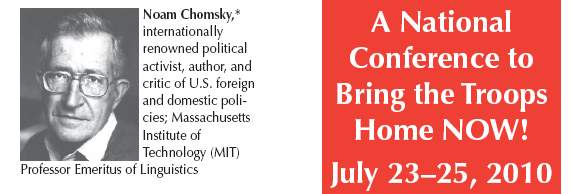
C0-host Michael Smith talks with attorney Jim Lafferty about the upcoming anti-war conference in Albany, New York, July 23-25. Noam Chomsky, internationally renowned political activist, author, and critic of U.S. foreign and domestic policies; Massachusetts Institute of Technology (MIT) Professor Emeritus of Linguistics is the keynote speaker. Click here for flyer (PDF) Groups sponsoring the event: After Downing Street, Arab American Union Members Council, Bail Out the People Movement, Black Agenda Report, Campus Antiwar Network, Campaign for Peace and Democracy, Citizen Soldier, Code Pink, Grandmothers Against the War, Granny Peace Brigade, International Action Center, Iraq Veterans Against the War, Military Families Speak Out, May 1st Workers and Immigrant Rights Coalition, National Assembly to End the Iraq and Afghanistan Wars and Occupations, National Lawyers Guild, Office of the Americas, Peace Action, Peace of the Action, Progressive Democrats of America, Project Salam, September Eleventh Families for Peaceful Tomorrows, The Fellowship of Reconciliation, U.S. Labor Against the War, Veterans for Peace, Voices for Creative Nonviolence, Voters for Peace,Women’s International League for Peace and Freedom, The World Can’t Wait.
—
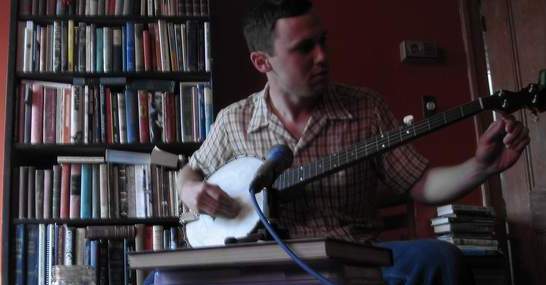
Iraq War Veteran, Conscientious Objector and Musician Clifton Hicks
Clifton Hicks is an activist with the Iraqi Veterans Against the War. Hicks is disabled and enrolled as an Anthropology student at Appalachian State University in Boone, North Carolina. Appalachian State is a center for old-time music, and Hicks is also an accomplished musician and banjo player. Cliff Hicks is psychologically disabled and got out of the Army as a conscientious objector several years ago. In the Spring issue of The Veteran, published by Vietnam Veterans Against the War, there’s printed the following chant, that is repeated by soldiers in training to go to Iraq. “I went down to the market where all the people shop, I pulled out my machete, and I began to chop, I went down to the park where all the children play, I took out my machine gun and I began to spray.” This is the kind of psychological brutalization that our young men are forced to endure that turn them into creatures they never thought they’d become.
Clifton Hicks:
- I was in 9th grade when 9/11 happened. I called the recruiter when I was 16, to try and get in.
- I saw Muslim and Arabic people and thought they were all out to get us.
- I listened to a lot of daytime AM right-wing radio. I had the ole cliche patriotic notions going.
- I wanted to go combat arms from the start, I figured if I was going into the Army, I wanted to fight.
- My feet were on the ground in Iraq in October 2003. The guys I was with that had already been there for a while had gotten pretty nasty. Guys get nasty, because their friends get killed and you realized you can’t trust anybody.
- We were the first division in combat to be out there for more than 13 months.
- They would literally give us candy and toys to give out to Iraqi kids at schools, the next day you’re ridin’ around and you see a b unch of kids get shot.
- I became an anti-war activist while I was still in the Army. We started an IVAW chapter in Gainesville Florida
Guest – Clifton Hicks, Branch of service: United States Army (USA) / Unit: C Troop, 1st Squadron, 1st U.S. Cavalry Regiment / Rank: PFC / Home: North Carolina / Served in: Ft. Knox, OIF 1, Germany. Hicks a musician and is currently a student at Appalachian State University in Boone, North Carolina.
——————————————————————–
Civil Liberties, Criminalizing Dissent, Guantanamo, Habeas Corpus, Human Rights, Surveillance, Truth to Power
Podcast: Play in new window | Download
Updates:
—
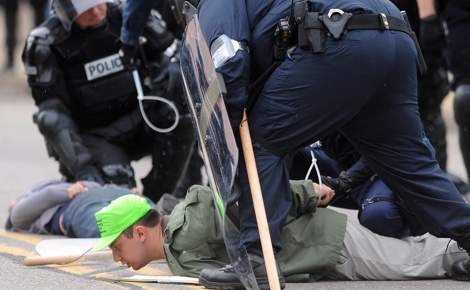
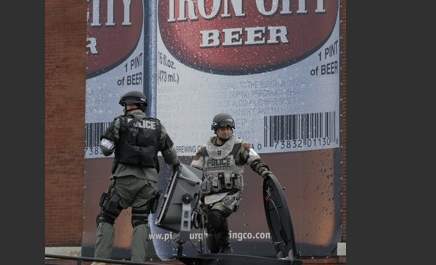
Pittsburgh’s Citizen Police Review Board Demands G20 Police Records, Faces Dismantling
Pittsburgh’s city council is worried that if the city’s Citizen Police Review Board are allowed to scrutinize secret records of officer conduct during the G-20 economic summit, more protesters will sue and possibly jeopardize a $20 million liability insurance policy the city bought before the International Summit last year. We could lose our homes over this,” said City Councilwoman Theresa Smith, chairwoman of the public safety committee.. “If we don’t have insurance, then it falls to us.” The Seeds of Peace Collective and Three Rivers Climate Convergence have filed a joint federal lawsuit against the city charging that police violated their First and 14th Amendment rights at two events. Meanwhile, city hall has started the nomination process to remove most of the members of the Pittsburgh Citizen Police Review Board.
Elizabeth Pittinger:
- The Pittsburgh Citizen Police Review Board does have subpoena power and when they initiated their inquiry last October, a general request of a number of documents to be turned over so we could begin the inquiry. The city resisted providing that information.
- In December the chair of the Citizen Police Review Board issued a subpoena demanding that police reports specified by number be turned over in addition to operational material and documents.
- On March 18, the courts issued an order directing the city to provide the documents. They finally gave us a stack of more than 300 pages of police reports that were so heavily redacted they were substantively illegible.
- We went back to court seeking that they would have to provide the information in an un-redacted form and that has led to this controversy with city council.
- The Pittsburgh City Council is coming forward with a document called “the will of council” urging the police review board to slow down its inquiry.
- What has happened now is that the request of these G20 documents is really the vehicle that the city has now created to challenge the board’s right of access to any document.
- Protesters hit with OC Vapor – Invisible Vaporized Pepper Spray
Guest – Elizabeth Pittinger, the Executive Director of the Pittsburgh Citizen Police Review Board.
——–
“Cyber War” Creates Need For Internet “Kill Switch”
Senator Lieberman and Senator Susan Collins have the attention of civil liberties and privacy experts as they craft a bill that would allow the take over of the civilian internet network during an emergency. After initial outcry, Senator Lieberman told the media, the Internet Kill Switch bill is a matter of national security, and a kill switch is needed to disconnect immediately from a foreign nation in case of an attack. He continues, “Right now, China, the government, can disconnect parts of its Internet in a case of war. We need to have that here too,” Protecting Cyberspace as a National Asset Act of 2010 is the name of the bill, and supporters argue that it is not a kill switch, but a way to divert traffic away from another country. It is added that the President already has broad powers to shut off any and all regulated telecommunications in the 1934 Telecommunications Act.
Tracy Rosenberg:
- I think its clear by the way the bill is currently written, the president could target political groups, but that’s not the intent of the bill. It doesn’t mean it couldn’t be used in that fashion. The information sharing is quite similar to what happened after 9/11. It potentially creates a situation where corporate providers basically rat out parties at the instructions of the government. That could certainly be directed at political viewpoints.
- Internet sites could potentially be shut down. Information about who is posting to them, who is reading them and who owns them will become the property of the federal government.
- Another motivation behind the bill – Litigation and liability protection for internet companies.
- Internet use in China is considerably compromised
Guest – Tracy Rosenberg, Executive Director of Media Alliance since 2007. She has organized and advocated for a free, accountable and accessible media system,focusing on the protection and sustainability of alternative media outlets from Pacifica Radio to low-power FM, public access and Indymedia, monitored the mainstream media for accuracy and fair representation and facilitated the training of numerous nonprofit organizations and citizen’s groups in effective communications.
—–
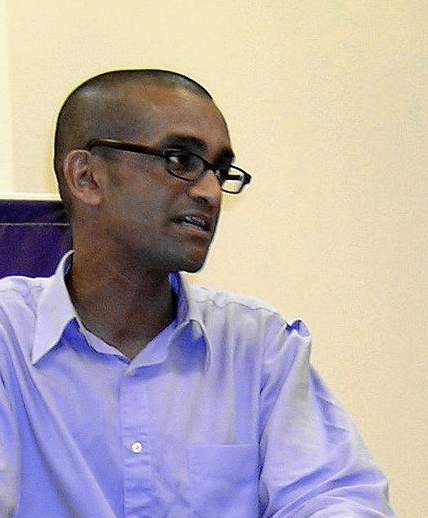
A Dark Day For Human Rights
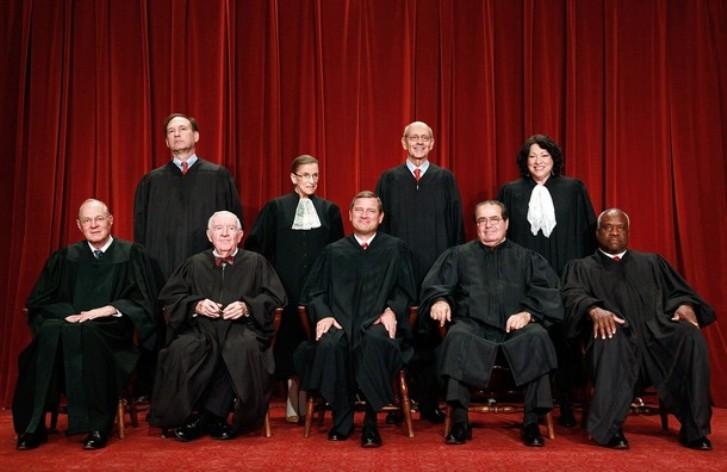
The Supreme Court’s decision to preserve a vague prohibition on aiding and associating with terrorist groups severely reduced the First Amendment rights of American citizens. The decision could have serious impact on lawyers, journalists and academics who represent or study terrorist groups. The new decision came from a case by the Humanitarian Law Project that challenged the law of prohibiting “material support” to terror groups. The law projected wanted to provide advice to two terrorist groups on how to peacefully resolve their disputes with the United Nations and International Law. The Supreme Court ruled that the peaceful assistance is aiding terrorism.
Shane Kadidal:
- A number of Justices were skeptical about the ways this law may be applied to journalists, to lawyers representing unpopular clients. “Speech discouraging violence can be banned under the First Amendment.”
- Solicitor General Kagan was asked if a lawyer is entitled to represent someone on the FTO list.
- Foreign Terrorist Organization List.
- Kagan says if you have some Constitutional right to be in court then the statutes should be interpreted in a way to allow the lawyer to represent someone in those circumstances.
- If you think about it, it took the Guantanamo lawyers 7 years to establish if there was a Constitutional right to challenge your detention if you’re a non-citizen.
- Kagan is saying that lawyers were taking their chances to represent Guantanamo lawyers in the first place.
- Lynn Cheney’s group : Keep America Safe.
- You couldn’t send books on Federalism to the Tigers of Tamil Eelam who are on the FTO list.
- The law defines material support to be more than tangible things like guns, and money but also things like personal services, expert advice and assistance. Those terms are so broad.
- (Treating a wounded person with your medical skills) Humanitarian aid during crisis at risk.
- That’s one of the fundamental problems with vague statutes. They give too much discretion to law enforcement, if everything is prohibited than law enforcement is going to be selective on who they choose to prosecute. The government likes that. Greenpeace would easily qualify.
- President Clinton was the first to use this law directed at whole nations such as Nazi Germany or Cuba and instead direct them at political organizations.
- The government has used this law 150 times since 9/11. Statute of limitations of 8 years.
Guest – Shane Kadidal senior managing attorney of the Guantánamo Global Justice Initiative at the Center for Constitutional Rights in New York City. He is a graduate of the Yale Law School and a former law clerk to Judge Kermit Lipez of the United States Court of Appeals for the First Circuit.
————————————————————————
Civil Liberties, Criminalizing Dissent, Gaza, Human Rights, Truth to Power
Podcast: Play in new window | Download
Updates:
————–
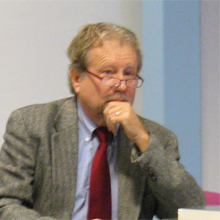
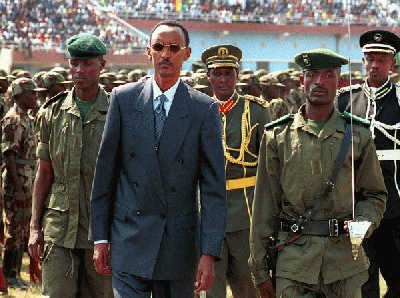
Critical: Attorney Peter Erlinder Arrested in Rwanda
Former National Lawyers Guild president, Professor Peter Erlinder was arrested last week by Rwandan Police for allegedly denying the country’s 1994 genocide. He had traveled to Rwanda from Brussels on Sunday May 23, to join the defense team of Rwandan presidential candidate Victoire Ingabire Umuhoza. He had recently attended a defense conference that they’d organized for the people working with the International Criminal Tribunal for Rwanda. He arrived in Rwanda with the intention of defending aspiring presidential candidate Victoire Ingabire and joining her legal team. Ingabire is the opposition candidate who was recently arrested and accused of denying the Rwanda genocide. Prosecutors say Erlinder made statements in publication that there was no genocide in Rwanda. Under a 2003 law, persons condemned for denying or grossly minimizing genocide, attempting to justify genocide or destroy evidence related to it are liable to a minimum of 10 years and a maximum of 20 in prison. Facebook Group – Free Professor Erlinder Now
Professor Erlinder is 62 a Chicago native and professor of law at the William Mitchell College of Law. He is a frequent litigator and consultant, often pro bono, in cases involving the death penalty, civil rights, claims of government and police misconduct, and criminal defense of political activists. He is also a frequent news commentator. Erlinder was president of the National Lawyers Guild from 1993-1997, and is a current board member of the NLG Foundation. He has been a defense attorney at the UN International Criminal Tribunal for Rwanda since 2003. National Lawyers Guild Page Updates
Gena Berglund:
- He’s accused of revisionism, revising history. Peter Erlinder years before found mountains of documentation at the UN about Rwanda’s history. He read them and discovered that the history of Rwanda is the history that’s told in the documents.
- He actually found that there was a civil war going on there for 4 years preceding the last 3 months when the alleged genocide took place.
- The civil war was the causation of the genocide. By doing this work, he encountered the wrath of the Rwandan government.
- He was trying to help the defense of an opposition presidential candidate Victoire Ingabire Umuhoza, who was arrested for “denying the genocide” and when Peter Erlinder arrived in Rwanda, he was arrested on the same charge.
- Rwanda President Paul Kagame has discredited presidential candidate Victoire Ingabire Umuhoza.
- We don’t know in the US, what’s really going on in Rwanda. The US is supporting Kagame’s war in the East Congo, the war is being fought over minerals and rights to minerals.
- Those minerals are used in cell phones.
- Help Peter Erlinder: Contact the US State Department and urge them to take an active role.
- Rwanda President Paul Kagame put 7 people on a list of those he would like to see assassinated, Peter Erlinder was on that list.
Sarah Erlinder:
- My Dad is back in the hospital, the Rwandan government is claiming that he attempted suicide.
- Gena Berglund said in the press conference that taking the pills was a “strategy’ for Peter to escape the poor conditions in the cell where he is being held with seven or eight other inmates and handcuffed each time he is taken out of the cell.
- No one has been able to talk with him since he was arrested. Peter is in a private hospital, a shared unit with 8 other patients. Facebook Group – Free Professor Erlinder Now
—
Guest – Attorney Gena Berglund with the Minnesota Chapter of the National Lawyers Guild and International Humanitarian Law Institute of Minnesota
Guest – Sarah Erlinder, Peter’s daughter, attorney and National Lawyers Guild member.
———-

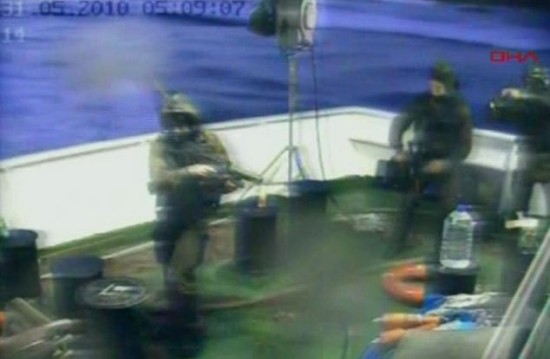
Israel Attacks on Aid Ships
International waves of protest continue over the lethal Israeli attack of 6 ships carrying humanitarian aid to the Gaza strip. The shipd called the Freedom Flotilla, were carrying shipments of wheelchairs, prefabricated homes, crayons, raw construction supplies, dental surgery equipment and reams of paper in a relief effort to end the blockade in Gaza.
The Freedom Flotilla was an effort by a coalition of human rights and humanitarian organizations to nonviolently break through Israel’s illegal blockade, and deliver much needed humanitarian and developmental aid to the Palestinians of Gaza. Almost 700 passengers from 40 different countries joined the flotilla, including: human rights workers, humanitarian aid workers, Members of Parliament, doctors, nurses, teachers, community leaders, and international journalists.
The lead coalition partners included:
- Insani Yardim Vakfi (IHH), the largest coalition partner, contributing 2 Turkish-flagged cargo ships, the Turkish-flagged passenger ship “Mavi Marmara,” and 380 Turkish nationals to the effort. This was IHH’s first attempt to break the Gaza blockade.
- The European Campaign to End the Siege on Gaza, contributing the Greek-flagged passenger ship “Sfendoni.” This was the European Campaign’s second mission to Gaza.
- The Free Gaza Movement, contributing the U.S.-flagged passenger ship “Challenger I.” This was Free Gaza’s ninth mission to Gaza.
- A Ship to Gaza, Sweden, and A Ship to Gaza, Greece, contributing the Greek-flagged cargo ship “Eleftheri Mesogeios.” This was the first voyage of A Ship to Gaza, Sweden, and the fourth of a Ship to Gaza, Greece.
Israeli Commando To Get Valor Medal / Rep. Sherman: Prosecute US Citizens Involved With Gaza Flotilla
The world watched in horror as Israeli commandos rappelled onto the ships from helicopters and opened fire. According to latest reports 19 people were killed and 60 wounded in the attack 75 miles off the coast of Israel and Gaza. The raid set off the strongest international condemnation of Israel since the 22-day military assault Operation Cast Lead in the Gaza Strip 18 months ago.
Richard Falk:
- Legality of Israel continuing the blockage against Gaza: Israel disengaged from territorial occupation in 2005 but continues to control all the borders, airspace and sea entry.
- Israel completely controls what gets in and out of Gaza, including fuel and medicines so that it’s functionally occupied and legally considered to be occupied.
- Internationally, there are several provisions requiring you to protect the necessities of the civilians
- Hamas still considered terrorist government. A blockade is an act of war
- If Gaza is defined as occupied, it is collective punishement, if it not occupied it means this is an act of war
- The UN charter is clear that any use of force that is not legally justified as self defense against an armed attack is unlawful. The law is when you’re attacked on the high seas, you have a right to act in self defense.
- The Israeli attack was a violation of the freedom of the high seas and a criminal, unlawful use of force. As far as I know, these allegations about these terrorist ties and background are completely invented, completely contrived. The New York Times has given the Israeli disinfo campaign, credibility is doesn’t deserve.
- Under customary international law, you can’t do what Israel has been doing.
- It’s a vindictive treatment of the people, the family members weren’t told if their loved ones were alive.
- The Israelis can’t claim self defense. The Israeli use of force was excessive and disproportionate.
- Israel continues to enjoy US protection and impunity.
Guest – Richard Falk professor of international law emeritus, Princeton University and Special Rapporteur on Occupied Palestinian Territories for the United Nations Human Rights Council. His book, The Great Terror War (2003), considers the American response to September 11, including its relationship to the patriotic duties of American citizens. He published Costs of War in 2008.
———————————————————————–
Civil Liberties, Criminalizing Dissent, Habeas Corpus, Human Rights, Military Tribunal, Supreme Court, Torture, Truth to Power
Podcast: Play in new window | Download
Updates:
——
Kagan “Loves” the Federalist Society
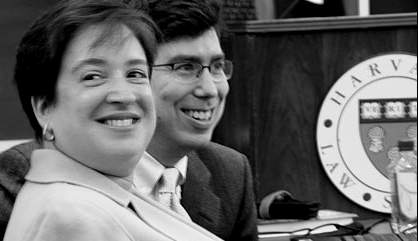
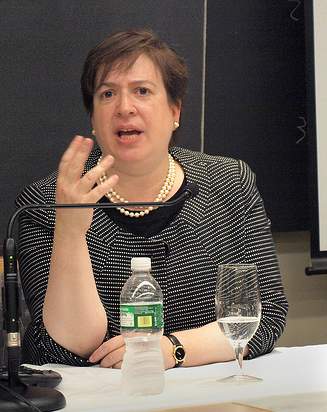
Hosts discuss Elena Kagan’s background with Francis Boyle, Professor of law at the University of Illinois. Boyle is author of “Tackling America’s Toughest Questions.” In his article titled – – Supreme Court Pick: Kagan “Loves” the Federalist Society, – – Boyle notes Kagan explicitly endorsed the Bush administration’s bogus category of ‘enemy combatant,’ whose implementation has been a war crime in its own right. He also writes that “Kagan has actually said ‘I love the Federalist Society.’ Almost all of the Bush administration lawyers responsible for its war and torture memos are members of the Federalist Society. Read – Dean Elena Kagan: Harvard’s Gitmo Kangaroo Law School — The School for Torturers
Law Professor, Francis Boyle:
- She has fully defended the hideous Bush atrocities, civil rights, human rights, civil liberties.
- No retreat or abandonment of the Bush positions.
- She (Kagan) did write this tome in the Harvard Law Review, equivalent to the Federalist Society, unitary executive power theory of the presidency.
- She’d be a total disaster on the cases that really count for the future of the US Constitution and the Bill of Rights.
- She’s a neo-conservative and has no qualifications to speak of.
- (She) hired Jack Goldsmith, author of torture memos and helped set up kangaroo court system in Guantanamo. We are still fighting Kagan supporting the Bush war on terrorism.
- Kagan stated on National Public Radio on December 22, 2009, “I Love The Federalist Society”
- Obama and his people know that Kagan will be the spear carrier for presidential powers on the Supreme Court
- This is a very dangerous time for the future of our republic and Constitution. The statement that she cares for the common people. . . she’s an elitist snob.
- There she is promoting globalization at Harvard Law School?? Hiring people to teach “globaloney” just to lick the boots of Larry Summers? While dean at Harvard Law School, she was moonlighting at Goldman Sachs payroll.
- This is all incredibly incestuous. Unlike Bush who wasn’t a lawyer, Obama taught Constitutional Law at the University of Chicago Law School, he should know better.
Guest – Professor Francis Boyle, A scholar in the areas of international law and human rights, Professor Boyle received a J.D. degree magna cum laude and A.M. and Ph.D. degrees in political science from Harvard University. Prior to joining the faculty at the College of Law, he was a teaching fellow at Harvard and an associate at its Center for International Affairs. He also practiced tax and international tax with Bingham, Dana & Gould in Boston.
He has written and lectured extensively in the United States and abroad on the relationship between international law and politics. His eleventh book, Breaking All the Rules: Palestine, Iraq, Iran and the Case for Impeachment was recently published by Clarity Press. His Protesting Power: War, Resistance and Law has been used successfully in anti-war protest trials.
——-
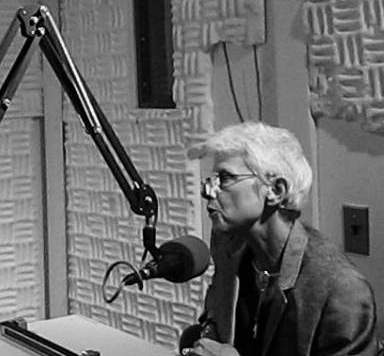
In Memory of Attorney Rhonda Copelon
Hosts talk with Cathy Albisa, executive director of the National Economic and Social Rights Initiative. about the human rights legacy of Rhonda Copelon. Rhonda had a huge influence on changing international law for human rights. She founded the International Women’s Human Rights Law Clinic.
Lawyers You’ll Like series with Rhonda Copelon. Part 1 / Part 2.
Attorney Cathy Albisa:
- I worked with Rhonda at CUNY, we both co-counseled with CCR on a couple of cases.
- I met Rhonda on a car ride, a 25 hour car ride. We spent 25 hours talking about human rights in the United States. Rhonda had a huge influence on NESRI
- Rhonda never stopped lamenting Harris v McRae, she was still furious and outraged.
- The assumption embedded in that case is the court is saying, we’re not responsible as a society, the poverty of this woman. Copeland Fund For Gender Justice. Rhonda thought it was critical that a progressive gender perspective be embedded into some body of work that really looked at these gender issues in a cross cutting way, that understood the relevance of poverty, the relevance of race, the relevance of sexual minorities.
- Rhonda was not a wealthy woman, she was a law professor and saved her money. She gave 1 million dollars for this fund and that was everything. The case that she says always saved my life was Filártiga v. Peña-Irala.
- She founded the International Women’s Human Rights Law Clinic. What she did with that clinic is challenge the traditional model of human rights law coming out of the United States.
- She made no claims of being objective, she was on the side of victims, of people with similar politics to her own.
- This changed international law. Rhonda: Don’t disregard the banal, the ordinary things that actually represent deep violations.
- The way Rhonda went about things, she merged intellectual capital with a strategic ferocity and personal good will and relationship building.
- She thought it was very important that people understand they’re part of a broad social justice and human rights movement.Cathy Albisa joins us today to talk about her work with the National Economic and Social Rights Initiative and Rhonda’s work as legal adviser to the Women’s Caucus for Gender Justice.
Guest- Cathy Albisa, is a constitutional and human rights lawyer with a background on the right to health. Ms. Albisa also has significant experience working in partnership with community organizers in the use of human rights standards to strengthen advocacy in the United States. She co-founded NESRI along with Sharda Sekaran and Liz Sullivan in order to build legitimacy for human rights in general, and economic and social rights in particular, in the United States.
——————————————–
Civil Liberties, Criminalizing Dissent, Human Rights, Iraq War, Torture, Truth to Power
Podcast: Play in new window | Download
Updates:
———————

Citizen’s Battle Against Haliburton Gas Drilling Heats Up
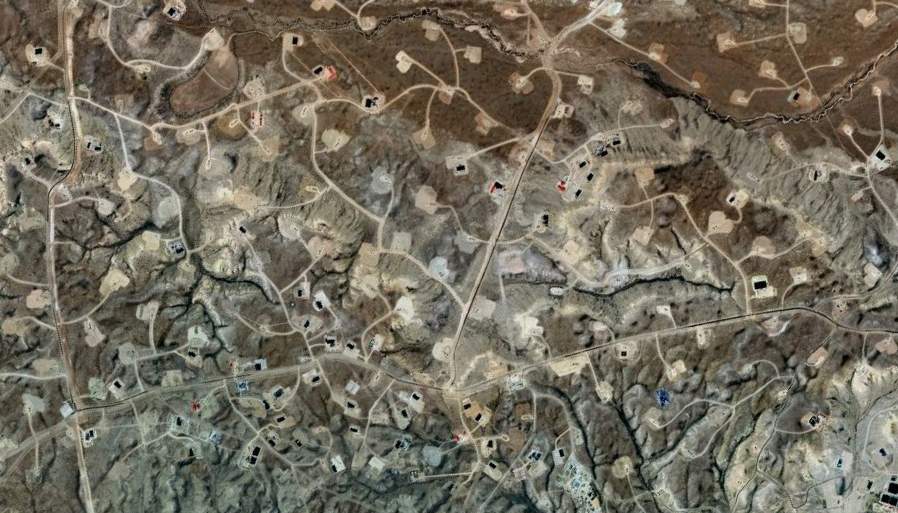
Environmental community groups from New York, New Jersey and Pennsylvania gathered last week in Philadelphia, pulling together strategies to protect the Marcellus Shale watershed from natural gas drilling and hydraulic fracturing. The shale is believed to hold some of the world’s largest deposits of natural gas, and those that want to mine this resource say it will reduce dependence on foreign oil and boost the economy. The environmental and public health costs are too high say opponents. They point out that gas drilling causes increased runoff because the water used in drilling won’t be returned to streams.There will be more erosion, water quality will worsen. The lesson is clear from other locations that had the same drilling. Near the Jonah gas field in Wyoming, there was a drop in wildlife of 50%, an increase in crime, loss of businesses, a drop in property values, accidents like wildfires, more traffic, and a greater need for emergency services are some of the impacts of gas drilling. Damascus Citizens Man lights tap water on fire – video
Late last week, the EPA stated it will investigate how hydraulic fracturing will impact water supplies and water quality in New York State. The Upper Delaware River Watershed Basin is the source of pure water for 20 million people in Philadelphia, New York City and half of New Jersey. 171 products and 245 chemicals are used among millions of gallons of water and sand. Halliburton’s gas well drilling process is now exempt from the Safe Drinking Water Act, The Clean Air Act and The Right To Know Act.
Susan Blankensop:
- I live in New York City and I have a part time residency in Pennsylvania.
- In January of 2008, some neighbors of mine starting speaking about these land-men who were coming around the neighborhoods speaking to private land owners, and offering them money for their mineral rights under their land.
- It was all secretive, they said don’t tell your neighbor because I’m offering you a better deal.
- Then we started hearing about this Marcellus Shale and natural gas deposits, hydro fracturing and horizontal drilling. They’re offering 3500.00 an acre with 18 percent royalties.
- Haliburton is the company that developed Hydro-fracturing is where they drill down into these deep shale levels. They go vertically down about a mile then bore horizontally and start setting off mini-explosions. Other companies involved – Chesapeake Energy /Fortuna – Now Talisman Hess
- Explosions – a high velocity mixture of water, chemicals and sand, creating fissures, then the gas escapes up the well. Each time they drill a well, they use an estimate of 5 to 9 million gallons of water, just to drill one well. Each time they fracture a well, it’s another 5-9 million gallons of water, and they can fracture a well multiple times.
- Huge amounts of water, where are they getting the water? Huge amounts of chemicals, 275 different toxic chemicals. After they drill the well, they end up with millions of gallons of industrial waste, this radioactive water. 40-70 percent of it stays underground.
- 90 percent of the New York City’s drinking water comes from ground zero of where Haliburton wants to drill into the Marcelle Shale for natural gas.
- MILLIONS OF ACRES HAVE ALREADY BEEN GIVEN UP FOR DRILLING
- The land owners stand to gain from this, but everybody is going to be affected by the contamination of the water. It’s going to turn the countryside into an industrial zone.
- TIMETABLE: In New York State, they’re (drilling companies) are waiting for the DEC guidelines.
- However, the EPA, came out with a statement, saying that those guidelines were totally inadequate. (No long term, cumulative effects of contamination) The hydro-fracturing, has no federal regulating body.
- Movie Documentary – – Gas Land, Directed by Josh Fox
- Organizing – at this point – stay as local as you can. Each area is different.
- Natural gas burns relatively cleaner than oil and coal, but it’s still a hydrocarbon. It’s still polluting, and the extraction process is highly contaminating.
- NYH2O – Events: Thursday, April 1, 2010 at 7 PM / John Jay College, Gerald W. Lynch Theater /899 10th Avenue @59th Street, NYC
- Symposium and Public Programs for Natural Gas – April 14-15, Cooper Union
Guest – Susan Blankensop, public speaker and member of Damascus citizens a non-profit advocacy group.
—————–

Left Forum: How to Make a Revolution in the US
We hear from our own co-host Michael Smith and Historian Paul LeBlanc who spoke at the Left Forum panel titled, How to Make a Revolution in the U.S. Paul teaches history and political science at LaRoche College.
Historian Paul LeBlanc:
- One percent of the families own 40 percent of the wealth, top 20 percent own 80 percent of the wealth.
- Economic power translates into political power. This is an international reality, this inequality of wealth and power. A revolution involves flipping this.
- So that there is an equal share of wealth and power. An economic democracy that is equal in power throughout the world. The oppressed workers no longer accepting the rulership over them, that’s a revolution and that’s what we need. We have crisis, and capitalism generates crisis.
- The movie Children of Men, shows global demonstrations, but they didn’t change the balance of power in society.
- People who are struggling for social change, can be co-opted by those who have power to repress, make adjustments. We have to oppose Imperialism, extraction industries, for those who own and control multi-national corporations, which exist not to meet the needs of the people of the Earth but to maximize profits for those who have economic power.
- They will do WHATEVER is necessary to maintain power and profit. They’re doing it in Iraq and Afghanistan and threatning to do the same in other regions.
- We have a responsibility to oppose that. Building anti-war movement. I think I’m going to die before we make the revolution. We need to replace Capitalism.
- They thought Obama would end the wars. Obama wanted to be president of the United States empire.
- Anti-war movement weakened. There is a lack of cadre. People who know how make a leaflet, organize a meeting. Who know how to use a series of meetings that will result in a demonstration, and that demonstration will be part of an overarching strategy, that will build an increasing militant and radical majority. We need to develop cadre. A strategic perspective that fights for victories in the here and now.
Speakers – Michael Steven Smith and Historian Paul LeBlanc. Professor LeBlanc graduated from University of Pittsburgh – B.A., M.A., Ph.D. He’s written many books including, “Black Liberation and the American Dream” (2003) / “U.S. Labor in the Twentieth Century” (edited with John Hinshaw, 2000) / “A Short History of the U.S. Working Class” (1999) and “Rosa Luxemburg: Reflections and Writings” (1999)”
————————————————–