Afghanistan War, Civil Liberties, Criminalizing Dissent, Guantanamo, Human Rights, Supreme Court, Surveillance, Targeting Muslims, Truth to Power
Podcast: Play in new window | Download
Updates:
—–
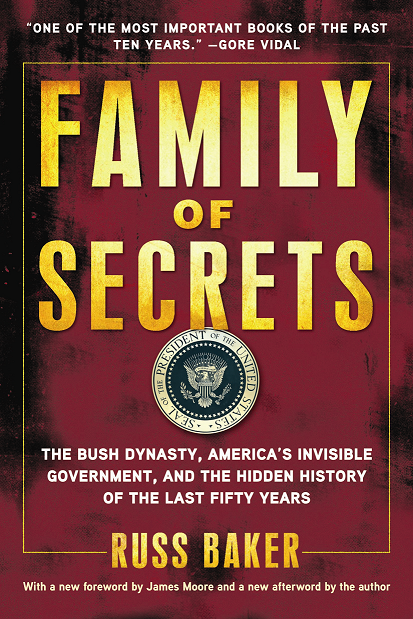
Family of Secrets: The Bush Dynasty, the Powerful Forces That Put It in the White House, and What Their Influence Means for America
From the Kennedy assassination to Watergate to Prescott Bush’s ties to Nazi Germany, the book Family of Secrets: The Bush Dynasty, the Powerful Forces That Put It in the White House, and What Their Influence Means for America, digs into the hidden history of the Bush family. Author Russ Baker takes on the Bush legacy with powerful investigative journalism. One review states that the chapter on George W Bush’s private life is worth the price of the book alone. Baker also reveals George H Walker Bush’s connections with the CIA began in 1953, not when he publicly joined the agency in 1976. Bush’s oil companies were used as fronts for the intelligence agencies around the world with an agenda controlled by power brokers. Award winning investigative reporter Russ Baker also tells us why this insight into the Bush family is important to know now during the Obama administration.
Russ Baker:
- I was training investigative journalists in Yugoslavia 2002, and when I traveled Europe people were asking me what has happened to your country. I knew superficially what happened, but I didn’t know why it happened.
- From the son, I looked into the father,because had the father not been president, the son wouldn’t be president.
- George HW Bush had a secret past more than 20 years, preceding his appointment to the CIA in 1976
- George HW Bush, starts up offshore drilling companies that make no sense, very few customers, very few rigs, but he’s traveling all over the world. It’s perfect intelligence cover.
- They even put a rig in Cuba before the Bay of Pigs, they had Cuban exiles working there
- Ok, he’s working in intelligence, I assume that’s what he’s doing while he was a Congressman, an oil man, an ambassador to the UN. This is fascinating and also deeply troubling.
- I think what we’re looking at is a permanent construct of power.
- Journalists: I don’t think they’ll say so publicly but privately they’ll tell you how scared they are, whether for their personal safety or they don’t want to lose their job.
- The Bush dynasty was the ultimate triumph of the military industrial complex that Dwight Eisenhower, a formal general had warned us about.
- Harry Truman speech on the CIA: I signed the Act that created the CIA, but they never told me the kinda things that they got in to.
- The Bush Family: You see them as the ultimate operatives on behalf of the coalition of powerful Wall St. interests, military contractors, resource extraction mining interests, going all over the world to bring back the plunder essentially.
- They (Bush family) are the representatives, they are not the bosses.
- Obama: It’s very difficult to go against these interests. Our economy runs on war, it’s very difficult to undo that.
- I, myself was naive, and I covered politics for more than 20 years, and I never understood the extent at which democracy is subverted.
- Power in America resides in pool of people about whom we’ve never even heard, the only way you find out is if you look at these Fortune 1000 lists. This is not a conspiracy, it’s just the way things work.
- Michael Smith: When I was starting out and learning how this country works, I was reading C.Wright Mills, Ferdinand Lunberg.
- Guest host Jim Lafferty: This is a matter of commonality of interests that run this country
- Whowhatwhy.com – specialized in doing deep politics investigation – historic epics that haven’t been properly explored.
- Everybody hated Kennedy except the people.
Guest – Russ Baker is an award-winning investigative reporter with a track record for making sense of complex and little understood matters. He has written for the New Yorker, Vanity Fair, the Nation, the New York Times, the Washington Post, the Village Voice and Esquire. He has also served as a contributing editor to the Columbia Journalism Review. Baker received a 2005 Deadline Club award for his exclusive reporting on George W. Bush’s military record. He is the founder of WhoWhatWhy/the Real News Project, a nonpartisan, nonprofit investigative news organization, operating at whowhatwhy.com.
——————–

MondoWeiss: The War of Ideas In the Middle East
Did the recent bombing of Gaza and killing of 1400 Palestinians create a breakdown in the traditional Jewish American support for Israel? In the first of its kind, last month’s J Street Conference brought together 1500 people to the meeting aimed at ending the Arab-Israeli and Israeli-Palestinian conflicts peacefully and diplomatically. The conference is a political arm of the pro-Israel pro peace movement that also lobbied more than 100 members of Congress to press forward with the peace process and two state solution.
Meanwhile the Boycott Divest and Sanction movement gains momentum and Code Pink activists continue to protest, demonstrate in and around Gaza. As many listeners may know living conditions in the Gaza Strip has deteriorated. Salt water has contaminated a large percentage of drinking water and is damaging the kidneys of Palestinian children.
Philip Weiss:
- J Street is the alternative Israel lobby or alternative Jewish lobby because they identify themselves as a Jewish organization.
- They are taking on AIPAC, which has traditionally taken on the role to shape the US response to Israel.
- It was landmark moment in changing the original purpose of the Israel lobby to speak with one voice
- Here’s a lobby that says. . guess what? Jews are not going to speak with one voice, we’re going to have a lot of different voices that contend on this issue.
- Finally there’s a little bit of fragmenting of this reactionary force of AIPAC and the Israel lobby.
- 160 Congressmen were at the J Street Conference in Washington DC. You saw lefty-Jews with a spring in their step. The conference disappointed me in a number of ways, it only had Zionists, progressive Zionists. It condemned the Goldstone Report
- There were some bright lights at this conference. It’s not that different from AIPAC in a number of ways.
- There was a strong sense if you were to speak there (J Street Conf.) you had to be a Zionist.
- Zionist: I think it is support for a Jewish state. We need a Jewish state because we could be persecuted again and we need to go somewhere.
- Generally the rank and file of these people are old Jewish leftys. J Street represents a break in the heresy. The heresy is that we speak with one voice. This process of colonization continues in the West Bank, unabated basically.
- One state with an apartheid system and that’s going to be the struggle. I think if you scratch any Jew in this country he has some connection to Israel. For me it was the 9/11 thing. As they say.
- My brother said, I demonstrated against the Vietnam War, as I did, but my Jewish newspaper says the Iraq War could be good for Israel.
- I couldn’t avoid the issue anymore then when I confronted the issue I became this Palestinian Solidarity person.
- The desperation is heightened by the fact there’s so little recognition of that in the United States.
- Goldstone, a Jewish Jurist from South Africa who fought apartheid and Bosnian war crimes, that he could say. . look this is persecution . . and that can be so ignored, defied and stomped on in the United States. .it’s a horror.
- Our country can affect the situation ( In Gaza / West Bank)
Guest – Peter Weiss, longtime journalist and regular contributor to the Nation and a fellow at the Nation Institute Philip is the author of two books a political novel, Cock-A-Doodle-Doo, and American Taboo, an investigative account of a 1976 murder in the Peace Corps in the Kingdom of Tonga. His website is called Mondoweiss, it explores Middle East policy and Israel/Palestine issues. Philip attended the J Street Conference 2 months ago.
————————————————————–
Criminalizing Dissent, FBI Intrusion, Habeas Corpus, Human Rights, Prison Industry, Supreme Court, Surveillance, Truth to Power
Podcast: Play in new window | Download
Updates:
——-
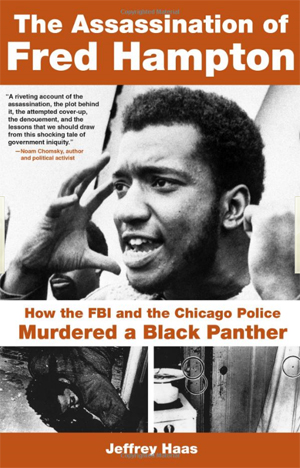
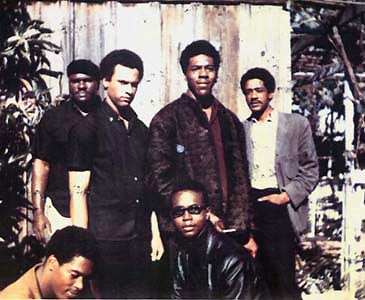
THE ASSASSINATION OF FRED HAMPTON: How the FBI and the Chicago Police Murdered a Black Panther
We are pleased to have with us author and National Lawyers Guild attorney Jeff Haas. His new book The Assassination of Fred Hampton: How the FBI and the Chicago Police Murdered a Black Panther, is a page turning true crime story chronicling the tragic murder of Fred Hampton, the young leader of the Chicago Black Panthers. On a dark December day, Chicago police unloaded 80 rounds into Fred Hampton’s bedroom, leaving his pregnant fiancee Deborah Johnson in shock having barely survived. The killing horrified the black community in Chicago. As Haas describes, it took 13 years of grueling litigation from the attorneys at the People’s Law Office collective to finally convict the FBI, the Cook County States Attorney Edward Hanrahan, and the Chicago police for their summary execution Fred Hampton. He was only 21. Today, 40 years later, the People’s Law Office still active in suing and scandalizing the Chicago police for torturing and extracting false confessions from over l00 black men in a south side police station. Jeff Haas Book Tour Dates NYC
Jeff Haas:
- Fred Hampton started in high school, he led a walk out because black girls weren’t considered for Homecoming Queen. He took on the issue of not having enough black teachers and black administrators. Wherever he saw injustice, he felt compelled to deal with it. At ten years old, he started his own breakfast for children program.
- He came from a warm family, in Louisiana, on farms where his grandparents had been slaves.
- I came from Atlanta, GA, a middle class Jewish family. I grew up as many were somewhat raised by blacks, there was a black man who worked at our farm who I idolized. He taught me how to plow with a mule, drive a tractor, things most kids don’t know how to do.
- At school in Chicago, my classmates consisted of John Ashcroft and Bernadine Dorhn. Ashcroft didn’t have much to say in those days. I was with Dr. King, when he marched in Chicago, the anti-war movement was at a peak, the black power movement was strong. There had been riots in the cities.
- Kennedy and King had been assassinated in 1968. It seem like things were headed for the falls, or the rapids.
- I met Fred Hampton because I was in Chicago. He was then head of the NAACP youth branch. A dynamic speaker. Fred could talk to welfare mothers, he could talk to law students, he could talk to gang kids.
- He said basically, if you’re not going to do any revolutionary act by the time you’re 20, you’re dead already.
- The Chicago panthers grew quickly from Nov. 1968, when they started, until his death in 1969.
- Forty years ago, my partner knocked on my door. I opened it and he said the chairman is dead, the pigs vamped on his crib this morning.
- It took me, how the police had killed him. I went and interviewed his fiancee. She told me they entered a room where Fred was semi-conscious.
- First we and with a lot of support from the National Lawyers Guild, the Center for Constitutional Rights filed a civil suit to find out what happened.
- Quickly we found out that the police raid was a shoot in, not a shoot-out. Ninety police shots to 1 shot from the Panthers. We also found out 3 years into the investigation that the FBI had provided a floor plan to the raiders, that showed the bed where Fred would be sleeping.
- And that bed was where the shots converged, so we pursued discovery.
- We found out that the FBI sent a letter to head of the Blackstone Rangers, a year before Fred was killed saying, dear brother, Fred has put a hit out on you. The FBI wanted someone else to do their dirty work.
- The FBI worked on creating conflict between the 2 groups. One of the objectives of the COINTELPRO program was to prevent the rise of a messiah who could unify and electrify the masses.
- Fred Hampton had a slogan, you can kill the revolutionary, but you can’t kill the revolution.
- You can still kill a freedom fighter, but you can’t kill freedom fighting. I think losing a black leader like Fred Hampton does set back the people’s struggle. His spirit, the non-compromising pursuit of justice lives on also.
Guest – Jeffrey Haas is an attorney and cofounder of the People’s Law Office, whose clients included the Black Panthers, Students for a Democratic Society, community activists, and a large number of those opposed to the Vietnam War. He has handled cases involving prisoners’ rights, Puerto Rican nationalists, protesters opposed to human rights violations in Central America, police torture, and the wrongfully accused.
—————————————————————————————————–
The Center For Constitutional Rights: Acorn Lawsuit
The Center for Constitutional Rights has filed a lawsuit on behalf of the community group ACORN. ACORN was recently barred funding by a Congressional Resolution. The lawsuit charges that Congress unfairly targeting the organization and is seeking a temporary restraining order to prevent the government from reallocation funds meant for ACORN. The Center for Constitutional Rights Legal Director Bill Quigley says it’s an outrage to see Congress violating the Constitution and politically grandstand. Bill continues – “With all the crimes and infractions committed by banks, pharmaceutical companies, and private government contractors, they have been rewarded with bailouts, tax credits, and billions of dollars in new contracts. Congress bowed to FOX News and joined in the scapegoating of an organization that helps average Americans going through hard times to get homes, pay their taxes, and vote. Shame on them.”
Bill Quigley:
- ACORN is an association of community organizations that has about 500 hundred thousand members across the United States. They’ve been in existence for some 35 years. They do voter registration, housing foreclosure work, issue organizing.
- In the last five years or so, they’ve registered nearly 2 million to vote. So, they’ve been the target of the right wing for some time. They do very aggressive outreach to get folks who haven’t been registered.
- Regarding sex scandal: The people in those offices, they’re low paid workers, but their goal is to help first time home buyers. So, these tricksters, they were into prostitution, the truth is the people at ACORN would try to help you whether you were a prostitute or not.
- ACORN tried to give advice and some of the people went too far concealing the nature of their work.
- Apart from the politics of punishing people for registering folks to vote, there is a specific part in the US Constitution that’s been in there since the beginning that prohibits what’s called a Bill of Attainder
- Constitution of the United States, Article I, Section 9, paragraph 3 provides that: “No Bill of Attainder or ex post facto Law will be passed.”
- We’re familiar with what happened in England, in Parliament, people in parliament would get all fired up about something and they would just have a specific bill naming a person or organization, and they were outlawed, they could receive the benefits of being a citizen. So the Congress outlawed that.
- So, what they did here, is without any hearings before Congress, without any investigation whatsoever, just based on the rumors and the FOX news sort of stuff. They said that ACORN and any of subsidiaries, or even allies, couldn’t receive any federal funds.
- A one sentence prohibition. It impacts millions of dollars of funds, not going to big salaries.
- It effects ACORN Housing organizations around the country. A lot of the housing works stopped.
- ACORN people have come to us and say we’ve been to law firms around this country but no one can help us now, because we are so stigmatized.
- The framers of the constitution didn’t want Congress to be the prosecutor, judge jury and executioner. We have a way to do this.
- If there’s more to this than just the rumor mongering that’s been done, then there are ways to do it. HUD, Department of Justice, IRS, can say, we suspect you’re misusing the funds and set up a hearing.
- The right wingers didn’t want to go this way, they did an end run and we’re hoping that the courts are going to set that aside.
Guest – CCR Legal Directory Bill Quigley. Bill has been an active public interest lawyer since 1977 and worked with a wide range of public interest organizations on an equally wide range of issues. He has litigated numerous cases with the NAACP Legal Defense and Educational Fund, Inc., the Advancement Project, and with the ACLU of Louisiana, for which he served as General Counsel for over 15 years.
———


Film Professor Sues University for Violating Right to Academic Free Speech
In the fall of 2007, Dr. Terri Ginsberg was hired to teach a film class at the North Carolina State University focusing on the media treatment of the Israeli-Palestinian conflict in 2008. She was also hired to help program a Middle Eastern film series. As Terri details in a grievance the director of the film studies program and the director of the Middle East studies program made a series of decisions that violated her academic freedom. Among the decisions was the limiting of Terri’s invovlement in the series that she had initially been hired to curate. Another was the criticism of an introduction she gave at the screening of the Palestinian film “Ticket to Jerusalem” as biased and overly political.
The grievance filed alleged violations of her First Amendment and equal opportunity rights under the University Code. Her grievance was dismissed on the grounds that it was filed too late and that she was no longer a university employee. Terri has now filed a lawsuit, one mention in the complaint states that in the views of several faculty, Jews who question and challenge the zionist colonial project are non-conforming Jews and therefore are outsiders and dangerous.
Terri Ginsburg / Attorney Rima Kapitan
- I was given strong indication the teaching professorship would convert into a permanent tenure track position.
- That I should apply for it and that I was a shoe in for that position. So I moved down from New York City, where I lived for many years to Raleigh, NC. Not long after I got there, a number of incidents occured that led me to believe the conversion was not going to take place.
- Key people in the faculty were very unhappy with my perspectives on the Israeli – Palestinian conflict and on Zionism. I am a Jewish Anti-Zionist, and I wanted to supply a genuinely balanced perspective on the issue of Zionism and the history as it has been depicted in cinema
- I showed Israeli films, I showed Palestinian films, I showed the array of cinema on this topic.
- This is a large campus upwards to 40 thousand students.
- I was asked to resign from a middle eastern series after I gave an introduction to a film that was pro-Palestinian.
- Attorney Rima Kapitan: Right now we’re alleging they violated her North Carolina Constitutional Rights. They breached her right to academic freedom and equal protection under the law.
- Terri covered every path in North Carolina, the only thing left is a constitutional claim in North Carolina.
- Under the equal protection claim, we’re saying Terri was treated differently because of her religion.
- Terri: The atmosphere is increasingly worse not only for Jews but anyone who speaks out on this issue, especially for non-tenured and temporary labor.
- I had minimal support from the AAUP, they failed until we put out a petition that received over 500 signatures.
- Most faculty on campus were afraid to communicate with me, over email, over telephone.
- I think the Israel-Palestine conflict is one of the core issues facing the United States.
- Film is a small field and gossip travels fast. I’m unemployed. When I did my research on the holocaust, I couldn’t ignore the structural relationship between the holocaust and the Nakba.
Guest- Dr. Terri Ginsberg joins us in the studio today she has a Ph.D. in Cinema Studies from New York University and previously taught in the Jewish Studies Program at Dartmouth College and the Cinema Studies Program at Rutgers University. CODZ
Guest – Attorney Rima Kapitan – staff Attorney at CAIR-Chicago. She is a graduate of DePaul University College of Law and Indiana University and a partner with Amal Law Group, LLC, a general practice law firm. Her main areas of interest and specialization are plaintiff-side employment discrimination, civil rights law, workers compensation and estate planning. She is active in the National Lawyers Guild Middle East Committee.
———————————————-
Afghanistan War, Censorship, Civil Liberties, Climate Change, Criminalizing Dissent, FBI Intrusion, Habeas Corpus, Human Rights, Surveillance, Targeting Muslims, Torture, Truth to Power
Podcast: Play in new window | Download
Updates:
—————————–
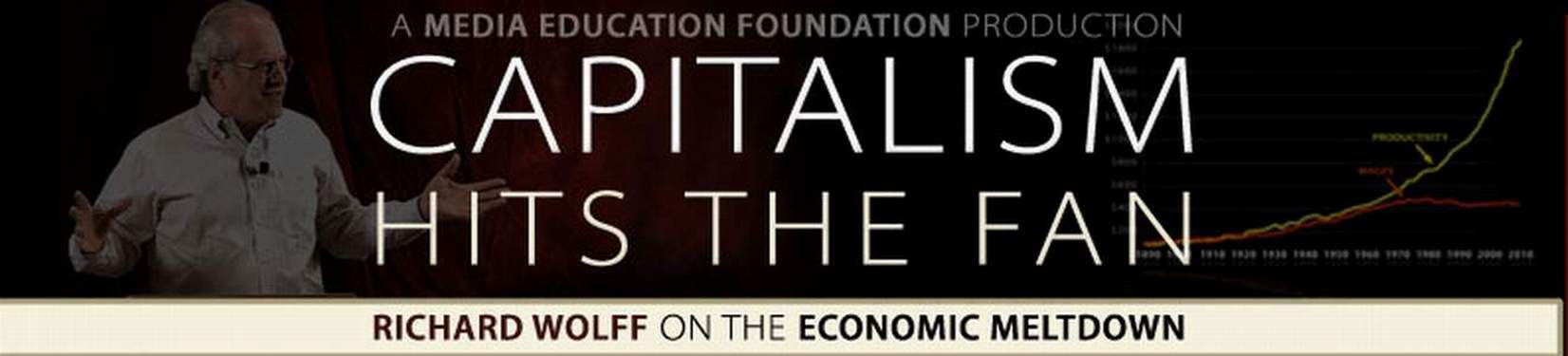
Capitalism Hits the Fan: The Global Economic Meltdown and What to Do About It (THE BOOK)
Today we welcome back Rick Wolff, Professor of Economics at the University of Massachusetts to discuss his new book titled Capitalism Hits the Fan: The Global Economic Meltdown and What to Do About It. In his book, Rick takes the reader back to 2005 and step by step reveals how policies, economic structures and wage-to-profit systems led to a global economic collapse.
Rick Wolff will give us an update on why the media claims the recession is over, he also tells us if there be another leg down as predicted in the September 21st interview. Another leg down meaning, will the economy continue to drop? This was mentioned because of the way people were investing, investing in a way that expected the market to drop.
Rick Wolff:
- The origin of the economic crisis goes deep into history. It’s one of the key things that people don’t understand or want to face. Roots of a System’s Crisis
- We were a country founded by foreigners coming here, they got rid of the indigenous population. They established a mix system. Capitalism on one hand, with employers and employees, and then self employed farmers and small crafts people, and in the Southern US, slavery.
- When the dust cleared, capitalism came through, it destroyed slavery and suboridinated the self employed to be small and on the margins.
- For 150 years – 1820-1970 the growth of capital was outrunning the available labor supply. Laborers had options, could go West.
- For 150 years, the goods and services a person could buy from an hour of their wages kept going up. It produced a strange and unusual notion that you were blessed, if you worked hard you would make more money.
- That Americans could have a dream like that. . their children could have a better life and deliver on the promise.
- It drew millions of immigrants from all over the world etc.
- Then after the 1970s capitalism reminded us that it is not a guarantee that if you work hard you will be rewarded.
- In the last 30 years wages have not anymore gone up. It’s a sea change in our culture’s history.
- Wages stayed the same for these reasons:
- The arrival of the computer that substituted people for machines on a mammoth scale
- The movement of corporations to other parts of the world to take advantage of cheaper labor.
- Women and immigrants moving into the paid labor force. This plunged the US economy into a disaster zone.
- The end of rising wages. Americans today work 20 percent more hours a week, than their counterparts in France, Germany or Italy. They are exhausted physically. The families are in disarray.
- Then to consume more, live the American dream, they borrowed on credit, the likes of which no working class in the history of the world has ever done.
- The average debt of US family in the 1920s equaled about 1/3 of its annual income. In 2007, the level of debt equaled 125 percent of annual income. At the same time, the last 30 years have been greatest boom of profitability of American corporations.
- Where did the money come from to lend unprecedented amounts? The money came from the boom in profits made possible by there no longer being a rise in wages. You not only get the profitability of a flat wage situation but you get the added income from the interest that comes from lending.
- The reforms and regulations we’ve seen, don’t work. The only thing that got Americans working again after a 10 year depression – 1929-1939, was not economic reform and regulation, it was something called WWII.
- Corporations used their profits to weaken reform laws, buy politicians, create army of Lobbyists.
- The American people MUST demand different responses to this crisis than what there was in the past.
- Handing corporations the citizen’s tax money as bail out is folly.
- We have 15 million adults looking for work, 10 million more are discouraged and have given up.
- The first thing this government should do is provide work for the unemployed.
- Not bailing out the banks. The private sector has failed in the United States.
- The government should support enterprises that workers run them, form them as their own enterprises in a collective way that is different from capitalist corporations
- Let workers choose if they want to work for an enterprise run by workers or capitalists. Let us as consumers choose from good and services produced in a non-capitalist way alongside the capitalist.
Guest – Rick Wolff, Professor of Economics at University of Massachusetts at Amherst. In his new book Capitalism Hits the Fan: The Global Economic Meltdown and What to Do About, Rick takes the reader back to 2005 and step by step reveals how policies, economic structures and wage to profit systems led to a global economic collapse.
—–
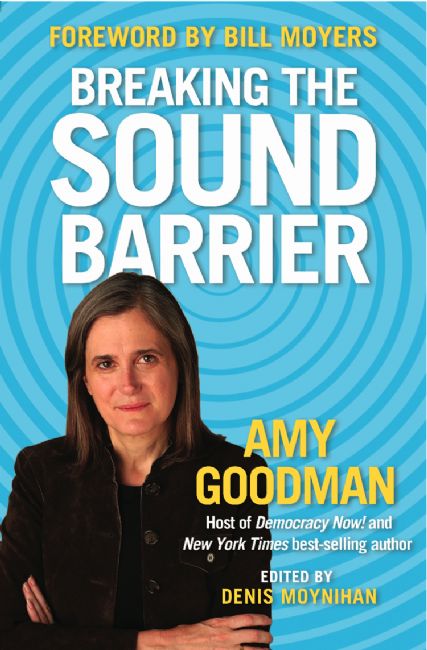
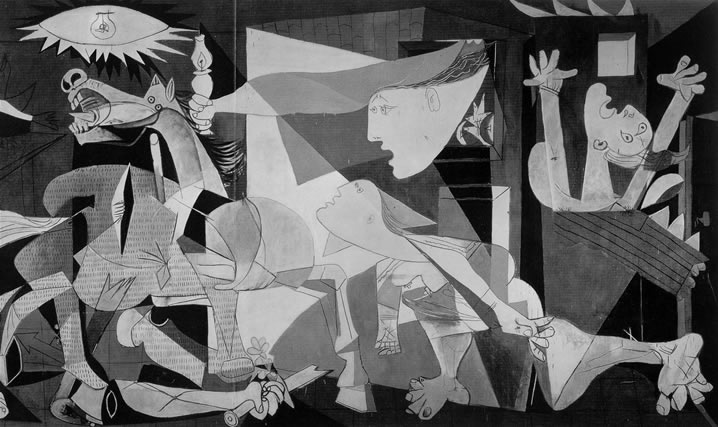
Amy Goodman: Breaking the Sound Barrier.
Today, we’re very pleased to talk with award-winning investigative journalist and syndicated columnist, author and the host/executive producer of Democracy Now! Amy Goodman. Her new book titled Breaking the Sound Barrier is a collection of wide-ranging articles reminding the reader of what true independent journalism can do. Amy’s style of journalism breaks through the corporate media noise with stories from community organizers in New Orleans to the brave soldiers resisting war in Iraq and Afghanistan. Truthout
Author and journalist Chris Hedges writes : “Amy Goodman is one of the most important voices in America. She defies the noise and clamor of celebrity gossip. She challenges the manipulation of information and dissemination of lies by the power elite. She refuses to pander to a culture where news is seen as another form of entertainment designed to bolster corporate profits. She holds steadfast to the core values of our trade. Her integrity and honesty remind us that a culture that cannot distinguish between illusion and reality dies.”
Amy Goodman:
- Picasso’s famous anti-war painting Guernica in front of the UN Security Council. When Colin Powell went to the UN and they had a press conference, this painting was the backdrop and so they shrouded it in a blue curtain. We have to rip that shroud every which way, we have to tear it, because that’s what journalism is all about.
- Most of the voices in these columns are the people we interview on Democracy Now. The media is ahistoric, it whites out history. How are young people supposed to figure out what to do when they have no sense of what came before? What are the models, what works, what doesn’t work?
- Look at the money shifting from those who least have it to those who most have it, whether we’re talking about the economic meltdown. Obama surrounding himself by the Goldman Sachs folks.
- The model of community organizing has to be adopted by people all over the country.
- It’s not going to happen because there’s one person in the white house.
- The people with money and power walking the halls of the west wing, whispering in the commander in chief’s ear, and he says, if I do that, they will storm the Bastille.
- If there’s no one out there that he’s pointing at, we’re all in very big trouble.
- Breaking the Sound Barrier is the name of the column I do every week and the column appears in more than a hundred newspapers around the country. I think it is very important for people who consider themselves activists in this country hold their leaders accountable.
- It’s the right for people to conduct their lives in this country without being spied on or infiltrated.
Guest – Amy Goodman, host and executive producer of Democracy Now!, a national, daily, independent, award-winning news program airing on over 800 TV and radio stations in North America. Time Magazine named Democracy Now! its “Pick of the Podcasts,” along with NBC’s Meet the Press.
Goodman is the first journalist to receive the Right Livelihood Award, widely known as the ‘Alternative Nobel Prize’ for “developing an innovative model of truly independent grassroots political journalism that brings to millions of people the alternative voices that are often excluded by the mainstream media.” She is also one of the the first recipients, along with Salon.com blogger Glenn Greenwald, of the Park Center for Independent Media’s Izzy Award, named for the great muckraking journalist I.F. Stone.
—————————————————————-
Civil Liberties, Criminalizing Dissent, Extraordinary Rendition, Guantanamo, Habeas Corpus, Human Rights, Torture, Truth to Power
Podcast: Play in new window | Download
Updates
—–
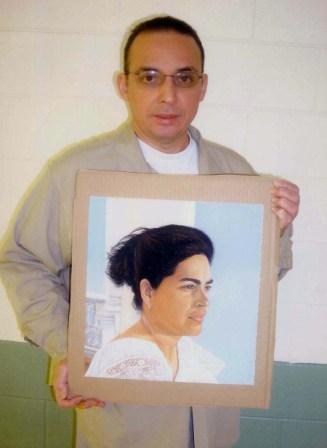
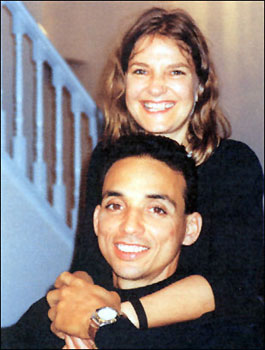
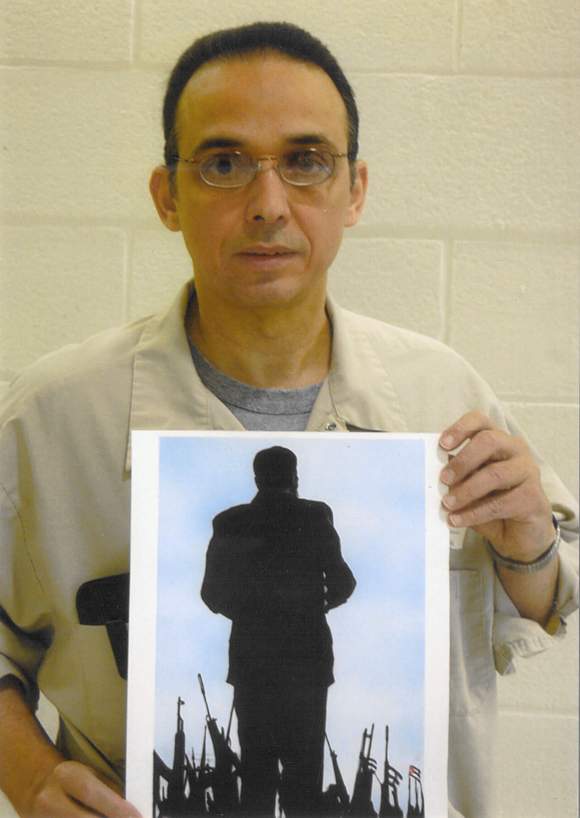
ENCORE: Cuban Five Update: The Re-sentencing of Antonio Guerrero
Earlier this month, Federal Judge Joan A Lenardo replaced the life sentence for Antonio Guerrero, one of the Cuban Five. Mr. Guerrero, a United States citizen, was convicted of spying for Cuba while working at the Naval Air Station in Key West. His sentence was reduced to almost 22 years, which means he could be out of prison in nearly seven years. Mr Guerrero’s attorneys had asked for the sentence to be reduced to 240 months, but Judge Lenardo set it at 262 months.
Mr. Guerrero’s lawyer, Len Weinglass told the New York Times, it was an odd decision, he said “You have a man who was on a military base but who didn’t take a single classified document and no one testified that he injured U.S. national security, but the judge still rejects the prosecutors’ request to lighten the sentence.” Transcript of Hearing
Len Weinglass:
- Antonio Guerrero who I represent, was originally sentenced to life in prison.
- The appellate courts reduced the life sentence for the conspiracy to commit espionage against 3 of the Cuban Five
- The decision only remanded life sentences for ultimately 2 of the Cuban Five including Antonio Guerrero
- We returned to Miami for the re-sentencing on October 13. Prior to the re-sentencing, we negotiated with the government on the issue of re-sentencing alone, making it clear there was no admission of guilt on the underlying charge, which we are still contesting on a later collateral attack.
- We agreed that it should come down from a life sentence to a period of 20 years.
- In Miami, the judge took the very unusual step of setting the agreement aside, and set the term to 21 years and 10 months.
- You can’t give a life sentence ( in this case) on what they intended to get, you can only give a life sentence on top secret information they did get. So, the original life sentence was wrong.
- When we got into the re-sentencing hearing, she got back to her original position as if the appellate court hadn’t ruled.
- I got very upset, the courtroom was packed. Packed with the same old crowd. The crowd in Miami that backs these para-miltary forces, they put the widows up front.
- I got upset at what I sought to be a climate that was being generated in that hearing and so I reminded the judge very forcibly that she was sentencing an individual not a country.
- I had given the court government documents from the Bureau of Prisons, all of them saying that Antonio Guerrero who was serving a faulty life sentence, and sent to a maxium security prison, which he shouldn’t have been sent, because the sentence was wrong.
- But the warden, his counselor and the supervisor of the unit, all extolled his behavior and most significantly pointed out that he had helped save a number of inmates all of whom were doing life sentences, from an encouragable future, by training them in English and Math and overseeing them getting their GED.
- At that time, she was about to pronounce sentence, then she stopped, walked off the bench.
- When the judge came back, the first thing she did is recite a Supreme Court decision, all federal judges must sentence an individual according to his character.
- Antonio was 39 when he was arrested and he will be nearly 60 when he is released. That’s the heart of a lifetime.
- There was no acknowledgment of context here. That this was provoked by a pattern of violence by the US directed at Cuba. Where more than 3000 people have died in the past 40 years from violence coming from Southern Florida.
- The Cuban Five performed their task, nobody was harmed, no property damaged and they end up with life sentences for that operation.
- It came to light that the federal government was paying members of the press in Miami as part of their anti-Castro campaign to write articles about this case that were highly prejudicial. People who were reporters but were on the federal payroll.
- Can the government be responsible for creating a prejudicial atmosphere?
- He was at the most hard-nosed prison and after seven years the warden of that prison wrote the Regional Bureau of Prisons, asking that Antonio be released from that prison. He doesn’t belong, there, he is a lovely sensitive man.
Guest – Attorney Len Weinglass, who represented the Cuban Five, as William Kunstler’s younger partner, Len Weinglass was considered the work horse of the defense team. He’s worked on a number of political cases including the Pentagon Papers trial and the Angela Davis case. He’s a Yale Law School graduate and former U.S. Air Force Captain.
—–
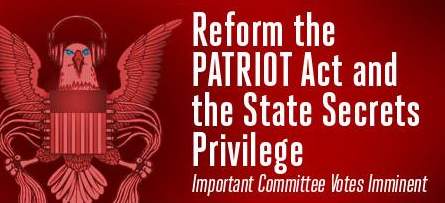
Will The Sun Set On Surveillance? Patriot Act Reform
Recently, the House of Representatives introduced their own USA Patriot Act reform bill, responding to the Patriot Act renewal bill approved by tthe Senate Judiciary Committee. The Electronic Frontier Foundation says it’s a significant improvement over the earlier Senate bill that gave more authority to government spying power. The renewal bill was introduced by House Judiciary Committee Chairman John Conyers, Jr. and others including Civil Liberties Subcommittee Chairman Jerrold Nadler; and Crime, Terrorism, and Homeland Security Subcommittee Chairman Bobby Scott. These bills are proposals that could pave the way to dismantle the broad surveillance and overreaching executive power currently intact.
Kevin Bankston:
- Patriot passed after 9/11/2001 – a lot of the provisions were set to expire in 2005, most of those were renewed, but there were 3 provisions left to expire in the end of 2009.
- Provisions that expanded the government’s power to get orders from the Foreign Intelligence Surveillance Court or any tangible thing, mostly business records. They’re mostly called section 215 orders, under the Patriot Act section 215.
- Roving wiretaps, more accurately roving “john doe” wiretaps. One that doesn’t name target, or address of target. (These sound the like the warrants our founders rebeled against)
- Lone Wolf authority, whereby the government can get wiretapping authorities from the FISA court for people who are unrelated to any foreign power but are suspect to engage in or preparing to engage in crimes related to terrorism.
- The Lone Wolf authority begins to un-moor from the Foreign Intelligence Surveillance Court – it looks to be unconstitutional under the fourth amendment. Most in Obama Administration want this to expire.
- Those are the 3 set to expire. Though worrisome, more worrisome is the National Security Letter Authority, whereby the FBI can write a letter to the court, without suspicion of terrorism, and get bank, telephone and internet records.
- The Justice Act – Senator Feingold / Durman – reform patriot act authorities- including FISA surveillance act passed last summer, which allows foreign surveillance of Americans.
- Also, repealing telecom immunity – Reforming the Patriot Act without addressing FISA is like rearranging deck chairs on the Titanic.
- Unfortunately, Senator Leheay, instead of sponsoring Feingold’s Justice Act reform bill, came out with his own bill that didn’t address the FISA amendment acts at all. That was the bill the Judiciary Committee considered 6 weeks ago.
- The Republicans offered to remove reforms to the already watered down bill, and the Republicans say they got their reforms from the Obama Administration. The Obama Administration is not only falling down on its promise to reform the Patriot Act, it is working through Republicans to make these bills even worse.
- So that’s when the USA Patriot Act reform bill, responding to the Patriot Act renewal bill approved by the Senate Judiciary Committee was proposed.
- We have 2 lawsuits, the first was brought against AT&T in early 2006 based on news reports and whistle blower evidence based on an AT&T technician info, that the NSA had backdoor access to key domestic communication switches.
- Whereby the NSA was sucking up millions upon millions of communications and then sorting out the stuff they were interesting in.
- If the telecom companies aren’t willing to say “NO” when the government secretly comes to them and asks them to break the law, then all of our privacy is in big trouble.
- We sued AT&T and then Congress passed this Telecom Immunity last summer, and our case along with others were dismissed. If the Repealing of the Telecom Immunity passes, our cases will be revived.
- Obama can end the Telcom Immunity right now, and have Attorney General Holder withdraw the certification on which the immunity is based.
Guest – Kevin Bankston, senior staff attorney specializing in free speech and privacy law, was the Electronic Frontier Foundation’s Equal Justice Works/Bruce J. Ennis Fellow for 2003-05. His fellowship project focused on the impact of post-9/11 anti-terrorism laws and surveillance initiatives on online privacy and free expression. Before joining EFF, Kevin was the Justice William J. Brennan First Amendment Fellow for the American Civil Liberties Union in New York City. At the ACLU, Kevin litigated Internet-related free speech cases, including First Amendment challenges to both the Digital Millennium Copyright Act (Edelman v. N2H2, Inc.) and a federal statute regulating Internet speech in public libraries (American Library Association v. U.S.). Kevin received his J.D. in 2001 from the University of Southern California Law Center, and received his undergraduate degree from the University of Texas in Austin.
——————————————————————————–
Afghanistan War, Civil Liberties, Criminalizing Dissent, FBI Intrusion, Habeas Corpus, Human Rights, Surveillance, Targeting Muslims, Torture, Truth to Power
Podcast: Play in new window | Download
Listen to Law and Disorder live Monday November 9 at 9:00AM EST WBAI 99.5 FM: At 9:30 AM Michael Ratner Interviews Democracy Now’s Amy Goodman on her new book Breaking the Sound Barrier – Based on her columns for King Features Syndicate, this wide-ranging new collection of articles breaks through the corporate media’s lies, sound-bites, and silence. In place of the usual suspects— the “experts” who, in Goodman’s words, “know so little about so much, explain the world to us, and get it so wrong”
Updates:
Michael Ratner Update: Congress Should Not Reject Goldstone Report
—–

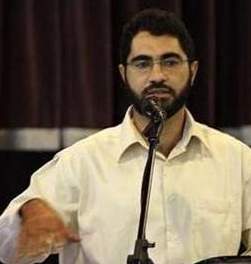
FBI Threaten Deportation To Muslim Man Refusing To Be Secret Informant
It was in 2004, that the FBI began to apply intense pressure on Foad Farahi to become a secret informant and spy on members of his mosque. Farahi, an Imam in Miami Florida refused. As many listeners may know, an imam is among the designated leaders in a community or mosque who leads prayers during gatherings and helps others understand the teachings of Islam. The FBI saw Farahi to be in a unique position to know local Muslim men. Farahi had met several South Floridians who allegedly had links to terrorism, including Jose Padilla.
Farahi refused to become a secret informant and the FBI knew he was in a vulnerable position. His student visa expired and he had applied for political asylum that could allow him to stay in the U.S. indefinitely. More than 2 years had past and in 2007, two agents showed up again asking Farahi to become an informant, he refused. In late 2007 Farahi was at a routine hearing for his political asylum case when he was told by his attorney that the ICE has a file with evidence that he is involved with a terrorist case. He was later presented with an ultimatum to drop the asylum case and leave the United States voluntarily, or be charged as a terrorist. Farahi agreed to voluntarily leave the US, but his passport expired, that gave him a little more time, and he later realized the government was bluffing and then hired attorney Ira Kurzban, a well-known advocate for immigrants’ rights.
(Law and Disorder archive Targeting Muslims Page 1 / Page 2)
Kurzban asked the Board of Immigration Appeals to throw out Farahi’s voluntary departure order, they refused. The legal battle has put Farahi’s immigration status in limbo. Kurzban told the Miami Times quote I think the real issue is, does the government have the right to pressure people… to make them informants?” —- “It’s clearly modus operandi of the FBI to recruit people who are going to be informants and to use whatever leverage they can.”
Ira Kurzban:
- Foad as an Imam, did not want to spy on others, but said to the FBI he would help them anyway he could.
- He was then put into removal (deportation) proceedings.
- The guilt by association method that the FBI has been using as an intimidation tactic is very reminiscent of the McCarthy period.
- The judge who originally denied Foad’s hearing was dismissed.
- We are now at the 11th Circuit of Appeals and an oral argument has been set.
- Immigrantslist.org – Political Action Committee
- This case represents a much broader pattern by the FBI and the government in trying to intimidate people into working as informants.
- They’re desperate to get informants but they’re using upstanding citizens to do bad things.
- The tragedy is that they’re turning people who are friendly to the United States into enemies.
Guest – Attorney Ira Kurzban, an adjunct faculty member in Immigration and Nationality Law at the University of Miami School of Law and Nova Southeastern University School of Law and has lectured and published extensively in the field of immigration law, including articles in the Harvard Law Review, San Diego Law Review and other publications.
——–
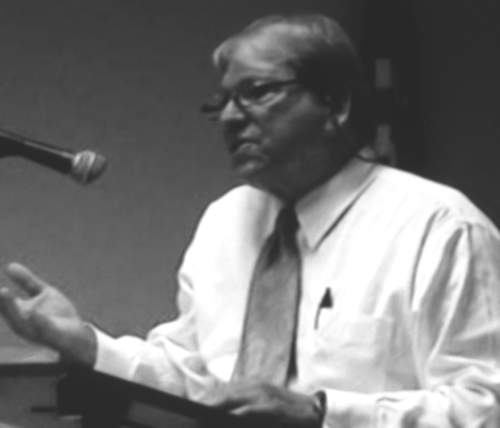
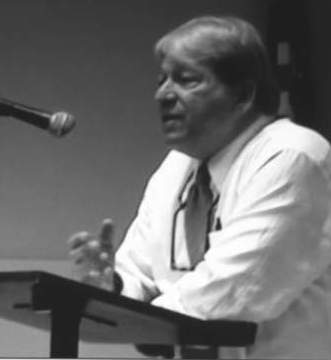
Michael Steven Smith – In Memory of Bob Boehm, Center for Constitutional Rights Vice President
On the recent eighth anniversary of the events of September 11th, our own Michael Steven Smith, draws a balance sheet on the state of democratic rights in America. He spoke to a captive audience on the long standing Five Towns Forum on Long Island in honor of recently deceased Center for Constitutional Rights Vice President Bob Boehm.
——-
Cuban Five Update: The Re-sentencing of Antonio Guerrero
Earlier this month, Federal Judge Joan A Lenardo replaced the life sentence for Antonio Guerrero, one of the Cuban Five. Mr. Guerrero, a United States citizen, was convicted of spying for Cuba while working at the Naval Air Station in Key West. His sentence was reduced to almost 22 years, which means he could be out of prison in nearly seven years. Mr Guerrero’s attorneys had asked for the sentence to be reduced to 240 months, but Judge Lenardo set it at 262 months.
Mr. Guerrero’s lawyer, Len Weinglass told the New York Times, it was an odd decision, he said “You have a man who was on a military base but who didn’t take a single classified document and no one testified that he injured U.S. national security, but the judge still rejects the prosecutors’ request to lighten the sentence.” Transcript of Hearing
Len Weinglass:
- Antonio Guerrero who I represent, was originally sentenced to life in prison.
- The appellate courts reduced the life sentence for the conspiracy to commit espionage against 3 of the Cuban Five
- The decision only remanded life sentences for ultimately 2 of the Cuban Five including Antonio Guerrero
- We returned to Miami for the re-sentencing on October 13. Prior to the re-sentencing, we negotiated with the government on the issue of re-sentencing alone, making it clear there was no admission of guilt on the underlying charge, which we are still contesting on a later collateral attack.
- We agreed that it should come down from a life sentence to a period of 20 years.
- In Miami, the judge took the very unusual step of setting the agreement aside, and set the term to 21 years and 10 months.
- You can’t give a life sentence ( in this case) on what they intended to get, you can only give a life sentence on top secret information they did get. So, the original life sentence was wrong.
- When we got into the re-sentencing hearing, she got back to her original position as if the appellate court hadn’t ruled.
- I got very upset, the courtroom was packed. Packed with the same old crowd. The crowd in Miami that backs these para-miltary forces, they put the widows up front.
- I got upset at what I sought to be a climate that was being generated in that hearing and so I reminded the judge very forcibly that she was sentencing an individual not a country.
- I had given the court government documents from the Bureau of Prisons, all of them saying that Antonio Guerrero who was serving a faulty life sentence, and sent to a maxium security prison, which he shouldn’t have been sent, because the sentence was wrong.
- But the warden, his counselor and the supervisor of the unit, all extolled his behavior and most significantly pointed out that he had helped save a number of inmates all of whom were doing life sentences, from an encouragable future, by training them in English and Math and overseeing them getting their GED.
- At that time, she was about to pronounce sentence, then she stopped, walked off the bench.
- When the judge came back, the first thing she did is recite a Supreme Court decision, all federal judges must sentence an individual according to his character.
- Antonio was 39 when he was arrested and he will be nearly 60 when he is released. That’s the heart of a lifetime.
- There was no acknowledgment of context here. That this was provoked by a pattern of violence by the US directed at Cuba. Where more than 3000 people have died in the past 40 years from violence coming from Southern Florida.
- The Cuban Five performed their task, nobody was harmed, no property damaged and they end up with life sentences for that operation.
- It came to light that the federal government was paying members of the press in Miami as part of their anti-Castro campaign to write articles about this case that were highly prejudicial. People who were reporters but were on the federal payroll.
- Can the government be responsible for creating a prejudicial atmosphere?
- He was at the most hard-nosed prison and after seven years the warden of that prison wrote the Regional Bureau of Prisons, asking that Antonio be released from that prison. He doesn’t belong, there, he is a lovely sensitive man.
Guest – Attorney Len Weinglass, who represented the Cuban Five, as William Kunstler’s younger partner, Len Weinglass was considered the work horse of the defense team. He’s worked on a number of political cases including the Pentagon Papers trial and the Angela Davis case. He’s a Yale Law School graduate and former U.S. Air Force Captain.
—————————————————————————————————————-
Civil Liberties, Criminalizing Dissent, FBI Intrusion, Habeas Corpus, Human Rights, Supreme Court, Surveillance, Truth to Power
Podcast: Play in new window | Download
Host Updates:
———————————————

Gaza Update: Code Pink Member Kitt Kittredge
Last month, the United Nations commission released the Goldstone Report, a scathing six hundred page account detailing how Israel committed war crimes against the Palestinians in the Gaza Strip. South African Judge Richard Goldstone who headed the report says the Israeli Defense Force and Israeli commanders must stand trial for war crimes committed during Operation Cast Lead earlier this year. Recently, Israeli Prime Minister Benjamin Netanyahu said he would never allow any Israel’s leaders or soldiers to be put on trial for war crimes. He called the Goldstone report a kangaroo court against Israel. War crimes are war crimes as many see it.
Meanwhile, living conditions in the Gaza Strip deteriorate, salt water has contaminated a large percentage of drinking water, damaging kidney function among the Palestinian children. Many who can afford it are trying to leave the region. To give us an update on the living conditions, we catch up with Code Pink member Kitt Kittredge, who has recently returned from Gaza.
Kitt Kittredge:
- It turned my stomach to think that we were handing off a less better world to our children
- So I thought I should step into the more active role of a concerned citizen and I found Code Pink.
- The conditions are deteriorating, it is a place under siege as you know, I consider it a very slow, deliberate strangulation of Palestine. Because it is a slow strangulation, it doesn’t make the news as would a total annihilation
- The biggest thing is they’re demoralized, depressed and diminished sense of hope.
- Unemployment is up more than it was in March, and women are bearing the burden of that.
- Goods are less available, and they are extremely expensive, Israel determines what goes in and when.
- Less than 15 percent of what is really needed.
- The water out of the tap is salty, the showers are cold. The salt water is coming into the wells, the desalinization plant was destroyed, and now the children are drinking the salt water, and they have severe kidney damage.
- It was very exciting to go to Gaza in September and work with the Palestinians on the Gaza Freedom March scheduled for December 31, 2009
- International Surge To End the Siege – GazaFreedomMarch.org
Guest – Kitt Kittredge – Code Pink member, recently returned from the Gaza Strip.
———–


Decriminalization of Drug Possession
Decriminalization of drug possession has now gone into effect for 150 million Latin Americans. Earlier this month, Mexico decriminalized the possession of a small amount of all drugs and days later, the Argentine Supreme Court declared unconstitutional their own law that criminalized drug possession. Embedded in the recent legislation, Mexico’s decriminalization laws also allow for state and local authorities to arrest and prosecute drug offenders and allows them to make undercover drug buys.
“What’s happened in Mexico and now Argentina is very consistent with the broader trend in Europe and Latin America in terms of decriminalizing small amounts of drugs and promoting alternatives to incarceration and a public health approach for people struggling with drug addiction,” said Ethan Nadelmann, executive director of the Drug Policy Alliance. International Drup Policy Reform Conference Nov 12 – 14, 2009.
Ethan Nadelmann:
- I think people understood that this was a good idea all along, sensible re-prioritization of police resources, treat addiction as a health issue, not a criminal issue.
- Many people who are getting away with drug possession don’t really have a drug problem and shouldn’t be a concern of the state.
- It doesn’t require people to be tossed into rehab regardless if whether or not they have a drug problem
- This applies to any drug (Mexico law)
- It’s part of that human rights, civil liberties tradition that exists in various languages in many parts of the world.
- Two thirds of Americans say, someone who’s been picked up on possession of drugs and clearly has an addiction, should not be sent to jail,
- More than 70 percent of the American people say that a small amount of marijuana possession should be decriminalized
- My job is to mentor and hand off the baton to the second and third generation,
- I look at drug policy reform as a movement for individual freedom and social justice
- New York City, marijuana arrest capital of the world / 40,000 marijuana arrests per year / Targeting young black and brown men
- Easy arrests, easy overtime pay, not contributing to public safety in any way even as its really screwing with hundreds and thousands of peoples lives.
Guest – Ethan Nadelmann, executive director of the Drug Policy Alliance says that the global consensus on drug policy is changing as countries seek to counteract prison overcrowding, rise in organized crime and drug violence.
——–
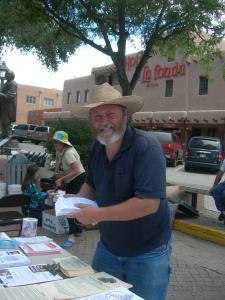


Food Not Bombs Surveillance: Criminalizing Lawful Non-violent Protest
Since 9/11, the government has stepped up its surveillance of a range of individuals and organizations, including volunteer-based groups. After providing free vegetarian food in hundreds of communities worldwide, Food Not Bombs has found itself a part of the domestic terrorism dragnet. Co-founded by Keith McHenry and seven friends, the group is dedicated to non-violent social change, and recovers food that would otherwise be discarded to serve hot free meals to the homeless, disaster survivors, rescue workers and others.
Keith McHenry – Food Not Bombs:
- We started out in Cambridge, MA. I was a produce worker and I was throwing out a lot of produce every morning. It occurred to us that we could take some of that produce and give it to battered women shelters and homeless shelters.
- We could also promote vegetarian eating and animal rights.
- We now share vegetarian meals in a thousand cities every week. We’re in Iceland, Poland has 12 chapters.
- I got arrested in 1988 for serving food without a permit. I ended up facing 25 to life under California’s 3 strikes law. They didn’t mind that we were feeding people, but we were making a political statement and that’s not allowed.
- Political Statement: Money and resources can go more toward feeding the hungry, healthcare and education. Diverting some of the money from the military to domestic human needs.
- Anonymous people would go to the state government, or city officials in different communities and file complaints against us.
- In Albuquerque, New Mexico, we started to get fined 500.00 a day, everyday we served, because of this anonymous complaint.
- We found out that it was military personnel who objected to our statement.
- In Flagstaff, Arizona, you can serve the food but you can’t have the Food Not Bombs banner and literature.
- Last week in Lancaster, Pennsylvania, similar complaints. Turned out the anonymous tipster was the manufacturer of landmines. This was a quarter mile away from where we were sharing free meals.
- A Lancaster health department official came by, without a thermometer to test the pH of the food, and said it was fine we were feeding people we had to get rid of the literature.
- We’re seeing this all over, including letters from the state of New Mexico, ordering me to stop all chapters serving free food.
- In Connecticut, I started getting emails ordering to stop all chapters.
- I think its the federal government, Homeland Security, and the intelligence unit of Chevron Oil, have all been involved in harrasing Food Not Bombs.
- We were first declared a terrorist organization in 1988.
- I’ve been under intense stress for a number of years, with informants trying to force me out of Food Not Bombs.
- I lost a couple of friends, who had committed suicide, as a result of this tension created in San Francisco, Food Not Bombs in particular.
- When I was facing the 3 strikes case in California, there was a man who turned out to be an FBI agent, was hanging out with my wife.
- He was hanging out at the California street bus stop, and he became friends with my wife, and ended up having an affair with her, during the time I was incarcerated and we had no idea whether I would get out of prison.
- Everything that we were saying in our house was being monitored.
- In one case, my home phone had become a pay phone. The Food Not Bombs hotline. To dial out, he was asked to deposit 35 cents. I would dial 611 Pacific Bell phone repair and they would tell me it was a pay phone.
- We’ve had a huge number of informants joining Food Not Bombs.
- When someone at a Food Not Bombs meeting is joking about violence, you have to distance yourself from that person. You don’t need to call them out and say you’re an infiltrator.
Guest – Keith McHenry, co-founder of Food Not Bombs. Keith has been arrested more than 100 times for making a political statement of sharing free food in San Francisco and he has spent more than 500 nights in jail for peaceful protest.
———————————————