Artificial Intelligence, Civil Liberties, Civil Rights, Executive Branch Law Breaking, Human Rights, Right To Dissent, Supreme Court
Podcast: Play in new window | Download
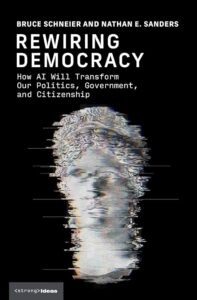
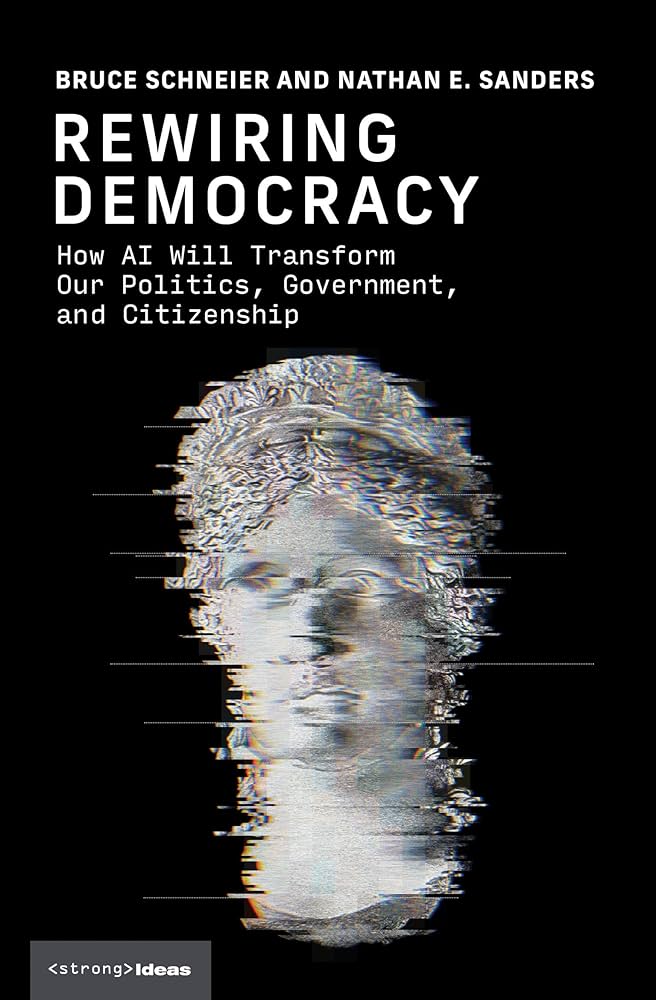
Rewiring Democracy: How AI Will Transform Our Politics, Government, and Citizenship
Artificial intelligence and democracy are two of the most charged words in the news right now. To hear the headlines tell it, AI is either about to save us—or quietly break everything that makes self-government possible. A new book refuses that false choice. It asks a more uncomfortable—and more political—question: who is using AI, how, and for whose benefit?
The book is Rewiring Democracy: How AI Will Transform Our Politics, Government, and Citizenship, published by MIT Press. It starts from a deceptively simple idea: democracy is an information-processing system—one that gathers people’s preferences and turns them into law, policy, and power. From that perspective, AI isn’t inherently democratic or dangerous. It’s a power-amplifying tool. In democratic hands, it can broaden participation, increase transparency, and make government more responsive. But in the hands of monopolistic tech companies or authoritarian states, it can just as easily intensify surveillance, manipulation, and control.
Instead of treating AI as a distant sci-fi threat, Rewiring Democracy looks at what’s already happening—AI in lawmaking, courts, elections, public services, and everyday citizenship—and asks the question too often left out of the debate: not what the technology can do, but who controls it—and who is left out.
Guest – Nathan E. Sanders, a data scientist affiliated with Harvard’s Berkman Klein Center for Internet & Society. His work focuses on using technology to strengthen democratic participation, especially for communities historically excluded from decision-making. He’s the co-author of Rewiring Democracy, along with cybersecurity expert Bruce Schneier.
—-
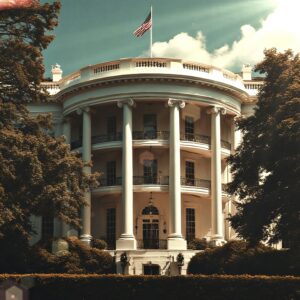
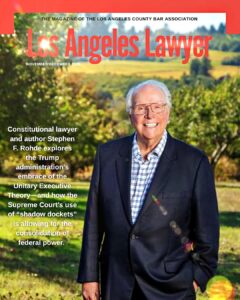
The Unitary Presidency: Trump’s Second Term, the Supreme Court, and the Consolidation of Power
The American system of democracy was built on a simple, stubborn idea: power must be divided if liberty is going to survive. James Madison warned that concentrating legislative, executive, and judicial authority in the same hands is “the very definition of tyranny,” and George Washington cautioned that power’s abuse is as predictable as gravity. Those weren’t poetic lines—they were the operating instructions for a constitutional democracy.
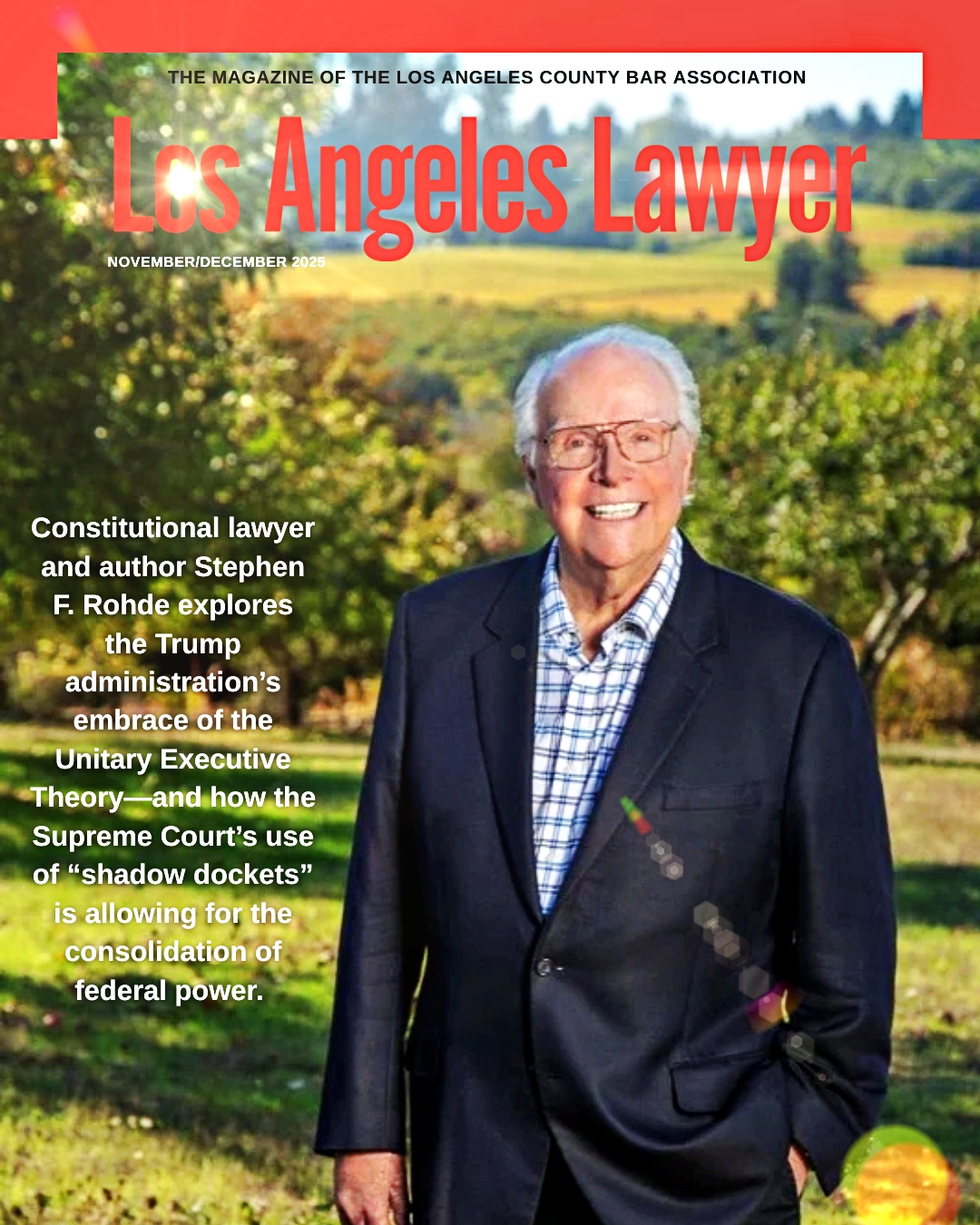
Our own cohost Stephen Rohde argues that those instructions are being ignored in plain sight. In The Unitary Presidency: Trump’s Second Term, the Supreme Court, and the Consolidation of Power, just published in Los Angeles Lawyer magazine, he says we’re not dealing with isolated controversies. We’re watching a sustained push to consolidate authority in the presidency—backed by legal theory, executive machinery, and a political ecosystem willing to treat norms and limits as optional.
Steve traces how an extreme version of the Unitary Executive Theory has become the rationale for purges of independent agencies, mass removals of officials, and executive actions that pressure universities, law firms, immigrants, protesters, and the press. In his account, the point isn’t just what’s being done—it’s the precedent being set: that the president can control, punish, and dismantle without meaningful restraint.
And the most alarming part, Steve argues, is the Supreme Court’s role—especially through its emergency “shadow docket,” where consequential decisions can be issued at lightening speed, often without full briefing or transparent reasoning. He asks readers: are we witnessing a temporary political lurch, or a lasting constitutional redesign—one that leaves checks and balances as a ceremonial relic?
Guest – Stephen Rohde is a retired constitutional attorney, lecturer, writer and political activist. He is the Chair Emeritus of several organizations including Bend the Arc, the ACLU Foundation of Southern California, and Death Penalty Focus. He is also a founder and current Chair of Interfaith Communities United for Justice and Peace. He is the author of American Words of Freedom and Freedom of Assembly.

——————————–
Cuba, Executive Branch Law Breaking, Gaza, genocide, Human Rights, Violations of U.S. and International Law, War Resister
Podcast: Play in new window | Download

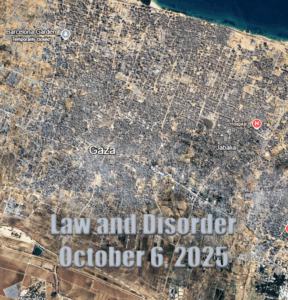
Taxpayers Against Genocide and the National Lawyers Guild Submit Petition To UN
Eighty years ago, after 2 world wars claimed millions of lives, nations worldwide — including the United States — came together and established the UN system “to save succeeding generations from the scourge of war.” The UN Charter requires that all states settle their disputes peacefully and refrain from the use of armed force, except in self-defense after an armed attack against a UN state by another state, or when the Security Council authorizes it.
But, motivated by American exceptionalism — the notion that the U.S. is unique and morally superior and thus not bound by the rules — successive U.S. governments have violated the commands of the UN Charter and illegally attacked other countries with impunity. Trump has ignored the straightforward rules about the lawful use of force, but he is not the first U.S. president to do so. The last five presidents have launched armed attacks without Security Council approval against countries that had not carried out armed attacks on the U.S. or other UN member countries.
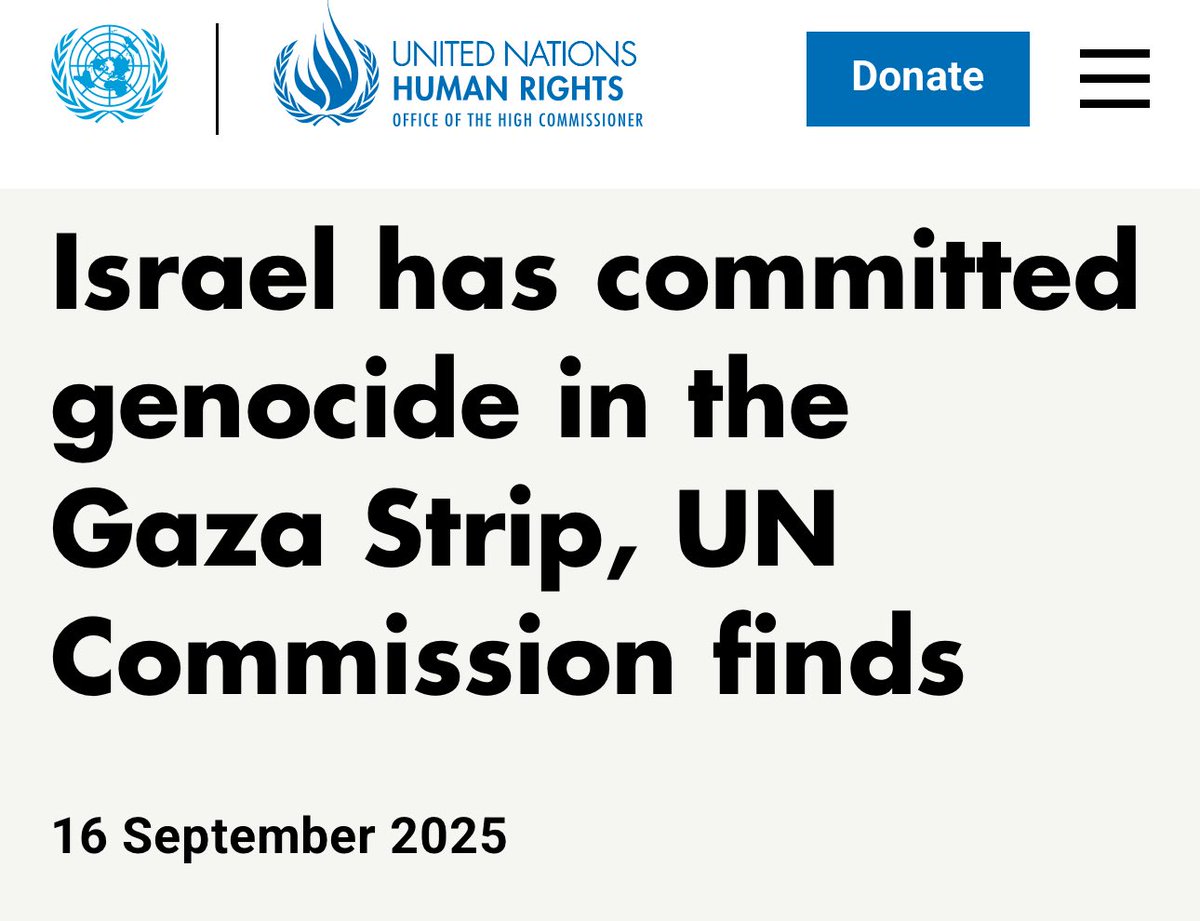
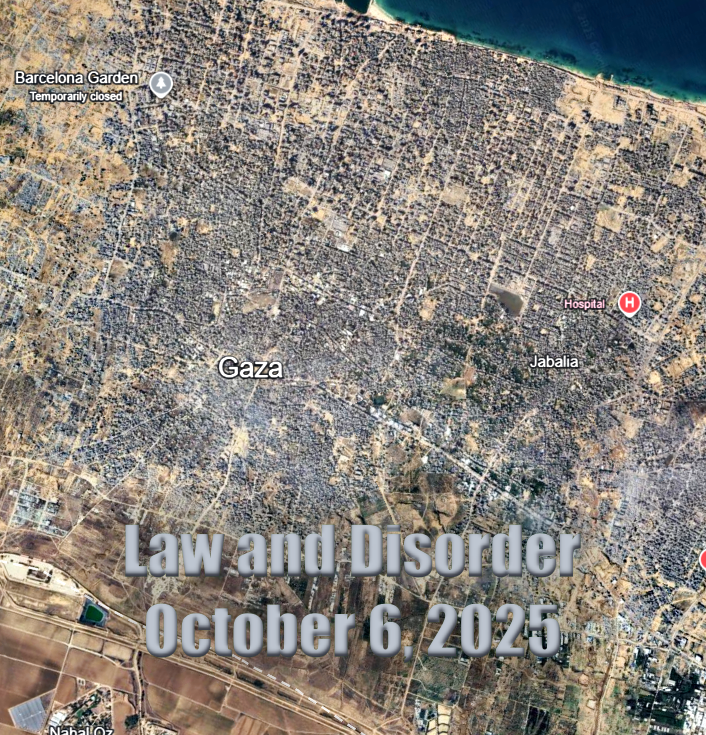
Besides violating the Charter’s prohibition on the use of force, the U.S. government – under both Biden and Trump – has aided and abetted Israel’s commission of genocide in Gaza. As the number of Palestinians killed by Israel exceeds 66,000, and famine has reached the “catastrophic” phase, thousands of taxpayers across the country have united with Palestinian-Americans to file an international legal complaint against the U.S. government for funding Israel’s genocide in Gaza.
An initial petition was filed in the Inter-American Commission on Human Rights in May by Taxpayers Against Genocide and the National Lawyers Guild. It charged the U.S. with aiding and abetting Israel in genocide, war crimes, and crimes against humanity. Tomorrow, the petitioners will file a new petition with the Commission. It includes substantial evidence of the U.S. role in Israel’s campaign of starvation.
Guest – Marjorie Cohn is Professor Emerita at Thomas Jefferson School of Law, Dean of the People’s Academy of International Law, and former president of the National Lawyers Guild. She is a legal political analyst who does commentary and writes columns on Truthout and other outlets, and she a former host on Law and Disorder radio. Her most recent book is Drones and Targeted Killing: Legal, Moral, and Geopolitical Issues. Marjorie wrote an article published last week on Truthout about U.S. violations of the UN Charter. Her article about the petition to be filed in the Inter-American Commission will be published tomorrow on Scheer Post.
—

Lisa Cook is ‘Low Hanging Fruit—While Jerome Powell Is a Bridge Too Far
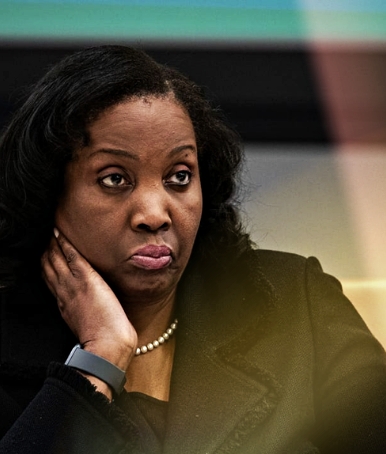
Sharon Kyle is the publisher of the L.A. Progressive. She has written a couple of fine articles about racism in American life in that publication. One of them, written at the end of August, is titled, Lisa Cook is ‘Low Hanging Fruit—While Jerome Powell Is a Bridge Too Far. She maintains that when political commentators, and the corporate media, describe Cook as “low hanging fruit” they expose the racism in American life and politics.
So, we’ve invited Sharon Kyle to be our guest today to explain her claim of racism in connection with Trump’s efforts to get rid of Cook on the vitally important Federal Reserve Board, and replace her with someone who would do his bidding.
Guest – Sharon Kyle is not only the publisher of the L.A. Progressive, a must read, online daily newsletter for all serious political thinkers and activists in and around L.A. She is also the former president of the Peoples College of Law, a former member of the Board of Directors of the ACLU of Southern California, and is on the editorial board of the BlackCommentator.com.
Remembering Assata Shakur (1947-2025)
————————————————-
Academic Freedom, Civil Liberties, Civil Rights, Executive Branch Law Breaking, Human Rights
Podcast: Play in new window | Download
Lawyers Defending American Democracy
The early days of the Trump administration have ushered in a series of assertive executive orders that are rapidly reshaping the federal landscape. While new administrations typically bring change, most Americans expect such shifts to respect the rule of law. Project 2025, however, diverges from legal norms, challenging birthright citizenship, dismantling crucial federal agencies like USAID without congressional approval, and attempting to criminalize support for lawful diversity and anti-bias initiatives.
Today’s guest is Lauren Stiller Rikleen, Executive Director of Lawyers Defending American Democracy. She argues that the media has inadequately covered the full scope of Project 2025’s goals. While the boldness of presidential actions has shocked many, these plans were outlined in the Project’s Mandate for Leadership. Trump’s executive orders threaten protections for workers and marginalized communities and undermine checks and balances that ensure government accountability.
Through these executive orders, the administration is unabashedly aligning the government with conservative ideals at the expense of civil rights and environmental protections. Presidential power is being centralized while erasing decades of legal safeguards against discrimination and environmental harm.
Guest – Lauren Stiller Rikleen is author of four books and editor of the 2023 anthology Her Honor—Stories of Challenge and Triumph from Women Judges, she is also an active member of the American Bar Association. She serves as vice-chair of the Advisory Commission to the Task Force on American Democracy, vice-chair of the Advisory Council to the DEI Center, and co-chair of the Women’s Caucus.
—-

Trump Executive Orders Dismantle DEI, Critical Race Theory
We are experiencing Donald Trump has launched his second term as President with an avalanche of Executive Orders as part of a calculated Shock and Awe strategy to take over the federal government in defiance of the Constitution, Congress, and maybe even the Supreme Court. One of the most dangerous aspects of that scheme is his plan to dismantle well-established programs and policies that encourage Diversity, Equity, and Inclusion, known as DEI, in American society in general and in education in particular; to ban the teaching of Critical Race Theory; and to either totally eliminate the Department of Education or at a minimum strip it of its key functions and funding.
The Department of Education was established by an Act Congress in 1979, signed by President Jimmy Carter. The Department of Education says its elementary and secondary programs serve more than 50 million students in about 98,000 public schools and 32,000 private schools. It also provides grants, loans, and work-study assistance to more than 12 million post-secondary students.
According to Becky Pringle, the president of the National Education Association, Trump’s expected Executive Order to abolish the Department of Education, if it becomes a reality, “would steal resources from the most vulnerable students, explode class sizes, cut job training programs, make higher ed more expensive and out of reach for middle class families, take away special education services for students with disabilities, and gut student civil rights protections.”
A bill has been introduced in the House of Representatives to eliminate the Department of Education, though since it would require 60 votes in the U.S. Senate to do so, it is unlikely to pass.
Christopher Rufo, a Senior Fellow at the conservative Manhattan Institute, writing in its publication, City Journal, spells out rather clearly why the Right is so determined to shut the department down. After pointing out the areas of its work, Rufo says it engages in “ideological production, which includes an array of programs, grants and civil rights initiatives, and third-party NGO’s that create left-wing content to push on local schools.” And he refers to the Department of Education over-all as “a hotbed of left-wing ideologies.”
Trump has yet to issue his Executive Order on this matter, but he’s already said he wants to put the Department of Education out of business, and transfer some of it duties to other departments.
And so today we spend our entire hour looking at the legality of Trump’s plans to target DEI, Critical Race Theory and the Department of Education and, if he is successful, what will be lost and what it is likely to mean for the state of education in America.
Guest – Stephen Rohde is a civil rights activist, author, and constitutional scholar. He practiced civil rights law for almost 50 years. He currently serves as chair of the Interfaith Communities United for Justice and Peace (aka ICUJP), which was formed in the wake of 9/11 for the purpose of organizing faith-based communities to call for an end to war and violence. He is also a past President of the ACLU Foundation of Southern California, and past Chair of Death Penalty Focus, and Bend the Arc: A Jewish Partnership for Justice. Despite that long list of affiliations, today he’s not speaking on behalf of any of those organizations.
——————-