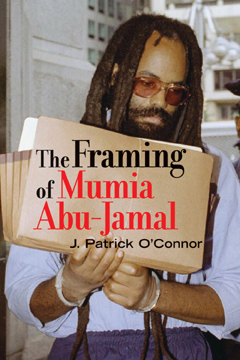
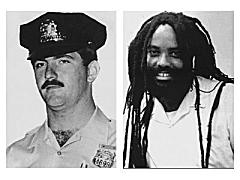
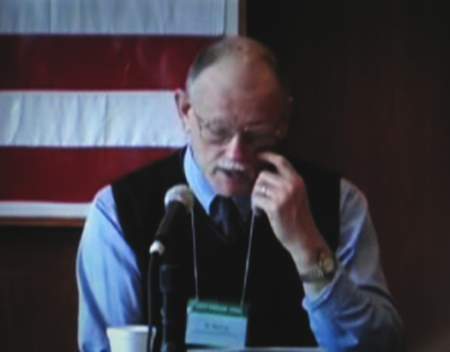
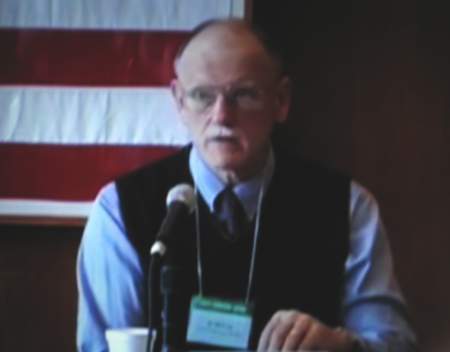
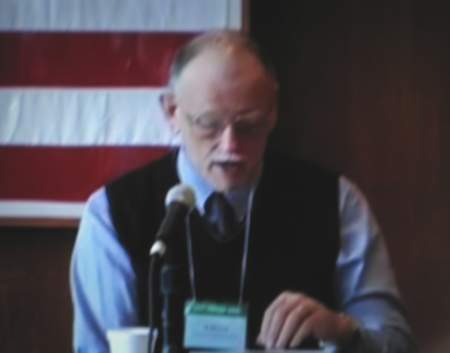
J.Patrick O’Connor delivers a powerful interview for the full program. O’Connor lays out the case based on his in-depth research that Mumia Abu Jamal was framed. O’Connor argues that the former black panther journalist did not shoot Philadelphia police officer Daniel Faulkner. The real shooter says O’Connor, was Kenneth Freeman a business partner of Mumia’s brother. Freeman, was found dead in 1985, bound and cuffed in a Philadelphia parking lot after a massive police raid on the counter-culture group MOVE.
One review writes: “In this account of the trial of controversial death row inmate Mumia Abu-Jamal, O’Connor, editor and publisher of crimemagazine.com, clearly lays out his case that Abu-Jamal should receive at least a new trial, if not complete exoneration. O’Connor asserts that Abu-Jamal was framed for the 1981 murder of police officer Daniel Faulkner because of a vendetta by Philadelphia mayor Frank Rizzo and the police due to Abu-Jamal’s defense, as a journalist, of the group MOVE.
Review excerpt by Linn Washington Jr : Carefully citing trial proceedings, O’Connor book lists odious instances of wrongdoing by police prosecutors – accomplished with judicial complicity.
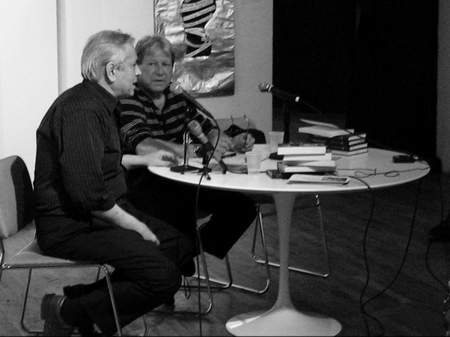
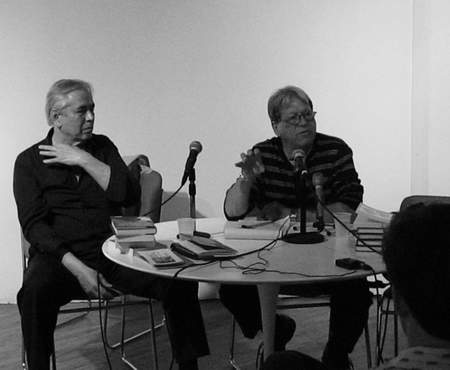
“From the beginning of this case, it was corrupt. It was a railroad job,” O’Connor said recently during a reading/book signing at a small venue on Baltimore Ave in West Philadelphia sponsored by the organization, Journalists for Abu-Jamal. “I wrote the book to show not only that Mumia did not kill Officer Faulkner but to show how and why they framed Mumia,” said O’Connor who lived in the Philadelphia area at the time of the brutal December 1981 crime at the heart of this controversial case.
Guest – J. Patrick O’Connor, editor and publisher of Crime Magazine. He has worked as a reporter for UPI, editor of Cincinnati Magazine, associate editor of TV Guide, and editor and publisher of the Kansas City New Times.
We hear excerpts from speeches at the Brecht Forum by our own Michael Smith and Citizen Soldier’s Tod Ensign. The anti-war soldier panel started with Michael Smith describing his work defending anti-war GI’s at Ft. Jackson, South Carolina and the formation of the GI Civil Liberties Defense Committee.
Anti-war GI’s were pivotal to the movement’s success. The growing protests from within the U.S. military today echo the Vietnam War soldiers experience. The panel discusses the role of anti-war GI organizing in the anti-war movements from 1917 to 1968 and to the present.
There are several significant events surrounding the US policy on torture taking place this week. Already last week, the US Senate Committee on Armed Services held hearings on the origins of aggressive interrogation techniques. Among the events this week is the fifth session of the United Nations Committee against Torture, Subcommittee on Prevention of Torture and Other Cruel, Inhuman or Degrading Treatment or Punishment in Geneva.
Amnesty International releases a report on torture and unfair trials in Tunisia’s war on terror, Amnesty International’s Guantanamo prison cell replica opens to the public in Washington, DC, through Sunday, June 29 and there is also the World Day in Support of Victims of Torture.
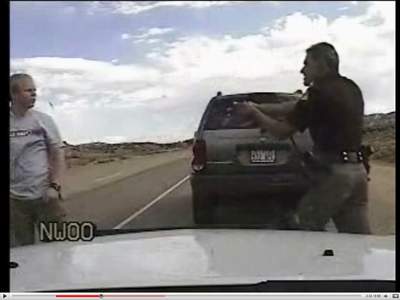
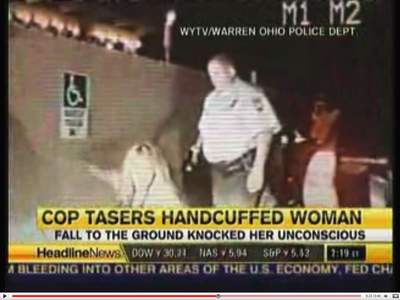
Here on Law and Disorder we’ve talked with many guests on the dangers of Taser stun guns. Recently Taser International Inc., the largest stun-gun maker, lost a $6.2 million jury verdict over the death of a California man who died after police shot him multiple times with the weapon. A San Jose, California jury says that Taser failed to warn the police of Salinas, California that prolonged exposure to Tasr’s electric shock could cause a risk of heart attack. The 40 year old victim Robert Heston died February 20, 2005 after his father had called Salinas police because his son was “acting strangely,” and seemed to be on drugs, according to the lawsuit complaint.
Nearly 400 people in the United States have been killed in Taser-related deaths in the past 7 years.
Stun guns are already widely abused on people who take too long to pull out ID, who are loud in public, elderly, disabled or in the wrong place at the wrong time.
Medical examiners are afraid to rule Tasers as the primary or contributory cause of death out of fear of retribution. In meetings with coroners, Taser International has actually threatened to sue if stun guns are cited on death certificates.
Taser International has formed questionable PR ties with law enforcement. It established and funded the Taser Foundation for Fallen Officers in 2004.
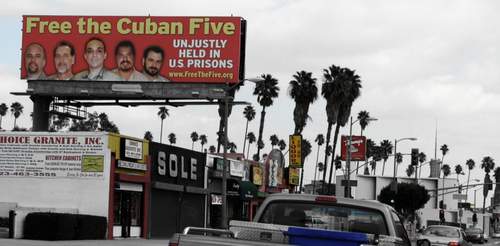
We’ve been following the case of the Cuban Five for years. Last week, the 11th U.S. District Court of Appeals in Atlanta upheld the convictions of the Cuban Five who are serving long prison sentences charged with spying and conspiracy to commit murder. The Five were falsely accused by the U.S. government of committing espionage conspiracy against the United States, and other related charges.
The Five pointed out vigorously in their defense that they were involved in monitoring the actions of Miami-based terrorist groups, in order to prevent terrorist attacks on their country of Cuba. The Five’s actions were never directed at the U.S. government. They never harmed anyone nor ever possessed nor used any weapons while in the United States. The Cuban Five are five Cuban men who are in U.S. prison, serving four life sentences and 75 years collectively, after being wrongly convicted in U.S. federal court in Miami, on June 8, 2001.
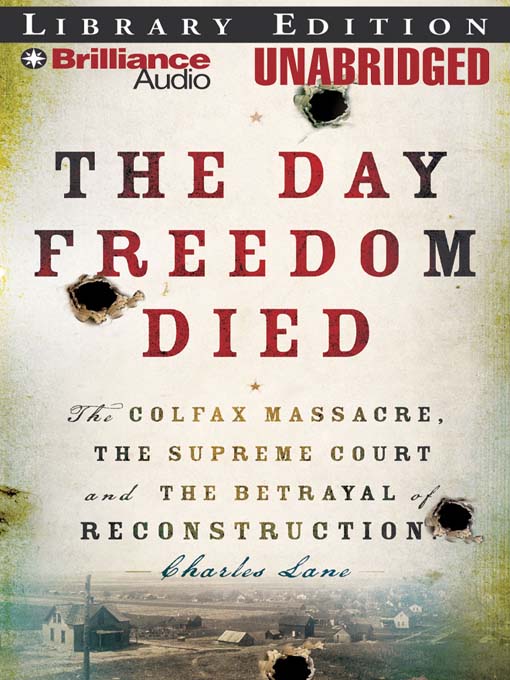
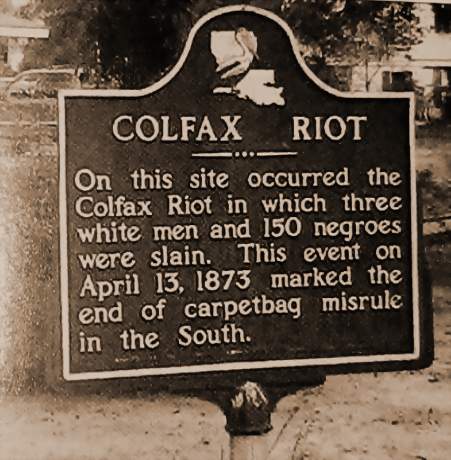
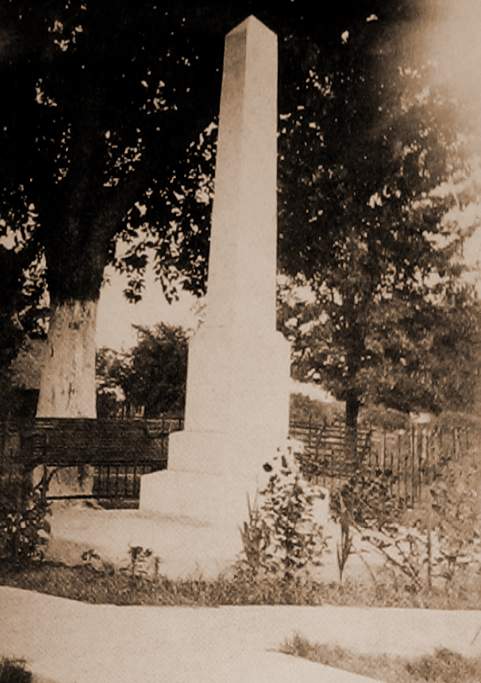
It was April 13, 1873 in Louisiana when a small army of white ex-Confederate soldiers enraged by freedmen asserting their new rights killed more than 60 African Americans who had occupied a courthouse. Today we talk with author and journalist Charles Lane. His recent book is titled The Day Freedom Died: The Colfax Massacre, the Supreme Court, and the Betrayal of Reconstruction. In the book, Lane uncovers a nearly forgotten historic post civil war massacre of African American men in Colfax, Louisiana and a white lawyer’s epic battle to bring the perpetrators to justice. Reviews call Lane’s book an electrifying piece of historical detective work that captures a gallery of characters from presidents to townspeople and re-creates the bloody days of Reconstruction. Lane discovered the Colfax Massacre case while covering the Supreme Court for The Washington Post.
Today we’re delighted to have Ann Ginger on the program, she’s a lawyer, teacher, writer, and political activist. She is the founder and the executive director of the Meiklejohn Civil Liberties, a think tank for human rights in Berkeley California. Here on Law and Disorder we’ve examine the practices and laws that have crippled civil and human rights in this country and now we take a look at ways law students and legal workers can bring them back.
Guest – Ann Ginger. Ann is Executive Director of Meiklejohn Civil Liberties Institute, a center for peace law and human rights, with archives of historic cases. Founded in 1965, the Institute answers queries of clients and lawyers and trains interns to prepare reports on U.S. compliance with human rights treaties for submission to U.N. committees.
Ann learned early to use the law and history to work for peace and human rights, coming from an Irish Catholic, English Quaker, Russian Jewish, Midwestern newspaper family. As a lawyer, she won a civil liberties case in the U.S. Supreme Court. After her testimony as an expert witness on international law that applies in the U.S., a jury acquitted nuclear weapons protesters in Utah. She is now teaching Peace Law and Human Rights at San Francisco State University and long served on the Peace and Justice Commission that administers the Nuclear Free Zone Ordinance in Berkeley.
Deepening Economic Crisis: What Laws Are In Place To Protect Against Economic Fleecing of the United States?
Law and Disorder Encore Interview: Two million families are on the brink of foreclosure, tent cities pop up along US city outskirts, and as UK press declare “depression†in the United States, we talk with Max Fraad Wolff , instructor at the Graduate Program in International Affairs, New School University. The media has reported that millions of US families took out loans to big for their incomes and were foreclosed, but hosts look at The Glass Steagall Act, mortgage sharking and banking predators.
Max is a freelance researcher, strategist, and writer in the areas of international finance and macroeconomics. His work can be seen at the Huffington Post, The AsiaTimes, Prudent Bear, and many other outlets.
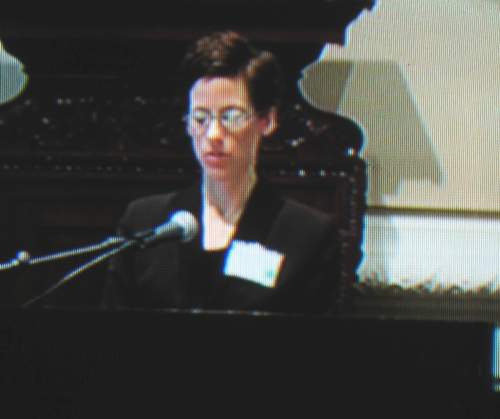
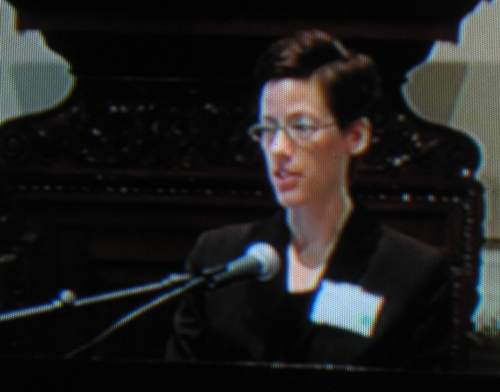
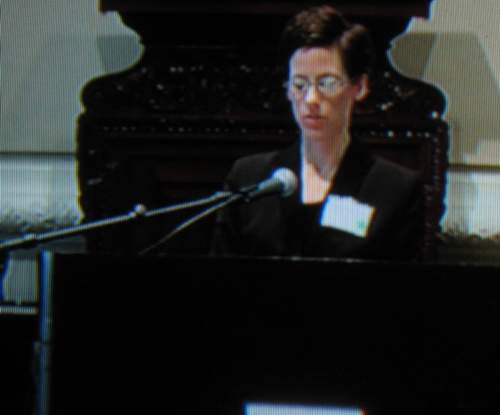
We hear a speech by Margaret Satterwaite on secret detention and extraordinary rendition at the New York City Law Review Symposium titled Preventing Torture. Margaret is the assistant professor of Clinical Law and Faculty Director of the Center for Human Rights and Global Justice at the New York University School of Law. Her current research focuses on human rights in the “war on terror.†She directs the “Black Sites†Litigation Project at NYU and her recent publications include Rendered Meaningless: Extraordinary Rendition and the Rule of Law. Margaret is also co-chair of the Human Rights Interest Group and the American Society of International Law.
Margaret’s speech was part of a panel titled Protected Contexts a look at how states acting through private entities to rendition and also what obligations exist to prevent violence and torture. She was among several speakers we will be presenting in the coming weeks.
This Symposium brings together leading international and U.S. experts, including former military officials, academics, practitioners, human rights advocates, politicians, journalists, and students to explore recent developments in the international law of torture.
The General Comment addresses key fault lines in the absolute prohibition against torture and ill-treatment that have been opened in the name of counter-terrorism. It also underscores the applicability of the Convention to sexualized and gender violence, where perpetrated by state officials as well as where state officials acquiesce to private violence, including domestic violence.
Speakers will address the authority, adequacy, and policy implications of the General Comment. Since the U.S. is a State party to the CAT, speakers will also address the relevance of the Comment to current laws and practices of the Bush administration and to positive reforms and initiatives needed to bring U.S. law and practice into compliance with its international commitments to eliminate torture and ill-treatment in every sphere.
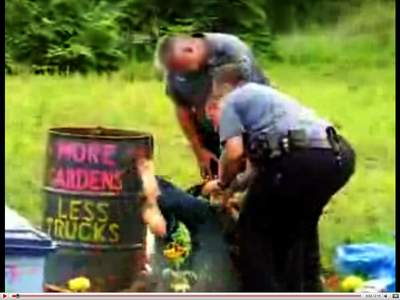
Here on Law and Disorder we’ve discussed how since December 2005, environmental activists in the United States have been targeted and handed unusually harsh prison sentences. It’s called Green Scare and more than a year ago the National Lawyer’s Guild sponsored an event titled Green Scare – How the Government Is Targeting Eco-Activists. Listen to it here.
We bring this up in context of the case involving Briana Waters. Acting as a lookout, she was accused of conspiring to set fire to the University of Washington’s Center for Urban Horticulture in 2001. This, despite evidence presented by the defense that she was 60 miles away at the time of the arson. Others claimed responsibility for the fire, but Ms. Waters, a 32 year old mother and violin teacher may face a mandatory minimum of 35 years in prison.
Federal “conspiracy law†is used often to prosecute drug dealers and is being used by prosecutors to take down individual environmental protesters. Once the judge accepts the charge of conspiracy, here-say is admissible making conspiracy very easy to prove in court.
Today we hear excerpts from the third part of the event An Innocent Man In Guantanamo: Five Years of My Life. That’s the title of the memoirs recently released by Murat Kurnaz who was detained at Guantanamo for five years. Kurnaz is a Turkish citizen and legal resident of Germany, he traveled to Pakistan to learn more about his Muslim faith and was later arrested at a checkpoint, handed to the United States and eventually taken to Guantanamo Bay, Cuba. Former US Army Muslim Chaplain of Guantanamo Bay, James Yee voices his concern about other secret prisons in Afghanistan and systematic abuse to prisoners involving IRF teams.
The event presented by Friends of the Library, brought together a panel of lawyers from the U.S. and Germany who fought for Murat’s release and a Guantanamo chaplain who was accused of espionage and imprisoned. The panel was moderated by our own Michael Ratner. Speakers include:
Baher Azmy – Professor at Seton Hall Law School, where he directs a civil rights clinic and teaches constitutional law. His litigation work on national security and human rights cases emerging from the “war on terror†include lawfulness of extraordinary rendition, torture and indefinite executive detention. In July 2004, Azmy began representation of Murat Kurnaz imprisoned in Guantanamo Bay until his release in August 2006.
Bernhard Docke – a lawyer since 1983, specializes in criminal law, since 1989 partner of the law firm “Dr. Heinrich Hannover und Partner†in Bremen, Germany. He has been a lawyer for Mr. Kurnaz since 2002.
Wallace Shawn – an Obie-winning playwright and a stage and screen actor. His plays include The Designated Mourner, Marie and Bruce, The Fever, and Aunt Dan and Lemon. He co-wrote and starred in the art-house classic My Dinner with Andre and he also performed in numerous Woody Allen films including Manhattan and Radio Days. Our Late Night and a Thought in Three Parts: Two Plays will be published in Spring 2008.
James Yee – the former US Army Muslim Chaplain of Guantanamo Bay. His book, For God And Country, Faith and Patriotism Under Fire, tells the story about being wrongly accused of espionage and imprisoned by the U.S. military. In 2004, the government dropped all charges against him and he received an honorable discharge from the U.S. Army.
Phillipe Sands – an international lawyer and a professor of law at University College London. He is the author of Lawless World and is frequently a commentator on news and current affairs programs including CNN, MSNBC and BBC World Service. Sands has been involved in many international cases, including the World Court trial of Slobodan Milosevic and the treatment of British detainees at Guantanamo Bay. His article in Vanity Fair “The Green Light,†looks at how high level members of the Bush administration pressured underlings to use torture tactics at Guantanamo. He is also the author of Torture Team: Rumsfeld’s Memo and the Betrayal of American Values.