Civil Liberties, Civil Rights, Death Penalty, Human Rights, Prison Industry, Racist Police Violence
Podcast: Play in new window | Download

The Case Of Bernina Mata And Clemency
In 1998, Bernina Mata was convicted of first-degree murder in the killing of John Draheim, who she’d met at a local bar. After he tried to rape her, she fought back in defense and stabbed him. At trial, prosecutors portrayed Mata as a man-hating lesbian, and literally described her as a “hard core lesbian” who they claimed killed because the victim made an unwanted sexual pass at her. They claimed Mata’s sexuality was the motive and showed the jury books from her apartment—Call Me Lesbian, Homosexualities, and Best Lesbian Reading —to support their theory. Prosecutors claimed that “a normal heterosexual person would not be so offended by the (victim’s) conduct as to murder.”
The jury found Mata guilty and sentenced her to death. In 2003, her sentence was commuted from death to life in prison after former Governor George Ryan commuted the sentences of everyone on death row in that state in response to a historic organizing clemency campaign. Now, Mata’s defense team – are asking Illinois Governor J.B. Pritzker to grant her release from prison. They filed a petition for executive clemency, saying her case was plagued by racism and anti-lesbian oppression.
FreeBernina
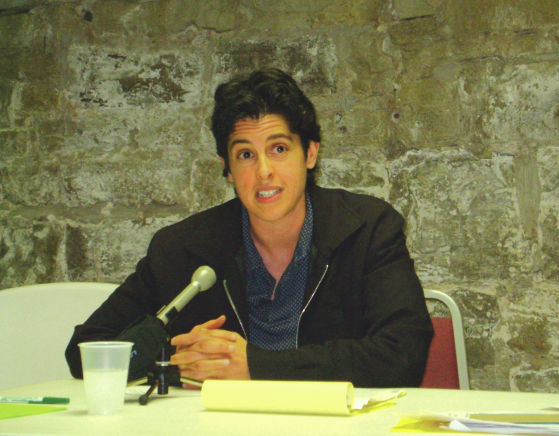
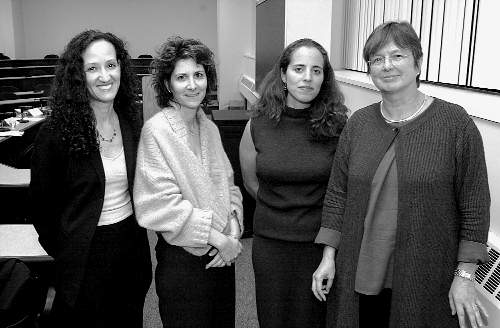
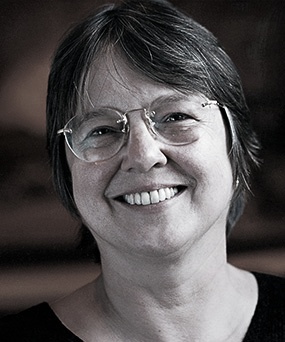
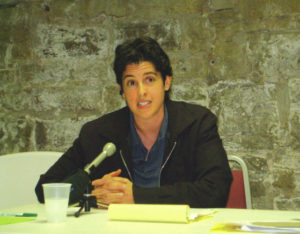
Guests – Attorney Joey Mogul and Deana Lewis, Joey Mogul is a partner at the People’s Law Office and has represented Mata since 2002. Deana Lewis is an Associate Director at the Institute for Research on Race and Public Policy at the University of Illinois at Chicago. Deana is involved in the work of several Chicago community and national organizing collectives including Love & Protect, Just Practice Collaborative, and Survived & Punished.
—-

Joanne Page: The Fortune Society
Each year in the United States, more than 600,000 individuals are released from state and federal prisons. A staggering 6.9 million people are on probation, in jail, in prison, or on parole. On top of that, an additional nine million persons cycle through local jails.
As grim as these numbers are, more sobering is the fact that more than two-thirds of prisoners are rearrested within 3 years of their release. Half of those are reincarcerated.
Why is this recidivism rate so high? It has much to do with the failure of re-entry support programs. We have the world’s largest carceral state but no effective support system for people finishing their sentences and re-entering society. Consequently, crime rates soar, more individuals are victims of crime, families and communities suffer when we fail to deal with the consequences of over-incarceration. When reentry fails, the costs are high — more crime, more victims, and more pressure on already-strained state and municipal budgets. There is also more family distress and community instability. Community reintegration impacts several larger areas such as community health, education, employment, family relationships and housing.
In every aspect, failure to support recently released individuals is costly to society.
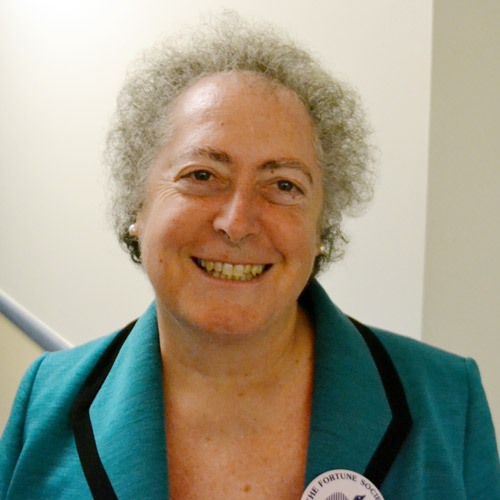
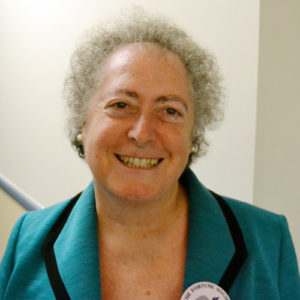
Guest – JoAnne Page is the President and CEO of the NY-based Fortune Society. Policymakers and researchers frequently cite the organization for its pioneering work. A graduate of Yale Law School, Page cultivated and created many of Fortune’s signature programs including substance abuse treatment, counseling, family services, HIV/AIDS health services, mental health programs, job training and employment services, parenting initiatives, and supportive and permanent housing. Page is a leading authority on issues including prison reform, solitary confinement, wrongful convictions, the over-incarceration of young men of color, sentencing reform, violence prevention, homeless housing, effective policing strategies, legislation, sex offender registries, and more.

————————
Civil Liberties, Civil Rights, Climate Change, Human Rights, Political Prisoner, Prison Industry, U.S. Militarism
Podcast: Play in new window | Download
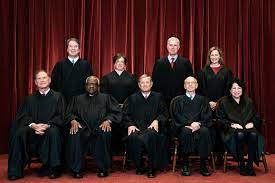
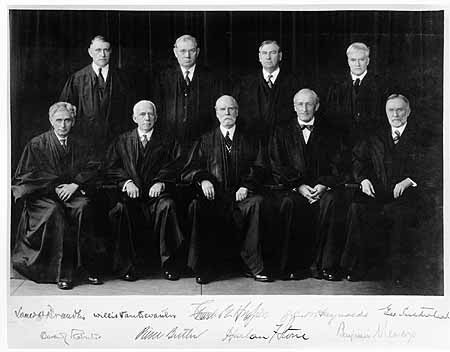
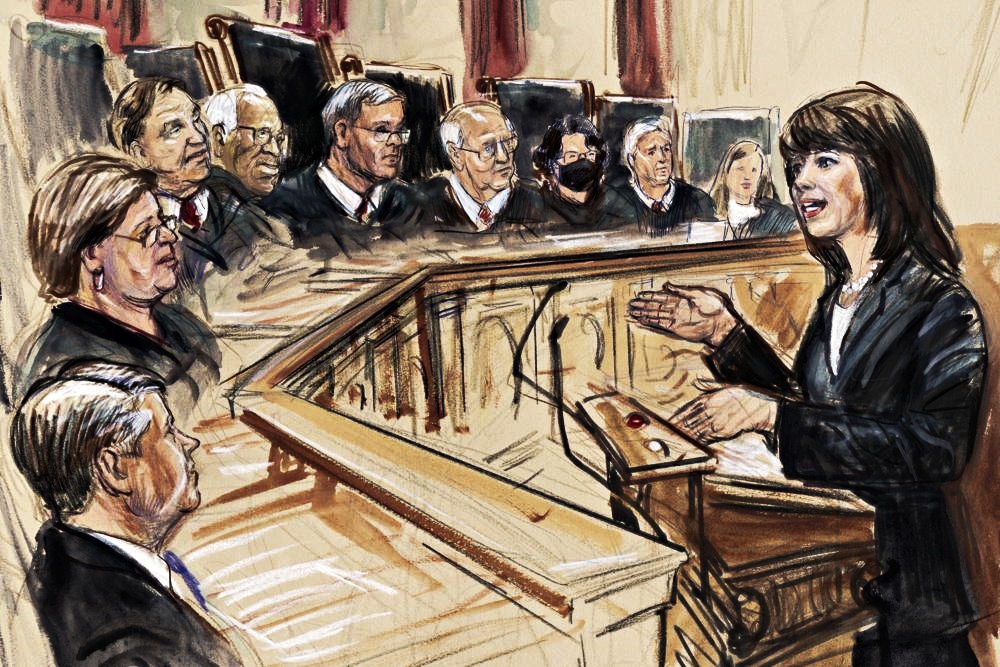
Far Right Supreme Court Decisions Not Seen Since 1931
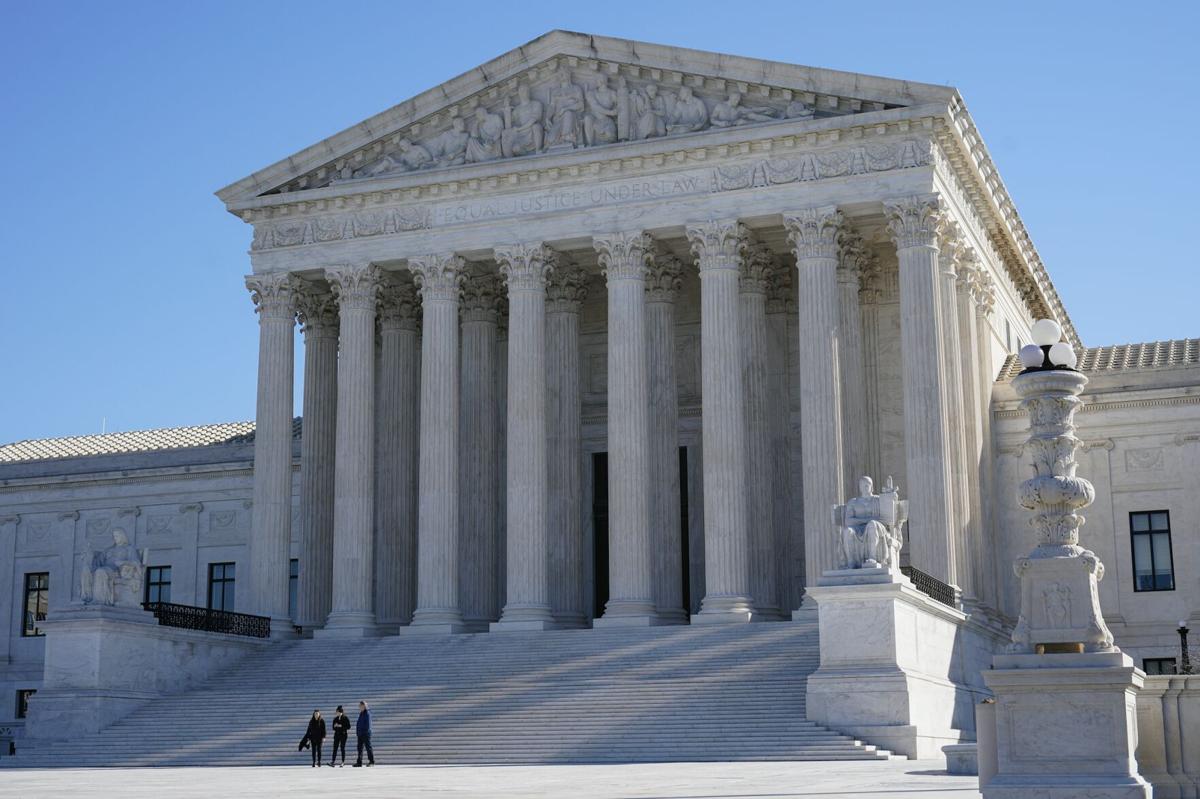
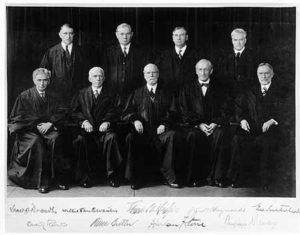
During its last term, the Supreme Court demonstrated that it is the most right-wing court since 1931. In cases involving reproductive rights, entanglement of church and state, the right to carry guns, and the ability of congressionally-mandated administrative agencies to regulate climate change, the high court’s conservative members handed down reactionary rulings. The court has agreed to hear a case next term that could radically change our electoral system.
Guest – Stephen Rohde is an author and social justice advocate who practiced civil rights and constitutional law for more than 45 years, including representing two men on California’s death row. He is the former chair of the ACLU Foundation of Southern California and former national chair of Bend the Arc, a Jewish Partnership for Justice. He is also a board member of Death Penalty Focus.
—-

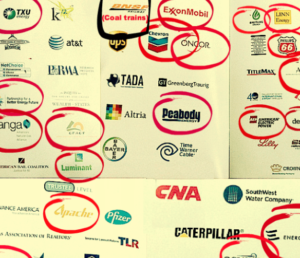
ALEC: Five Decades of Government Influence
The United States underwent a “public interest” revolution in the 1960s and early 1970s. In the first half of the ’60s, Congress passed precedent-setting environmental laws, including the Clean Air Act, the Clean Water Act, and the Water Quality Act. And in just three years, from 1969 to 1972, the federal government adopted a raft of new environmental, public health, workplace and consumer protections and established new agencies to administer them, including the Environmental Protection Agency and the Occupational Safety and Health Administration.
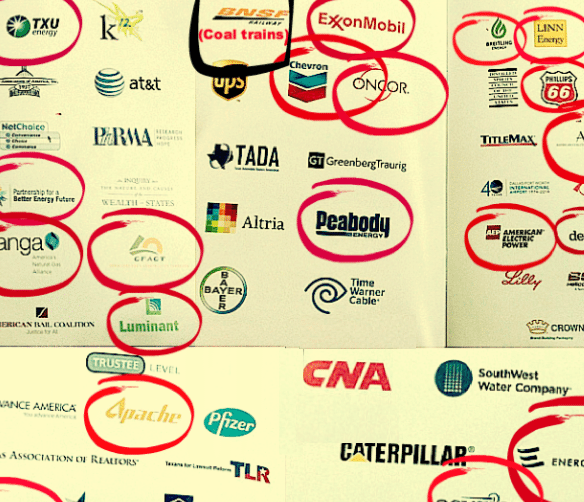
That revolution sparked a counterrevolution that is still reverberating today. Wealthy conservatives, corporations and libertarian foundations poured money into new think tanks and advocacy groups, including the Heritage Foundation and Charles Koch’s Cato Institute. A less-well-known group, the American Legislative Exchange Council, was founded around the same time. It goes by its acronym, ALEC.
Unlike Heritage and Cato, ALEC—a network of nearly 300 corporations, trade groups, law firms, and libertarian foundations—operates at the state level. The group provides state legislators with a variety of ready-made bills that, among other things, roll back voting rights, thwart efforts to address climate change, and bolster corporate profits.
State lawmakers introduced nearly 2,900 bills based on ALEC’s recommendations from 2010 through 2018, according to an investigation by USA Today, the Arizona Republic and the Center for Public Integrity. More than 600 of them became law.
Lately ALEC has been coaching state legislators on how to spin the recent Supreme Court decision overturning Roe v. Wade. ALEC has also been working behind the scenes to amplify the false GOP narrative on voter fraud. Writer Elliott Negin has been following ALEC off and on for the last decade, and he recently posted an essay that explains in detail how ALEC turns disinformation into law. We are fortunate to have Elliott as our guest today.
Guest – Elliott Negin is a senior writer at the Union of Concerned Scientists, a national science advocacy organization. Prior to joining UCS in 2007, he was the Washington communications director for the Natural Resource Defense Council, a former news editor at National Public Radio, the managing editor of American Journalism Review, and the editor of Nuclear Times and Public Citizen magazines.
—————————————————
Civil Liberties, Civil Rights, Human Rights, Immigration
Podcast: Play in new window | Download
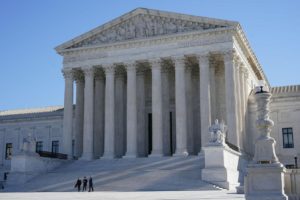

Kennedy v. Bremerton School District: Rights To Religious Expression In The Workplace
On June 27, 2022, the U.S. Supreme Court handed down the case of Kennedy v. Bremerton School District. At issue was school employees’ First Amendment rights to religious expression while on the job. The Court held that a school district infringed on football coach Joseph Kennedy’s First Amendment rights when it disciplined him for engaging in “private” prayer. Kennedy was a coach at the Bremerton School District in Washington State. After games, he knelt on the field with some students joining him in prayer.
That so-called private prayer occurred on the 50-yard line. The school district forbade the coach to pray on the field after games. It did allow him to pray in a private location behind closed doors. After Coach Kennedy continued on the field to give his thanks to God, the school district placed him on administrative leave. It gave him a poor evaluation, despite a history of positive ones. Kennedy did not return the following year and sued, seeking reinstatement. He also relocated to Florida. The Supreme Court upheld Kennedy’s right to pray in public on the field after the game.
Guest – Andrew Seidel is a constitutional attorney and vice president of strategic communications at Americans United for Separation of Church and State, which litigated Kennedy v. Bremerton. He’s also the author of several books including The Founding Myth: Why Christian Nationalism is Un-American and American Crusade: How the Supreme Court is Weaponizing Religious Freedom, which hits shelves in September and explains a lot of what is happening at the court right now.
—–
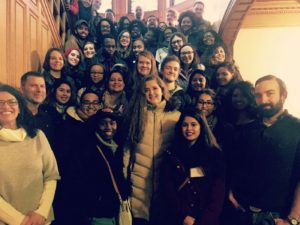
Attorney John Philo: Sugar Law Center
Maurice Sugar was a workers’ lawyer and a socialist, one of the founding members of the National Lawyers Guild, the first General Counsel to the United Auto Workers and a staunch defender of working people’s rights. He was also a talented poet and songwriter of political songs and poems. In the 1950’s, during the height of the Cold War, Walter Reuther was elected President of the UAW. His first official action was to fire Sugar. Maurice and his wife Jane Sugar, who was an activist and union organizer of teachers, homesteaded over 100 acres of property in the Black Lake area of Michigan. At their deaths – he in the 1970s and she in the 1980s – a trust was created which formed the financial seed money for the founding of the Maurice and Jane Sugar Law Center for Economic and Social Justice in Detroit, Michigan.
In 1990, shortly after the death of Jane Sugar, a group of National Lawyers Guild national leaders, including NLG founding member Ernie Goodman, former National President Bill Goodman – both Trustees of the M & J Trust – and former national president Debra Evenson, used the endowment from the Sugar Trust to establish the Sugar Law Center. It brought to life a long-standing vision of creating a national public interest project of the NLG that would tackle the critical questions of the intersection between civil rights and economic justice. The Sugar Law Center began with a primary focus on plant closings and worker dislocation and Julie Hurwitz was the founding Director. Now, 32 years later, as a nationally recognized public interest workers rights’ law project, the work of the Sugar Law Center has expanded to take on issues of runaway corporate power, racism, community dislocation, gentrification, poverty, environmental injustice; women’s rights and many others.
Guest – Executive Director of the Sugar Law Center, John Philo. John has litigated cases in dozens of states representing low-wage workers, communities, and injured persons on matters of employment, constitutional, and tort law. John is also a former president of the Detroit Chapter of the National Lawyers Guild, and a contributing author to the National Lawyers Guild’s Employee and Union Member Guide to Labor Law and the Institute of Continuing Legal Education’s Torts: Michigan Law and Practice.
—————————————-
Civil Liberties, Civil Rights, Human Rights
Podcast: Play in new window | Download
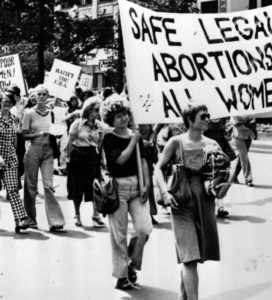
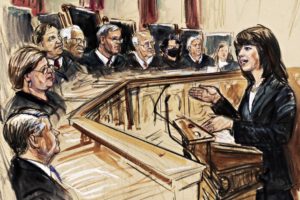
Lead Up To Roe v. Wade Overturn
Since Roe v. Wade was decided in 1973, its opponents have mounted a sustained effort to overturn it. The Heritage Foundation and the Federalist Society (which is funded largely with untraceable dark money by wealthy right-wingers, climate damaging industries and conservative think tanks) compiled lists of anti-choice judges. Samuel Alito was helped into his seat on the court by Leonard Leo, former executive vice president of the Federalist Society.
The same funding sources power the Attorney General’s Association, which is made up of 27 right wing attorneys general. The attorneys general bring their lawsuits in front of sympathetic judges whose appointments were secured by the same entities that supported them.
Donald Trump drew his three Supreme Court nominees – Neil Gorsuch, Brett Kavanaugh and Amy Coney Barrett – from those lists. In spite of their promises to adhere to stare decisis (which means respect for the court’s precedents) Gorsuch, Kavanaugh and Barrett all voted to overturn Roe v. Wade and Planned Parenthood v. Casey (which reaffirmed the central holding of Roe in 1992).
On June 24, five right-wing Christian zealots on the court ruled in Dobbs v. Jackson Women’s Health Organization that abortion is no longer a fundamental constitutional right. Samuel Alito wrote the majority opinion and Clarence Thomas joined it as well. Chief Justice John Roberts did not vote to overturn Roe and Casey.
Alito’s draft opinion, which was leaked to Politico in May, largely became the majority opinion in Dobbs. After oral argument in December, Alito, Thomas, Gorsuch, Kavanaugh and Barrett indicated in a straw poll that they were inclined to overturn Roe and Casey.
Although we knew that the court would likely erase the right to abortion, it still came as a shock when they actually did that in the Dobbs case.
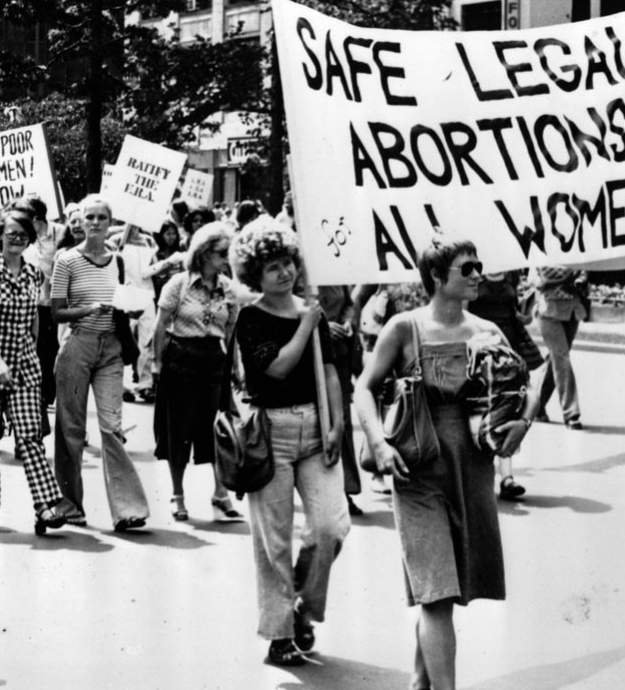
The fallout has been swift. Twenty-six states have laws that could ban or severely limit abortion. Thirteen states had “trigger laws” that would immediately ban abortion. Five states with pre-Roe abortion bans could enforce them. And 14 states would ban abortions before fetal viability. Bans and restrictions on abortion would disproportionately affect poor women and people of color.
Guest – Law and Disorder co-host Marjorie Cohn, who has written extensively about the Supreme Court and reproductive rights, predicting in several articles that the Supreme Court would overrule Roe v. Wade. Marjorie is a former criminal defense attorney, professor emerita at Thomas Jefferson School of Law and past president of the National Lawyers Guild. She has published several books and she writes a regular column for Truthout.
—-
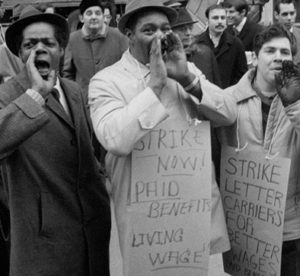
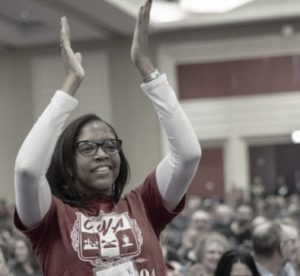
Labor Notes Conference 2022
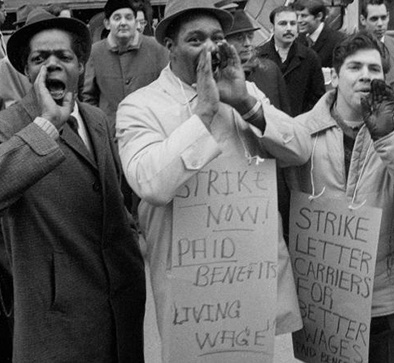
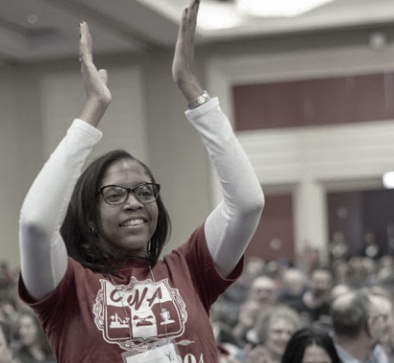
We live in ominous times. But one extremely hopeful development was the well-attended Labor Notes conference in Chicago over the June 19th weekend. Upwards of 4,000 mostly young workers from across the country came to the labor conference which was distinguished by its militancy and enthusiasm.
Speakers at the Friday night rally included Chris Smalls, the Amazon Labor Union president who recently led the historic Amazon warehouse workers’ organizing drive on Staten Island.
Amazon is owned by Jeff Bezos, a multibillionaire and the second richest person in the United States. Also speaking was Michelle Eisen, the Starbucks barista from Buffalo who is helping to organize Starbucks workers. Starting at zero, 160 stores have unionized in the last six months.
Speaking last was Bernie Sanders who has personally donated tens of thousands of dollars to union organizing. He spoke about the income and money inequality in the U.S. Sanders said that between Bezos and Elon Musk (the world’s richest man), the two own more than the bottom 40% of the entire U.S. population and he added that the top one percent in our country own more than the bottom 90%. He said that after the pharmaceutical company Moderna received $3 billion in Covid money from the government, its recently retired CEO got a golden parachute worth $900 million.
This is why the Labor Notes conference was organized – to explore and struggle against such wealth inequality. The organizers understand that workers produce all wealth and that we can’t fight the one percent in the traditional ways.
The old bureaucrats and labor liberals in the AFL-CIO held a convention the week before in Philadelphia. They believe in “a fair day’s wages for a fair day’s work.” The new militants who attended the Labor Notes conference understand that they may have to break the law, fight injunctions, risk fines, and mobilize sympathizers and other unions as well as the population in general. They believe in class struggle unionism.
Guest – Joshua DeVries is a long time rank and file union activist who attended the conference from his hometown of Austin, Texas. Joshua DeVries has been a local officer in Amalgamated Transit union and the Association of Flight Attendants as well as an organizer with the AFA. He writes for the magazine “Against The Current.”
———————————————
Civil Liberties, Civil Rights, Human Rights, Political Prisoner, Torture, Truth to Power, Violations of U.S. and International Law, War Resister, Whistleblowers
Podcast: Play in new window | Download
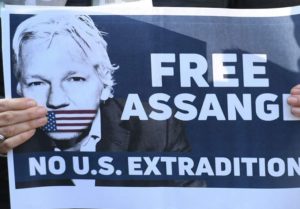

Extradition Of Journalist Julian Assange
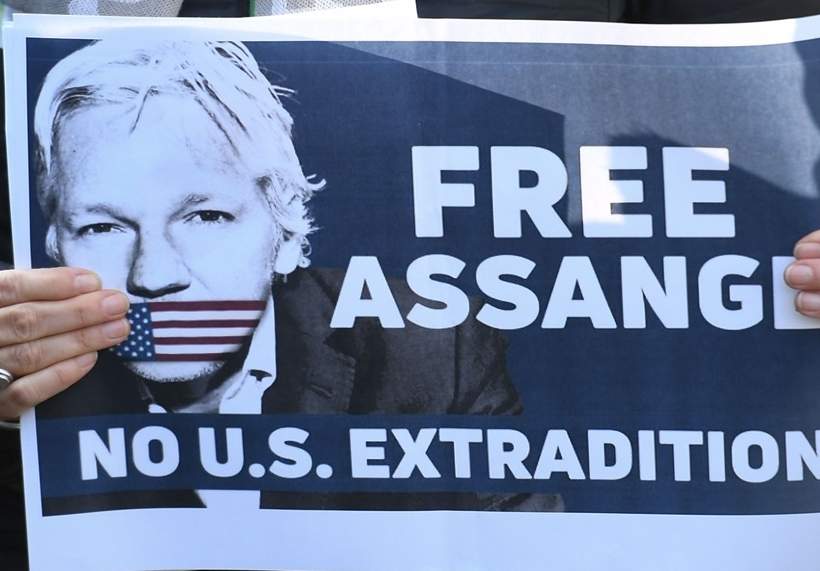
On June 17, Priti Patel, the UK Home Secretary, ordered the extradition of journalist Julian Assange to the United States to stand trial on Espionage Act charges that could lead to 175 years in prison. The Obama administration, which prosecuted more whistleblowers than all prior presidents combined, decided not to file criminal charges against Assange. But Donald Trump’s regime indicted Assange for revealing evidence of U.S. war crimes in Iraq, Afghanistan and Guantanamo. And Joe Biden’s government is continuing to pursue the extradition of Assange to the United States.
Assange has been confined in the UK for more than a decade. If he is extradited to the United States, he will be tried in the Eastern District of Virginia, one of the most conservative districts in the country. The judge to whom his case has been assigned jailed Chelsea Manning for refusing to appear before a grand jury investigating Assange.
Assange will appeal Patel’s decision. But if he is ultimately extradited, tried and convicted, it will pose a major threat to investigative journalism. People around the world are supporting Assange but the Biden administration is continuing Trump’s campaign to extradite Assange and try him in the United States.
Guest – Kevin Gosztola, an American journalist who writes about whistleblowers, WikiLeaks, national security and civil liberties. Kevin is managing editor of Shadowproof and he curates The Dissenter. He is producer and host of the weekly podcast Unauthorized Disclosure and co-author of Truth and Consequences: The US vs. Bradley Manning. Kevin has covered the Assange case extensively.
—-
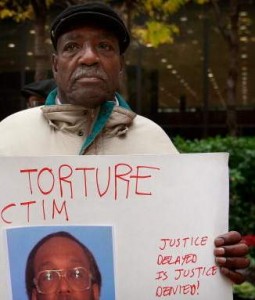
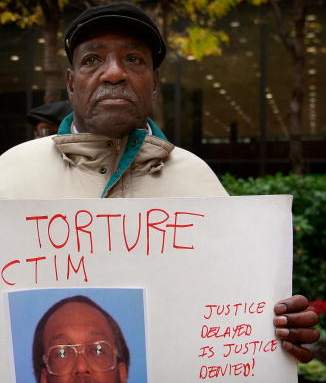
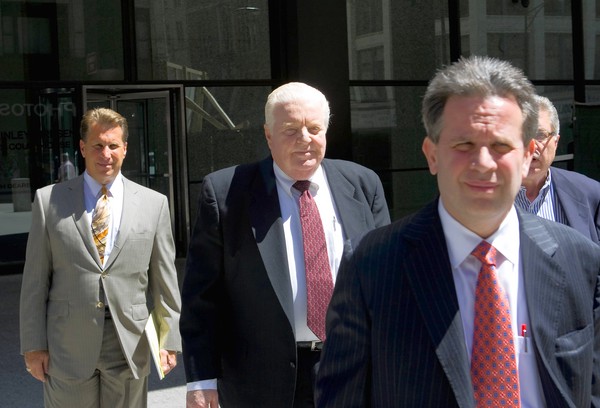
Chicago Torture Cases Cost Taxpayers 210 Million
Sixty years ago, the great social satirist and comedian Lenny Bruce quipped that “Chicago is so corrupt, it is thrilling.“ Today the corruption may not be so transparent but the amount of money spent to protect and defend cops who kill and torture people is staggering.
A few years ago, the city of Chicago sold its parking meters to a private corporation even as it was closing public schools and mental health clinics ostensibly for lack of funding. But as of now and for the last 15 years, Chicago, Cook County and the State of Illinois has spent at least $212 million of taxpayer money for expenses in torture cases involving the infamous Chicago torturing cop, Jon Burge, and his crew. They operated in Chicago’s brutal Area 2 where they extracted false confessions from more than 125 African-American men through the use of torture.
$37.5 million of the $212 million has gone to what has been called “pinstripe patronage lawyers,“ who defended the police torturers. $19-1/2 million has been spent on special prosecutors in Cook County where Chicago is located. At least $38.7 million has been applied to pension payments for the offending cops, $7.9 million has been spent on the state Torture Commission and Court of Claims payouts, and finally, $108.2 million has gone for settlements, verdicts, and reparations. And the cases, and the payments, continue to this day and will continue into the future.
Guest – Chicago civil rights attorney Flint Taylor who led the litigation against Jon Burge and his torture crew. Taylor is a founding partner of the People’s Law Office in Chicago and has represented dozens of clients subjected to torture and other police misconduct. He is the author of The Torture Machine: Racism and Police Violence in Chicago. His most recent case involves the police murder of Joseph Lopez in Greensboro, North Carolina.
————————————-
CIA Sponsored Terror, Civil Liberties, Civil Rights, Human Rights, U.S. Militarism
Podcast: Play in new window | Download


The Menace of American Authoritarianism
Law And Disorder Radio was launched 18 years ago by four lawyers for the purpose of defending democracy and the rule of law.
This was just after the United States attacked Iraq under the false pretense that Iraq harbored weapons of mass destruction.
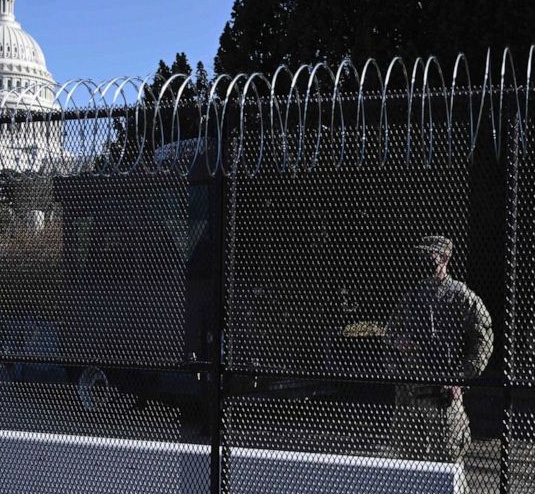
We have seen democracy and the rule of law consistently disintegrating. Starting perhaps 40 years ago under the Reagan administration, this disintegration has brought us to the crisis of today. A committee of the House of Representatives is actually holding televised hearings on the attempted coup d’état by the last president, Donald Trump.
At the first hearing, it was demonstrated that Trump planned to ignore the results of an election which he lost by 7 million votes. The insurrection that he initiated was unsuccessful. The Capitol was attacked after Trump incited the insurrectionists and Trump did nothing to stop it for over three hours. When Vice President Mike Pence refused to go along with Trump’s scheme to overthrow the election results, Trump suggested that hanging Pence was a good idea. The insurrectionists had built a gallows on the grounds of the Capitol.
What has brought us to this critical point?
We live in a country where inequality is increasing, where, as Bob Dylan wrote, “money doesn’t talk; it swears.“ Nearly half the population is poor or near poor. Neoliberalism, an extreme form of capitalism, has taken hold and hollowed out the country. Schools have been privatized and there is no national healthcare system. Students are 1.7 trillion dollars in debt just as a result of attending college. The country’s infrastructure is crumbling, there’s no decent railroad service, there are mass shootings almost every day, and the US government is spending $813 billion on war this year. The United States refuses to help negotiate a peace agreement between Russia and Ukraine. The twin threats of nuclear war and climate catastrophe hang over our heads. Things are dreadful. We have reached a point summarized by the great Italian revolutionary Antonio Gramsci, who was imprisoned by a fascist dictator. Gramsci famously wrote from his prison cell: “The old world is dying, and the new world struggles to be born: now is the time of monsters.”
Guest – Professor Henry A. Giroux currently holds the McMaster University chair for a Scholarship in the Public Interest in the English and Cultural Studies Department. He has written many books, most recently The Public in Peril: Trump and the Menace of American Authoritarianism and American Nightmare: Facing the Challenge of Facism.
—-
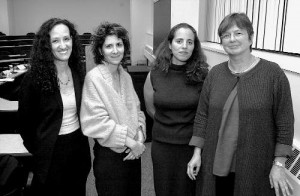

Lawyers You’ll Like: Professor Holly Maguigan
In our Lawyers You’ll Like series we’re joined by Professor Holly Maguigan, Professor of Clinical Law at the New York University School of Law, where she teaches Comparative Criminal Justice Clinic: Focus on Domestic Violence and Evidence. Professor Maguigan is an expert on the criminal trials of battered women. Her research and teaching is interdisciplinary. Professor Maguigan is a member of the Family Violence Prevention Fund’s National Advisory Committee on Cultural Considerations in Domestic Violence cases. She serves on the boards of directors of the National Clearinghouse for the Defense of Battered Women and the William Moses Kunstler Fund for Racial Justice. She is a past co-president of the Society of American Law Teachers, the largest membership organization of law professors in the U.S.
Professor Holly Maguigan:
- I was doing medieval history and I was at Berkeley. It was 1967 and Oakland stopped the draft.
- I got very interested in the anti-war politics.
- I hated lawyers. I really hated lawyers. They were boring. They talked about themselves all the time. They only had stories about their cases and how great they were and they would never post bail when people got arrested.
- The University of Pennsylvania in Philadelphia is where I stayed for 17 years.
- First I started out as a public defender. I loved being a public defender, it was the beginning and end of everything I hoped it would be.
- That’s where I met David Rudovsky and David Kairys. They were then defenders while I was a student.
- After they went out on their own, they kept inviting me to join them. I kept putting it off because I loved being a defender so much.
- In Philadelphia there was much more actual litigation, not just motion litigation there’s a lot of that here in New York City but actual trials.
- You had a sense, there was an analysis that people were doing life on the installment plan and you needed to do what you could to kick them loose any particular time.
- It was a community in its own odd way and I found it difficult to leave it.
- I was doing major felonies within a couple of years.
- David Kairys was very focused on constitutional litigation and government misconduct. He did the Camden 28 which was a big draft resistance case.
- My interest was more into criminal defense.
- Grand juries (all over the country) convened to investigate the alleged transportation of Patty Hearst by the SLA from California where she had been captured.
- He was a killer. (Frank Rizzo) There was no question. More people died in police actions before or since.
- I don’t mean to suggest that all the police started out as homocidal. This was a situation which from the top down came the message if you’re a good cop then you’re going to take people out however you think you need to.
- I knew about race and class bias in the court room as much as a white woman who was middle class could know.
- I was just blown away by what happens when you add hatred of women to hatred of black people and hatred of poor people.
- Judges would go by me in the hall and say Maguigan, ahem, you didn’t give me anything this Christmas, not even one lousy bottle, you’re not getting any assignments.
- Judges would do things, like open the drawer in their chambers, and there would be wads of bills, and they’d let you know.
- I developed a specialty on women who kill men.
- In the early eighties a group in Philadelphia called Women Against Abuse began working and they did advocacy for battered women accused of crime and meant a huge difference.
- The battered women cases I was working on were quite consuming because people then didn’t know very much in how to try these cases.
- The judges expected you to plead insanity or guilty. Reasonable doubt was a consideration at sentencing not at trial.
- There were cases that did require teams. There was no question.
- I wanted to be in court. I wanted to be in the presence of that conflict between the authorities and regular people.
- I went to NYU where I taught in the criminal defense clinic for many years.
- To see students react to the great stories their clients have is just amazing.
- SALT (Society of American Law Teachers) is about who gets into law school, what they learn and who teaches them. It’s about access to justice. It’s about relating to law school as a place where you train people to do social justice. SALT’s focus is on students and teaching.
- Holly Maguigan to be honored by Society of American Law Teachers.
Guest – Professor Holly Maguigan teaches a criminal defense clinic and one in comparative criminal justice as well as a seminar in global public service lawyering and a course in evidence. She is an expert on the criminal trials of battered women. Her research and teaching are interdisciplinary. Of particular importance in her litigation and scholarship are the obstacles to fair trials experienced by people accused of crimes who are not part of the dominant culture. Professor Maguigan is a member of the Family Violence Prevention Fund’s National Advisory Committee on Cultural Considerations in Domestic Violence cases. She serves on the boards of directors of the National Clearinghouse for the Defense of Battered Women and the William Moses Kunstler Fund for Racial Justice. She is a past co-president of the Society of American Law Teachers, the largest membership organization of law professors in the U.S.
———————————————–