Civil Liberties, Criminalizing Dissent, Habeas Corpus, Human Rights, Military Tribunal, Political Prisoner, Prison Industry, Supreme Court, Targeting Muslims, Torture, Truth to Power
Podcast: Play in new window | Download
Updates:
—
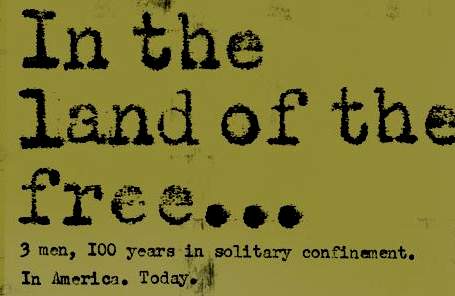
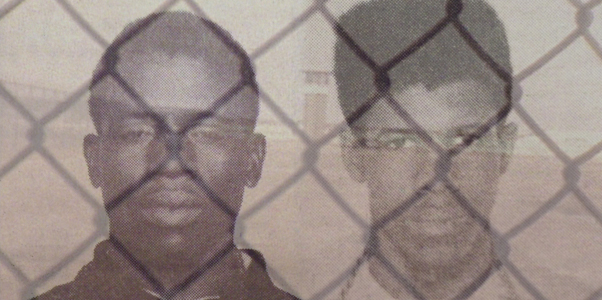
In the Land of the Free, a film by Vadim Jean
Director Vadim George joins us to discuss his recent documentary film “In the Land of the Free.” As many listeners may know, the Angola 3 are Robert King, Albert Woodfox and Herman Wallace. Each had arrived to the Louisiana State Penitentiary in the late 1960s. While in prison, and in contact with Black Panthers, the men helped build a prison chapter of the Black Panthers. They organized inmates to end systematic rape and violence and worked as jailhouse lawyers. The men have spent a combined century in solitary confinement in the Angola prison. Vadim’s powerful documentary explores the issues of accountability and examines the biases against the sentencing of African Americans compared to Whites and Latinos. The film is narrated by Samuel L. Jackson, and it’s noted toward the end, that there is a pending civil suit ‘Wilkerson, Wallace and Woodfox’ vs the State of Louisiana, ruled by the US Supreme Court and to go to trial based that their 30+ years in solitary confinement is “inhumane and unconstitutional”. This case could stop long-term solitary confinement in US prisons.
Vadim Jean:
- I was friends with Anita Roddick, she knew Robert King, and when she passed away in 2007, Robert King was one of the speakers at her memorial. They wouldn’t let me film in the prison.
- The Angola 3 came together in the New Orleans parrish prison in the 1970s.
- The criminals were put in with the Black Panthers and the Black Panthers educated the criminals.
- In the 1970s Angola was the bloodiest prison in America.
- Robert King was told why he was kept in solitary confinement after 25 years in CCR (solitary confinement)
- Because he was being investigated for the murder of Brent Miller, which happened when he wasn’t even in the prison. They’re incredible human beings. They’re strong men. They’re self educated, in prison.
- I think they have their side, the fact that they know they’re innocent, and that makes you strong, that’s made them incredibly strong. They refused to be beaten.
- Robert is free. His conviction was overturned in 2001. People have reacted strongly to the film.
- I’ve tended to make drama comedies. I made a completely mad film called Jiminy Glick in Lalawood with Martin Short.
- I made this film for Anita. (Anita Roddick) The Roddick Foundation.
Guest – Vadim Jean, began his career directing commercials for products such as Blockbuster Video, Woolworths, The Observer and Mercury 121 Mobile Phones. He then moved on to music videos for Elton John and Oasis before co-directing his first feature film, Leon the Pig Farmer (1992). For his work he won an Evening Standard British Film Award for Most Promising Newcomer, a Chaplin Award for Best First Feature at the Edinburgh International Film Festival.
——–

Law and Disorder Barack Obama Series – CCR Staff Attorney Shane Kadidal
We’re joined by Center for Constitutional Rights staff attorney Shane Kadidal to give us an overview on several critical topics we’ve been following over the years here on Law and Disorder. We look at what is happening in Guantanamo right now, the Obama policy of preventive detentions and the state of Habeas Corpus in the United States. In January of 2009 Barack Obama issued orders to close Guantanamo Bay prison. There was talk of transferring prisoners to a supermax prison in the United States. Military tribunals move forward for Guantanamo prisoners.
Shane Kadidal:
- What we won is the right to get into court and challenge the legality of your detention. CCR won that in 2008
- Obama gets into office and says he’s going to close Guantanamo Bay Prison in a year.
- Obama to set up expert agency to decide what to do with people in Guantanamo prison
- About 50 cases have gone forward and we (CCR) won 72 percent of the cases
- About 180 left in Guantanamo. Obama has improved physical conditions for detainees in Guantanamo, but they’re still stuck there. Nothing much has changed, we see stasis, there isn’t much political movement.
- About a month into the administration, the Obama Department of Justice says our position is the same as the Bush administrations on Bagram AFB prison
- We’re taking the same legal position about executive power as the previous administration – state’s secrets about rendition
- Six hundred people in Bagram right now. Bagram is an active war zone, can’t have courts interferring
- About 30 of the remaining 180 in Guantanamo will be charged. Most of the people brought there were innocent. The victim of profiling policies.
- General Stone says 400 of the 600 hundred in Bagram Prison have done nothing and should be released immediately. Task Force report on Guantanamo prisoners. 10 percent leaders of Al-Qaeda, 20 percent had a logistics role, others are low level soldiers. This is false.
- There are innocent people in Guantanamo, who have been there for 8 years.
- We still have a military commissions, an indefinite detention system. Lieberman proposing to strip citizenship from terrorism suspects so they can be interrogated without Miranda warnings.
- Moving Guantanamo Prison to Thomson Prison in Illinois.
- Obama as committed to removing checks on executive power
Guest – Shane Kadidal senior managing attorney of the Guantánamo Global Justice Initiative at the Center for Constitutional Rights in New York City. He is a graduate of the Yale Law School and a former law clerk to Judge Kermit Lipez of the United States Court of Appeals for the First Circuit.
Past shows with Shane Kadidal
Civil Liberties, Criminalizing Dissent, Habeas Corpus, Human Rights, Iraq War, Supreme Court, Targeting Muslims, Torture, Truth to Power
Podcast: Play in new window | Download
Updates:
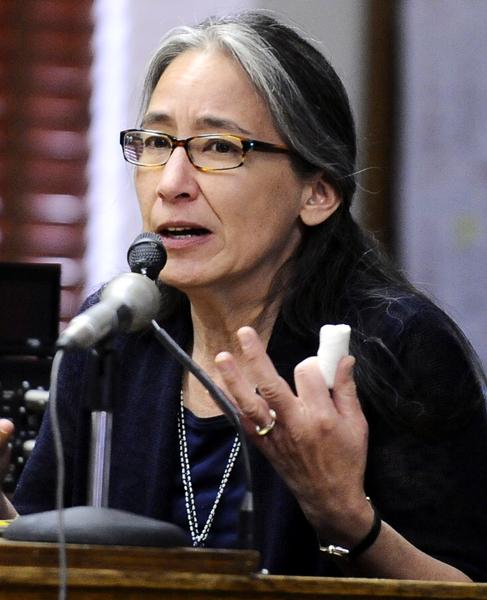
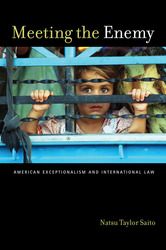
Natsu Saito, Meeting the Enemy: American Exceptionalism and International Law
Meeting the Enemy: American Exceptionalism and International Law is the title of Natsu Saito’s recent book, Natsu is an attorney and professor of Law at Georgia State University’s College of Law in Atlanta. The book boldly points out how the United States violated international law since its declaration of independence. As often discussed here on Law and Disorder, international courts and institutions have been at the forefront of holding the torture conspirators accountable. Meeting the Enemy gives disturbing insight into the origins of American exceptionalism.
Natsu Saito:
- The duality is that the US does exempt itself (from international law) very consistently and very frequently and yet promotes international law very strongly and relies upon it.
- It has relied upon certain premises that are fundamental to the whole outlook and paradigm of colonialism – which is that there is a higher good, a more civilized approach the US embodies.
- The law doesn’t apply because we have a higher aim of civilization and that justifies not playing by the rules.
- The United States making others comply with human rights standards while exempting itself.
- Moving humanity toward this higher goal is so critical because if you strip that away and you look at the realities on the ground, you see what has been termed Western civilization has been incredibly barbaric.
- In order to get around that analysis, you have to say it was for a higher good.
- I think the “left” tends to accept the general framework, and to make particular criticisms of policies and practices that are obviously problematic. The US government engaging in torture for example, but each instant is accepted as anomalous instead of the larger picture.
- It is too frightening even for the people on the left to deal with the reality that this is a country that sits on occupied land, illegally occupied by its own rules. People on the left want to make it a kinder, gentler colonialism.
- I started out thinking I was writing a book about the failure of the United States failure to comply with international law, as I got into it, the more interesting questions were the push / pull dynamics between reliance on international law
- The current system of international law evolved from the international law which was the agreement between the European colonial powers of how they were not going to destroy each other in the process of taking over the rest of the world.
Guest – Natsu Taylor Saito teaches international law and human rights, race and the law, immigration, criminal procedure, and professional responsibility, and is an advisor to the Asian American Law Student Association and the Hispanic Student Bar Association. Professor Saito’s scholarship focuses on the legal history of race in the United States, the plenary power doctrine as applied to immigrants, American Indians, and U.S. territorial possessions, and the human rights implications of U.S. governmental policies, particularly with regard to the suppression of political dissent. Read more.
——-
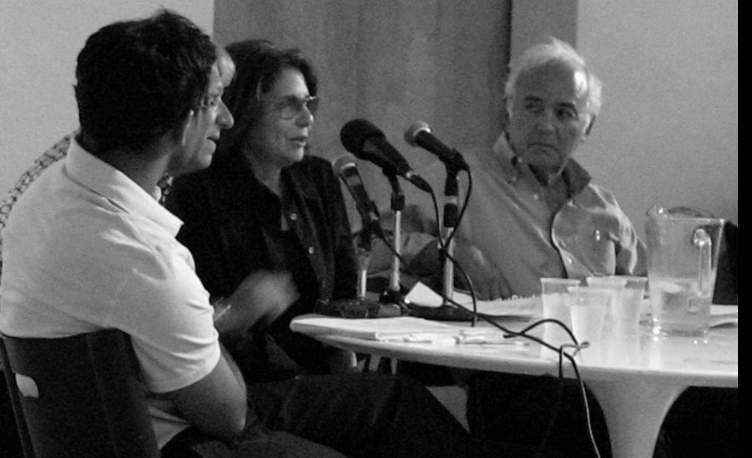
Elena Kagan and the Supremes – Brecht Forum
We hear excerpts from a discussion on the confirmation hearings of Elena Kagan, and how her position may influence the direction of the Supreme Court.
Panelists:
Martin Garbus – one of the country’s leading trial lawyers. Mr. Garbus aggressively represents his clients in the courts and in the media. He has appeared before the United States Supreme Court as well as the highest state and federal courts in the nation. His devotion to ethics, justice and the law has earned him respect among the legal community and beyond as well as prominent awards. Time Magazine has named him “legendary . . . one of the best trial lawyers in the country,” while Newsweek , the National Law Journal and other media agree that Mr. Garbus is America’s “most prominent First Amendment lawyer,” with an “extraordinarily diverse practice.” The National Law Journal named him one of the country’s top ten litigators.
Margaret Ratner Kunstler – former Educational Director at the Center for Constitutional Rights. She’s an attorney and leads the New York City chapter of the National Lawyers Guild and heads the William Moses Kunstler Fund for Racial Justice.
Anand Swaminathan – an associate at Vladeck, Waldman, Elias & Engelhard, P.C. He graduated from the University of Wisconsin in 2001 and the Harvard Law School in 2006. Prior to joining Vladeck he was a law clerk for the Honorable Theodore H. Katz of the United States District Court for the Southern District of New York.
Michael Steven Smith – Law and Disorder co-host, author and New York attorney. Michael Steven Smith is the author, editor, and co-editor of six books, including “The Emerging Police State,” by William M. Kunstler. He has testified before committees of the United States Congress and the United Nations on human rights issues. Mr. Smith lives and practices law in New York City with his wife Debby, where on behalf of seriously injured persons he sues insurance companies and occasionally the New York City Police Department.
———————
Civil Liberties, Extraordinary Rendition, Guantanamo, Habeas Corpus, Human Rights, Supreme Court, Torture, Truth to Power
Podcast: Play in new window | Download
Updates:
—


Labor Relations at the American Red Cross and It’s Impact on Employee and Donor Safety (PDF)
Hosts look at a suprising report detailing the cost cutting efforts within America’s premier disaster relief and blood donor organization, the American Red Cross. Award winning Washington based reporter Philip Dine has put together an investigative summary titled – (PDF)Labor Relations at the American Red Cross and It’s Impact on Employee and Donor Safety that enumerates the effects of cut backs that have led to bad labor relations, bungled disaster relief, mishandled blood supplies and federal fines. The investigation examines a far less publicized issue that involves the treatment of Red Cross employees and the impact this has on the organization’s work, with high turnover, younger employees and lower wages.
Philip Dine:
- Over the years, the Feds saw that the Red Cross was not living up to its promises.
- Red Cross labor relations: For years the Red Cross has been intent on degrading the training and expertise of the employees.
- At one point you needed doctors on site for blood drives, then it became registered nurses, then it became nurses on call, and then non-medically trained supervisors.
- It seems that the Red Cross wants to have more management control and lower pay and that basically means a disposable work force.
- Management mess: 10 Executive directors in 12 years.
- High turnover at the top, a budget deficit, despite the main money maker – the blood supply which they get for free. It accounts for 2/3 of revenue. Calling for an audit
- Workers increasingly hired from fast food outlets with no experience, workers see co-workers improperly inserting needles into people. More articles
- I’ve been covering labor for 25 years/ Please contact Philip Dine directly at – philipmdine@aol.com
Guest – Philip Dine author of “State of the Unions: How Labor Can Strengthen the Middle Class, Improve Our Economy, and Regain Political Influence.” Philip Dine is teaching a labor-management course at the George Washington University School of Business this fall. State of the Unions has won honorable mention for best book about labor or work of the past five years from the United Association for Labor Education.
———–
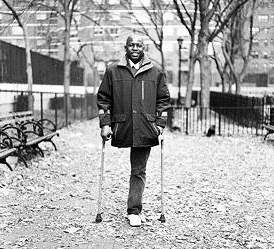

Medical Students Advocate Against Health Professional Participation in Torture
Last year it was confirmed that doctors and psychologists were directly involved in the supervision, design and execution of torture at U.S. military and intelligence facilities. This is a violation of state laws and professional ethics. These “health professionals” that were involved in the torture still hold their professional licenses to practice. Legislation introduced in New York by Assemblyman Richard Gottfried and Senator Tom Duane would reinforce existing ethical and legal responsibilities by prohibiting state-licensed doctors and other health professionals from participating in such practices. The law would also call for legal protection to resist and report any involvement in acts of torture and abuse. Last week, medical students and health professionals descended on Albany to meet with law makers to advocate the passage of this historic legislation. Physicians For Human Rights / When Healers Harm
Dr.Allen Keller:
- If you’re a health professional that participated in torture, you can lose your license.
- Health professionals were front and center and complicit in this policy of torture.
- Medical professionals provided sanitizing and rationalization for those infamous torture memos.
- During water-boarding there would be a doctor there. This is clearly a breach of medical and professional ethics.
- Licenses issued by the state. Torturers relied heavily on medical opinion.
- The state chapter of the New York Psychological Association has endorsed this bill.
- What I believe is that the interrogator looks at the health professional and says, well, if it gets out of hand, the medical professional will stop me.
- Suvivorsoftorture.org – The Bellevue/NYU Program for Survivors of Torture provides comprehensive medical and mental health care, as well as social and legal services to survivors of torture and war traumas and their family members. In the past year alone we provided these multidisciplinary services to more than 600 people from 70 countries.
Guest – Dr. Allen Keller, founder and director of the Bellevue/NYU Program for Survivors of Torture. In addition to serving as a primary care physician for many patients in the Program (Dr. Keller speaks French and Spanish). Dr. Keller oversees and coordinates the provision of medical services for Program patients, working with other primary care physicians and medical specialists affiliated with the program.
———————————————–
Civil Liberties, Criminalizing Dissent, Habeas Corpus, Human Rights, Military Tribunal, Supreme Court, Torture, Truth to Power
Podcast: Play in new window | Download
Updates:
——
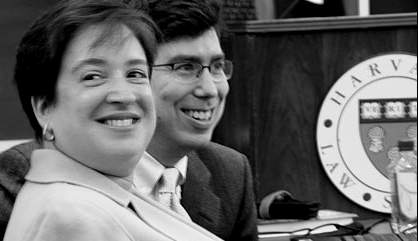
Kagan “Loves” the Federalist Society
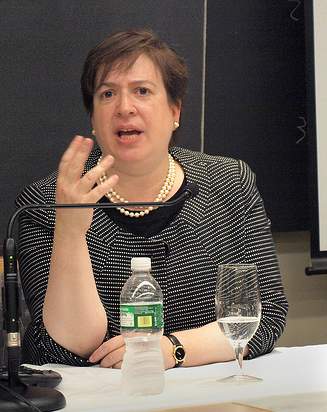
Hosts discuss Elena Kagan’s background with Francis Boyle, Professor of law at the University of Illinois. Boyle is author of “Tackling America’s Toughest Questions.” In his article titled – – Supreme Court Pick: Kagan “Loves” the Federalist Society, – – Boyle notes Kagan explicitly endorsed the Bush administration’s bogus category of ‘enemy combatant,’ whose implementation has been a war crime in its own right. He also writes that “Kagan has actually said ‘I love the Federalist Society.’ Almost all of the Bush administration lawyers responsible for its war and torture memos are members of the Federalist Society. Read – Dean Elena Kagan: Harvard’s Gitmo Kangaroo Law School — The School for Torturers
Law Professor, Francis Boyle:
- She has fully defended the hideous Bush atrocities, civil rights, human rights, civil liberties.
- No retreat or abandonment of the Bush positions.
- She (Kagan) did write this tome in the Harvard Law Review, equivalent to the Federalist Society, unitary executive power theory of the presidency.
- She’d be a total disaster on the cases that really count for the future of the US Constitution and the Bill of Rights.
- She’s a neo-conservative and has no qualifications to speak of.
- (She) hired Jack Goldsmith, author of torture memos and helped set up kangaroo court system in Guantanamo. We are still fighting Kagan supporting the Bush war on terrorism.
- Kagan stated on National Public Radio on December 22, 2009, “I Love The Federalist Society”
- Obama and his people know that Kagan will be the spear carrier for presidential powers on the Supreme Court
- This is a very dangerous time for the future of our republic and Constitution. The statement that she cares for the common people. . . she’s an elitist snob.
- There she is promoting globalization at Harvard Law School?? Hiring people to teach “globaloney” just to lick the boots of Larry Summers? While dean at Harvard Law School, she was moonlighting at Goldman Sachs payroll.
- This is all incredibly incestuous. Unlike Bush who wasn’t a lawyer, Obama taught Constitutional Law at the University of Chicago Law School, he should know better.
Guest – Professor Francis Boyle, A scholar in the areas of international law and human rights, Professor Boyle received a J.D. degree magna cum laude and A.M. and Ph.D. degrees in political science from Harvard University. Prior to joining the faculty at the College of Law, he was a teaching fellow at Harvard and an associate at its Center for International Affairs. He also practiced tax and international tax with Bingham, Dana & Gould in Boston.
He has written and lectured extensively in the United States and abroad on the relationship between international law and politics. His eleventh book, Breaking All the Rules: Palestine, Iraq, Iran and the Case for Impeachment was recently published by Clarity Press. His Protesting Power: War, Resistance and Law has been used successfully in anti-war protest trials.
——-



In Memory of Attorney Rhonda Copelon
Hosts talk with Cathy Albisa, executive director of the National Economic and Social Rights Initiative. about the human rights legacy of Rhonda Copelon. Rhonda had a huge influence on changing international law for human rights. She founded the International Women’s Human Rights Law Clinic.
Lawyers You’ll Like series with Rhonda Copelon. Part 1 / Part 2.
Attorney Cathy Albisa:
- I worked with Rhonda at CUNY, we both co-counseled with CCR on a couple of cases.
- I met Rhonda on a car ride, a 25 hour car ride. We spent 25 hours talking about human rights in the United States. Rhonda had a huge influence on NESRI
- Rhonda never stopped lamenting Harris v McRae, she was still furious and outraged.
- The assumption embedded in that case is the court is saying, we’re not responsible as a society, the poverty of this woman. Copeland Fund For Gender Justice. Rhonda thought it was critical that a progressive gender perspective be embedded into some body of work that really looked at these gender issues in a cross cutting way, that understood the relevance of poverty, the relevance of race, the relevance of sexual minorities.
- Rhonda was not a wealthy woman, she was a law professor and saved her money. She gave 1 million dollars for this fund and that was everything. The case that she says always saved my life was Filártiga v. Peña-Irala.
- She founded the International Women’s Human Rights Law Clinic. What she did with that clinic is challenge the traditional model of human rights law coming out of the United States.
- She made no claims of being objective, she was on the side of victims, of people with similar politics to her own.
- This changed international law. Rhonda: Don’t disregard the banal, the ordinary things that actually represent deep violations.
- The way Rhonda went about things, she merged intellectual capital with a strategic ferocity and personal good will and relationship building.
- She thought it was very important that people understand they’re part of a broad social justice and human rights movement.Cathy Albisa joins us today to talk about her work with the National Economic and Social Rights Initiative and Rhonda’s work as legal adviser to the Women’s Caucus for Gender Justice.
Guest- Cathy Albisa, is a constitutional and human rights lawyer with a background on the right to health. Ms. Albisa also has significant experience working in partnership with community organizers in the use of human rights standards to strengthen advocacy in the United States. She co-founded NESRI along with Sharda Sekaran and Liz Sullivan in order to build legitimacy for human rights in general, and economic and social rights in particular, in the United States.
——————————————–
Civil Liberties, Criminalizing Dissent, Gaza, Human Rights, Prosecution of the Bush Administration, Supreme Court, Surveillance, Targeting Muslims, Torture
Podcast: Play in new window | Download
Updates:
—

People v Bush, Charlotte Dennett
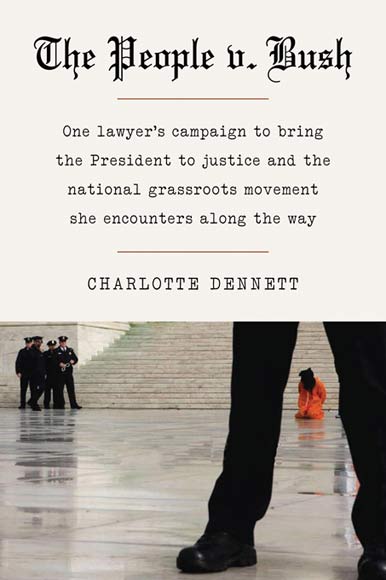
Today we talk with former Vermont Attorney General Candidate Charlotte Dennett. Listeners may remember Charlotte ran for office of Attorney General on the platform that if elected she would immediately undertake the prosecution of George W. Bush for the unnecessary deaths of Vermont soldiers in Iraq. The strategy was to establish jurisdiction in the cases for Attorneys General in each state as outlined in The Prosecution of George W. Bush for Murder, written by former prosecutor Vincent Bugliosi. Charlotte Dennett didn’t get the votes to become Vermont’s new attorney general. Now, a year later Charlotte describes from an inside perspective the “accountability movement” in her new book titled The People v. Bush. Is impeachment or prosecution still off the table?
Charlotte Dennett:
- If we don’t act on them now, then the impunity will get worse, we have to clamour for Cheney’s prosecution. We’ve got to keep the pressure on the department of justice. We know that the Spanish prosecutors have done that.
- I’ve come to realize that Obama’s mantra that we have to move forward and not look backward is really translated into: Don’t Prosecute.
- Brennan who was involved with crafting torture policy is playing a role advising Obama not to prosecute.
- It’s up to the accountability movement to step forward. There are going to be major events on March 20th, the anniversary of the war on Iraq.
- In my book the People v. Bush, I’ve got 10 pages in the appendix of all the different resources that people can turn to, to pressure Congress, sign petitions.
- The first half of the book is about my campaign for attorney general in Vermont, where I pledged to prosecute Bush for murder. I also lay out the evidence of how we can still do this, we can still do this by the way.
- I became hooked on accountability, this is a struggle for democracy and the soul of our nation.
- The book also looks at how the Obama Administration deals with the crimes of its predecessors.
- I have to tell you Michael Ratner, you were one of the first people to start raising the alarms (Obama Administration). My book shows the gradual shock and disillusionment of his supporters.
- People are upset that John Yoo, is doing talk shows, he showed up on John Stewart recently (OUCH)
- Regarding Sen. Leahy of Vermont: I tracked his effort to put together a truth commission and not prosecution. There were 37 towns in Vermont, that in their town meetings, voted for impeachment.
Guest – Charlotte Dennett, is an author and attorney who resides in Cambridge Vermont. She and her husband, Gerard Colby, have lived in Vermont since 1984. Charlotte has been practicing law since 1997, representing injured Vermonters in negligence, medical malpractice and wrongful death cases, as well as civil rights litigation and family law, and has argued before the Vermont Supreme Court.
——-

Lawyers You’ll Like: Center For Constitutional Rights Legal Director, Bill Quiqley
This week, CCR Legal Director Bill Quigley joined Law and Disorder hosts during a marathon 3 hour fund raiser for Pacifica’s WBAI. Bill talked about his trip to Gaza during Operation Cast Lead, his recent trip to Haiti and his death penalty work in Louisiana.
Bill Quigley:
- I went to Gaza with activist Audrey Stewart and Kathy Kelly, an International Peace Activist.
- We went over there, a year ago January, while the bombing was still going on. We were on the Egyptian side of the border where we could see the bombing of Gaza
- There were constant drones going over head, they had aerial balloons that were doing surveillance. It was sort of like a sociopath beating a baby. There was no defense, there was no anti-aircraft, people were literally sitting ducks.
- In my life, it compared to a time when one of my clients was being executed, in death row in Louisiana. To see the apparatus of the state, move into action, very calm, step by step.
- Then with full force and the respect of state behind it, pull on a switch and my client was no more. (at that time) It was a surprise that anyone in the U.S. would support the Palestinians.
- Death Penalty: there really is a community of deathy penalty advocates who train themselves how to communicate with juries. It is trending in the right direction by it still continues as a terrible tool, that the state has an opportunity to use when they choose to.
- Stop and frisk case update: New York is fighting this every step of the way. The term they use to justify this is: Furtive activity
- Culture of Intimidation: If young men don’t look at them the way they want to be looked at, if people don’t recognize their presence with the kind of respect that the police department thinks that they’re entitled to by the mere fact that they’re wearing a uniform and carrying a weapon.
- It is something that clearly could stop if the message was sent from the top.
- But clearly something has a green light from the top to engage in this. Authoritarian order that inconsistent with law and order, with the constitution.
- Endemic: If you have a society that values violence, the violence we institute around the world, the way we support Israel, the way they deal with Palestine. If we value deep racism, then what else what would we expect from a police or a military. The police and military are tools of a violent and racist regime.
- Part of our job is to re-educate police officers. We are going to be engaged in this activity over again, in every city in the country in varying degrees. The root problem is that we have a racist and violent criminal justice system, education system, a racist and marginalizing housing system, employment system.
- Most people don’t have the educational opportunities to know what’s going on with Haiti, Gaza, Iraq and even within our own country. Haiti: You could travel for miles and see no indication that international community even cared about what happened in Haiti. Most people were under a sheet or a blanket, could break some of the sun.
Guest – Bill Quigley. Bill is the Legal Director for the Center for Constitutional Rights, a national legal and educational organization dedicated to advancing and defending the rights guaranteed by the United States Constitution and the Universal Declaration of Human Rights. Bill joined CCR on sabbatical from his position as law professor and Director of the Law Clinic and the Gillis Long Poverty Law Center at Loyola University New Orleans. He has been an active public interest lawyer since 1977.
———————————————-
Afghanistan War, Civil Liberties, Criminalizing Dissent, Death Penalty, FBI Intrusion, Human Rights, Prison Industry, Supreme Court, Surveillance, Targeting Muslims, Torture, Truth to Power
Podcast: Play in new window | Download
Updates:
—

The Death Penalty Loses Support of The American Law Institute
In late 2009, the American Law Institute, which created the intellectual structure for the current capital justice system for nearly 50 years, essentially announced that its project has failed. The American Law Institute or A.L.I. is made up of around 4 thousand judges, lawyers and law professors, streamlines law and model codes to provide coherence in a federal legal system that is usually taking a varied approach. In a 1962 Model Code, the best legal minds of the institute framed a way for the death penalty to be carried out fairly, it then was re-instated in 1976. Now, the same people disavow the structure saying there is no fair system of capital punishment. The New York Times, in one article wrote (quote) the institute’s move represents a tectonic shift in legal theory. The article also points out that capital punishment was plagued by problems including racial disparities.
David Seth Michaels:
- American Law Institute, the intellectual group that tries to cobble together federal law in the United States including capital punishment. The capital punishment rules that they invented fifty years ago, have been the groundwork on which everything has happened since.
- So, it comes as a bit of a shock that fifty years later, they say “oh, oh.” It doesn’t work. It won’t work, we can’t make it work, so we’re going to fold up our tents. We won’t have anything else to do with it.
- Unworkable elements in the system: They’re troubled by the racial disparity on who gets executed, there’s tremendous disparity that is regional across the U.S. The prospect of capital punishment is ridiculously expensive. There’s risk of executing innocent people and politics of appointed judges who wantonly convict.
- It’s one of these circumstances that it is irreparably falling apart, broken. Everywhere you turn you find horrendous errors, egregious discrimination.
- The murder rate is higher in places where they have the death penalty than places where they don’t have the death penalty. Public support for the death penalty has been slowly and gradually decreasing.
- In the early 70s I became concerned about conditions in the prisons and mental hospitals in Tennesee and Mississippi. This is after the restoration of the death penalty in 1976.
- I can’t wait for the day that capital punishment is abolished. This system can’t die soon enough. You got nobody supporting the death penalty on an intellectual basis.
- National Coalition Against the Death Penalty.
Guest – Attorney David Seth Michaels. David has represented clients for 30 years, clients such as prison inmates in Mississippi and Tennessee. He’s worked with Brooklyn Legal Services B and with the Federal Defenders Service Appeals. He is also a novelist, has his own practice in New York.
—————————-

Lawyers You’ll Like: Jim Lafferty Part II
We’re delighted to have back with us attorney Jim Lafferty for the second half of our Lawyers You’ll Like series. He is the Executive Director of the National Lawyers Guild in Los Angeles and host of The Lawyers Guild Show, a weekly public affairs program on Pacifica radio sister station KPFK, 90.7 FM in L.A.
He has served as a chief officer of, and spokesperson for, various national anti-war coalitions, including the National Peace Action Coalition, the anti-Vietnam War coalition that organized the largest protests during that war; the National Coalition for Peace in the Middle East; and, the National Campaign to End U.S. Intervention in the Philippines. In the 60s and 70s, his law firm, Lafferty, Reosti, Jabara, Papakian & Smith, represented virtually all of the left political movements in and around Detroit, Michigan, during which time he became one of this nation’s leading experts on Selective Service law and military law.
In the early 80’s, Mr. Lafferty founded and chaired the largest A.C.L.U. Chapter in the State of Michigan. In New York City, in the late 80’s and early 90’s, he traveled the world organizing on behalf of the labor rights of merchant seafarers. During this time he also taught a course at the New School for Social Research, entitled, Vietnam: The War at Home and Abroad. More recently, Jim Lafferty was the Coordinator of the L.A. Coalition to Stop the Execution of Mumia Abu-Jamal, as well as a member of the national steering committee of the Campaign to Stop the Execution of Mumia Abu-Jamal.
Jim Lafferty:
- The man who was presented to me as my uncle, when I was sixteen he died, my mother acknowledged that he was my father. A friend of mine, she was a white nurse and she was married to a white school teacher and had a 3 year old daughter.
- She divorced that man and married a black surgeon. Her mother and former husband wanted custody feeling it was inappropriate for child to be raised in biracial home. George Crockett was one of the lawyers in the National Lawyers Guild in Michigan, took the case only if I clerked and read every opinion on domestic relations given down by the Michigan Supreme Court.
- We lost that case, and I continued working with that firm. They made a movie about that called “One Potato, Two Potato”
- The firm had been lawyers for UAW. I had gone down South to work with the lawyers guild in 1963, I was taking depositions for the Freedom Democratic Party. That’s where I met Mary Robinson.
- Bill Kunstler and Arthur Kinoy / Bill Kunstler’s book (1966) Deep In My Heart
- Michael Smith: Jeff Haas says Fred Hampton had Bill’s book, Deep In My Heart on his bed.
- When you finally take a stand, even though it leads to your incarceration and apparent lack of freedom, you’re finally free. Anti-war movements: Some friends of mine ran as peace candidates just to bring up the question of the war. We ran the entire campaign for 3300.00. Including 10 small billboards. Later we put together the Detroit Coalition to End the War in Vietnam Now.
- I wasn’t representing people anymore, but as the head of this coalition, you were doing public speaking, and getting an appreciation for what the power of people could do. To the credit of those lawyers who were winning those victories, even then they were saying to younger lawyers like me, but the real important thing is what goes on in the streets.
- Los Angeles Chapter of the National Lawyers Guild, – Labor Movement is vital. The anti-war movement is vibrant. You can’t blame the young activists for not knowing history, because nobody’s bothered to teach them. I’d like to see the movement coalesce around a meaningful left socialist third party.
- On the issue of the war, we’re worse off than we were with Bush.
- Healthcare plan: boondoggle for insurance companies, if you insure people who haven’t been insured, the profits of insurance companies aren’t gonna go down, you and I will pay more. Whereas the government should be paying more. NY Times article: putting aside the public option, you get past it by not dealing with it.
Guest – Attorney Jim Lafferty, Executive Director of the National Lawyers Guild in Los Angeles and host of The Lawyers Guild Show, a weekly public affairs program on Pacifica radio sister station KPFK, 90.7 FM in L.A.
————————————————————–