CIA Sponsored Terror, Civil Liberties, Guantanamo, Habeas Corpus, Human Rights, Prosecution of the Bush Administration, Supreme Court, Surveillance, Targeting Muslims, Torture, Truth to Power
Podcast: Play in new window | Download
Host Updates:

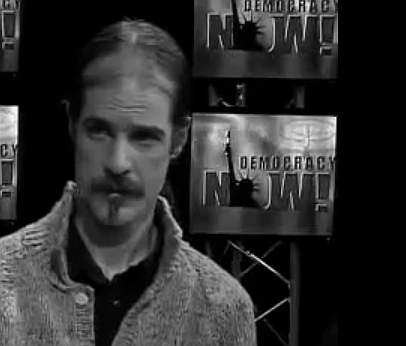
Elliot Madison: Activist Arrested for Using Twitter To Communicate With G20 Protesters.
Elliot Madison, a social worker and activist was arrested in Pittsburgh last month during the G20 Summit and was charged with hindering apprehension or prosecution, criminal use of a communication facility and possession of instruments of crime. The Pennsylvania State Police say he was found in a hotel room with police scanners and computers while using the social networking site Twitter to communicate police movements to protesters. Madison recently said “They arrested me for doing the same thing everybody else was doing, which was perfectly legal,” he said. “It was crucial for people to have the information we were sending.” Madison’s laywer Martin Stolar told the New York Times “He and a friend were part of a communications network among people protesting the G-20,” Mr. Madison’s lawyer, Martin Stolar, said. “There’s absolutely nothing that he’s done that should subject him to any criminal liability.”
Attorney Martin Stolar:
- It seems it would be helping out the police in a way. They’re saying disperse, don’t go here, don’t go there.
- They selected him for some reason amid all the various people posting things on twitter boards
- They got a search warrant for his hotel room, rousted he and a colleague who was there, arrested Elliot and he was held on a 30 thousand dollar bail.
- Unfortunately, agents of the FBI, and the Joint Terrorism Task Force, showed up at his home in Queens, with a search warrant issued by a Federal Court in Brooklyn, seeking evidence of violating the federal anti-rioting laws. (H.Rap Brown Act) Think about the Chicago 8.
- They spent 16 hours searching his home, grabbing everything in sight, it was terribly unclear what would violate this law. So they took pictures of Lenin, his writings, computers, material from producing a documentary film.
- The warrants seemed properly issued, until I can see the affidavits that underlie the warrant.
- I whipped up some legal papers to show cause and a motion under Federal rules of criminal procedure 41G. A motion for the return of property illegally seized.
- He is accused of posting stuff that is publicly available, that is a police scanner that is posted on the internet, such as a police order to disperse.
- That information is passed on through the Twitter board and that constitutes the crime that he is charged with.
- Law enforcement is targeting those who provide support for lawful demonstrations.
- This case is a first in Pennsylvania and a real stretch in criminal law to penalize what is essentially speech
- In New York, there is potentially a separate investigation in which Elliot is a target
- The so-called Green Revolution in Iran, the demonstrators were using Twitter, in exactly the same way the folks in the G20 used it. When the oppressive government came down on the Iranian students using Twitter, the US State Dept said, wait a minute there are free speech issues here.
Guest – Attorney Martin Stolar, president of the New York chapter of the National Lawyers Guild.
———
Supreme Court To Argue Life Without Parole Cases For Children
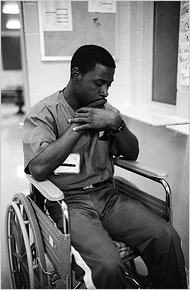
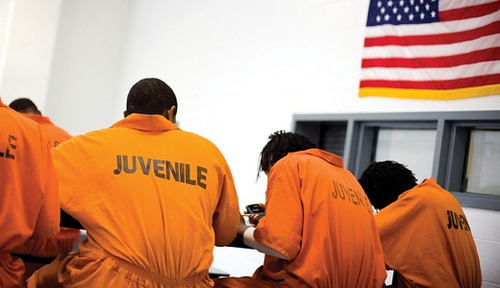
The Supreme Court will address whether it’s constitutional to sentence a child to be imprisoned for life without parole for an offense committed during adolescence. There will be two main cases the Supreme Court will argue. One is the case involving Joe Sullivan. Joe, at the time, was a mentally disabled 13 year old child living in a home where he was physically and sexually abused. He was convinced to participate in a burglary of a home. The elderly home owner was sexually abused, though she didn’t see her attacker. Joe was tried in an adult court, found guilty and sentenced to life in prison without the possibility of parole. He was fourteen when he was sent to an adult prison, there he was abused and later diagnosed with MS. That is a summary of one of the cases.
Professor Stephen Harper:
- 2400 Kids in jail serving life sentences without parole in the US. 120 of those kids didn’t commit homicides.
- The United States is the only country in the world that sentences children to life, without the possibility of parole
- Part of this sentencing of kids was an accident, they were getting tougher on adults in the early 80s and 90s.
- There should be an opportunity, Sullivan’s lawyer argued that at some point they could be granted parole
- Florida is the number one state that puts children in prison for life without the possibility of parole
Guest – Stephen Harper, Adjunct professor of Juvenile Justice University of Miami school of Law.
———————–
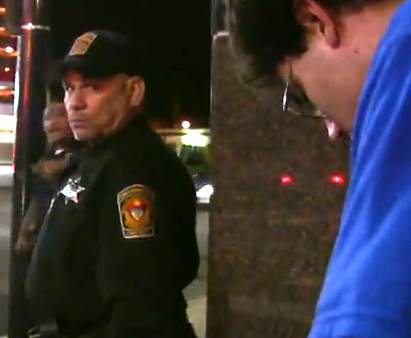
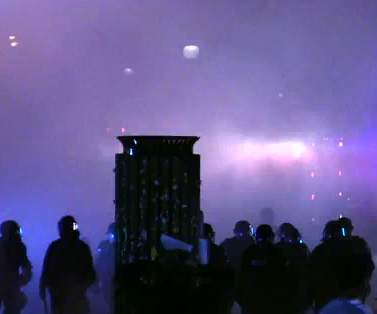
National Lawyers Guild Observes Improper Use of Force by Law Enforcement at the G-20
Many listeners have probably seen the videos of the G20 protesters going up against hundreds of riot police. Some of the most compelling footage were of reckless use of LRAD, the sonic weapons, and the surge of riot police onto the University of Pittsburgh campus. Many students who were not protesting were rounded up, knocked down, tear gassed and beaten by police. We reported last month on the blatant violations of first amendment rights as local police engaged in patterns of harassment on activists such as the group Seeds for Peace. Today we hear first hand accounts of police abuse from our own Heidi Boghosian who was at the marches and demonstrations as a legal observer and we’ll be joined by attorney Joel Kupferman, who was also at the also a legal observer with National Lawyers Guild at the G20 Summit. Read Heidi’s G20 Blog Entry Here
Heidi Boghosian / Joel Kupferman
- LRAD Sonic Weapons combined with order to disperse. You had to cover your ears, some stayed still, paralyzed. We think it’s illegal, it’s and invasion, it’s a weapon.
- One of the legal angles, we’re looking into is the fifth amendment, where we charged Christine Todd Whitman after 9/11 for violating our fifth amendment rights of bodily integrity and in this case, that sound pierced that bodily integrity.
- The manufacturer of the device (LRAD) filed in their SEC filings of Sept 2008 that the device is capable of sufficient acoustic output to cause damage to human hearing or human health, expressing concern that the misuse could lead to lawsuits.
- Private security police forces were employed. They went up the hill, onto the campus and students were just coming out of their dorms, hearing this noise, the helicopters, they didn’t know whether they should stay in their buildings. They started to arrest people who didn’t know what was going on.
- This is the highest police per protester ratio I’ve ever seen, definitely a radicalizing experience for these students, definitely no cause for arrests. Wantonly arresting people in a violent fashion.
- When we spoke to shop owners downtown, there was a hatred, I’ve never seen before. The sympathy came from the neighborhoods of color, it was a climate of fear, they were basically saying, you can’t assemble.
- It almost seemed like it was a police convention. The Pittsburgh Police Department wore military fatigues. I saw more Canine Units there then any other demonstration.
Guest – Attorney Joel Kupferman, National Lawyers Guild Legal Observer /New York Environmental Law and Justice Project
————————————————
Civil Liberties, Criminalizing Dissent, FBI Intrusion, Guantanamo, Habeas Corpus, Human Rights, Prosecution of the Bush Administration, Supreme Court, Surveillance, Targeting Muslims, Torture, Truth to Power
Podcast: Play in new window | Download
Lawsuit Brought Against Former US Attorney General John Ashcroft
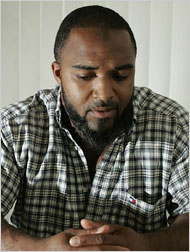
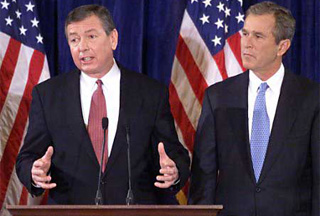
Last month, a major decision written by a federal judge gives a lawsuit standing that was brought against former US Attorney General John Ashcroft for the illegal and unconstitutional detention of American Muslims. The lawsuit was brought by Abdullah al-Kidd, an American citizen and African American who had coverted to Islam. In 2003 Al-Kidd was arrested, and detained under abusive conditions without evidence that he did anything wrong. The lawsuit points at the way John Ashcroft abused the material witness statute to “preventively detain” American Muslims. Ashcroft uses the statute as a pretext to arrest American Muslims without sufficient evidence to establish probable cause. This suit will be a key lawsuit when President Obama presents a proposal for a “preventive detention system.”
Lee Gelernt:
- Federal Appeals court recognized the abuse of the material witness statute under Ashcroft.
- Material witness statute, rarely used, limited purpose before 9/11. If the witness would not testify and needed testimony, they would arrest witness get testimony then release person.
- If its taking too long, get the person’s deposition, because you simply cannot hold a witness for a long time, because they’re completely innocent.
- After 9/11 the government used the material witness statute on Muslim men who were suspicious and no probable cause. Probable cause is the bedrock of this country. Mere suspicion is not enough.
- It turned out that dozens and dozens of men were arrested as mere witnesses, held for months under the most harsh conditions. They have to be unwilling to be a witness, you don’t simply arrest a witness, obstensibly.
- Abdullah al-Kidd, born in Kansas, spent some time in Los Angeles, and mostly in Seattle. African American born in the United States. His father is a supervisor at the Chino Correctional Institute in California. His mother has done work for IBM for the last thirty years.
- He was a football player, went to University of Idaho on a football scholarship. Right before 9/11 he converted to Islam, and started working for charitable organizations. After 9/11 he was under surveillance, then arrested, held for 16 days under the very abusive conditions. Restricted for 14 months.
- FBI agents went to magistrate saying Al-Kidd had a one-way ticket to Saudi Arabia, it turns out after spending time in detention, that it was a round-trip coach ticket.
- The agents also did not tell the magistrate that he cooperated with the FBI and a native born citizen.
- Lawsuit is against Attorney General in a personal capacity and two FBI agents who submitted an affadavit, the United States and 3 Wardens. Settled lawsuit against the 3 wardens.
- FBI Director Mueller, went before Congress to report on the recent successes of the terrorism fight. The first person Mueller mentions is Kalik Sheikh Mohammed, the second person is Abdullah al-Kidd.
- Bedrock principle: You’re innocent unless the government has probable cause (objective reasonable belief) not law enforcement acting under suspicion. In other countries, people can be arrested on suspicion.
Guest – ACLU Attorney Lee Gelernt, the Deputy Director of the Immigrants’ Rights Project. He has litigated many cases including the Detroit Free Press v. Ashcroft and North Jersey Media Group v. Ashcroft, which involved challenges to the government’s post-September 11 policy of holding secret deportation hearings.
———

FOIA Lawsuit to Make Public the FBI’s Domestic Investigative Operational Guidelines
Last month, a Muslim civil rights group filed a lawsuit against the FBI’s refusal to make public its surveillance guidelines of civic and religious organizations in connection with criminal investigations. The group Muslim Advocates, a national legal and educational organization filed a Freedom of Information Act suit against the Department of Justice. The lawsuit is seeking the text of the Domestic Investigative Operational Guidelines. The quote DIOGs which went into effect last December are practical manual interpreting revised surveillance guidelines. The interesting part of this story is that civil rights groups including Muslim Advocates were shown drafts of the FBI surveillance guidelines but were not given a copy.
Farhana Khera:
- Agent are provocateurs sent into mosques. Muslim Americans should not have to look over their shoulders while they’re praying.
- Suspicion based on not wrongdoing and criminality, but religion. What concerns us is the set of guidelines issued during the waning days of the Bush Administration, that further and potentially expand FBI powers.
- We were able to see those guidelines in a meeting with the FBI, but not keep a copy of the guidelines. Those guidelines went into effect 1-2 weeks after that meeting.
- We sought formal channels to get a copy of those guidelines then filed a FOIA request.
- It’s been almost a year later, and we still have not got a copy of the guidelines.
- We would hope that the FBI would be working in consistence with the President’s committment to greater transparency
- The FBI said our request is under review and may be redacting or blacking out sections of the guidelines.
- We think the public has a right to know how the powers of the FBI have been expanded and are wielded in our name. What we saw in the draft guidelines were “gathering data about racial and ethnic communities” Geo-mapping of communities.
- Changes made to FBI guidelines under former Attorney General Ashcroft allow line agent FBI to make decisions based on limited evidence of criminality. One example, a prominent Pakistani physician made pro-democracy comments for Pakistan in a US newspaper. Days later he was visited by the FBI who wanted to ask him general political questions about Pakistan and Pakistani leaders.
- Check out Muslim Advocates “Got Rights?” Video.
Guest – Farhana Khera, first Executive Director of Muslim Advocates and the National Association of Muslim Lawyers (NAML). Prior to joining Muslim Advocates and NAML in 2005, Ms. Khera was Counsel to the U.S. Senate Judiciary Committee, Subcommittee on the Constitution, Civil Rights, and Property Rights. In the Senate, she worked for six years directly for Senator Russell D. Feingold (D_WI), the Chairman of the Constitution Subcommittee. Ms. Khera focused substantially on the USA PATRIOT Act, racial and religious profiling, and other civil liberties issues raised by the government’s anti_terrorism policies since September 11, 2001. She was the Senator’s lead staff member in developing anti_racial profiling legislation and organizing subcommittee hearings on racial profiling.
Censorship, Civil Liberties, Criminalizing Dissent, FBI Intrusion, Human Rights, Supreme Court, Surveillance, Targeting Muslims, Torture, Truth to Power
Podcast: Play in new window | Download
Updates:
——
United Nations Goldstone Report on Gaza: Operation Cast Lead
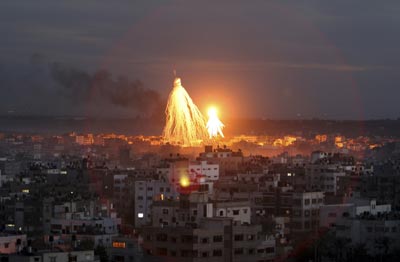
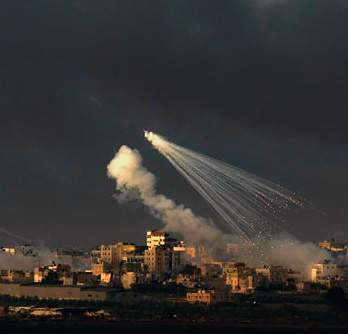
Last week, the United Nations commission released a six hundred page report (PDF) that says Israel committed war crimes against the Palestinians in the Gaza Strip. South African Judge Richard Goldstone who headed the report also says that Israel committed crimes against humanity during the Operation Cast Lead in late December and January. The report also states that the Palestinians committed war crimes by firing rockets into southern Israel. The report confirms that Israel fired the chemical agent white phosphorous in civilian areas, and intentionally fired high-explosive artillery shells upon hospitals. It also claims that Israel used Palestinian civilians as human shields and deliberately attacked Palestinian food supplies in Gaza.
Professor Richard Falk:
- The report is a real milestone in holding the Israeli government accountable at least at the level of affirming facts for its behavior in the occupied territories. A great contribution to the Palestinian Solidarity Movement.
- I think the report went a little too far in the objective view, while it didn’t treat them equally, the report gave a lot of detail on the rockets that were fired from Gaza, and allowed a certain impression of symmetry to be formed, which I think is very misleading.
- The rocket fire is a war crime and should be condemned but at the same time, there was a cease fire in 2008 where the rocket fire was reduced virtually to zero. Hamas tried to extend that cease fire, Israel basically broke it and refused to extend it.
- Reasons why Israel broke cease fire: It occurred near Israeli elections, change in leadership in the US, overcoming the impression of Israeli defeat in the Lebanon conflict of 2006
- Israel kept pressing for an opportunity to show it is a formidable power that shouldn’t be challenged, and in that sense the message was as much to Iran as the Palestinians.
- The report discuss in detail the various incidents in factual detail and confirmed what had been alleged earlier. Attacking civilians who are in complete vulnerability.
- It was the indiscriminant and disproportionate character of the use of force by Israel, that is the focus of the condemnation that is at the core of the report. The report confirms what had been a journalistic consensus.
- The report gives credibility to universal jurisdiction. Universal jurisdiction initiatives are appropriate given the findings of the report. The international criminal court may not be available, but there are other possibilities for ending Israeli impunity and one of them is universal jurisdiction. Countries can push for universal jurisdiction in holding certain Israelis accountable.
- The report will help legitimize the BDS movement. The blockade still in place.
Guest – Professor Richard Falk, Special Rapporteur on Human Rights in the Palestinian Territories for the United Nations High Commissioner for Human Rights who has been barred entry to Israel. He’s Professor of International Law at Princeton, will be the Council’s special investigator of Israeli behavior in the territories and this has incited furious objections from Yitzhak Levanon, the Israeli ambassador to the U.N. in Geneva. Falk replaced South African John Dugard, a veteran anti-apartheid activist.
—————————–
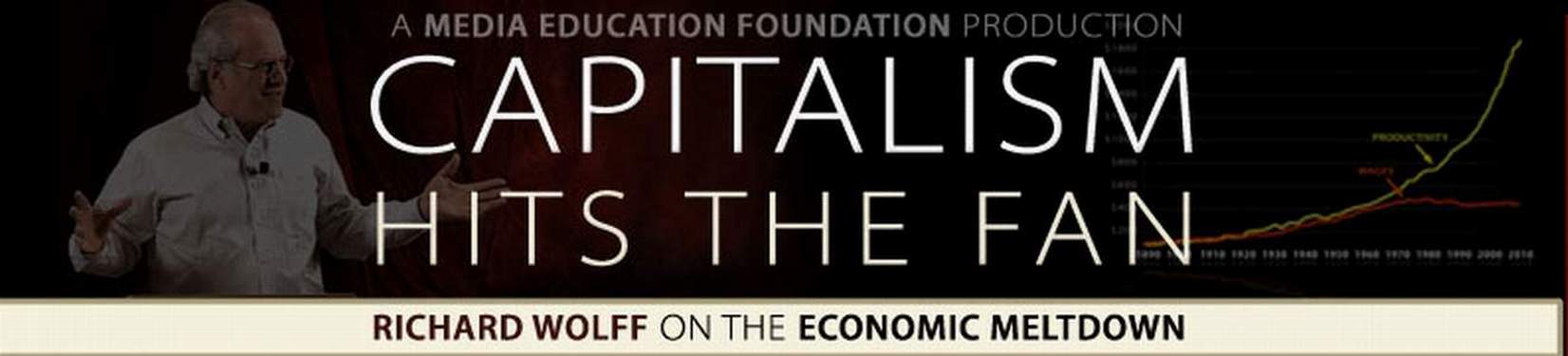
Capitalism Hits The Fan: A Jobless Economic Recovery
Nearly a year ago, the US government seized mortgage banks Fannie Mae and Freddie Mac, within a week investment bank Lehman Brothers went bankrupt that triggered a global financial panic. In the months that followed financial markets tumbled worldwide. With trillions vaporized from the world economy, the US is partnering with G20 groups to create global rules that will govern finance. The US economy is just now showing signs of recovering from one of its deepest economic recession ever.
Rick Wolff:
- False euphoria about recovery, gamblers come into the market, believing it won’t go lower.
- Typically however there’s another leg down, we have people investing in a way expecting the market to drop.
- The whole world went into the toilet (economically) and the Chinese government stock market doubled?
- The Chinese miracle is based on exports, but in order to have exports, the rest of the world has to be able to buy. The rest of the world has been in the greatest depression at least since the second world war
- How can the Chinese keep producing if the rest of world in which they sold, can’t buy?
- My theory is that if the Chinese allow their system to collapse they’d have a domestic impossibility, socially and politically. The Chinese are basically continuing production and storing it. Hold it, and hope against hope, warehouses of toys and everything. Revealed: The ghost fleet of the recession anchored just east of Singapore
- Two bubbles, the Chinese bubble and the US treasury bubble.
- The Federal Reserve prints money, that’s voted on by the Federal Reserve boards. This way they avoid the unpleasantness of having to tax people or borrowing from the private sector
- One out of 15 people in the US labor force today is unemployed (Bureau of Labor Statistics)
- Roughly 59 percent of the US is working, every conceivable worker that can be laid off, is being laid off.
- Is this a real recovery? New businesses? Yes, but workers taking it on the chin.
- American businesses are discovering everywhere, that the future growth is elsewhere, it’s not in the U.S.
- The American working class is being pushed down, with the unemployment, the foreclosures.
- In China and other countries that are desperately poor, there’s a small growing income rich, technical industry, since that’s the only growth anywhere in the world economy, it’s what everyone is excited about, and where everybody is gearing.
- The Obama Administration ought to question the assumption of focusing all their efforts on restoring credit markets and shoring up banks, bailing out busted insurance companies, etc.
- Roosevelt hired millions people in the depths of the depression to work on a whole host of projects, Obama hasn’t done a thing about that, nothing.
- Capitalism Hits the Fan, you can follow how the crisis happened, why it took the forms it did, literally, month by month how it was happening, think about it as a critical analysis, of how we had this crisis, why its not responding to the government, why it is so powerful and global in nature.
Guest – Rick Wolff, Professor of Economics at University of Massachusetts at Amherst. In his new book Capitalism Hits the Fan: The Global Economic Meltdown and What to Do About, Rick takes the reader back to 2005 and step by step reveals how policies, economic structures and wage to profit systems led to a global economic collapse. His books is complimented by the film Capitalism Hits the Fan.
———————————————————————————-
Afghanistan War, Civil Liberties, FBI Intrusion, Human Rights, Iraq War, Supreme Court, Surveillance, Targeting Muslims, Truth to Power, War Resister
Podcast: Play in new window | Download
New Time: Law and Disorder Broadcasts at 9AM on WBAI Listen here
Updates:
- 9-11 Anniversary/ Patriot Act / AUMF / Preventive Detention /Surveillance
- North Carolina terrorists / Consequences of cooperating with FBI
- Spanish prosecution update / Change in universal jurisdiction law / Trying to narrow law at behest of Israelis and Chinese
—–

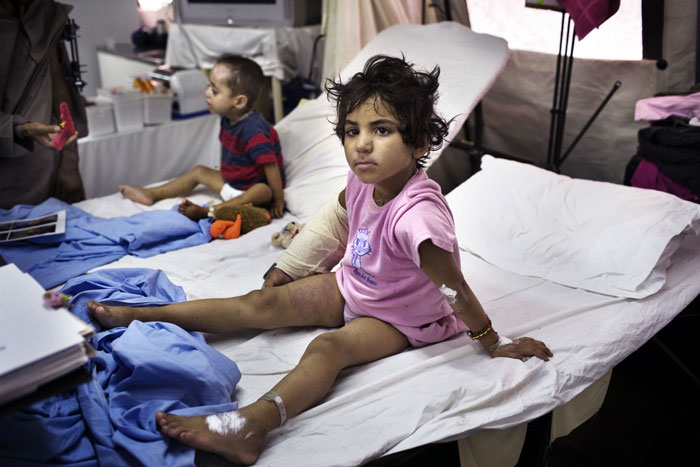
Rethinking Afghanistan
Last week, Defense Secretary Robert Gates affirmed the US miltary commitment in Afghanistan, as thousands of additional troops are deployed. To give us a perspective we are joined by Norman Soloman, executive director of the Institute for Public Accuracy. Solomon is also the author of “War Made Easy: How Presidents and Pundits Keep Spinning Us to Death.” and has written several articles about his experiences in Afghanistan. Solomon has returned from a visit to Kabul in late August. His articles have detailed the war torn landscapes, stunning civilian casualties and the desperate living conditions of Afghani children. Previous Law and Disorder Shows on Afghanistan
Norman Solomon
- It’s worse than the mainline media would tell us.
- People who do go to Afghanistan, travel in a bubble, taken around by the Pentagon and learn very little, often not speaking to any Afghans who aren’t part of Karzai government.
- The intention of the Obama Administration is to wage war in Afghanistan, and humanitarian aid and assistance is an after thought.
- It’s in the foreground for PR, but the suffering is way beyond the number of people killed that’s being reported
- Afghans are outraged at the US killing civilians and outraged at the air war
- There are no Al-Qaeda in in Afghanistan, that’s been true for a while.
- This is a prescription for endless war, repetition compulsion.
- The agenda is less defensive and high blown, they have to do with geo-political positioning which is primary.
- Recommended Book: Descent Into Chaos: The United States and the Failure of Nation Building in Pakistan, Afghanistan and Central Asia.
- Afghanistan War is a humanitarian disaster that continues to unfold.
- The solution has to do with humanitarian and military activity being inverted.
Guest – Norman Solomon, executive director of the Institute for Public Accuracy. Solomon is also the author of “War Made Easy: How Presidents and Pundits Keep Spinning Us to Death.” and has written several articles about his experiences in Afghanistan. Solomon returned from a visit to Kabul in late August.
—–
T.Bishop – photo by: Eric Thompson
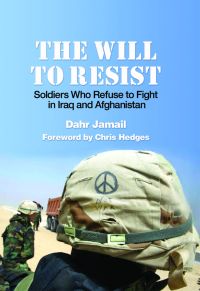
The Will To Resist: Soldiers Who Refuse to Fight in Iraq and Afghanistan
The majority of the United States has opposed the continued occupation of Iraq and as the Pentagon decides to send more US troops to Afghanistan, there is a growing public distrust surrounding this recent escalation of war. Is there also a growing resistance among the ranks of US soldiers? The mainstream media has failed to report on the increasing number of soldiers taking a public stand and finding ingenious ways to express defiance. Author Dahr Jamail has compiled a report of dissent within the military in his recent book The Will To Resist: Soldiers Who Refuse to Fight in Iraq and Afghanistan. Watch Winter Soldier Coverage
Dahr Jamail:
- In the last decade, 50 thousand troops have gone AWOL. In 2007, a 42 percent increase of troops going AWOL in the US Army. Nearly 8 thousand troops each year going AWOL.
- Increase in troops contacting groups such as Courage To Resist and IVAW
- Soldiers resisting are often quickly processed through to shut them up
- Massive escalation in Afghanistan – more than 60 thousand troops. 131 thousand troops still in Iraq.
- McCrystal was advised that after the surge is done, add 45 thousand more troops.
- Lack of quality treatment for PTSD and Traumatic Brain Injury are not lost on the military, they know and understand.
- The Will To Resist focuses on active duty troops and veterans, the lead chapter is about resistance on the ground in Iraq.
- Search and avoid missions, IED lottery, we would find an open field, park there and call in every hour, saying yes we’re still looking for weapons caches.
- We often see a demoralized unit being sent in to an extremely bad situation, when it gets time to gear up, the troops are sitting there and the commander sees them and rather than risk media exposure, he’ll cancel the mission.
- A lot of people still in Canada.
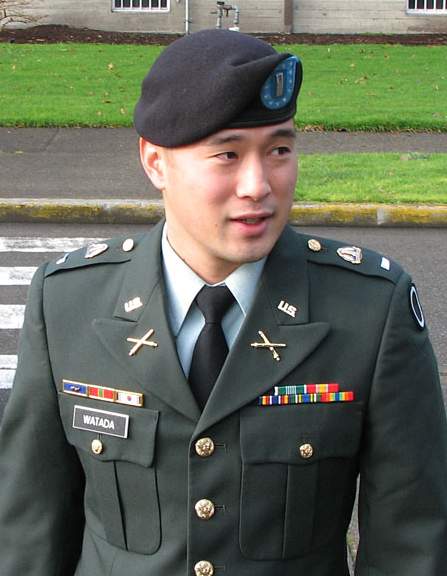
- Soldiers are not informed that they can refuse an unlawful order and that they can apply for conscientious objector status. Two resisters from Fort Hood, SP4 Victor Augusto and Sgt Travis Bishop.
Guest- Dahr Jamail, he currently writes for the Inter Press Service, Le Monde Diplomatique, and many other outlets. His stories have also been published with The Nation, The Sunday Herald in Scotland, Al-Jazeera, the Guardian, Foreign Policy in Focus, and the Independent.
————————————————————————–
Civil Liberties, Criminalizing Dissent, Habeas Corpus, Human Rights, Prison Industry, Supreme Court, Surveillance, Targeting Muslims, Torture, Truth to Power
Podcast: Play in new window | Download
Naomi Wolf – Guantanamo Bay: The Inside Story
Has President Obama begun to honor his promise to close Guantanamo detention camp and undo secretive detention and interrogation policies within the year? Author and political consultant Naomi had to find out for herself. She is back from Cuba and wrote a highly descriptive narrative-style article of the trip titled Guantanamo Bay: An Inside Story. Naomi takes the reader into a surreal world where detainee handlers and lawyers flatly contradict each other and prisoners are viewed from a safari-tour distance.
Naomi Wolf:
- In order to close down an open society, you need secret prisons where torture takes place to create a police state.
- I’ve admired the work at CCR, and I thought since we have a new president I should go down to Guantanamo and see for myself if anything has changed.
- Getting off the plane in Cuba: It was like the Soviet Union in 1948, I was immediately separated from Pardiss Kebriaei. (CCR Attorney)
- Journalists are shadowed, literally every they’re there. Not only do they keep lawyers from doing their jobs, they keep journalists from doing their jobs.
- They literally treat detainees like animals in a cage. Any action that would humanize the detainees is categorically forbidden. They showed us camp x-ray first – the dog kennel-like cages.
- Running around these cages are rats the size of bulldogs.
- I went into another room and there was a huge pile of chairs. I looked closely at the legs and arms of chairs, there were duct tape marks as if someone were taped to the chair for interrogation.
- It was clear that the Obama Team wanted to communicate there was a kinder, gentler Guantanamo.
- Mohammad Al Anashi – alleged suicide. Banality of Evil
- Their bodies are crimes scenes but they can’t talk about what happened to them because it’s classified.
Guest – Naomi Wolf, author of seven books, and the groundbreaking book The End of America: A Letter of Warning To A Young Patriot, which was also turned into a feature documentary. In the book, Naomi addresses ten steps that societies, dictators, and sometimes democracies use to close an open society to move it toward facsism. Her new book is titled Give Me Liberty: A Handbook for American Revolutionaries which is a call to action for every person, activist or not. When you ask that question “What Can I Do?” The answers are outlined in Give Me Liberty.
Listen to past Law and Disorder shows with Naomi Wolf.
————–

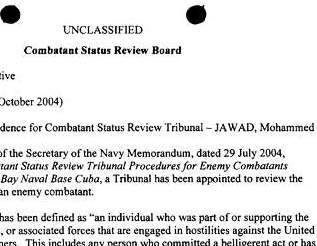
Mohammed Jawad
The Obama Administration proposed a new strategy last week for continuing the detention of Mohammed Jawad, he’s an Afghani being held for allegedly wounding two US soldiers with a grenade in 2002. Jawad may have been as young as 12 when he was picked up in 2002. Last month, the Obama administration conceded defeat when US District Judge Ellen Segal Huvelle told Justice Department lawyers that the case for holding Jawad was quote riddled with holes. Now, the Obama administration under pressure to release Jawad to Afghanistan, is asking to hold Jawad and try the case in a US District Court. A military judge has already ruled that his confession to Afghanistan authorities had been coerced by torture because they threatened to arrest and kill his family.
Jonathan Hafetz:
- Mohammed Jawad, arrested in Afghanistan in 2002 for allegedly throwing a grenade in a crowded market place that injured 2 US service members and their Afghan interpreter.
- Following his arrest, he was beaten and tortured by corrupt Afghan police who also threatened to kill him and his family if didn’t confess to throwing grenade.
- He was then turned over to Americans who continued to torture and terrify him. They then obtained a different false confession.
- He was taken to Bagram Prison at the peak of torture and abuse in December 2002.
- He was then rendered from his home country and taken to Guantanamo in February 2003.
- Mohammad Jawad suffered psychological stress, was observed to be in a trance state, then psychologists saw this as an opportunity to completely break him.
- He was sleep deprived, moved 110 times during a 2 week period.
- Fall of 2008, a military judge threw out false confessions that Jawad made to Afghan and US officials.
- By the end of 2008, the military commissions case was literally on life support, meanwhile Jawad enter’s his seventh year of detention.
- Even after a judge dismissed the coerced torture evidence, Obama administration still tried to use this evidence against Jawad.
- The case now under US District Judge Ellen Segal Huvelle; had granted Habeas petition, ordered Jawad to be released.
- New law: Before transferring a detainee from GTMO to another country, the president must provide notice to Congress. The power to decide release of Guantanamo prisoners still in Executive Branch of US Government.
Guest – Jonathan Hafetz, attorney with the ACLU’s National Security Project and one of Jawad’s lawyers. Jonathan Hafetz blasted the Obama administration for its “pathetic attempt to prolong an outrageous case and to manipulate the court system.”
—————————————————————————–
Afghanistan War, CIA Sponsored Terror, Civil Liberties, Guantanamo, Habeas Corpus, Human Rights, Prosecution of the Bush Administration, Supreme Court, Surveillance, Targeting Muslims
Podcast: Play in new window | Download
Host Updates:
Segments This Week:
——-
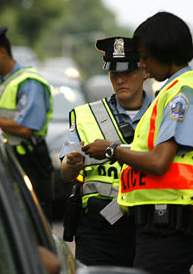
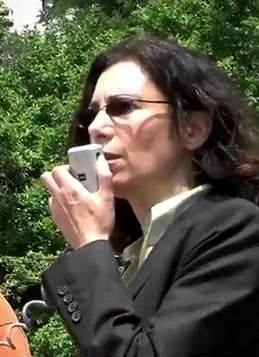
Washington DC Check Points Not Legal: Mara Verheyden-Hilliard
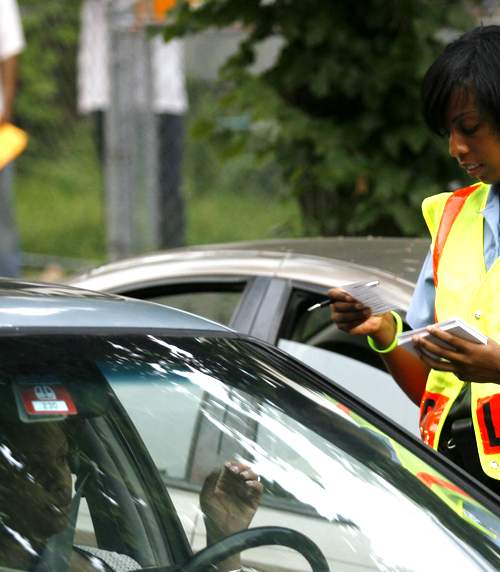
Last summer, D.C. police set up checkpoints around the city’s Trinidad neighborhood and denied access to drivers who refused to disclose their destination. The purpose of the checkpoints, according to the Metropolitan Police Department, was to deter violence after a string of drive-by shootings in 2008. Recently, a federal appeals court ruled that these checkpoints are unconstitutional. In the opinion, Chief Judge David Sentelle of the D.C. Circuit Court of Appeals wrote that “citizens have a right to drive upon the public streets of the District of Columbia or any other city absent a constitutionally sound reason for limiting their access.” The Partnership for Civil Justice
Mara Verheyden-Hilliard:
- We do think if we had not succeeded with this case, it would have been a model in implementation in urban environments throughout the U.S.
- In the District of Columbia, last summer the mayor and the attorney general deployed an extraordinary checkpoint program. It was really a blockade or barricade program.
- It was the sealing off of an entire neighborhood, police setting up check points and not letting anyone through without being interrogated. It’s an interrogation and seizure program.
- The police would question you, as to where you were going, who you were visiting, demand that you provide identity information, information on your associates, information on what you were doing, who you knew.
- You could not continue to drive on this public roadway unless you proved to the satisfaction of the police, a legitimate reason to travel further. When we challenged them, they stayed in court, they defended the program, saying it was absolutely constitutional.
- Plaintiffs included a 50 year old resident, a retired DC school teacher. He would have to be stopped at the checkpoint to get to his own home. Visitors were reluctant to come over, to avoid getting tangled with the police. Racial profiling, police misconduct, abuse of power.
- It’s not nearly that your stopped by the police and you can explain your way in. The police set up 6 defined categories of legitmate reasons for entering. Visiting a friend is not a legitimate reason.
- If crime became the prevention for fundamental fourth amendment rights, then there wouldn’t be any fourth amendment rights to speak of.
- The issue is you have the right to travel down a public roadway without being seized by the police without any allegation of criminal activity or suspicion of criminal wrong doing.
- The Trinidad neighborhood is on the cusp of gentrification. We’re seeing a lot of these programs happening in areas that are moving toward gentrification.
- The community wants geniune responses to crime in their neighborhoods, this program was not only unconstitutional but ineffective.
- We believe they were collecting information at the checkpoints and collecting a criminal database.
- We demanded that they cease that activity and expunge the information collected in the database.
- They were sending in tag readers, they’re mounting cameras on government vehicles, they do a mass scan on license tags and suck up information on where you are.
Guest – Mara Verheyden-Hilliard is an attorney and co-founder of the Partnership for Civil Justice, which represented three drivers challenging the checkpoints.
—————-
Jewish Fast For Gaza
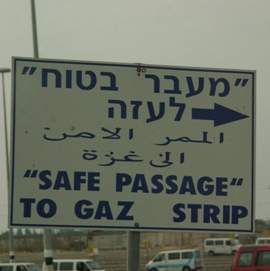
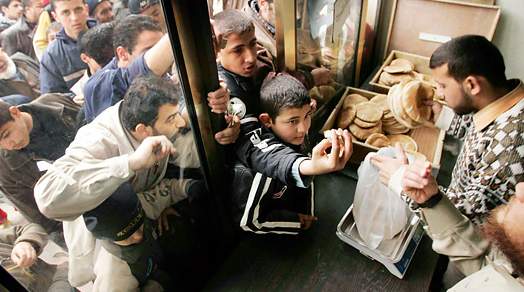
A group of American Rabbis have launched a water-only fast, aimed at breaking the Jewish Community’s silence over Israel’s collective punishment of Palestinians. The initiative, called Jewish Fast For Gaza includes Reform, Reconstructionist, Orthodox and Conservative rabbis who call for lifting the blockade on Gaza. They plan to fast the third Thursday of each month, lasting from sunrise to sunset.
Rabbi Brian Walt:
- This idea of a fast in a time of trouble is an ancient tradition. We were stunned by the silence among the Rabbis.
- So we decided to gather together as a Minyan, to break the silence in our community.
- It’s not a Jewish-only initiative, it’s a Jewish initiated event to draw people of all faiths.
- The state that is the state of the Jewish people is preventing food from reaching children whose growth is stunted by these actions. To be silent in the face of that as a Rabbi, is inconceivable to me.
- Can’t one separate out, an opinion about a government and collective punishment of a whole people?
- Four goals: Lifting Israeli blockade, bring in food, make peace with your enemies.
- Does Israel recognize the Palestinian people?
- Why is Israel asking two things of it’s partner that its not prepared to do?
- It’s a pretext because Israel doesn’t want to negotiate. If Israel doesn’t want to negotiate, they’ll say the other side doesn’t want to, it’s a trick that Israel has done for decades.
- Anyone can join the fast, nearly 600 have joined. 70 Rabbis so far.
- The most vile and violent responses we get come from Israel.
- I grew up under apartheid in South Africa in a very Zionist family with deep connections in Israel.
Guest – Rabbi Brian Walt, co-coordinator of Jewish Fast For Gaza. Rabbi Walt is also the founding executive director of Rabbis for Human Rights-North America and Rabbi Emeritus of Congregation Mishkan Shalom, a synagogue in Philadelphia, PA. He is dedicated to the integration of spiritual life and social justice. Born in Cape Town, South Africa, he was active in the struggle against Apartheid. He is a member of the board of the National Religious Campaign against Torture.
———————————————