Civil Liberties, Crony Capitalism, Guantanamo, Habeas Corpus, Human Rights, Surveillance, Truth to Power
Podcast: Play in new window | Download
Updates:
- Tim DeChristopher Sentencing – Bidder # 70
- Aaron Schwartz, Anonymous Activists and Paypal
- Australian Government Seize Profits from David Hicks’ new book – Guantanamo, My Journey
—-
From Economic to Social Crisis: Deficits, Debt and a Little Class History
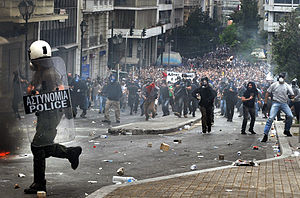
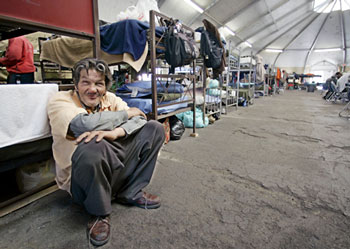
We welcome returning guest Rick Wolff, Professor of Economics. We talk with him about his latest article, From Economic to Social Crisis: Deficits, Debt and a Little Class History. Earlier this year Rick pointed out how the Democrats and Republicans debate over spending cuts at around 40 to 60 billion. Rick says the debate is inconsequential, when the federal budget’s projected deficit of $1.5 trillion will carry an annual interest cost of $40-60 billion. Now, as both parties are committed to a broken, corrupt system, Rick points out that historically transitioning to another economic system is not in the public discussion. He says, the tools used to recover from the 1930s economic collapse can’t be used today mainly because of the last 75 years of rising national debt and budget deficit.
Professor Rick Wolff:
- This is mostly theater, the people I talked to in the business of finance and government are quite clear that the United States will work this out.
- It is a sign of the political dysfunction that they can’t do it in a reasonable way.
- It is a normal procedure to periodically ask for the debt ceiling to be raised, so that they can borrow the amount of money stipulated by the budgets they have passed. The sitting president asks for the debt ceiling to be raised, Bush did it eight times. It’s normal.
- The only thing the Democrats have left, to not look defeated, is to make a big deal out of the cuts they’re willing to accept are smaller than the “draconian” version that the Republicans want.
- The Republicans don’t know, the Democrats don’t know (what will happen). They fundamentally don’t care, because they have long ago decided that their political needs and strategies are unhooked from the underlying economic situation.
- We’re spending 3.5 trillion dollars this year as a Federal Government. We’re raising 2 trillion. That means 1.5 trillion has to be borrowed otherwise its not going to happen.
- That’s money that will be used to help old people’s needs, help fight wars in Iraq, Afghanistan, Libya, Pakistan, to help cities and states that need support, etc.
- The actual creditors in the immediate situation have nothing to fear.
- For the rest of the world you have a double whammy, which is what we should be thinking about.
- We have the driver of the world’s economy collapse in 2007/2008 and having been unable to recover since.
- The bottom line is this economy isn’t working well and isn’t solving its crisis. This is now a deeper, longer crisis than any since the Great Depression.
- That means every other player in the world, from a Chinese official, to a Spanish bank to an investor in Brazil has to rethink what he or she thought.
- A thousand small decisions are going to be made a little differently from now on.
- There is no proposal working its way through Congress to provide employment to the tens of millions of people who have no work.
- The president’s statement (is a bipartisan commitment to ignore the problem of unemployment.)
- The most extreme proposal is to cut 4 trillion dollars in the next ten years. This year alone the US deficit will run one thousand five hundred billion. 1.5 trillion.
- The debtors know that at a certain point there’s going to be trouble.
- You can’t continue to cut the masses’ standard of living to make money for big bankers, that’s not a political sustainable program. Not here, not in Greece, not anywhere else.
- The silence of the press here is stunning. There have been multiple general strikes across Europe.
- The greed of the corporations, they’ve had their way for 30 years. Republicans and Democrats alike, have basically gone in the direction they want. Corporate taxes have been cut, regulations relieved, money is everything, wealth is everything, consumption is where you are.
- The smaller business (corporations, etc) are late to party. They still want to get theirs. Those who already got theirs don’t want them to mess up the game. I believe you will see big splits emerging among the Right in America because these are different attitudes.
- They want a stable United States so that they can grow in the rest of the world, because that’s where they think growth is coming.
- They don’t need to maintain the roads like they did, they don’t need to maintain the education in this country.
- You can appeal to them, you need these workers, you need these consumers. No we don’t. We don’t need them as workers, and we don’t expect them to be much in the way of consumers, because they would have to borrow and we’re not going to lend to them.
- They would have to have higher wages, and we’re not going to give that to them. We have no reason to, we have cheaper better workers elsewhere.
- You are subjecting your working class to a major sustained attack on its standard of living. To believe this is all going to happen and they’re quietly going to sink some resignation with no consequence is nutty.
- The attempt to isolate, to freeze, to inoculate the population so they don’t fear what’s coming. It’s falling apart in Europe, but it will fall apart here too.
Guest – Richard D. Wolff is Professor of Economics Emeritus, University of Massachusetts, Amherst where he taught economics from 1973 to 2008. He is currently a Visiting Professor in the Graduate Program in International Affairs of the New School University, New York City. He also teaches classes regularly at the Brecht Forum in Manhattan.
Afghanistan War, Civil Liberties, Extraordinary Rendition, FBI Intrusion, Guantanamo, Habeas Corpus, Human Rights, Surveillance, Targeting Muslims, Torture, Truth to Power, War Resister
Podcast: Play in new window | Download
Ten Years after 9/11: War, Operation American Condor (Guantanamo) , Civil Liberties and Hope
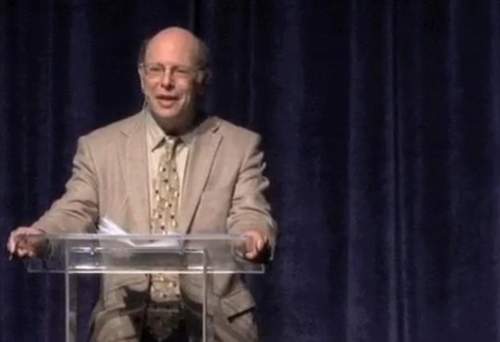
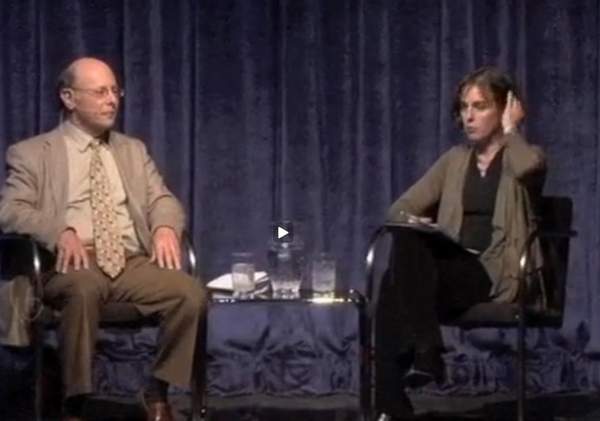
We hear a talk from our own Michael Ratner who spoke at the James A Little Theater in Santa Fe, New Mexico. He was also in conversation with radio host Mary Charlotte Domandi. The event was titled – Ten Years after 9/11: War, Operation American Condor (Guantanamo) , Civil Liberties and Hope.” Michael is introduced by Mary-Charlotte Domandi producer and host of the Santa Fe Radio Cafe on KSFR 101.1 FM (Santa Fe, NM, Public Radio)
Michael Ratner is President of the Center for Constitutional Rights (CCR) in New York and the European Center for Constitutional and Human Rights (ECCHR) in Berlin. Both are non-profit human rights litigation organizations. He was part of the small group of lawyers that first took on representation of the Guantánamo detainees in January 2001, a case that resulted in a victory in the Supreme Court in 2004. CCR established a network of over 600 pro-bono lawyers to represent Guantánamo detainees and continues that work.
He has filed criminal complaints in the courts of Germany, France and Spain against former US officials including Secretary of Defense Rumsfeld seeking the initiation of criminal prosecutions against them for the Abu Ghraib abuse and torture as well as for their actions at Guantánamo. Recently, CCR and ECCHR prepared papers to file in Switzerland against George W. Bush for torture. As a result Bush canceled his trip. A major area of Mr. Ratner’s litigation and writing is the enforcement of the prohibition on torture and murder against various dictators and generals who travel to the United States. He has sued on behalf of victims in Guatemala, East Timor, Haiti, Argentina, among other countries. He has also litigated numerous suits to prevent or stop illegal US wars ranging from Central America to Iraq. A constant in his work has been litigation against government spying and surveillance of activists.
Michael Ratner’s books, authored or coauthored, include the soon to be published, Hell No: Your Right to Dissent in 21st-Century America (2011) and Killing Che: How the CIA Got Away with Murder (2011). Other books include International Human Rights Litigation in U.S. Courts, Second Edition (2008); Against War with Iraq (2003); Guantánamo: What the World Should Know (2004); and The Trial of Donald Rumsfeld: A Prosecution by Book (2008). Ratner has taught human rights litigation at Yale and Columbia Law Schools. A past president of the National Lawyers Guild, Ratner has received many awards including Trial Lawyer of the Year, the Columbia Law School Medal of Honor (2005), the North Star Community Frederick Douglass Award, Honorary Fellow at the University of Pennsylvania Law School (2005), and The Nation Institute/Puffin Foundation Prize for Creative Citizenship (2007). In 2006, the National Law Journal named Ratner one of the 100 most influential lawyers in the United States.
—-

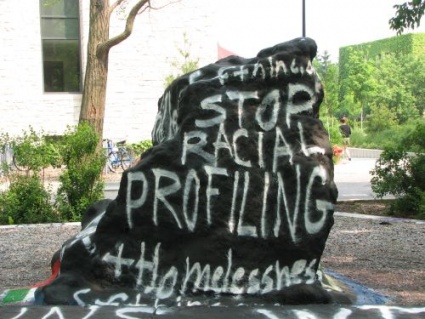
Right-Wing Firms Train Public Servants on Terror Threats
There is a sprawling hidden world of counter-terrorism organizations growing beyond control in the United States. Twenty-four of them were created by the end of 2001, including the Office of Homeland Security and the Foreign Terrorist Asset Tracking Task Force. The next year, 37 more were created to track weapons of mass destruction and collect threat tips. By 2009, nearly 260 organizations were created as 854 thousand civil servants, military personnel and private contractors with top-secret security clearances monitor national security concerns. However, according to a report from the Public Research Associates, those same concerns have bolstered a class of self-proclaimed terrorism experts who decry Islam as an evil religion of terrorists and routinely brand Muslims as primitive, vengeful, duplicitous, and belligerent people who oppress women and gays, and have values irreconcilable with “western Judeo-Christian civilization.”
In fact, when PRA discovered earlier this year that the Massachusetts Bay Transportation Authority (MBTA) had contracted with Security Solutions International to conduct a training on radical Islam, they notified the Muslim American Society, ACLU, and our other advocacy partners, who used PRA’s research to compel the MBTA to cancel the agency’s training.
Chip Berlet :
- As part of the Homeland Security Initiatives and working with the FBI in other aspects of the national security apparatus, there was a need to train thousands as part of a local state and federal counter-terrorism “experts.”
- Some of these trainings are quite good. The problem is that there are a handful of groups that train hundreds and hundreds of local, state and federal counter-terrorism experts, with rhetoric that is basically Islamophobic.
- In the late 1970s there was an attempt to restrain this illegal surveillance. I’d have to say right now it’s worse.
- What used to be done illegally and covertly is now done ostensibly legally and openly and in fact proudly by both Democrats and Republicans who should be ashamed.
- The whole strategic suspicious reporting initiative which basically is a pipeline for unverified rumor and innuendo through local police departments up through a chain of information agencies to the federal government. We know in Europe this kind of reporting is unconstitutional and bad for society.
- Now, everyone that was considered illegal and unconstitutional for which there were Congressional hearings and reforms under Jimmy Carter, now we do it.
- In proper training that is actually looking for criminal activity, not people of color who wear garb that we’re scared of. What’s going on here is untrained, badly trained officers are reporting the names of people up into a huge infrastructure of information data storage, based on bias they’ve not been trained to resist or confront within themselves.
- We described this whole process as a platform for prejudice in a report by Tom Cincotta
- Tom has on his wall a wall chart of all the agencies of this information reporting system and it has 150 dots so inter-connected, no one can control this.
- I’m urging people to form broad coalitions across the political spectrum.
Guest – Chip Berlet, (senior analyst) is a veteran freelance writer and photographer who specializes in investigating right-wing social movements, apocalyptic scapegoating and conspiracism, and authoritarianism. A PRA staffer since 1982, he has written, edited and co-authored numerous articles on right-wing activity and government repression for publications as varied as the Boston Globe, the New York Times, The Progressive, The Nation, The Humanist, and the St. Louis Journalism Review.
Afghanistan War, Civil Liberties, Criminalizing Dissent, FBI Intrusion, Habeas Corpus, Human Rights, Surveillance, Targeting Muslims, Torture, Truth to Power
Podcast: Play in new window | Download
Updates:
—————
Blair Mountain March
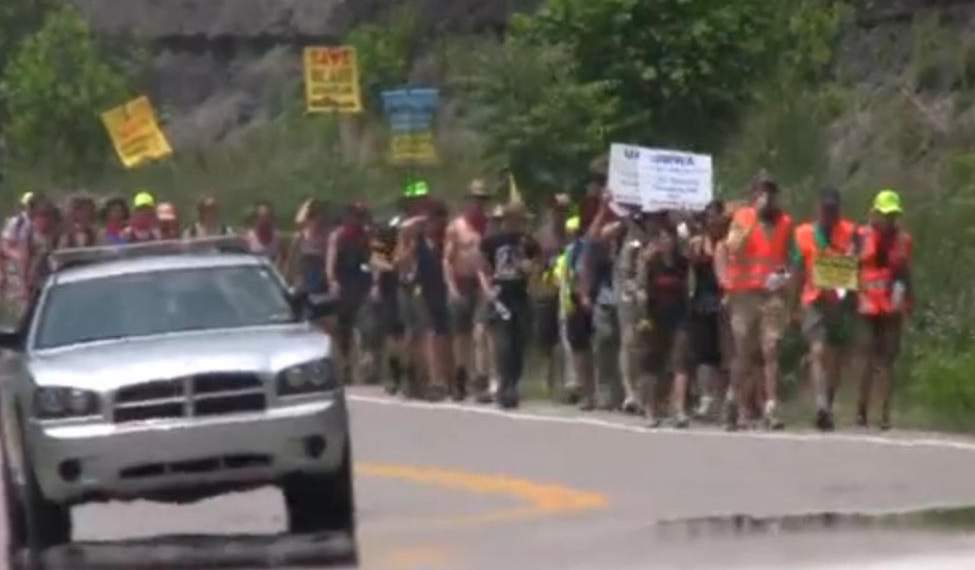
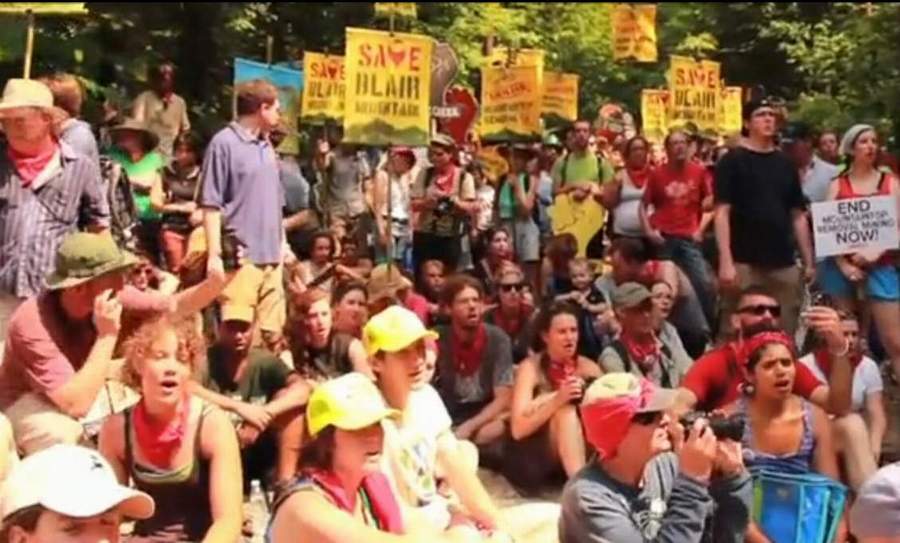
In protest to stop mountain top removal mining, hundreds of activists finished a five day fifty mile march earlier this month from Marmet, West Virginia to Blair Mountain in West Virginia. The massive under publicized march also marked the historic Battle of Blair Mountain, the largest armed conflict in US labor history. In 1921, thousands of miners near the area marched to organize non-union coal mines. This demonstration ended in a rally of speakers, musicians, celebrities, union workers and picketing at the top of Blair mountain. The demonstration drew attention to the demand of sustainable job creation in all Appalachian communities, abolish mountaintop removal, strengthen labor rights and preserve Blair Mountain. As many listeners know, mountain top removal is a highly destructive extraction coal mining process with usually no environmental remediation.
Attorney Dan Gregor:
- It is not an exaggeration to say that big coal owns southern Virginia.
- Logan and Boone Counties where we walked through, big coal has more or less owned the politics, the citizenry, the economy for a century.
- The Congressional Delegation is very sympathetic to what they perceive as coal jobs.
- During the marches we had 200-250 people at any given time.
- Putting myself in the best way that I can do legal support, and one of the core logistics organizer of the event, best do organizing support, it put myself in a position where I was knowingly arrestable.
- It was alternately exciting and freeing and terrifying. It’s a very activist lawyer, resistance approach.
- There are locals who don’t understand this doesn’t mean more jobs or it means a fraction of unionized jobs for organized coal workers.
- The Boone County Sheriff department was somewhat less then helpful. For the most part, the West Virginia State Police were professional and did their jobs carefully. We didn’t see police misconduct, or police brutality as you would see in most mass protest situations.
- The broader strategy is calling for an end to mountain top removal coal mining, transitioning to a cleaner economy with wind and solar.
- One of the reasons you don’t see mountain tops blown up in Tennessee for example, is that the Congressional Delegation there, has been resistant to it, in West Virginia, historically it hasn’t.
- Mountain top removal coal mining produces very high quality, pure Anthracite Coal, this is part of Obama’s “Clean Coal” strategy.
- A great deal of my practice is resistance law, and is assisting resisting communities.
- I’ve been able to make this a significant focus of my life as an attorney.
- Ilovemountains.org / allianceforapplachia.org
- We can always use more people, more attorneys. It took six months to organize this March on Blair Mountain, no ordinary task for volunteers.
Guest – Dan Gregor, activist attorney whose practice includes protest defense, criminal defense, immigration, and human and civil rights law. This has included assisting and representing activists involved with the annual School of the Americas Watch vigil, the Immigrant Workers Freedom Ride, people being harassed by Green Scare grand juries, and many other activist causes. Dan is a graduate of Northeastern University School of Law and Hampshire College. He is an active member of the National Lawyers Guild, and former National Vice President of the Guild.
——————
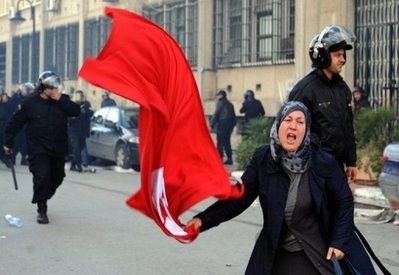
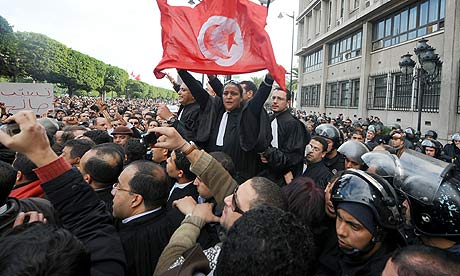
National Lawyers Guild Report: Human Rights In Tunisia
A wave civil resistance continues throughout the country of Tunisia, Africa sparked from high unemployment, food inflation, corruption, and lack of freedom of speech. During the country’s civil unrest, President Zine El Abidine Ben Ali was ousted as president, fleeing to Saudi Arabia after 23 years in power. Now, human rights violations are being investigated. A group of lawyers from the U.S., U.K. and Turkey have been investigating U.S. and European complicity in human rights abuses committed by the Ben Ali regime. The group has recently issued a warning that the U.S. and other Western governments must respect Tunisian sovereignty and not interfere in that country’s path to democracy. Atlanta attorney and National Lawyers Guild Executive Vice President Azadeh Shahshahani, was a member of the delegation and is on a speaking tour.
Azadeh Shahshahani:
- The Tunisian government passed this law, the 2003 anti-terror act. US State Department very supportive.
- If you go back to look at the US State Department Human Rights report on this, you can see the human rights violations are documented in the reports.
- It’s not like the US government didn’t know what was happening in those jails. Particularly the Islamists, after the legislation went into effect, a lot of people were picked up, for being a Muslim, for being a devout, perhaps engaging in religious discussions with your friends,
- A lot of youth were arrested and subjected to torture. Torture seemed to be really systematic, you’re arrested, detained, then tortured and confession is obtained.
- One family of a young man arrested, the father asked authorities why his son was arrested, he hasn’t done anything? They said, well, he does pray, doesn’t he?
- That was the sole basis of having been picked up. Arrests: one per day under the auspices of the Tunisian 2003 anti-terror act.
- Revolution in Saudi Arabia? Michael Ratner: That could the greatest thing that could happen.
- This “war on terror” provided the Ben Ali regime, was an enabling mechanism and justification to continue his repressive tactics.
Guest – Azadeh Shahshahhani, the Director of the National Security/Immigrants’ Rights Project at the ACLU of Georgia. The project is aimed at bringing Georgia and its localities into compliance with international human rights and constitutional standards in treatment of refugee and immigrant communities, including immigrant detainees. To that end, a variety of strategies are employed, including the development of impact litigation, legislative advocacy, providing training to attorneys, human rights documentation and the publishing of reports, public education, and coalition and movement building. The current focus areas of the project include: immigration detention, racial profiling and local enforcement of immigration laws, governmental surveillance, discrimination faced by Muslim, Middle Eastern, and South Asian communities, immigrant access to higher education, and language access in the court setting.
——————————————————
Civil Liberties, Criminalizing Dissent, FBI Intrusion, Habeas Corpus, Human Rights, Political Prisoner, Surveillance, Targeting Muslims, Torture, Truth to Power, War Resister
Podcast: Play in new window | Download
Updates:
——–
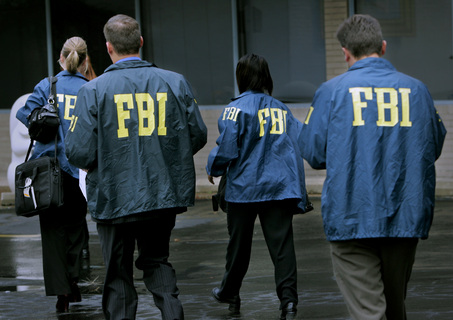
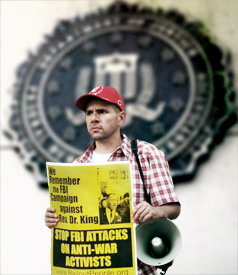
FBI to Expand Domestic Surveillance Powers
On many of our shows, we’ve discussed the broad over reaching powers and underhanded tactics the FBI use when targeting environmental or pro-Palestine activists, Mosques and Muslim-Americans. Now, new expanded FBI guidelines would allow agents easier access to search commercial or law enforcement databases, conduct lie detector tests, search people’s trash and conduct physical surveillance. Read: Anything Goes: The New FBI Guidelines
Though the guidelines are still under review, they would allow agents further access into people’s lives without suspicion of wrongdoing. The guidelines will be part of a new edition of the FBI manual, the Domestic Investigations and Operations Guide. Civil libertarians criticize the guidelines in light of recent cases such as the Fort Dix Five, the Newburgh Four and Yassin Aref in Albany, where the FBI is accused of entrapping people by infiltrating poor or specific ethnic and religious communities. Michael Ratner’s Forthcoming Book: Hell No, Your Right To Dissent
Attorney Mike German:
- The government is saying they have unfettered authority to look into your private life without any justification, and they’re claiming they don’t need any factual basis to suspect you of wrongdoing.
- National Security Letters were initially a tool to go after KGB spies, it was expanded to international terrorists. What the Patriot Act did is expand it to anyone who’s relevant to an investigation of spies or terrorists.
- The fact that the government had no reason to suspect you was no longer relevant if they could use this tool.
- That was originally set to sunset in 2005. Inspector General audit on the FBI’s use of this tool. There were five IG reports, that found the FBI were using these tools against people two or three times removed from the person of the investigation.
- Phone records, bank records, credit history and they gag the bank or place from telling you.
- IG audit found between 2003 and 2006 there were over 200 thousand National Security Letters.
- Its the FBI manual, the Domestic Investigations and Operations Guide, the FBI’s internal policy. Their internal authority created by the Department of Justice.
- These were initially designed to curb the abuse. As an FBI agent for 16 years, I found it useful to focus on the people doing bad things, not straying from that and focusing on people saying things I didn’t like, or doing things I didn’t think were right but wasn’t illegal.
- The outgoing administration in 2008 had radically altered the guidelines. People who are completely innocent and not suspected of doing anything wrong can come under suspicion and investigation under these assessments.
- The 2008 guidelines allowed the FBI to map communities based on race and ethnicity and track racial and ethnic behavior and facilities.
- Under these new guidelines 2011, an FBI agent would be allowed to search private databases, data aggregaters, that pull together all sorts of information based on marketing, state and local law enforcement information – includes if you’ve also been a victim of crime or witness to a criminal act. No factual predicate required.
- It doesn’t require attorney general approval to open an assessment. There’s no necessity to identify what federal crime they think you’re violating.
- The tools include physical surveillance, they can stand outside your house, follow you around 24/7. They can get an informant to start engaging you in a false pretense, and your friends or neighbors.
- They can interview your neighbors, they can interview your employer.
- When you become a subject of investigation you get on the terrorist watch list.
- The scary thing the Inspector General revealed, is that these (abuses) were all under the 2002 guidelines. He said where he found violations, under the 2008, this would all be perfectly legitimate.
- We at the ACLU are not just seeing the abuse with the FBI but within state and local law enforcement. You can visit www.aclu.org/spyfiles we’ve documented spying and obstruction of first amendment activity in 31 states and the District of Columbia.
- It was predictable because these laws were put in place to prevent exactly that, because that’s what the state and local police and the FBI were doing in the absence of rules.
- It’s not surprising when you take those rules away, they go into political spying mode.
- It’s very frustrating, because so much of what’s happening is happening is secret.
- Scott Crow: He found under a FOIA request, the FBI had gone to the IRS to find some small tax violation that they could put him in jail for. Because they suspected him of something, yet they had years of investigation and found no wrong doing.
- Mike German’s book – Thinking Like A Terrorist, it’s a look at what terrorists are trying to accomplish, that is to coerce the government into taking measures that actually take away the government’s legitimacy.
- Past Law and Disorder interview with Attorney Mike German.
Guest – ACLU attorney and former FBI agent, Mike German, German develops policy positions and proactive strategies on pending legislation and executive branch actions concerning domestic surveillance, data mining, freedom to travel, medical and financial privacy, national ID cards, whistleblower protection, military commissions and law enforcement conduct. German currently serves as an adjunct professor for Law Enforcement and Terrorism at the National Defense University and is a Senior Fellow with GlobalSecurity.org. German graduated from the Northwestern University Law School , and graduated cum laude from Wake Forest University with a B.A. in Philosophy. A sixteen-year veteran of federal law enforcement, German served as a special agent with the Federal Bureau of Investigation, where he specialized in domestic terrorism and covert operations. As an undercover agent, German twice infiltrated extremist groups using constitutionally sound law enforcement techniques. These operations successfully prevented terrorist attacks by winning criminal convictions against terrorists.
——————————————————————–
CIA Sponsored Terror, Civil Liberties, Criminalizing Dissent, Habeas Corpus, Human Rights, Prosecution of the Bush Administration, Surveillance, Targeting Muslims, Torture, Truth to Power
Podcast: Play in new window | Download
Updates:
——

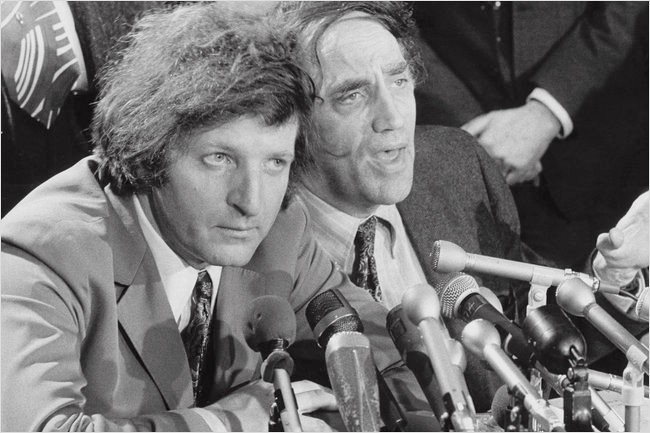
In Memory of Attorney Leonard Weinglass
Hosts remember one of the great civil rights attorneys, Leonard Weinglass from his early years as a lawyer in the Air Force to his big cases. Michael Smith shares a great anecdote. Len vigorously defended a black soldier and upset the Air Force brass. They sent him to Iceland for 2 years. Much later in the late fifties, he moved to Newark, NJ, set up a one man office and represented black people in police abuse cases.
The remarkable and heroic progressive lawyer Len Weinglass died on March 23. Among his cases were the Chicago 8, the Ellsberg case and the Cuban 5. He was our close comrade and will be missed by his friends and all those seeking a better world. – Michael Ratner.
——–
A Poem for Len Weinglass by Linda Backiel
Almost Ready
“I have everything almost ready for the spring,”
you said. Brush cut, brambles cleared, new trees
planted. A lop-sided smile flit across your silver
stubble beard, a late winter field momentarily lit
by a break in a fleet of migrating clouds.
click for more
——–


Universal Jurisdiction: Attorney Wolfgang Kaleck
Co-host Michael Ratner interviews attorney Wolfgang Kaleck, German civil rights attorney and General Secretary for the European Center for Constitutional and Human Rights. They discuss the effectiveness of Universal Jurisdiction cases. The cases that helped international human rights prosecutions. Specifically the cases in Argentina against corporations that profited from dictatorships and human rights abuses and how Argentina can be used as a model to bring cases against other powerful leaders or corporations. Optimism overcomes cynicism, Wolfgang says its not easy, it’s work bringing cases against the powerful of the world.
Attorney Wolfgang Kaleck:
- I have the privilege to work on behalf of Germans and Argentinian victims of the Dirty War between 1976 and 1983 in Argentina.
- The Argentinian cases and the Chilean cases were the most important phase in universal jurisdiction.
- We filed cases in Germany, Italy and France.
- The idea to file Argentinian and Chilean cases in European courts was not to try Argentinians and Chileans in Europe but to impose accountability in Chile and Argentina.
- That’s what people call the Pinochet Effect.
- In 2005 and 2006 when the amnesty laws were abolished. If you go to Buenos Aries now you will observe military junta tribes from Monday to Friday and you will police officers, military leaders, torturers, guards.
- At this point, special prosecutors and parts of the civil society are demanding an investigation and prosecution into crimes committed by corporations who aided and abetted the dictatorship, or who profited from the dictatorship.
- The history in Argentina, 30 thousand people disappeared, 100 thousand were tortured.
- The human rights movement in Argentina was so strong, that they maintained a certain presence, a certain public attention.
- For us, Argentina is like the blue print. They inspired the human rights movement not only in Europe
- I filed a case at Mercy Dispense because in Buenos Aires, 15 trade unionists were disappeared. We filed the criminal case in Germany against a German-Argentinian manager who had duel citizenship which allowed us to bring the case in Germany. Then we filed a case in the US, an alien tort claims which is still pending. We filed a case in Argentina which is still pending.
- One line is to blame the torturers and the torturer leaders, we want to talk about why these human rights violations have been committed. Why the Argentinian military took the decision to oppress their populations and our explanation is that they wanted to install a political and economic system which needed the extermination of the trade unionists.
- Actually to demand accountability and do these investigations is trauma work. Society that hasn’t dealt with its past has some problems in the present. Argentina is worth studying as an example.
- Universal Jurisdiction is showing its limits. So far it was very difficult to bring cases against the powerful of the world.
- The suspicion that the criminal justice system is just another tool of the powerful against the powerless,
- We have to try to bring cases against the powerful, Russian, China, the US, or Sri Lanka or Israel, who all undertake actions to avoid prosecution.
- We are very optimistic that some investigation will be carried out in Spain but some people are over-pessimistic, because even now, we achieved that several former US officials, or from the CIA or from the Army, or politicians can’t travel anymore, without running the risk to be arrested.
- We achieved something, I’m also not satisfied from it but still its more than we thought possible.
- President Bush wanted to go to Switzerland.
- It’s always an argument against those cynical people who say nothing is possible. Yes there is, something is possible. We do have to struggle to maintain this, the whole international criminal justice system is at stake.
Guest – Attorney Wolfgang Kaleck, a German civil rights attorney. He is also the General Secretary for the European Center for Constitutional and Human Rights. On November 14, 2006, Kaleck sought criminal prosecution charges in German court against a number of US officials and military personnel in connection with alleged human rights abuses at the prison facilities at Abu Gharib and Guantanamo Bay on behalf of eleven plaintiffs. Approximately 30 human rights activists and organizations participated as co-plaintiffs
Afghanistan War, CIA Sponsored Terror, Civil Liberties, Habeas Corpus, Human Rights, Iraq War, Surveillance, Targeting Muslims, Torture, Truth to Power
Podcast: Play in new window | Download
Updates:
—
“Operation Libya” and the Battle for Oil: Redrawing the Map of Africa
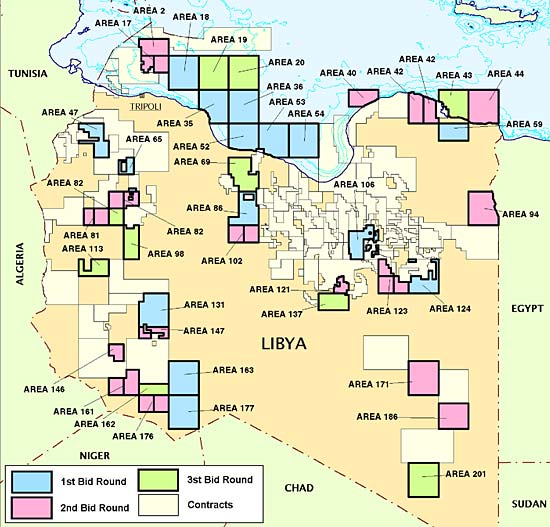
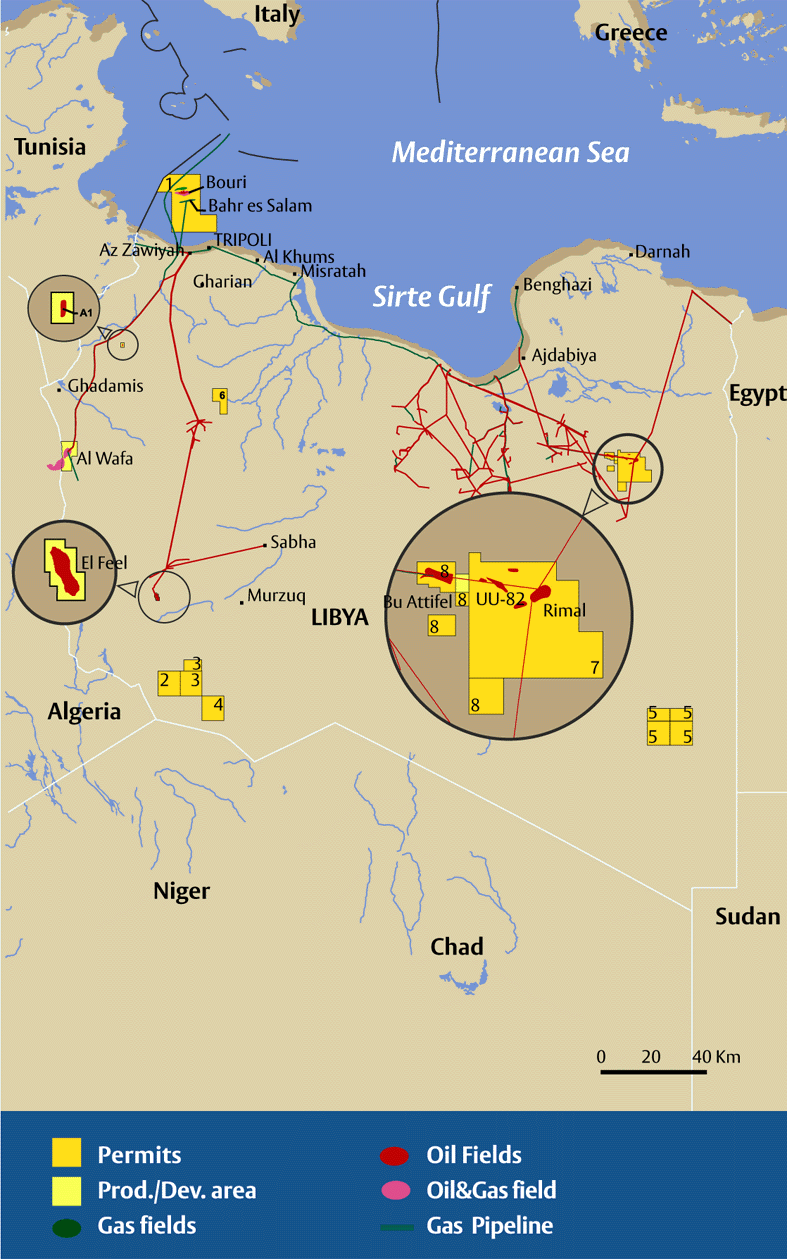
The US and allied air strikes on Libya will have far reaching geopolitical and economic implications. Libya is the among the world’s largest oil economies with near 3.5 percent of global oil reserves, twice that of the United States. What’s going here? As Professor Michel Chossudovsky writes in his article “Operation Libya” and the Battle for Oil: Redrawing the Map of Africa.” there is no such thing as a just war. This is part of US imperialism as drafted in the 2000 Report of the Project of the New American Century entitled “Rebuilding Americas’ Defenses.” One of the main components of this military agenda is: to “Fight and decisively win in multiple, simultaneous theater wars”. Libya counts as the fourth theater of war along with Palestine, Afghanistan, Iraq. In all of this the mainstream media has used a massive disinformation in justifying this military agenda.
Professor Michel Chossudovsky:
- This is not a humanitarian intervention. It is a carefully planned military operation. This was on the drawing board of the Pentagon, well before the protest movements in Egypt.
- It is a war theater, and should be viewed in the broader context of the war theater, namely Iraq, Afghanistan and Palestine. It opens up a new area of militarization in North Africa. It has devastating consequences and is part of a global war.
- The object of coming to the rescue of civilians by bombing with cruise missiles is an absurd proposition. They’re bombing civilian infrastructure. The same agenda as the previous war theaters, they have a list of targets and go ahead and bomb. This whole notion of responsibility to protect is nonsense.
- They’re getting away with it because the media is lying through their teeth.
- Clearly there are Al-Qaeda elements that are supported by the CIA. Two years ago, the Gaddafi government made a deal with the CIA. We know that Al-Qaeda is an intelligence asset. It can be used precisely to create these conditions of insurrection as occurred in Bosnia and in Kosovo. We have to investigate a little more, who is behind the insurgency. The insurgency is not there to win a civil war, the insurgency is there to create a pretext for an intervention.
- I suspect this opposition is heavily divided in any event. Obama has ordered drone attacks in Pakistan.
- The Chinese have sizable interests in Libya. This is also directed against France and Italy, its France and Belgium that are being shoved out of Central Africa.
- Libya borders on Niger, its the entry into central Africa. Niger is important because it has large reserves of Uranium, which is in the hands of a French conglomerate.
- The conquest of Libya is the battle for oil, the same logic as Iraq.
- I estimated that Muslim countries have about 65-75 percent of global oil reserves. That is why we’re demonizing Muslims, they happen to inhabit.
- Bahrain and Yemen peaceful protesters getting hit with nerve gas.
Guest – Professor Michel Chossudovsky, director of Global Research.ca , Center for Research on Globalization. An independent research and media organization based in Montreal, Quebec, Canada.
————-
Community Service Society Report: Black Youth Unemployment
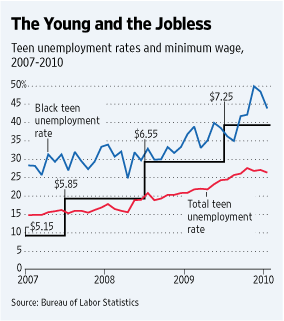
Unemployment in a jobless economic recovery has hit young African American men the hardest according to a recent report by the Community Service Society. PDF The highest unemployment rate in 2009 was among men 16-24 years of age—their overall unemployment rate hit 24.6 percent during the recession. Breaking it down by race, young black men had the highest unemployment rate in this group at 33.5 percent. While only one in four black men ages 16-24 have a job in the city, that figure drops to an astounding one in ten for young black men without a high school diploma.
“The recession has created a landscape of the unemployed and underemployed with particular catastrophic consequences for young African American men,” said David R. Jones, president and CEO of the Community Service Society of New York. “We have long known the struggles of the more than 200,000 youth in New York City who are out of work and out of school. Now young black men between 16 and 24 years have become the banner of hopelessness, particularly here in New York City.”
David R. Jones:
- Those who’ve never made the connection to work or those who’ve ceased trying. We’re talking hundreds of thousands of people involved here. African Americans constitute about a third of New Yorkers.
- I think people have to recognize we’re in something totally new.
- At least anecdotally, the Great Depression didn’t have this kind of impact on the black community that this recession is having on them.
- New York in the Great Depression was a segregated city, were working exclusively in black communities or trades that were circumscribed.
- You get pullman porters and restaurant work which were the reserves for African Americans before the civil rights movement hit. The homeless of New York were white on Bowery.
- While we’re seeing a better recovery, the number of long term unemployed is actually greater than New York than other municipalities.
- The trouble is you start to lose job skills, you lose hope, all sorts of with friends and employment start to disintegrate.
- We did a report on security guards and I went back to look at it. There are 63 thousand security guards in the city of New York and virtually none of them are unionized, their average wage was $10 an hour, no health insurance, no paid sick leave.
- New York has an usually high concentration of the working poor.
- We’ve been focusing all our efforts, in terms of how we deal with poverty on the issue of on this nexus between work and getting to a position where they can support themselves and their families.
- This is not limited to the South Bronx or Crown Heights, this is a national phenomenon.
- We know when we did our report on disconnected youth, we had 200 thousand disconnected youth in New York, there were nearly 5 million disconnected youth scattered across the country before the recession.
- We’re never going to go back, to the unemployment levels that we found unacceptable in New York of 5% again. That we’re going to back down from the 9.5 %.
- It was always the expectation, if you worked really hard, there’s was going to be a way, sort of a seat at the table here. New York has one of the highest recidivism rates, we’re doing a couple of things, we’re making it impossible to get work, once you’ve been incarcerated.
- We are going to get a group of young people who feel betrayed.
- I think this scapegoating that has taken on a really powerful voice, is partially because people want to blame someone for why they can’t get employment.
Guest – David Jones, President and Chief Executive Officer of the Community Service Society of New York , a nonpartisan, not-for-profit organization that promotes economic advancement and full civic participation for low-income New Yorkers.
Mr. Jones, an outspoken advocate for low-income New Yorkers, writes bi-weekly newspaper columns in the New York Amsterdam News and El Diario/La Prensa and a weekly blog on the Huffington Post website that serve to educate the public and government officials on issues of importance to minority and poor communities.
——————————-