Afghanistan War, CIA Sponsored Terror, Civil Liberties, Criminalizing Dissent, FBI Intrusion, Habeas Corpus, Human Rights, Iraq Veterans, Iraq War, Targeting Muslims, Torture, War Resister
Podcast: Play in new window | Download
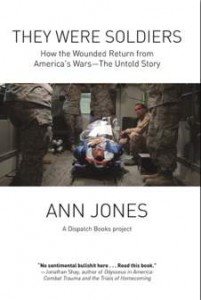
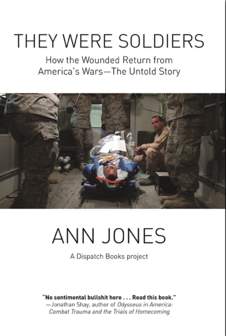
They Were Soldiers: How the Wounded Return from America’s Wars
What are the true costs of war in Afghanistan? Our guest, author Ann Jones has written an impactful book titled They Were Soldiers: How the Wounded Return from America’s Wars, it chronicles a world mostly hidden from the public. Ann Jones has spent nearly a decade working with Afghan civilians and writing about the effects of war on their lives but in the last couple years, she focused on the human toll on and off the battle field as U.S. soldiers return back from war zones with permanent mental damage, missing limbs or as quadruple amputees.
Ann Jones:
- I live in Norway where peace is taken for granted as it is in Europe.
- The United States looks crazed, the way we send our forces out all over the world, are always looking for a fight.
- Any unit of any size has a special unit within it that does mortuary affairs because all combat units are losing soldiers all the time and even soldiers who never leave base may be victims of this war. Suicides for example.
- The job of the soldiers assigned to mortuary affairs is to protect the other soldiers from knowledge of those deaths.
- Their job is to go out and retrieve the pieces of soldiers who very often in Afghanistan have literally been blown to pieces and bring those body parts and remains back to the base, to thier little secret part of the base and try to match up and put them in “transfer cases.” – to transfer them home to Dover, Delaware where they are repackaged, gussied up to be put in coffins and sent on for families for burial.
- Landstuhl Regional Medical Center is very close to Ramstein Air Base in Germany. There are special air ambulance services that go out from there to Africa, to Asia to pick even individual casualties. The individuals are often members of the CIA or private contractors or military special ops people.
- The suicides have been increasing year by year. Many of those suicides take place in the field. There have been a number that have been documented as a result of hazing and sexual assaults.
- A great many more take place here at home when soldiers return and find that they can’t live with themselves.
- I think what’s really troubling now is the number of soldiers and ex soldiers who aren’t really counted in this statistic who are taking their lives under the influence of opiad-pain killers, that have been pushed upon them by big-pharma.
- They’re shown to be highly addictive, particularly in young people and to be heavily implicated in suicide.
- The rate at which soldiers under treatment in the V.A. are taking their lives is what should be a national scandal.
- It’s estimated that 1 in 3 women soldiers have been the victim of sexual assault.
- Though in fact the number of male soldiers victimized is even greater. The percentage is less but the number is greater because men still represent 85 percent of the personnel in the military.
- Congress is supposed to vote on military appropriations for 2014 very shortly. Kirsten Gillebrand, the senator from New York is leading the campaign to attach an amendment to that budgetary appropriation that would remove the prosecution, the reporting and the decision about the prosecution and the prosecution itself from the chain of command and place it in the hands of specially trained military and civilian legal units.
- Who joins? It’s kids, from poor families, from dysfunctional families. Mainly from in the South and the “rust belt” and urban centers who see very little if any, opportunity for their ambitions and their idealism in their home communities.
Guest – Ann Jones, a journalist, photographer, and the author of ten books of nonfiction. She has written extensively about violence against women. Since 2001, she has worked intermittently as a humanitarian volunteer in conflict and post-conflict countries in the Middle East, sub-Saharan Africa, and central and south Asia. From Afghanistan and the Middle East, she has reported on the impact of war upon civilians; and she has embedded with American forces in Afghanistan to report on war’s impact on soldiers. Her articles on these and other matters appear most often in The Nation and online at www.TomDispatch.com. Her work has received generous support from the Radcliffe Institute for Advanced Study at Harvard University, where she held the Mildred Londa Weisman Fellowship in 2010-11, the John Simon Guggenheim Memorial Foundation (2011-12), and the Fulbright Foundation (2012). She lives in Oslo, Norway, with two conversational cats.
—–
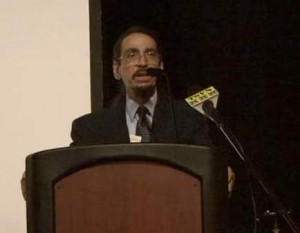

The Black Misleadership Class Versus the Movement and its Legacy
We go now to hear Glen Ford speaking at the Black Agenda Report 7th anniversary gathering at Harlem’s Riverside Church. The theme of the event was ““The Black Misleadership Class Versus the Movement and its Legacy.” Ford gives strong criticism of newly elected New Jersey Senator Cory Booker as the essence of Black misleadership, showing the many ties of the current Newark mayor to corporate America.
Glen Ford is the Black Agenda Report executive editor Glen Ford can be contacted at Glen.Ford@BlackAgendaReport.com.
——————————————————————————-
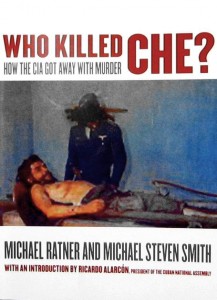
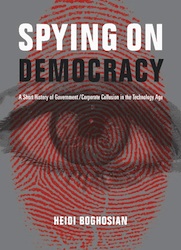
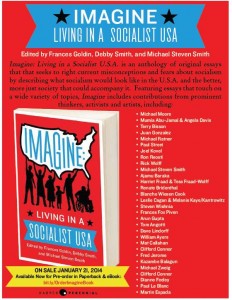
Books From Law and Disorder Hosts
Civil Liberties, Criminalizing Dissent, Extraordinary Rendition, FBI Intrusion, Guantanamo, Habeas Corpus, Human Rights, Political Prisoner, Prison Industry, Supreme Court, Surveillance, Targeting Muslims, Torture, Truth to Power, War Resister
Podcast: Play in new window | Download
Updates:
- Judge Leon Rules That NSA Meta Data Collection Is Likely Unconstitutional.
- Michael Ratner: It Could Be The Deathknell For This Kind Of MetaData Collection
- Ed Snowden’s Response To Judge Leon’s Decision
- Ed Snowden’s Open Letter To The People Of Brasil
- A Christmas Card From Chelsea Manning
- Guantánamo Five: Military Commissions – Their Torture Memories Are . . Classified.
- First Commander Lenhardt: Guantánamo Should Never Have Opened
- American Studies Association Supports Boycott Of Israeli Academic Institutions
——

Over Policing of America: The Criminalization of Everyday Life
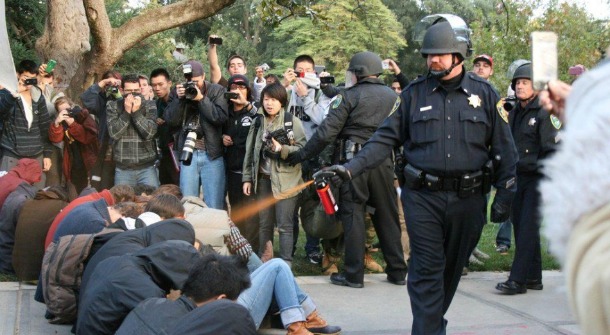
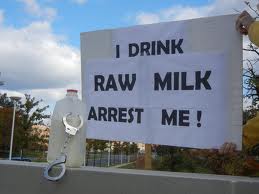
In his recent article titled Over Policing of America, attorney Chase Madar outlines a familiar narrative such as the militarization of police, stop and frisk, and how students get swept into the school to prison pipeline. The pattern is clear and who benefits is obvious in the list of over policing examples compiled by our returning guest, such as criminalizing immigration and how simple economic transactions are closely scrutinized by under-cover police.
Attorney Chase Madar:
- I’m hoping this new term will enter the national lingo; over-policing.
- What I wrote about is how the police paradigm has entered the DNA of social policy across the board in the United States in matters that a generation ago would not require police or prosecutors or criminal law, now suddenly do.
- That’s in education, in immigration, in family law, even how we regulate the economy.
- All of these spheres, domains of everyday life are increasingly regulated by police and prosecutors.
- A creeping police state. We need to take a very sobering look at how we’re governing ourselves and how criminal law is displacing and devouring all other kinds of social regulation.
- You see this more and more disciplinary matters in schools get outsourced to police departments.
- Police people are trained to respond to crimes, and to respond to everything as a crime. That’s the nature of police.
- When you send police into a school, the crime is going to sky rocket.
- Even the way we regulate our economy is suffering from an overdose of criminal law and police powers.
- What we have frequently is white collar work getting criminalized by a mare’s nest of criminal laws that are very complex, very difficult to understand.
- It’s not like we have a great financial system that was abused by a few bad apples. We have a really crappy system that’s legal because these people write the laws.
- Immigration law was mostly under the domain of administrative law with milder penalties, civil penalties.
- We’re kidding ourselves if we pretend that’s somehow aberrational.
- Although our political class seems incapable of doing anything constructive about it, they are very adept at channeling all fears about security in any sense into criminal law crack downs and ratcheting up the police state.
- Our incarceration rate is three times higher than the old East Germany.
- I think we need to switch very swiftly to alternative ways of social policy in holding our society together other than throwing cops and prosecutors at it.
Guest – Attorney Chase Madar , a TomDispatch regular and author of a new book, The Passion of Bradley Manning (OR Books). Madar tweets @ChMadar. He’s a contributor to the London Review of Books and Le Monde diplomatique and the author of a new book, The Passion of Bradley Manning (OR Books).
——————————————————-
Books From Law and Disorder Hosts
Afghanistan War, CIA Sponsored Terror, Civil Liberties, Criminalizing Dissent, FBI Intrusion, Guantanamo, Habeas Corpus, Human Rights, Political Prisoner, Prison Industry, Supreme Court, Surveillance, Targeting Muslims, Torture, War Resister
Podcast: Play in new window | Download
Updates:
—–
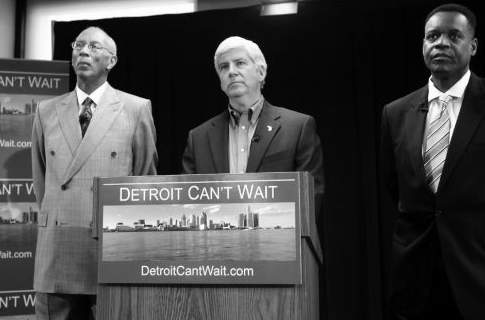
Judge Ruling Allows Detroit Bankruptcy To Move Forward
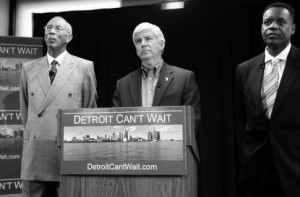
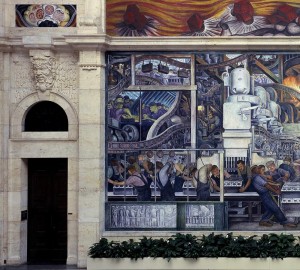
This summer we spoke with retired auto worker and activist Dianne Feeley about the plans to wipe out the pensions and health benefits of all current and retired city workers by emergency manager of Detroit, Kevyn Orr. We also looked at the history of workers in Detroit from the perspective of black workers and the broader pattern of oppression. Last week, a ruling by Judge Stevens W. Rhodes of the U.S. Bankruptcy Court allows the city of Detroit to move forward in the bankruptcy process. The cradle of the American auto industry will now be allowed to pay off debts and restore essential services.
Professor Laura Bartell:
- It is the first time that a bankruptcy judge that pension obligations constitute contractual obligations that are subject to diminution in bankruptcy.
- Although its rattled pensioners nationwide, its really not that extraordinary.
- The healthcare was never protected by the Michigan Constitution. Everyone has always known that healthcare was subject to modification by the city.
- The cuts in health care are going into effect I believe in February for city employees.
- When we’re talking about the pensions we’re talking about the retirees both the firefighters and policemen unions retirees.
- The city maintains that the plans are underfunded by 3.5 billion dollars.
- The union believes that number is vastly inflated based on projected returns that are too low. Whatever the number is its somewhere between 800 million and 3.5 billion.
- The policemen and firefighters don’t have the benefit of social security.
- You’re not talking about a lot of money going to any individual so if you cut the pension to any particular individual its obviously going to be a major cut for that individual.
- The major problem that Detroit has suffered was a vast decline in population.
- It used to be a much larger city. It’s footprint is still a very large city but the number of people living in that footprint is much smaller than it used to be.
- Among that small population there’s an even smaller number of people actually working and paying taxes.
- So the money coming in to meet the obligations of Detroit has been constantly shrinking.
- Detroit’s obligation to retirees in terms of pensions and healthcare is up at 38 percent and rising constantly. – and in addition we had severe mismanagement of city government including criminality. I’m sure everyone knows our former mayor is now in prison.
- My guess is the pensioners will be hit far less severely than the bond holders. Bond holders are making an investment and taking a risk.
- That’s what bankruptcy is about is all people who have done something to become creditors to the city and they’re not going to get what they deserve.
- That’s the problem, everybody is deserving, everybody should get paid.
- The problem is not that the governor has suddenly taken away the democratic rights of Detroit. We’ve had an emergency manager law for many years in the state of Michigan.
- Detroit is the latest and the biggest to have that happen.
- The next stage is a presentation of a plan of adjustment which he will present to creditors at the end of this month and file with the court at the beginning of January.
Guest – Professor Laura Bartell, after graduating from Harvard Law School, where she was an officer on the Harvard Law Review, she clerked for Judge Alvin B. Rubin of the U.S. Court of Appeals for the 5th Circuit in New Orleans. She then entered practice in New York where she became a partner in Shearman & Sterling, specializing in bank financing and bankruptcy work. She is a member of the American Law Institute and American Bankruptcy Institute and has published articles on bankruptcy topics, federal court-awarded attorneys’ fees and costs, and the attorney/client privilege and work-product doctrine. She teaches Property, Secured Transactions, Bankruptcy and Creditors’ Rights and Effective Oral Communication for Lawyers.
—–


Terrorist Watch Lists and No Fly Lists Cases
How do governments compile lists called no-fly lists of individuals often placed on terrorist watch lists? As we’ve seen, the predictions about individual behavior of Muslims, Communists or Japanese-Americans have often been wildly inaccurate and cause a great deal of harm to these communities. Today to discuss the no-fly list and a recent case proceeding through the courts is returning guest Shane Kadidal senior managing attorney of the Guantánamo Global Justice Initiative at the Center for Constitutional Rights in New York City.
Attorney Shane Kadidal:
- There are broad watch lists and there are lists that people are more familiar with in concept and that’s what being litigated out in California, somebody placed on the no-fly list.
- There are two kinds of no-fly lists, there’s the selectee list where some where on the order of tens of thousands of people are designated for additional security checks when they go through the TSA.
- Then there’s the smaller list which contains several thousand names that sometimes you hear referred to as the no transport list. That’s people who can’t board a flight under any circumstances.
- The US shares its list at times with other countries. We don’t know how much sharing exists.
- The case in California is super interesting because the person who got stopped doesn’t seem like the kind of person that would get stopped except for the fact that she wears a hijab.
- The Terrorism Screening Center is responsible for putting people on the list.
- The interesting thing about this case is that daughter that was put on the list was 14, eight or nine years ago and is now a lawyer in Malaysia and was supposed to testify and was told by Malaysian airlines you are on the no-fly list.
- She’s seeking damages because she couldn’t fly back. This is really the first case to get to trial basically.
- The ACLU has a challenge to which kind of a pure due process challenge case in a case called Lateef v Holder.
- You got put on a list and there’s no real process for challenging those facts.
- If its an accidental match, somebody has the same name as you, or close to you. You can go through this challenge procedure called TRIPP.
- If you win your challenge, they’ll give you a number that you can enter in when you buy your plane ticket.
- CCR along with the Clear Clinic at CUNY Law School filed a case at the beginning of October. The gist of it is that people will end up on the no-fly list and if you complaint about it the FBI will say, if you talk to us you can be taken off the list if you agree to work as an informant on the Muslim community.
- What’s interesting about the couple thousand names (no-fly list) which is much smaller than the number which are on these lists intended to intercept terrorism finance like the list the treasury department maintains like a 500 plus page phone book.
- You can imagine that there might be some logical rationale behind having a short list of people who get a little scrutiny and hope it has more due process than the selectee list has now.
- But the fact that there are some people who are not allowed to fly under any circumstances with any level of search scrutiny that doesn’t seem to make any sense and seems to fit very neatly into our complaint.
- I question if this list can make rational sense.
- Typically if you’re on the no-fly list you get turned away. Typically you don’t get arrested.
- OFAC list, is sort of a list of parties you’re not allowed to do business with. It combines not only sanctions directed at whole countries but also the variety of sanctions directed at terrorism finance.
- This is just like other cases where secrecy is at the core of the defense of the program.
Guest – Shane Kadidal, senior managing attorney of the Guantánamo Global Justice Initiative at the Center for Constitutional Rights in New York City. He is a graduate of the Yale Law School and a former law clerk to Judge Kermit Lipez of the United States Court of Appeals for the First Circuit. In his eight years at the Center, he has worked on a number of significant cases in the wake of 9/11, including the Center’s challenges to the detention of prisoners at Guantánamo Bay (among them torture victim Mohammed al Qahtani and former CIA ghost detainee Majid Khan), which have twice reached the Supreme Court, and several cases arising out of the post-9/11 domestic immigration sweeps. He is also counsel in CCR’s legal challenges to the “material support” statute (decided by the Supreme Court last term), to the low rates of black firefighter hiring in New York City, and to the NSA’s warrantless surveillance program.
——————————————————————————
CIA Sponsored Terror, Civil Liberties, Habeas Corpus, Human Rights, Political Prisoner, Prison Industry, Supreme Court, Surveillance, Targeting Muslims
Podcast: Play in new window | Download
Updates:
—-
Lawyers You’ll Like: Attorney Brigitt Keller
On our Lawyers You’ll Like series we’re joined today by Attorney Brigitt Keller. She’s the Executive Director of the National Police Accountability Project (NPAP). Brigitt holds a law degree from Fribourg University Law School in her native Switzerland and an LLM in American Law from Boston University. She is admitted to practice law in New York. Prior to attending law school, Brigitt counseled victims of domestic violence and was instrumental in founding the Swiss National Council of Women’s Shelters. In addition to her engagement for NPAP, Brigitt is a fellow at the International Center for Conciliation and occasionally teaches conflict resolution workshops.
Attorney Brigitt Keller:
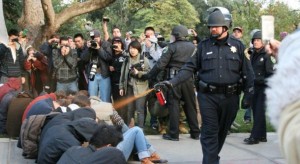
- NPAP’s mission is to hold law enforcement officers including prison personnel accountable for civil rights violations and police misconduct and brutality.
- As an organization we provide training and support for civil rights attorneys, legal workers and community activists.
- We also work with other organizations with similar efforts to change policy and practices and provide relevant information to the public.
- We see increasing disproportionate measures taken by police.
- The police (NYPD) no longer stop people when there is suspicious activity. They preventively sweep up hundreds of thousands of young men of color.
- When tasers were initially brought on the market, they were really sold to the public with the argument that they would be used instead of firearms.
- What we observe today and this counts for all over the country is that tasers are used in cases where there would never ever be a justification for the use of a firearm.
- When you think about why should we have police, its really to protect the people of this country,
- Young people of color have a very good sense of when policing is legitimate and when its not legitimate.
- These strategies make the community very unsafe. People will not call the police if the police behaves like an occupying army.
- I find the involvement of community activists and families of victims incredibly important.
- There is a different awareness today about police misconduct.
- I want to make clear that damage has been done already – that the fact that the judge was recused from the case with in my opinion, no valid reason. Secondly, the police are allowed to violate the rights of New Yorkers until the stay will be lifted.
- My interest in the law started initially by working for 7 years in a shelter for domestic violence victims.
- Police violence is something truly international. Even in a country like Switzerland where crime numbers are pretty low, there is police violence.
- I find it important that there is no abuse of power and police violence is abuse of power.
- www.nlg-npap.org
Guest – Attorney Brigett Keller – Executive Director of the National Police Accountability Project (NPAP). Brigitt holds a law degree from Fribourg University Law School in her native Switzerland and an LLM in American Law from Boston University. She is admitted to practice law in New York. Prior to attending law school, Brigitt counseled victims of domestic violence and was instrumental in founding the Swiss National Council of Women’s Shelters. In addition to her engagement for NPAP, Brigitt is a fellow at the International Center for Conciliation and occasionally teaches conflict resolution workshops.
—–

A Panel Discussion: Militarizing, Domestic Spying, and the Boycott of Israel
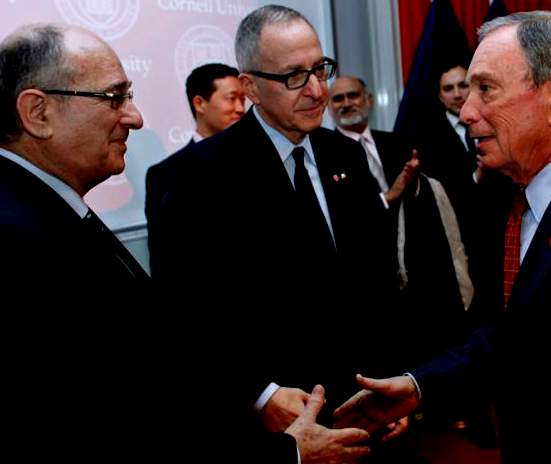
We hear a presentation by Anna Calcutt (New Yorkers Against the Cornell-Technion Partnership – NYACT), NYC-based BDS activist, will supply background on the conception and planning of the Cornell-Technion campus in NYC, along with reasons to oppose The Technion–including its deep-rooted ties with the Israeli weapons industry and military, the growth of the anti-Technion campaign, and what needs to be done next.
Recorded by Deep Dish TV
—————————————————————————————————-
CIA Sponsored Terror, Civil Liberties, Criminalizing Dissent, Habeas Corpus, Human Rights, Military Tribunal, Supreme Court, Surveillance, Targeting Muslims, Torture, War Resister
Podcast: Play in new window | Download
Updates:
——
Pan African Solidarity Hague Campaign to Delegitimize the ICC
In the month June last year, the Pan-African Solidarity Hague Committee delivered a petition to the International Criminal Court at the Hague, Netherlands demanding they prosecute the United States, Great Britain, France, Italy, Canada, and NATO for war crimes and crimes against humanity in Libya, Cote d’lvoire, Haiti and the US. This campaign began in May of 2011 when thousands gathered to protest the US/NATO bombing of Libya, attacks on Zimbabwe and the racist assault against African-Americans in the United States. 16 months after delivering the petition and sending follow up letters, the Pan African Solidarity Hague Committee haven’t received a response. The organization is now reaching out to National Lawyers Guild members and law students to help expose the International Criminal Court.
Attorney Roger Wareham:
- The International Criminal Court was established in 2001-2002, supposedly to replace the different ad-hoc international tribunals that had been set up to deal with war crimes and crimes against humanity.
- It’s supposed to be even handed, no double standard – everyone is held to the same level of accountability.
- The membership, you have to sign on to be a part of it. The United States was closely involved in the process of setting up the ICC.
- The U.S. insisted that it would not be subject to prosecution by the ICC, although under the Security Council of the United Nations could recommend cases for the ICC.
- Given the plethora of human rights violations and war crimes that have been committed around the world, the only people that the ICC is presently prosecuting are Africans.
- The only prosecutions have been of Africans.
- Our involvement in taking it to the ICC was in particular to expose its nature that its really not an international tribunal that would look at the question of war crimes across the board and that its really another instrument in the West’s arsenal of the exploitation of Africa.
- Ostensibly, dealing with human rights violations, the ICC has zeroed in on Africa.
- There’s been a response and rebellion among several of the African countries around this clear bias.
- Three of the five permanent members are not on the ICC, Russia, United States and China.
- I think what we want to do is we want a single standard or no ICC.
- Email: D12M@aol.com
- www.PASHC2012.blogspot.com
Guest – Attorney Roger Wareham, a member of the December 12th Movement, an organization of African people which organizes in the Black and Latino community around human rights violations, particularly police terror. Wareham is also the International Secretary-General of the International Association Against Torture (AICT), a non-governmental organization that has consultative status before the United Nations.
—–

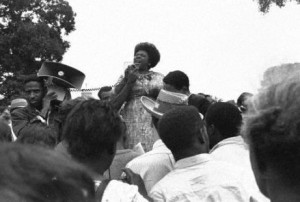
Lawyers You’ll Like – Attorney Mel Wulf
We’re joined today by Attorney Mel Wulf, former legal director with the American Civil Liberties Union for 15 years. He was a law partner with former US Attorney General Ramsey Clark during the Kennedy Administration and much more. Wulf was part of some of the greatest contributions to the civil rights movement. He’s now retired after practicing law for 54 years. As part of our Lawyers You’ll Like series, we talk with Wulf about his work with the ACLU during the early 60s, and also about the forming of the Lawyers Constitutional Defense Committee.
Attorney Mel Wulf:
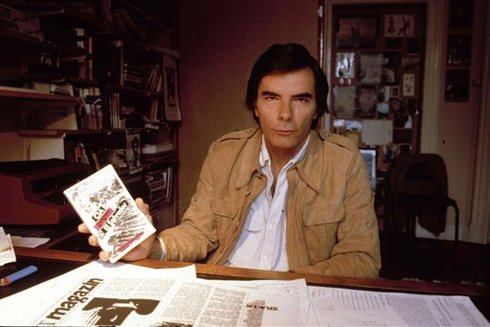
- Phil Agee was a dissident CIA agent who spent decades working against the CIA, published a couple of books.
- He lost his passport because when the dissidents took over the embassy in Tehran in 1979, the New York Post carried a story accusing Phil of helping the students who’d invaded the embassy to put together all of that written material that had been shredded.
- It was another New York Post bald faced lie.
- The State Department, based upon that story revoked his passport.
- I had represented Phil Agee, I was his principle lawyer for 30 years.
- Agee was very widely disliked in Washington because he was well known to be a CIA dissident who disclosed the names of many CIA agents.
- If Snowden went the same route today, he would do even worse in this Supreme Court than I did. That’s why Snowden won’t get his passport, thanks to me.
- I was for the workers and not for the bosses and I’ve always been for the workers and not for the bosses, which I think is the distinguishing political factor in our world. Which side are you on?
- I got my Bachelors Degree in ’52 and I had a Navy Commission which I had gotten from the New York State Maritime Academy earlier on.
- The draft board sent me a 1A notice, I applied to Columbia and when I finished Columbia they sent me another 1A notice because the draft was still on. I spent 2 years in the Navy as a Liuetenant Junior Grade Officer in Southern California.
- I went to work at the ACLU in 1958 as the assistant legal director, in 1962 I was given the job of the legal director of the ACLU.
- I had actually been going down to Mississippi from 1961 to 1962, working with then one of the two black lawyers who were practicing in Mississippi.
- We tried a couple of capitol cases in Mississippi. I continued to argue the systematic exclusion of blacks from the jury.
- I finally got a case up to the Supreme Court on that issue.
- Lawyers Constitutional Defense Committee: We had several hundred lawyers who went down to Mississippi for periods of a week or two. They were representing people being arrested during the Mississippi summer.
- Most of the judges allowed these lawyers to make some sort of presentation.
Guest – Attorney Mel Wulf, former legal director with the American Civil Liberties Union for 15 years. He was a law partner with former US Attorney General Ramsey Clark during the Kennedy Administration and much more. Wulf was part of some of the greatest contributions to the civil rights movement. He’s now retired after practicing law for 54 years.
——————————————————–
Afghanistan War, CIA Sponsored Terror, Civil Liberties, Criminalizing Dissent, FBI Intrusion, Habeas Corpus, Human Rights, Political Prisoner, Prison Industry, Surveillance, Targeting Muslims, Torture, War Resister
Podcast: Play in new window | Download
Updates:
- Lynne Stewart Turns 74
- Phone Campaign For Lynne Stewart To Be Let Out Of Prison Under Compassionate Release
- Director of Federal Bureau of Prisons – 202-307-3250
- U.S. Attorney General Eric Holder – 202-353-1555
- U.S. President Barack Obama – 202-456-1111
- Che Guevara Anniversary
- Shocking Statistics On Americans Under 30
—–
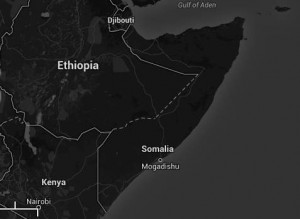
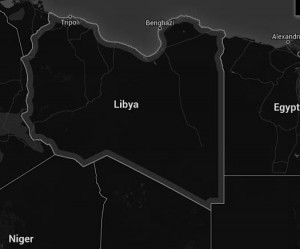
The United States Military Kidnapping In Libya And Failed Kill or?Capture In Somalia
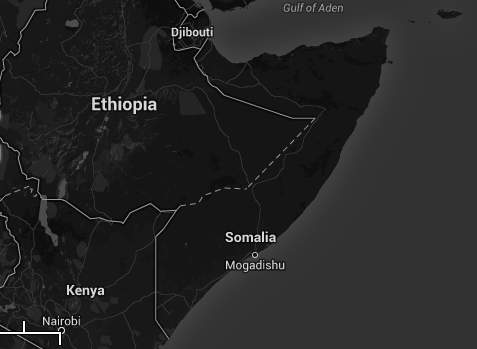
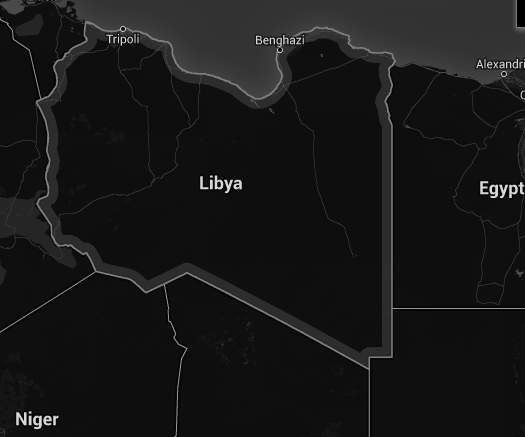
The United States military had gone into 2 parts of Africa. In one case they went into Libya and brazenly seized a man who they claim to be a leader of Al-Qaeda, his name is Abu Anas al-Libi. He was seized out of Tripoli, Libya. The U.S. also went into Somalia and attacked a house or a compound in apparently an effort to grab or kill an alleged senior leader of the Somali group al-Shabab. Michael Ratner reports in this update.
Attorney Michael Ratner:
- It was shocking news to see that the United States think it can go into sovereign countries and kidnap, kill whoever they want. Did the US have the right to go into Libya at all?
- Article 24 of the UN Charter says that the territorial integrity of the a country is complete, except of the case of self-defense or authorized by the UN.
- There was no authority by the UN or international law to go into Libya.
- Then the question came up – Did Libya consent to it?
- He’s on some U.S. ship. It’s called the San Antonio.
- They’re keeping him floating on this ship while they’re going to interrogate him.
- Its true, Obama when he took office 5 years ago, he banned torture and he said all interrogations had to be done according to the Army Field Manual.
- Annex M allows 3 kinds of techniques that I think constitute cruel and inhuman, degrading treatment and taken together would constitute torture.
Law and Disorder Co-host Attorney Michael Ratner, President Emeritus of the Center for Constitutional Rights (CCR), a non-profit human rights litigation organization based in New York City and president of the European Center for Constitutional and Human Rights (ECCHR) based in Berlin. Ratner and CCR are currently the attorneys in the United States for publishers Julian Assange and Wikileaks. He was co-counsel in representing the Guantanamo Bay detainees in the United States Supreme Court, where, in June 2004, the court decided his clients have the right to test the legality of their detentions in court. Ratner is also a past president of the National Lawyers Guild and the author of numerous books and articles, including the books The Trial of Donald Rumsfeld: A Prosecution by Book, Against War with Iraq and Guantanamo: What the World Should Know, as well as a textbook on international human rights.
—-
The United States, Iraq, Afghanistan, Iran, Syria and Israel Part 2
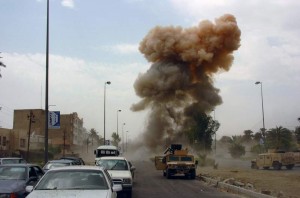
October 7th of 2013 marked the 12th anniversary since the United States invaded Afghanistan as the war drags into its 13th year. The Afghanistan war and the Iraq war have been estimated to cost tax payers up to 6 trillion dollars. This year marks the 10th anniversary of the Iraq War – an illegal war launched despite the global protest in the streets.
Phyllis Bennis:
- On the one hand it was a huge victory for the U.S. and the anti-war mobilization effort, that we managed to prevent what was a very imminent US strike. The British also had their missiles ready to go. They were very close.
- In combination with the British Parliament decision to say no, led to a huge shift in what the Obama Administration was prepared to do.
- It turns out they were prepared to go to war without UN permission. They were ready to do without the UN, without NATO, without the Arab League, but not without the Brits.
- This was a political decision, this wasn’t rooted in concerns about international law or any kind of strategic or military necessity.
- When it was turned over to Congress, a lot of organizations mobilized and said you know what, we’re not going to let this happen.
- Members of Congress were reporting that their emails were running 500 to 1, 800 to 1, 1000 to 1 against US military intervention.
- What we found is that people were not willing to sign on to another war after so many failed wars in the region.
- You can call it war fatigue but it’s really about learning a lesson, that war is not an answer to these problems.
- Given that there have been 100 thousand victims in this war (Syria) about a third of them civilians, about 43 percent regime soldiers and militia, about 18 percent rebel soldiers. The rest were civilians.
- To claim this was all about the humanitarian consequences, simply, that’s not the case.
- The voices that have been marginalized the most are the original political opposition in Syria, who were incredibly brave and courageous, still out there fighting.
- The regime in Syria was forced to sign on to the chemical weapons treaty. That’s huge, there are only 7 countries in the world that had not signed that treaty.
- Israel of course being another one.
- The number of people killed with chemical weapons in Syria is tiny compared to the number of people killed with conventional weapons.
- The five wars in Syria, the regional power struggle, the sectarian war, the US-Russian war, the US-Israel vs. Iran war, those are still underway in Syria.
- President Rouhani, the new president of Iran, was on a major charm offensive.
- Rouhani has said ” I have the backing of the Supreme Leader in a new approach to our nuclear negotiations.”
- There are enormous pressures in the U.S from the arms industry, from AIPAC, from hawks in Congress of all sorts.
- The Palestinians are the ones that will pay the price if there is an agreement between the US and Iran because the US will be determined to give Israel something.
- Iraq has become as violent as it was in the height of the sectarian wars of 2006 and 2007.
- Hundreds of people are being killed on a daily basis. It’s a disaster. Much of that is the result of the exploding war in Syria. Syria and Iraq share a long border. It’s a very porous border.
- The division of Libya into 2 or 3 regions is a very likely possibility.
- Saul Landau was a giant in our movement, he made one of the first films about Fidel. It was called Fidel it was made in 1960 a year after the revolution.
- He died about a month ago after a 2 year battle with a very virulent cancer.
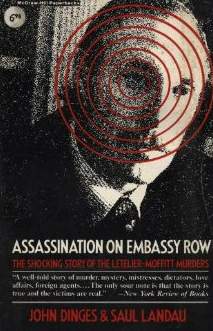
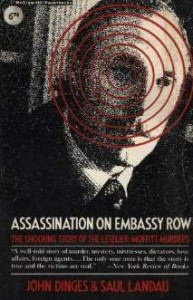
- Saul had been at IPS almost at the beginning. He wrote the book Assassination on Embassy Row that documented with such precision on how Operation Condor had gone forward.
Guest – Phyllis Bennis, directs the New Internationalism Project at IPS. She is also a fellow of the Transnational Institute in Amsterdam. She has been a writer, analyst, and activist on Middle East and UN issues for many years. In 2001 she helped found and remains on the steering committee of the U.S. Campaign to End Israeli Occupation. She works closely with the United for Peace and Justice anti-war coalition, co-chairs the UN-based International Coordinating Network on Palestine, and since 2002 has played an active role in the growing global peace movement. She continues to serve as an adviser to several top UN officials on Middle East and UN democratization issues.
—————————————————————-