Afghanistan War, CIA Sponsored Terror, Civil Liberties, Criminalizing Dissent, FBI Intrusion, Guantanamo, Habeas Corpus, Human Rights, Political Prisoner, Prison Industry, Supreme Court, Surveillance, Targeting Muslims, Torture, War Resister
Podcast: Play in new window | Download
Updates:
—–
Judge Ruling Allows Detroit Bankruptcy To Move Forward
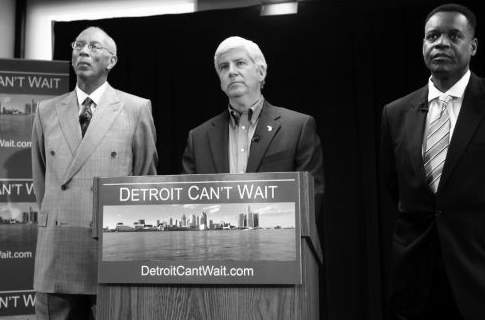
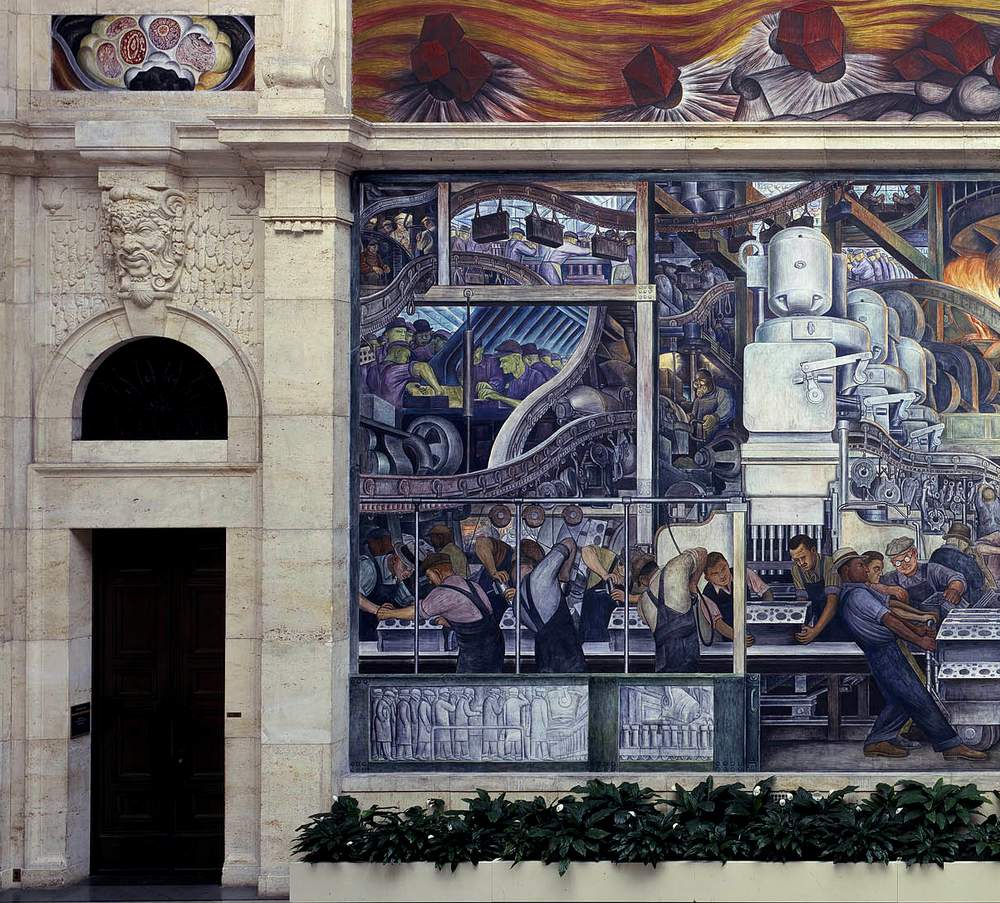
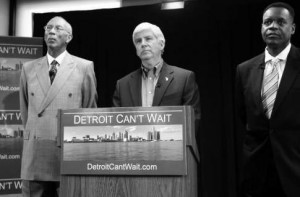
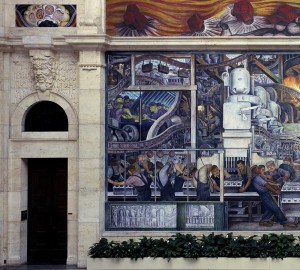
This summer we spoke with retired auto worker and activist Dianne Feeley about the plans to wipe out the pensions and health benefits of all current and retired city workers by emergency manager of Detroit, Kevyn Orr. We also looked at the history of workers in Detroit from the perspective of black workers and the broader pattern of oppression. Last week, a ruling by Judge Stevens W. Rhodes of the U.S. Bankruptcy Court allows the city of Detroit to move forward in the bankruptcy process. The cradle of the American auto industry will now be allowed to pay off debts and restore essential services.
Professor Laura Bartell:
- It is the first time that a bankruptcy judge that pension obligations constitute contractual obligations that are subject to diminution in bankruptcy.
- Although its rattled pensioners nationwide, its really not that extraordinary.
- The healthcare was never protected by the Michigan Constitution. Everyone has always known that healthcare was subject to modification by the city.
- The cuts in health care are going into effect I believe in February for city employees.
- When we’re talking about the pensions we’re talking about the retirees both the firefighters and policemen unions retirees.
- The city maintains that the plans are underfunded by 3.5 billion dollars.
- The union believes that number is vastly inflated based on projected returns that are too low. Whatever the number is its somewhere between 800 million and 3.5 billion.
- The policemen and firefighters don’t have the benefit of social security.
- You’re not talking about a lot of money going to any individual so if you cut the pension to any particular individual its obviously going to be a major cut for that individual.
- The major problem that Detroit has suffered was a vast decline in population.
- It used to be a much larger city. It’s footprint is still a very large city but the number of people living in that footprint is much smaller than it used to be.
- Among that small population there’s an even smaller number of people actually working and paying taxes.
- So the money coming in to meet the obligations of Detroit has been constantly shrinking.
- Detroit’s obligation to retirees in terms of pensions and healthcare is up at 38 percent and rising constantly. – and in addition we had severe mismanagement of city government including criminality. I’m sure everyone knows our former mayor is now in prison.
- My guess is the pensioners will be hit far less severely than the bond holders. Bond holders are making an investment and taking a risk.
- That’s what bankruptcy is about is all people who have done something to become creditors to the city and they’re not going to get what they deserve.
- That’s the problem, everybody is deserving, everybody should get paid.
- The problem is not that the governor has suddenly taken away the democratic rights of Detroit. We’ve had an emergency manager law for many years in the state of Michigan.
- Detroit is the latest and the biggest to have that happen.
- The next stage is a presentation of a plan of adjustment which he will present to creditors at the end of this month and file with the court at the beginning of January.
Guest – Professor Laura Bartell, after graduating from Harvard Law School, where she was an officer on the Harvard Law Review, she clerked for Judge Alvin B. Rubin of the U.S. Court of Appeals for the 5th Circuit in New Orleans. She then entered practice in New York where she became a partner in Shearman & Sterling, specializing in bank financing and bankruptcy work. She is a member of the American Law Institute and American Bankruptcy Institute and has published articles on bankruptcy topics, federal court-awarded attorneys’ fees and costs, and the attorney/client privilege and work-product doctrine. She teaches Property, Secured Transactions, Bankruptcy and Creditors’ Rights and Effective Oral Communication for Lawyers.
—–

Terrorist Watch Lists and No Fly Lists Cases
How do governments compile lists called no-fly lists of individuals often placed on terrorist watch lists? As we’ve seen, the predictions about individual behavior of Muslims, Communists or Japanese-Americans have often been wildly inaccurate and cause a great deal of harm to these communities. Today to discuss the no-fly list and a recent case proceeding through the courts is returning guest Shane Kadidal senior managing attorney of the Guantánamo Global Justice Initiative at the Center for Constitutional Rights in New York City.
Attorney Shane Kadidal:
- There are broad watch lists and there are lists that people are more familiar with in concept and that’s what being litigated out in California, somebody placed on the no-fly list.
- There are two kinds of no-fly lists, there’s the selectee list where some where on the order of tens of thousands of people are designated for additional security checks when they go through the TSA.
- Then there’s the smaller list which contains several thousand names that sometimes you hear referred to as the no transport list. That’s people who can’t board a flight under any circumstances.
- The US shares its list at times with other countries. We don’t know how much sharing exists.
- The case in California is super interesting because the person who got stopped doesn’t seem like the kind of person that would get stopped except for the fact that she wears a hijab.
- The Terrorism Screening Center is responsible for putting people on the list.
- The interesting thing about this case is that daughter that was put on the list was 14, eight or nine years ago and is now a lawyer in Malaysia and was supposed to testify and was told by Malaysian airlines you are on the no-fly list.
- She’s seeking damages because she couldn’t fly back. This is really the first case to get to trial basically.
- The ACLU has a challenge to which kind of a pure due process challenge case in a case called Lateef v Holder.
- You got put on a list and there’s no real process for challenging those facts.
- If its an accidental match, somebody has the same name as you, or close to you. You can go through this challenge procedure called TRIPP.
- If you win your challenge, they’ll give you a number that you can enter in when you buy your plane ticket.
- CCR along with the Clear Clinic at CUNY Law School filed a case at the beginning of October. The gist of it is that people will end up on the no-fly list and if you complaint about it the FBI will say, if you talk to us you can be taken off the list if you agree to work as an informant on the Muslim community.
- What’s interesting about the couple thousand names (no-fly list) which is much smaller than the number which are on these lists intended to intercept terrorism finance like the list the treasury department maintains like a 500 plus page phone book.
- You can imagine that there might be some logical rationale behind having a short list of people who get a little scrutiny and hope it has more due process than the selectee list has now.
- But the fact that there are some people who are not allowed to fly under any circumstances with any level of search scrutiny that doesn’t seem to make any sense and seems to fit very neatly into our complaint.
- I question if this list can make rational sense.
- Typically if you’re on the no-fly list you get turned away. Typically you don’t get arrested.
- OFAC list, is sort of a list of parties you’re not allowed to do business with. It combines not only sanctions directed at whole countries but also the variety of sanctions directed at terrorism finance.
- This is just like other cases where secrecy is at the core of the defense of the program.
Guest – Shane Kadidal, senior managing attorney of the Guantánamo Global Justice Initiative at the Center for Constitutional Rights in New York City. He is a graduate of the Yale Law School and a former law clerk to Judge Kermit Lipez of the United States Court of Appeals for the First Circuit. In his eight years at the Center, he has worked on a number of significant cases in the wake of 9/11, including the Center’s challenges to the detention of prisoners at Guantánamo Bay (among them torture victim Mohammed al Qahtani and former CIA ghost detainee Majid Khan), which have twice reached the Supreme Court, and several cases arising out of the post-9/11 domestic immigration sweeps. He is also counsel in CCR’s legal challenges to the “material support” statute (decided by the Supreme Court last term), to the low rates of black firefighter hiring in New York City, and to the NSA’s warrantless surveillance program.
——————————————————————————
CIA Sponsored Terror, Civil Liberties, Habeas Corpus, Human Rights, Political Prisoner, Prison Industry, Supreme Court, Surveillance, Targeting Muslims
Podcast: Play in new window | Download
Updates:
—-
Lawyers You’ll Like: Attorney Brigitt Keller
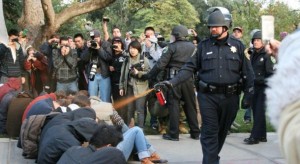
On our Lawyers You’ll Like series we’re joined today by Attorney Brigitt Keller. She’s the Executive Director of the National Police Accountability Project (NPAP). Brigitt holds a law degree from Fribourg University Law School in her native Switzerland and an LLM in American Law from Boston University. She is admitted to practice law in New York. Prior to attending law school, Brigitt counseled victims of domestic violence and was instrumental in founding the Swiss National Council of Women’s Shelters. In addition to her engagement for NPAP, Brigitt is a fellow at the International Center for Conciliation and occasionally teaches conflict resolution workshops.
Attorney Brigitt Keller:
- NPAP’s mission is to hold law enforcement officers including prison personnel accountable for civil rights violations and police misconduct and brutality.
- As an organization we provide training and support for civil rights attorneys, legal workers and community activists.
- We also work with other organizations with similar efforts to change policy and practices and provide relevant information to the public.
- We see increasing disproportionate measures taken by police.
- The police (NYPD) no longer stop people when there is suspicious activity. They preventively sweep up hundreds of thousands of young men of color.
- When tasers were initially brought on the market, they were really sold to the public with the argument that they would be used instead of firearms.
- What we observe today and this counts for all over the country is that tasers are used in cases where there would never ever be a justification for the use of a firearm.
- When you think about why should we have police, its really to protect the people of this country,
- Young people of color have a very good sense of when policing is legitimate and when its not legitimate.
- These strategies make the community very unsafe. People will not call the police if the police behaves like an occupying army.
- I find the involvement of community activists and families of victims incredibly important.
- There is a different awareness today about police misconduct.
- I want to make clear that damage has been done already – that the fact that the judge was recused from the case with in my opinion, no valid reason. Secondly, the police are allowed to violate the rights of New Yorkers until the stay will be lifted.
- My interest in the law started initially by working for 7 years in a shelter for domestic violence victims.
- Police violence is something truly international. Even in a country like Switzerland where crime numbers are pretty low, there is police violence.
- I find it important that there is no abuse of power and police violence is abuse of power.
- www.nlg-npap.org
Guest – Attorney Brigett Keller – Executive Director of the National Police Accountability Project (NPAP). Brigitt holds a law degree from Fribourg University Law School in her native Switzerland and an LLM in American Law from Boston University. She is admitted to practice law in New York. Prior to attending law school, Brigitt counseled victims of domestic violence and was instrumental in founding the Swiss National Council of Women’s Shelters. In addition to her engagement for NPAP, Brigitt is a fellow at the International Center for Conciliation and occasionally teaches conflict resolution workshops.
—–
A Panel Discussion: Militarizing, Domestic Spying, and the Boycott of Israel
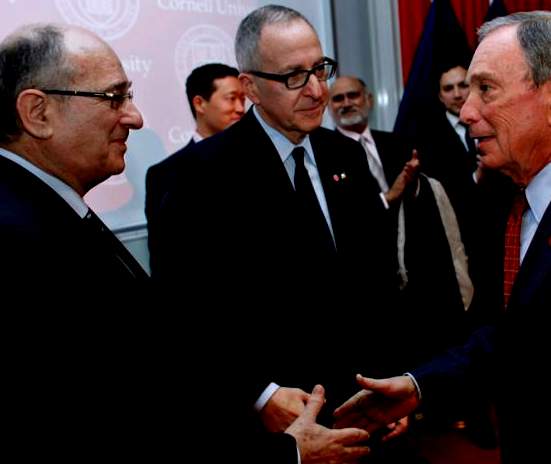
We hear a presentation by Anna Calcutt (New Yorkers Against the Cornell-Technion Partnership – NYACT), NYC-based BDS activist, will supply background on the conception and planning of the Cornell-Technion campus in NYC, along with reasons to oppose The Technion–including its deep-rooted ties with the Israeli weapons industry and military, the growth of the anti-Technion campaign, and what needs to be done next.
Recorded by Deep Dish TV
—————————————————————————————————-
CIA Sponsored Terror, Civil Liberties, Criminalizing Dissent, Habeas Corpus, Human Rights, Military Tribunal, Supreme Court, Surveillance, Targeting Muslims, Torture, War Resister
Podcast: Play in new window | Download
Updates:
——
Pan African Solidarity Hague Campaign to Delegitimize the ICC
In the month June last year, the Pan-African Solidarity Hague Committee delivered a petition to the International Criminal Court at the Hague, Netherlands demanding they prosecute the United States, Great Britain, France, Italy, Canada, and NATO for war crimes and crimes against humanity in Libya, Cote d’lvoire, Haiti and the US. This campaign began in May of 2011 when thousands gathered to protest the US/NATO bombing of Libya, attacks on Zimbabwe and the racist assault against African-Americans in the United States. 16 months after delivering the petition and sending follow up letters, the Pan African Solidarity Hague Committee haven’t received a response. The organization is now reaching out to National Lawyers Guild members and law students to help expose the International Criminal Court.
Attorney Roger Wareham:
- The International Criminal Court was established in 2001-2002, supposedly to replace the different ad-hoc international tribunals that had been set up to deal with war crimes and crimes against humanity.
- It’s supposed to be even handed, no double standard – everyone is held to the same level of accountability.
- The membership, you have to sign on to be a part of it. The United States was closely involved in the process of setting up the ICC.
- The U.S. insisted that it would not be subject to prosecution by the ICC, although under the Security Council of the United Nations could recommend cases for the ICC.
- Given the plethora of human rights violations and war crimes that have been committed around the world, the only people that the ICC is presently prosecuting are Africans.
- The only prosecutions have been of Africans.
- Our involvement in taking it to the ICC was in particular to expose its nature that its really not an international tribunal that would look at the question of war crimes across the board and that its really another instrument in the West’s arsenal of the exploitation of Africa.
- Ostensibly, dealing with human rights violations, the ICC has zeroed in on Africa.
- There’s been a response and rebellion among several of the African countries around this clear bias.
- Three of the five permanent members are not on the ICC, Russia, United States and China.
- I think what we want to do is we want a single standard or no ICC.
- Email: D12M@aol.com
- www.PASHC2012.blogspot.com
Guest – Attorney Roger Wareham, a member of the December 12th Movement, an organization of African people which organizes in the Black and Latino community around human rights violations, particularly police terror. Wareham is also the International Secretary-General of the International Association Against Torture (AICT), a non-governmental organization that has consultative status before the United Nations.
—–
Lawyers You’ll Like – Attorney Mel Wulf
We’re joined today by Attorney Mel Wulf, former legal director with the American Civil Liberties Union for 15 years. He was a law partner with former US Attorney General Ramsey Clark during the Kennedy Administration and much more. Wulf was part of some of the greatest contributions to the civil rights movement. He’s now retired after practicing law for 54 years. As part of our Lawyers You’ll Like series, we talk with Wulf about his work with the ACLU during the early 60s, and also about the forming of the Lawyers Constitutional Defense Committee.
Attorney Mel Wulf:
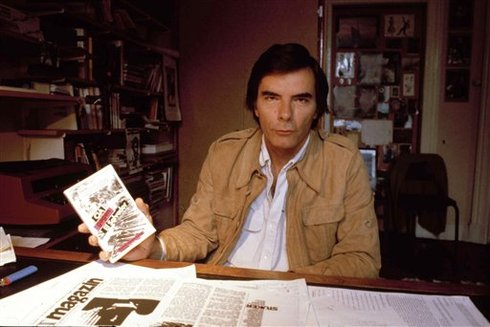
- Phil Agee was a dissident CIA agent who spent decades working against the CIA, published a couple of books.
- He lost his passport because when the dissidents took over the embassy in Tehran in 1979, the New York Post carried a story accusing Phil of helping the students who’d invaded the embassy to put together all of that written material that had been shredded.
- It was another New York Post bald faced lie.
- The State Department, based upon that story revoked his passport.
- I had represented Phil Agee, I was his principle lawyer for 30 years.
- Agee was very widely disliked in Washington because he was well known to be a CIA dissident who disclosed the names of many CIA agents.
- If Snowden went the same route today, he would do even worse in this Supreme Court than I did. That’s why Snowden won’t get his passport, thanks to me.
- I was for the workers and not for the bosses and I’ve always been for the workers and not for the bosses, which I think is the distinguishing political factor in our world. Which side are you on?
- I got my Bachelors Degree in ’52 and I had a Navy Commission which I had gotten from the New York State Maritime Academy earlier on.
- The draft board sent me a 1A notice, I applied to Columbia and when I finished Columbia they sent me another 1A notice because the draft was still on. I spent 2 years in the Navy as a Liuetenant Junior Grade Officer in Southern California.
- I went to work at the ACLU in 1958 as the assistant legal director, in 1962 I was given the job of the legal director of the ACLU.
- I had actually been going down to Mississippi from 1961 to 1962, working with then one of the two black lawyers who were practicing in Mississippi.
- We tried a couple of capitol cases in Mississippi. I continued to argue the systematic exclusion of blacks from the jury.
- I finally got a case up to the Supreme Court on that issue.
- Lawyers Constitutional Defense Committee: We had several hundred lawyers who went down to Mississippi for periods of a week or two. They were representing people being arrested during the Mississippi summer.
- Most of the judges allowed these lawyers to make some sort of presentation.
Guest – Attorney Mel Wulf, former legal director with the American Civil Liberties Union for 15 years. He was a law partner with former US Attorney General Ramsey Clark during the Kennedy Administration and much more. Wulf was part of some of the greatest contributions to the civil rights movement. He’s now retired after practicing law for 54 years.
——————————————————–
Afghanistan War, CIA Sponsored Terror, Civil Liberties, Criminalizing Dissent, FBI Intrusion, Habeas Corpus, Human Rights, Political Prisoner, Prison Industry, Surveillance, Targeting Muslims, Torture, War Resister
Podcast: Play in new window | Download
Updates:
- Lynne Stewart Turns 74
- Phone Campaign For Lynne Stewart To Be Let Out Of Prison Under Compassionate Release
- Director of Federal Bureau of Prisons – 202-307-3250
- U.S. Attorney General Eric Holder – 202-353-1555
- U.S. President Barack Obama – 202-456-1111
- Che Guevara Anniversary
- Shocking Statistics On Americans Under 30
—–
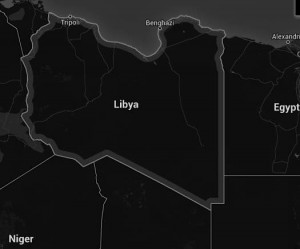
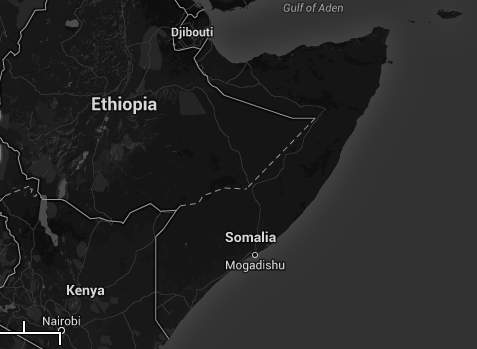
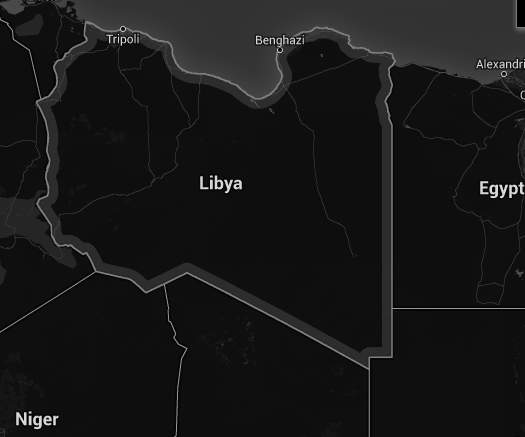
The United States Military Kidnapping In Libya And Failed Kill or?Capture In Somalia
The United States military had gone into 2 parts of Africa. In one case they went into Libya and brazenly seized a man who they claim to be a leader of Al-Qaeda, his name is Abu Anas al-Libi. He was seized out of Tripoli, Libya. The U.S. also went into Somalia and attacked a house or a compound in apparently an effort to grab or kill an alleged senior leader of the Somali group al-Shabab. Michael Ratner reports in this update.
Attorney Michael Ratner:
- It was shocking news to see that the United States think it can go into sovereign countries and kidnap, kill whoever they want. Did the US have the right to go into Libya at all?
- Article 24 of the UN Charter says that the territorial integrity of the a country is complete, except of the case of self-defense or authorized by the UN.
- There was no authority by the UN or international law to go into Libya.
- Then the question came up – Did Libya consent to it?
- He’s on some U.S. ship. It’s called the San Antonio.
- They’re keeping him floating on this ship while they’re going to interrogate him.
- Its true, Obama when he took office 5 years ago, he banned torture and he said all interrogations had to be done according to the Army Field Manual.
- Annex M allows 3 kinds of techniques that I think constitute cruel and inhuman, degrading treatment and taken together would constitute torture.
Law and Disorder Co-host Attorney Michael Ratner, President Emeritus of the Center for Constitutional Rights (CCR), a non-profit human rights litigation organization based in New York City and president of the European Center for Constitutional and Human Rights (ECCHR) based in Berlin. Ratner and CCR are currently the attorneys in the United States for publishers Julian Assange and Wikileaks. He was co-counsel in representing the Guantanamo Bay detainees in the United States Supreme Court, where, in June 2004, the court decided his clients have the right to test the legality of their detentions in court. Ratner is also a past president of the National Lawyers Guild and the author of numerous books and articles, including the books The Trial of Donald Rumsfeld: A Prosecution by Book, Against War with Iraq and Guantanamo: What the World Should Know, as well as a textbook on international human rights.
—-

The United States, Iraq, Afghanistan, Iran, Syria and Israel Part 2
October 7th of 2013 marked the 12th anniversary since the United States invaded Afghanistan as the war drags into its 13th year. The Afghanistan war and the Iraq war have been estimated to cost tax payers up to 6 trillion dollars. This year marks the 10th anniversary of the Iraq War – an illegal war launched despite the global protest in the streets.
Phyllis Bennis:
- On the one hand it was a huge victory for the U.S. and the anti-war mobilization effort, that we managed to prevent what was a very imminent US strike. The British also had their missiles ready to go. They were very close.
- In combination with the British Parliament decision to say no, led to a huge shift in what the Obama Administration was prepared to do.
- It turns out they were prepared to go to war without UN permission. They were ready to do without the UN, without NATO, without the Arab League, but not without the Brits.
- This was a political decision, this wasn’t rooted in concerns about international law or any kind of strategic or military necessity.
- When it was turned over to Congress, a lot of organizations mobilized and said you know what, we’re not going to let this happen.
- Members of Congress were reporting that their emails were running 500 to 1, 800 to 1, 1000 to 1 against US military intervention.
- What we found is that people were not willing to sign on to another war after so many failed wars in the region.
- You can call it war fatigue but it’s really about learning a lesson, that war is not an answer to these problems.
- Given that there have been 100 thousand victims in this war (Syria) about a third of them civilians, about 43 percent regime soldiers and militia, about 18 percent rebel soldiers. The rest were civilians.
- To claim this was all about the humanitarian consequences, simply, that’s not the case.
- The voices that have been marginalized the most are the original political opposition in Syria, who were incredibly brave and courageous, still out there fighting.
- The regime in Syria was forced to sign on to the chemical weapons treaty. That’s huge, there are only 7 countries in the world that had not signed that treaty.
- Israel of course being another one.
- The number of people killed with chemical weapons in Syria is tiny compared to the number of people killed with conventional weapons.
- The five wars in Syria, the regional power struggle, the sectarian war, the US-Russian war, the US-Israel vs. Iran war, those are still underway in Syria.
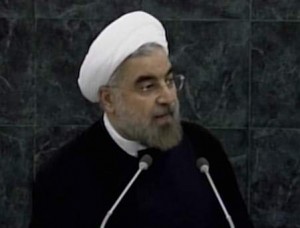
- President Rouhani, the new president of Iran, was on a major charm offensive.
- Rouhani has said ” I have the backing of the Supreme Leader in a new approach to our nuclear negotiations.”
- There are enormous pressures in the U.S from the arms industry, from AIPAC, from hawks in Congress of all sorts.
- The Palestinians are the ones that will pay the price if there is an agreement between the US and Iran because the US will be determined to give Israel something.
- Iraq has become as violent as it was in the height of the sectarian wars of 2006 and 2007.
- Hundreds of people are being killed on a daily basis. It’s a disaster. Much of that is the result of the exploding war in Syria. Syria and Iraq share a long border. It’s a very porous border.
- The division of Libya into 2 or 3 regions is a very likely possibility.
- Saul Landau was a giant in our movement, he made one of the first films about Fidel. It was called Fidel it was made in 1960 a year after the revolution.
- He died about a month ago after a 2 year battle with a very virulent cancer.
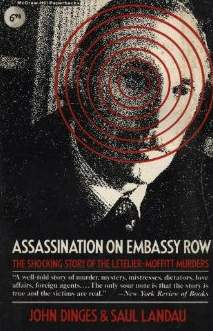
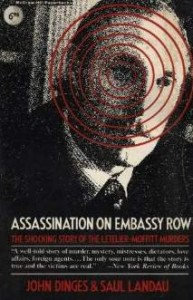
- Saul had been at IPS almost at the beginning. He wrote the book Assassination on Embassy Row that documented with such precision on how Operation Condor had gone forward.
Guest – Phyllis Bennis, directs the New Internationalism Project at IPS. She is also a fellow of the Transnational Institute in Amsterdam. She has been a writer, analyst, and activist on Middle East and UN issues for many years. In 2001 she helped found and remains on the steering committee of the U.S. Campaign to End Israeli Occupation. She works closely with the United for Peace and Justice anti-war coalition, co-chairs the UN-based International Coordinating Network on Palestine, and since 2002 has played an active role in the growing global peace movement. She continues to serve as an adviser to several top UN officials on Middle East and UN democratization issues.
—————————————————————-
Civil Liberties, Criminalizing Dissent, FBI Intrusion, Habeas Corpus, Human Rights, Surveillance, Targeting Muslims, Torture, War Resister
Podcast: Play in new window | Download
Updates:
—–
The United States, Iraq, Afghanistan, Iran, Syria and Israel
President Barack Obama addressed the 68th session of the United Nations General Assembly last week, near the end of September. His speech reflected some of the shift in global politics in the Middle East, especially in Syria. He also spoke about Iran, and mentioned the usual, “we are determined to prevent Iran from developing a nuclear weapon.” Obama said “we are not seeking regime change we respect the right of the Iranian people to access peaceful nuclear energy.” However Iran has signed on to the Non-Proliferation Treaty which recognizes the right to develop, research, produce and use nuclear energy for peaceful purposes without discrimination.
William Blum:
- One must accept the basic premise that the United States wants to dominate the world.
- In that context it becomes clear that the main problem we have with other countries is one of disobedience.
- Our closest ally in the Arab world is Saudi Arabia, if that’s not the most oppressive government in the world then damn close to it.
- We’ve overthrown the 3 leading secular governments of the Middle East. First Iraq, and then Libya, and now we’re in the process to attempt to overthrow the Syrian government.
- In ’79, the Shah of Iran was overthrown by various forces, but the ones that came to power were the Islamics.
- It’s a myth that the U.S. was totally opposed to Islam coming to power in Iran then.
- What Washington feared is the Left coming to power in Iran.
- The Left, all over the world, are the least likely to be obedient to Washington, to become a client state.
- So the Left is the first target of U.S foreign policy.
- Israel fears Iran, in the same way it fears Iraq and Libya. Any country in the Middle East that had some military power and not falling in line as an obedient friend or follower of Israel, that was a target of Israel, which means target of the U.S.
- The 3 main targets have all been attacked by Washington and that’s where we are today.
- Cuba then and now has represented what Washington fears greatly, a good alternative to capitalist system.
- They have inspired people and countries all over the world, especially in Latin America.
- It’s not very well known that throughout the 70s and into the 80s, Afghanistan had a fairly progressive government. Women had full rights. I’ve seen photos of that time, of women walking around in mini-skirts.
- What happened to that society and government? Our dear government overthrew it.
- It’s amazing when we hear people say we have to stay in Afghanistan to help the women there.
- Saddam Hussein, as much of a dictator as he was, he still ran a welfare state.
- The people in their daily life were much better off than they are today and there was peace and order
- Syria is not going to make a good client state to the United States and Israel. Syria is a bit too friendly with Russia.
- It’s amazing how sensitive we are to those who will not embrace the American empire.
- Almost all the leading people in Israel except for Netanyahu, they know Iran is not a threat. It’s all hype.
- Netanyahu needs this hype and the U.S. needs it.
- There’s a very growing trend now to be turned off by all of this war. The vote in Congress which if it were held would have been against invading Syria.
- The American public is very tired of these wars.
- Sign up for the monthly Anti-Empire Report.
Guest – William Blum, has been a freelance journalist in the United States, Europe and South America. His stay in Chile in 1972-3, writing about the Allende government’s “socialist experiment” and its tragic overthrow in a CIA-designed coup, instilled in him a personal involvement and an even more heightened interest in what his government was doing in various parts of the world. In the mid-1970’s, he worked in London with former CIA officer Philip Agee and his associates on their project of exposing CIA personnel and their misdeeds. His book on U.S. foreign policy, Killing Hope: U.S. Military and CIA Interventions Since World War II, first published in 1995 and updated since, has received international acclaim.
—–
EFF Fights Back Against NSA Spying
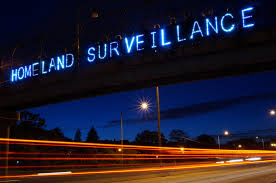
A few shows ago we asked Attorney Carl Messineo with the Partnership for Civil Justice Fund what legal steps are they taking to stem the pervasive breach of civil liberties from the National Security Agency’s massive surveillance program. Our own Heidi Boghosian, author of the book Spying On Democracy: Government Surveillance, Corporate Power and Public Resistance has discussed in detail the public fight back from a legal standpoint. David Greene, a senior staff attorney with the Electronic Frontier Foundation brings us up to date about ongoing litigation, lawsuits and FOIA requests to continue the fight back against government and corporate spying.
Attorney David Greene:
- There’s a lot we still don’t know about how much they know about us.
- We do know that they have several programs to collect communications, data. They have a program called UPSTREAM that collects all internet communications.
- This actually happens at the fiber level. – where the switching facilities are at the splitter, split the transmissions to where the communications company wants it to go and one that actually goes toward the government.
- We at EFF have known about that and had a lawsuit pending for 7 years now.
- Our lawsuit was originally against AT&T and then Congress granted telecoms immunity, so.
- One of the other things we’ve learned about is a program that also collects internet records called PRISM. PRISM seems to be focused on collecting email correspondence between foreign targets and the United States.
- They’re basically collecting the call data of every telephone call made in the United States. Right now they’re saying they’re not collecting the content of the calls but only the metadata.
- They’re also collecting social media data as well and doing things such as social mapping.
- There are several provisions of the Fourth Amendment and some of the issues here is the prohibition against unreasonable searches and seizures.
- Basically people’s information is being searched, being seized without a probable cause. A probable cause to believe these people actually did anything wrong.
- The Electronic Frontier Foundation is an organization that fights for civil liberties in the digital world.
- Whenever you go up against the government, you’re going to be out resourced.
- There are many parts about being a free person that requires a person to operate with some degree of privacy from there government.
Guest – Attorney David Greene, Senior Staff Attorney, has significant experience litigating First Amendment issues in state and federal trial and appellate courts and is one of the country’s leading advocates for and commentators on freedom of expression in the arts. David was a founding member, with David Sobel and Shari Steele, of the Internet Free Expression Alliance, and currently serves on the Northern California Society for Professional Journalists Freedom of Information Committee, the steering committee of the Free Expression Network, the governing committee of the ABA Forum on Communications Law, and on advisory boards for several arts and free speech organizations across the country.
—–
Left Forum 2013: Dr. Harriet Fraad Part 2
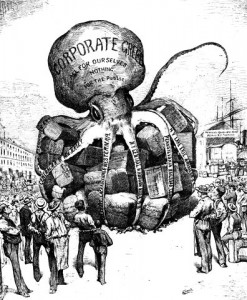
We hear part 2 of a presentation from Harriet Fraad, a hypnotherapist & psychotherapist in Manhattan. She writes regularly for Truthout, Tikkun and The Journal of Psychohistory. Her blog with Richard D. Wolff, Economy and Psychology appears at HarrietFraad.com and RDWolff.com. Her latest book is Bringing It All Back Home ed. Graham Cussano. Her article on Emotional and Sexual Life in a Socialist America written with Tess Fraad Wolff will appear in the book Imagine A Socialist America- (Harper Collins 2013). This panel explores what Socialism could look like in the United States.
———————————————————————————–
Civil Liberties, Criminalizing Dissent, Human Rights, Iran, Military Tribunal, Targeting Muslims, Truth to Power, War Resister
Podcast: Play in new window | Download
Updates:
—-
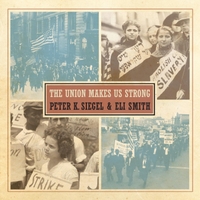
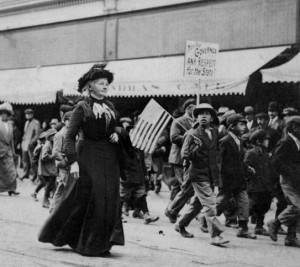
There Is Power In A Union: Labor Songs
Songs of the American labor movement called for fair wages, dignity and voiced grievances. Classic labor songs such as “Which Side Are You On” or “There Is Power In A Union” affirmed the value of the worker to society and expressed hope in their lyrics. Woody Gutherie, Pete Seeger and Joe Hill were leaders of the movement, and sang songs with a passion and love for their fellow workers.
Peter Siegel:
- I’ve been singing these songs all my life. My parents sang these songs. I got a guitar when I was about 13 years old. One of the first songs I learned was Talking Union, along with Bird Dog and Don’t Take Your Guns to Town.
- In recent years, when the state started cracking down on unions. The reporting that was coming through the media about these things, didn’t really explain what a union was and why there unions in the first place, and what the issues were.
- I think these songs do a very clear and direct job of explaining that.
- Many of the issues are still the same as they were when these songs were written. Eli and I talked about and got together and decided to make this album.
- Martin Luther King Jr., talk about the hottest places in hell being reserved for those in times of crisis do nothing.
- The Death of Mother Jones: I don’t think Gene Autry had a particular connection to that song, he apparently got the song from OK Records, which was his label.
- Eli plays the steel guitar on our record and sings it beautifully.
Eli Smith:
- One over-arching aspect of the songs is they give you a feeling of what its like to have a labor movement.
- And also now to give people a feeling of what it was like in the past because I think America is an amnesiac society.
- Most of the songs on our album are from 80 to 100 years ago.
- Which Side Are You On? It’s a song written by Florence Reece, in a traditional style from the heart of Appalachia, in the coal mining region and we rendered in a way that’s as authentic as we can be to that style.
Guest – Peter Siegel is a musician, a record producer and performance artist who has worked with Doc Watson, Hazel Dickens and Roy Buchanan. He’s produced a number of great albums for Nonesuch, Folkways and Rounder Records in the last 50 years.
Guest – Eli Smith is a banjo player, writer and promoter of folk music, living in New York City. Eli is a Smithsonian Folkways recording artist and produces two folk festivals every year.
—-
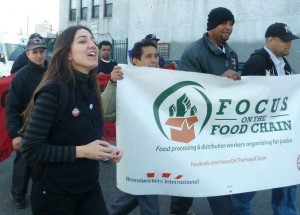
Brandworkers – Focus On The Food Chain
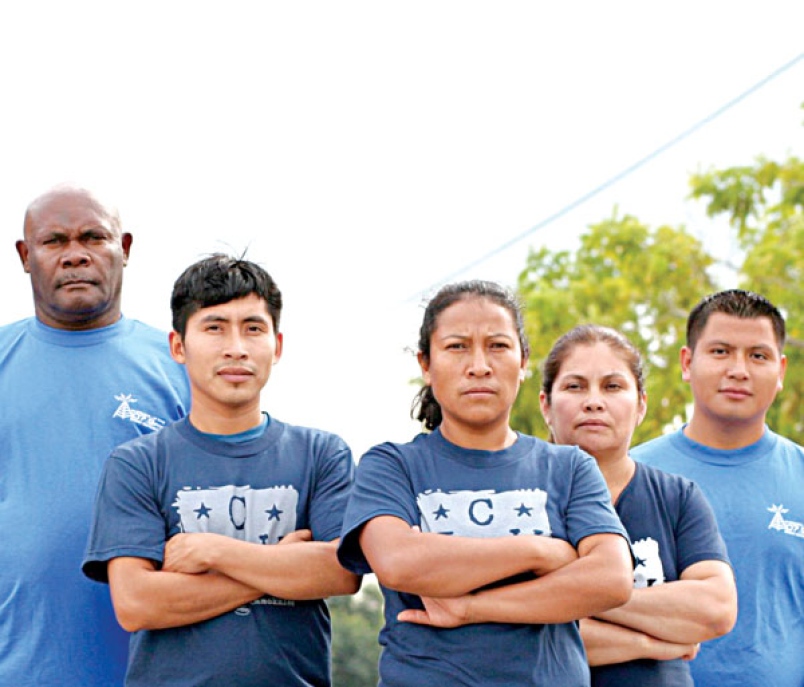
Nearly 35 thousand workers are employed to run New York City’s massive food processing and distribution. The vast majority are immigrant workers from all over the world, Latin America, the Caribbean, China and Nepal. They depend on this work for their livelihood yet they’re often exploited through wage theft, reckless disregard of health and safety, plus egregious discrimination. We welcome back attorney Daniel Gross, executive director of Brandworkers, a non-profit organization protecting and advancing the rights of retail and food employees. They’ve had numerous victories including recovering unpaid wages and forcing companies such as Flaum Appetizing into full compliance of workplace protections. The efforts to achieve these victories are based on the labor movement of the late 19th century using direct action and everyday solidarity.
Attorney Daniel Gross:
- That approach worked for several decades. Labor identified itself with having a seat at the table with government and business and frankly lost its sense of being a fighting movement.
- As many predicted, that arrangement among labor, capital and government wouldn’t hold.
- Capital and government understood that it was a temporary sessation of hostility to worker’s right to organize.
- What we see now is the NLRB system come undone.
- It’s very easy for an employer with the right union-busting attorney to quite effectively undermine the worker’s right to go through the traditional processes we’ve understood for a while to form a union.
- This multi-billion dollar global union busting industry which is led by law firms.
- These folks wake up every day in the morning and seek to undermine working people coming together to do better at work for their families.
- 93 out of 100 workers today are not in a labor union traditionally and have very little prospect getting in.
- Starbucks when I realized the traditional model was ineffective.
- Our members work as bakers, they process seafood, they drive trucks that deliver all kinds of food and beverages to the grocery stores and restaurants, where we all get our food.
- Our motto is empowering workers to build and lead their own campaigns for justice at work and in the food system.
- Most recently, we announced a campaign at the Tom Cat bakery.
- Workers marched and made declaration of dignity, demanding respect from management and an end to an under-payment scheme and hands off the benefits they’ve accrued.
Jose Romero:
- Flaum Appetizing was a kosher factory, we were working very long hours without being paid overtime, there were no benefits including no vacations.
- We decided to unite and came together one day during our break, we all met on the patio and decided we were going to confront the boss altogether.
- This manager would attack us, and yell, call us cockroaches, would hurry us and call us stupid.
Guest – Attorney Daniel Gross, Executive Director of Brandworkers, a non-profit organization protecting and advancing the rights of retail and food employees.
Guest – Juan Romero from Flaum Appetizing who works as a cook on the West side of Manhattan.
—-

Farm Workers: Coalition of Immokalee Workers
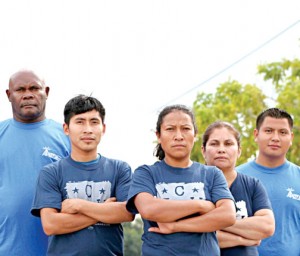
This year’s Labor Day, farmworkers with the Coalition of Immokalee Workers travel across Florida calling on Publix Supermarkets to join the Fair Food Program. Who are the Coalition of Immokalee workers? They’re a Florida based community organization of mainly immigrants from Latin America and the Caribbean including Mayan Indian and Haitian immigrants who have been working low wage jobs throughout Florida. The farm workers routinely face a number of different kinds of exploitation, poverty, wage theft, physical and verbal abuse as well as sexual harassment of many women working in the fields. Their campaigns focus on the big corporate buyers of the produce that they pick in an effort to improve wages and working conditions in the fields. They started with Taco Bell and from there launched campaigns with McDonald’s, Burger King, since then 11 other companies are cooperating to improving wages and working conditions in their supply chains. Last year Trader Joe’s and the Coalition of Immokalee Workers signed an agreement that formalized the ways in which the supermarket chain will support the CIW’s Fair Food Program. Their efforts continue to urge Publix and Wendy’s fast food to join up.
Silvia Perez:
- My experience as a woman working in the fields, its been very difficult for me, we often do the same work that men do in the industry.
- We face heat exposure and having to work long hours, under the Florida Sun, and also to over fill our buckets to keep extra tomatoes on top for which we were not paid.
- For many years before the CIW began its Fair Food Program, farm workers were paid an average of 45 cents per 32 lb bucket.
- That’s been the same wage that farm workers received in Florida for more than 30 years.
- There was no guaranteed wage that we would receive in the field, we were paid the bucket rate.
- While there should be a minimum wage and we should get that guarantee to get paid that minimum wage, often times we didn’t receive it.
- With our campaign for Fair Food, which brought on board 11 major corporations we developed the Fair Food Program, an initiative which is a partnership between farmers, farmworkers and the major retailers and because of that program things are changing.
- Our organization is not a union, we are a worker and community based organization that was formed by farm workers themselves.
- In addition to Wendy’s we’ve asked Publix the largest Florida based corporation to come on board as 11 other companies have. Specifically we ask for 2 things, to pay 1 penny more a pound for the tomatoes that they’re buying to go directly to farm workers, and to respect our rights.
Guest – Silvia Perez with the Coalition Immokalee Workers and also CIW campaign organizer Jake Ratner who will translate.
Guest – Jake Ratner, translater and son of co-host Michael Ratner. Jake traveled and studied in Cuba and Bolivia, South America. He now works with the Coalition of the Immokalee Workers.
—————————————————————-