CIA Sponsored Terror, Civil Liberties, Criminalizing Dissent, FBI Intrusion, Guantanamo, Habeas Corpus, Human Rights, Political Prisoner, Prison Industry, Surveillance, Targeting Muslims, War Resister
Podcast: Play in new window | Download
Updates:
——–
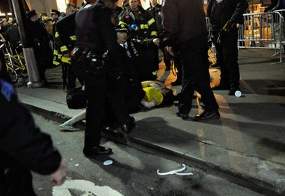
Jury Trial Begins for Occupy Wall Street’s Cecily McMillan
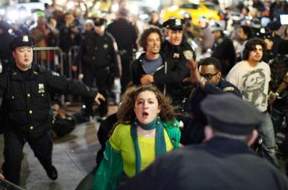
Cecily McMillan faces 7 years in prison after being beaten by the New York Police that left her unconscious at an event marking the 6 month anniversary of the occupation in Zuccotti Park. The Occupy Wall Street activist is charged with felony assault on a police officer a Class D felony in New York. In the course of her arrest McMillan sustained bruised ribs, a seizure and numerous cuts across her body. McMillan was a political organizer and activists speculate that’s why the prosecutor is seeking the full penalty.
Attorney Marty Stolar:
- Cecily is indicted which is somewhat unusual in the Occupy Wall Street cases. There are only 2 serious felonies that made it through the indictment process, Cecily’s is one of them.
- She’s accused of assault in the second degree. She’s accused of assaulting a police officer with intent to disrupt his ability to perform his official duties. She wacked him in the face with her elbow and left a good sized mouse under his left eye, causing him substantial pain and also to miss some work.
- The circumstances however under which she delivered the blow to his cheekbone are what the trial is about.
- Cecily is not the kind of person who would assault a police officer just for the hell of it.
- The police at midnight decided to clear the park of all the people who were there to celebrate the anniversary. Cecily was there not necessarily to celebrate the anniversary but to meet somebody to continue her pub crawling on St Patrick’s day being a McMillan when Cecily is grabbed from behind on her right breast and jerked upwards and she reacts, her arms go up in the air, her elbows go up, and that’s when her elbow and that’s when the elbow makes contact with the officer’s cheekbone.
- At that point Cecily is knocked down to the ground hits her head on the sidewalk and really has no memory of what has occurred until she wakes up somewhat later in a hospital.
- All of sudden she realizes she’s got bruises all over her body. She’s got a bruised rib, cuts all over her back, bumps on her head, she really has no idea how they occurred.
- Cecily for whatever reason was singled out to be prosecuted for a felony and they didn’t offer her a decent plea in the case.
- The officer lost a couple days of work, he was back on the job, his vision was not impaired.
Guest – Attorney Marty Stolar is a criminal defense lawyer and former president of the New York chapter of the National Lawyers Guild.
——
Fair Sentencing Of Youth Campaign
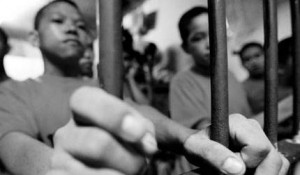
Here on Law and Disorder we’ve been covering the issue of children being sentenced to prison for life without parole for an offense committed during adolescence. The United States was the only country in the world to mete out life without parole to juveniles. But, in the last few years, the United States Supreme Court acted to curb the use of mandatory life sentences for juveniles. It accepted the argument that children, even those who are convicted of murder deserve a chance at redemption. However most state courts are not following the spirit of the recent Supreme Court decision. In Florida, which is the number one state that puts children in prison for life without the possibility of parole, several lawsuits have been brought accusing the state of handing out massive sentences in non-homicide cases that they basically amount to life without parole.
Jody Kent Lavy:
- The youths were involved in homicide cases, Human Rights Watch estimates that 25 percent of those individuals were convicted of felony murder meaning they were the primary perpetrator or they were there at the time the crime was committed but weren’t the trigger men.
- The majority of them 60 percent had no prior record.
- This most extreme sentence has been imposed on people we could not define as our most serious offenders.
- June of 2012 the Miller v Alabama decision was issued which struck down mandatory life without parole sentences for children.
- Each of these cases the court has relied on a growing body of research that really articulate the fundamental differences between children and adults.
- We know that the vast majority of them tend to grow out of any criminal behavior.
- The court has said we can’t impose these most extreme sentences on our children.
- The court has said that children are constitutionally different when it comes to sentencing.
- Two thirds of the people serving these sentences are concentrated in just five states.
- In Pennsylvania the state that leads the nation in this practice there are 500 serving this sentence.
- Back in the 1990s there was this theory known as the super-predator theory that there was going to be this juvenile crime wave.
- The super-predator theory has since been dis-proven by the criminologists who were even the authors.
- We now have an opportunity to be really mindful and careful about how we implement policies at the state level that hold young people accountable for serious crimes.
- Some legislatures have abolished life without parole altogether, Wyoming, Texas, Delaware among them. Some states have reacted in imposing the next available harshest sentence.
- The Mendota Juvenile Treatment Center in Wisconsin.
Guest – Jody Kent Lavy, director of the Campaign for the Fair Sentencing of Youth, the organization calls on states to reconsider mandatory terms dispensed before the Miller ruling.
——————————————————————–
CSPAN Book Club Video – Imagine: Living In A Socialist U.S.A.
CIA Sponsored Terror, Civil Liberties, Gaza, Habeas Corpus, Human Rights, Military Tribunal, Political Prisoner, Prison Industry, Surveillance, Targeting Muslims, War Resister
Podcast: Play in new window | Download
Updates:
—–
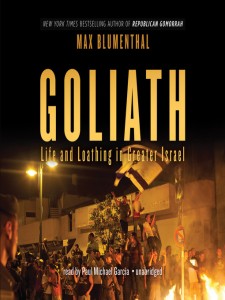
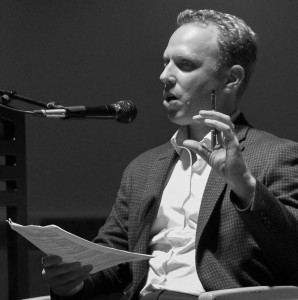
Goliath: Life and Loathing In Greater Israel: Max Blumenthal
Operation Cast Lead in 2008, is a starting point in the book Goliath: Life and Loathing In Greater Israel where award winning journalist and author Max Blumenthal shows the reader how a right wing government in Israel rose to power. His book takes hard look at Israeli authoritarian politics through a cross section of interviews from the homes of Palestinian activists to the political leaders behind the organized assault against civil liberties. Max gives readers a rare look into Israeli society that many will not write about.
Max Blumenthal:
- The first title was Master Race Democracy.
- Of course Israel is always portrayed in our media as this plucky little David surrounded by the Arab Goliath. Of course our reality is 180 degrees different.
- Matzpen warned that this would happen, they took a full page ad in Harretz saying we will become a police state and a nation of murderers.
- That’s where I come in to show that all of their darkest prophecies have been fulfilled and realized.
- I take you through Israeli society and through the key institutions of Israeli life to show how its playing out.
- From my time in Jerusalem where an anti miscegenation movement is burgeoning in the streets of Israel, leading mob attacks on young Palestinian men who are accused of making passes at Jewish women to the convention at the Jerusalem Ramada where key state Rabbis sit on a panel before right-wing settlers, including settler vigilantes leaders of the anti miscegenation movement defend a book, a guide on how and when its permissible to kill non-jews. A guide to genocide which is being distributed in Israeli Army units.
- Avigdor Lieberman is the man that basically promised to transfer 100s of thousands of Palestinians. He’s a rising force in Israeli society. It’s the youth whose hearts and minds they command.
- I take you into the Knesset to meet the younger legislators and the rising stars in Lieberman’s party and Netanhayu’s party who are far to the right of Netanyahu. Netanyahu really just commands the hollow center of Israeli politics.
- Rotem was great because he and other hard core right wingers have this whole philosophy of being dugri or straight. There was nothing I could say to shake him. He looks at me coming in at just another pathetic Jewish liberal who doesn’t really get what it takes to prevent a second holocaust and that’s what he said his goal was.
- It’s completely different from talking to a Republican in the United States who has to pander to some kind of civil rights sensibility.
- That’s another thing reviewers missed about my book is that I analyzed these key votes on major anti-democratic laws going back to 2009. Laws like the Nakba Law which basically criminalized observance of Palestine dispossession in 2008. Laws like the Acceptance to Community Law which legitimizes racial and religious discrimination for communities of under 500.
- These are laws that strip off the veneer of democracy and expose apartheid for what it is.
- It’s the right-wing that has captured the heart of Israeli society because they have the dynamism, they’re driving the agenda forward. (using a simple mantra – “finish 48”)
- In 1948 and actually starting in 1947, 750 thousand Palestinian Arabs were expelled to allow the creation of a Jewish state with a Jewish demographic majority, but many stayed behind. 20 percent of the state of Israel is non-Jewish Palestinian.
- They view Palestinian citizens of Israel increasingly as a fifth column, as a trojan horse for the Arab world, for Arab nationalism and Islamism.
- In order to become a citizen of Israel you have swear loyalty to the Jewish state and that applies to Palestinians in east Jerusalem.
- You will meet the people who are trying to push back inside Jewish-Israeli society on the pages of my book because they were my roommates, my friends. They took me to the flashpoints of ethnic cleansing and conflict.
- I would number 700 or less active left wingers who are actively leveling their bodies against the occupation and apartheid.
- The writings on the wall for these activists that there is very little room for them left in Israeli society.
- What they’ve (leftists in Israel) done is call to the outside. They’re calling to us. They organized around the boycott from within committee and they’re signing letters asking performers not to come to Israel. They’re signing letters calling on Americans to boycott their country.
- That is really where the activism of the radical left wing Israelis is going.
- The Jewish National Fund is supposed to operate within the Green Line only and is probably the leading Jewish non-profit in the world. It receives the most donations from diaspora Jews in the world.
- Steven Harper the Prime Minister of Canada recently spoke at one of their banquets. They’ve paid Bill Clinton hundreds of thousands to speak at their banquets.
- They are also the premier organization linked to the Israeli government involved in ethnic cleansing and crimes against humanity.
- It’s something we talk about a lot. How Zionism is trying to capture Judaism and change what it means to be a Jew and declare us to be who are not only not Zionists but object to this redefinition of Judaism and cast us out and declare us to be anathema.
- You can see it in my video Feeling the Hate where I go to the heart of Jerusalem and meet American Jews from around the country and they line up around my camera the night before Barack Obama’s historic address in Cairo.
- Zionism is attracting those who are magnetized by the kind of bellicose identity that it requires and is repelling anyone who has any liberal sensibility or at least throwing them into a moral crisis.
- I showed up as # 9 on Simon Weisenthal Center’s list of anti-Israel, anti-semites and they called me an anti-semitic Jew, not even a self-hating Jew but a Jew who hates Jews.
- I was tied with Alice Walker by the way.
- They literally count the calorie of each Gaza resident with complex mathematical formulas.
- Barack Obama has never challenged the idea of holding 1.8 million under siege because they possess the wrong ethnicity.
- When a situation like this is taking place and expanding as Jeff Halper from the Israeli Committee Against Home Demolitions says into a “global Gaza” where the techniques that have been used to control people in the Gaza Strip are literally being exported because Israel is the only country that has the ability to basically lab test such a regime of domination.
- That’s very appealing to people in the United States, the Department of Homeland Security, to private prison companies like CCA.
- Twitter – @maxblumenthal
Guest – Max Blumenthal, an award-winning journalist and bestselling author whose articles and video documentaries have appeared in The New York Times, The Los Angeles Times, The Daily Beast, The Nation, The Guardian, The Independent Film Channel, The Huffington Post, Salon, Al Jazeera English and many other publications. He is a former Puffin Foundation Writing Fellow for The Nation Institute. His book, Republican Gomorrah: Inside The Movement That Shattered The Party, is a New York Times and Los Angeles Times bestseller.
———————
CIA Sponsored Terror, Civil Liberties, Criminalizing Dissent, FBI Intrusion, Guantanamo, Habeas Corpus, Human Rights, Iraq War, Political Prisoner, Prison Industry, RFID, Supreme Court, Surveillance, Targeting Muslims, Torture, War Resister
Podcast: Play in new window | Download
Updates:
——–

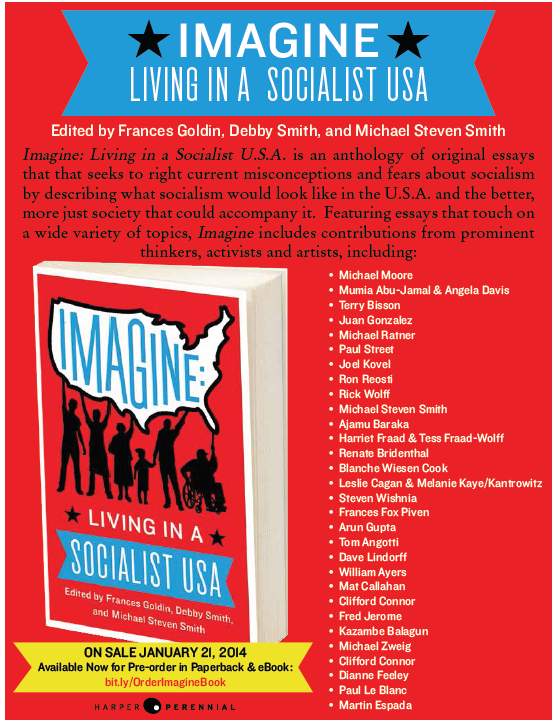
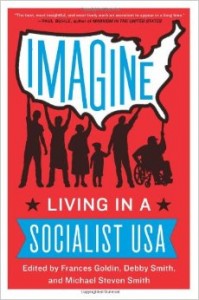
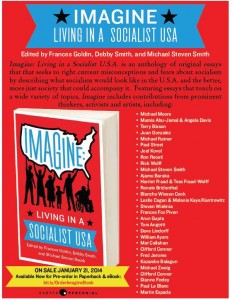
Imagine: Living in a Socialist USA-Frances Goldin, Michael and Debby Smith
Our own co-host Michael Smith, his wife Debby and Frances Goldin have assembled and edited an anthology of powerful essays titled Imagine Living In A Socialist USA. Prominent thinkers, activists and artists have given their perspective of what the United States would look like through the lens of a socialist society. This new work is an important contribution to what we hope will be a broader movement. It includes an indictment of capitalism, an alternative U.S.A. and how to get there.
Frances Goldin:
- It was my brainchild because I wanted to accomplish 3 things before I joined by ancestors. One is everyone who lived in Cooper Square who had been fighting Robert Moses and saving their old tenements since 1959 its been a tremendous long struggle.
- This is the only community land trust in the Northeast. The only one.
- The next one is that I was really distressed at the direction our country was moving. Here I am 89 years old and all of a sudden North Carolina says that we’re going back to the old days where you had to bring in your right arm and read the Constitution without missing a word in order to vote. That plus spying on every American and continuing the wars.
- It was just breaking my heart. I was very distressed that everybody thought that socialism was a dirty word, it was an undemocratic terrible way of life and they just didn’t have a clue as to what it really meant.
- I thought it would be a great idea to pull together some of the greatest minds in the country and let them talk about health, education, welfare, homosexuality, every subject that effects American’s lives and explain how it would be different under socialism if it were democratically done, which is the only way it should be done.
- Within one year, 31 leading brains in the United States for no charge, they did it free, wrote their essays on each one of these subjects. The book is in my hand, its finished and its beautiful and it makes me so happy. That’s my second accomplishment.
- The third one is to see one of the leading intellectuals in the world free, forever free. Mumia Abu-Jamal.
- I couldn’t do it alone, it was a great plan and so I leaned on to dear friends, Debby and Michael Smith.
- I had to force Harper Collins into this, they really didn’t want to do it.
- We were very lucky to hire an incredibly good editor, whose livelihood was editing for magazines and newspapers. If a sentence was too long, he cut it into 2 or 3 sentences.
- Right now, the word socialism, people think of dictatorship, they think terrible things, they think undemocratic.
- This is a simple instruction about how it would effect us with regard to health, education, housing, welfare, all of those subjects which make it so difficult for all of us to live.
- It can’t be a dirty word, it happens to be the most democratic way of governing possible.
- Get the workers to run the company. It’s happening in Spain, with dozens of corporations that have become worker owned.
- It’s going to be the workers dividing the profits among themselves.
- It will only happen when the workers are angry enough and informed enough to know that they can run the show.
- Every penny of the royalties will go to free Mumia Abu-Jamal
- We are not earning one dime from this book. It was a labor of love. It was a labor of activism.
- It was a labor to change the world and make it a better place.
Guest – Frances Goldin is the President & Principal of Frances Goldin Literary Agency. Frances has worked in publishing for 63 years, as an agent and as editor-in-chief of a children’s publishing company; she founded the Frances Goldin Literary Agency and sold her first book in 1977. Authored by Black anthropologist Betty Lou Valentine and titled Hustling and Other Hard Work, the book continued to receive royalties for 32 years. One of the agency’s strengths is that many of its books continue to earn royalties long after publication. Reflecting Goldin’s radical politics, the Agency concentrates on literary fiction and serious, controversial, progressive non-fiction.
—–
Attorney Michael Smith:
- I don’t think its a dirty word, because people see what’s going on under capitalism and they don’t like it. The economic situation in this country ain’t gonna change, its only going to get worse.
- Frances is quite an influential literary agent in this country.
- What’s your definition of socialism? I said a democratic economy and political system, both where people from the bottom up control how we make a living, and how we live.
- We’re having a book launch on January 27. It’s at 126 Crosby Street in SOHO at the book store called Housing Works.
- In order to achieve the kind of socialism we’re talking about and that’s socialism from the bottom up you need a broad democratic movement of people.
- All the left wing parties, all the movement groups, we gotta get together around a common program.
- One of the chapters that I really like, and this isn’t to flatter you Michael Ratner, but you wrote a chapter on what I would do if I was US Attorney General.
- Paul LeBlanc writes his chapter about the 3rd American revolution. Diane Feeley writes about that in her chapter. She’s an auto worker retired from Detroit.
- Michael Zweig, the great sociologist, we reprint his speech from Occupy Wall Street where he talks about the 1 percent, the ruling class.
- He says actually its 1/10 of 1 percent. Those are the people who are the top of the economy and different organizations in this country. He said, you gotta be very careful, because these people will kill ya.
- In the second part of the book, we emphasize use your imagination. How do we organize the economy democratically?
- How do you organize a corporation democratically? Rick Wolff wrote that chapter.
- There are 31 chapters in the book. The last chapter suggests itself. How do we do it?
- We’re not against leadership, we’re against undemocratic leadership but you need people who’ve had some experience and who can draw the lessons of the past.
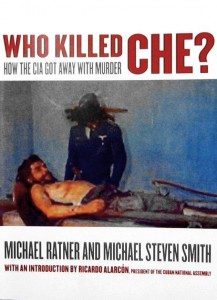
Guest – Attorney Michael Smith is co-host of Law and Disorder, and a New York City attorney and author. His most recent book, written with Michael Ratner , is Who Killed Che? How The CIA Got Away With Murder. He is on the boards of the Center for Constitutional Rights, and the Brecht Forum. He was educated at the University of Wisconsin in the 1960s, where he learned social history from the great teacher Harvey Goldberg. He has testified on Palestinian rights before committees of the US Congress and the United Nations.
Guest – Debby Smith is a long time socialist since going to college in Boston during the radical sixties. Debby worked full-time for the anti-Vietnam War movement, the Kent State Legal Defense Fund and in the feminist, union and socialist movements. She is also the wife of Michael Smith and participates in the anti-capitalist and pro-democracy movements that are growing rapidly in the United States and worldwide.
————————————————————————————————————
Afghanistan War, CIA Sponsored Terror, Civil Liberties, FBI Intrusion, Habeas Corpus, Human Rights, Surveillance, Targeting Muslims, Truth to Power
Podcast: Play in new window | Download
Updates:
- Lynne Stewart Released From Prison, Returns Home
- Media, Pennsylvania Activists Come Forward
- White House Report: “Liberty and Security in a Changing World”
——
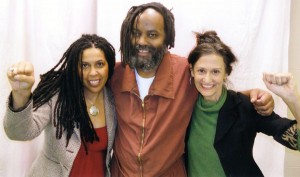

Mumia Abu-Jamal, Heidi Boghosian and Professor Johanna Fernandez
We at Law and Disorder have kept you updated on his case for the 10 years we’ve been broadcasting. It’s our pleasure to welcome Mumia Abu-Jamal as our special guest. Professor Johanna Fernandez joins us as Mumia calls from SCI Mahanoy in Frackville, Pennsylvania. Johanna is a Professor of History at Baruch College and co-coordinator of the newly launched campaign to bring Mumia home.
Mumia Abu-Jamal:
- I remember with quite a degree of distinction receiving in the mail, a packet full of xeroxed FBI files.
- I believe by 1971, I had left the party. I read through files that named names and detailed internal affairs of the Black Panther Party of Philadelphia, the national office, other organizations, activists all through out the city and the region.
- We lived in communal apartments and houses. We lived together we worked out of the same offices, we spent all day together with each other.
- To read about lies that were in those files, and the people that you knew for years that were FBI informants, stuff like that, it was absolutely mind blowing.
- Media, Pennsylvania story: I think they are the linear ancestors of Edward Snowden.
- These were anti-war people for the most part, living their own lives but willing to make a contribution to the movement, because they were part of the movement.
- It’s interesting that these file come out now, because for someone who has been reading and writing recently, about the Reverend Dr. Martin Luther King Jr., people know now that the FBI taped hotel rooms where Martin and Ralph David Abernathy and other civil rights activist were staying.
- They tried to use those tapes to blackmail Martin King and actually force him into suicide.
- This was all part of Hoover’s plan to destroy the Black Freedom Movement and any movement that was against what the government was doing.
- It’s interesting that Law and Disorder is talking about 9/11 when right there in New York you have an estimated 100 cops who used 9/11 to justify scamming the public. Cops, prison guards and a few firefighters.
- When you think about the ordinary heroes. These are people whose names are not known. Those nameless black mothers, grandmothers, sisters and daughters, they made that movement possible. (Black Freedom Movement)
- Even if you think of Edward Snowden. He’s an average guy, no college education, he’s like a computer whiz. Now he got a great job and he resolved in his mind, in his heart, in his soul, that he would not be silent about the things he saw and heard.
- BringMumiaHome.com
- Law and Disorder Interview – The Framing of Mumia Abu Jamal by J.Patrick O’Connor
Guest – Mumia Abu-Jamal is a renowned journalist from Philadelphia who has been in prison since 1981 and was on death row since 1983 for allegedly shooting Philadelphia police officer Daniel Faulkner. After decades of appeals, he left death row in 2012 but is still facing a life sentence. He is known as the “Voice of the Voiceless” for his award-winning reporting on police/state violence brutality and other social and racial epidemics that plague communities of color in Philadelphia and throughout the world.
——
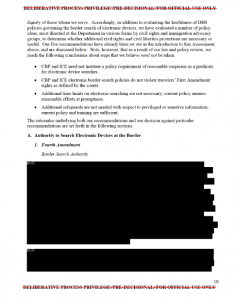
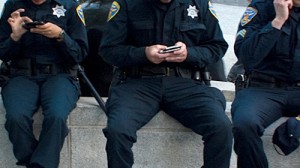
Federal Court Allows For DHS Laptop Searches At Border
Each year, thousands of American citizens returning from abroad are subjected to searches of their laptops, cell phones and other personal devices. The Department of Homeland Security claims it has the right to such searches regardless of whether the traveler is suspected of wrongdoing.
A federal court recently dismissed a 2010 lawsuit against the DHS. The ACLU, and the National Association of Criminal Defense Lawyers, filed the suit on behalf of Pascal Abidor, a dual French-American citizen whose laptop was searched and confiscated at the Canadian border, as well as the National Press Photographers Association and the NACDL. Abidor was traveling from Montreal to NY on Amtrak when his laptop was searched and taken by customs officers. He was questioned, taken off the rain in handcuffs and held in a cell for several hours. When his laptop was returned, many of his files, chats and photos had been searched.
Attorney Brian Hauss:
- The agent opened Mr Abidor’s laptop and started looking through the files on his desktop.
- She found a couple pictures that she showed to agents around her. She turned the laptop around to see what he thought about the pictures she identified.
- One was a picture of a Hamas rally in Israel, and the other picture was of a Hezbollah rally in Lebanon.
- Mr Abidor explained that these were related to his graduate work in Islamic studies.
- The agents thought these pictures were suspicious, and they took Mr. Abidor off the train, the train left without him. They put him in handcuffs and placed him in a holding cell where he was forced to wait for several hours.
- While he was there, the agents interrogated him about his studies, his associations, his interests in Islam, etc.
- Eventually they decided there was no evidence of wrong doing. They decided to let him go but not before seizing all his electronic devices and specifically detaining his laptop for an indefinite period of time.
- When they returned his laptop 11 days later he was able to determine from the last open date on his files, that the government had actually inspected his personal photographs a transcript of a chat he had with his girlfriend, copies of his email correspondence, class notes, journal articles, tax returns, his graduate school transcript and even his resume.
- He decided to come to us and we brought a lawsuit on his behalf challenging this policy.
- David House is a very talented computer programmer who lives in Cambridge, Massachussetts and he was at one time deeply involved in the Bradley Manning support network.
- The government figured out that David House was related to Chelsea Manning and they wanted to question him in connection with the Wikileaks investigation.
- They set up an alert in the data base, known as the Text Database. It let the government know whenever Mr. House was leaving the country.
- When Mr House returned (from leaving the country) government agents were waiting for him at Chicago O’Hare.
- They interrogated Mr. House about wikileaks and his political activities and confiscated his laptop and electronic devices.
- When we brought a lawsuit on Mr. House’s behalf and actually settled with the government, the DHS notes after reviewing all of his materials after going through every file on his laptop . . concluded there was absolutely no evidence to seize these devices. There was strong reason to believe they knew this from the beginning and they knew they couldn’t get a probable cause warrant by a judge.
- As we understand it, the DHS can put anyone it likes into the Text Database.
- Our understanding is that from October 1, 2008 to June 2, 2010 more than 6,500 people.
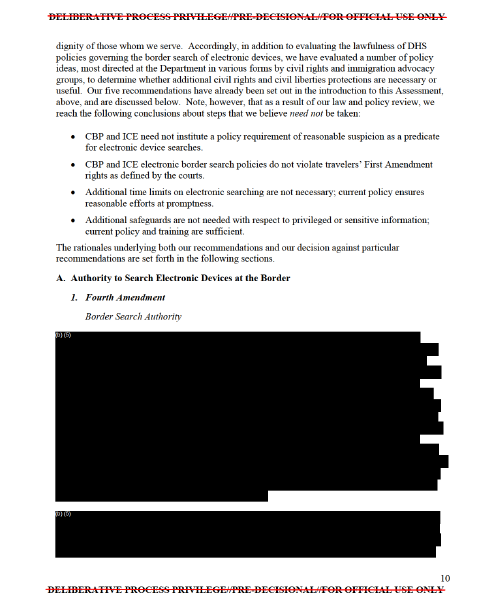
- What we asked for in our FOIA request was the DHS Civil Rights and Civil Liberties Impact Report on border searches. We ultimately got the report with some redactions pertaining to the government’s legal analysis of why its allowed to engage in suspicionless searches.
Guest – Brian Hauss, the William J. Brennan Fellow with the ACLU’s Speech, Privacy, and Technology Project. At the ACLU, he has been involved in litigation challenging the federal government’s suspicionless search and seizure of laptops and other electronic devices at the international border. Brian is a graduate of Yale University and Harvard Law School. After graduation from law school, he served as a law clerk to the Honorable Marsha Berzon of the United States Court of Appeals for the Ninth Circuit.
——————————————————————————————
Books From Law and Disorder Hosts
Afghanistan War, CIA Sponsored Terror, Civil Liberties, Criminalizing Dissent, FBI Intrusion, Habeas Corpus, Human Rights, Iraq Veterans, Iraq War, Targeting Muslims, Torture, War Resister
Podcast: Play in new window | Download
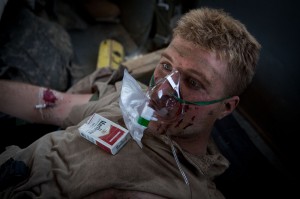
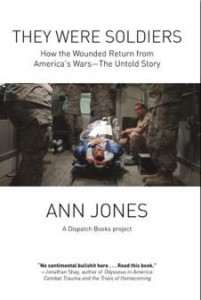
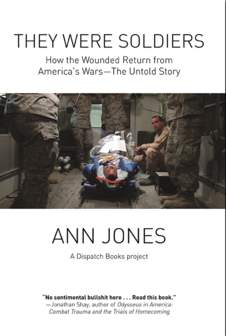
They Were Soldiers: How the Wounded Return from America’s Wars
What are the true costs of war in Afghanistan? Our guest, author Ann Jones has written an impactful book titled They Were Soldiers: How the Wounded Return from America’s Wars, it chronicles a world mostly hidden from the public. Ann Jones has spent nearly a decade working with Afghan civilians and writing about the effects of war on their lives but in the last couple years, she focused on the human toll on and off the battle field as U.S. soldiers return back from war zones with permanent mental damage, missing limbs or as quadruple amputees.
Ann Jones:
- I live in Norway where peace is taken for granted as it is in Europe.
- The United States looks crazed, the way we send our forces out all over the world, are always looking for a fight.
- Any unit of any size has a special unit within it that does mortuary affairs because all combat units are losing soldiers all the time and even soldiers who never leave base may be victims of this war. Suicides for example.
- The job of the soldiers assigned to mortuary affairs is to protect the other soldiers from knowledge of those deaths.
- Their job is to go out and retrieve the pieces of soldiers who very often in Afghanistan have literally been blown to pieces and bring those body parts and remains back to the base, to thier little secret part of the base and try to match up and put them in “transfer cases.” – to transfer them home to Dover, Delaware where they are repackaged, gussied up to be put in coffins and sent on for families for burial.
- Landstuhl Regional Medical Center is very close to Ramstein Air Base in Germany. There are special air ambulance services that go out from there to Africa, to Asia to pick even individual casualties. The individuals are often members of the CIA or private contractors or military special ops people.
- The suicides have been increasing year by year. Many of those suicides take place in the field. There have been a number that have been documented as a result of hazing and sexual assaults.
- A great many more take place here at home when soldiers return and find that they can’t live with themselves.
- I think what’s really troubling now is the number of soldiers and ex soldiers who aren’t really counted in this statistic who are taking their lives under the influence of opiad-pain killers, that have been pushed upon them by big-pharma.
- They’re shown to be highly addictive, particularly in young people and to be heavily implicated in suicide.
- The rate at which soldiers under treatment in the V.A. are taking their lives is what should be a national scandal.
- It’s estimated that 1 in 3 women soldiers have been the victim of sexual assault.
- Though in fact the number of male soldiers victimized is even greater. The percentage is less but the number is greater because men still represent 85 percent of the personnel in the military.
- Congress is supposed to vote on military appropriations for 2014 very shortly. Kirsten Gillebrand, the senator from New York is leading the campaign to attach an amendment to that budgetary appropriation that would remove the prosecution, the reporting and the decision about the prosecution and the prosecution itself from the chain of command and place it in the hands of specially trained military and civilian legal units.
- Who joins? It’s kids, from poor families, from dysfunctional families. Mainly from in the South and the “rust belt” and urban centers who see very little if any, opportunity for their ambitions and their idealism in their home communities.
Guest – Ann Jones, a journalist, photographer, and the author of ten books of nonfiction. She has written extensively about violence against women. Since 2001, she has worked intermittently as a humanitarian volunteer in conflict and post-conflict countries in the Middle East, sub-Saharan Africa, and central and south Asia. From Afghanistan and the Middle East, she has reported on the impact of war upon civilians; and she has embedded with American forces in Afghanistan to report on war’s impact on soldiers. Her articles on these and other matters appear most often in The Nation and online at www.TomDispatch.com. Her work has received generous support from the Radcliffe Institute for Advanced Study at Harvard University, where she held the Mildred Londa Weisman Fellowship in 2010-11, the John Simon Guggenheim Memorial Foundation (2011-12), and the Fulbright Foundation (2012). She lives in Oslo, Norway, with two conversational cats.
—–

The Black Misleadership Class Versus the Movement and its Legacy
We go now to hear Glen Ford speaking at the Black Agenda Report 7th anniversary gathering at Harlem’s Riverside Church. The theme of the event was ““The Black Misleadership Class Versus the Movement and its Legacy.” Ford gives strong criticism of newly elected New Jersey Senator Cory Booker as the essence of Black misleadership, showing the many ties of the current Newark mayor to corporate America.
Glen Ford is the Black Agenda Report executive editor Glen Ford can be contacted at Glen.Ford@BlackAgendaReport.com.
——————————————————————————-
Books From Law and Disorder Hosts
Civil Liberties, Criminalizing Dissent, Extraordinary Rendition, FBI Intrusion, Guantanamo, Habeas Corpus, Human Rights, Political Prisoner, Prison Industry, Supreme Court, Surveillance, Targeting Muslims, Torture, Truth to Power, War Resister
Podcast: Play in new window | Download
Updates:
- Judge Leon Rules That NSA Meta Data Collection Is Likely Unconstitutional.
- Michael Ratner: It Could Be The Deathknell For This Kind Of MetaData Collection
- Ed Snowden’s Response To Judge Leon’s Decision
- Ed Snowden’s Open Letter To The People Of Brasil
- A Christmas Card From Chelsea Manning
- Guantánamo Five: Military Commissions – Their Torture Memories Are . . Classified.
- First Commander Lenhardt: Guantánamo Should Never Have Opened
- American Studies Association Supports Boycott Of Israeli Academic Institutions
——

Over Policing of America: The Criminalization of Everyday Life
In his recent article titled Over Policing of America, attorney Chase Madar outlines a familiar narrative such as the militarization of police, stop and frisk, and how students get swept into the school to prison pipeline. The pattern is clear and who benefits is obvious in the list of over policing examples compiled by our returning guest, such as criminalizing immigration and how simple economic transactions are closely scrutinized by under-cover police.
Attorney Chase Madar:
- I’m hoping this new term will enter the national lingo; over-policing.
- What I wrote about is how the police paradigm has entered the DNA of social policy across the board in the United States in matters that a generation ago would not require police or prosecutors or criminal law, now suddenly do.
- That’s in education, in immigration, in family law, even how we regulate the economy.
- All of these spheres, domains of everyday life are increasingly regulated by police and prosecutors.
- A creeping police state. We need to take a very sobering look at how we’re governing ourselves and how criminal law is displacing and devouring all other kinds of social regulation.
- You see this more and more disciplinary matters in schools get outsourced to police departments.
- Police people are trained to respond to crimes, and to respond to everything as a crime. That’s the nature of police.
- When you send police into a school, the crime is going to sky rocket.
- Even the way we regulate our economy is suffering from an overdose of criminal law and police powers.
- What we have frequently is white collar work getting criminalized by a mare’s nest of criminal laws that are very complex, very difficult to understand.
- It’s not like we have a great financial system that was abused by a few bad apples. We have a really crappy system that’s legal because these people write the laws.
- Immigration law was mostly under the domain of administrative law with milder penalties, civil penalties.
- We’re kidding ourselves if we pretend that’s somehow aberrational.
- Although our political class seems incapable of doing anything constructive about it, they are very adept at channeling all fears about security in any sense into criminal law crack downs and ratcheting up the police state.
- Our incarceration rate is three times higher than the old East Germany.
- I think we need to switch very swiftly to alternative ways of social policy in holding our society together other than throwing cops and prosecutors at it.
Guest – Attorney Chase Madar , a TomDispatch regular and author of a new book, The Passion of Bradley Manning (OR Books). Madar tweets @ChMadar. He’s a contributor to the London Review of Books and Le Monde diplomatique and the author of a new book, The Passion of Bradley Manning (OR Books).
——————————————————-
Books From Law and Disorder Hosts