Civil Liberties, Criminalizing Dissent, FBI Intrusion, Habeas Corpus, Human Rights, Surveillance, Targeting Muslims, Torture, War Resister
Podcast: Play in new window | Download
Updates:
—–
The United States, Iraq, Afghanistan, Iran, Syria and Israel
President Barack Obama addressed the 68th session of the United Nations General Assembly last week, near the end of September. His speech reflected some of the shift in global politics in the Middle East, especially in Syria. He also spoke about Iran, and mentioned the usual, “we are determined to prevent Iran from developing a nuclear weapon.” Obama said “we are not seeking regime change we respect the right of the Iranian people to access peaceful nuclear energy.” However Iran has signed on to the Non-Proliferation Treaty which recognizes the right to develop, research, produce and use nuclear energy for peaceful purposes without discrimination.
William Blum:
- One must accept the basic premise that the United States wants to dominate the world.
- In that context it becomes clear that the main problem we have with other countries is one of disobedience.
- Our closest ally in the Arab world is Saudi Arabia, if that’s not the most oppressive government in the world then damn close to it.
- We’ve overthrown the 3 leading secular governments of the Middle East. First Iraq, and then Libya, and now we’re in the process to attempt to overthrow the Syrian government.
- In ’79, the Shah of Iran was overthrown by various forces, but the ones that came to power were the Islamics.
- It’s a myth that the U.S. was totally opposed to Islam coming to power in Iran then.
- What Washington feared is the Left coming to power in Iran.
- The Left, all over the world, are the least likely to be obedient to Washington, to become a client state.
- So the Left is the first target of U.S foreign policy.
- Israel fears Iran, in the same way it fears Iraq and Libya. Any country in the Middle East that had some military power and not falling in line as an obedient friend or follower of Israel, that was a target of Israel, which means target of the U.S.
- The 3 main targets have all been attacked by Washington and that’s where we are today.
- Cuba then and now has represented what Washington fears greatly, a good alternative to capitalist system.
- They have inspired people and countries all over the world, especially in Latin America.
- It’s not very well known that throughout the 70s and into the 80s, Afghanistan had a fairly progressive government. Women had full rights. I’ve seen photos of that time, of women walking around in mini-skirts.
- What happened to that society and government? Our dear government overthrew it.
- It’s amazing when we hear people say we have to stay in Afghanistan to help the women there.
- Saddam Hussein, as much of a dictator as he was, he still ran a welfare state.
- The people in their daily life were much better off than they are today and there was peace and order
- Syria is not going to make a good client state to the United States and Israel. Syria is a bit too friendly with Russia.
- It’s amazing how sensitive we are to those who will not embrace the American empire.
- Almost all the leading people in Israel except for Netanyahu, they know Iran is not a threat. It’s all hype.
- Netanyahu needs this hype and the U.S. needs it.
- There’s a very growing trend now to be turned off by all of this war. The vote in Congress which if it were held would have been against invading Syria.
- The American public is very tired of these wars.
- Sign up for the monthly Anti-Empire Report.
Guest – William Blum, has been a freelance journalist in the United States, Europe and South America. His stay in Chile in 1972-3, writing about the Allende government’s “socialist experiment” and its tragic overthrow in a CIA-designed coup, instilled in him a personal involvement and an even more heightened interest in what his government was doing in various parts of the world. In the mid-1970’s, he worked in London with former CIA officer Philip Agee and his associates on their project of exposing CIA personnel and their misdeeds. His book on U.S. foreign policy, Killing Hope: U.S. Military and CIA Interventions Since World War II, first published in 1995 and updated since, has received international acclaim.
—–
EFF Fights Back Against NSA Spying
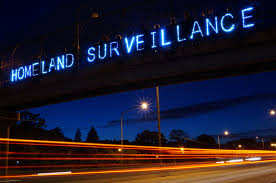
A few shows ago we asked Attorney Carl Messineo with the Partnership for Civil Justice Fund what legal steps are they taking to stem the pervasive breach of civil liberties from the National Security Agency’s massive surveillance program. Our own Heidi Boghosian, author of the book Spying On Democracy: Government Surveillance, Corporate Power and Public Resistance has discussed in detail the public fight back from a legal standpoint. David Greene, a senior staff attorney with the Electronic Frontier Foundation brings us up to date about ongoing litigation, lawsuits and FOIA requests to continue the fight back against government and corporate spying.
Attorney David Greene:
- There’s a lot we still don’t know about how much they know about us.
- We do know that they have several programs to collect communications, data. They have a program called UPSTREAM that collects all internet communications.
- This actually happens at the fiber level. – where the switching facilities are at the splitter, split the transmissions to where the communications company wants it to go and one that actually goes toward the government.
- We at EFF have known about that and had a lawsuit pending for 7 years now.
- Our lawsuit was originally against AT&T and then Congress granted telecoms immunity, so.
- One of the other things we’ve learned about is a program that also collects internet records called PRISM. PRISM seems to be focused on collecting email correspondence between foreign targets and the United States.
- They’re basically collecting the call data of every telephone call made in the United States. Right now they’re saying they’re not collecting the content of the calls but only the metadata.
- They’re also collecting social media data as well and doing things such as social mapping.
- There are several provisions of the Fourth Amendment and some of the issues here is the prohibition against unreasonable searches and seizures.
- Basically people’s information is being searched, being seized without a probable cause. A probable cause to believe these people actually did anything wrong.
- The Electronic Frontier Foundation is an organization that fights for civil liberties in the digital world.
- Whenever you go up against the government, you’re going to be out resourced.
- There are many parts about being a free person that requires a person to operate with some degree of privacy from there government.
Guest – Attorney David Greene, Senior Staff Attorney, has significant experience litigating First Amendment issues in state and federal trial and appellate courts and is one of the country’s leading advocates for and commentators on freedom of expression in the arts. David was a founding member, with David Sobel and Shari Steele, of the Internet Free Expression Alliance, and currently serves on the Northern California Society for Professional Journalists Freedom of Information Committee, the steering committee of the Free Expression Network, the governing committee of the ABA Forum on Communications Law, and on advisory boards for several arts and free speech organizations across the country.
—–
Left Forum 2013: Dr. Harriet Fraad Part 2
We hear part 2 of a presentation from Harriet Fraad, a hypnotherapist & psychotherapist in Manhattan. She writes regularly for Truthout, Tikkun and The Journal of Psychohistory. Her blog with Richard D. Wolff, Economy and Psychology appears at HarrietFraad.com and RDWolff.com. Her latest book is Bringing It All Back Home ed. Graham Cussano. Her article on Emotional and Sexual Life in a Socialist America written with Tess Fraad Wolff will appear in the book Imagine A Socialist America- (Harper Collins 2013). This panel explores what Socialism could look like in the United States.
———————————————————————————–
Civil Liberties, Criminalizing Dissent, Human Rights, Iran, Military Tribunal, Targeting Muslims, Truth to Power, War Resister
Podcast: Play in new window | Download
Updates:
—-
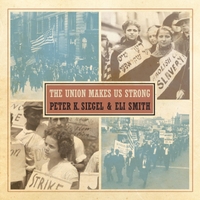
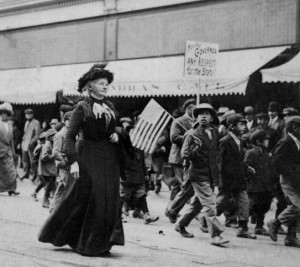
There Is Power In A Union: Labor Songs
Songs of the American labor movement called for fair wages, dignity and voiced grievances. Classic labor songs such as “Which Side Are You On” or “There Is Power In A Union” affirmed the value of the worker to society and expressed hope in their lyrics. Woody Gutherie, Pete Seeger and Joe Hill were leaders of the movement, and sang songs with a passion and love for their fellow workers.
Peter Siegel:
- I’ve been singing these songs all my life. My parents sang these songs. I got a guitar when I was about 13 years old. One of the first songs I learned was Talking Union, along with Bird Dog and Don’t Take Your Guns to Town.
- In recent years, when the state started cracking down on unions. The reporting that was coming through the media about these things, didn’t really explain what a union was and why there unions in the first place, and what the issues were.
- I think these songs do a very clear and direct job of explaining that.
- Many of the issues are still the same as they were when these songs were written. Eli and I talked about and got together and decided to make this album.
- Martin Luther King Jr., talk about the hottest places in hell being reserved for those in times of crisis do nothing.
- The Death of Mother Jones: I don’t think Gene Autry had a particular connection to that song, he apparently got the song from OK Records, which was his label.
- Eli plays the steel guitar on our record and sings it beautifully.
Eli Smith:
- One over-arching aspect of the songs is they give you a feeling of what its like to have a labor movement.
- And also now to give people a feeling of what it was like in the past because I think America is an amnesiac society.
- Most of the songs on our album are from 80 to 100 years ago.
- Which Side Are You On? It’s a song written by Florence Reece, in a traditional style from the heart of Appalachia, in the coal mining region and we rendered in a way that’s as authentic as we can be to that style.
Guest – Peter Siegel is a musician, a record producer and performance artist who has worked with Doc Watson, Hazel Dickens and Roy Buchanan. He’s produced a number of great albums for Nonesuch, Folkways and Rounder Records in the last 50 years.
Guest – Eli Smith is a banjo player, writer and promoter of folk music, living in New York City. Eli is a Smithsonian Folkways recording artist and produces two folk festivals every year.
—-
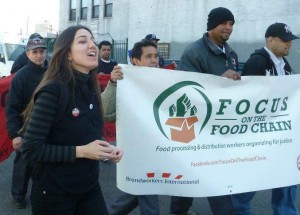
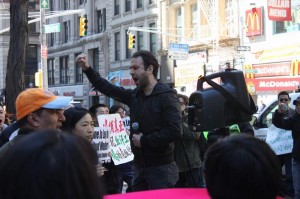
Brandworkers – Focus On The Food Chain
Nearly 35 thousand workers are employed to run New York City’s massive food processing and distribution. The vast majority are immigrant workers from all over the world, Latin America, the Caribbean, China and Nepal. They depend on this work for their livelihood yet they’re often exploited through wage theft, reckless disregard of health and safety, plus egregious discrimination. We welcome back attorney Daniel Gross, executive director of Brandworkers, a non-profit organization protecting and advancing the rights of retail and food employees. They’ve had numerous victories including recovering unpaid wages and forcing companies such as Flaum Appetizing into full compliance of workplace protections. The efforts to achieve these victories are based on the labor movement of the late 19th century using direct action and everyday solidarity.
Attorney Daniel Gross:
- That approach worked for several decades. Labor identified itself with having a seat at the table with government and business and frankly lost its sense of being a fighting movement.
- As many predicted, that arrangement among labor, capital and government wouldn’t hold.
- Capital and government understood that it was a temporary sessation of hostility to worker’s right to organize.
- What we see now is the NLRB system come undone.
- It’s very easy for an employer with the right union-busting attorney to quite effectively undermine the worker’s right to go through the traditional processes we’ve understood for a while to form a union.
- This multi-billion dollar global union busting industry which is led by law firms.
- These folks wake up every day in the morning and seek to undermine working people coming together to do better at work for their families.
- 93 out of 100 workers today are not in a labor union traditionally and have very little prospect getting in.
- Starbucks when I realized the traditional model was ineffective.
- Our members work as bakers, they process seafood, they drive trucks that deliver all kinds of food and beverages to the grocery stores and restaurants, where we all get our food.
- Our motto is empowering workers to build and lead their own campaigns for justice at work and in the food system.
- Most recently, we announced a campaign at the Tom Cat bakery.
- Workers marched and made declaration of dignity, demanding respect from management and an end to an under-payment scheme and hands off the benefits they’ve accrued.
Jose Romero:
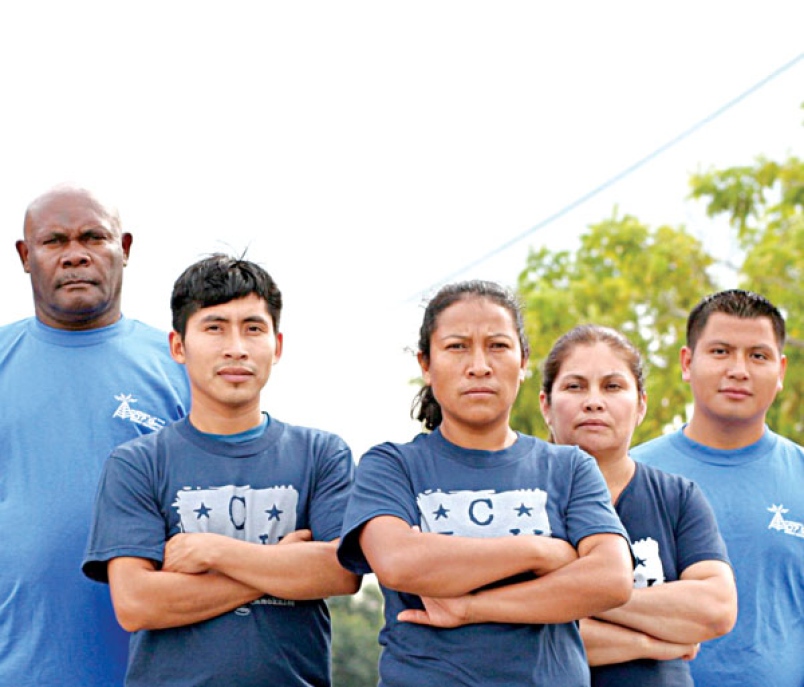
- Flaum Appetizing was a kosher factory, we were working very long hours without being paid overtime, there were no benefits including no vacations.
- We decided to unite and came together one day during our break, we all met on the patio and decided we were going to confront the boss altogether.
- This manager would attack us, and yell, call us cockroaches, would hurry us and call us stupid.
Guest – Attorney Daniel Gross, Executive Director of Brandworkers, a non-profit organization protecting and advancing the rights of retail and food employees.
Guest – Juan Romero from Flaum Appetizing who works as a cook on the West side of Manhattan.
—-

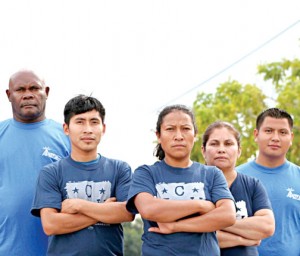
Farm Workers: Coalition of Immokalee Workers
This year’s Labor Day, farmworkers with the Coalition of Immokalee Workers travel across Florida calling on Publix Supermarkets to join the Fair Food Program. Who are the Coalition of Immokalee workers? They’re a Florida based community organization of mainly immigrants from Latin America and the Caribbean including Mayan Indian and Haitian immigrants who have been working low wage jobs throughout Florida. The farm workers routinely face a number of different kinds of exploitation, poverty, wage theft, physical and verbal abuse as well as sexual harassment of many women working in the fields. Their campaigns focus on the big corporate buyers of the produce that they pick in an effort to improve wages and working conditions in the fields. They started with Taco Bell and from there launched campaigns with McDonald’s, Burger King, since then 11 other companies are cooperating to improving wages and working conditions in their supply chains. Last year Trader Joe’s and the Coalition of Immokalee Workers signed an agreement that formalized the ways in which the supermarket chain will support the CIW’s Fair Food Program. Their efforts continue to urge Publix and Wendy’s fast food to join up.
Silvia Perez:
- My experience as a woman working in the fields, its been very difficult for me, we often do the same work that men do in the industry.
- We face heat exposure and having to work long hours, under the Florida Sun, and also to over fill our buckets to keep extra tomatoes on top for which we were not paid.
- For many years before the CIW began its Fair Food Program, farm workers were paid an average of 45 cents per 32 lb bucket.
- That’s been the same wage that farm workers received in Florida for more than 30 years.
- There was no guaranteed wage that we would receive in the field, we were paid the bucket rate.
- While there should be a minimum wage and we should get that guarantee to get paid that minimum wage, often times we didn’t receive it.
- With our campaign for Fair Food, which brought on board 11 major corporations we developed the Fair Food Program, an initiative which is a partnership between farmers, farmworkers and the major retailers and because of that program things are changing.
- Our organization is not a union, we are a worker and community based organization that was formed by farm workers themselves.
- In addition to Wendy’s we’ve asked Publix the largest Florida based corporation to come on board as 11 other companies have. Specifically we ask for 2 things, to pay 1 penny more a pound for the tomatoes that they’re buying to go directly to farm workers, and to respect our rights.
Guest – Silvia Perez with the Coalition Immokalee Workers and also CIW campaign organizer Jake Ratner who will translate.
Guest – Jake Ratner, translater and son of co-host Michael Ratner. Jake traveled and studied in Cuba and Bolivia, South America. He now works with the Coalition of the Immokalee Workers.
—————————————————————-
CIA Sponsored Terror, Civil Liberties, Supreme Court, Targeting Muslims, Truth to Power, War Resister
Podcast: Play in new window | Download
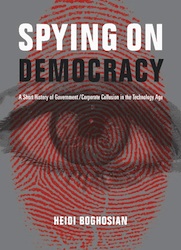
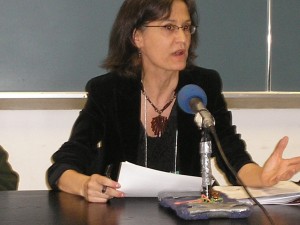
Law and Disorder Co-host and Executive Director of the National Lawyers Guild, Heidi Boghosian Recently Published “Spying on Democracy: Government Surveillance, Corporate Power and Public Resistance.”
—-

Israel-Palestine Peace Talks
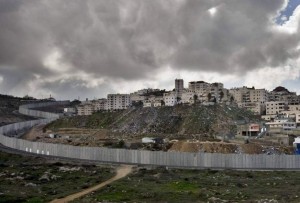
Could the timing of the recent Israel-Palestine peace talks be related to the crisis erupting across the Middle East region? The escalating war in Syria and the massive coup in Egypt have reflected US strategic failures. Now, the U.S. led effort to re-start 22 year old peace talks with Israel and Palestine has again raised suspicion of again benefiting the side of Israel.
Interestingly, former U.S. ambassador to Israel and former deputy research director of AIPAC, the pro-Israel lobby, Martin Indyk will be acting as the U.S. envoy in the negotiations. The stated goals of these new peace talks according to our guest Phyllis Bennis, director at the Project Institute for Policy Studies will not end the occupation, or the siege of Gaza, or the decades of dispossession and exile of Palestinian refugees but only current tension and dispute.
Phyllis Bennis:
- 1947 is when the British really threw up their hands and said we don’t want to be the official colonial power in historic Palestine any more so we’re going to turn it over to the UN.
- At the end of November in 1947, the UN decided to divide Palestine and make two states.
- It started out incredibly unfair because what they decided to do is give 55 percent of the land to become a quote Jewish state but that was a time when the Jews amounted to 30 percent of the population.
- The Palestinians who were 70 percent of the population were supposed to get what was to become a state only 45 percent.
- The war that broke out that was as much against the British as it was against the Palestinians and what were to become the Israelis but were at the time Zionist militia, the war led to the expulsion, many at gun point of 750 thousand who were driven into exile, off their land. At the end of the war, the Palestinians were left with only 22 percent.
- The Israelis controlled 78 percent of historic Palestine and all of western Jerusalem. Jerusalem was supposed to be separate under international law, it was called corpus separatum, that was to be governed internationally and not governed by either of these states.
- That’s what led up to the period from 1948 and 1967. Jordan took over administering the West Bank, and East Jerusalem – and Egypt took over administering the Gaza Strip.
- In 1967, war breaks out, what became known as the Six Day War. The Egyptian Air Force is the first target of the Israeli military.
- The Israeli military was really good, they had gotten their arms mainly from France and Czechoslovakia. It’s interesting because in that period from 1948 and 1967, the U.S. supported Israel but it wasn’t the kind of special relationship we see now.
- At the end of 6 days, they now controlled 100 percent of historic Palestine. They now had been occupying what had been left to the Palestinians after 1948, which meant the West Bank, the Gaza Strip and East Jerusalem.
- We can look back at this particular process, it goes back 22 years to Madrid Conference of 1991.
- I was at Madrid, I was really young, Netanyahu, was the spokesperson for the delegation. I went head to head with him at a press conference in Madrid.
- That led to the Oslo process, and what we have now. We’ve had the “road map” we’ve had the Anapolis meetings, we had the Y-River Accord.
- In 1967, the US is desperate for allies it can rely on, against the Soviet Union, against the anti-colonial movements that are springing up across Africa.
- Here’s Israel that just trounced 6 Arab armies and the Pentagon looked at that and said, we could do business with these people.
- So the Pentagon starts to build this relationship with Israel that goes beyond joint training. Soon you have the beginning of the interlocking connection between the Israeli military, military producers, war profiteers, military corporations and that gives rise to the whole new influence to the long standing pro-Israel lobby.
- At the end of the cold war, the value of Israel begins to be a liability. That’s when you see some changes in US policy.
- Then you have 9/11 and the global war on terror and Israel is a great strategic ally again. It’s an asset again, not a liability anymore.
- This idea of land swap is the code word that the U.S. and Israel have been using for the last 7 or 8 years. That is based on the idea that Israel will keep all its major settlement blocs – about 80 percent of the current 600 plus thousand illegal Israeli settlers that are living in illegal Jews-only settlements in the occupied West Bank, and the occupied East Jerusalem.
- About 80 percent of the settlers would stay, all the major settlement blocs. These are cities of 40-50 thousand people with shopping centers and swimming pools and colleges and industrial zones, with industrial waste going down the hill into Palestinian villages at the bottom.
- Israel will all of those, Israel will keep all the major water aquifers of the West Bank, and they will call that “land swap” because in return they will give Palestine a few acres of desert land, abutting Gaza or some other land that’s not developed.
- The Coalition of the US Campaign To End the Israeli Occupation. EndtheOccupation.org
- The BDS movement. Boycott, Divest and Sanction which is aimed at stopping Israel’s violation of international law. If it doesn’t there will be consequences that we as a civil society can bring in stop buying settlement produced goods. In Europe, the BDS movement has pressured enough countries that the European Union has now issued new guidelines calling to an end of any European Union funding of any institutions or individuals in the occupied territories.
Guest – Phyllis Bennis, directs the New Internationalism Project at IPS. She is also a fellow of the Transnational Institute in Amsterdam. She has been a writer, analyst, and activist on Middle East and UN issues for many years. In 2001 she helped found and remains on the steering committee of the U.S. Campaign to End Israeli Occupation. She works closely with the United for Peace and Justice anti-war coalition, co-chairs the UN-based International Coordinating Network on Palestine, and since 2002 has played an active role in the growing global peace movement. She continues to serve as an adviser to several top UN officials on Middle East and UN democratization issues.
—–
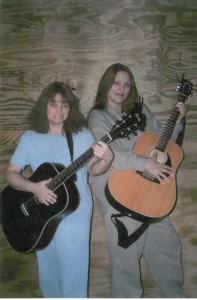
Green Scare Crackdown and Monsanto Political Prisoner Marie Mason
Long time activist in environmental and labor movements Marie Mason continues to serve out a harsh 22 year prison sentence based on her involvement in two attacks of property damage and arson. Marie Mason is considered an eco-terrorist and is serving the longest sentence of any convicted animal rights or environmental militant. In one of the attacks, Mason and her husband Ambrose set fire to a Michigan State University building, targeting a Monsanto funded office in charge of a genetically modified crop research program to create moth resistant crops for Africa. Marie Mason was later set up by her husband who recorded their conversation that led to her conviction. As we continue to report, since 9/11, environmental radicals have been labeled terrorists, and charged with overly long sentences. This is part of what’s known as the “Green Scare” campaigns that seek to put a chill on dissent.
Peter Werbe:
- Marie Mason was an environmental activist from the Detroit area.
- In January 2000 she committed a number of acts the government considered illegal. They were eco-sabotage. Frustrated by her lack of ability, her and others to mobilize great numbers of people to defend the environment against things like genetically modified organisms.
- She and her husband at the time entered a research lab at Michigan State University and set fire to these records. Arson under the law. She also damaged logging equipment in an area where they were doing clear-cutting.
- When you get these “frankenstein” genes into the environment, there’s no longer a debate. When you clear cut an old growth forest, that’s the end of debate as well.
- She was desperate. She actually escaped apprehension until her husband who actually became estranged from her was caught in another matter and ratted her out in 2007.
- She was brought to trial. He actually wore a wire taping her and going around the country, making 140 other recordings of environmental activists but was only able to ensnare her.
- She was tried for these acts in Federal Court, and found guilty. She pled guilty. The judge gave her 22 years.
- She is now the longest serving prisoner of this nature. (Federal Terrorism Enhancement Law) No one was ever injured in any of these.
- There are these Catholic peace activists who regularly go down to Tennessee to protest against nuclear facilities there and previously they were convicted under misdemeanors. They are now facing up to 15 years in prison on federal charges.
- Marie Mason appealed her sentence saying it was disproportionate to other federal guidelines for sentencing. Unfortunately, the right-wing Bush appointed judge wrote the sentencing guidelines so she didn’t get anywhere with the Circuit Court of Appeals.
- She was sent to a federal woman’s facility in Minnesota where she did good work. She was a model prisoner, but one day about two and a half years ago – in the middle of the night she was taken to administrative segregation. The hole. Held there for a couple of months and suddenly in the middle of the night in chains, taken in a small plane and took off. She said she thought she was going to Guantanamo or something like that.
- She wound up in the Special Administrative Unit in Carswell Federal Medical Center. Lynne Stewart is in Carswell but she’s in the general population. Women are sent there with medical difficulties but its a horror show.
- She was told she was moved because she was recruiting for the Earth Liberation Front, that she maintained a connection via email that was provided by the prison.
- They don’t want to restrict her communications, they want to see who is writing her.
- She has written extensively for the Fifth Estate Magazine.
- Marie’s support is worldwide. SupportMarieMason.org
Guest – Peter Alexander Werbe, American radio talk show host and a progressive political activist. His home is Detroit, where he has become a fixture spinning discs and hosting Nightcall Sunday nights on Detroit’s WRIF 101.1 FM. Peter Werbe’s tenure, having commenced in 1970 has resulted in 2 popular radio programs: Nightcall and The Peter Werbe Show. He currently hosts a Mon-Fri classic (webstream) rock show Deep Trax on WCSX. He is also a staff member of Fifth Estate magazine.
—–
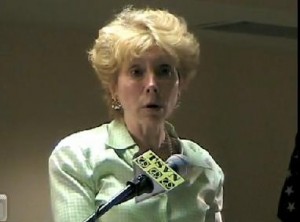
Left Forum 2013: Dr. Harriet Fraad
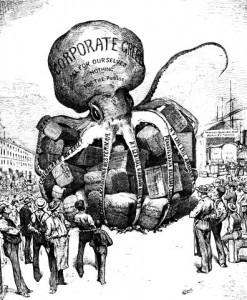
We hear an excerpt of a presentation from Harriet Fraad is a hypnotherapist & psychotherapist in Manhattan. She writes regularly for Truthout, Tikkun and The Journal of Psychohistory. Her blog with Richard D. Wolff, Economy and Psychology appears at HarrietFraad.com and RDWolff.com. Her latest book is Bringing It All Back Home ed. Graham Cussano. Her article on Emotional and Sexual Life in a Socialist America written with Tess Fraad Wolff will appear in the book Imagine A Socialist America- (Harper Collins 2013). This panel explores what Socialism could look like in the United States.
———————————————
Afghanistan War, CIA Sponsored Terror, Civil Liberties, Criminalizing Dissent, Extraordinary Rendition, FBI Intrusion, Habeas Corpus, Human Rights, Military Tribunal, Political Prisoner, Prison Industry, Surveillance, Targeting Muslims, Torture, Truth to Power, War Resister
Podcast: Play in new window | Download
Updates:
- Michael Ratner: Bradley Manning’s Defense Makes Case To Dismiss Aiding The Enemy Charge
- Freedom of the Press Foundation For Transcripts
- Update: Judge Upholds Aiding The Enemy Charge in Bradley Manning Trial
—
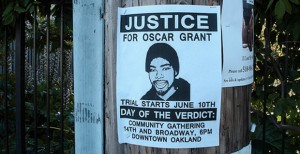
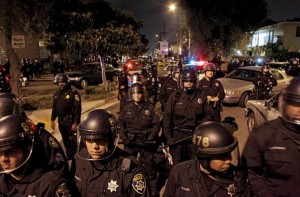
NLG Obtains $1.17M, OPD Reforms for Occupy Oakland Protesters and Journalists
In recent weeks, attorneys from the National Lawyers Guild achieved two significant victories for the rights of protesters faced with police brutality and unlawful repression. The first came when the city of Oakland settled a class action lawsuit for more than 1 million dollars. The second victory occurred in early July when Oakland City Council approved a settlement for 1.17 million in another lawsuit arising from police actions at protests. As part of these settlements, the Oakland Police Department is now legally obligated to follow a crowd control policy. This policy which already existed but lacked enforcement outlines limits on police department officer’s use of force and the ability to make mass arrests in protest situations.
Attorney Rachel Lederman:
- The first case has to do with the demonstration that had occurred on the day Johannes Mesterly was sentenced for the death of Oscar Grant. That’s the BART officer who shot Oscar Grant in the back as he was restrained facedown on the subway platform.
- There’s a movie out about the last day in the life of Oscar Grant called Fruitvale Station that I would highly recommend seeing it’s playing all over the country now.
- The death of Oscar Grant sparked a large number of demonstrations. November 5, 2010 was the date that Mesterly was sentenced and he was given a very minimal sentence of involuntary man slaughter of 2 years, 11 months with time served.
- There was a demonstration planned for that evening it was actually a very small demonstration. OPD had planned to not allow a march after dark.
- There was a rally that was permitted in downtown Oakland and then about 200 people started marching in the direction of Fruitvale Bart where the shooting had occurred. As soon as the march started the police began to set up for mass arrest.
- When a police line would be erected in front of the march people would naturally turn another direction. This went on for a while, where the march was re-routed.
- Eventually the OPD herded people to a residential area where they didn’t intend to go. The police announced it was a crime scene and began arresting everyone.
- The Oakland City Police have been under consent decree since January 2003 mandating reform process.
- We’ve had this crowd control policy in place but basically every single provision of the crowd control policy was violated in the Occupy Oakland incident and the Oscar Grant incident.
- We brought those cases to try to enforce the crowd control policy. A lot has changed in the last six months.
- There’s also been a new shake up of command (OCP) there’s a new acting chief.
Guest – Rachel Lederman, a California based National Lawyers Guild attorney who worked on both cases. Rachel first got involved in police misconduct civil rights cases as a result of her criminal defense work with political demonstrators. In 1989, Dennis Cunningham and Rachel Lederman successfully sued the San Francisco Police to obtain justice for AIDS activists who had been brutalized and unlawfully detained in what became known as the “Castro Sweep”.
—–

Surveillance Blowback: The Making of the U.S. Surveillance State, 1898-2020
What is the history and context of surveillance in the United States? Last week Scott Horton explained how the Foreign Intelligence Surveillance Act court devolved into a panel of judges making decisions in secret that influence federal law. Returning guest Alfred McCoy traces the US surveillance apparatus back to the late 1800s and brings us up to understanding the context of leaked NSA documents by whistle-blower Ed Snowden. In his latest article titled Surveillance Blowback: the Making of the U.S. Surveillance State 1898-2020, Al McCoy, Professor of History at the University of Wisconsin-Madison details the surveillance timeline beginning with the US occupation of the Philipines and makes the connection to US imperialism abroad and apathy at home.
Professor Alfred McCoy:
- Four years ago I published a book called Policing America’s Empire which started in the Philipines and started the history of US domestic surveillance through what I call surveillance blowback.
- It’s the trajectory of history that allows you to see this.
- In the late 19th century America had what I call our first information regime which was really a brilliant synergy of discoveries.
- Thomas Edison’s quadruplex telegraph, Remington’s typewriter allowed the transmission around the world, across the nation, absolutely accurately at 40 words a minute.
- The Gamewell Corporation for a half century during the 19th century was the world leader in the development of police telegraph and telephone communication – those police boxes that used to be on the streets of every American city.
- The Gamewell Corporation had 900 of these boxes in operation and collectively they sent 41 million messages in the year 1900.
- When we intervened in the Philippines we were suddenly faced with this massive insurgency, this guerrilla underground. We smashed the regular military formations but we couldn’t break the insurgency.
- The US military in order to pacify that country created the first field intelligence unit in its 100 year history.
- They appointed an obscure medical doctor Captain Ralph Van Deman to be the head of the division of military information.
- He decided he would map the entire Filipino political elite.
- William Howard Taft passed very draconian sedition and libel legislation and created a powerful colonial secret police called the Philipines constabulary. It took about 10 years to accomplish. 1898-1907
- We had to track down the politicians (Philipines) we had to manipulate them.
- 10 years after that process, the US joined WWI. April 1917.
- The United States was the only army on either side of the battlefield that didn’t have an intelligence service with any description.
- We turn now to Colonel Van Deman who applied his Philippines experience to developing a very elaborate counter-intelligence apparatus inside the United States.
- Mr and Mrs Van Deman ran a private intelligence service that had Army file clerks and regular FBI liason officers dropping by.
- And from their home they compiled files on 250 thousand suspected subversives.
- They divided the world. Basically, North America, Latin America became the purview of the FBI for counter-intelligence the rest of the world became purview of US military intelligence and of course the CIA and then NSA.
- That division of the word remain in effect until December 2011.
- 3 million Afghani iris scans and fingerprints are housed in a main frame computer in West Virginia.
- So, we developed then, this very efficient system of surveillance and digital monitoring overseas.
- During the war on terror we now know the Bush Administration beginning October 2001 authorized the NSA to start massive capping of all digital communications.
- In March of this year, it was 97 billion emails that were tapped by the NSA.
- This began migrating home very very quickly.
- When Obama came even though he criticized this illegal wiretapping, when he came in, instead of cutting it back like the Republicans did in the 1920s, he decided to build upon it.
- What he’s building upon it for is to build an architecture for the exercise of global power through a significant edge or advantage for information control and information warfare.
- Obama wants to cut back on the appropriations for the big behemoths, the heavy tanks, the big ships and he wants to shift us into an agile form of information warfare and global information control.
- The NSA is spending 1. 6 Billion dollars for the world’s biggest data farm in Bluffdale, Utah.
- The National Geo-spatial Intelligence Agency has a nearly 2 billion dollar headquarters with 16 thousand employees in DC.
- The Obama Administration has launched a new generation of light low cost, very agile satellites that can be remotely controlled from the ground, serving ground force commanders.
- The Obama Administration is also building an armada of 99 Global Hawk drones with 24 hour flight capacity. These are surveillance drones with a 100 mile ambit for sucking audio communications.
- With the combination of drones sucking up the local two way radio – cell phone communication with the tapping of the fiber optic cables within the US by the NSA, and internationally by the Five Eyes Coalition, Canad Australia, New Zealand and Britain, means that the NSA will have a total global surveillance system for the first time in human history.
Guest – Alfred McCoy, Professor of History at the University of Wisconsin-Madison. His recent book, Policing America’s Empire: The United States, the Philippines, and the Rise of the Surveillance State (2009), draws together these two strands in his research–covert operations and Philippine political history–to explore the role of police, information, and scandal in the shaping both the modern Philippine state and the U.S. internal security apparatus. In 2011, the Association for Asian Studies awarded Policing America’s Empire the George McT. Kahin Prize, describing the work as “a passionate, elegantly written book.” He’s also the author of “Torture and Impunity: The U.S. Doctrine of Coercive Interrogation.” Al is also the author of “A Question of Torture: CIA Interrogation, From the Cold War to the War on Terror” and “The Politics of Heroin: CIA Complicity in the Global Drug Trade. The first edition of his book, published in 1972 as The Politics of Heroin in Southeast Asia, sparked controversy, but is now regarded as the “classic work” about Asian drug trafficking.
—————————————————
CIA Sponsored Terror, Civil Liberties, Crony Capitalism, Guantanamo, Habeas Corpus, Human Rights, Military Tribunal, Political Prisoner, Prison Industry, Prosecution of the Bush Administration, Supreme Court, Surveillance, Targeting Muslims, Torture
Podcast: Play in new window | Download
Updates:
- Prisoner’s Hunger Strike: Pelican Bay Prison, Guantanamo Bay Prison, Palestinians In Israeli Prisons
- CCR Lawsuit – Pelican Bay Prisoner Class Action
- 20 Plus Palestinians On Hunger Strike In Israeli Prisons Demand Better Conditions For Pelican Bay Prisoners
- Federal Judge Gladys Kessler Says the President Is The One To Stop Force Feeding and Release Cleared Guantanamo Bay Detainees
- Bradley Manning Trial: Important Proceedings During Defense Case At Ft Meade, Maryland
—-
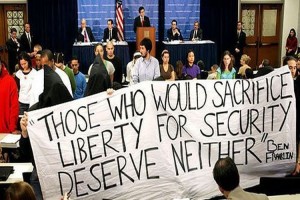
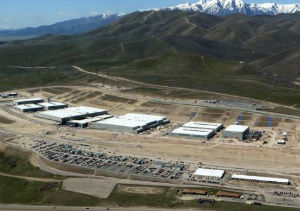
Secret Federal FISA Court Advocate of National Security State
Here on Law and Disorder we’ve discussed the process of the US government expanding its power to get wiretapping permission from the Foreign Intelligence Surveillance Court or FISA court. This is under a provision called section 215 of the Patriot Act which if listeners might recall was set to expire in 2009. It did not. We discussed how the FISA court will be accessed by what’s called Lone Wolf Authority or National Security Letter Authority whereby the FBI can write a letter to the court without suspicion of terrorism and get bank, telephone and internet records.
The 11-member FISA Court has been central to allowing a massive surveillance state to exist by granting US agencies such as the NSA access to private telecommunication data. Today, the FISA court essentially operates as an advocate for the national security state. It’s judicial oversight now parallels the Supreme Court. But more troubling, these FISA Court Justices operate in complete secrecy and base their decisions from hearing only one side the argument, the US government’s.
Attorney Scott Horton:
- The Nixon Administration attempted to use “intelligence gathering” as a justification. Congress reacted to that by saying we’re not going to agree that the government has the right to wiretap people in the United States on the grounds of intelligence gathering. We’re going to require this judicial check, so Congress created this special court the FISA court.
- The court has been around for a long time, but its become a far more significant entity doing much more work after 9/11.
- It has 11 judges. The judges are selected by the Chief Justice of the Supreme Court, John Roberts.
- The judges are picked from courts all around the country.
- It’s not a secret court in that we know that it exists. It IS a secret court in that it operates in secret.
- Literally, the public doesn’t know what papers are filed with it and doesn’t know about its decision.
- That’s a highly controversial matter because decisions by federal courts constitute law.
- This means that this court is manufacturing secret law that the people don’t know about.
- We don’t know the jurisprudence of this court, we don’t know its decisions, we don’t know the full rationale for all its decisions because most of them have been secret.
- It is very aggressively expanding the power and authority of the NSA in surveillance areas.
- This is a court picked by Roberts who share his attitude. Out of 11 judges we have 10 Republican appointees. It’s very well known that Roberts in making appointments here looks very closely to select only judges who reflect his attitudes about the national security state.
- It is a cherry picked court. A movement conservative perspective which is quite hostile to civil liberties.
- The court has become an advocate for national intelligence services.
- It really puts the whole institution of the court under a cloud right now.
- If you want to disperse that cloud you would make sure those judges are representatives of the country.
- The legal reasoning and interpretation of statutes that should be there for people to see and know and understand and criticize.
- Telecoms: Here they are service providers dealing with consumers, lying to their clients and allowing the government free access to all this information.
- That is a criminal act under various statutes of states including New Jersey and Maine. That have rules that say they may not allow governments, investigators access to this information other than pursuant to a government subpoena or court order.
- This court is sweeping away core rights and making a joke out of the 4th Amendment.
- Whistle-blower damage control strategy: A program to deflect attention from the disclosures themselves.
- There is a move afoot to take this out on the American service providers who cooperate with the NSA, Verizon, AT&T. . .Google and so forth.
Guest – Scott Horton, human rights lawyer and contributing editor to Harper’s Magazine. Scott’s column – No Comment. He graduated Texas Law School in Austin with a JD and was a partner in a large New York law firm, Patterson Belknap Webb & Tyler.
—-


Left Forum 2013: Ron Reosti
Capitalists are not necessary to run firms, nor to run macro-economies and investment says Ron Reosti in his presentation at the Left Forum Panel titled Imagine Living In A Socialist USA, Part 2: Making The American Socialist Revolution.
Speaker – Ron Reosti, his Italian parents imparted to him a working-class identity, a sense of social justice, a belief in the possibility of social change, a commitment to democracy, and a hatred of the undemocratic ruling class. He embraced socialism in his early teens, during the McCarthy era, and has remained committed to that vision. He practices law and is part of the radical community in Detroit.
———————————————-
CIA Sponsored Terror, Civil Liberties, Habeas Corpus, Human Rights, Political Prisoner, Targeting Muslims, Truth to Power, War Resister
Podcast: Play in new window | Download
Updates:
—-
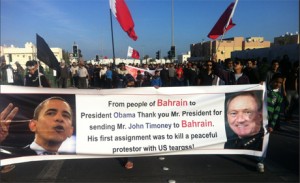

White-washing Human Rights Abuses and Suppressing a Popular Revolution
Two years since the Arab-Spring demonstrations erupted in Bahrain, human rights abuses continue to this day. In 2011, an independent report exposes these abuses that compelled the Kingdom of Bahrain to hire former NYPD police chief John Timoney to white was acts of political repression. Who is John Timoney and why was he outsourced to Bahrain? We ask legal worker and journalist Kris Hermes who recently penned the article John Timoney and Kingdom of Bahrain: White-washing Human Rights Abuses and Suppressing a Popular Revolution.
Kris Hermes:
- Shortly after the Arab Spring began in 2011, Bahrain followed in the footsteps of Tunisia and Egypt by demonstrating against the ruling monarchy that’s been in power for more than 200 years.
- Those protests were met with intense repression by King Hamad.
- The protests made of the Shiite population who argue they’ve been systematically discriminated against in employment, housing, education.
- The ministry of interior hired John Timoney as well as John Yates who is from the UK.from Britains metropolitan police department.
- John Timoney started with a long career in the New York City Police Department, he was probably most well known for his handling of the Tomkins Square Park riots in 1988.
- Regardless of what he did to clean up the Philadelphia Police Department, his handling of the Republican National Convention protests were abysmal. He came down very hard on protesters in 2000, essentially establishing a new form of policing in the United States that for the most part was intolerant of political demonstrations.
- He became the police chief of Miami in 2002 and oversaw one of the most violent police reactions in modern history. He not only used what he learned in Philadelphia, conducting preemptive raids, using infiltration and heavy surveillance, brutalizing protesters on the street, and wrongfully arresting hundreds of people.
- In Miami he used a whole panaply of weapons against protesters, including tear gas, pepper spray, rubber and wooden bullets, bean bag rounds, tasers and electric shields.
- He gained a reputation both in Philly and Miami.
- He’s been in Bahrain for a year and a half now and has a two year contract and its just about up.
- That’s the reason why the article was done, an assessment on how Timoney has done in Bahrain in terms of his crown control measures.
- Andrews International: Part of a security apparatus that is increasingly private in terms of policing and security personnel that are deployed around the world.
- It allows the US to expand its militia around the world as well.
- The death toll of political demonstrators has only increased since Timoney arrived on the scene. One of his favorite tools to suppress demonstrations in the United States is tear gas.
- Things are pretty dire for political dissidents in Bahrain.
Guest – Kris Hermes, activist who provides legal support work on cases involving political dissidents.
—-
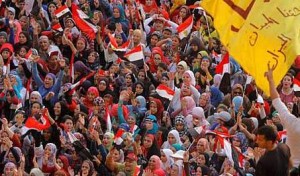
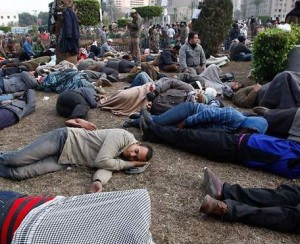
Egyptian President Mohamed Morsi Ousted Following Days of Massive Largest Anti-Government Protest
Last week, democratically elected President Mohamed Morsi was ousted following historic demonstrations by Egyptian protesters. Morsi and his advisors have been held under house arrest in the Egyptian Republican Guard Club, the highest Brotherhood leader, Mohammed Badie, and some associates of his have been arrested. Protesters accused Morsi of supporting Obama’s anti-Syrian agenda, ignoring critical economic problems and betraying his support for Palestinians. However, what are the some of the economic issues involved that led up to these massive protests?
Omar el-Shafei:
- We’re going through a real historic process. At least you had 20 million people in the streets expressing their anger in different Egyptian cities.
- This is a continuation of the process that started in January 2011, not just Egyptian but an Arab phenomenon.
- I think its a complete anger, bitterness and disillusionment of the rule of the Muslim Brotherhood.
- We have to remember that the Muslim Brotherhood has been the largest opposition force during the last decade of the Mubarack dictatorship.
- After one year in power they managed to alienate everybody. They were essentially ruling as a continuation of the old regime, and pro-imperialist foreign policy.
- The dominant image of the Arab Spring is purely political, middle class, youthful mobilization aiming at democratizing despotic regimes.
- The Mubarack dictatorship for years and sometimes decades have applied neoliberal economic policy that tremendously increased class divide, so the social element of this revolution was vital.
- In the case of Egypt, the revolution in 2011 came after five years of the biggest wave of workers struggle in the history of the country, since the 1940s.
- The continuation of the revolution is in large part of the worker mobilization. After the revolution we didn’t have independent trade unions, they incorporated by the state.
- More like the agent of the state against the liberal movement.
- Since then we’ve witnessed an emergence of thousands of trade unions and they are playing an important part in the revolution in social demands.
- The message from below even when it is apparently limited demands it has the potential of raising people’s confidence and enhance a process of self radicalization that can link these demands to a wider vision of transformation in society.
- What happened in Turkey a few weeks ago and Brazil more recently has very much has inspired the Egyptian struggle.
- What we are witnessing is a huge mobilization against the Muslim Brotherhood. The military prefer to remain in the background.
- We are in a prolonged revolutionary process and I think that the people are learning from their own experience.
Guest – Omar el-Shafei, political activist, and independent researcher currently living in NYC. He is a doctoral candidate of International Law at Paris VII University in France. Omar is a founding member of the “Committee of Solidarity with the Struggle of the Egyptian People” in Paris, France, and author of “Workers, Trade Unions, and the State in Egypt, 1984-1989,” Cairo Papers in Social Science, American University in Cairo Press (Volume 18, Monograph 2, Summer 1995).
———————————————————————