Afghanistan War, CIA Sponsored Terror, Civil Liberties, Criminalizing Dissent, Gaza, Habeas Corpus, Human Rights, Surveillance, Targeting Muslims, Torture, Truth to Power
Podcast: Play in new window | Download
Updates:
- Hosts Update On Hurricane Sandy
- Obama Re-election: What Does It Mean For Basic Civil Rights? Drones, Guantanamo, Military Commissions, Warrantless Wiretapping.
- PLO and CCR Victory – Muhammad Salah
- Holy Land Case Update – Supreme Court Refuses To Review Sixth Amendment Right
—-

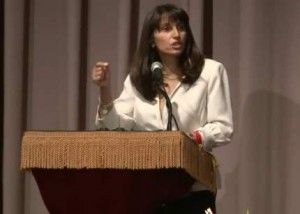
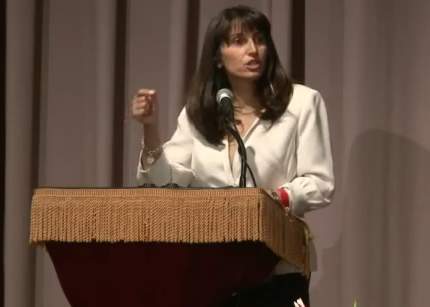
Russell Tribunal on Palestine: Attorney Diana Butto
The final session of the Tribunal focused on the responsibility of the United States of America and the United Nations regarding the Israeli breaches of international law towards Palestine and Palestinians. There is now a situation in which Israel has achieved a status of immunity and impunity, facilitated by the US, despite its complete disregard for the norms and standards of international law. We hear an excerpt of a speech by Human Rights Attorney Diana Butto at the Russell Tribunal on Palestine.
Diana Buttu is a Palestinian–Canadian lawyer and former spokesperson with the Palestine Liberation Organization.
She is best known for her work as a legal adviser and negotiator on peace negotiations between Israeli and Palestinian organizations. Buttu was born in Canada to Palestinian parents. She began her work as a negotiator in 2000, shortly after the outbreak of the Second Palestinian Intifada, as a spokesperson for the Negotiations Support Unit of the Palestine Liberation Organization.
—-
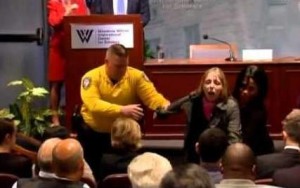
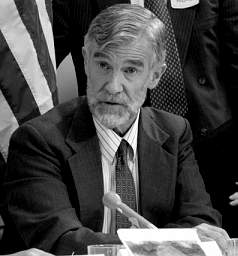
The Moral Challenge of ‘Kill Lists’ by Ray McGovern
The Obama Administration has conducted hundreds of drone strikes in several countries, killing civilians and a US citizen. Critics point out that as the Obama Administration assassinates its’ suspects, it also avoids the legal complications of detention. In last week’s New York Times, authors Jo Becker and Scott Shane expose the priest-like role of counter terrorist adviser John Brennan as he provides Mr. Obama with the moral justification for extrajudicial murder. The framing of John Brennan’s role of priestly adviser caught Ray McGovern’s attention. His recent article The Moral Challenge of Kill Lists, dissects the New York Times story.
Ray McGovern:
- There has been a geometric increase in the number of drone strikes against Pakistan and of course Somalia and Yemen.
- London based bureau for investigative journalism estimates that about 830 civilians including women and children may have been killed by drone attacks in Pakistan. 138 in Yemen, and 57 in Somalia. It’s incredibly naive to think that this helps in any way in the war on terrorism.
- This wonderfully insightful and dangerous New York Times article a week ago talked about the conundrum of aligning these activities with US legal and moral principles. Conundrum? That’s an impossibility.
- The Fifth Amendment prevents this sort of thing if you take the interpretation we’ve always had.
- As the New York Times article mentions 1 out of 30 assassinations that are known about just one escaped assassination and was brought before a court. It’s much easier to kill them.
- If you wanted to learn about al-Qaeda, don’t you think Osama Bin Laden could’ve told us some stuff about al-Qaeda?
- Any military aged male in the area of a “bad guy” is fair game.
- Maybe I can draw from my own experience in the CIA, I know about lists. I know that when there was a coup attempt in Indonesia in 1965, that there were lists given to the Indonesian authorities of communists. How many communists on that list? A million. How many were killed, were murdered? 500 thousand plus. How many were put in prison? The other 500 thousand.
- The drones are really accurate but the target information is notoriously inaccurate.
- I love Fordham and I hate to see the administration and the very wealthy trustees who have lots of money to give to Fordham, determine who comes in to give the commencement address.
- I think that you have to have some kind of personal involvement with innocent suffering. I think that you have to have some sense of the injustice others suffer to let your heart be touched by this direct experience.
- Obama’s fallen in with a rough crowd.
- I was attracted to getting outside of my Catholic walls. There’s a small church down in Washington DC called the Church of the Savior.
- I found out they were doing wonderful things like preventing housing from being gentrified so poor people can still live there. Healthcare, jobs, addictions, a hospice for people to sick to be on the street.
- There’s been one major change for the good in this country. That is Occupy.
- When you look for proof that Occupy has incredible potential, look no farther than what the president and the top senators thought necessary to inject into the NDAA on New Year’s Eve, which allows them to use the US Army of all things to wrap us all up without charge, without court proceedings.
Guest – Raymond L. McGovern, retired CIA officer turned political activist. McGovern was a Federal employee under seven U.S. presidents in the past 27 years. Ray’s opinion pieces have appeared in many leading newspapers here and abroad. His website writings are posted first on consortiumnews.com, and are usually carried on other websites as well. He has debated at the Oxford Forum and appeared on Charlie Rose, The Newshour, CNN, and numerous other TV & radio programs and documentaries. Ray has lectured to a wide variety of audiences here and abroad. Ray studied theology and philosophy (as well as his major, Russian) at Fordham University, from which he holds two degrees. He also holds a Certificate in Theological Studies from Georgetown University. A Catholic, Mr. McGovern has been worshipping for over a decade with the ecumenical Church of the Saviour and teaching at its Servant Leadership School. He was co-director of the school from 1998 to 2004. Ray came from his native New York to Washington in the early Sixties as an Army infantry/intelligence officer and then served as a CIA analyst from the administration of John F. Kennedy to that of George H. W. Bush. Ray’s duties included chairing National Intelligence Estimates and preparing the President’s Daily Brief, which he briefed one-on-one to President Ronald Reagan’s most senior national security advisers from 1981 to 1985.
Civil Liberties, Habeas Corpus, Human Rights, Prosecution of the Bush Administration, Targeting Muslims, Torture, Truth to Power, War Resister
Podcast: Play in new window | Download
Updates:
- Supreme Court Decision on Qualified Immunity: Dick Cheney
- NYPD Turned Young Man Into Informant: Mosque Crawler
—–
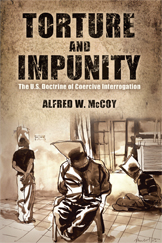
Torture and Impunity: The U.S. Doctrine of Coercive Interrogation
It’s an undisputed fact: both the George W. Bush and Obama administrations actively engaged in various methods of torture, and have done so with impunity. Despite initial public outrage at graphic images from the bowels of Abu Graib and Guantanamo prisons, government-sponsored torture has, on one level, come to be accepted as integral in the several perpetual wars waged by the United States. References to torture are now commonplace, sprinkled throughout the mainstream media and in popular culture references. Even discussion of different forms of torture has, in ways, become abstract.
We’ve reported, for example, that Cornell University Medical Center scientists have deemed so-called “forced standing” the most devastating mode of torture. Standing motionless for hours can shut down the kidneys, cause hallucinations and wreak much more damage.
And we’ve looked at numerous cases in which the perpetrators of US-sponsored terror have gone unpunished. In one case, while Italy’s high court upheld sentences of 23 CIA operatives convicted of kidnapping a Muslim cleric under the US program of “extraordinary rendition, more than 10 years later, the commanders who authorized the torture yet to face charges. This country’s practice of torture have become virtually sanitized, and in the process, does lasting damage to America’s moral authority as a world leader.
Professor Al McCoy:
- In the 1950s, the human mind was like the last continent to be discovered.
- People in Washington, the CIA were concerned that Russia was capable of programming people to do things against their will.
- Initially defensively and very quickly offensively the CIA led the US intelligence community, the British and Canadians on a massive search that lasted 12 years for sophisticated mind control techniques.
- It went through an exotic phase where they explored hypnosis and very famously almost notoriously drugs, that led to dead ends.
- They outsourced the mundane research to top ranking cognitive scientists. This produced two breakthroughs.
- One is sensory deprivation, second is stress positions.
- These two techniques self afflicted pain and sensory disorientation were combined in the CIA’s counter intelligence and interrogation manual in 1963.
- It was disseminated withing the US intelligence community and then through a bunch of CIA blinds then to international police training to US allies worldwide . . .leading to a global proliferation of torture on our side of the Iron Curtain.
- The UN Convention barred with equal weight the physical and psychological torture.
- We illegally took people and seized them, transferred them to allied nations where they would be likely to be subjected to torture.
- One of the favorite blinds of the CIA was the office of Naval Research.
- President Bush authorized the CIA to open up its own prisons, lease its own fleet of executive jets in order to move them around from prison to prison.
- Torture became normalized for the American people. Torture became omnipresent on screens large and small across America.
- The show 24 became enormously popular with 15-20 million views per episode. We’ve had torture normalized within the mass media.
- This process of impunity is really a transnational process.
- Rewriting history so that the fabric of the past is radically reconstructed to justify the use of torture.
Guest – Al McCoy, Professor of History at the University of Wisconsin-Madison and author of “Torture and Impunity: The U.S. Doctrine of Coercive Interrogation.” Al is also the author of “A Question of Torture: CIA Interrogation, From the Cold War to the War on Terror” and “The Politics of Heroin: CIA Complicity in the Global Drug Trade. The first edition of his book, published in 1972 as The Politics of Heroin in Southeast Asia, sparked controversy, but is now regarded as the “classic work” about Asian drug trafficking.
—
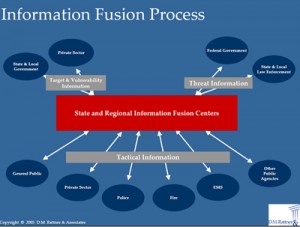

ACLU: When Boston Police Spy on Free Speech, Democracy Suffers
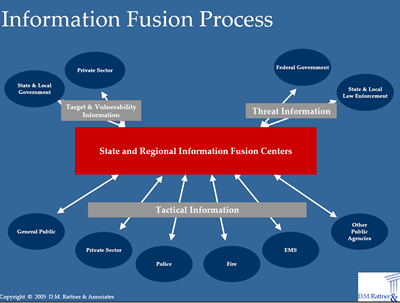
The Massachusetts National Lawyers Guild, along with the ACLU, recently issued a report detailing how the Boston Police Department has worked with its local fusion center to spy on lawful activities. The Center was established in the wake of 9/11 to more effectively share “terrorism-related” information among federal, state and local law enforcement agencies as well as with private entities.
Public police records, including documents and videotapes, obtained with a court order reveal a pattern of police surveillance of peaceful demonstrations, coupled with the practice of interrogating activists and labeling peaceful groups as extremists. Local groups and activists have long suspected that spying was taking place.
Urszula Masny-Latos:
- We know that various law enforcement agencies monitor peaceful activists.
- Even though COINTELL PRO ended in the 70s, we know that law enforcement agencies have continued spying.
- In 2009 when Israel attacked Gaza, there were many protests in Boston, one of those protests happened at the Israeli consulate.
- Four activists were arrested and the NLG represented them and eventually charges were dropped.
- While in jail the activists were interviewed by plain clothes officers.
- One of the activists was threatened because she refused to answer questions.
- Four BRIC officers interviewed those activists. BRIC (Boston Regional Intelligence Center) is one of two fusion centers we have in Massachussetts.
- We know that BRIC is not supposed to gather information or evidence from activists or anyone else.
- The Boston Police Department says BRIC officers only said they were available to talk with.
- Not only in Boston, people have to be very aware of it, fusion centers have been put in all states.
Guest – Urszula Masny-Latos, Executive Director of the Massachusetts National Lawyers Guild since 1996. She grew up in Poland, where she was active in the student movement. After moving to the U.S., she attended University of California at Santa Cruz where she majored in sociology and legal studies; her graduate work in arts management was done at the New School for Social Research in New York City. Prior to her Guild employment, Urszula organized arts festivals, managed a theater company, and worked as an organizer for a union in Boston.
——————————————————————-
Afghanistan War, Civil Liberties, Criminalizing Dissent, Extraordinary Rendition, Gaza, Guantanamo, Habeas Corpus, Human Rights, Military Tribunal, Political Prisoner, Targeting Muslims, Torture, Truth to Power, War Resister
Podcast: Play in new window | Download
Updates:
—
Russell Tribunal on Palestine Findings
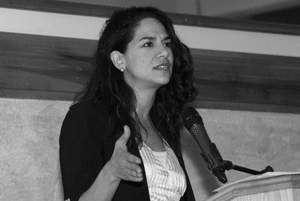
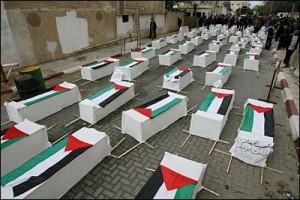
We follow up on the findings of the Russell Tribunal on Palestine. As many listeners may know, the tribunal was created in response to the international community’s inaction regarding Israel’s recognized violations of international law. Jury and speakers included Angela Davis, Noam Chomsky, Ilan Pappe, Peter Hansen, Diana Buttu, Phyllis Bennis, Katie Gallagher and Russell Means.
Attorney Noura Erakat:
- Each of the sessions focuses on a different component of the problems that has led to a failure to achieve a solution to what some may describe as the Palestinian-Israeli conflict.
- More specifically to achieve Palestinian self-determination and equality with their Jewish-Israeli counterparts.
- The first tribunal explored the EU complicity. A condition for Israel’s acceptance into the United Nations was its acceptance of returning refugees to their homes per UN Resolution 194.
- Since the 1967 war they’ve been supported by unequivocal US financial, military and diplomatic support.
- Corporate complicity: The corporations that are involved in funding the Israeli military arsenal and its construction arsenal to expand its colonial settlements in the Occupied Territory as well as building a wall deemed illegal by the National Court of Justice.
- This fourth and final session brought everything back to the U.S.
- To New York specifically because the U.S. has proven to be the primary obstacle in resolving this conflict.
- Consider first that Israel has received 115 billion dollars in aid since World War 2. Making it the highest recipient of US foreign aid.
- In addition to that Israel receives approximately 3 billion dollars a year. It receives money without any review in US law, specifically the Arms Export Control Act which conditions that all US aid to foreign countries must be used to further human rights or in self defense.
- The US is shielding Israeli responsibility in the UN Security Council
- The resolution process is stonewalled internationally.
- One of the things that we’d love to do is remove the veto power from the five permanent members of the UN Security Council.
- BDS Movement: 2011 – Dock Workers refused unload Israeli products from a boat.
- EndtheOccupation.org
Guest – Attorney Noura Erakat, human rights attorney and activist. She is currently a Abraham L. Freedman Teaching Fellow at Temple University, Beasley School of Law and the U.S. based Legal Advocacy Consultant for the Badil Resource Center for Palestinian Refugee and Residency Rights. She has taught international human rights law in the Middle East at Georgetown University since Spring 2009. Noura also has helped seed BDS campaigns as a national grassroots organizer with the US Campaign to End the Israeli Occupation.
———-
Russell Tribunal on Palestine: Ilan Pappé Speech
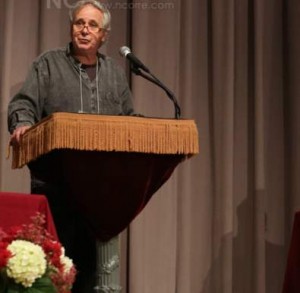
The final session of the Tribunal focused on the responsibility of the United States of America and the United Nations regarding the Israeli breaches of international law towards Palestine and Palestinians. There is now a situation in which Israel has achieved a status of immunity and impunity, facilitated by the US, despite its complete disregard for the norms and standards of international law.
Speaker – Ilan Pappé, an Israeli historian and activist. He is currently a professor with the College of Social Sciences and International Studies at the University of Exeter in the UK, director of the university’s European Centre for Palestine Studies, and co-director of the Exeter Centre for Ethno-Political Studies. He is the author of The Ethnic Cleansing of Palestine (2006), The Modern Middle East (2005), A History of Modern Palestine: One Land, Two Peoples (2003), and Britain and the Arab-Israeli Conflict (1988)
——————————————————————————-
Afghanistan War, CIA Sponsored Terror, Civil Liberties, Criminalizing Dissent, Extraordinary Rendition, FBI Intrusion, Guantanamo, Habeas Corpus, Human Rights, Political Prisoner, Prison Industry, Prosecution of the Bush Administration, Supreme Court, Targeting Muslims, Torture
Podcast: Play in new window | Download
Updates:
——
Universal Jurisdiction: Kiobel v. Royal Dutch Shell / Bush 6 Case In Spain
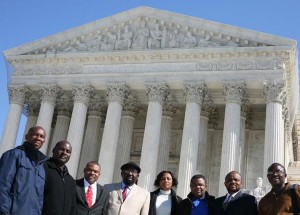
This week the US Supreme Court will decide if corporations could be held liable in U.S. courts for violations of international human rights law in the land mark case Kiobel v. Royal Dutch Petroleum. The case was brought by families of seven Nigerians who were executed by a former military government for protesting Shell’s exploration and development and is pushing to hold corporations accountable for human rights violations. The Supreme Court will also consider how the Alien Tort Statute Claim can be used the Kiobel case. A one sentence law that goes back to 1789 when the first judiciary act was brought in the United States. We’ve discussed this statute with several past guests including attorneys Peter Weiss and Rhonda Copeland who were instrumental in beginning the first cases in which human rights violations, taking place in other countries could actually be litigated in the United States.
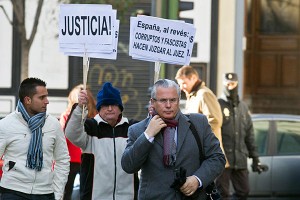
We also discuss the recent amicus filing by a group of international human rights organizations and experts before the Spanish Supreme Court. The brief asks the Spanish Supreme Court to overturn a decision not to pursue a criminal case against six former officials from the Bush administration for their role in directing and implementing a systematic torture program. Past shows with Katherine Gallagher.
Attorney Katherine Gallagher:
- The Kiobel case has been in US courts since 2004.
- The claims were brought in the Southern District of New York, under a law from 1789, known as the Alien Tort Statute.
- This law allows non-US citizens to come into a US federal court and assert violations of the Laws of Nations or International Law.
- A recent precedence for this is Citizens United, what happened was that the Second Circuit ruled that corporations could not be held liable for these egregious human rights violations under the Alien Tort Statute.
- The question of corporate liability went up to the Supreme Court first.
- We had 2 judges from a 3 bunch panel in the Second Circuit suddenly come out in the fall of 2009 and say there is no corporate liability. That is the question that went up to the Supreme Court.
- Four other circuits had look at this question and they said of course corporations can be held as liable as an individual, a natural person.
- The Alien Tort Statute allows for a civil suit and civil liability rather than criminal liability.
- The key case from 1980 that CCR brought, the case of Filartiga, this case which the Supreme Court affirmed in 2004 as being on solid legal basis, claims by a Paraguayan, against a Paraguayan for actions that occurred in Paraguay.
- So its very strange that the Supreme Court was asking in a very broad fashion whether the ATS could apply to actions that occurred in another country. That is what the bulk of the cases brought under the ATS have been about.
- Some of the cases where the ATS is used are for some of the most serious violations. Cases of war crimes, crimes against humanity, torture, not your run of the mill case.
- What the justices seem to coalesce around was the issue of whether there’s an alternate forum. If the claims against Shell could have been brought in the UK or in the Netherlands, maybe they don’t need to be brought in the US.
- We’ve seen a trend in the last 20 years of other countries adopting stronger laws that allow for redress, and accountability, so we don’t have to be the world’s policeman.
- There have been 2 cases that percolated up in the last 4 years in Spain.
- The first is a widespread investigation of the torture program then Judge Balthazar Garzon. This is a case looking at torture in Guantanamo, and potentially in Iraq and Afghanistan, looking at the whole U.S. torture program. That case was brought on by 4 named plaintiffs.
- That case is very wide ranging, and willing to go up the chain of command as far as the evidence leads.
- There is a second case that was brought against specific U.S. individuals. They’re known as the Bush 6, including, Jay Bybee, John Yu, David Addington, Alberto Gonzalez. Six men who served as lawyers and argued to have essentially created both the legal structure that enabled the torture program, providing arguements for immunity and protecting participants of the torture program from accountability.
- Spain has a long and proud history of upholding International Law. Spain is where we had the case against Augusto Pinochet in the late 90s.
- We’ll be doing this as long as we need. We need to have accountability, its really critical.
Guest – Katherine Gallagher, Senior Staff Attorney at the Center for Constitutional Rights (CCR), where she focuses on holding individuals, including US and foreign government officials, and corporations, including private military contractors, accountable for serious human rights violations. Among the cases she has worked, or is working, on are international accountability efforts for U.S. officials involved in torture (Spain, Switzerland, Canada); ICC Vatican Officials Prosecution; Arar v. Ashcroft, Corrie v. Caterpillar, Matar v. Dichter, Saleh v. Titan, Al-Quraishi v. Nakhla and L-3, Estate of Atban v. Blackwater.
—————————————————————————————————
Civil Liberties, Criminalizing Dissent, Gaza, Human Rights, Targeting Muslims, Torture, Truth to Power, War Resister
Podcast: Play in new window | Download
Updates:
—–
The Russell Tribunal on Palestine
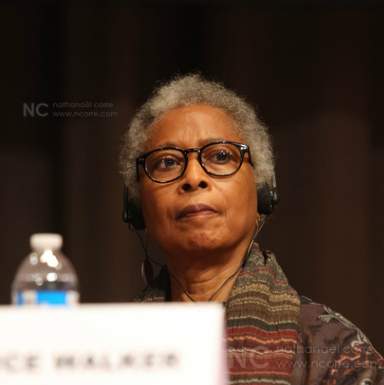
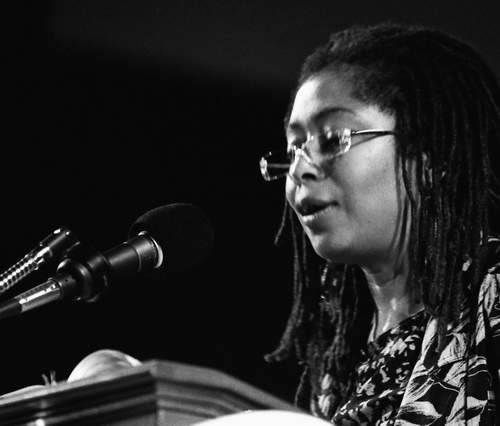
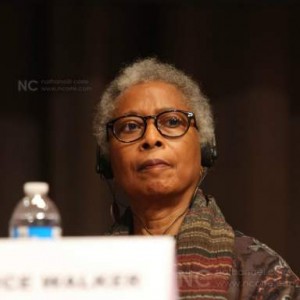
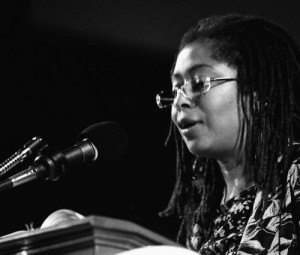
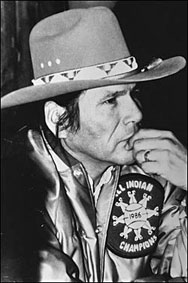
The Russell Tribunal on Palestine is holding its fourth and last session in New York City, October 6 through the 7th. This public session focuses on the denial of the Palestinian right to self determination and the role of the US and the United Nations. This tribunal will draw attention to the ongoing Israeli occupation of Palestinian Territories and how Israel continues to act with impunity under international law. There will be many speakers at this event including Ilan Pappe, Noam Chomsky, and Cynthia McKinney. We talk today with Pulitzer Prize winning novelist and poet Alice Walker and Dennis Banks, a Native American leader, activist and author. Both of whom will be speaking at the tribunal.
Alice Walker:
- Citizens around the world are very concerned that nothing seems to move forward between the Israelis and the Palestinians.
- The traditional one (tribunal) that came into being because of Vietnam and the American war against the Vietnamese people.
- I was in Gaza shortly after the bombing and that would’ve made anyone want to have a tribunal because it was so completely devastating and horrible.
- The Israelis just sailed along as if everything was ok to kill 1400 people and 300 children, destroy the water system. We don’t have a lot of power in terms of making things change, but I think consciousness is our only hope in any case.
- The UN has been relatively helpless against the US and Israeli veto of their resolution. We want to look at – Why is that?
- How is it that we can’t get any movement in the UN toward justice for the Palestinian people?
- I think the United States and Israel are in agreement they want that territory.
- We have to remember this is an entrenched long standing pattern of how you treat indigenous people when you want what they have.
- In this country what they did is destroy the Indians.
- The Palestinians are just seen as obstructions to this grand vision. When people say real politic, they mean no matter what they have to do to implement their plan. Their plan whatever it is is supreme.
- They just gonna do that if it takes 100 years, 200 years.
- I remember sitting in Gaza after the bombing. The thing that got me was they bombed this school, not only a school but it was the American school.
- We must as human beings gather together. Gather ourselves and address these issues of destruction and they’re coming faster and faster.
Guest – Alice Walker, American author, poet, and activist. She has written both fiction and essays about race and gender. She is best known for the critically acclaimed novel The Color Purple (1982) for which she won the National Book Award and the Pulitzer Prize.
——
Dennis Banks:
- It seems that they’re taking a page out of Native American history and using it over there.
- You look at the burning of the sweat lodges. The whole experiment to take Native people away their parents and destroy them, put them in foster homes, boarding schools, military boarding schools.
- And keep them there for five, six, seven years. In my case it was six years before I was even allowed to see my parents.
- The whole thing is all over again.
- What can I say to warn people, to warn people about the future?
- I know they’re gonna dispossess the land from the Palestinians.
- I will not forgive the government for what it did not only to me but to thousands of thousands of young Native children.
- I’m speaking against the American people, I’m speaking against the policies of the American government.
Guest – Dennis Banks, a Native American leader, teacher, lecturer, activist and author, is an Anishinaabe born on Leech Lake Indian Reservation in northern Minnesota. Banks is also known as Nowa Cumig (Naawakamig in the Double Vowel System). His name in the Ojibwe language means “In the Center of the Ground.” He has been a longtime leader of the American Indian Movement, which he cofounded in 1968 with Native Americans in Minneapolis.
——
Chicago Teacher Strike
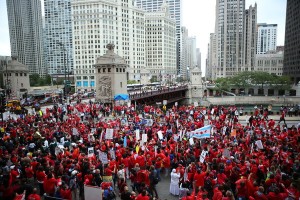
The Chicago teachers, with deep community support, have won a good victory last week in their ten day strike. their victory, while not complete, defends one of the great gains of the American people, public education, against the neo-liberal goal of supplanting it with private for profit non union charter schools. The teachers strike was about more than wages and hours. They fought against the dismantling of public schools in favor of for profit charter schools, a project that both the democrats from Obama down to Chicago Mayor Rahm Emannuel, champion.
The teachers demanded smaller class size, school aids, school supplies, and an end to the use of standardized tests. The new leadership of the teachers union gained its strength by being democratic and being rooted in the community, largely Black and Latino, and allied with the families of the students they teach. They began organizing in defense of their students 3 years ago.
Debby Pope:
- I started out the week as a strike coordinator. We went out and worked with 8 to 12 schools in a particular area on the picket lines and then someone else moved in to a communications role.
- Right now I’m working in a grievance department working on contract enforcement issues.
- I think the fundamental issue is the defense of public education and the defense of teaching as a profession.
- Let me make it clear that we were not legally able to bargain on some of the issues I talk about due to restrictive labor laws in Illinois.
- They have made over a hundred charter schools in Chicago in the last decade or so.
- They’ve eliminated bargaining in those schools, they’ve eliminated Chicago Teacher’s Union membership, they’ve eliminated the decent working conditions and the rights that we’ve fought for.
- They’ve given the billionaire business men a huge control over their schools.
- They have systematically defunded neighborhood schools.
- They allowed our buildings to crumble. They’ve given us computers that are decades old.
- This is an example of how they’ve been starving the public schools and then blaming us when the schools don’t work.
- We went out to the schools. We started contract action committees in all the schools. We helped teachers to understand what their rights were.
- We resumed our place as one of the largest unions in Illinois as a part of the labor movement.
- Is a teacher’s effectiveness related to his or her class size?
- Can a teacher teach 40 kids as well he or she can teach 25 kids?
- We want a better school day with a richer curriculum with art, music and drama.
- The enemies of poor children, the enemies of public education, the enemies of giving every child an opportunity are within both parties.
- We put ourselves in a position where the schools are failing.
- We blamed the schools for failing when in fact as a society set them up to fail.
- Then of course the billionaire rescuers . . . came in and said Oh my God look at what a mess the schools are. We have to privatize them, we have to charter them. We have to turn them into little business models.
- These people believe in factory schools.
- The next fight on the horizon is against school closings.
Guest – Debby Pope, member of the executive board Chicago Teachers Union and delegate. Debby Pope is a retired teacher and currently works on the CTU grievance board in contract dispute.
———————————————————————–
CIA Sponsored Terror, Civil Liberties, Guantanamo, Habeas Corpus, Human Rights, Political Prisoner, Prison Industry, Targeting Muslims, Torture, Truth to Power
Podcast: Play in new window | Download
Updates:
- US Refuses To Extradite Former Bolivian President
- Jose Padilla Re-Sentencing
- Ward Churchill Case Update – Are University Board of Regents Immune?
- Armenia Protests Extradition of Axe Murderer
——
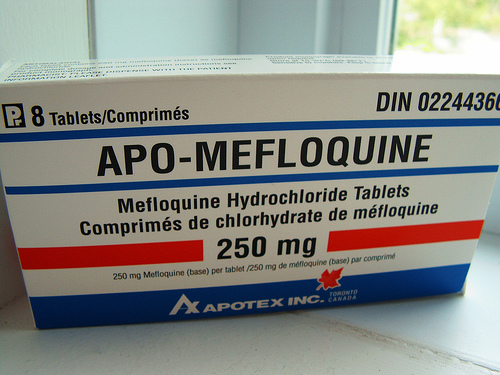
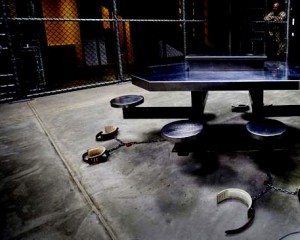

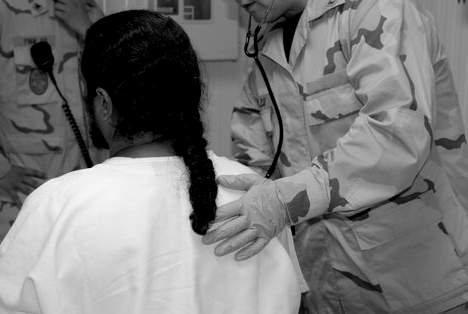
Department of Defense Declassifies Report on Alleged Drugging of Detainees
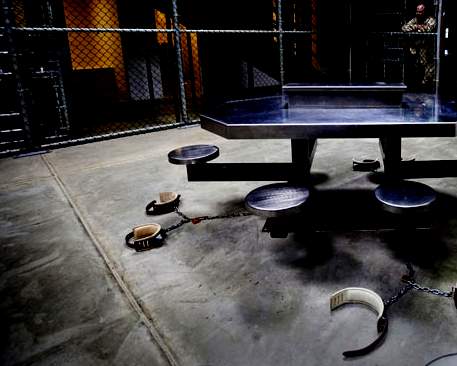
Hosts discuss a recently declassified report on alleged drugging of Guantanamo detainees with Attorney Shane Kadidal.
Guest – Attorney Shane Kadidal, senior managing attorney of the Guantánamo Global Justice Initiative at the Center for Constitutional Rights in New York City. He is a graduate of the Yale Law School and a former law clerk to Judge Kermit Lipez of the United States Court of Appeals for the First Circuit. In his eight years at the Center, he has worked on a number of significant cases in the wake of 9/11, including the Center’s challenges to the detention of prisoners at Guantánamo Bay (among them torture victim Mohammed al Qahtani and former CIA ghost detainee Majid Khan), which have twice reached the Supreme Court, and several cases arising out of the post-9/11 domestic immigration sweeps.
——
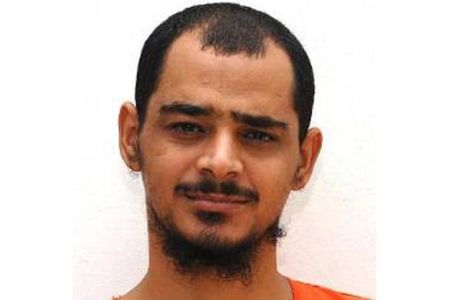
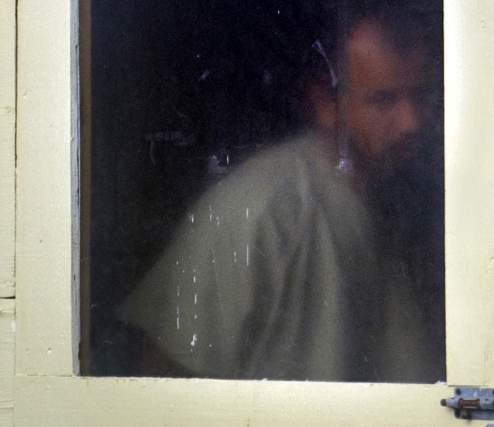
Adnan Latif – the Face of Indefinite Detention – Dies at Guantánamo
A prisoner held at Guantanamo Bay Naval Base since 2002 died last week. Adnan Farhan Abdul Latif was a 32 year old from Yemen who was allegedly suicidal and mentally ill. Latif won a U.S. court order for his release but it was overturned on appeal. In 2009, President Obama imposed a moratorium on Guantanamo prisoners from Yemen after a Yemeni trained Nigerian was found with a bomb in his underwear on a Detroit bound plane in 2009. Latif is the ninth prisoner to die at Guantanamo Bay prison.
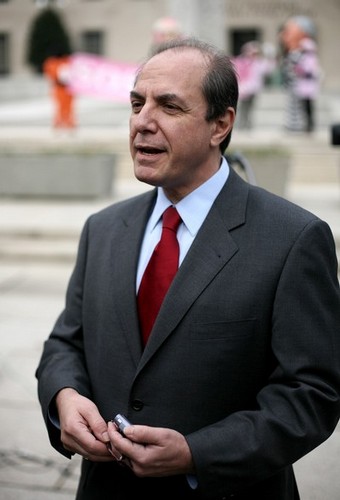
Attorney David Remes:
- We decided to put out a statement by the lawyers. We wanted to call his family but the government said let the ICRC do it.
- He was approved in 2004, he was approved in 2007, and approved in 2009 for transfer out of Guantanamo.
- Adnan filed a habeas corpus petitions in 2004. In 2008 those cases began to move forward, Adnan was among them. He won his habeas case. The whole case against him hinged on an intelligence report that the district court judge said was unreliable. The case was appealed by the Obama Administration.
- He was a very sweet man, he was small, he was thin.
- He was very sensitive and a fine poet. He felt everything more keenly, perhaps more keenly than any of the other detainees.
- He felt that his spirit was being crushed. That he was always being roughed up by the guards. He was on long hunger strikes, he was held in isolation for the majority of his time in Guantanamo.
- He was mentally very fragile.
- At one point in my representation of him in 2009, he slit his wrists as I was speaking with him . . by chipping formica from under the table and cutting into his vein let the blood drip into a little cup and then threw his blood on me.
- I took an inventory of his various bumps, bruises and swellings. It was almost like a doctor’s visit.
- He was a small guy.
- He could be very lucid, he was very intelligent.
- You just have to question the NCIS reports from the beginning.
- Whatever the conclusions that were announced it was Guantanamo that killed Adnan. It ruined his health, it ruined his spirit, it may have led him to suicide.
Guest – Attorney David Remes, a human rights lawyer who has been deeply involved in the litigation on behalf of Guantanamo prisoners since 2004. He represents 16 Yemenis and has made several visits to Yemen to press for his clients’ release and brief their families. He was among the first lawyers to visit Guantanamo after the Supreme Court ruled in Rasul v. Bush in 2004 that the prisoners had a right to legal counsel.
————————————————————————–