Afghanistan War, CIA Sponsored Terror, Civil Liberties, Criminalizing Dissent, Extraordinary Rendition, FBI Intrusion, Guantanamo, Habeas Corpus, Human Rights, Iraq War, Military Tribunal, Political Prisoner, Targeting Muslims, Torture
Podcast: Play in new window | Download
Updates
- Michael Ratner: Update on Verdict – Corrie v State of Israel
- Cardinal Dolan Who Approved Payoffs For Priests Accused of Sex Abuse To Leave Priesthood Gives Speech At RNC and Closing Speech for DNC
—–

Islamophobia: Anatomy of an American Panic
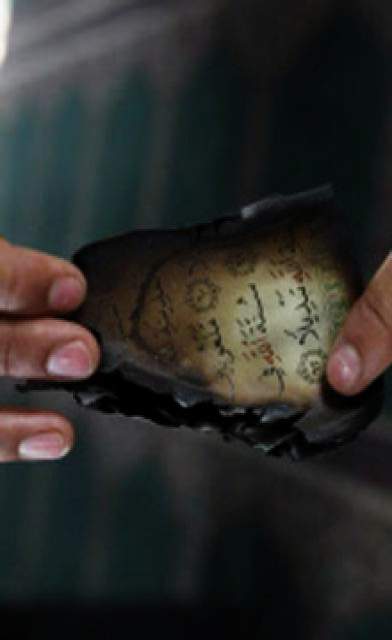
In the last few weeks, 8 places of worship connected with South Asians or Middle Easterners have been targets in the United States. As many listeners know, six people were murdered at a Sikh temple in Oak Creek, Wisconsin but later that evening a mosque in Joplin Missouri was burned down. Other targets recently included mosques in Rhode Island, Southern California, Oklahoma City and Dearborn, Michigan. These tragic events mark another wave of existential Muslim threats inciting fear and violence against Middle Eastern people while helping to justify the ongoing war on terror.
According to the University of Maryland’s National Consortium for the Study of Terrorism and Response to Terrorism, since 9/11 to 2010 there have been 155 terror incidents in the U.S., and exactly two of them or 1.3 percent have been attributed to international Islamist terror groups. The majority of events involved individuals such as anti-abortionists, right-wing extremists, or extreme animal rights activists.
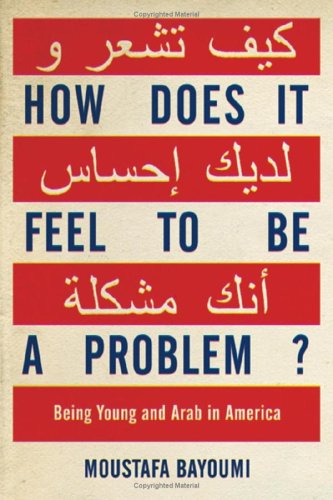
The Nation Magazine has highlighted the disproportional focus put on Muslim communities in a special issue titled “Islamophobia: Anatomy of an American Panic.” We talk with journalist Lizzy Ratner and authors Deepa Kumar and Moustafa Bayoumi who contributed articles to the Nation Magazine special.
Lizzy Ratner:
- The Nation did a special issue about Islamophobia. It came out in the beginning of July. You can still find the majority of the articles online. The real credit has to go to Abdeen Jabara whose idea this really was.
- The civil rights attorney came to me last year and said the anti-Arab, anti-Muslim has reached fever-pitch.
- So I began to do some research about what exactly was going on and very quickly compiled a massive roster of possible articles.
- For the most part, the Left and Progressives have been far too quiet.
- This bigotry that is flourishing right now has a real history, it’s not a just a product of 9/11 and the post 9/11 era.
- Some of the seeds of bigotry have to do with the role of the United States historically in the Middle East.
- Islamophobia served an agenda and a number of purposes.
Guest – New York City journalist Lizzy Ratner has written extensively for the Nation and Alternet on issues involving Islamophobia. Lizzy is also co-editor of The Goldstone Report: The Legacy of the Landmark Investigation of the Gaza Conflict.
——
Moustafa Bayoumi:
- I was happy to see that the Nation was happy to take on the question of Islamophobia for a double issue.
- There’s been a shift in the last ten years from paranoia around security to a paranoia about the basic facts of Muslim life in the United States.
- In a way you can say it’s a shift from security to culture.
- At any stage, anything that has to do with a daily concerns about living a life as a Muslim American, somehow now becomes charged with sedition. Part of the funding of the anti-Muslim movement in the United States is basic conservative politics and extreme conservative politics.
- And also due to the Israel-Palestine conflict. So people who want to come aboard Israel will make a very distorted picture of what Muslim life is like.
- The NYPD has now a decade long history of “othering” the Muslim-American community.
- The NYPD had been screening The New Jihad for its new recruits.
- It’s a crazy film saying that all of the American Muslims are here as a fifth column ready to pounce. It’s a training film for new recruits. That’s true for the Pentagon and the FBI.
- Muslim Americans are still seen as perpetual foreigners.
- That Muslim American rights are different than everyone else’s rights.
- You’re average American consumer of media does not relate to the victims of the Oak Creek massacre because they don’t see them as being part of the American family.
- They asked American’s in this poll, and 62 percent of the population has never met a Muslim.
- If you’ve never met a Muslim then it’s very easy to believe all these boogey man ideas. That’s why media plays an important role in this issue.
- The FBI (training manual) said that it was in the nature of Muslims to try to take over this country.
Guest – Author Moustafa Bayoumi wrote Fear and Loathing of Islam joins us, his book : Being Young and Arab in America, won an American Book Award and the Arab American Book Award for non-fiction. He is also a professor of English at Brooklyn College, City University of New York.
——
Deepa Kumar:
- As of late the anti-Muslim statements coming from Michelle Bachmann, Joe Walsh, all of whom are Republicans, there is a sense of which it is the Republicans who are responsible for Islamophobia, for the demonization of Muslims and so on.
- This brand of the war on terror gets hatched and part of that was language developed in the 1990s, called the Clash of Civilizations. It was a man named Bernard Lewis who first penned this term.
- It’s not so much we’re going to carry out revenge on Osama Bin Laden but that we’re going to rescue Afghan women. In the case of Iraq, we’re going to bring democracy when no weapons of mass destruction were found.
- This rhetoric has a long history it goes back to the 19th century.
- Both presidents need Islamophobia. They need to generate this fear and hatred of the “Muslim other.”
- Operation Boulder
- The Jonathan Institute holds this conference in Jerusalem . . Islamofacism, the roots are sown at that conference.
- The idea of this menacing Muslim enemy is not new. It was not something created after 9/11 but in fact it goes back a millennium.
- It’s about political goals but religious rhetoric gets used. Same thing with the re-conquest of Spain.
- The Islamophobic rhetoric is one that’s mobilized by the elite.
- I hold both Republicans and Democrats responsible. These rabid right wingers get their confidence from mainstream figures like Walsh, like Bachmann and others.
- The sad reality is that the Democrats have done nothing to counter this.
- The Democrats are not an ally in this fight.
- I take inspiration from 2 movements in the sixties, the civil rights movement and the anti-war movement. I think these 2 strategies need to come together in fighting Islamophobia.
- We have to take on both the far right and challenge the priorities of empire and bring together a multiracial coalition that can actually change a generation.
- It was President Clinton with Anti-Terrorism and Effective Death Penalty Act in 1996 which made it legal to actually deport people with secret evidence. We know this lays the basis for the Patriot Act. This has really been a bipartisan project in the interest of empire.
Guest – Deepa Kumar, an Associate Professor of Media Studies and Middle Eastern Studies at Rutgers University. Her work is driven by an active engagement with the key issues that characterize our era–neoliberalism and imperialism. Her first book, Outside the Box: Corporate Media, Globalization and the UPS Strike (University of Illinois Press, 2007), is about the power of collective struggle in effectively challenging the priorities of neoliberalism.
———————————————–
CIA Sponsored Terror, Civil Liberties, Criminalizing Dissent, Gaza, Habeas Corpus, Human Rights, Iran, Targeting Muslims
Podcast: Play in new window | Download
Updates:
—–
A Challenge to a Brutal Anti-Latino Law
Sheriff Joe Arpaio recently went on trial in Arizona for discriminating against Latinos and for usurping federal authority with roundups of undocumented immigrants. In a related action, a coalition of groups is asking a federal court to block enforcement of Section 2(B) of SB 1070, the Arizona law that compels all law enforcement agencies in that state to enforce the Arpaio model.
In June the Supreme Court rejected the premise of SB 1070 on grounds that making foreign policy – of which immigration law is a part – is a federal government’s domain. However, the Court upheld the law’s “show me your papers” section that requires officers to check the immigration status of anyone they stop, arrest or detain on another basis if the officer has a “reasonable suspicion” the person is in the country illegally.
The motion to block Section 2(B) “involves additional claims, evidence, and irreparable injuries beyond what the Supreme Court had before it.” The challenge explains harms so obvious and unconstitutional that the judge does not need extensive proof of the section’s impact to enjoin it. The Legislature “explicitly intended Section 2(B) to codify the practices” of Arpaio, the motion says, even after his powers had been restricted by earlier investigations into and challenges to his racial profiling. The practices include prolonged stops and detentions of Latinos to check their status or for other immigration-related purposes.
The plaintiffs are also asking the court to enjoin another Arizona law, which turns alleged violations of a federal anti-harboring law into a state crime. Courts have enjoined similar laws in Georgia, Alabama and South Carolina since, like Arizona’s, they were clearly pre-empted by federal law.
Lena Graber:
- The law enforcement in Joe Arpaio’s district have been really outspoken about their intention to stop Latinos and fight immigration.
- The issues around racial profiling are really huge. I think it’s worth separating out the different lawsuits that are going on.
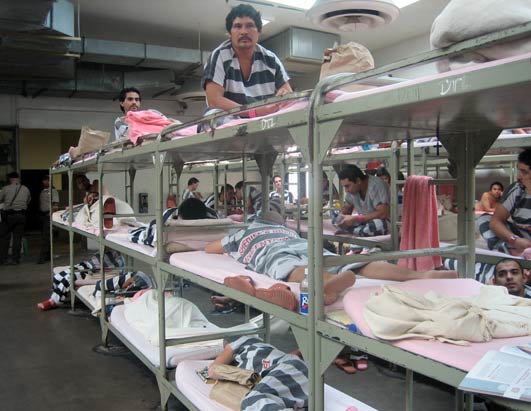
- Sheriff Joe Arpaio runs this incredibly punitive jail where they barely feed people enough it’s a 120 degrees, and he’s been sued literally thousands of times for the conditions of his jail.
- Thats been going on since he was elected in the early nineties.
- In the last several years he’s really gotten on this tough on immigration, let’s do sweeps through the Latino neighborhood.
- The ACLU and other civil rights groups filed a lawsuit against him for racial discrimination, violation of equal protection, and violation of civil rights.
- They filed that 2007, about six months later the Department of Justice initiated a civil rights investigation into Joe Arpaio and his operations in Arizona.
- In the meantime the state of Arizona passed SB 1070.
- There are both civil rights groups and non profits filing one lawsuit and the federal government filing a parallel.
- The Arizona Supreme Court recently ruled on the Arizona law, not on Joe Arpaio, where they struck down most of the law and upheld “show me your papers.”
- The federal government did not argue that the law was unconstitutional because of racial discrimination.
- Litigation tends to effect the way law enforcement operate pretty dramatically.
- Joe Arpaio has been elected five times.
- The federal government has been very slow on the game to chastise Joe Arpaio.
- The Department of Homeland Security formed their largest 287G agreement with Sheriff Joe for his deputies to be trained to enforce federal immigration law. At that point the violations really started to go through the roof.
Guest – Lena Graber, a Soros Criminal Justice Fellow who focuses on detention and deportation and state and local enforcement. Lena Graber’s work seeks to reduce the government’s abuse of immigration detainers–a tool used to maintain custody of potentially deportable individuals in local jails or prisons nationwide. Lena previously worked at the National Immigration Forum in Washington, D.C.
—–

Mondoweiss: Israel Trip and the Future of Palestine
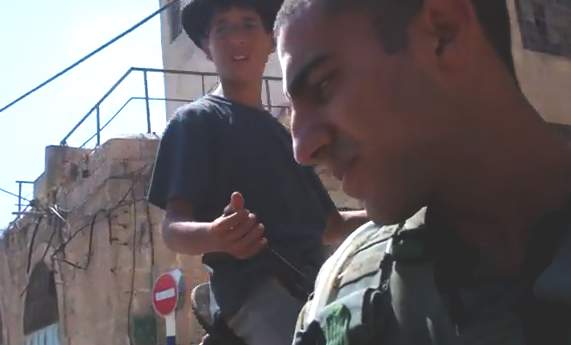
We welcome back returning guest Philip Weiss, the founder and co-editor of Mondoweiss.net, a news website devoted to covering American foreign policy in the Middle East. Philip has recently returned from a trip to Israel and was struck by the ongoing apartheid against Palestinians. During his trip, he traveled an Israeli’s only road. He saw the massive barrier in the West Bank. He toured many Israeli settlements, such as Ma’ale Adumim, the first settlement to be declared a city. Interestingly Philip also saw some of the fund raiser entourage of Republican presidential candidate Mitt Romney while in Jerusalem. We talk with him about his trip and the future of the Palestinian state.
Philip Weiss:
- The last few times I’ve come back I felt a real sense of bleakness.
- When you’re there and you see just how much force is arrayed on one side and the status quo is of complete inequality.
- The sense of martial law is overwhelming. Spiritually, it’s awful.
- When you’re over there you see there is very little left in terms of contiguous territory in the West Bank to create a viable state.
- You see the settlements all around you, giant swimming pools next to villages with walls around them, to separate themselves from Palestine villages in occupied land.
- Jeff Halper says the 2 state solution is dead.
- Area C is ours they say.
- I saw one ad on my commute here today that read – It’s Not Islamaphobia to Blame Islam for Terrorism.
- This is extremism, it’s intolerance, it’s racism.
- It’s statements that we would not accept, that have become off limits in American discourse in almost any other context.
- One thing I saw there was the separation, the complete separation of two societies.
- You really get a sense of ethnic purity at work.
- The denial of that humanity is so profound and offensive.
- I’ve been struck by the famous Arab hospitality in that region.
- The sense of sovereignty and domination is profound.
- It’s hard sometimes to meet people’s eyes, because you know that you’re an author of their humiliation and this human being with a lot of dignity has suddenly become humiliated before your eyes and it’s upsetting.
- John Brown said the idea that all people are created equal is the exact same idea as do unto others as you would have them do unto you.
- It’s kinda scary to think that a bunch of Americans to send a signal to Obama would have to go raise a million dollars at the King David hotel in Jerusalem and have Romney talk about Iran and he’s with Netanyahu on Iran. These were powerful political signals being sent while I was there.
- I think Romney is behaving in an irresponsible manner. It seems like he’s being used in this situation. Within the Israeli security establishment there is some sense it does not want this attack.
- They don’t care about Iran, they care about cleansing the West Bank of Palestinians.
- If there is a war with Iran it’s a perfect opportunity and a crisis to push more Palestinians out of area C into the cities.
- I’m for BDS. Every time I go there I’m upset by what I see. The question is that whether the South African connection is kicking in. (BDS Collective)
- I get a lot of criticism from Jews for exposing my people to danger.
- Jeff Halper studies the occupation and knows it in a granular way.
Guest – Philip Weiss, founder of Mondoweiss, longtime journalist and regular contributor to the Nation and a fellow at the Nation Institute. Philip is the author of two books a political novel, Cock-A-Doodle-Doo, and American Taboo, an investigative account of a 1976 murder in the Peace Corps in the Kingdom of Tonga. Weiss is one of the editors of The Goldstone Report: The Legacy of the Landmark Investigation of the Gaza Conflict.
————————————————————————–
Civil Liberties, Criminalizing Dissent, FBI Intrusion, Habeas Corpus, Human Rights, Prosecution of the Bush Administration, Targeting Muslims, Torture, Truth to Power, War Resister
Podcast: Play in new window | Download
Updates:
—–
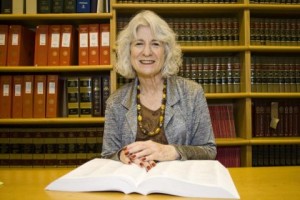
Lawyers You’ll Like: Attorney Nancy Hollander
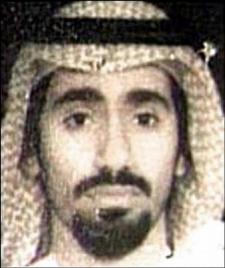
In this week’s Lawyers You’ll Like series, we’re joined by attorney Nancy Hollander. Nancy has been a member and partner with Freedman Boyd Hollander Goldberg Ives & Duncan P.A. since the early 80s. Her practice is devoted to mostly criminal cases including those involved with national security. Ms. Hollander has also argued and won a religious freedom case in the US Supreme Court. She’s served as a consultant to the defense in a high profile terrorism case in Ireland – and she represents 2 prisoners at Guantanamo Bay Naval Base.
Attorney Nancy Hollander:
- I was a community organizer with JOIN, Jobs or income now.
- We organized Appalachian migrants to Chicago. I wrote a book that I co-authored with Todd Gitlin called Uptown.
- I became a photographer, I learned how to develop film in the basement of Jessie Jackson’s church. I was in Cleveland for a time and then came to New Mexico, became the Executive Director of the New Mexico Civil Liberties Union, then went to law school.
- I worked as a riveter in a football equipment factory.
- It looked like that whole began when I met with Vietnamese women in Indonesia 1964. I met with women from North and South Vietnam.
- We all met at the embassy, and I thought, that was odd meeting, and that was the beginning of my CIA file.
- I represent 2 people (in Guantanamo Prison) one is Mohamado Ould Slahi, he’s a Mauratanian citizen, he was there from almost the beginning.
- We won his habeas case, the judge ordered him almost immediately released.
- After ten years, the government said they didn’t have the preponderance of evidence to keep him.
- The government appealed, the case got remanded, and we’re essentially starting over.
- They changed what they accused him of continuously. He’s never been tried, he was tortured.
- The rule of law has become the law of changing rules.
- I got a security clearance and learned about SEPA and OFAC, the Office Of Foreign Asset Controls.
- We originally represented the Holy Land Foundation in its fight against the designated and some other civil litigation.
- They were charged and convicted of providing charity.
- The law is very fluid and lawyers have a lot of power. Our power is to make change and to create miracles in some cases. There have been something like 100 terrorism cases tried in New York alone since 9/11
Guest – Attorney Nancy Hollander has been a member of the firm Freedman Boyd Hollander Goldberg Ives & Duncan, P.A. since 1980 and a partner since 1983. Her practice is largely devoted to criminal cases, including those involving national security issues. She has also been counsel in numerous civil cases, forfeitures and administrative hearings, and has argued and won a case involving religious freedom in the United States Supreme Court. (see decision) Ms. Hollander also served as a consultant to the defense in a high profile terrorism case in Ireland, has assisted counsel in other international cases and represents two prisoners at Guantanamo Bay Naval Base. Nancy is co-author of WestGroup’s Everytrial Criminal Defense Resource Book, Wharton’s Criminal Evidence, 15th Edition, and Wharton’s Criminal Procedure, 14th Edition. She has appeared on national television programs as PBS Now, Burden of Proof, the Today Show, Oprah Winfrey, CourtTV, and the MacNeill/Lehrer News Hour.
—–
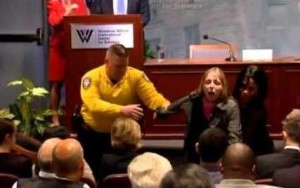
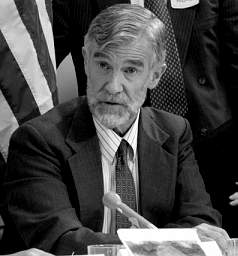
The Moral Challenge of ‘Kill Lists’ by Ray McGovern
The Obama Administration has conducted hundreds of drone strikes in several countries, killing civilians and a US citizen. Critics point out that as the Obama Administration assassinates its’ suspects, it also avoids the legal complications of detention. In last week’s New York Times, authors Jo Becker and Scott Shane expose the priest-like role of counter terrorist adviser John Brennan as he provides Mr. Obama with the moral justification for extrajudicial murder. The framing of John Brennan’s role of priestly adviser caught Ray McGovern’s attention. His recent article The Moral Challenge of Kill Lists, dissects the New York Times story.
Ray McGovern:
- There has been a geometric increase in the number of drone strikes against Pakistan and of course Somalia and Yemen.
- London based bureau for investigative journalism estimates that about 830 civilians including women and children may have been killed by drone attacks in Pakistan. 138 in Yemen, and 57 in Somalia. It’s incredibly naive to think that this helps in any way in the war on terrorism.
- This wonderfully insightful and dangerous New York Times article a week ago talked about the conundrum of aligning these activities with US legal and moral principles. Conundrum? That’s an impossibility.
- The Fifth Amendment prevents this sort of thing if you take the interpretation we’ve always had.
- As the New York Times article mentions 1 out of 30 assassinations that are known about just one escaped assassination and was brought before a court. It’s much easier to kill them.
- If you wanted to learn about al-Qaeda, don’t you think Osama Bin Laden could’ve told us some stuff about al-Qaeda?
- Any military aged male in the area of a “bad guy” is fair game.
- Maybe I can draw from my own experience in the CIA, I know about lists. I know that when there was a coup attempt in Indonesia in 1965, that there were lists given to the Indonesian authorities of communists. How many communists on that list? A million. How many were killed, were murdered? 500 thousand plus. How many were put in prison? The other 500 thousand.
- The drones are really accurate but the target information is notoriously inaccurate.
- I love Fordham and I hate to see the administration and the very wealthy trustees who have lots of money to give to Fordham, determine who comes in to give the commencement address.
- I think that you have to have some kind of personal involvement with innocent suffering. I think that you have to have some sense of the injustice others suffer to let your heart be touched by this direct experience.
- Obama’s fallen in with a rough crowd.
- I was attracted to getting outside of my Catholic walls. There’s a small church down in Washington DC called the Church of the Savior.
- I found out they were doing wonderful things like preventing housing from being gentrified so poor people can still live there. Healthcare, jobs, addictions, a hospice for people to sick to be on the street.
- There’s been one major change for the good in this country. That is Occupy.
- When you look for proof that Occupy has incredible potential, look no farther than what the president and the top senators thought necessary to inject into the NDAA on New Year’s Eve, which allows them to use the US Army of all things to wrap us all up without charge, without court proceedings.
Guest – Raymond L. McGovern, retired CIA officer turned political activist. McGovern was a Federal employee under seven U.S. presidents in the past 27 years. Ray’s opinion pieces have appeared in many leading newspapers here and abroad. His website writings are posted first on consortiumnews.com, and are usually carried on other websites as well. He has debated at the Oxford Forum and appeared on Charlie Rose, The Newshour, CNN, and numerous other TV & radio programs and documentaries. Ray has lectured to a wide variety of audiences here and abroad. Ray studied theology and philosophy (as well as his major, Russian) at Fordham University, from which he holds two degrees. He also holds a Certificate in Theological Studies from Georgetown University. A Catholic, Mr. McGovern has been worshipping for over a decade with the ecumenical Church of the Saviour and teaching at its Servant Leadership School. He was co-director of the school from 1998 to 2004. Ray came from his native New York to Washington in the early Sixties as an Army infantry/intelligence officer and then served as a CIA analyst from the administration of John F. Kennedy to that of George H. W. Bush. Ray’s duties included chairing National Intelligence Estimates and preparing the President’s Daily Brief, which he briefed one-on-one to President Ronald Reagan’s most senior national security advisers from 1981 to 1985.
—————————————————————————–
CIA Sponsored Terror, Civil Liberties, FBI Intrusion, Habeas Corpus, Human Rights, Surveillance, Targeting Muslims, Torture, Truth to Power, War Resister
Podcast: Play in new window | Download
Updates:
- Michael Smith and Heidi Boghosian Discuss May Day Events
- Michael Smith Reads A May Day Letter From Lynne Stewart
- Retired Chemistry Professor Tried For Jury Tampering Represents Self and Wins.
- Federal Lawsuit Filed Against NYPD For Improper Use Of Barricades
- Four City Council Members File Suit Against NYPD For Police Abuse
—–
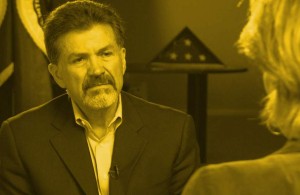
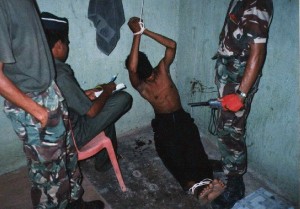
Former Head of CIA Clandestine Service Justifies Torture On CBS 60 Minutes
In a recent interview on CBS news, former head of the CIA’s clandestine service Jose Rodriguez discussed the destruction of 92 tapes in which terrorism suspects were subjected to water boarding and other forms of torture. Rodriguez told CBS that he destroyed the tapes to protect the people who worked for him at various black sites. But critics say Rodriguez is afraid of criminal prosecution because those 92 tapes contained compelling evidence of criminality and are a threat to Rodriguez and those who approved the use of torture. Rodriguez, a thirty-year veteran of the CIA, and spent most of his entire career in Latin America, supports the idea that torture works to get information.
Attorney Scott Horton:
- We know the government in response to FOIA requests, and litigation requests has released photographs and tapes repeatedly in the past, and always obliterates the faces involved, so of course the identities are not released.
- Obama announced in his speech from Kabul, al-Qaeda’s been defeated. It’s a faint shadow of what it was before.
- The tapes contained evidence of crimes, it showed water boarding and other torture techniques. It documented those techniques, and that presented a risk to Jose Rodriguez and to the the people up above Rodriguez who are responsible for putting through torture policy.
- George Tenet was involved, Bybee, a judge in the Ninth Circuit in Las Vegas, John Yoo who is a professor at the University of California, Steven Bradbury who is now a partner in a law firm in Washington DC and then it went into the White House where it went into the National Security Council.
- The trail consistently leads straight into the office of former Vice President Dick Cheney. He was the key mover for the introduction of torture policy.
- Domestically, we have an anti-torture statute that includes for conspiracy to torture, both of those things were violated. They apply outside of the United States, so they would have applied to the conduct of a CIA agent operating in Poland or Thailand for instance.
- Jose Rodriguez: He’s trying to make money, he’s selling a book, what you saw was a 36 minute advertisement for his book, published by an affiliate of CBS.
- Beyond that I’d say he’s trying to build sympathy and beat back calls for his own prosecution.
- I think this was an ill advised strategy and I think he confessed to criminal conduct in the course of this interview.
- At one point they claimed that they were able to track down and pick up Jose Padilla through the use of water boarding, which is very very interesting because Padilla was arrested and in custody before the first case of water boarding was applied.
- Mitt Romney has been out there punching away constantly on the advocacy of torture and the response from the Obama campaign has been silence. Silence.
- The guy came across to me as something of a psychopath (Jose Rodriguez)
Guest – New York attorney Scott Horton, Scott is known for his work in human rights law and the law of armed conflict. Scott is also the contributing editor to Harper’s Magazine.
—–
Common Cause Files IRS Whistleblower Complaint Against ALEC
The American Legislative Exchange Council, or ALEC, is a tax exempt charity that spends millions of dollars annually to lobby for hundreds of bills in state legislatures around the United States. It came to the attention of the public for having drafted and pressured passage of the so-called stand your ground legislation after the shooting death of Trayvon Martin in February. The watchdog group Common Cause has asked the IRS to review ALEC’s status claiming that ALEC is “a corporate lobby masquerading as a charity,” and that contributors should not be allowed to claim the gifts as charitable contributions.
Nick Surgey:
- ALEC describes itself as nonpartisan although the majority are members of the Republican Party.
- It’s concerning from a tax perspective, ALEC is operating as 501c non-profit, which means its a charity.
- Therefore corporations who are members of ALEC are allowed to take a tax deduction, when they contribute up to hundreds of thousands of dollars.
- If Visa, Verizon or Amazon then those lobbying would not be tax deductible, they would be subject to tax, but they do the same lobbying through ALEC.
- All of those contributions are subsidized by us – the tax payer. And that’s wrong.
- We shouldn’t be subsidizing the activities of any corporation.
- Until recently ALEC operated 9 Task Forces, they were forced to close one 2 weeks ago.
- Stand Your Ground Bill / Drafted by the NRA, lobbied by them and presented to legislators in Florida 2005.
- The NRA took it to ALEC, who they’re a member of, Walmart chaired the taskforce. Walmart the largest retailer of weapons in the United States.
- The Stand Your Ground bill is now law in 20 states.
- ALEC organizes around these 9 task forces. They have bills that really cover almost every policy area.
- Other areas include rolling back environmental protection, they have a commerce task force, where a lot of anti-union bills, the right to work legislation, it comes from that task force.
- Corporations will use the state essentially to lobby on their behalf.
- Common Cause has a very good picture of what ALEC has been doing in the last 2 years and this formed the basis of this massive IRS submission.
- One document are these scorecards which they send to their corporate members, where they celebrate the success that they have. Some of the early scorecards, they mapped out the complete picture of the United States and where all of their model bills have been introduced.
- A source provided us with emails going between ALEC and state legislators. We were very greatful to be represented pro-bono by one of the country’s leading whistle-blower firms, Phillips and Cohen.
- Voter ID has been increasingly connected to ALEC.
- We believe the bigger fraud is disenfranchising millions of predominantly African American, elderly or young student voters. In wasn’t until 2009 when ALEC took it up, that it really injected energy into it at the state level and its been introduced in 34 states. (Voter ID)
- ALEC has an ability to take a law, not always a new law and sell it to their almost 2000 state legislator members.
- ALEC has about a third of all state legislators in the entire country as members.
- There was a fracking bill, and it was sponsored by Exxon Mobile.
- ALECExposed.org
Guest – Nick Surgey, Nick conducted the research helping to expose the American Legislative Exchange Council. Nick joined Common Cause in March 2011 as a Legal Associate. He formerly worked at the British Refugee Council in Leeds, England, where he advocated on behalf of asylum seekers. He previously worked at an immigration law firm, as an elected student union officer and as a paid campaigner. Nick holds an undergraduate degree in History and Politics and a post-graduate diploma in law.
—————————————–
Afghanistan War, Civil Liberties, Criminalizing Dissent, Human Rights, Iraq War, Prison Industry, Supreme Court, Surveillance, Targeting Muslims, Torture, Truth to Power, War Resister
Podcast: Play in new window | Download
Updates:
————
39 Ways To Limit Free Speech
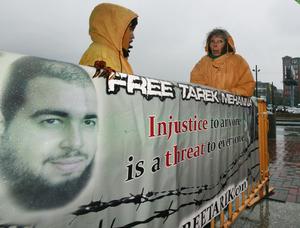
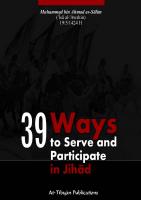
39 Ways To Limit Free Speech is the title Law Professor David Cole’s recent article. Earlier this month, a 29-year old citizen from Sudbury, Massachusetts named Tarek Mehanna was sentenced to seventeen and a half years in prison for translating a document. The text he translated from Arabic is “39 Ways to Serve and Participate in Jihad” and its all over the internet, you can read it says David Cole, but don’t try to translate it. One issue in the government’s prosecution of this case is the use of the decision from the Brandenburg v. Ohio case in which the Supreme Court established that standard in ruling that the First Amendment protected a Ku Klux Klansman who made a speech to a Klan gathering advocating “revengeance” against blacks and “Jews.”
Professor David Cole:
- He was accused of providing material support to al-Qaeda by translating various documents and videos from Arabic into English. There’s no allegations that Mehanna ever met with or even talked to a member of al-Qaeda. There are no allegations that the translations were delivered to or provided to al-Qaeda which was the designated group.
- The government argued that because he translated these documents and put them up on the web and hoped to encourage people to support jihad and support al-Qaeda, that’s enough to constitute material support.
- Here’s an instant in which the government is prosecuting pure speech but no showing that the speech was connected to illegal conduct, no showing that it was intended to produce eminent lawless action, which the Supreme Court said is required to produce under Brandenburg.
- It’s enough that he put it up on the web and wanted to support al-Qaeda.
- If that’s a crime what about the New York Times when it does a report on one of the many messages Osama Bin Laden put after 9-11?
- I represented the Humanitarian Law Project in the case that went to the Supreme Court in 2010, in which the HLP was in engaging in advocacy of human rights and peace, clearly non-violent, non-criminal conduct.
- But because they wanted to do it to and with the Kurds in Turkey and particularly the political representatives of the Kurds in Turkey which is the Kurdistan Workers Party (designated as a terrorist organization) the government argued that it was a crime to teach the KWP to bring human rights claims in Geneva and work with them in peace overtures to the Turkish Government.
- The Supreme Court upheld that, but doesn’t apply to independent advocacy. (until now)
- Now if you wanted your speech to support terrorist organizations, even if you did it independently of that organization, even if you never met or talked to anyone in that organization, we can make it a crime.
- Very much about declaring a “new front” in the war on terror and the front is going after internet propaganda.
- To me it recalls the kind of aiding the enemy prosecutions we saw in World War 1.
- We as citizens need to be active in monitoring and pushing back against this material support statute.
Guest – Professor David Cole teaches constitutional law, national security, and criminal justice at Georgetown University Law Center. He is also a volunteer attorney for the Center for Constitutional Rights, the legal affairs correspondent for The Nation, a regular contributor to the New York Review of Books, and a commentator on National Public Radio’s All Things Considered. He has been published widely in law journals and the popular press, including the Yale Law Journal, California Law Review, Stanford Law Review, New York Times, Washington Post, Wall Street Journal, and Los Angeles Times.
——————-

FAA Releases Lists of Drone Certificates—Many Questions Left Unanswered
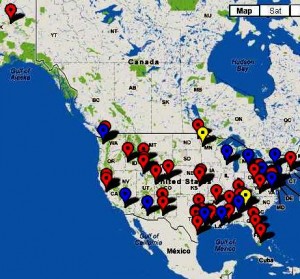
Earlier this year we discussed the partnership with Cornell University and Technion-Israel Institute of Technology. The two institutions are working together to build a campus in New York City. Technion is involved with developing robotic weapons systems, which include aerial drones, and unmanned combat vehicle technology. There are many more universities involved with drone technology. Through a series of Freedom of Information requests by the Electronic Frontier Foundation, the FAA has been forced to reveal approximately 63 active drone sites. These sites are located in 20 states and their owners include military and universities. Universities include Cornell, (which we just mentioned) the University of Colorado, Georgia Tech, Eastern Gateway Community College and many more.
Attorney Jennifer Lynch:
- We filed a FOIA request with the FAA last April asking for copies of all the certificates of authorization and the special air-worthiness certificates that the FAA issues to anybody to wants to fly a drone in the US.
- We asked for these lists which are called COAs, or Certificates of Authorization. The COAs apply to public entities like state and local law enforcement, universities, the federal government.
- We got two lists from the FAA and the FAA says these cover all of the entities that applied for an authorization to fly a drone in United States.
- They’re very interesting, the COA list includes some unsurprising entities like DARPA, DHS, Customs and Border Protection, the FBI, various branches of the military. We already knew those entities were flying drones.
- What was more surprising was the number of universities and colleges on the list.
- Universities that have an aerospace engineering program they may be seeking authorization so the students can learn about and design drones.
- The Electronic Frontier Foundation is a civil liberties non-profit, we focus on civil liberties and new technology, and we’re concerned about surveillance equipment used by the government.
- Drones are a duel use technology, they can be used for good or for bad.
- They can see inside buildings, survey an area at night with heat sensors, they also have the ability to carry communications intercept tools. You could swap out various payloads on a drone.
- Then of course these drones can carry weapons.
- You can build your own drone, DIYDrones.
- We don’t know too much about what’s going on now. The reason the EFF file the FOIA request in the first place is that we just don’t know how agencies are using these drones.
- What we found is that a lot of the police forces that have drones are required to fly them under 600 feet. If its something that flying under 600 feet you’re going to be able to see that.
- Congress was getting a lot of pressure, and the FAA was getting a lot of pressure from state and local law enforcement, the military and the federal government to authorize more drones to be used in the United States.
- We’ve heard from the Congressional Research Service that 1 in 3 warplanes right now is a drone.
- The wars are going to end and the military is going to want to something with these drones.
Guest – Jennifer Lynch, staff attorney with the Electronic Frontier Foundation and works on open government, transparency and privacy issues as part of EFF’s FOIA Litigation for Accountable Government (FLAG) Project. In addition to government transparency, Jennifer has written and spoken frequently on government surveillance programs, intelligence community misconduct, and biometrics collection. Prior to joining EFF, Jennifer was the Clinical Teaching Fellow with the Samuelson Law, Technology & Public Policy Clinic at UC Berkeley School of Law. At the Samuelson Clinic, Jennifer specialized in privacy and intellectual property issues, including investigations on social media, privacy and the smart electrical grid, digital books, and open source regimes for biotech. Before the Clinic, Jennifer practiced with Bingham McCutchen in San Francisco and clerked for Judge A. Howard Matz in the Central District of California. She earned both her undergraduate and law degrees from UC Berkeley.
—————————–
Afghanistan War, Civil Liberties, Criminalizing Dissent, FBI Intrusion, Human Rights, Prison Industry, Supreme Court, Surveillance, Targeting Muslims
Podcast: Play in new window | Download
Updates:
——
Snitching: Criminal Informants and the Erosion of American Justice
The FBI now spends more than 3 billion dollars a year on counter-terrorism, the bureau maintains a team of 15 thousand spies in a nationwide network of informants. Criminal informants or snitches are part of a criminal system most people know little about. Many of these informants are tasked with infiltrating Muslims communities in the United States. We’ve discussed in the past, the expanded FBI guidelines plus the broad over reaching powers and underhanded tactics the FBI use when targeting Mosques and Muslim Americans.
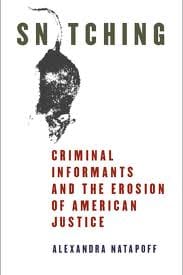
We talk today with Professor of Law and author Alexandra Natapoff, about her book Snitching: Criminal Informants and the Erosion of American Justice. Her book catalogues the downside in the use of snitches on social structure and democracy and suggests ways to make the use of informants acceptable within the criminal justice system.
Professor Alexandra Natapoff:
- Snitching is such a massive part of our criminal justice system even though the public rarely gets a good look at it.
- It’s an under the radar aspect of the way our criminal justice system handles investigations, the way it handles cases, the way it shapes our case law.
- It’s such a powerful deal, a deal that exerts a huge amount of influence and plea bargaining.
- The reality is that this is a deeply under-regulated arena. The handler is the law enforcement official who creates and uses an informant.
- It could be a police officer talking to a street corner addict cutting a deal right then and there.
- It could be an FBI agent who has an established documented supervised relationship with a long term criminal informant.
- Somebody may be suspected of a crime or even just of interest to the government. People who have mild brushes with the criminal system can end up through this mechanism of criminal informing entering into a world in which really anything can happen to them.
- Argument: Either you let us use informants in an unaccountable, invisible, secretive, undocumented way or we can’t run the criminal system at all.
- We permit the barter of crime under the radar, in a way that is unfair to other defendants and other suspects. We produce unreliable information through the use of informants without regulation.
- My contention is that we shouldn’t ban this practice, but run it as any other public policy with transparency and accountability and some rules.
- My favorite criminal informant of recent is Jack Abramoff.
- Usually we don’t learn when informants have been mistreated because often they have very little power.
- The courts have said, informants proceed at their own risk.
- This is a deal that they can enter if they want to risk their life.
- The law does not owe criminal informants much protection. Our criminal system is built on the principle that the defendant should not have to face the government unaided by council.
- That’s a principle that should be extended to criminal informants.
- The state of Florida passed a ground breaking law, called Rachel’s Law.
- What sort of deal should we permit the government to cut with informants?
- The use of criminal informants is a massive source of error in capitol cases.
- States across the country are starting to impose greater restrictions on the use of criminal informants, in particular jailhouse snitches as a way to improving reliability of the information.
- Confidential Informant Accountability Act – Federal Legislative Proposal
- One of the things the government doesn’t keep track of is how many crimes are committed by criminal informants in the pursuit of investigating new cases.
Guest – Alexandra Napatoff, professor of Law at Loyola Law School, Los Angeles, and a member of the American Law Institute. I have also been a federal public defender, a community organizer, and the recipient of an Open Society Institute Community Fellowship.
————–
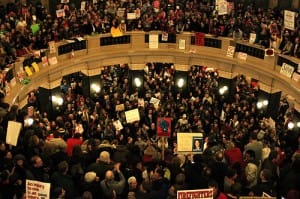
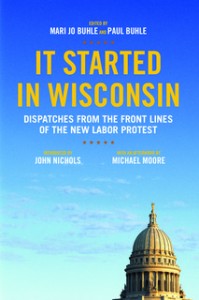
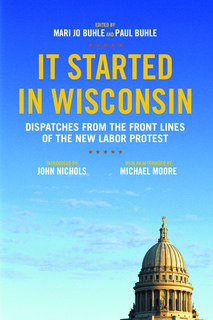
It Started in Wisconsin: Dispatches from the Front Lines of the New Labor Protest
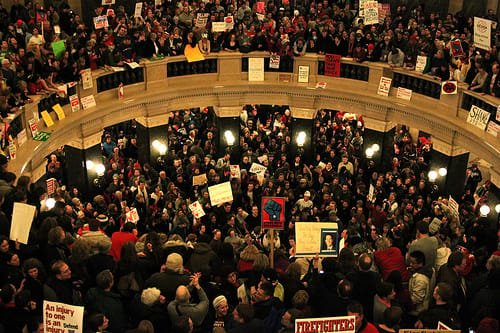
Remember the multi-day occupation of the Wisconsin State Capitol by tens of thousands of people. Massive demonstrations erupted when the Republican controlled state government proposed to dismantle public employee bargaining rights as Wisconsin trade unions already conceded to wage and benefit cuts. These protests became the largest labor demonstrations in modern American history. Protesters from the Middle East sent pizzas and solidarity as thousands occupied Madison’s Capitol building.
We’re joined today by Paul Buhle, historian, and editor of the book It Started in Wisconsin: Dispatches from the Front Lines of the New Labor Protest. A powerful collecton of eyewitness reports and essays by striking teachers, students, and many others. This book exposes the corporate agenda that imposed anti-union legislation across the country and highlights the power of the people coming together in protest.
Paul Buhle:
- Brecht Forum, Friday night – April 27,2012
- The “it” is very large, perhaps vaporous and very promising. We were thinking of occupy in the sense that Madisonians, labor supporters from as far away as California, occupied the State Capitol, the rotunda in February of last year and remained there for some weeks.
- The “it” may mean occupy or the emergence of a new kind of movement.
- We should have seen it coming but we were deluded or Walker, when running for election never mentioned these promises or threats at all and made some statements about getting along with unions when he was a county executive.
- The response was just as stunning as the shock. A mass outpouring that really began with students in Stoten, an old Norwegian community about half an hour south of Madison – working up their own protests with facebook to support their teachers.
- And then, the following weeks, a massive outpouring of people around the Capitol and then occupying the Capitol.
- Things went on and on until there were crowds of 150 thousand in a town of Madison that has normally only 250 thousand residents.
- Pacifica has been in the business from the late 1940s in the Bay area, in providing the documentation that other commercial radio stations rarely provide.
- I would say these protests in Wisconsin are probably the most recorded mass movement of the Left in recent history.
- Among the most important developments, relative to the stories in the history of labor, the unions of public workers are substantially, if not overwhelmingly women.
- So, the shape of the movement, perhaps its cultural character, perhaps the infernal degree of politeness that outsiders frequently complained about, the chant – let us in, let us in please.
- What it demonstrated was that women in the labor movement were ferociously militant.
- My assessment was that the labor movement was in no way prepared to stage a general strike.
- Nor that a massive walk out of public workers mean that the wheels of industry would stop what few wheels are left.
- The sense that public workers wish to put pressure on the political system.
- Contrary to our expectations of the Democratic Party in general, assorted leaders, were quite wonderful in their constituencies and the things that they did, and how they related to the movements.
- As an editor and producer of radical comics, I’m always interested in new developments in the field, and its exciting there are young comic artists who are working in and around “occupy.”
Guest – Paul Buhle, senior lecturer at Brown University, a historian of American radicalism., a former member of Students for a Democratic Society and author of many books including images of American Radicalism. Also, Che, A Graphic Biography, and Isodore Duncan, a graphic biography by Sabrina Jones.
———–
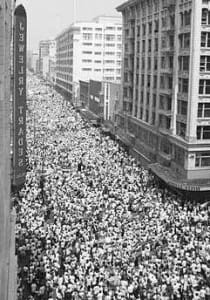
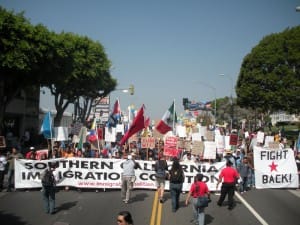
May Day: Workers’ Rights and Immigrant Communities
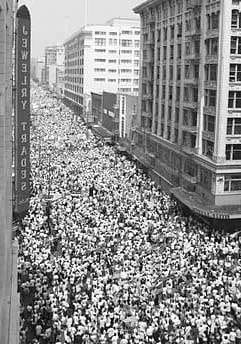
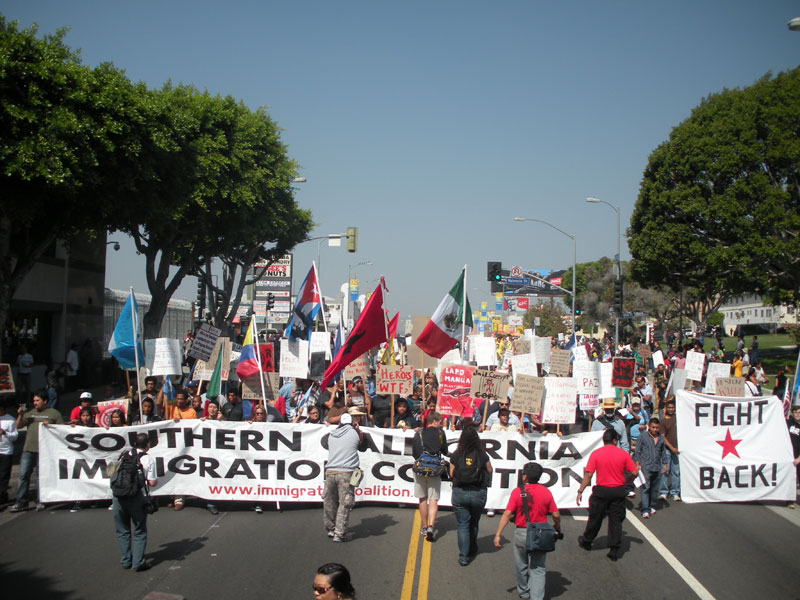
In the past year, public employees around the country have rallied to hold on to their collective bargaining, workers rights and pensions. May Day protests this year will emphasize these issues and will be especially significant for immigrant rights in California that directly effect certain communities. On May Day in 2006, hundreds of thousands took to the streets of San Jose marking one of the largest demonstrations in California history.
Guest – Celina Benitez, director of the Committee In Solidarity With the People of El Salvador, Celina is also with the Southern California Immigration Coalition and produces radio for Suplemento Comunitario on sister station KPFK in Los Angeles.
——————————————————-