Afghanistan War, Civil Liberties, Criminalizing Dissent, Human Rights, Iraq War, Prison Industry, Supreme Court, Surveillance, Targeting Muslims, Torture, Truth to Power, War Resister
Podcast: Play in new window | Download
Updates:
————
39 Ways To Limit Free Speech
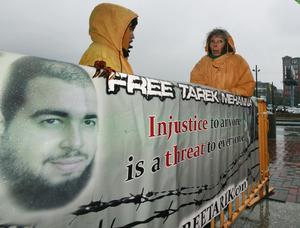
39 Ways To Limit Free Speech is the title Law Professor David Cole’s recent article. Earlier this month, a 29-year old citizen from Sudbury, Massachusetts named Tarek Mehanna was sentenced to seventeen and a half years in prison for translating a document. The text he translated from Arabic is “39 Ways to Serve and Participate in Jihad” and its all over the internet, you can read it says David Cole, but don’t try to translate it. One issue in the government’s prosecution of this case is the use of the decision from the Brandenburg v. Ohio case in which the Supreme Court established that standard in ruling that the First Amendment protected a Ku Klux Klansman who made a speech to a Klan gathering advocating “revengeance” against blacks and “Jews.”
Professor David Cole:
- He was accused of providing material support to al-Qaeda by translating various documents and videos from Arabic into English. There’s no allegations that Mehanna ever met with or even talked to a member of al-Qaeda. There are no allegations that the translations were delivered to or provided to al-Qaeda which was the designated group.
- The government argued that because he translated these documents and put them up on the web and hoped to encourage people to support jihad and support al-Qaeda, that’s enough to constitute material support.
- Here’s an instant in which the government is prosecuting pure speech but no showing that the speech was connected to illegal conduct, no showing that it was intended to produce eminent lawless action, which the Supreme Court said is required to produce under Brandenburg.
- It’s enough that he put it up on the web and wanted to support al-Qaeda.
- If that’s a crime what about the New York Times when it does a report on one of the many messages Osama Bin Laden put after 9-11?
- I represented the Humanitarian Law Project in the case that went to the Supreme Court in 2010, in which the HLP was in engaging in advocacy of human rights and peace, clearly non-violent, non-criminal conduct.
- But because they wanted to do it to and with the Kurds in Turkey and particularly the political representatives of the Kurds in Turkey which is the Kurdistan Workers Party (designated as a terrorist organization) the government argued that it was a crime to teach the KWP to bring human rights claims in Geneva and work with them in peace overtures to the Turkish Government.
- The Supreme Court upheld that, but doesn’t apply to independent advocacy. (until now)
- Now if you wanted your speech to support terrorist organizations, even if you did it independently of that organization, even if you never met or talked to anyone in that organization, we can make it a crime.
- Very much about declaring a “new front” in the war on terror and the front is going after internet propaganda.
- To me it recalls the kind of aiding the enemy prosecutions we saw in World War 1.
- We as citizens need to be active in monitoring and pushing back against this material support statute.
Guest – Professor David Cole teaches constitutional law, national security, and criminal justice at Georgetown University Law Center. He is also a volunteer attorney for the Center for Constitutional Rights, the legal affairs correspondent for The Nation, a regular contributor to the New York Review of Books, and a commentator on National Public Radio’s All Things Considered. He has been published widely in law journals and the popular press, including the Yale Law Journal, California Law Review, Stanford Law Review, New York Times, Washington Post, Wall Street Journal, and Los Angeles Times.
——————-

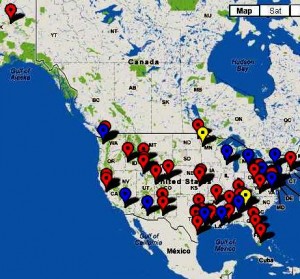
FAA Releases Lists of Drone Certificates—Many Questions Left Unanswered
Earlier this year we discussed the partnership with Cornell University and Technion-Israel Institute of Technology. The two institutions are working together to build a campus in New York City. Technion is involved with developing robotic weapons systems, which include aerial drones, and unmanned combat vehicle technology. There are many more universities involved with drone technology. Through a series of Freedom of Information requests by the Electronic Frontier Foundation, the FAA has been forced to reveal approximately 63 active drone sites. These sites are located in 20 states and their owners include military and universities. Universities include Cornell, (which we just mentioned) the University of Colorado, Georgia Tech, Eastern Gateway Community College and many more.
Attorney Jennifer Lynch:
- We filed a FOIA request with the FAA last April asking for copies of all the certificates of authorization and the special air-worthiness certificates that the FAA issues to anybody to wants to fly a drone in the US.
- We asked for these lists which are called COAs, or Certificates of Authorization. The COAs apply to public entities like state and local law enforcement, universities, the federal government.
- We got two lists from the FAA and the FAA says these cover all of the entities that applied for an authorization to fly a drone in United States.
- They’re very interesting, the COA list includes some unsurprising entities like DARPA, DHS, Customs and Border Protection, the FBI, various branches of the military. We already knew those entities were flying drones.
- What was more surprising was the number of universities and colleges on the list.
- Universities that have an aerospace engineering program they may be seeking authorization so the students can learn about and design drones.
- The Electronic Frontier Foundation is a civil liberties non-profit, we focus on civil liberties and new technology, and we’re concerned about surveillance equipment used by the government.
- Drones are a duel use technology, they can be used for good or for bad.
- They can see inside buildings, survey an area at night with heat sensors, they also have the ability to carry communications intercept tools. You could swap out various payloads on a drone.
- Then of course these drones can carry weapons.
- You can build your own drone, DIYDrones.
- We don’t know too much about what’s going on now. The reason the EFF file the FOIA request in the first place is that we just don’t know how agencies are using these drones.
- What we found is that a lot of the police forces that have drones are required to fly them under 600 feet. If its something that flying under 600 feet you’re going to be able to see that.
- Congress was getting a lot of pressure, and the FAA was getting a lot of pressure from state and local law enforcement, the military and the federal government to authorize more drones to be used in the United States.
- We’ve heard from the Congressional Research Service that 1 in 3 warplanes right now is a drone.
- The wars are going to end and the military is going to want to something with these drones.
Guest – Jennifer Lynch, staff attorney with the Electronic Frontier Foundation and works on open government, transparency and privacy issues as part of EFF’s FOIA Litigation for Accountable Government (FLAG) Project. In addition to government transparency, Jennifer has written and spoken frequently on government surveillance programs, intelligence community misconduct, and biometrics collection. Prior to joining EFF, Jennifer was the Clinical Teaching Fellow with the Samuelson Law, Technology & Public Policy Clinic at UC Berkeley School of Law. At the Samuelson Clinic, Jennifer specialized in privacy and intellectual property issues, including investigations on social media, privacy and the smart electrical grid, digital books, and open source regimes for biotech. Before the Clinic, Jennifer practiced with Bingham McCutchen in San Francisco and clerked for Judge A. Howard Matz in the Central District of California. She earned both her undergraduate and law degrees from UC Berkeley.
—————————–
Afghanistan War, Civil Liberties, Criminalizing Dissent, FBI Intrusion, Human Rights, Prison Industry, Supreme Court, Surveillance, Targeting Muslims
Podcast: Play in new window | Download
Updates:
——
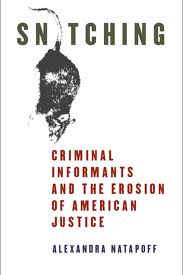
Snitching: Criminal Informants and the Erosion of American Justice
The FBI now spends more than 3 billion dollars a year on counter-terrorism, the bureau maintains a team of 15 thousand spies in a nationwide network of informants. Criminal informants or snitches are part of a criminal system most people know little about. Many of these informants are tasked with infiltrating Muslims communities in the United States. We’ve discussed in the past, the expanded FBI guidelines plus the broad over reaching powers and underhanded tactics the FBI use when targeting Mosques and Muslim Americans.
We talk today with Professor of Law and author Alexandra Natapoff, about her book Snitching: Criminal Informants and the Erosion of American Justice. Her book catalogues the downside in the use of snitches on social structure and democracy and suggests ways to make the use of informants acceptable within the criminal justice system.
Professor Alexandra Natapoff:
- Snitching is such a massive part of our criminal justice system even though the public rarely gets a good look at it.
- It’s an under the radar aspect of the way our criminal justice system handles investigations, the way it handles cases, the way it shapes our case law.
- It’s such a powerful deal, a deal that exerts a huge amount of influence and plea bargaining.
- The reality is that this is a deeply under-regulated arena. The handler is the law enforcement official who creates and uses an informant.
- It could be a police officer talking to a street corner addict cutting a deal right then and there.
- It could be an FBI agent who has an established documented supervised relationship with a long term criminal informant.
- Somebody may be suspected of a crime or even just of interest to the government. People who have mild brushes with the criminal system can end up through this mechanism of criminal informing entering into a world in which really anything can happen to them.
- Argument: Either you let us use informants in an unaccountable, invisible, secretive, undocumented way or we can’t run the criminal system at all.
- We permit the barter of crime under the radar, in a way that is unfair to other defendants and other suspects. We produce unreliable information through the use of informants without regulation.
- My contention is that we shouldn’t ban this practice, but run it as any other public policy with transparency and accountability and some rules.
- My favorite criminal informant of recent is Jack Abramoff.
- Usually we don’t learn when informants have been mistreated because often they have very little power.
- The courts have said, informants proceed at their own risk.
- This is a deal that they can enter if they want to risk their life.
- The law does not owe criminal informants much protection. Our criminal system is built on the principle that the defendant should not have to face the government unaided by council.
- That’s a principle that should be extended to criminal informants.
- The state of Florida passed a ground breaking law, called Rachel’s Law.
- What sort of deal should we permit the government to cut with informants?
- The use of criminal informants is a massive source of error in capitol cases.
- States across the country are starting to impose greater restrictions on the use of criminal informants, in particular jailhouse snitches as a way to improving reliability of the information.
- Confidential Informant Accountability Act – Federal Legislative Proposal
- One of the things the government doesn’t keep track of is how many crimes are committed by criminal informants in the pursuit of investigating new cases.
Guest – Alexandra Napatoff, professor of Law at Loyola Law School, Los Angeles, and a member of the American Law Institute. I have also been a federal public defender, a community organizer, and the recipient of an Open Society Institute Community Fellowship.
————–
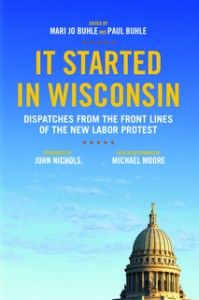
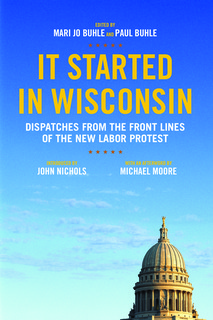
It Started in Wisconsin: Dispatches from the Front Lines of the New Labor Protest
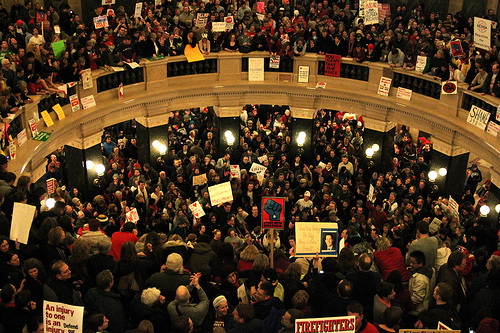
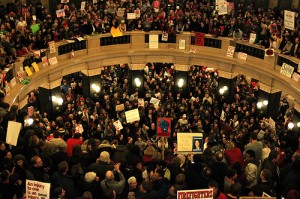
Remember the multi-day occupation of the Wisconsin State Capitol by tens of thousands of people. Massive demonstrations erupted when the Republican controlled state government proposed to dismantle public employee bargaining rights as Wisconsin trade unions already conceded to wage and benefit cuts. These protests became the largest labor demonstrations in modern American history. Protesters from the Middle East sent pizzas and solidarity as thousands occupied Madison’s Capitol building.
We’re joined today by Paul Buhle, historian, and editor of the book It Started in Wisconsin: Dispatches from the Front Lines of the New Labor Protest. A powerful collecton of eyewitness reports and essays by striking teachers, students, and many others. This book exposes the corporate agenda that imposed anti-union legislation across the country and highlights the power of the people coming together in protest.
Paul Buhle:
- Brecht Forum, Friday night – April 27,2012
- The “it” is very large, perhaps vaporous and very promising. We were thinking of occupy in the sense that Madisonians, labor supporters from as far away as California, occupied the State Capitol, the rotunda in February of last year and remained there for some weeks.
- The “it” may mean occupy or the emergence of a new kind of movement.
- We should have seen it coming but we were deluded or Walker, when running for election never mentioned these promises or threats at all and made some statements about getting along with unions when he was a county executive.
- The response was just as stunning as the shock. A mass outpouring that really began with students in Stoten, an old Norwegian community about half an hour south of Madison – working up their own protests with facebook to support their teachers.
- And then, the following weeks, a massive outpouring of people around the Capitol and then occupying the Capitol.
- Things went on and on until there were crowds of 150 thousand in a town of Madison that has normally only 250 thousand residents.
- Pacifica has been in the business from the late 1940s in the Bay area, in providing the documentation that other commercial radio stations rarely provide.
- I would say these protests in Wisconsin are probably the most recorded mass movement of the Left in recent history.
- Among the most important developments, relative to the stories in the history of labor, the unions of public workers are substantially, if not overwhelmingly women.
- So, the shape of the movement, perhaps its cultural character, perhaps the infernal degree of politeness that outsiders frequently complained about, the chant – let us in, let us in please.
- What it demonstrated was that women in the labor movement were ferociously militant.
- My assessment was that the labor movement was in no way prepared to stage a general strike.
- Nor that a massive walk out of public workers mean that the wheels of industry would stop what few wheels are left.
- The sense that public workers wish to put pressure on the political system.
- Contrary to our expectations of the Democratic Party in general, assorted leaders, were quite wonderful in their constituencies and the things that they did, and how they related to the movements.
- As an editor and producer of radical comics, I’m always interested in new developments in the field, and its exciting there are young comic artists who are working in and around “occupy.”
Guest – Paul Buhle, senior lecturer at Brown University, a historian of American radicalism., a former member of Students for a Democratic Society and author of many books including images of American Radicalism. Also, Che, A Graphic Biography, and Isodore Duncan, a graphic biography by Sabrina Jones.
———–
May Day: Workers’ Rights and Immigrant Communities
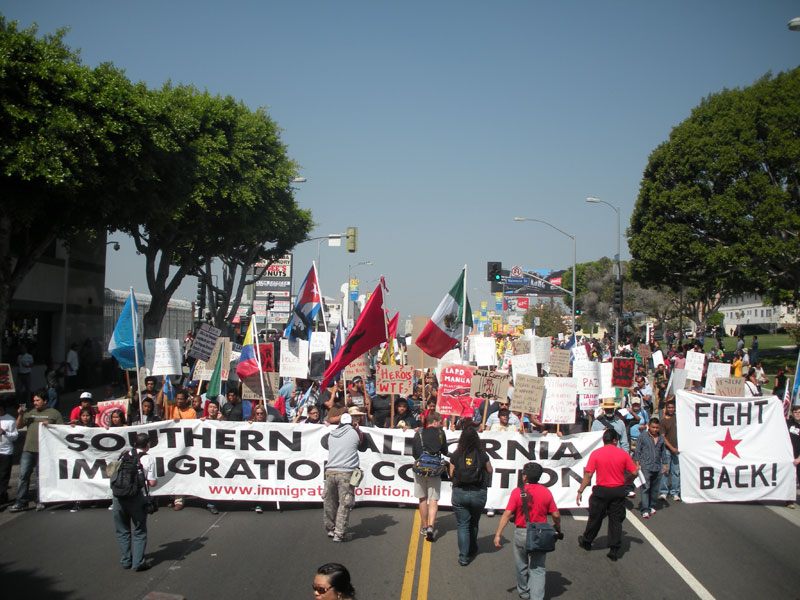
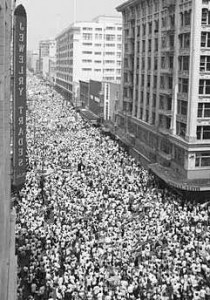
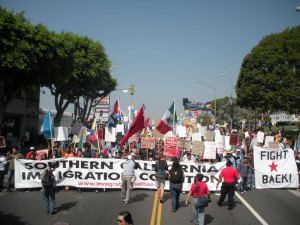
In the past year, public employees around the country have rallied to hold on to their collective bargaining, workers rights and pensions. May Day protests this year will emphasize these issues and will be especially significant for immigrant rights in California that directly effect certain communities. On May Day in 2006, hundreds of thousands took to the streets of San Jose marking one of the largest demonstrations in California history.
Guest – Celina Benitez, director of the Committee In Solidarity With the People of El Salvador, Celina is also with the Southern California Immigration Coalition and produces radio for Suplemento Comunitario on sister station KPFK in Los Angeles.
——————————————————-
Civil Liberties, Habeas Corpus, Human Rights, Surveillance, Targeting Muslims, Torture, Truth to Power
Podcast: Play in new window | Download
Updates:
——

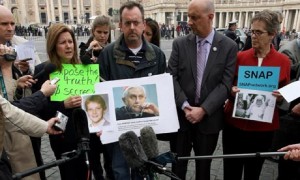
Church Puts Legal Pressure on Abuse Victims’ Group
Earlier last year, we reported on the Vatican revising its laws making it easier to discipline sex abuser priests. This month, lawyers for the Roman Catholic Church and priests accused of sexual abuse and pedophilia have used the courts to force the group SNAP Survivors Network of those Abused by Priests to disclose more than two decades of e-mails that could include correspondence with victims, lawyers, whistle-blowers, witnesses, the police, prosecutors and journalists. A Kansas City judge decided SNAP must comply with lawyers because it had relevant information regarding 2 cases in Missouri.
Attorney Barbara Blaine:
- As you know we are a not for profit, self help support group run by and for people who have been victims of clergy sexual abuse. We have been providing support information to each other since 1988.
- The church officials have taken an unprecedented move and they have subpoenaed records from our SNAP leaders.
- We are an international group, we have groups forming in other countries as well.
- Here in the United States, we have support groups meeting in about 70 cities. In these support groups people share their feelings and tidbits of information on how to cope with the repercussions of sexual violence.
- There are subpoenas from 2 different cities, 2 different cases, both from the state of Missouri.
- In Kansas City, what’s happen in the past year, is a lot of sex abuse by priests has been uncovered, exposed and brought to light. In the process, the Bishop himself was indicted for failure to protect children.
- In one particular civil case, the church attorneys have subpoenaed the records of our national director and they are looking for very extreme information.
- These subpoenas are not tailored to be helpful to get information for the case, SNAP is not a party to either of these cases. They ask for records with no date, from the very beginning of SNAP, from 1988.
- They’re asking for all the information in our emails, in our files, and they’re looking for any information that names any priest from the diocese of Kansas City, St Joseph.
- We do believe that the victims who have spoken out in Kansas City, have had an impact. I think its empowered other victims to come forward. I think they’re trying to shut down SNAP in Kansas City.
- The biggest concern we have now is the fear that this is spreading. In many ways, the intended effect has already taken place.
- I started SNAP, I did so, after I was raped and sexually violated by a priest in my parish growing up.
- Stop The Legal Bullying Petition.
Guest – Attorney Barbara Blaine, founder of SNAP the nation’s oldest and largest self-help organization for victims of clergy sexual abuse 10 thousand survivors.
——–
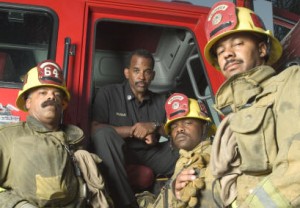
Court Rules FDNY Liable for Up to $128 Million in Back Pay to Black and Latino Applicants
Last week, a US District judge awarded plaintiffs back pay in a class action lawsuit that found the New York Fire Department to have racially discriminatory hiring practices. US District Judge Nicholas Garaufis also ruled that the City of New York is liable for nearly 129 million in lost wages. This amount will be distributed to Black and Latino applicants, 82 and 42 million dollars respectively. The judge also ordered the FDNY to hire 186 Black firefighters and 107 Latino firefighters.
Attorney Darius Charney:
- The Vulcan Society which is the Black fraternal organization for New York City brought a lawsuit in the early 1970s challenging the hiring practices of the department as violative of the equal protection clause of the Constitution, saying that they racially discriminated.
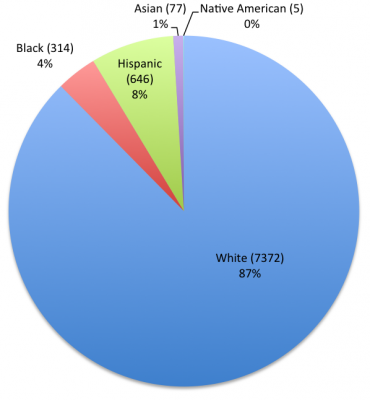
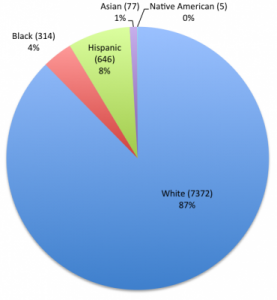
- Blacks and Latinos, its over half of the city’s population today. If you look at the fire department today, its roughly if you combine Blacks and Latinos about 10 percent.
- A federal judge in New York found that the hiring practices were discriminatory and violated the 14th amendment, the 2nd Circuit Court of Appeals upheld that decision and the Fire Dept was ordered to make some changes in 1970s.
- As of 2002 when we actually formerly brought this case, the department was 3 percent Black, 5 percent Latino, which is not much different than it was in 1970. The city was asked to work out a settlement, the city refused for 2 years.
- So, the EEOC referred the case to the Department of Justice, Civil Rights Division. This was during the Bush Administration and as you know the Civil Rights Division didn’t do much.
- We’ve proven discrimination about 3 times over now to the judge. Last year we had a big federal trial in Brooklyn on what relief the court should order because of the discrimination that was found.
- If you try to obstruct a federal court order, that could lead to some serious penalties.
- Our clients, the Vulcans first met with Mayor Bloomberg when first came to office in 2002 about this problem.
- We felt it was a purposeful and intentional effort by the city to exclude people of color.
- There have been incidence, we think retaliatory incidence we think against Vulcan members for there efforts in this case.
- The FDNY has really dropped the ball in responding to these acts of discrimination.
- The court has to oversee a lot of different aspects to this case. There’s a new test being developed, they’re going to start administering this week. There’s now the piece about the compensation for the plaintiffs.
- Federal judges can’t closely supervise the case so they appoint these monitors to simply act in the role of the judge and oversee each of these aspects of the case.
- We hope that the city will at some point stop fighting because all the things the judge has ordered for changing, I think benefits the fire department.
- A group of women sued in the early 1980s alleging sex discrimination and again they pointed to the test and other aspects of the hiring process.
- They were victorious and the court ordered them to hire 50 women, which they did do.
Guest – Attorney Darius Charney, senior staff attorney in the Racial Justice/Government Misconduct Docket. He is currently lead counsel on Floyd v. City of New York, a federal civil rights class action lawsuit challenging the New York Police Department’s unconstitutional and racially discriminatory stop-and-frisk practices, and Vulcan Society Inc. v. the City of New York, a Title VII class action lawsuit on behalf of African-American applicants to the New York City Fire Department which challenges the racially discriminatory hiring practices of the FDNY.
—————————-
Civil Liberties, Habeas Corpus, Human Rights, Supreme Court, Surveillance, Targeting Muslims, Truth to Power
Podcast: Play in new window | Download
Updates:
——–
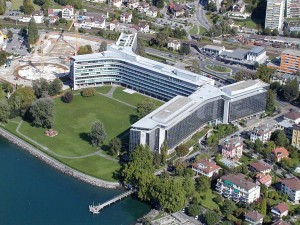
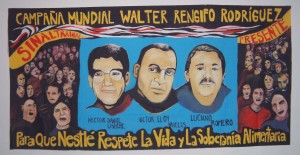
Nestlé Test Case: Charges filed on murder of Colombian Trade Unionist
In a previous show we discussed the lawsuit Kiobel v. Royal Dutch Petroleum, a case pushing to hold corporations accountable for human rights violations. We talk today about a similar case. Recently a Columbian Trade Union filed charges against the Swiss company Nestle and members of its senior management. They are accused of failing to take precautionary measures for the 2005 murder of Luciano Romero. Romero was murdered by paramilitaries in Valledupar, a north eastern part of Columbia. His body was found with 50 stab wounds. Romero worked for a the Columbian Nestle subsidiary company Cicolac. Cicolac is accused of being negligent in failing to prevent this crime.
Attorney Wolfgang Kaleck:
- We are presenting cases against European Transnationals who are involved in human rights violations.
- One of our targets is Nestle’s, Switzerland whom we try to hold accountable for an assassination of a Columbian Trade Unionist Luciano Romero in 2005.
- The Nestle subsidiary was very close to the paramilitary.
- Columbia has a record of killing over 2000 trade unionists over the last 20 years.
- The solidarity movement here in Switzerland was very active of the defense of the threatened trade unionists. They were threatened over years, some of them had to go into exile, some of them moved within Columbia.
- What we accused them of is negligent killing through omission.
- If you go into a conflict region and if you link with one of the conflict parties, you can be held accountable.
- The companies have the duty of due diligence. You have the task to take a human rights risk assessment. Then you have as a mother company, you have a role to play for your subsidiaries.
- That’s why we presented the case here in Switzerland, we’re not only talking about the murder in 2005, we’re also talking about future responsibilities of transnational companies.
- That’s why the whole complaint here, got huge media coverage.
- The managers who we are suing live in Switzerland, and are Swiss citizens.
- We want the prosecutor in Switzerland to undertake an investigation.
- In Columbia there is no real possibility to sue a transnational company, but this is why the Swiss judges and prosecutors have to act right now.
- The spectacle in the German and Swiss media helped us put the problems on the table.
- Havard Professor was appointed by the UN to elaborate principles to regulate the behavior of transnational companies and human rights. The principles are very general.
- The prosecutor got quite a difficult criminal complaint. He has to decide in the next weeks or months to open this criminal procedure.
- Nestle did the other way around, because they didn’t like the trade unionists. They were an obstacle.
Guest – Attorney Wolfgang Kaleck, General Secretary and co-founder of ECCHR, specializing in criminal law, he has established an international reputation as an advocate for human rights. He made a name for himself when he filed suit against the U.S. Defense Minister Donald Rumsfeld for war crimes and torture committed at Abu Ghraib and Guantanamo Bay.
———
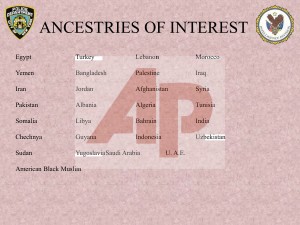
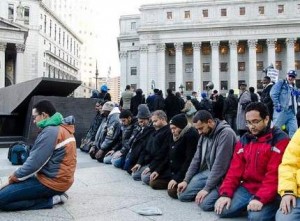
Exposed: NYPD Surveillance of Muslims Spill Over Into Other States, Africa and Europe
We’ve covered a wide range of stories involving the FBI spying on Muslim students and using undercover agents at mosques. Last month, news of this spying had broke into the mainstream news. The New York Police Department’s ongoing surveillance operations of Muslims across the Northeast has exposed a broad spectrum of civil rights violations. Documents recently obtained by the Associated Press reveal the NYPD built databases showing where Muslims live, buy food, and where they watch sports. The NYPD municipal spy operations spilled out of New York City and reached into New Jersey, Long Island and to colleges across the Northeast.
Cyrus McGoldrick:
- This program amounts to a comprehensive and warrant-less and invasive surveillance program of all Muslim life.
- Not just here in New York City but now we have reports of cops going down to UPenn in Philadelphia.
- Up to Yale in New Haven, Albany and Buffalo. It’s even worse than that. NYPD officers out in North Africa and Europe.
- This is one of the worse things I’ve seen is people being scared out of their public activities. I think there’s a fear of speaking publicly about things.
- We’re hearing reports of a network of up to 15 thousand informants feeding information to the NYPD.
- One of the earliest documents that came out was a powerpoint presentation from the NYPD called the demographics unit. The third or fourth slide in this document is titled “ancestries of interest.”
- Anyone who is trying to make the argument, “they’re trying to protect us” they need to see this slide.
- It’s human mapping, community mapping, modeled off of how Israelis operate in the West Bank.
- It’s essentially Muslim until proven innocent.
- The documents are there, they’re online, we’ve seen them for ourselves. I would love to put Mayor Bloomberg in front of the power point presentation of the demographics unit and let him justify that.
- They’ll trot out pictures of terrorists and say this is what we’re keeping you safe from .
- You’re really in danger of honey bees than from a terrorist attack
- And don’t let the NYPD tell you that that’s because they’re spying on Muslim students from Philadelphia to New Haven because that’s not the case.
- There’s maybe two cases where the FBI was not the primary planner of that attack.
- Within 200 miles of New York City, the NYPD are sending people just a shocking number of informants and sometimes undercover officers culling political speech, political activity, hearing what people are talking about.
- So they’re watching everything they can, and anyone who is expressing some anger.
- Watching for raising a dissenting voice, that’s what the rakers were.
- Mosque crawlers played a similar role.
- Rakers is a more general term for the invasion, infiltration.
- We’re lucky that this got discovered.
- The involvement of the CIA is very interesting. David Cohen from the CIA who came to the NYPD after 9/11. Sometimes they refer to him as a former CIA agent. I’m not sure that’s a type of club you can leave.
- There are other CIA agents that were on CIA payroll but were posted in the NYPD.
- Later, the CIA actually removed the officers that were in the NYPD because of a lack of supervision, they called it.
- When you see these people lining up to defend this, you have to wonder why.
- They’re using the fear of us to get to your rights.
- It’s really amazing the assumptions of power that the government has justified with the war on terror.
Guest – Cyrus McGoldrick, Civil Rights Manager with the Council on American-Islamic Relations-New York
—————————–
Civil Liberties, Criminalizing Dissent, Guantanamo, Habeas Corpus, Human Rights, Surveillance, Targeting Muslims, War Resister
Podcast: Play in new window | Download
Updates:
——-
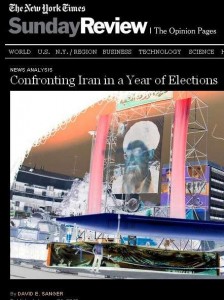

Weapons of Mass Destruction Part 2: Iran
Similar to accusing the Iraqi government for stockpiling weapons of mass destruction as a pretext for a military invasion, Israeli and US intelligence assert that Iran is bent on becoming a nuclear weapons state by enriching uranium. This narrative as many listeners know has been going for many years In the New York Times article titled Confronting Iran In A Year of Elections, New York Time’s chief Washington correspondent David Sanger platforms his article on the assumption there is evidence Iran is making nuclear weapons. We talk today with Professor Bill Beeman author of The “Great Satan” vs. the “Mad Mullahs”: How the United States and Iran Demonize Each Other. Beeman has criticized the New York Times and other media for falsely claiming there is evidence Iran is developing nuclear weapons. He also points out that Iran has a right to enrich uranium for peaceful purposes and that their facilities are monitored by the International Atomic Energy Agency.
Professor William Beeman:
- First of all its very important to understand there is no evidence anywhere that Iran has a nuclear weapons program. Every report from the IAEA has reaffirmed that Iran has not diverted any nuclear material for military purposes, including the last report in November 2011.
- The news media, especially the New York Times, I must tell you has distorted the IAEA report in order to make it seem as if Iran is building nuclear weapons.
- We have no evidence to the contrary.
- The New York Times article written by an Israeli journalist not only has actually attracted hundreds and hundreds of objections. Because of its war mongering tone and because it contains a lot of inaccuracies.
- Clapper claims Iran is most likely to attack the United States based on the incident that took place a few months ago.
- There are some countries like Japan that have said outright that they intend to develop the capacity to construct nuclear weapons. Iran has said it doesn’t intend to do this.
- The United States is not coming after Japan. . or Brazil which has issued a similar statement or any of the 20 countries that don’t have weapons but are now enriching uranium.
- When Colin Powell went before the United Nations saying Iraq had weapons of mass destruction I wrote a column saying its simply not true.
- That got me on the Bill O’Reilly show where I had a big arguement with him about this.
- I said simply show us the actual proof.
- My feeling at the time was that Colin Powell had been badly misused by the Bush administration in order to sell a false picture of what was actually going on in Iraq.
- Iran was given uranium many years ago during the time of the Shah to use in a medical reactor to develop isotopes for the treatment of cancer.
- Every scrap of uranium that they’ve been working with is under inspection.
- The IAEA is watching the process as it goes on every day.
- They say if Iran wants to wipe Israel off the map they’re probably going to use nuclear weapons.
- The joke is of course we knew Iran was enriching uranium, because we started the enriching program 40 years ago.
- The idea that it was carried out in secret, quite frankly revealed the extraordinary ignorance of the Bush Administration.
- They have a continual drum beat to attack Iran. The aim is not to stop Iran’s nuclear program because Iran’s nuclear program is anemic. The aim is regime change.
Guest – Professor William O. Beeman, Professor and Chair of Anthropology and specialist in Middle East Studies at the University of Minnesota, Minneapolis-St. Paul Minnesota, formerly of Brown University. It includes current publications on Middle Eastern affairs, especially Iran, Iraq, Afghanistan and the Persian Gulf region; anthropology; linguistics; performance; opera; things Japanese and Central Asian.
———————————————–
Civil Liberties, Criminalizing Dissent, Guantanamo, Habeas Corpus, Human Rights, Political Prisoner, Surveillance, Targeting Muslims, Torture, Truth to Power
Podcast: Play in new window | Download
Updates:
- Michael Smith visits political prisoner David Gilbert and discusses David’s book Love and Struggle.
- Genocide Bill Angers Turks – It Was Genocide Radio Documentary by Heidi Boghosian
- Supreme Court: GPS Tracking Device Illegal
- Lizzy Ratner Co-hosts Beyond the Pale on WBAI
—

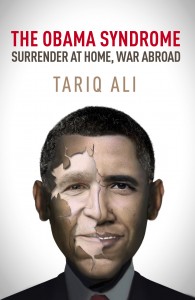
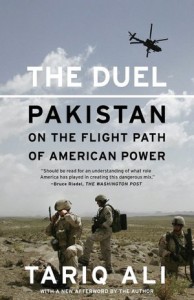
Tariq Ali: Turning Points in the History of Imperialism
Today we’re joined by internationally renowned writer and activist Tariq Ali. Tariq is visiting from London where he is editor of the New Left Review.
A writer and filmmaker, Tariq has written more than 2 dozen books on world history and politics, including The Duel: Pakistan on the Flight Path of American Power, The Obama Syndrome and On History. We talk specifically about several turning points in global history, the Occupy movement and US elections. .
Tariq Ali:
- The think the first World War was crucial but it wasn’t the war itself it was the consequences of that war. Here you had huge empires.
- The Russian revolution challenged capitalism frontally and its leaders said we want Europe to be with us, on our own we can’t do it. We need the Germans, we need a German revolution. That frightened the capitalist class globally.
- Woodrow Wilson, decided that the time had come to intervene. 22 countries came to intervene.
- This intervention made it impossible for the early infant Soviet Union to achieve what it wanted to achieve.
- The Second World War was an effort by the German ruling class to get its share of the world market in countries.
- The US helped rebuild Japan and Germany. They helped build France and Britain by the Marshal Plan and that has never been done by a big imperial power before.
- They managed to get the Soviet Union to implode by having an arms race. The Russians fell into their trap and decided to go for the arms race, had they not history might have been different.
- I hope the Chinese do not fall into the same trap, threatened by Obama’s puny little bases in Australia.
- People, early settlers in the United States got land totally free and they took it and that created the belief in the American psyche of private property.
- The Soviet Union imploded because the people lost faith in the system.
- The entire elite in the United States and Western Europe is wedded to the Washington consensus that emerged after the collapse of communism. The center piece of this consensus was a system which believed in market forces. I refer to it as market fundamentalism.
- We are confronting the extremism of the center and the result of this is no alternatives exist within mainstream politics. The effect that this is having is hollowing out democracy itself.
- Occupy: What we need is for these movements to call an assembly nationally and discuss a charter of demands for progressive America which need only be ten demands but something around which people can rally. I think its a movement that should be created bearing what the needs of ordinary people are.
- In order to understand the laws of motion of capital, you have to read Marx. It’s true capitalism has become much much more complex. Zombie capitalism, or fictitious capitalism, where money is used to make more money.
- It’s not money that’s creating productive goods.
- I had written a book on South American because I got very engaged in the Venezuela-Boliverian struggle and got to know Chavez very well.
- If Americans had access to Cuban medicine, the pharmaceutical companies would collapse, they would never let it happen.
Guest – Tariq Ali, writer, journalist and film-maker, born in Lahore and educated at Oxford University. He writes regularly for a range of publications including The Guardian and The London Review of Books. He has written more than a dozen books including non-fiction as well as scripts for both stage and screen.
———————————