CIA Sponsored Terror, Civil Liberties, Habeas Corpus, Human Rights, Surveillance, Targeting Muslims, Torture
Podcast: Play in new window | Download
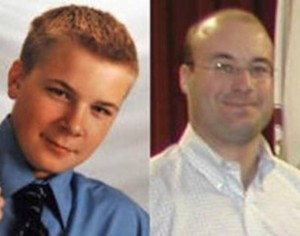
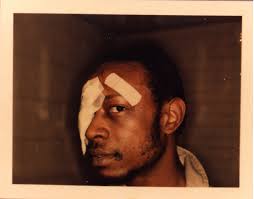
Chicago Torture Update And Another Chicago Cover Up
–
We follow up on the Chicago torture cases and the aftermath. Listeners may recall the sentencing of former Chicago Police Commander Jon Burge in 2011 which helped created a model within Chicago criminal courts in seeking justice for crimes of torture. The Civil Rights Act was used to litigate the Chicago torture cases, specifically the Anti Klu Klux Klan Act and now, the People’s Law Office is working to get a statute passed making torture a federal crime. In our last interview with attorney Flint Taylor he questioned how the Chicago mayor Rahm Emanuel will handle the hundreds of ongoing torture cases of African American men. The type of torture that was involved include electric shock, bagging, beating and burning to get confession. The city continues to fund Burge’s defense paying private lawyers millions to date. Meanwhile, a recent unraveling of a murder cover up involving former Mayor Daley’s nephew makes headlines.
Attorney G. Flint Taylor:
- This is a scandal that’s gone on for 20 years now. Burge came back from Vietnam and he was quickly made a detective on the South side of Chicago in the early 70s. He started to use electric shock, bagging people to suffocate them, mock executions – all the torture techniques you hear about in third world and that kind of thing.
- He tortured over the next 20 years, we now document more than 120 African American men.
- Those men, many were sent to the penitentiary, some to death row. Many of them gave false confessions, all of them confessed under the torture techniques and during this 20 year period, Burge was promoted from detective, to sergeant, to lieutenant, to commander.
- During this period of the time the prosecutor was Richard M Daley who went on to be mayor of course. This evidence was presented to him early on by the superintendent of police and they decided to cover it all up rather than pursue Burge.
- Because of that, the torture went on for another 10-15 years.
- Burge was fired in the 90s but was never prosecuted until the critical mass of evidence reached a peak in the mid-2000s. Burge was convicted and sent to a penitentiary where he’s now serving a four and half year sentence with Bernie Madoff down in Butner.
- The city of Chicago has paid over 20 million dollars to defend Burge and his co-horts.
- Another 20 million has gone out to pensions. Burge now still gets his pension down in the penitentiary. There’s another 65 million that paid out to the men who were fortunate enough to have lawsuits who were wrongfully convicted by Burge and his associates.
- You add it all up and you get 125 million dollars in taxpayer money that’s been spent in this scandal.
- There are still men behind bars after all these years, based on tortured confessions.
- We were appointed recently a special master to find men in the penitentiary who haven’t had the ability to have a hearing to have their case re-litigated based on the torture evidence.
- There’s an ongoing battle to try and take Burge’s pension away.
- David Koschman was a 21 year old college student from the suburbs who had the misfortune of being on Rush street in Chicago late at night, and getting into a verbal altercation with a group of thugs that included the mayor’s nephew.
- A man by the name of Venecko. Venecko was 6″3′, 230lbs and he punched David square in the face. Koschman went down, hit his head against the curb, went into a coma and died 12 days later.
- The mayor’s nephew ran from the scene so they didn’t know who it was. Somehow through back channels they let the highest officials in the police department know that it was the mayor’s nephew was involved and so a massive cover up went on in the police department and at the state’s attorneys office – to make Koschman 5″5′ 120lbs into the aggressor.
Guest – G. Flint Taylor, a graduate of Brown University and Northwestern Law School, is a founding partner of the People’s Law Office in Chicago, an office which has been dedicated to litigating civil rights, police violence, government misconduct, and death penalty cases for more than 40 years.
——
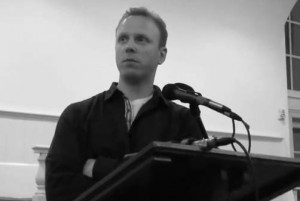
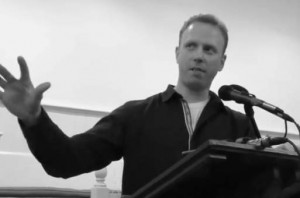
Goliath: Life and Loathing In Greater Israel: Max Blumenthal Speech In Brooklyn
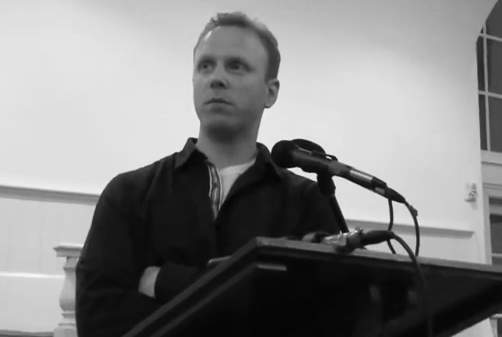
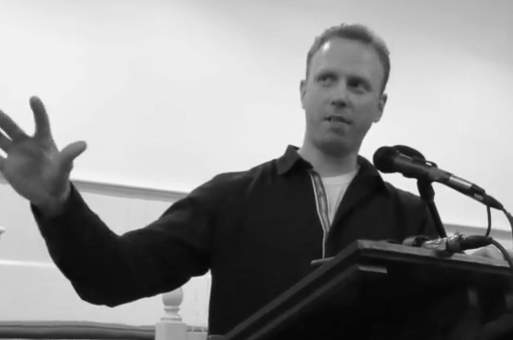
We hear part of speech by award winning journalist and author Max Blumenthal delivered at a Brooklyn For Peace meeting. Operation Cast Lead in 2008, is a starting point in the book Goliath: Life and Loathing In Greater Israel where award winning journalist and author Max Blumenthal shows the reader how a right wing government in Israel rose to power. His book takes hard look at Israeli authoritarian politics through a cross section of interviews from the homes of Palestinian activists to the political leaders behind the organized assault against civil liberties.
Speaker – Max Blumenthal, an award-winning journalist and bestselling author whose articles and video documentaries have appeared in The New York Times, The Los Angeles Times, The Daily Beast, The Nation, The Guardian, The Independent Film Channel, The Huffington Post, Salon, Al Jazeera English and many other publications. He is a former Puffin Foundation Writing Fellow for The Nation Institute. His book, Republican Gomorrah: Inside The Movement That Shattered The Party, is a New York Times and Los Angeles Times bestseller.
——-
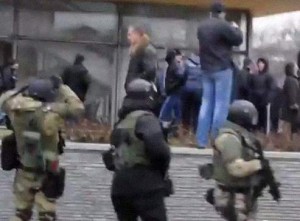
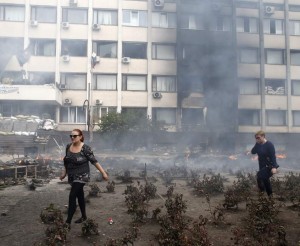
The Kiev Putsch: Rebel Workers Take Power in the East
In his recent article The Kiev Putsch: Rebel Workers Take Power In the East, returning guest Professor Jim Petras describes the immense complexity and shifting outcomes within the NATO, US and European violent seizure of the Ukraine. He asserts that the US-EU power grab in the Ukraine is part of a strategic goal to place neo-liberal political proxies in power in Moscow. In order to do this, one objective is to undermine Russia’s military capability. However, things have not gone according to plan. There’s growing opposition to the Ukraine power grab in the EU, and Russia. Professor Jim Petras asserts that the real struggle is not between the US and Russia, it’s between the NATO-imposed junta composed of neo-liberal oligarchs and fascists – that’s on one side, and on the other side is the industrial workers, their local militias plus democratic councils.
Professor James Petras:
- Ukraine had kind of an oligarchical electoral system where competing oligarchs competed in the electoral arena. One set of oligarchs was closer to the NATO powers and one set was closer to Russia, more or less pursuing a non-alignment policy.
- This came to a head recently. I believe in February.
- The opposition backed by NATO overthrew the government and a coup seized power and the U.S. under the Secretary of Foreign Affairs Victoria Newland appointed the president and the prime minister who then formed a coalition government with neo-fascists openly embracing the heritage of the Nazi collaborators.
- These people then tried to impose a different kind of policy, and different kind of orientation to the country essentially aligning it to NATO and trying to undercut any pluralism or diversity that existed up til then.
- They moved ahead and outlawed the pro-Russian speaking minority and that provoked people in the east who were long time critics of centralism and the imposition of policies from the west (Kiev).
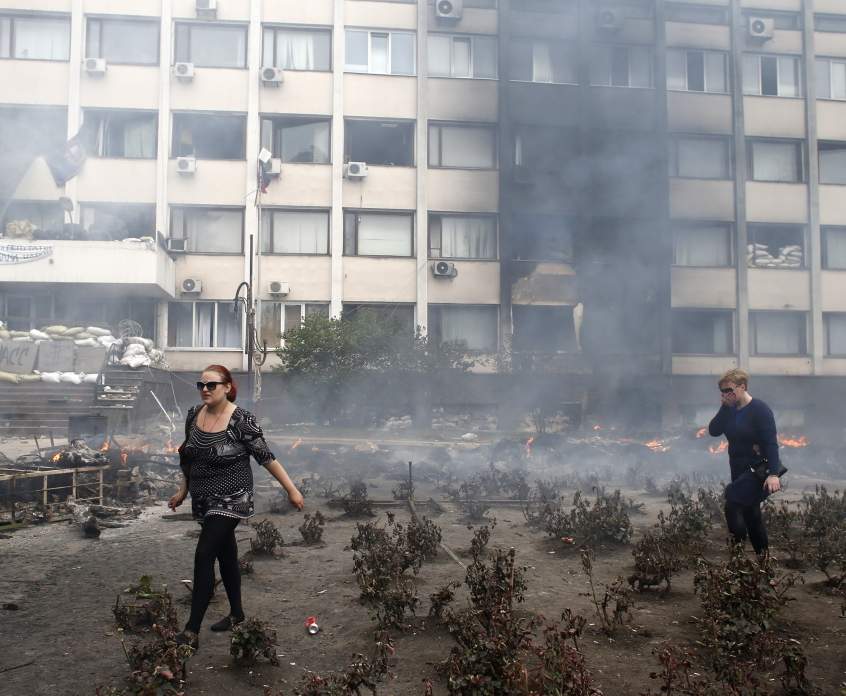
- The Kiev junta sent military groups out there to repress them, culminating with the neo-fascists going to Odessa and incinerating 40 people who were taking refuge in a trade union center.
- You have to realize the dynamic of the sectors in the east. There’s the steel, coal. The most productive sector of the country. They pay a disproportionate amount of taxes and get very little in return.
- So there is a regional hostility here, and the issue has nothing to do with being pro-Russia. It’s a question of people in the east opposing a military take over, a junta. They oppose a government appointed by foreign powers.
- They oppose the outlawing of bilingualism.
- The authoritarians in the east want to break with Russia. It has nothing to do with the so called transition government. The west’s account is absolutely bizarre.
- The cover up (in western press) of the massive incineration is comparable to Nazi press when Hitler was incinerating Jews, telling people they were just taking showers.
- The western press has lined up in the most . . I would compare it to the worst part of McCarthyism in Cold War. I would say 1950-51.
- The Kiev dictatorship can’t even count on its own troops. They send troops over there and they fraternize with their own people. So they have to send special forces and they recently got a big inflow of mercenaries from what used to be called Blackwater. They call themselves the Academi now.
- There were over 400 of them that were shipped in to the eastern part of the country to do the dirty work.
- I think this is an indication of how isolated this government is and how much the demands for democracy, maintaining industry and resisting the IMF, how much fear they have of the contagion, the democratic self determination agenda of the east resonates with the west.
- There’s no great wall of China separating the east and west when it comes to economic improvement and democratic representation.
- Essentially their idea is to turn Russia into a vassal state.
- The same thing with China, they’re encircling China with bases all over the Pacific, provoking conflict.
- They don’t want a powerful competitive economy that’s displacing them in Latin America and Asia.
- What happened to the peace movement that went into the Democratic Party to support Obama?
Guest – Professor James Petras, author of more than 62 books published in 29 languages, and over 600 articles in professional journals, including the American Sociological Review, British Journal of Sociology, Social Research, and Journal of Peasant Studies. He has published over 2000 articles in nonprofessional journals such as the New York Times, the Guardian, the Nation, Christian Science Monitor, Foreign Policy, New Left Review, Partisan Review, TempsModerne, Le Monde Diplomatique, and his commentary is widely carried on the internet.
———————————————————————————-

Please help support Law and Disorder, the show is now a sponsored project of Fractured Atlas, a non-profit arts service organization. Contributions for the charitable purposes of Law and Disorder must be made payable to Fractured Atlas only and are tax-deductible to the extent permitted by law.
Afghanistan War, CIA Sponsored Terror, Civil Liberties, Criminalizing Dissent, FBI Intrusion, Guantanamo, Habeas Corpus, Human Rights, Iraq War, NSA Spying, Political Prisoner, Surveillance, Targeting Muslims, Torture, War Resister
Podcast: Play in new window | Download
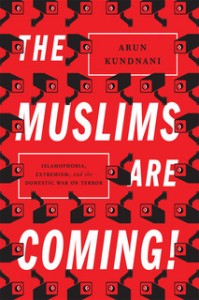
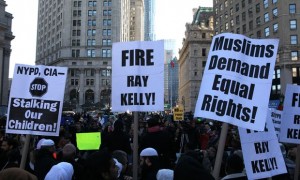
The Muslims Are Coming
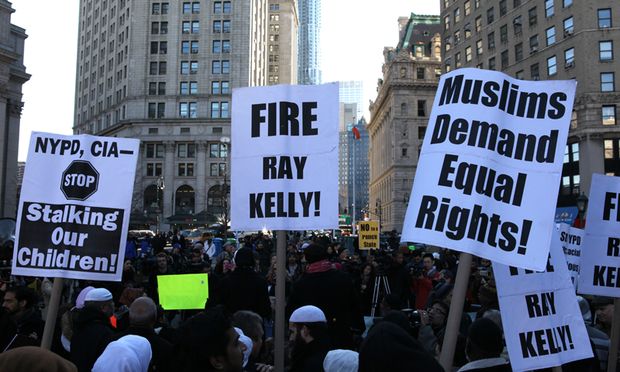
Since the so called war on terror, thousands of innocent Muslims have been entrapped, surveilled, and their communities infiltrated while spending untold resources in search for the radicalized terrorist. In Arun Kundnani’s recent book titled the Muslims Are Coming, he carefully looks at the ideologies and strategies of law enforcement used to create the domestic war on terror. He unveils the disturbing processes of radicalization theories and racial profiling followed by law enforcement.
Arun Kundnani:
- There wasn’t any reflection of what the political causes might be of 9/11 or the political context that might give rise to Al-Qaeda.
- That discussion was basically censored at least in the United States.
- The war on terror has basically failed.
- Radicalization is the chief lens that security officials in Western government lock up Muslim populations.
- The idea of radicalization is that there’s this kind of ideology out there that turns ordinary Muslims into terrorists.
- The FBI and the police department both have the same model of radicalization which they claim tells you the process that someone goes through from being an ordinary member of the public to becoming a terrorist.
- Within that there are various indicators such as behavior or things that people might say or believe that are supposed to be signs that someone is traveling on this path to becoming a terrorist.
- This provides the basis for the very aggressive practice of surveillance that we’ve seen from both of those law enforcement agencies.
- It enables them to have a frame of reference to intervene within Muslim populations within the United States, to tackle the ideology that they see is the root driver for this.
- There are 4 stages in this model. Growing a beard, wearing Islamic clothing, changing the mosque that you attend, being active in a pro-Muslim in a social or political group.
- They often correspond to expression of political opinion.
- The FBI as of 2008 had 15,000 paid informants on its books. That’s a huge number given that half of the FBI’s budget is given to counter-terrorism. The sting operations using informants are the key method of dealing with this.
- The Stasi in Germany had one spy for every 66 East German citizens. It’s that kind of ratio that you can talk about a totalitarian system of surveillance.
- Muslims in America are probably experiencing the same level of surveillance that East Germans faced under the Stasi.
- The liberal take on the war on terror is not the same as the neoconservative take.
- As a Muslim you’re potentially bad and you need to prove that you’re not by the kind of ideology you express. That’s characterized the Obama period in the war on terror.
- The way that the word terrorism or the word extremism or radicalization works is that is serves to criminalize and demonize people who have radical political opinion, irrespective if they’re involved in any kind of violence.
- The structures of surveillance that have been set up in the war on terror, get recycled for all kinds of other purposes.
Guest – Arun Kundnani writes about race, Islamophobia, political violence, and surveillance. His latest book The Muslims are Coming! Islamophobia, extremism, and the domestic War on Terror was published by Verso Books in March 2014. Born and bred in London, he moved to New York in 2010 on a fellowship with the Open Society Foundations and now lives in Harlem. He is the author of The End of Tolerance: racism in 21st century Britain, which was selected as a New Statesman book of the year in 2007. A former editor of the journal Race & Class, he was miseducated at Cambridge University, holds a PhD from London Metropolitan University, and teaches at New York University
———
Ukraine’s Neo Nazis
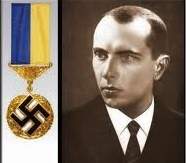
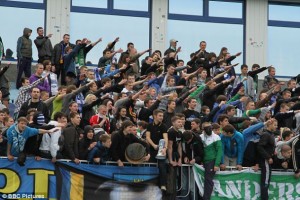
We look at Ukraine’s neo-Nazis and Stepan Bandera and the legacy of World War II. Every important ministry in the Ukraine is now held by ultra-nationalists. The Ministry of Education, social policy, policing, prosecution and national defense are all headed up by people whose party is a direct descendant of the Stepan Bandera movement in the Ukraine during World War II. Bandera and his movement were responsible for the genocide of more than 500 thousand including Poles, Ukrainians and Jews. This fact is played down by the U.S. government, the mainstream media in the United States, the state of Israel and its defenders amongst the Jewish establishment including Abe Foxman of the Anti-Defamation League.
Joel Kovel:
- I think its important to recognize this utterly illegitimate US puppet government I think in large part because it doesn’t have any standing for the Ukrainian people as a whole – has to be defended by neo-Nazi elements which aren’t enormously plentiful, but plentiful enough and they will do the bidding of their masters.
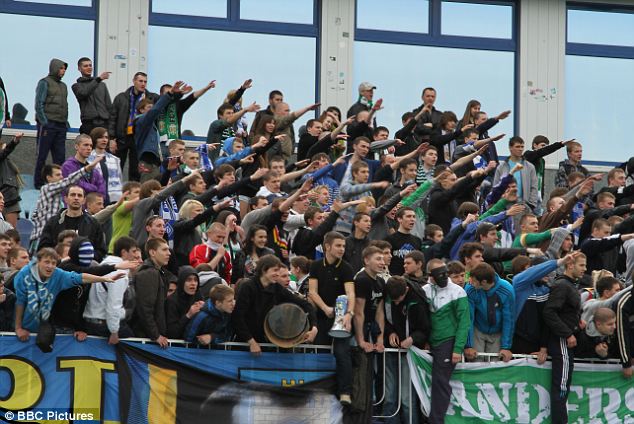
- It started (Odessa, Ukraine) as a quarrel in a soccer stadium, and moved to Odessa. Odessa is an extremely important town it was one of the centers of world Jewish culture for a long time, still has 30 thousand Jews in it.
- The Ukrainian loyalists overwhelmed the other people and drove them into this building, they set fires within the building which led to a hideous massacre.
- One on one violence but also people jumping out of the windows, smoke inhalation.
- Watching it on youtube you saw the total savagery and unspeakable brutality of these thugs, they were laughing, having the time of their lives.
- There were police around, military around, they did nothing to stop this.
- Utterly mystified and denied by the mainstream media, including the main springs thereof, including the Wall Street Journal, the Washington Post, the New York Times.
- My parents were both born in the Ukraine. In the early years of the last century, one third of the Jews in the world lived in the Ukraine.
- You have a blood strewn, contentious history marked by an enormous amount of hatred and vindictiveness. I think all nationalisms are pathological frankly.
- Ukrainian nationalism was particularly virulent. We’re dealing with another brand of ultra-nationalism with the state of Israel, and they’re not unconnected with all this.
- Fascism being a right wing alliance between large bourgeois and nationalist forces using some kind of mythic or racist ideology to legitimate itself.
- Ukraine: there’s never been a solid national identity there’s a tremendous complex mixture of things.
- There’s a book called Organized Antisemitism in Contemporary Ukraine: Structure, Influence and Ideology.
- Of course the US thinks they’re manipulating the puppets so they can control them. You go down that road, there’s going to be a lot of tragedies as the puppet turns on the master.
- The number of Rabbis quoted as saying we’re getting ready to evacuate, we have plans. We’re ready to go in a half an hour. We’re afraid its going to happen again. Meanwhile, this Foxman is saying, don’t worry.
- New York Times had a headline about 3 or 4 weeks ago how this was all overblown Ukraine’s Jews say that Putin not antisemitism is the problem.
- That’s the headline in the New York Times. How could they do that?
- We need a massive onslaught against the program of lies and deception that is being waged by our national media in total lockstep with the imperial interest of the United States. I’ve never in my life seen journalism sink to such an abyss as it has and in the very least this is a front that we can occupy.
- It means a lot because the American don’t want this to be happening. This is something that our power system. One front is the ruthless critique of the media and the lies that our government is putting out.
Guest- Joel Kovel, scholar and an activist. In the former capacity he has published nine books and over a hundred articles and reviews. His books include White Racism, which was nominated for a National Book Award in 1972; A Complete Guide to Therapy; The Age of Desire (in which his work in the psychiatric-psychoanalytic system is detailed); Against the State of Nuclear Terror; In Nicaragua; The Radical Spirit; History and Spirit(1991) – Committee for Open Discussion of Zionism
——————————————————————
Please help support Law and Disorder, the show is now a sponsored project of Fractured Atlas, a non-profit arts service organization. Contributions for the charitable purposes of Law and Disorder must be made payable to Fractured Atlas only and are tax-deductible to the extent permitted by law.
CIA Sponsored Terror, Civil Liberties, Criminalizing Dissent, Habeas Corpus, Hydraulic Fracturing, Prison Industry, Surveillance, Targeting Muslims, Torture, Truth to Power
Podcast: Play in new window | Download
Updates:
- John Kerry Middle East Peace Talks And NY Times Propaganda
- There is no ‘Palestine Exception’ to free speech rights’: Northeastern overturns Students for Justice in Palestine suspension
- CCR: Palestine Solidarity Legal Support Project
- Host Attorney Micheal Smith Retraction On Abe Foxman Update
——

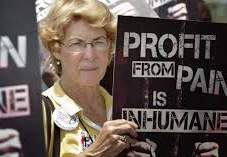
Torturous For-Profit Medical Care in Prisons
The medical care in private prisons is often provided by a sub contracted for profit entity. Today we look at a specific case involving Corizon, a prison health management corporation serving 530 prisons in 28 states. Corizon has been sued for malpractice 660 times in the past five years. We talk today about “Bradley’s” case. He’s 67, and was out on parole after serving 34 years in California’s state prisons. Bradley was on 100mg of morphine 3 times a day for surgical complications from knee injury. While on parole, THC was detected in his system, and officers brought him back to prison. However, under the care of Corizon, he was not given his medication and forced to painfully withdraw from the morphine.
Dr. Robin Andersen:
- My brother who we call Brad is at Santa Rita jail who Corizon is under contract with.
- He went in on April 17, and after a week of being in there, my lawyer and my sister said he was on death’s door.
- The reason was he was being forced to withdraw from medications. His medications are morphine and high blood pressure medication.
- He was given no medications for pain, and he basically did cold turkey inside that jail and is still being mistreated there.
- This is a parole violation where its alleged he might have smoked some pot.
- He was in San Quentin and some other California prisons. He served 34 years. When he was finally paroled one of the parole board members said – well we assess that the crime that you did to be about 11 years.
- Just the thought of him in that jail without medication for that time, it was agony.
- What the jail has told me is they don’t give out controlled substances.
- What my lawyer said is their policy to save money, they don’t have proper medication.
- They’re putting him through a forced cold turkey withdrawal and laughing at him.
- They keep using the word protocol, and it rings in my ear. Oh, he’s on a withdrawal protocol. One wonders what that protocol might be.
- I’ve been asking people to call the jail. It’s very interesting, they thrive in secrecy and brutality within these places.
- Call the Santa Rita County Jail – 925-551-6500. Lawrence (Bradley) Benetto – Prisoner # BKB172
Guest – Dr. Robin Andersen, is the brother of “Bradley” and Professor of Communication and Media Studies and Director of the M.A. Program in Public Communication. She is also Director of the Peace and Justice Studies Program at Fordham University.
——–
Lawsuits Against Prison Health Management Corporations
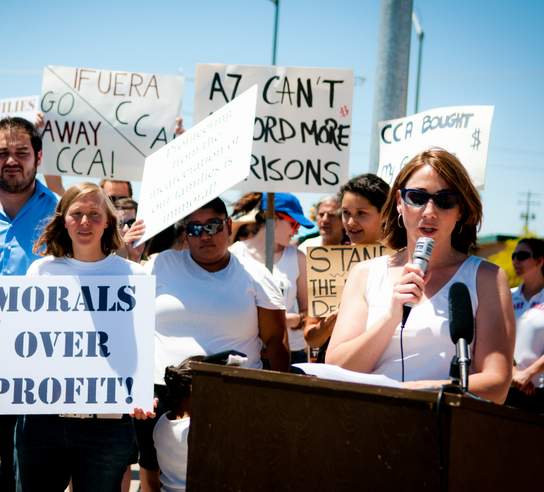
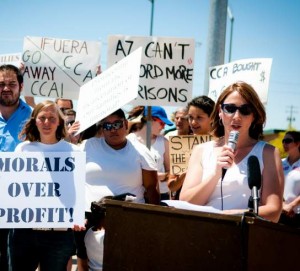
Class action lawsuits against prison health management corporations are becoming very common. There are many cases and stories of mistreatment and negligence which critics say stem from profit making and cost cutting protocols. We take a deeper look at the recent litigation involving lawsuits against private, for profit prison health care companies.
Attorney Sarah Grady:
- Corizon, they’re a multi-billion dollar company. They’ve operated under many names throughout the years.
- They’re whole model is to provide as little health care as possible in order to continue to drive a profit. They take into account in their profit, how often they’re going to be sued.
- They gamble in effect on how much money they’re going to lose in lawsuits and whether that can keep them profitable by continuing to deny care to prisoners.
- When Corizon contracted with Arizona to provide care (in prisons) in the first 8 months there were 50 deaths in Arizona Department of Corrections in their custody, that’s in a single state.
- There are multiple stories of substandard care being provided by nurses and doctors who have not been trained, who have been trained at a suboptimal level.
- The states, county or municipality cannot contract away the 8th Amendment.
- The individual doctors get bonuses based on their ability to stay under budget.
Guest – Attorney Sarah Grady leads Loevy & Loevy’s Prisoners’ Rights Project. Ms. Grady graduated cum laude from Northwestern University School of Law in 2012. At Northwestern, she worked on civil rights cases with the Roderick and Solange MacArthur Justice Center in the Bluhm Legal Clinic.
Sarah Grady joined Loevy & Loevy in 2013. She leads Loevy & Loevy’s Prisoners’ Rights Project.
Ms. Grady graduated cum laude from Northwestern University School of Law in 2012. At Northwestern, she worked on civil rights cases with the Roderick and Solange MacArthur Justice Center in the Bluhm Legal Clinic, served on the board of the Public Interest Law Group and the American Constitution Society, and received Northwestern’s annual Public Service Award for her commitment to serving the public interest in her legal work.
– See more at: http://www.loevy.com/attorneys/sarah-grady/#sthash.M7ruq9uH.dpuf
Sarah Grady joined Loevy & Loevy in 2013. She leads Loevy & Loevy’s Prisoners’ Rights Project.
Ms. Grady graduated cum laude from Northwestern University School of Law in 2012. At Northwestern, she worked on civil rights cases with the Roderick and Solange MacArthur Justice Center in the Bluhm Legal Clinic, served on the board of the Public Interest Law Group and the American Constitution Society, and received Northwestern’s annual Public Service Award for her commitment to serving the public interest in her legal work.
– See more at: http://www.loevy.com/attorneys/sarah-grady/#sthash.M7ruq9uH.dpuf
Sarah Grady joined Loevy & Loevy in 2013. She leads Loevy & Loevy’s Prisoners’ Rights Project.
Ms. Grady graduated cum laude from Northwestern University School of Law in 2012. At Northwestern, she worked on civil rights cases with the Roderick and Solange MacArthur Justice Center in the Bluhm Legal Clinic, served on the board of the Public Interest Law Group and the American Constitution Society, and received Northwestern’s annual Public Service Award for her commitment to serving the public interest in her legal work.
– See more at: http://www.loevy.com/attorneys/sarah-grady/#sthash.M7ruq9uH.dpuf
Sarah Grady joined Loevy & Loevy in 2013. She leads Loevy & Loevy’s Prisoners’ Rights Project.
Ms. Grady graduated cum laude from Northwestern University School of Law in 2012. At Northwestern, she worked on civil rights cases with the Roderick and Solange MacArthur Justice Center in the Bluhm Legal Clinic, served on the board of the Public Interest Law Group and the American Constitution Society, and received Northwestern’s annual Public Service Award for her commitment to serving the public interest in her legal work.
– See more at: http://www.loevy.com/attorneys/sarah-grady/#sthash.M7ruq9uH.dpuf
——–
Attorney Anand Swaminathan:
- We a broad spectrum of issues both in terms of types of facilities where these things are occurring and the actual kinds of medical problems that are not being dealt with or ignored.
- There are states, counties and municipalities all engaged in this form of privatization which are outsourcing medical care to these private companies.
- It includes, large prisons people who are convicted of crimes, it includes people who are being held in custody, that includes county jails which are a hybrid facility that holding people long term and people in short term custody.
- It’s everything down to the local police station.
- We’re seeing a lack of adequate medical care across that entire spectrum.
- There’s a complete failure to treat chronic conditions, some of the chronic conditions that are so prevalent in our society now.
- These people (prisoners) are not consumers and cannot choose and say I find your product subpar, I’m not interested, I’m going to choose the other guys’ product.
- We’re starting to see a push back. Courts are starting to attack specific protections that companies are invoking.
- Here you have courts identifying market forces as a reason to deny the protections that some of these companies are trying to invoke.
Guest – Attorney Anand Swaminathan, has worked on a broad range of constitutional and civil rights cases, and has worked extensively on False Claims Act litigation, where he has represented whistleblowers alleging defense military and other government contractor fraud, bid-rigging, Medicare and Medicaid fraud, construction/contractor (MBE/DBE) fraud, and tax fraud.
———
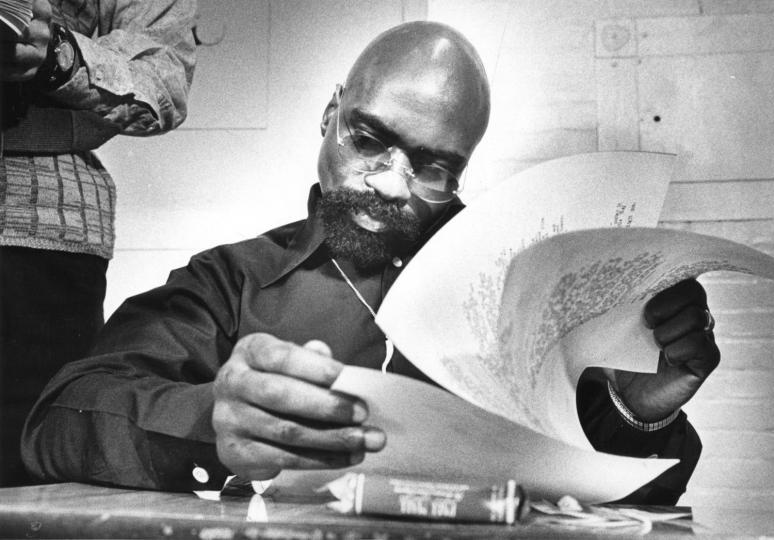
Rubin “Hurricane” Carter 1937-2014
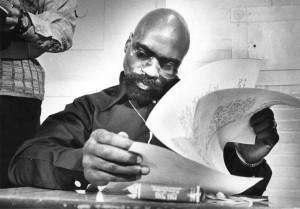
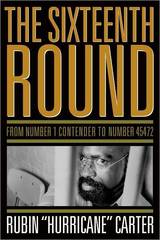
In April of this year, celebrated boxer and prisoner-rights activist Rubin “Hurricane” Carter died at the age of 76. He had become an international symbol of racial injustice after his wrongful murder conviction forced him to spend 19 years in prison. Carter was arrested for a triple murder in his hometown of Paterson, New Jersey. He said he was innocent, was convicted by an all white jury, and sentenced to three consecutive life sentences. In 1976, the New Jersey State Supreme Court overturned his conviction on grounds the authorities withheld material evidence from the defense. But Carter was convicted again in a second trial in 1976. In 1985, that conviction was overturned by a U.S. district court judge, who concluded the state made an unconstitutional appeal to racial prejudice. In 1988, the Passaic, New Jersey, Prosecutor’s Office dropped all charges against Carter.
Attorney Myron Beldock:
- He was a defendant in a criminal case in New Jersey involved the triple shooting and three murders of 3 people in the Lafayette bar in Patterson, New Jersey.
- He and his co-defendant John Artis were represented at the first trial and they lost, (convicted) and Rubin started his campaign to get out of jail and wrote his book the 16th Round.
- He was charismatic and powerful, a great thinker, very very intellectually strong person as well as being spiritually strong.
- Almost a typical case, high profile case, where you get people who are vulnerable and easily manipulated because of their need for their own benefits to falsely testify.
- We set aside the convictions when we learned about the benefits that were given to the witnesses.
- We went again to trial in 1975. At that time the atmosphere had changed. There was a new prosecutor, they came up with a theory that it was actually a racial revenge killing.
- Earlier that night, a white former bar owner had shot and killed the black purchaser of the bar from him.
- That was always known and there was no motives attributed to the killings in the first trial but the second trial really based on speculation and bias, they argued persuasively to the jury that this was a racial revenge killing.
- Mr. Bellow who was the supposed eye witness who testified, there were two of them in the first trial, was being questioned by me on the stand as to why he recanted his recantation. The prosecutor persuaded him to again tell the story he told at the first trial, identifying Rubin and John and I was trying to establish that they had falsely manipulated him when I was pulled into the chambers along with my co-counsel Louis Steele who represented John Artis and told that if I question him further, the jury would learn that he passed the lie detector test, supporting what he said at the first trial. Supporting his identification (of Rubin Carter)
- We did have that test. It seemed like that was the result because that’s the way it was written. In fact that was a fraud.
- The polygraph results were completely opposite of what they were purported to be.
- The prosecutors in that case, two of them became judges, rewarded for what they did.
- Rubin was not a popular person, he had been an outspoken civil rights person. It was a cesspool of rumors without any evidentiary basis.
- The entire community there almost in Passaic New Jersey treated us like we were the devil.
- It was the coldest community reception I ever encountered in any place.
- Rubin would call every year (from Canada) on the anniversary of his release. He got a group of Canadian do-gooders and free thinkers to join him in fighting to set aside convictions for people who were wrongly convicted in Canada.
- He would vet the briefs that we sent. He was a very unusual client.
- Rubin refused to act as a prisoner because he wasn’t anyone who was guilty he said.
- So, he didn’t eat prison food, he didn’t take prisoner assignments, he didn’t wear prison clothes and somehow or other he was able to pull that off.
- People think of it as being another time, I’ve been practicing law long enough and I don’t think anything changes.
- The same kind of bias runs deep throughout the community its just masked somewhat differently.
- You make your luck in these cases, you have to forge ahead.
- His insistence on being an innocent person and will not compromise with the system is the kind of inspiration that pushes us on as lawyers.
Guest – Attorney Myron Beldock, graduated from Erasmus Hall High School in 1946, Hamilton College in 1950 and Harvard Law School in 1958. He served in the U.S. Army from 1951 to 1954 and as an Assistant U.S. Attorney in the Eastern District of New York from 1958 to 1960. After several years as an associate with a small New York City firm and as a single practitioner, he brought together two friends and former Assistant U.S. Attorneys, Elliot Hoffman and Larry Levine, to form Beldock Levine & Hoffman in 1964. He is best described, by his own definition, as an old-time general practitioner. He concentrates on trial and appellate litigation, in state and federal courts, in defense of criminal charges and in pursuing plaintiffs’ civil rights actions based on police and prosecutorial misconduct and employer and governmental discrimination. He regularly consults and defends charges of professional discipline. He represents plaintiffs and defendants in a wide variety of personal and business related matters, working with others in the firm’s various practice areas.
——————————————————————————-
Please help support Law and Disorder, the show is now a sponsored project of Fractured Atlas, a non-profit arts service organization. Contributions for the charitable purposes of Law and Disorder must be made payable to Fractured Atlas only and are tax-deductible to the extent permitted by law.
Civil Liberties, Criminalizing Dissent, Habeas Corpus, Human Rights, Torture, Truth to Power, War Resister
Podcast: Play in new window | Download
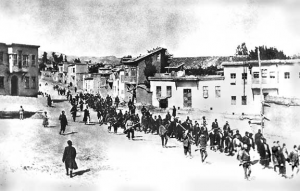
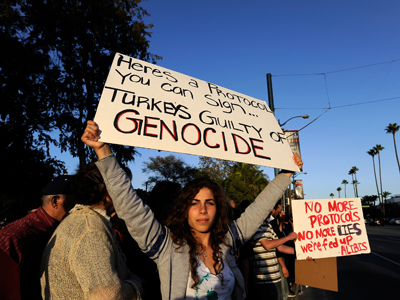
Armenian Genocide Survivor Stories: 99 Years Later
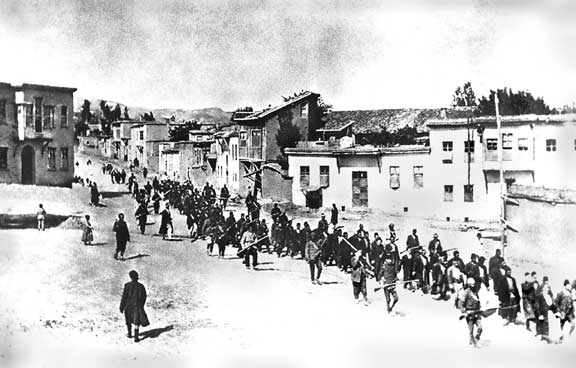
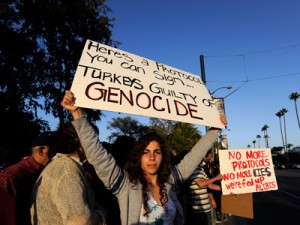
Around the world, April 24 marks observance of the Armenian Genocide. On that day in 1915 the Interior Minister of the Ottoman Empire, Talaat Pasha, ordered the arrest and hangings of Armenian intellectuals and community leaders in Constantinople. The date is widely considered to be the starting date of a systematic and well-documented plan to eliminate the Armenians, who had been under Ottoman rule and treated as second class citizens since the 15th century.
As Armenians escaped to several countries, including the United States, a number came to New Britain, Connecticut in 1892 to work in the factories of what was then known as the hardware capital of the world. By 1940, nearly 3,000 Armenians lived there in a tight-knit community. Meeting together to share memories in conversation are Jennie Garabedian, Harry Mazadorian, Roxy Garabedian, Lucy Simonian, Roxie Maljanian, Mary Abrahamian, John Maljanian, Agnes Karanian, Ruth Swisher, and Artie Shahverdian.
The unspeakable and gruesome nature of the killings—beheadings of groups of babies, dismemberments, mass burnings, mass drownings, use of toxic gas, lethal injections of morphine or injections with the blood of typhoid fever patients—render oral histories particularly difficult. As you will hear from the stories of these first generation Armenian survivors who continue to live in New Britain, a shared history –a shared identity—emerges.
Why did this happen? Despite being deemed inferior to Turkish Muslims, the Armenian community had attained a prestigious position in the Ottoman Empire and the central authorities there grew apprehensive of their power and longing for a homeland. A concerted plan of deportation and extermination was allowed to be carried out, in large part because World War I demanded the involvement and concern of potential allied countries. As the writer Grigoris Balakian wrote, the war provided the Turkish government “their sole opportunity, one unprecedented” to exploit the chaos of war in order to carry out their extermination plan.
Some learned about the massacres directly from their parents or family members, while others were not told at all. Often, surviving women were ashamed to talk about what they had experienced because so many of them had been raped or forced into harems. For others, conjuring visual images of the atrocities was too painful to bear. When parents did speak about the crimes they experienced or witnessed, they frequently spoke in Turkish or Syrian, instead of English or Armenian, so that their children couldn’t understand. Most children of survivors say that the subject was a secret, even forbidden.
————————————————————————
Please help support Law and Disorder, the show is now a sponsored project of Fractured Atlas, a non-profit arts service organization. Contributions for the charitable purposes of Law and Disorder must be made payable to Fractured Atlas only and are tax-deductible to the extent permitted by law.
CIA Sponsored Terror, Civil Liberties, Criminalizing Dissent, Guantanamo, Habeas Corpus, Human Rights, Political Prisoner, Supreme Court, Surveillance, Targeting Muslims, Torture, Truth to Power, War Resister
Podcast: Play in new window | Download
Updates:
——


U.S. Agency Infiltrates Cuba With Fake Twitter Account
Consistent with the NSA’s deceptive strategies in creating fake social networks, the U.S. Agency for International Development masterminded the creation of a “Cuban Twitter: The communications network was designed to undermine the communist government in Cuba. It was financed through foreign banks and constructed through shell companies. The Associated Press learned that the project lasted more than 2 years and had tens of thousands of followers. The content initially was non political such as soccer, music and weather, but it was learned that once a critical mass was reached, political content would be introduced to organize “smart mobs” that could trigger a Cuban Spring.
Jane Franklin:
- When Obama speaks about Cuba you have to read between the lines always and be very careful about what you think he’s saying.
- He said the notion that “the policies we put into place in 1961 would somehow be as effective as they are today in the age of the internet and google and world travel doesn’t make sense.
- We recognize that the aims are always going to be the same and what we have to do is continually find new mechanisms and new tools to speak out on behalf of the issues that we care so deeply about.”
- That’s what he was considering back in November and of course before that this plan to use creative and thoughtful methods to infiltrate Cuba and try to create what the Associated Press calls “smart mobs” which could lead to the downfall of the Cuban government.
- It was called ZunZuneo and was budding in 2009, then it was launched full scale in 2010 with a campaign to use a half a million cell phone numbers that U.S. aids have gotten and sent what they call blasts to those half a million receivers.
- Those people would be told that they could sign up for this program and get news and so on. News that at first would be trivial, and then gradually according to the documents that the AP has – this would increase until they could develop smart mobs – that is street protest that would help lead to the overthrow of the Cuban government.
- They used foreign countries to disguise where the messages came from. They set up a bank account in the Cayman Islands which is a tax haven to use that for money.
- When there was a concert in Havana in 2009 which is described in the report by the AP and the US Aid people blasted the cell phones with questions.
- One of the questions was do you think the two bands that were not in favor of the Cuban government should be on the stage with the band that’s there today?
- If you answered yes, you were what’s called “receptive” to their ideas.
- A few months later they launched this full scale campaign and eventually they had 60 thousand receivers using their program. That’s not many in the population of Cuba. It was a failure and they closed it down.
- They were paying tens of thousands to Cuba Cell, which regulates the cell phones.
- They get millions of dollars from Congress every year to create such programs and try to overthrow the government of Cuba which they’re supposed to do according to U.S. law The Helms-Burton Act requires that.
- It (the report) says that a researcher from Mobile Accord which was the main private contractor was building a mass database about the Cuban subscribers including gender, age, receptiveness and political tendency.
Guest – Jane Franklin is a historian, she has written two books about Cuba: Cuban Foreign Relations 1959-1982 (Center for Cuban Studies, New York, 1984) and Cuba and the United States: A Chronological History (Ocean Press, Melbourne, Australia, 1997). She is co-author of Vietnam and America: A Documented History (Grove Press: New York, 1985, enlarged edition 1995). Her chronology of the history of Panama is in The U.S. Invasion of Panama (South End Press: Boston, 1991). She has published numerous articles, poems and film reviews and has lectured extensively about Cuba, Vietnam, Nicaragua, El Salvador, and Panama. She is a frequent radio commentator about Cuba.
—–
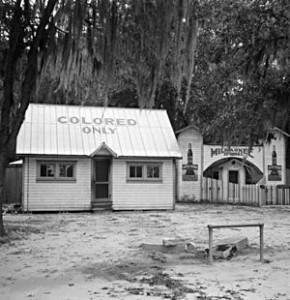
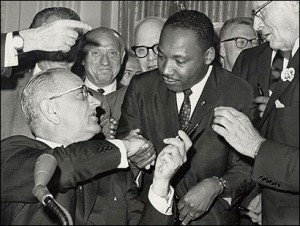
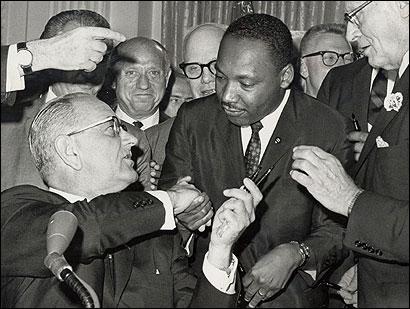
50th anniversary of the Civil Rights Act
This year marks the 50th anniversary of the Civil Rights Act, the most sweeping civil rights legislation since Reconstruction. The Civil Rights Act prohibits prohibits discrimination of all kinds based on race, color, religion, or national origin. The law also provides the federal government with the powers to enforce desegregation. In a speech on June 11, 1963, President John F. Kennedy unveiled plans to pursue a comprehensive civil rights bill in Congress, stating, ‘‘this nation, for all its hopes and all its boasts, will not be fully free until all its citizens are free.”
Professor of Law John Brittain:
- Yes, I do believe Lyndon Johnson deserves credit, although he had such allies like Martin Luther King. They released some of the unacknowledged tapes by President Johnson in his office in talking with Dr. King both about the 1964 Civil Rights Act as well as he went on to usher in the 1965 Voting Rights Act.
- These acts were a response to a condition on the ground, and the condition was apartheid in the United States, in particularly in the South, but as Malcolm X said anything below the Canadian – US border was the South.
- We’re also celebrating the 50th anniversary of the Summer in Mississippi.
- The demonstrations in the streets no doubt had an effect upon the Congress in passing the 1964 Civil Rights Act to shall we say, let some of the steam out of the kettle.
- He (LBJ) came out of the Lone Star state, the only state that came into the union as a slave state and the state that promoted the white primary, that unless you were white you couldn’t vote in the primary.
- The Missouri Compromise we’d have slave states and free states. After the civil war we’d have a great period of radical Republican reconstruction in the South to give the black former slave equal rights but that died by the 1890s and ushered in a period what we call Jim Crow.
- Coming up to that point in the 1960s and with the riots, to his credit LBJ, notwithstanding that dark cloud over his head, that war in Vietnam which Dr. King called immoral, unjust and illegal and took a lot of criticism for daring to talk about international affairs and indeed talk about a war.
- The minute lawyers went to work in representing the poor, they were cut off by restrictions. The war on poverty and neighborhood legal services was started in 1965-66 but a decade later it was cut off at the knees.
- Johnson said when he was first presented with the idea of legal services – hell I’m not going to pay lawyers to sue the government and win but he was convinced otherwise.
- By the time 65 came around and they created this compromise and started this new federal agency funding called Legal Services corporation to take the political veto out of governors but they had to agree to restriction.
- Legal Services lawyers couldn’t take criminal cases, abortion cases, agitation for labor rights cases, immigration cases, school desegregation cases.
- Just last year 2013, on the eve of celebrating the 50th anniversary of the Voting Rights Act, Chief Justice John Roberts and the right wing on the Supreme Court – Shelby County v Eric Holder
- The Civil Rights Act of 1964 was the same Civil Rights Act of the 1860s. The only difference is they based on a different constitutional provision, not the 14th Amendment which gives Congress the right to enforce the Constitution to provide equality for the former slave, now African American, but instead in 1964, they based it on commerce clause by saying that any segregation interfered with interstate commerce. The act in essence provided for equal accommodation.
- It broke the back of Jim Crow segregation where an African American could go shop, go eat, go live and go play and go to any access in parts of America.
- It would later take the 1968 Fair Housing Act in order to provide equal housing.
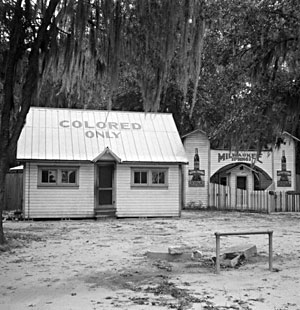
- The 1964 Civil Rights Act gave Congress, gave the Justice Department, the Department of Education too, and others the tools to go in and to stop Jim Crow or “colored only” segregation in our mainly southern states.
- That was the same Justice Department that went on to enforce 1964 Civil Rights Act by bringing legal claims against hotels and restaurants, government facilities that continued to bar blacks from equal access.
- Kennedy said where are the lawyers? By current tort terms, he falsely imprisoned them in the White House and told them they couldn’t leave until they created an organization and out of that grew the Lawyers Committee and immediately they went down to Jackson, Mississippi and created the Jackson Litigation Office.
- I happen to come along in 1969 fresh out of law school to become one of the lawyers in the Jackson litigation and throughout the history of the lawyers committee. The only national legal organization dedicated to equality for African Americans and other people of color have gone on to litigate in education, in voting, in housing and employment discrimination as well as criminal justice.
Guest – Professor John Brittain, tenured professor of law at the University of the District of Columbia, David A. Clarke School of Law. In the past he served as dean of the Thurgood Marshall School of Law at Texas Southern University in Houston, was a veteran law professor at the University of Connecticut School of Law for twenty-two years and was the Chief Counsel and Senior Deputy Director of the Lawyers’ Committee for Civil Rights Under Law in Washington, DC, a public interest legal organization started by President John F. Kennedy to enlist private lawyers to take pro bono cases in civil rights.
———————————————————————-
Please Help Support Law and Disorder
Law and Disorder is now a sponsored project of Fractured Atlas, a non-profit arts service organization. Contributions for the charitable purposes of Law and Disorder must be made payable to Fractured Atlas only and are tax-deductible to the extent permitted by law.
CIA Sponsored Terror, Civil Liberties, Criminalizing Dissent, Extraordinary Rendition, Guantanamo, Human Rights, Political Prisoner, Prison Industry, Surveillance, Torture, Truth to Power, War Resister
Podcast: Play in new window | Download
Updates:
——
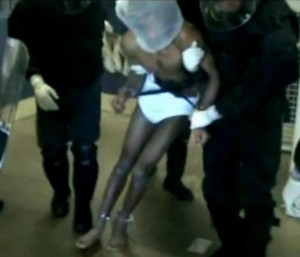
The Dallas 6: Abuse In Solitary Confinement
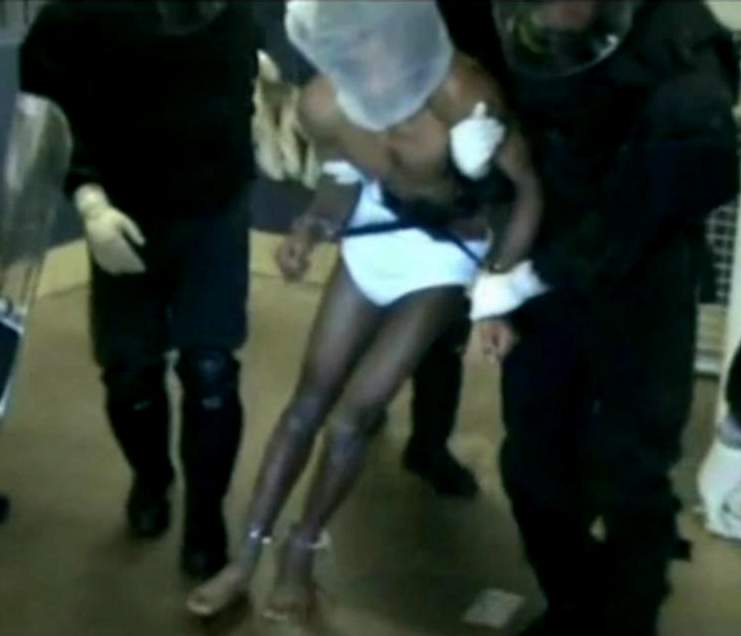
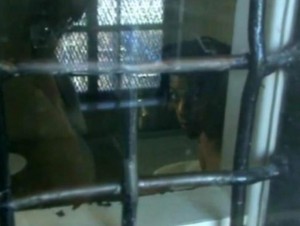
In April of 2010, a group of inmates locked in solitary confinement at SCI Dallas prison in Pennsylvania were suffering so much abuse and brutal treatment by prison guards they had placed their bedding over the window of their cell doors to attract attention of the prison administrators. Instead of receiving assistance, the inmates were brought up on riot charges. Last December the inmates known as the Dallas 6 defended themselves and presented testimony describing the details of their abuse in solitary confinement.
Shandre Delaney:
- This case, the Dallas 6, began in April 2010. These men were all in the RHU at SCI Dallas, in Dallas PA.
- The RHU is the restrictive housing unit, its an acronym for solitary confinement.
- All of these men had been victims of abuse and torture during their stay in solitary confinement.
- The Dallas 6 are Andre Jacobs, Anthony Kelly, Anthony Locke, Dwayne Peters, Derek Stanley and my son Carrington Keys.
- Most of these guys went into solitary for minor infractions, maybe to stay 60-90 days. My son stayed in there for 10 years, and I think all of the other guys about the same.
- These guys were jailhouse lawyers. These guys were people who spoke up and sent word to the outside about what was going on in solitary confinement.
- Once you do that – they call it misconduct, which are write ups, they’ll give you false write ups, and all types of things just to keep you in there longer.
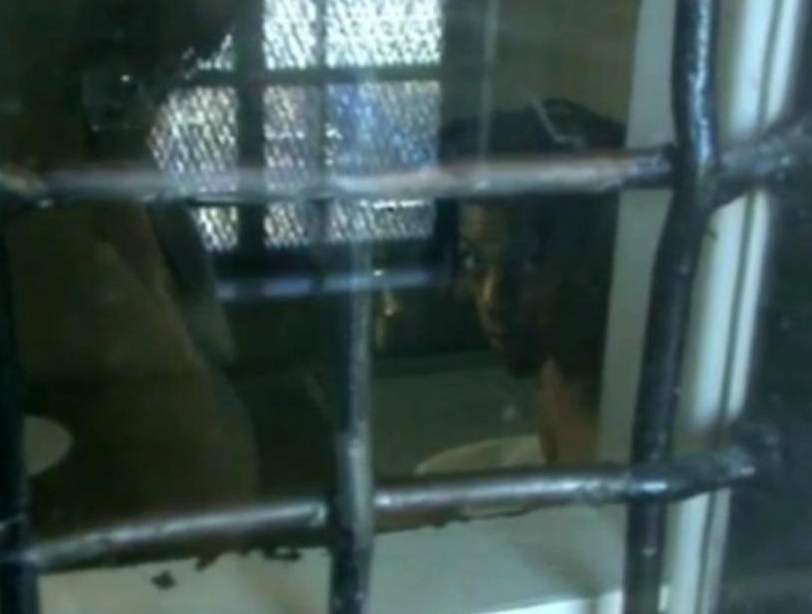
- The cells are 6X9. In solitary, they might have a window to the outside. There is a bunk that they sleep on. There is only a slot for food to come in and out.
- You’re supposed to come out of your cell for one hour a day. They may get a shower 2 or 3 times a week.
- They lied to me for years and told me he wasn’t allowed visits. I later found out that they’re allowed one visit per month.
- The group that I work for Human Rights Coalition, some of the information that was sent from SCI Dallas, a 93 page report was written called Resistance and Retaliation.
- They sent a copy back in (to SCI Dallas) they didn’t mark out the guys’ names, so once the guards got a hold of this, and saw the guy’s names, they started one by one beating guys.
- They took one guy and put him in a restraint chair. You’re only supposed to be in the restraint chair for 2 hours, they kept there over night.
- They (the guards) told the guys (Dallas 6) we’re comin for you. In order to bring attention from a lieutenant or a superior officer, you have to cover your cell window.
- They covered their cell windows. The guards put on riot gear and one by one they beat these guys very bad.
- It’s all on video tape. They tasered a lot of the guys on their genitals.
- They have you like a hog or something, I saw it on the video.
- They cut their clothes off and left them for hours in cages.
- May 5, 2014 is supposed to be the official trial date. The official trial date has been going on for 2 years.
- I was praying every night hoping the phone didn’t ring and they tell me they killed him.
- They took out to shower and threw him down the steps and broke his nose, they busted his teeth out with a stick before.
- They put glass in his food.
- HRCoalition.org
- Dallas 6 Blog
- Petition to Indict Luzerne County Officials
- Summary in Support of Petition to Indict
Guest – Shandre Delaney, a powerful activist with HRCoalition and the mother of Carrington Keys, one of the Dallas 6.
—–

Rutgers University Plans to Give Condoleezza Rice Honorary Degree
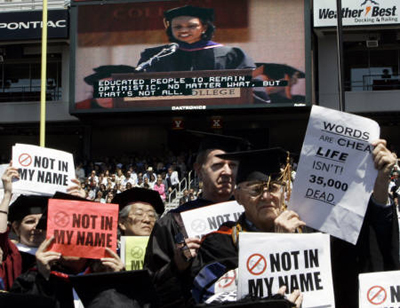
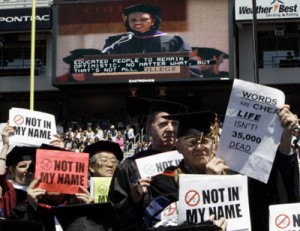
Students and faculty at Rutgers University have rejected the idea to invite former Secretary of State Condoleezza Rice to speak at this year’s commencement ceremony and receive an honorary degree. The Board of Governors in February of this year unanimously voted to award Rice the invite for a fee of 35 thousand dollars. They also voted to give the national security adviser under former President George W. Bush an honorary degree. Resolutions signed by the university faculty and staff calls for Rice to be disinvited.
Professor Deepa Kumar:
- Historically our process at Rutgers University has involved having 20 some faculties, students, involved in the process of selecting the commencement speaker, typically by canvasing students and canvasing faculty and then making a recommendation to the president as to who to invite.
- When president Barchi came to your university in 2012 he completely violated this open and democratic process, formed a committee of 6 people including himself. Then they decided to go ahead an invite Condoleezza Rice.
- We believe that this was actually politically motivated. What suspect is that Chris Cristi who was riding high at that time in 2012, before bridge-gate, very likely wanted to have Condoleezza Rice as Vice Presidential candidate when he runs.
- So far we have taken out a petition drive, the students have their own petition drive, hundreds of people have signed up. We’ve also talked about holding a protest outside should our efforts fail.
- The last time Dr. Rice was invited to be a commencement speaker was at 2006 at Boston College, when everybody turned their back to her when she started to speak.
- Condoleezza Rice was very much a part of the systematic lying to the American public and quite frankly we at Rutgers teach our students to ethical to be responsible citizens.
- At Rutgers we have a 44 percent minority student enrollment. It’s a very diverse school and I welcome African American women as commencement speakers but I think there are better people like Anita Hill or Angela Davis.
- In 2002 we know from a Senate Committee Intelligence Report of 2009 that when Rice was chair of the National Security Council she gave a verbal approval to then CIA director George Tenet to go ahead and use enhanced interrogation techniques.
- She’s been quite steadfast in defending the use of torture. She gave a speech at Stanford University where she argued that if torture is authorized by the president then it doesn’t violate the Geneva Convention against torture.
- Commencement at Rutgers – May 18, 2014.
- Senator Feinstein called the use of torture a dark chapter in the history of this country.
- Clearly torture is a violation of international law and the Geneva Convention and I think to confer a Doctor of Law degree to someone who has been intimately connected with this “dark chapter” in our history I think is a serious embarrassment for Rutgers University.
- I’m really proud to be among the hundreds of faculty members and students who are actually standing up against this to disinvite her.
- Dick Cheney comes out and defends the torture program even now.
- If I Was Allowed To Speak
Guest – Deepa Kumar, an Associate Professor of Media and Middle Eastern Studies at Rutgers University. Her latest book is Islamophobia and The Politics of Empire by Haymarket Books and is in response to the events of 9/11, the Bush administration launched a “war on terror,” ushering in an era of anti-Muslim racism, or Islamophobia. Her first book, Outside the Box: Corporate Media, Globalization and the UPS Strike (University of Illinois Press, 2007), is about the power of collective struggle in effectively challenging the priorities of neoliberalism.
———————————————————————–
Help Support Law and Disorder Right Here
Law and Disorder is now a sponsored project of Fractured Atlas, a non-profit arts service organization. Contributions for the charitable purposes of Law and Disorder must be made payable to Fractured Atlas only and are tax-deductible to the extent permitted by law.