Afghanistan War, CIA Sponsored Terror, Civil Liberties, Criminalizing Dissent, Human Rights, NSA Spying, Surveillance, Targeting Muslims, Torture
Podcast: Play in new window | Download
Updates:
- Ruling In Teenager’s Facebook Case
- Family of Homeless Man Repeatedly Shot By Police Reached $725, 000 Settlement
- Supreme Court Strikes Down Campaign Contribution Limits
- Kerry Cancels Visit to PA after Abbas Asks to Join 15 UN Agencies
——
The ARNCA Urges US President and Congress To Stop Attacks on Kessab
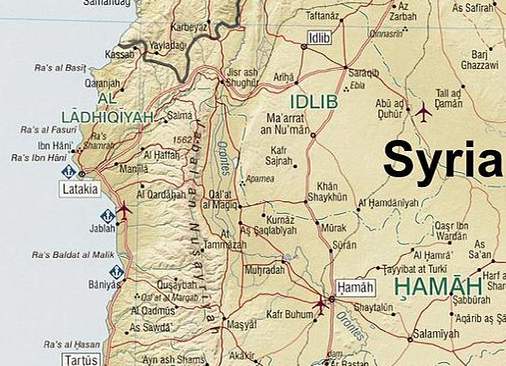
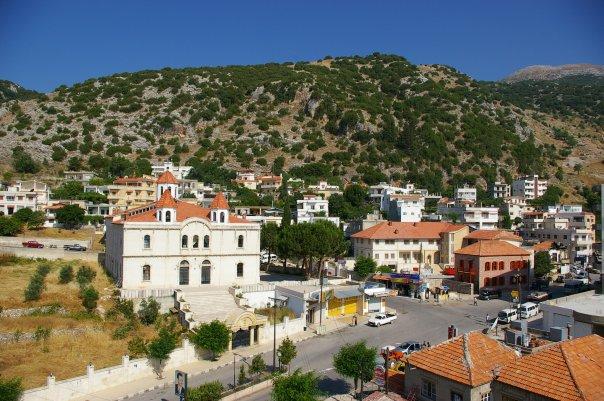
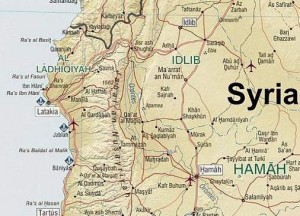
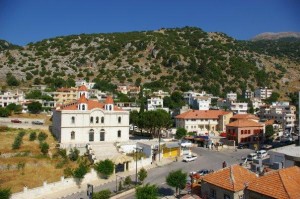
In the early hours of march 31, 2014 civilians in the ancient Armenian settlement of Kessab and surrounding villages were attacked by forces opposed to the Syrian government crossing the border from Turkey. Kessab is an Armenian-populated town situated in northwestern Syria. The cross border attacks, which included church desecrations, forced immediate civilian evacuation of the area, alarming Armenians around the globe concerned about the safety of their relatives. Considered safe haven for refugees fleeing nearby war torn cities in recent years, the local Armenian population in Kessab has increased. In response to the recent multi-pronged attack, the Armenian National Committee of America has called on President Obama and Congress to press Turkey to stop facilitation attacks on civilians in Kessab, to investigate Turkey’s reported assistance to foreign fighters associated with the U.S. designated terrorist groups and to direct humanitarian aid to victims in the Armenian settlement.
Aram Hamparian:
- Kessab holds tremendous meaning for Armenians around the world. It’s essentially the last Armenian village that remains on the territory of the former Ottoman Empire. The territory that was emptied of Armenians during the genocide of 1915.
- A portion of those survivors settled in this village which is right on the Turkish border and for 9 decades they lived in safety but in the shadow of Turkey, until recently when extremist militants invaded the village from Turkey and drove out about 2000 residents who are essentially homeless today.
- I think that a decision was made in Ankara, Turkey to allow extremists to use their territory to drive the Armenians out of that village. I think there’s an element of intent on the part of the Turkish government, which has been consistently anti-Armenian for more than half a century.
- Only one person we understand was killed by a sniper as reported by the Washington Post but the overwhelming majority have fled.
- We’ve worked very hard to encourage the U.S. government to protest not only the attack but also Turkey’s role.
- Congress didn’t condemn what we thought was the key element Turkey allowing the soldiers to cross this border and make this attack.
- There are parts of Kessab that are a 100 yards away from a highly militarized, highly monitored border.
- It’s inconceivable that soldiers would’ve crossed that border had they not been supported by or at the very least ignored by the Turkish government.
- They simply can’t go home if there is a fear of repetition. If the precedent is set that, well if Turkey did this once and they were not challenged at all and given a free pass.
- We’re trying to get a message from the Washington to Ankara, saying this is out of bounds. You have the right to protect your border but you also have to make sure your border isn’t crossed by militants who are doing harm to innocent civilians.
- President Obama came in to office with a pledge to recognize the genocide. Soon after he came into office he turned 180 degrees, not only didn’t honor his pledge to recognize the genocide but blocked Congress from doing what he said he would do.
- Turkey has banned Youtube, Turkey has banned Twitter because its leaders are not happy with what’s being said.
- Armenian Relief Fund
Guest – Aram Hamparian, Executive Director of The Armenian National Committee of America (ANCA) is the largest and most influential Armenian American grassroots political organization. Working in coordination with a network of offices, chapters and supporters throughout the United States and affiliated organizations around the world, the ANCA actively advances the concerns of the Armenian American community on a broad range of issues.
——–
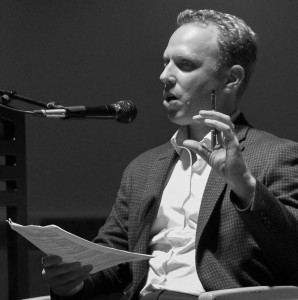
Max Blumenthal At “Against Israeli Apartheid” in New York City
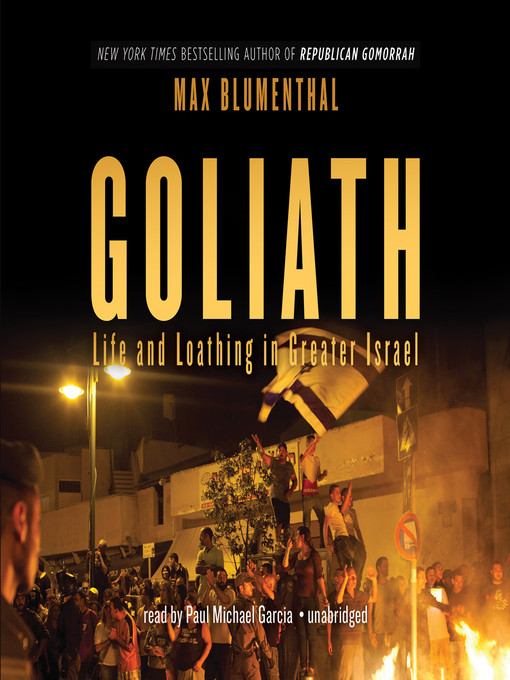
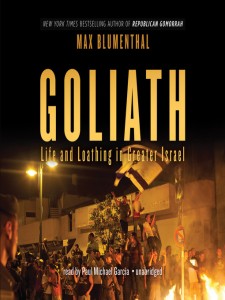
We hear a speech by award winning journalist, and best selling author Max Blumenthal speaking at the event Against Israeli Apartheid along with Palestinian journalist Ali Abunimah. Max’s new book Goliath: Life and Loathing In Greater Israel shows the reader how the Netanyahu right wing government is actually moderate compared to most other institutions in Israel. His book takes a hard look at Israeli authoritarian politics from a cross section of interviews, from the homes of Palestinian activists to the political leaders behind the organized assault on democratic rights.
—————————————————————————-
Help Support Law and Disorder Right Here

Law and Disorder is now a sponsored project of Fractured Atlas, a non-profit arts service organization. Contributions for the charitable purposes of Law and Disorder must be made payable to Fractured Atlas only and are tax-deductible to the extent permitted by law.
CIA Sponsored Terror, Civil Liberties, Criminalizing Dissent, Cuba, Habeas Corpus, Human Rights, NSA Spying, Political Prisoner, Supreme Court, Surveillance, Targeting Muslims, Torture, Truth to Power
Podcast: Play in new window | Download
Updates:
- President Barack Obama Lies About NSA Bulk Collection and Retention of Personal Metadata.
- Der Spiegel Reports on U.S. Spies On Huawei Telecommunications in China
- New York Times Reports That U.S. Spying on China Is In Retaliation From China Spying
- Michael Ratner: New York Times Spin Is Ridiculous In Justifying Spying
—-
Obama’s Ukrainian Power Grab, Sanctions and the Boomerang Effect
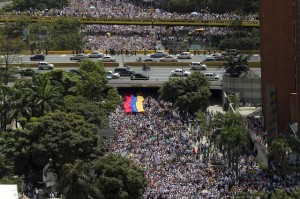
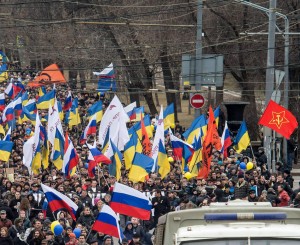
The unfolding of the US-EU-Russian conflict over the Ukraine will have far reaching consequences and will ultimately define the global configuration of power. While the Western power grab was largely ignored, the US-EU propaganda machine kicked into gear, focusing on Russia’s defensive action in the autonomous region of Crimea. The citizens of Crimea organized a self-defense militia and pressured the Putin administration to help protect them from armed incursions by the NATO backed coup regime in Kiev. We’re joined today by returning guest Professor James Petras who has written several articles on the crisis in the Ukraine. He identifies it as the most recent cycle of US empire-building in a 3 phase system including Eastern Europe, Latin America, Africa and Asia.
Professor James Petras:
- The U.S. according to UN Sub-secretary of Foreign Affairs stated it very clearly. We’ve poured 5 billion dollars into the Ukraine building up organizations and politicians who are favorable to NATO and the European Union and hostile to Russia and eager to oust it from the bases in the Black Sea.
- I think it was a long term project in building client organizations there, mainly in terms of electoral politics in the beginning.
- So you have a target of a vassal state building and encircling Russia in line with what happened through the Baltics through central Europe and into the soft underbelly of Russia.
- At the same time this is going on Russia is cooperating with the U.S. in many spheres including the over-flight caper in Libya, supporting the sanctions in Iran,
- You have on one hand Washington aggressively encircling Russia, Russia essentially cooperating with the U.S. to gain good merit points, hopefully to get accepted in the G8.
- Two thirds of the so called Ukraine Army decide to stay in Crimea as an annex state of Russia. This is a fact that tells you something about the hostility they feel to the people that grabbed power in Kiev.
- The Russian threat that’s been manufactured has to do with the fact that in southern Ukraine there have been massive demonstrations against the coup makers.
- What they’re doing is reenforcing repressive authority against the internal opposition which is hostile to the coup.
- The internal opposition now doesn’t want to join Crimea but do want a federal structure in which they elect their own governors and legislators and not be forced to accept oligarchs in line with the EU policies.
- I think its clear its to encircle Russia and return Russia to the status of the 1990s.
- With the rise of Putin you have a semblance of a state once more. You have a political economic order which is functioning which has raised living standards which allows Russia to play a modicum of political role in world politics in particular the border area.
- Venezuela: Democratic protesters don’t burn down 500 businesses and installations administering social welfare programs.
- Democratic protesters don’t assassinate 7 national guard and policemen trying to maintain order.
- Democratic protesters don’t blow up electrical grids and light up the national forests in a 360 degree circumference.
- Kerry is lying, the U.S. is supporting violent terrorists. Those people that are engaged in this activity are engaged in trying to overthrow the government by force and violence. They resorted to this because they lost the last 10 elections in Venezuela including a resounding defeat this last December.
- They’re going for a civilian based terrorist operation which they (U.S.) will hope will precipitate a military coup.
- The New York Times is a propaganda organ for the U.S. government whenever there is a serious conflict particularly from a left wing or progressive government.
- The New York Times has not shown any of the charred buildings that the so called democratic protesters have burned down.
- They haven’t shown the experimental school that was blown up in Tachira, Venezuela.
- Let’s be clear Michael, the targets of the terrorists, not a single U.S. business has been effected. Not a single major bank has been effected.
- This is profoundly a class war directed against anti-imperialist communities.
- China holds 3 trillion dollars in U.S. treasury notes. All the major 500 U.S. corporations are involved with China. It’s very much linked into the production chain of goods that go from Asia to China to the U.S. Walmarts, etc.
- On the other hand Washington is very concerned with not being able to compete with China in world markets.
- The Chinese have displaced the U.S. in Latin America, in the Asian field.
Guest – Professor James Petras, author of more than 62 books published in 29 languages, and over 600 articles in professional journals, including the American Sociological Review, British Journal of Sociology, Social Research, and Journal of Peasant Studies. He has published over 2000 articles in nonprofessional journals such as the New York Times, the Guardian, the Nation, Christian Science Monitor, Foreign Policy, New Left Review, Partisan Review, TempsModerne, Le Monde Diplomatique, and his commentary is widely carried on the internet.
——
Boycott Divestment Sanction Awareness Gains Traction On University Campuses
Members of the group Students for Justice in Palestine at Northeastern University in Boston were disciplined and banned from serving on the inaugural board of the new organization plus their members must attend a university-sanctioned “training.” This is one of 50 cases of repression the SJP has documented across the country in universities since 2013. As the SJP gains momentum, it faces aggressive campaigns to shield Israel from public scrutiny. The repression campaigns are driven by organizations such as the Anti-Defamation League, the Zionist Organization of America, StandWithUs, the Amcha Initiative, American for Peace and Tolerance and the Bradneis Center. Recently the Northeastern University School of Law chapter of the National Lawyers Guild had publicly declared support for the Northeastern chapter of the SJP and formally opposes the administration’s decision to suspend the group and sanction its members.
Attorney Dima Khalidi:
- We started Palestine Legal Support a little over a year ago.
- The major backlash has been on campuses because that’s where the activism is most vigorous and spirited.
- What we’re seeing is a lot of effort by students, even academics to raise awareness about the Israel – Palestine issue.
- There’s also a lot of movement around Boycott, Divestment Sanction. The BDS movement is really growing and I think that’s been the case since 2008-2009 with Operation Cast Lead.
- We’re seeing students doing a lot of awareness raising, unique and creative things.
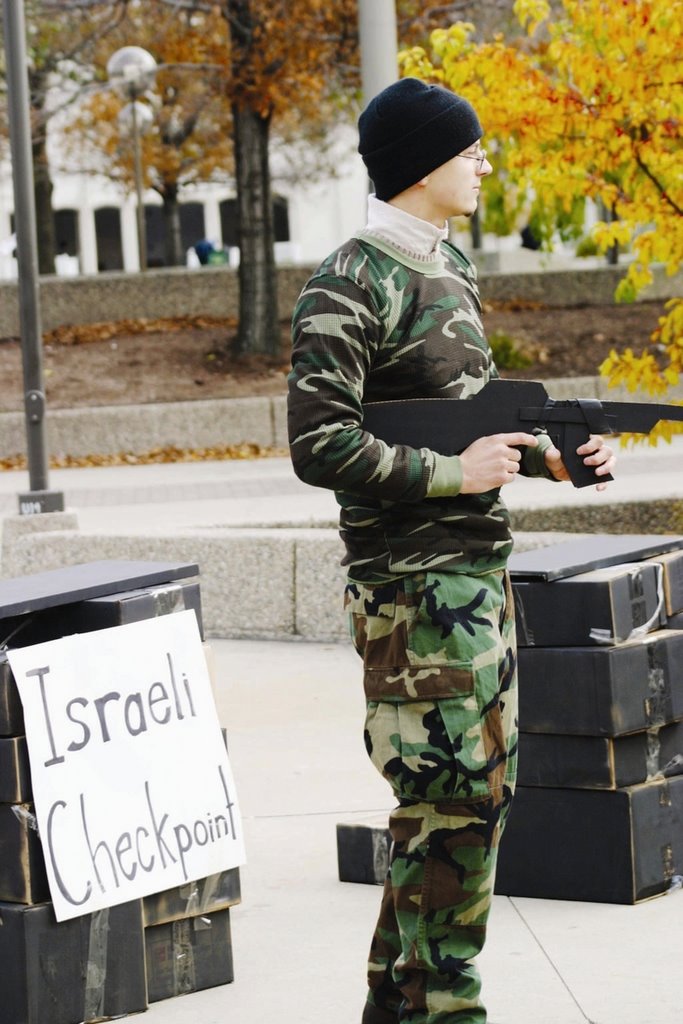
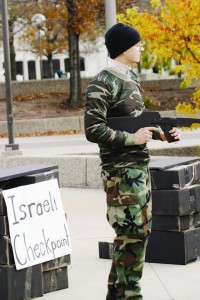
- We’re seeing things like mock walls to illustrate what the apartheid wall is doing.
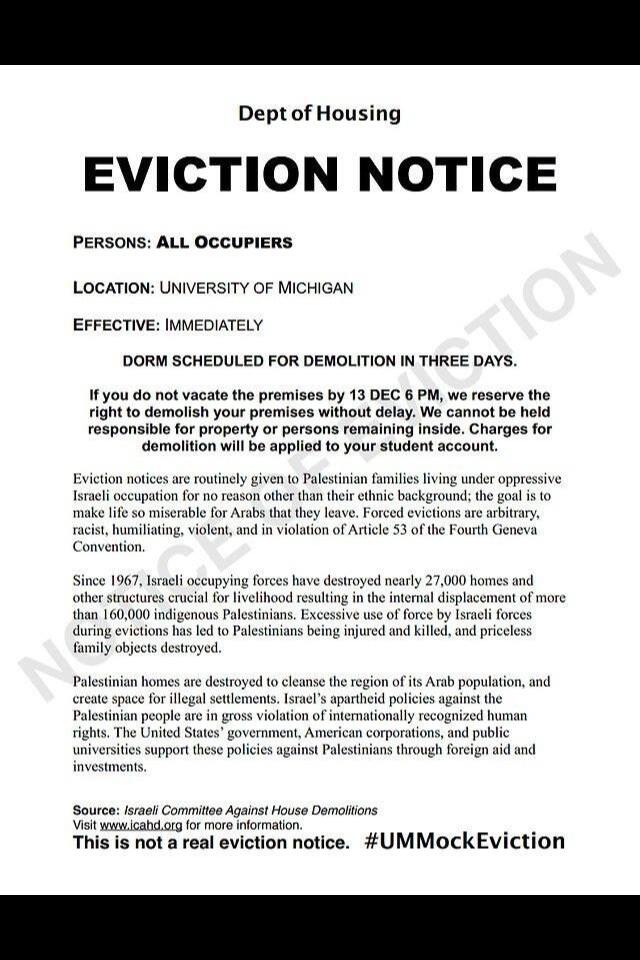
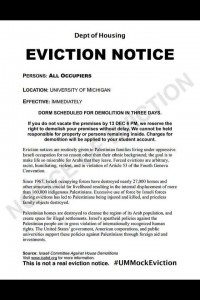
- We’re seeing things like mock eviction notices being distributed in dorms to illustrate the way Israel demolishes Palestinian civilian homes.
- We’ve working with Northeastern students since last year. This year when students, some affiliated with SJP distributed mock eviction notices under dorm room doors, the university, right away, suspended the entire group.
- The reaction is typical but its unique in the type of pressure that’s been put on this university.
- The reaction was disproportionate and inappropriate.
- They sent university police to student’s homes, they interrogated a couple of students. They filed disciplinary charges against 2 students for allegedly allowing students to enter the dorms.
- Title IV of the Civil Rights Act prohibits discrimination on the basis of race, national origin and color by educational institutions.
- This has been used by Jewish groups to allege that universities are discriminating Jewish students by tolerating a hostile anti semitic environment.
- Accusations of anti semitism underlie this backlash. We saw this with mock eviction notices in several places, at Florida Atlantic University last year. The ADL accused the SJP of targeting Jewish students with these notices saying they only put them under Jewish student’s doors.
- The same accusations at Rutgers, that Jewish students were targeted.
- The burden has fallen on those advocating for Palestinian rights.
- What sustains us is really the activists themselves who are really inspirational in their dedication to this issue.
- There are number of student groups that are trying to pass divestment actions at their schools and there’s a sustained attack and we know that Netanyahu himself has said this is a prime threat to the state of Israel.
Guest – Attorney Dima Khalidi, founder and Director of Palestine Solidarity Legal Support (PSLS), and Cooperating Counsel with the Center for Constitutional Rights (CCR). Her work includes providing legal advice to activists, engaging in advocacy to protect their rights to speak out for Palestinian rights, and educating activists and the public about their rights.
———————————————————————-
CIA Sponsored Terror, Civil Liberties, Criminalizing Dissent, Human Rights, Prison Industry, Surveillance, Torture
Podcast: Play in new window | Download
Updates:
- Immokalee Workers Demonstrations In Florida
- Michael Ratner: Ukraine Crisis Analysis Update
- Hosts Discuss CCR NYC Firefighter Racial Discrimination Case
- Law and Disorder Contest – The NSA Collected All Outgoing and Incoming Phone Calls Of What Country? (Use Site Contact Form)
- Brooklyn Folk Festival April 18 2014
- Hosts Remember Melba Hernandez, Heroine of Cuban Revolution
——-
FBI Meeting With TransCanada Industry Partners On the Keystone XL Pipeline
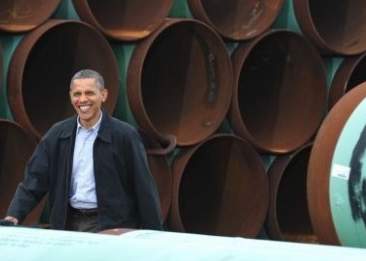
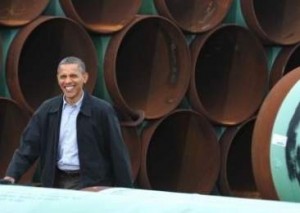
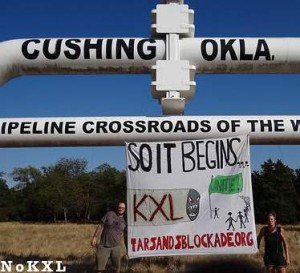
Here on Law and Disorder we’ve reported in depth on the targeting of environmental activists by federal agents that categorizing their exercise of free speech as terrorism. In a recent FOIA request obtained by the Earth Island Journal, the FBI held a daylong strategy meeting with TransCanada Corporation, the company building the 2100 mile Keystone XL pipeline in April of 2012. In March of 2012 President Obama made a speech in Cushing Oklahoma confirming the approval of the southern portion of the pipeline toward the Gulf of Mexico. The FBI meeting suggests that the highest levels of law enforcement are involved to monitor opposition to the pipeline.
Adam Federman:
- I spoke with a former FBI agent Mike German who is now at the Brennan Center and he was very surprised to see the juxtaposition of the FBI and TransCanada at the top of that letterhead which makes them look like partners.
- I also uncovered correspondence between TransCanada corporate security adviser and an FBI agent in South Dakota who he had invited to this meeting in Nebraska. They seem to be on very good terms.
- Clearly the company is using all levers of power to get this thing, not only approved but push opposition out of the way and potentially criminalize dissent.
- Tar sands oil which is primarily being mined up in Alberta is considered the dirtiest form of oil on the planet.
- The timing is quite interesting. Obama was in Cushing, at the TransCanada pipeyard at speech he gave that was not open to the public. That was on March 22, 2012 and he essentially approved the southern portion of the pipeline.
- About a week before that the FBI had met with TransCanada to start planning this strategy meeting.
- I’m in the middle of requesting additional documents looking more closely at both the Homeland Security and the FBI’s collaboration with the oil and gas industry beyond TransCanada.
Guest – Adam Federman, a contributing editor to Earth Island Journal. His writing has appeared in the Nation magazine, Salon, Columbia Journalism Review, Utne Reader, Gastronomica, CounterPunch, Adirondack Life, Adirondack Explorer and other publications. He is the recipient of a Polk Grant for Investigative Reporting, a Middlebury Fellowship in Environmental Journalism, and a Russia Fulbright Fellowship.
——
CIA Caught Spying On The Congressional Committee That Oversees It
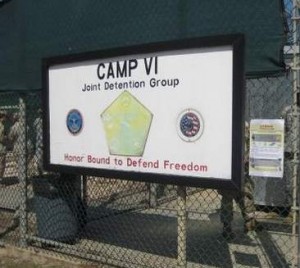
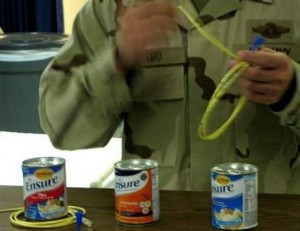
We continue to discuss the bitter dispute between the CIA and the U.S. Senate committee that oversees it. Last week, the contention erupted when the committee chairwoman accused the CIA of spying on Congress. Senator Dianne Feinstein announced publicly the CIA had searched computers used by committee staffers examining CIA documents when they research the agency’s counter-terrorism operations and harsh interrogation methods or torture. She charged that the search violated the Fourth Amendment of the U.S. Constitution, the Computer Fraud and Abuse Act and an executive order that prohibits the CIA from conduction domestic searches. CIA Director John Brennan denied any charge of computer hacking.
Attorney Scott Horton:
- I say we go back to December 2012 when the Senate Select Committee finished work on a massive 6000 page review of torture practices including the operation of black sites by the CIA.
- This is something was researched over a period of several years. This was sent for CIA review and comment, and a war broke out almost immediately between the CIA and the Senate Select Committee.
- The CIA was making it clear that there were factual inaccuracies.
- The Senate Select Committee said – Now wait a minute, the CIA’s own notes about this show that their claims are not correct. That exchange is what triggered the latest war.
- In this case we come down to a set of particulars about how information was transmitted from the CIA to the Senate Select Committee.
- The CIA would not simply turn over documents to the Senate to be used in Senate offices and reviewed.
- What’s now become clear is that certain materials were turned over the Senate Select Committee and the CIA realized after the fact it wasn’t such a good idea, because it showed that the CIA was lying about aspects of its program.
- So they went in and deleted the files that they already turned over to the committee. I’d say that’s right at the crux.
- The CIA’s General Counsel, a fellow named Robert Eatinger then filed a criminal reference with the U.S. Department of Justice saying there had been a violation of security protocols by the Senate and the Senate staffers and demanding that the FBI and the Department of Justice investigate the Senate and the conduct of the Senate’s investigation.
- Then I think Dianne Feinstein went to the well of the Senate and delivered a remarkable speech – in which she talked about this in crisis of the Republic terms.
- It was really a dramatic speech, a very rare speech.
- This is the sort of thing that will get printed up and reproduced in text books.
- They really had to do something awfully bad to get her riled up this way and they did.
- There is no such thing is security classifications that block a Senate inquiry or block access of Senate staff who have security clearance.
- We know there that the lawyer at the Counter-terrorism center who was providing information to the Department of Justice to solicit those memos consistently made false or incorrect statements to the DOJ to get the memos, and that would be Robert Eatinger.
- Congress should have its own oversight of its own operations. It’s not up to the Executive to provide oversight.
- You cannot have the executive providing oversight of Congress’ oversight of the executive. It’s theoretically impossible.
- The National Security Division was established to be a law firm for the CIA.
- So they work for the CIA and the National Security Division has in the past been aggressively involved in cover ups for the benefit of the CIA.
Guest – Scott Horton, human rights lawyer and contributing editor to Harper’s Magazine. Scott’s column – No Comment. He graduated Texas Law School in Austin with a JD and was a partner in a large New York law firm, Patterson Belknap Webb & Tyler.
——————————————————————–
CIA Sponsored Terror, Civil Liberties, Human Rights, Political Prisoner, Prison Industry, Surveillance, Torture, Truth to Power, War Resister
Podcast: Play in new window | Download
Updates:
- Hosts Discuss The CIA Spies On Senate Committee Staff Computers
- Heidi Boghosian: Goes Back To 2009 When The CIA Destroyed Videotapes of Interrogation.
- Michael Ratner: When It Was Disclosed That The NSA Is Surveilling All Of Us, She (Feinstein) Stood In Front Of Everybody And Said Oh, This Is Great.
——
Senate Democrats Help Block Key DOJ Civil Rights Division Nominee
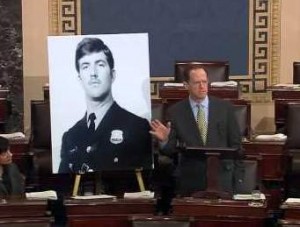
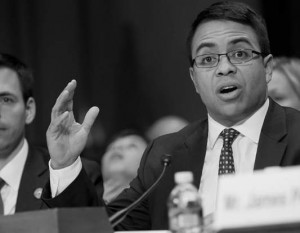
We take a looking at how a group of Senate Democrats broke ranks with President Obama to block key nominee Debo Adegbile as head of the Department of Justice’s Civil Rights Division. Seven democrats joined with Republicans to defeat Adegbile’s bid. That defeat was driven by the Philadelphia Fraternal Order of Police who launched a campaign against Adegbile and his work defending imprisoned Black Panther Mumia Abu-Jamal. Specifically, Adegbile was part of a team of lawyers at the NAACP Legal Defense Fund who successfully argued the trial judge’s jury instructions violated Abu-Jamal’s rights.
Professor Mark Taylor:
- The recent campaign has been foregrounded especially on FOX television news where you heard leading anchors and reporters connecting Dego Adegbile to Mumia Abu-Jamal.
- The Fraternal Order of Police wrote letters to media outlets. They wrote a letter to President Obama objecting to Dego Adegbile. This is fully congruent to what we in Educators for Mumia Abu-Jamal have experienced from the Fraternal Order of Police throughout the years.
- The Fraternal Order of Police will even stoop to maintaining a black list online of any of us Educators around the country not only for working for Mumia but for just for signing ads in the New York Times on behalf of Mumia Abu-Jamal’s new trial or release with restitution, whatever the case, they’ll maintain those charges.
- The Fraternal Order of Police will put pressure on venues that host the events for Mumia Abu-Jamal.
- It is a national organization and in their letter to President Obama they claim to represent some 350 thousand police officers across the country and claim to be speaking for those 350 thousand.
- There are elements of the Fraternal Order of Police all over the country who will step forward to ratchet up this venom against Mumia Abu-Jamal.
- They have always used Maureen Falkner the widow to be in the position of the grieving widow of the slain police officer in spite of the fact that there is exculpatory evidence. They don’t want to discuss that, they want to play the drama of the grieving relative instead.
- Of course that has powerful media appeal it often in our infotainment industry overrides argument, we know.
- There is a stigmatization that is pervasive throughout much of our culture that causes lawyers, public relations officers and others to back away from the issue.
- It’s an outrageous departure and betrayal of a tradition of civil rights advocacy that at least Democratic Party affiliates like to say they have supported through the years.
- We will hope that voters will make them pay a price for this kind of vote.
- We have voting rights issues because Dego Adegbile would have the job of which states to sue for Voter ID laws that are oppressive to African Americans.
- Educators for Mumia Abu Jamal
- Temple News At Temple University Ad Story.
Guest – Professor Mark Taylor, founder of Educators for Mumia Abu Jamal, a group of teachers from all levels of education, organizing since 1995 for a new a trial. Mark Taylor is a professor of Theology and Culture at Princeton Theological Seminary.
———
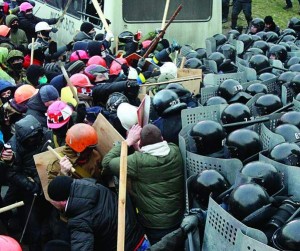
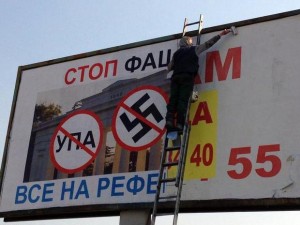
Ukraine and the Pathology of America’s Liberal Worldview. An African American Perspective
In his recent article, Ukraine and the Pathology of America’s Liberal Worldview. An African American Perspective returning guest Ajamu Baracka calls it a massive cognitive deficiency that President Obama asks Congress to agree on a billion dollar package aid for the Ukraine. Meanwhile, the elite opinion in the United States has embraced the position that cuts in public expenditures and services at every level of government are a reasonable and unavoidable necessity. Baracka says the crisis is here in the United States, with extended unemployment benefits for the 1.3 million people who lost thier jobs in Detroit.
Ajamu Baracka:
- It’s clear that there was legitimate social opposition in the Ukraine to some of the policies of the government there and there was an attempt to express some of those concerns that were quickly taken advantage of by some elements of the Ukrainian society that are, have been associated with some of the more fascist elements that have been aligned with the far right for decades.
- Some of those right wing forces ended up being the primary shock troops engaged in all kinds of violent activities.
- A decision was made in which the protesters had won much of their demands in terms of political reforms, but that agreement was jettisoned by those right wing forces.
- The result was that basically they stormed the institutions of the government and proclaimed themselves the new government.
- There’s real danger in characterizing this as a popular revolution. It’s clear that more than half of the population of Ukraine was still not convinced that a revolutionary movement was called for and one in which violated the tenants of the Ukrainian constitution.
- It became clear that the character of this revolution was one that was not really committed to social change.
- Here we have a situation in Detroit a city that is basically bankrupt as a consequence of these predatory banks and the disintegration of the U.S. economy and its urban cores.
- When the city officials went to the administration looking for assistance of course the line was, there’s no assistance for you.
- It’s not just Detroit it’s across the country. We saw in December Congress, when striking their budget deals they eliminated extensions for the long term unemployed.
- When it comes to the American people, the working class, the poor, there’s no money, there’s only growing austerity, but when it comes to advancing what many of us call the “empire” they can always find resources.
- The one billion dollar package to the Ukraine is a stark contrast to the line – There’s no resources to bail out the people of Detroit.
- Ultimately the winners in the Ukraine chess game will be U.S. capital and there would be some European capital that would benefit also.
- Ukrainian economy will be forced to open up. The financial sector will be exposed. Banks will be taken over. Whatever state industries that are viable will be seized, privatized. There will be massive unemployment.
- The Ukrainian workers will find that their wages not only increase but probably will be further eroded because they’re in competition with other poor workers throughout western Europe.
- That’s why the U.S. is salivating at the prospects of penetrating the Ukrainian economy.
- For reasons that are not really clear to me, many folks in the west in the U.S. don’t seem to be able to recognize this growing threat. This tendency to align themselves with the most reactionary elements on the planet.
- The way I see it is a global strategy on the part of U.S. and western imperialism and the alignment they’ve made with what everybody knows to be fascist elements within the Ukraine.
- It’s similar to alignments being made in slightly different ways to the radical right in Venezuela, with the continued support to the right wing government in Israel. .
- What we see is a counter-revolutionary strategy based on closer alignments with right wing forces throughout the world.
- There’s been mass confusion, people not being able to differentiate from the left and right, all they see is opposition and the opposition is enough for them to align with it.
Guest – Ajamu Baraka, Longtime activist, veteran of Black Liberation Movement, Human Rights defender, Former founding director of US Human Rights Network, currently Public Intervenon for Human Rights with Green Shadow Cabinet, member of Coordinating Committee of Black Left Unity Network and Associate Fellow at IPS.
———————————————————————–
Civil Liberties, Criminalizing Dissent, Death Penalty, FBI Intrusion, Habeas Corpus, Human Rights, Political Prisoner, Prison Industry, Targeting Muslims, Torture
Podcast: Play in new window | Download
Updates:
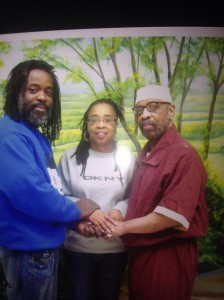
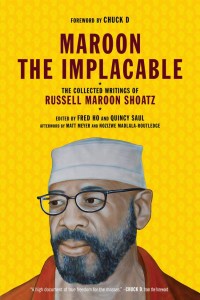
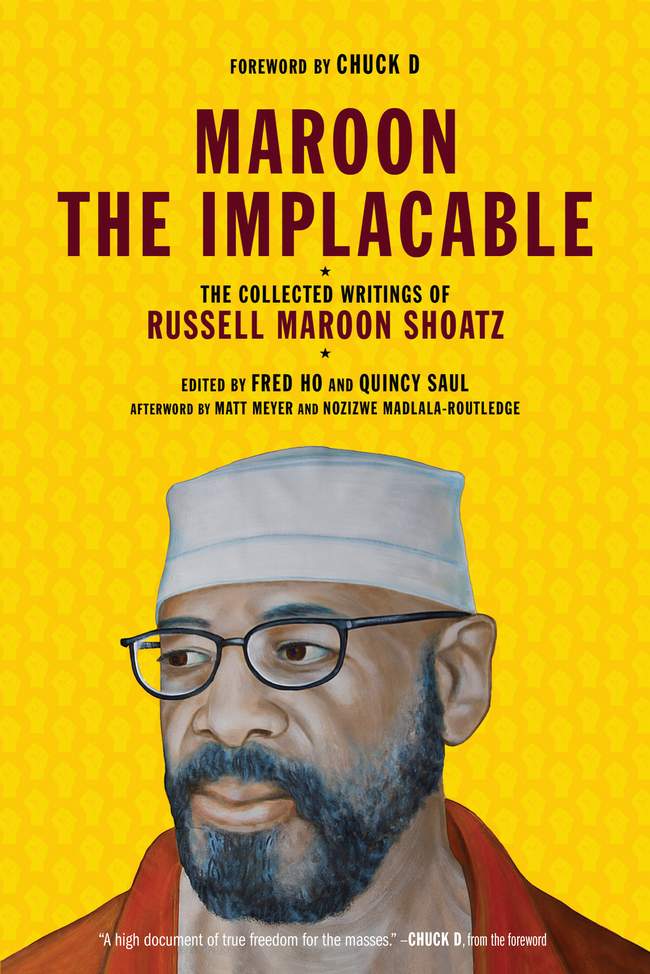
Russell “Maroon” Shoatz Released Into General Population After 22 Years of Solitary
Here on Law and Disorder we’ve been keeping you updated on the campaign to release Russell “Maroon” Shoatz from solitary confinement. We’re heartened to broadcast the news that he has been released from solitary confinement and is now in the general prison population. Maroon has spent 40 years in the U.S. prison system and 22 of those years were spent under intense lock down. He was allowed only one hour a day outside of that cell. In May of 2013 Maroon brought a lawsuit on the grounds that he was subjected to cruel and unusual punishment in violation of the Eighth Amendment of to the U.S. Constitution and that he was denied his legal rights to proceed with a case.
Attorney Bret Grote:
- We had a legal phone scheduled to take place Thursday February 20, when we received notice from the prison that the housing unit that he was in. The restricted housing unit was not going to be able to facilitate that phone call because he was not longer on the unit.
- I received a call from him at 1PM confirming that he had been released from solitary confinement just hours before that very morning. We notified his family. That same night he had his first contact visit in more than 20 years when his son Russell III, and his daughter Sharon were able to go see him. There’s a real wonderful picture of the 3 of them circulating on the internet.
- A constellation of forces and various tactics and strategies that had been deployed over a course of 3 years of renewed, reinvigorated effort to get Maroon out of solitary confinement.
- It started back in August of 2010 when State Representative Ron Waters held a hearing on solitary confinement in front of the House Judiciary Committee and Maroon’s daughter Theresa Shoatz was there and seeing former survivors of solitary confinement and advocates testify in the presence of DOC officials and state legislators inspired her.
- She said on that very day. I remember it crystal clear. “I’m going to get my Dad out of solitary.”
- That began a series of advocacy efforts including phone calls, including action alerts that saw the construction of a coalition of more than 30 organizations including the National Lawyers Guild, the Center for Constitutional Rights, the Human Rights coalition in Pennsylvania.
- There was no change in condition or indication that anything was going to change until late March of 2013. What had been happening at that time was Maroon was getting increasing visits from lawyers. There were more correspondence coming from the legal team.
- Right when we were about to send the Department of Corrections our demand letter that he be released in 30 days or else they’d be hit with a civil rights lawsuit, they abruptly without any notice that this was going to happen, transferred him from the state correctional institution at Greene where he’d been for 18 years to SCI Mahanoy.
- In my experience of 6 years of being a human rights advocate for prisoners in Pennsylvania, I’ve never heard of prison officials going to somebody in the solitary units and telling them we’re going to do what you want.
- In the process of constructing this massive imperial prison state they have resorted to similar ideology, punitive ideologies and tactics to manage that prison population once they’re behind the walls, and that includes widespread use solitary confinement in a way that is qualitatively different than it had been used throughout most of the 20th century.
- It had been used as a long term affirmative strategy for managing the prison population for warehousing for people that were problematic for prison officials because maybe they filed a lot of grievances, or they were jailhouse lawyers, maybe they were political prisoners or dissidents . . .
- In the 30 years that this has been ongoing, there have been waves of activism that really at the outset were led by people like Bonnie Kerness, director of AFSC’s Prison Watch Project.
Guest – Attorney Bret Grote, a member of the Russell Maroon Shoatz legal team and the Abolitionist Law Center. Bret has worked with the Human Rights Coalition since 2007 as an investigator, organizer, and researcher. He was the Isabel and Alger Hiss Racial Justice Fellow at the Center for Constitutional Rights in 2012. He graduated from the University of Pitt Law School in May 2013 and was recognized as the school’s Distinguished Public Interest Scholar.
—–
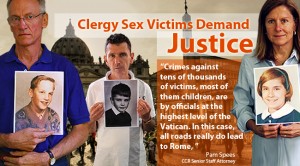
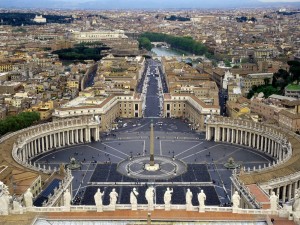
U.N. Expresses “Deepest Concern” over Widespread Sexual Abuse by Clergy
Here on Law and Disorder we continue to report on the work of the Center for Constitutional Rights and SNAP, the Survivor’s Network of Those Abused By Priests in bringing accountability within the Catholic Church for widespread sexual violence against perhaps hundreds of thousands of victims, mainly children. Recently, the Vatican was summoned before the United Nations Committee On the Rights of the Child to respond to allegations of systemic sexual violence and practices that have allowed abuse to continue.
Attorney Pam Spees:
- We were in Geneva with members of the Survivors network, those abused by priests because the Vatican was having to report to the UN Committee of the Rights of the Child for the first time ever on the issue of sexual violence.
- This is in the wake of more than a decade of scandals that have broken out in different parts of the world and investigations in different countries which really revealed that the Vatican has a system in place that actually facilitates this widespread sexual violence.
- The treaty set up a committee of independent experts. Their job is to see compliance with the treaty and review different countries that have ratified this convention, basically in a dialogue with them in how they’re complying with the treaty, protecting children’s rights.
- The committee had asked for data on the scope of sexual violence. The information the Vatican has about it. What was done in these cases, with individual priests but also evidence of higher officials who helped cover up these crimes around the world.
- Vatican officials are claiming that this is a thing of the past and that they’ve made changes. They point to 2011 when Pope Benedict issued a new set of guidelines, essentially an instruction to Catholic authorities around the world that they should comply with civil laws.
- We’ve seen similar types of policy and language in the U.S. We’ve seen similar language in Ireland. But what has happened in Ireland and the U.S. is in that realm, officials at the Vatican have overridden the national level bishops plan to require mandatory reporting of sexual violence.
- The same practices are happening behind the policies, and the policies have no teeth.
- You have a former archbishop in Wisconsin who has talked about shredding documents on a routine basis under sworn testimony, he had admitted to this, but the priest-shifting is just common. One former cannon lawyer said its part of the DNA of the church.
- We know sexual violence can occur in every institution but when you have a closed system like the Vatican that is saying it can police itself and its really not. It’s actually continuing to enable – they (the committee) got the way it was operating and that was really important for the survivors to be there and they called them out on that.
- It’s not just putting the blame on individual perpetrators, its about changing the system fundamentally and the way it operates.
- We’ve seen Vatican officials come out in two ways and criticize the report. One is the focus on the committees questions about non-discrimination issues.
- The treaty is a wide ranging treaty that sets out a number of rights that are to be protected, respected and fulfilled by the state’s parties.
- The Vatican has operated as a state when its convenient and then falls back to its religious entity status when its not convenient to be a state.
- What’s coming up next is UN Committee Against Torture has decided to call the Holy See for review. That will be happening in April, again in Geneva.
Guest – Pam Spees, senior staff attorney in the international human rights program at the Center for Constitutional Rights. She has a background in international criminal and human rights law with a gender focus, as well as criminal trial practice. She serves as lead counsel on several of CCR’s cases and initiatives including, Sexual Minorities Uganda v. Lively, a case brought against a U.S. based anti-gay extremist for his role in the persecution of LGBTI people in Uganda; Murillo v. Micheletti, a case brought by the parents of a youth killed by the coup regime in Honduras; and in the legal effort to hold Vatican officials criminally responsible for the crimes against humanity of rape and sexual violence within the church.
——————————————————————————————
CIA Sponsored Terror, Civil Liberties, Criminalizing Dissent, Crony Capitalism, FBI Intrusion, Guantanamo, Human Rights, NSA Spying, Political Prisoner, Prison Industry, Surveillance, Torture
Podcast: Play in new window | Download
Updates:
—-

The Drug War: Policing and U.S. Militarism at Home and Abroad
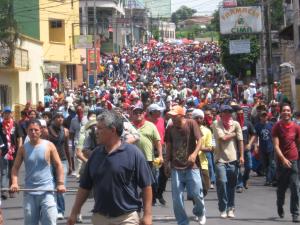
Last week the Center for Constitutional Rights hosted an event titled The Drug War: Policing and U.S. Militarism at Home and Abroad. We’re joined by one of the panelists David Vivar, he’s an author and scholar at National Autonomous University of Honduras at the Faculty of Political Science and International Relations of the University of Calabria. His work focuses on the U.S. cooperation in the Honduran military coup of 2009 and the centrality of drug trafficking to state power in Honduras. What you will hear in this interview is that the U.S. Drug War has not only fueled mass incarceration and discriminatory policing practices here in the U.S. but also supports violence and militarization throughout Latin America. We get the details of that and David’s strategies to resist the racist, and devastating war.
David Vivar:
- It’s been constant that Congress asks to stop human rights violations.
- This goes all the way back to the simulation of the rule of law, to a democratic state.
- We have the highest murder rate in the whole world, and we have no war, not a consistent war declared except the war on drugs.
- We’re fighting a war that has turned the current conditions into a civil war.
- When you start having conflicts between drug lords, Mexican cartels and Colombian cartels – what do they do? They go to the space right in the middle, which is Central America and the northern triangle.
- Guatemala, Honduras and El Salvador have seen the consequences. We are the collateral damage.
- 79 percent of the cocaine that travels to the United States goes via Honduras. Basically what the Department of State is doing is investing money on kingpins and drug lords in the Honduran institutions.
- After the coup the military took back power and the U.S constantly supported this new democratic military civil alliance, which in the hand is what happened in Mexico.
- The (Honduran) military has drug lords of its own.
- Miguel Facusse is the most powerful man in Honduras. He’s got the Dinan Corporation which has African Palm plantations throughout the whole drug path.
- Basically the conflict around land is a failed agrarian reform.
- You have indigenous populations that lost their land. Their land was given to this man. The most powerful person, he gets the African Palm plantations which is the best place, as we know from wikileaks to establish small airports for aircraft to land there and deal with the drugs.
- The resistance is still in the streets against a lot of laws – the opening for business of the country – model cities and charter cities are something we’re fighting back in keeping our resources ours.
Laura Raymond:
- The U.S. did cut off military aid for a short amount of time directly after the coup but instead of backing the movement from the Honduran civil society for reinstatement of President Zelaya – throughout that summer and fall there was a huge movement, the streets were filled with people calling for the reinstatement of their president – the United States instead pushed for new elections that fall which was what ended up happening.
- The elections were heavily boycotted by civil society yet the U.S. was the primary force in the region for supporting those elections.
- After those elections took place and Pepe Lobo is elected as president, the U.S. reinstated their support for the Honduran military and police, despite massive human rights violations that were taking place on an almost daily basis.
- You really have a very close relationship between the Honduran military and police and the U.S. government and military.
- There have known to be drug planes that have landed on his property (Miguel Facusse) We know that the U.S.State Department knows about that because of wikileaks and the U.S. goes on to have this cozy relationship with him and the political arm of Honduras that he runs in.
- The World Bank continues to fund him and give him subsidies for the African Palm plantations. Where is the interest in stopping the drugs if you’re working with this person who there are drug planes landing on his property.
- He has a private army basically. He has all these private security contractors that implicated in murders. The Center for Constitutional Rights has laid those out in a report to the International Criminal Court, naming Miguel Facusse as a criminal that needs to be prosecuted.
- The U.S. depends on the Honduran government to have a very friendly government in the region. We have a lot of military presence there, we have a lot of bases. It’s a relationship that depends on the repression of civil society throughout Honduras.
- There’s a massive resistance movement that has taken a lot of repression in the last four years. What’s going on with the drug wars, its very dark and scary but the other side is this movement that David is part of.
Guest – David Vivar, is a sociologist, currently a scholarship holder from the National Autonomous University of Honduras at the Faculty of Political Science and International Relations of the University of Calabria, where he studies dependence, international asymmetry and the division between center and periphery nations. His articles and essays analyze media discourse and public opinion; the representative intermediations of Honduran democracy, the influence of U.S. cooperation in the military coup of 2009 and the centrality of drug trafficking to state power in Honduras and its inextricable relation with the neoliberal impoverishment and the ongoing usurpation of democracy.
Guest – Laura Raymond, has over fourteen years of experience organizing, writing, and advocating on social justice and human rights issues in the U.S. and internationally. Much of Laura’s work focuses on the impact of U.S. actors, corporations and government policies and practices abroad.
—–
Imagine: Living In A Socialist U.S.A – Kazembe Balagune
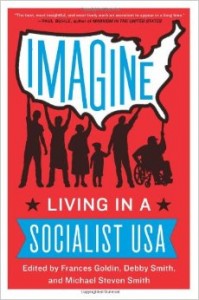
In the past weeks we’ve featured contributors to the book Imagine: Living In A Socialist U.S.A. This book as many know was conceived and edited by Frances Goldin and our own Michael Smith with his wife Debby. We continue to discuss the essays in this ground breaking anthology. Today we speak with Kazembe Balagun, who wrote We Be Reading Marx Where We From: Socialism and the Black Freedom Struggle.
Kazembe Balagun:
- The chapter starts out with a short story on Paul Robeson at the Carnegie Hall in 1957. He sang a song called I Dreamed of Joe Hill last night.
- When we talk about Wall Street, the first commodity were Black slaves. The reason they called it Wall Street is to keep the Native Americans out.
- There’s always been an interweaving of Black freedom struggles in the socialist experience.
- One of the first socialist experiments happens in the Sea Islands of South Carolina and Georgia where General Butler issuing Article 15 calling for all land held in common for negros.
- Then you have John Brown issuing an alternative constitution of the United States which calls for all land to be held in common between blacks and whites.
- Martin Luther King Jr (in a speech said) there has to be some form of socialism in the United States in order to achieve economic democracy.
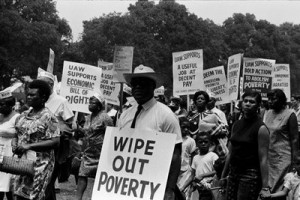
- The Poor People’s march going forward in 1968 in his fight for Memphis, these are all parallels for economic democracy.
- What we find today is that these socialist ideas are prevalent in the African-American community.
- I think there’s a way we can excavate this history for our own social movement.
- This capitalist society really has little to offer people, particularly young people of color.
- I always take into account is that there’s always been a tradition of African-American prophetic tradition which always looks beyond what’s been given to us and looks at the condition of possibility.
Guest – Kazembe Balagun, an activist and cultural organizer from the Bronx and former program director at the Brecht Forum. He is currently the project manager at the Rosa Luxemburg New York Foundation.
———————————————————