CIA Sponsored Terror, Civil Liberties, Criminalizing Dissent, Habeas Corpus, Human Rights, Political Prisoner, Surveillance, Torture, War Resister
Podcast: Play in new window | Download
—–
Imagine: Living in a Socialist USA
—–
Lawyers You’ll Like: Attorney Bill Schapp
Attorney William Schaap graduated from the University of Chicago Law School in 1964 and has been a practicing lawyer since. Bill specialized in military law and practiced in Asia and Europe. He later became the editor in chief of the Military Law Reporter in Washington for a number of years. In the 70’s and 80’s he was a staff counsel of the Center for Constitutional Rights in New York City. In the late 80s, he was an adjunct professor at John J. College of Criminal Justice of the City University of New York where he taught courses on propaganda and disinformation.
Attorney William Schapp:
- One of first cases at this big Wall Street firm, they had some outside counsel working on it, one of whom was David Lubel, and Dave Lubel who had I think been a recruiter for the Communist Party in his youth, was always good at spotting somebody who was always worth recruiting and he started to tell me there was this convention of this lawyers group.
- It was this 1967 Lawyers Guild Convention in New York. He dragged me to one event, I met Bill Kunstler, I met Arthur Kinoy, I met Victor Rabbinowitz. I’d been on Wall Street for a year or two, I said I didn’t know there were lawyers like this.
- I joined the same day and met Bernadine Dorhn and a few weeks she called me and said we need your help.
- She said you gotta defend a bunch of Columbia students. The next thing I knew the riot started at Columbia and she said you have to go down there and defend them.
- I signed up to be staff counsel on the National Lawyers Guild Military Law Project in Okinawa, Japan.
- When you work overseas in that kind of a climate with the military you learn a lot fast about American imperialism.
- Once you learn that, you learn about the CIA.
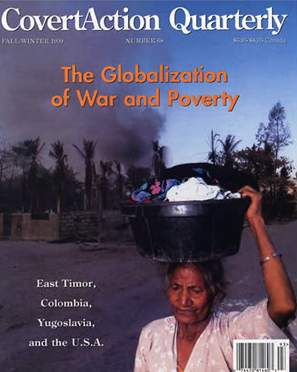
- That led us to originally working on Counter Spy magazine and then on Covert Action Magazine.
- The original purpose was to expose the CIA. We worked with Lou Wolf who is an expert in uncovering CIA agents in US embassies, not through any classified documents but because if you knew how to read the paperwork and State Department things, you could tell who are the “ringers.”
- We were so successful that Congress passed a law against us.
- Our goal was to make these people ineffective because the only way most CIA could work, particularly the ones that were assigned to an embassy was to have to pretend to be something else.
- They were all third assistant political secretaries and those were all phony things. Their job was to finagle their way into various community organizations in whatever foreign capital they were posted to recruit people to turn against their own countries and become traitors to their own countries, to become spies for the U.S.
- We thought if we identified these people, it might make their job a little bit harder, which it did.
- Of course, the problem with that is the government said we were trying to get them killed which we weren’t trying to do and nobody we did expose ever did get killed.
- He (Philip Agee) had been an adviser to Counter Spy. Counter Spy folded when Welch got killed, cause the pressure was too much and started Covert Action Quarterly.
- He was not the person discovering who the under cover people were, Lou Wolf was doing that.
- Phil wrote articles for us in every issue and we worked very closely with him.
- Once you start exposing these things, they really don’t have any defense.
- They tried to catch us in something phony. We would get tips that would turn out to be CIA trying to get us to print some story that wasn’t true so they could then discredit us.
- We had more interference from the government when we were doing military law work, before Covert Action Quarterly.
- They would plant bugs in our attic in Okinawa, things like that.
- The Intelligence Identity Protection Act has 2 parts. One makes it a crime for someone in the government who has classified information to reveal someone’s identity. The second part makes it a crime to reveal the identity of someone you did not learn from classified information or you position. (But if you were in the business of exposing these people . . .)
- Regarding his newsletter The Lies of Our Times – It was in the 90s, from 1990 to 1995 I think. To a certain extent, the abuses we were crying about got a little bit less over time because that’s sometimes the helpful result of that kind of exposure.
- We were just tired of people thinking that if it was in the New York Times it must be true.
- The fact is that those people lie all the time.
- I think we’ve gotten to a point where people recognize that the government lies to them and that there’s an awful lot that goes on that they don’t know.
Guest – Attorney William Schapp graduated from the University of Chicago Law School in 1964 and has been a practicing lawyer since. Bill specialized in military law and practiced in Asia and Europe. He later became the editor in chief of the Military Law Reporter in Washington for a number of years. In the 70’s and 80’s he was a staff counsel of the Center for Constitutional Rights in New York City. In the late 80s, he was an adjunct professor at John J. College of Criminal Justice of the City University of New York where he taught courses on propaganda and disinformation.
In addition to being a practicing lawyer, Bill was a journalist, publisher and a writer specializing in intelligence as it relates to media. He was the co-publisher of a magazine called the Covert Action Quarterly for more than 20 years. He also published a magazine on propaganda and disinformation titled Lies Of Our Times. Attorney Bill Schapp has written numerous articles and edited many books on the topic of media and intelligence.
———-
A Panel Discussion: Militarizing, Domestic Spying, and the Boycott of Israel
We hear a presentation by David Swanson with the (New Yorkers Against the Cornell-Technion Partnership – NYACT) presentation. David Swanson is working to organize a movement to end war at WorldBeyondWar.org. His books include “War Is A Lie.” He blogs at davidswanson.org and warisacrime.org.
Recorded by Deep Dish TV
———————————————————————–
CIA Sponsored Terror, Civil Liberties, Criminalizing Dissent, FBI Intrusion, Guantanamo, Habeas Corpus, Human Rights, Iraq War, Political Prisoner, Prison Industry, RFID, Supreme Court, Surveillance, Targeting Muslims, Torture, War Resister
Podcast: Play in new window | Download
Updates:
——–
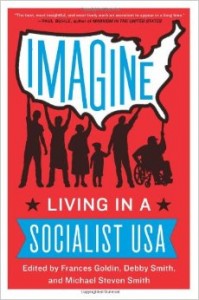

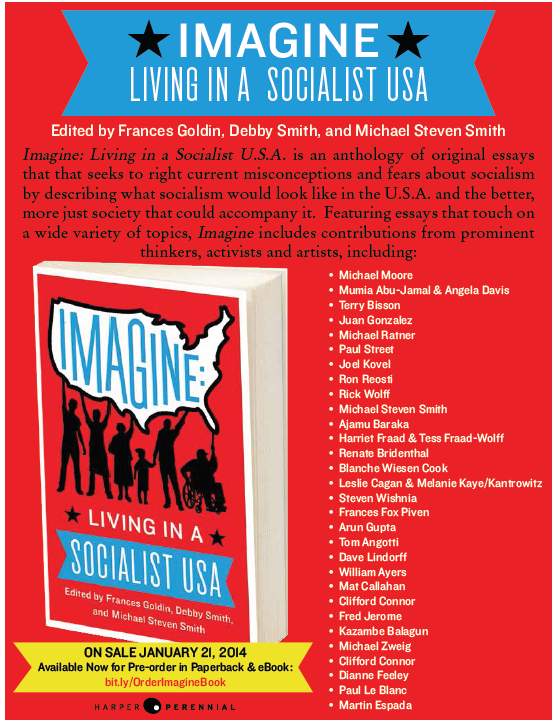
Imagine: Living in a Socialist USA-Frances Goldin, Michael and Debby Smith
Our own co-host Michael Smith, his wife Debby and Frances Goldin have assembled and edited an anthology of powerful essays titled Imagine Living In A Socialist USA. Prominent thinkers, activists and artists have given their perspective of what the United States would look like through the lens of a socialist society. This new work is an important contribution to what we hope will be a broader movement. It includes an indictment of capitalism, an alternative U.S.A. and how to get there.
Frances Goldin:
- It was my brainchild because I wanted to accomplish 3 things before I joined by ancestors. One is everyone who lived in Cooper Square who had been fighting Robert Moses and saving their old tenements since 1959 its been a tremendous long struggle.
- This is the only community land trust in the Northeast. The only one.
- The next one is that I was really distressed at the direction our country was moving. Here I am 89 years old and all of a sudden North Carolina says that we’re going back to the old days where you had to bring in your right arm and read the Constitution without missing a word in order to vote. That plus spying on every American and continuing the wars.
- It was just breaking my heart. I was very distressed that everybody thought that socialism was a dirty word, it was an undemocratic terrible way of life and they just didn’t have a clue as to what it really meant.
- I thought it would be a great idea to pull together some of the greatest minds in the country and let them talk about health, education, welfare, homosexuality, every subject that effects American’s lives and explain how it would be different under socialism if it were democratically done, which is the only way it should be done.
- Within one year, 31 leading brains in the United States for no charge, they did it free, wrote their essays on each one of these subjects. The book is in my hand, its finished and its beautiful and it makes me so happy. That’s my second accomplishment.
- The third one is to see one of the leading intellectuals in the world free, forever free. Mumia Abu-Jamal.
- I couldn’t do it alone, it was a great plan and so I leaned on to dear friends, Debby and Michael Smith.
- I had to force Harper Collins into this, they really didn’t want to do it.
- We were very lucky to hire an incredibly good editor, whose livelihood was editing for magazines and newspapers. If a sentence was too long, he cut it into 2 or 3 sentences.
- Right now, the word socialism, people think of dictatorship, they think terrible things, they think undemocratic.
- This is a simple instruction about how it would effect us with regard to health, education, housing, welfare, all of those subjects which make it so difficult for all of us to live.
- It can’t be a dirty word, it happens to be the most democratic way of governing possible.
- Get the workers to run the company. It’s happening in Spain, with dozens of corporations that have become worker owned.
- It’s going to be the workers dividing the profits among themselves.
- It will only happen when the workers are angry enough and informed enough to know that they can run the show.
- Every penny of the royalties will go to free Mumia Abu-Jamal
- We are not earning one dime from this book. It was a labor of love. It was a labor of activism.
- It was a labor to change the world and make it a better place.
Guest – Frances Goldin is the President & Principal of Frances Goldin Literary Agency. Frances has worked in publishing for 63 years, as an agent and as editor-in-chief of a children’s publishing company; she founded the Frances Goldin Literary Agency and sold her first book in 1977. Authored by Black anthropologist Betty Lou Valentine and titled Hustling and Other Hard Work, the book continued to receive royalties for 32 years. One of the agency’s strengths is that many of its books continue to earn royalties long after publication. Reflecting Goldin’s radical politics, the Agency concentrates on literary fiction and serious, controversial, progressive non-fiction.
—–
Attorney Michael Smith:
- I don’t think its a dirty word, because people see what’s going on under capitalism and they don’t like it. The economic situation in this country ain’t gonna change, its only going to get worse.
- Frances is quite an influential literary agent in this country.
- What’s your definition of socialism? I said a democratic economy and political system, both where people from the bottom up control how we make a living, and how we live.
- We’re having a book launch on January 27. It’s at 126 Crosby Street in SOHO at the book store called Housing Works.
- In order to achieve the kind of socialism we’re talking about and that’s socialism from the bottom up you need a broad democratic movement of people.
- All the left wing parties, all the movement groups, we gotta get together around a common program.
- One of the chapters that I really like, and this isn’t to flatter you Michael Ratner, but you wrote a chapter on what I would do if I was US Attorney General.
- Paul LeBlanc writes his chapter about the 3rd American revolution. Diane Feeley writes about that in her chapter. She’s an auto worker retired from Detroit.
- Michael Zweig, the great sociologist, we reprint his speech from Occupy Wall Street where he talks about the 1 percent, the ruling class.
- He says actually its 1/10 of 1 percent. Those are the people who are the top of the economy and different organizations in this country. He said, you gotta be very careful, because these people will kill ya.
- In the second part of the book, we emphasize use your imagination. How do we organize the economy democratically?
- How do you organize a corporation democratically? Rick Wolff wrote that chapter.
- There are 31 chapters in the book. The last chapter suggests itself. How do we do it?
- We’re not against leadership, we’re against undemocratic leadership but you need people who’ve had some experience and who can draw the lessons of the past.
Guest – Attorney Michael Smith is co-host of Law and Disorder, and a New York City attorney and author. His most recent book, written with Michael Ratner , is Who Killed Che? How The CIA Got Away With Murder. He is on the boards of the Center for Constitutional Rights, and the Brecht Forum. He was educated at the University of Wisconsin in the 1960s, where he learned social history from the great teacher Harvey Goldberg. He has testified on Palestinian rights before committees of the US Congress and the United Nations.
Guest – Debby Smith is a long time socialist since going to college in Boston during the radical sixties. Debby worked full-time for the anti-Vietnam War movement, the Kent State Legal Defense Fund and in the feminist, union and socialist movements. She is also the wife of Michael Smith and participates in the anti-capitalist and pro-democracy movements that are growing rapidly in the United States and worldwide.
————————————————————————————————————
Afghanistan War, CIA Sponsored Terror, Civil Liberties, Criminalizing Dissent, FBI Intrusion, Habeas Corpus, Human Rights, Iraq Veterans, Iraq War, Targeting Muslims, Torture, War Resister
Podcast: Play in new window | Download
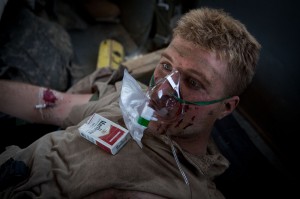
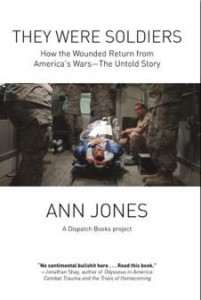
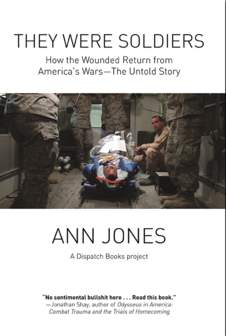
They Were Soldiers: How the Wounded Return from America’s Wars
What are the true costs of war in Afghanistan? Our guest, author Ann Jones has written an impactful book titled They Were Soldiers: How the Wounded Return from America’s Wars, it chronicles a world mostly hidden from the public. Ann Jones has spent nearly a decade working with Afghan civilians and writing about the effects of war on their lives but in the last couple years, she focused on the human toll on and off the battle field as U.S. soldiers return back from war zones with permanent mental damage, missing limbs or as quadruple amputees.
Ann Jones:
- I live in Norway where peace is taken for granted as it is in Europe.
- The United States looks crazed, the way we send our forces out all over the world, are always looking for a fight.
- Any unit of any size has a special unit within it that does mortuary affairs because all combat units are losing soldiers all the time and even soldiers who never leave base may be victims of this war. Suicides for example.
- The job of the soldiers assigned to mortuary affairs is to protect the other soldiers from knowledge of those deaths.
- Their job is to go out and retrieve the pieces of soldiers who very often in Afghanistan have literally been blown to pieces and bring those body parts and remains back to the base, to thier little secret part of the base and try to match up and put them in “transfer cases.” – to transfer them home to Dover, Delaware where they are repackaged, gussied up to be put in coffins and sent on for families for burial.
- Landstuhl Regional Medical Center is very close to Ramstein Air Base in Germany. There are special air ambulance services that go out from there to Africa, to Asia to pick even individual casualties. The individuals are often members of the CIA or private contractors or military special ops people.
- The suicides have been increasing year by year. Many of those suicides take place in the field. There have been a number that have been documented as a result of hazing and sexual assaults.
- A great many more take place here at home when soldiers return and find that they can’t live with themselves.
- I think what’s really troubling now is the number of soldiers and ex soldiers who aren’t really counted in this statistic who are taking their lives under the influence of opiad-pain killers, that have been pushed upon them by big-pharma.
- They’re shown to be highly addictive, particularly in young people and to be heavily implicated in suicide.
- The rate at which soldiers under treatment in the V.A. are taking their lives is what should be a national scandal.
- It’s estimated that 1 in 3 women soldiers have been the victim of sexual assault.
- Though in fact the number of male soldiers victimized is even greater. The percentage is less but the number is greater because men still represent 85 percent of the personnel in the military.
- Congress is supposed to vote on military appropriations for 2014 very shortly. Kirsten Gillebrand, the senator from New York is leading the campaign to attach an amendment to that budgetary appropriation that would remove the prosecution, the reporting and the decision about the prosecution and the prosecution itself from the chain of command and place it in the hands of specially trained military and civilian legal units.
- Who joins? It’s kids, from poor families, from dysfunctional families. Mainly from in the South and the “rust belt” and urban centers who see very little if any, opportunity for their ambitions and their idealism in their home communities.
Guest – Ann Jones, a journalist, photographer, and the author of ten books of nonfiction. She has written extensively about violence against women. Since 2001, she has worked intermittently as a humanitarian volunteer in conflict and post-conflict countries in the Middle East, sub-Saharan Africa, and central and south Asia. From Afghanistan and the Middle East, she has reported on the impact of war upon civilians; and she has embedded with American forces in Afghanistan to report on war’s impact on soldiers. Her articles on these and other matters appear most often in The Nation and online at www.TomDispatch.com. Her work has received generous support from the Radcliffe Institute for Advanced Study at Harvard University, where she held the Mildred Londa Weisman Fellowship in 2010-11, the John Simon Guggenheim Memorial Foundation (2011-12), and the Fulbright Foundation (2012). She lives in Oslo, Norway, with two conversational cats.
—–

The Black Misleadership Class Versus the Movement and its Legacy
We go now to hear Glen Ford speaking at the Black Agenda Report 7th anniversary gathering at Harlem’s Riverside Church. The theme of the event was ““The Black Misleadership Class Versus the Movement and its Legacy.” Ford gives strong criticism of newly elected New Jersey Senator Cory Booker as the essence of Black misleadership, showing the many ties of the current Newark mayor to corporate America.
Glen Ford is the Black Agenda Report executive editor Glen Ford can be contacted at Glen.Ford@BlackAgendaReport.com.
——————————————————————————-
Books From Law and Disorder Hosts
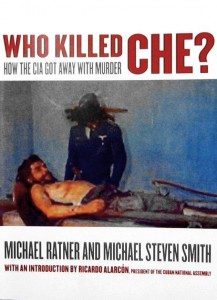
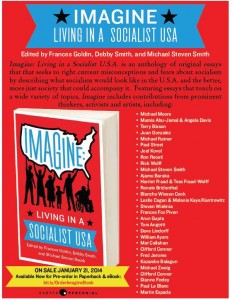
Civil Liberties, Criminalizing Dissent, Extraordinary Rendition, FBI Intrusion, Guantanamo, Habeas Corpus, Human Rights, Political Prisoner, Prison Industry, Supreme Court, Surveillance, Targeting Muslims, Torture, Truth to Power, War Resister
Podcast: Play in new window | Download
Updates:
- Judge Leon Rules That NSA Meta Data Collection Is Likely Unconstitutional.
- Michael Ratner: It Could Be The Deathknell For This Kind Of MetaData Collection
- Ed Snowden’s Response To Judge Leon’s Decision
- Ed Snowden’s Open Letter To The People Of Brasil
- A Christmas Card From Chelsea Manning
- Guantánamo Five: Military Commissions – Their Torture Memories Are . . Classified.
- First Commander Lenhardt: Guantánamo Should Never Have Opened
- American Studies Association Supports Boycott Of Israeli Academic Institutions
——


Over Policing of America: The Criminalization of Everyday Life
In his recent article titled Over Policing of America, attorney Chase Madar outlines a familiar narrative such as the militarization of police, stop and frisk, and how students get swept into the school to prison pipeline. The pattern is clear and who benefits is obvious in the list of over policing examples compiled by our returning guest, such as criminalizing immigration and how simple economic transactions are closely scrutinized by under-cover police.
Attorney Chase Madar:
- I’m hoping this new term will enter the national lingo; over-policing.
- What I wrote about is how the police paradigm has entered the DNA of social policy across the board in the United States in matters that a generation ago would not require police or prosecutors or criminal law, now suddenly do.
- That’s in education, in immigration, in family law, even how we regulate the economy.
- All of these spheres, domains of everyday life are increasingly regulated by police and prosecutors.
- A creeping police state. We need to take a very sobering look at how we’re governing ourselves and how criminal law is displacing and devouring all other kinds of social regulation.
- You see this more and more disciplinary matters in schools get outsourced to police departments.
- Police people are trained to respond to crimes, and to respond to everything as a crime. That’s the nature of police.
- When you send police into a school, the crime is going to sky rocket.
- Even the way we regulate our economy is suffering from an overdose of criminal law and police powers.
- What we have frequently is white collar work getting criminalized by a mare’s nest of criminal laws that are very complex, very difficult to understand.
- It’s not like we have a great financial system that was abused by a few bad apples. We have a really crappy system that’s legal because these people write the laws.
- Immigration law was mostly under the domain of administrative law with milder penalties, civil penalties.
- We’re kidding ourselves if we pretend that’s somehow aberrational.
- Although our political class seems incapable of doing anything constructive about it, they are very adept at channeling all fears about security in any sense into criminal law crack downs and ratcheting up the police state.
- Our incarceration rate is three times higher than the old East Germany.
- I think we need to switch very swiftly to alternative ways of social policy in holding our society together other than throwing cops and prosecutors at it.
Guest – Attorney Chase Madar , a TomDispatch regular and author of a new book, The Passion of Bradley Manning (OR Books). Madar tweets @ChMadar. He’s a contributor to the London Review of Books and Le Monde diplomatique and the author of a new book, The Passion of Bradley Manning (OR Books).
——————————————————-
Books From Law and Disorder Hosts
Afghanistan War, CIA Sponsored Terror, Civil Liberties, Criminalizing Dissent, FBI Intrusion, Guantanamo, Habeas Corpus, Human Rights, Political Prisoner, Prison Industry, Supreme Court, Surveillance, Targeting Muslims, Torture, War Resister
Podcast: Play in new window | Download
Updates:
—–


Judge Ruling Allows Detroit Bankruptcy To Move Forward
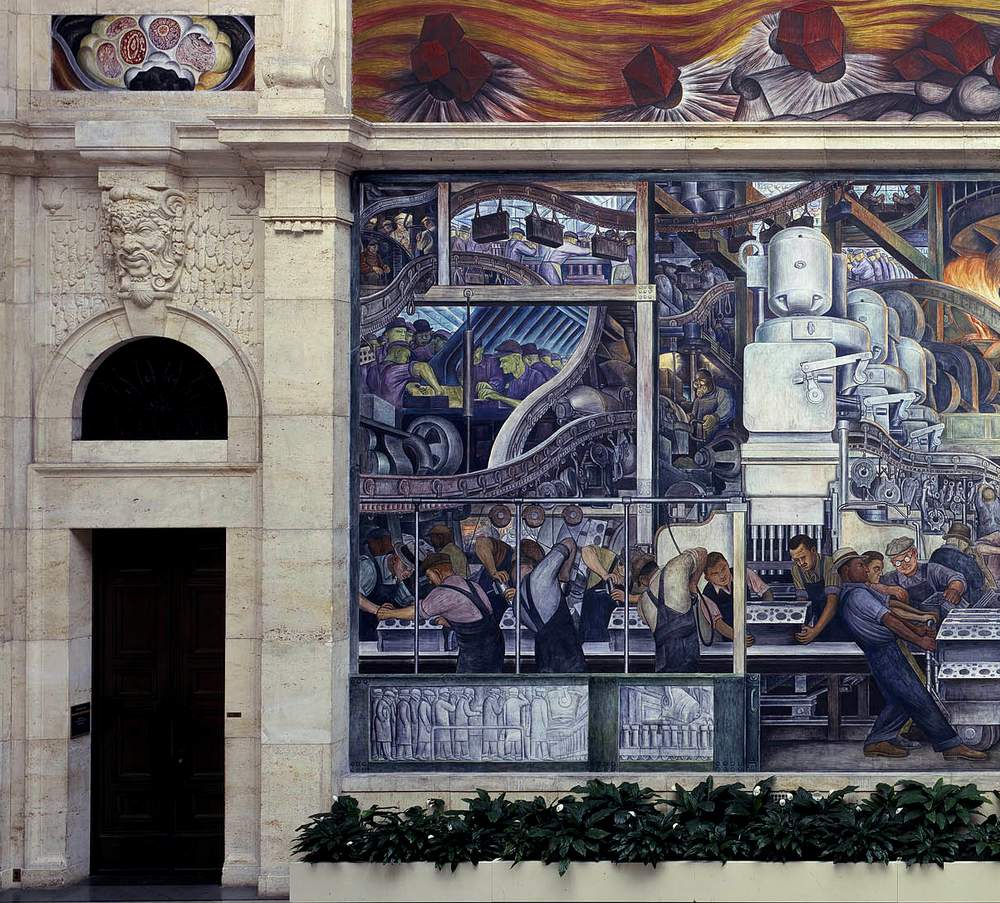
This summer we spoke with retired auto worker and activist Dianne Feeley about the plans to wipe out the pensions and health benefits of all current and retired city workers by emergency manager of Detroit, Kevyn Orr. We also looked at the history of workers in Detroit from the perspective of black workers and the broader pattern of oppression. Last week, a ruling by Judge Stevens W. Rhodes of the U.S. Bankruptcy Court allows the city of Detroit to move forward in the bankruptcy process. The cradle of the American auto industry will now be allowed to pay off debts and restore essential services.
Professor Laura Bartell:
- It is the first time that a bankruptcy judge that pension obligations constitute contractual obligations that are subject to diminution in bankruptcy.
- Although its rattled pensioners nationwide, its really not that extraordinary.
- The healthcare was never protected by the Michigan Constitution. Everyone has always known that healthcare was subject to modification by the city.
- The cuts in health care are going into effect I believe in February for city employees.
- When we’re talking about the pensions we’re talking about the retirees both the firefighters and policemen unions retirees.
- The city maintains that the plans are underfunded by 3.5 billion dollars.
- The union believes that number is vastly inflated based on projected returns that are too low. Whatever the number is its somewhere between 800 million and 3.5 billion.
- The policemen and firefighters don’t have the benefit of social security.
- You’re not talking about a lot of money going to any individual so if you cut the pension to any particular individual its obviously going to be a major cut for that individual.
- The major problem that Detroit has suffered was a vast decline in population.
- It used to be a much larger city. It’s footprint is still a very large city but the number of people living in that footprint is much smaller than it used to be.
- Among that small population there’s an even smaller number of people actually working and paying taxes.
- So the money coming in to meet the obligations of Detroit has been constantly shrinking.
- Detroit’s obligation to retirees in terms of pensions and healthcare is up at 38 percent and rising constantly. – and in addition we had severe mismanagement of city government including criminality. I’m sure everyone knows our former mayor is now in prison.
- My guess is the pensioners will be hit far less severely than the bond holders. Bond holders are making an investment and taking a risk.
- That’s what bankruptcy is about is all people who have done something to become creditors to the city and they’re not going to get what they deserve.
- That’s the problem, everybody is deserving, everybody should get paid.
- The problem is not that the governor has suddenly taken away the democratic rights of Detroit. We’ve had an emergency manager law for many years in the state of Michigan.
- Detroit is the latest and the biggest to have that happen.
- The next stage is a presentation of a plan of adjustment which he will present to creditors at the end of this month and file with the court at the beginning of January.
Guest – Professor Laura Bartell, after graduating from Harvard Law School, where she was an officer on the Harvard Law Review, she clerked for Judge Alvin B. Rubin of the U.S. Court of Appeals for the 5th Circuit in New Orleans. She then entered practice in New York where she became a partner in Shearman & Sterling, specializing in bank financing and bankruptcy work. She is a member of the American Law Institute and American Bankruptcy Institute and has published articles on bankruptcy topics, federal court-awarded attorneys’ fees and costs, and the attorney/client privilege and work-product doctrine. She teaches Property, Secured Transactions, Bankruptcy and Creditors’ Rights and Effective Oral Communication for Lawyers.
—–

Terrorist Watch Lists and No Fly Lists Cases
How do governments compile lists called no-fly lists of individuals often placed on terrorist watch lists? As we’ve seen, the predictions about individual behavior of Muslims, Communists or Japanese-Americans have often been wildly inaccurate and cause a great deal of harm to these communities. Today to discuss the no-fly list and a recent case proceeding through the courts is returning guest Shane Kadidal senior managing attorney of the Guantánamo Global Justice Initiative at the Center for Constitutional Rights in New York City.
Attorney Shane Kadidal:
- There are broad watch lists and there are lists that people are more familiar with in concept and that’s what being litigated out in California, somebody placed on the no-fly list.
- There are two kinds of no-fly lists, there’s the selectee list where some where on the order of tens of thousands of people are designated for additional security checks when they go through the TSA.
- Then there’s the smaller list which contains several thousand names that sometimes you hear referred to as the no transport list. That’s people who can’t board a flight under any circumstances.
- The US shares its list at times with other countries. We don’t know how much sharing exists.
- The case in California is super interesting because the person who got stopped doesn’t seem like the kind of person that would get stopped except for the fact that she wears a hijab.
- The Terrorism Screening Center is responsible for putting people on the list.
- The interesting thing about this case is that daughter that was put on the list was 14, eight or nine years ago and is now a lawyer in Malaysia and was supposed to testify and was told by Malaysian airlines you are on the no-fly list.
- She’s seeking damages because she couldn’t fly back. This is really the first case to get to trial basically.
- The ACLU has a challenge to which kind of a pure due process challenge case in a case called Lateef v Holder.
- You got put on a list and there’s no real process for challenging those facts.
- If its an accidental match, somebody has the same name as you, or close to you. You can go through this challenge procedure called TRIPP.
- If you win your challenge, they’ll give you a number that you can enter in when you buy your plane ticket.
- CCR along with the Clear Clinic at CUNY Law School filed a case at the beginning of October. The gist of it is that people will end up on the no-fly list and if you complaint about it the FBI will say, if you talk to us you can be taken off the list if you agree to work as an informant on the Muslim community.
- What’s interesting about the couple thousand names (no-fly list) which is much smaller than the number which are on these lists intended to intercept terrorism finance like the list the treasury department maintains like a 500 plus page phone book.
- You can imagine that there might be some logical rationale behind having a short list of people who get a little scrutiny and hope it has more due process than the selectee list has now.
- But the fact that there are some people who are not allowed to fly under any circumstances with any level of search scrutiny that doesn’t seem to make any sense and seems to fit very neatly into our complaint.
- I question if this list can make rational sense.
- Typically if you’re on the no-fly list you get turned away. Typically you don’t get arrested.
- OFAC list, is sort of a list of parties you’re not allowed to do business with. It combines not only sanctions directed at whole countries but also the variety of sanctions directed at terrorism finance.
- This is just like other cases where secrecy is at the core of the defense of the program.
Guest – Shane Kadidal, senior managing attorney of the Guantánamo Global Justice Initiative at the Center for Constitutional Rights in New York City. He is a graduate of the Yale Law School and a former law clerk to Judge Kermit Lipez of the United States Court of Appeals for the First Circuit. In his eight years at the Center, he has worked on a number of significant cases in the wake of 9/11, including the Center’s challenges to the detention of prisoners at Guantánamo Bay (among them torture victim Mohammed al Qahtani and former CIA ghost detainee Majid Khan), which have twice reached the Supreme Court, and several cases arising out of the post-9/11 domestic immigration sweeps. He is also counsel in CCR’s legal challenges to the “material support” statute (decided by the Supreme Court last term), to the low rates of black firefighter hiring in New York City, and to the NSA’s warrantless surveillance program.
——————————————————————————
CIA Sponsored Terror, Civil Liberties, Criminalizing Dissent, Habeas Corpus, Human Rights, Military Tribunal, Supreme Court, Surveillance, Targeting Muslims, Torture, War Resister
Podcast: Play in new window | Download
Updates:
——
Pan African Solidarity Hague Campaign to Delegitimize the ICC
In the month June last year, the Pan-African Solidarity Hague Committee delivered a petition to the International Criminal Court at the Hague, Netherlands demanding they prosecute the United States, Great Britain, France, Italy, Canada, and NATO for war crimes and crimes against humanity in Libya, Cote d’lvoire, Haiti and the US. This campaign began in May of 2011 when thousands gathered to protest the US/NATO bombing of Libya, attacks on Zimbabwe and the racist assault against African-Americans in the United States. 16 months after delivering the petition and sending follow up letters, the Pan African Solidarity Hague Committee haven’t received a response. The organization is now reaching out to National Lawyers Guild members and law students to help expose the International Criminal Court.
Attorney Roger Wareham:
- The International Criminal Court was established in 2001-2002, supposedly to replace the different ad-hoc international tribunals that had been set up to deal with war crimes and crimes against humanity.
- It’s supposed to be even handed, no double standard – everyone is held to the same level of accountability.
- The membership, you have to sign on to be a part of it. The United States was closely involved in the process of setting up the ICC.
- The U.S. insisted that it would not be subject to prosecution by the ICC, although under the Security Council of the United Nations could recommend cases for the ICC.
- Given the plethora of human rights violations and war crimes that have been committed around the world, the only people that the ICC is presently prosecuting are Africans.
- The only prosecutions have been of Africans.
- Our involvement in taking it to the ICC was in particular to expose its nature that its really not an international tribunal that would look at the question of war crimes across the board and that its really another instrument in the West’s arsenal of the exploitation of Africa.
- Ostensibly, dealing with human rights violations, the ICC has zeroed in on Africa.
- There’s been a response and rebellion among several of the African countries around this clear bias.
- Three of the five permanent members are not on the ICC, Russia, United States and China.
- I think what we want to do is we want a single standard or no ICC.
- Email: D12M@aol.com
- www.PASHC2012.blogspot.com
Guest – Attorney Roger Wareham, a member of the December 12th Movement, an organization of African people which organizes in the Black and Latino community around human rights violations, particularly police terror. Wareham is also the International Secretary-General of the International Association Against Torture (AICT), a non-governmental organization that has consultative status before the United Nations.
—–

Lawyers You’ll Like – Attorney Mel Wulf
We’re joined today by Attorney Mel Wulf, former legal director with the American Civil Liberties Union for 15 years. He was a law partner with former US Attorney General Ramsey Clark during the Kennedy Administration and much more. Wulf was part of some of the greatest contributions to the civil rights movement. He’s now retired after practicing law for 54 years. As part of our Lawyers You’ll Like series, we talk with Wulf about his work with the ACLU during the early 60s, and also about the forming of the Lawyers Constitutional Defense Committee.
Attorney Mel Wulf:
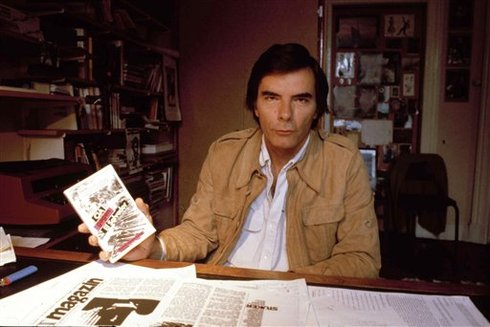
- Phil Agee was a dissident CIA agent who spent decades working against the CIA, published a couple of books.
- He lost his passport because when the dissidents took over the embassy in Tehran in 1979, the New York Post carried a story accusing Phil of helping the students who’d invaded the embassy to put together all of that written material that had been shredded.
- It was another New York Post bald faced lie.
- The State Department, based upon that story revoked his passport.
- I had represented Phil Agee, I was his principle lawyer for 30 years.
- Agee was very widely disliked in Washington because he was well known to be a CIA dissident who disclosed the names of many CIA agents.
- If Snowden went the same route today, he would do even worse in this Supreme Court than I did. That’s why Snowden won’t get his passport, thanks to me.
- I was for the workers and not for the bosses and I’ve always been for the workers and not for the bosses, which I think is the distinguishing political factor in our world. Which side are you on?
- I got my Bachelors Degree in ’52 and I had a Navy Commission which I had gotten from the New York State Maritime Academy earlier on.
- The draft board sent me a 1A notice, I applied to Columbia and when I finished Columbia they sent me another 1A notice because the draft was still on. I spent 2 years in the Navy as a Liuetenant Junior Grade Officer in Southern California.
- I went to work at the ACLU in 1958 as the assistant legal director, in 1962 I was given the job of the legal director of the ACLU.
- I had actually been going down to Mississippi from 1961 to 1962, working with then one of the two black lawyers who were practicing in Mississippi.
- We tried a couple of capitol cases in Mississippi. I continued to argue the systematic exclusion of blacks from the jury.
- I finally got a case up to the Supreme Court on that issue.
- Lawyers Constitutional Defense Committee: We had several hundred lawyers who went down to Mississippi for periods of a week or two. They were representing people being arrested during the Mississippi summer.
- Most of the judges allowed these lawyers to make some sort of presentation.
Guest – Attorney Mel Wulf, former legal director with the American Civil Liberties Union for 15 years. He was a law partner with former US Attorney General Ramsey Clark during the Kennedy Administration and much more. Wulf was part of some of the greatest contributions to the civil rights movement. He’s now retired after practicing law for 54 years.
——————————————————–