Afghanistan War, Civil Liberties, Criminalizing Dissent, Guantanamo, Human Rights, Iraq Veterans, Iraq War, Torture, Truth to Power, War Resister
Podcast: Play in new window | Download
Updates:
—–
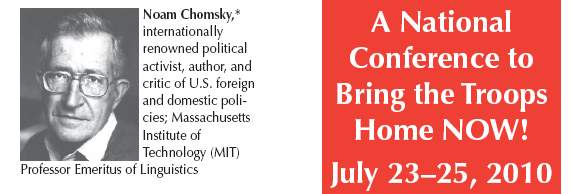
C0-host Michael Smith talks with attorney Jim Lafferty about the upcoming anti-war conference in Albany, New York, July 23-25. Noam Chomsky, internationally renowned political activist, author, and critic of U.S. foreign and domestic policies; Massachusetts Institute of Technology (MIT) Professor Emeritus of Linguistics is the keynote speaker. Click here for flyer (PDF) Groups sponsoring the event: After Downing Street, Arab American Union Members Council, Bail Out the People Movement, Black Agenda Report, Campus Antiwar Network, Campaign for Peace and Democracy, Citizen Soldier, Code Pink, Grandmothers Against the War, Granny Peace Brigade, International Action Center, Iraq Veterans Against the War, Military Families Speak Out, May 1st Workers and Immigrant Rights Coalition, National Assembly to End the Iraq and Afghanistan Wars and Occupations, National Lawyers Guild, Office of the Americas, Peace Action, Peace of the Action, Progressive Democrats of America, Project Salam, September Eleventh Families for Peaceful Tomorrows, The Fellowship of Reconciliation, U.S. Labor Against the War, Veterans for Peace, Voices for Creative Nonviolence, Voters for Peace,Women’s International League for Peace and Freedom, The World Can’t Wait.
—


Iraq War Veteran, Conscientious Objector and Musician Clifton Hicks
Clifton Hicks is an activist with the Iraqi Veterans Against the War. Hicks is disabled and enrolled as an Anthropology student at Appalachian State University in Boone, North Carolina. Appalachian State is a center for old-time music, and Hicks is also an accomplished musician and banjo player. Cliff Hicks is psychologically disabled and got out of the Army as a conscientious objector several years ago. In the Spring issue of The Veteran, published by Vietnam Veterans Against the War, there’s printed the following chant, that is repeated by soldiers in training to go to Iraq. “I went down to the market where all the people shop, I pulled out my machete, and I began to chop, I went down to the park where all the children play, I took out my machine gun and I began to spray.” This is the kind of psychological brutalization that our young men are forced to endure that turn them into creatures they never thought they’d become.
Clifton Hicks:
- I was in 9th grade when 9/11 happened. I called the recruiter when I was 16, to try and get in.
- I saw Muslim and Arabic people and thought they were all out to get us.
- I listened to a lot of daytime AM right-wing radio. I had the ole cliche patriotic notions going.
- I wanted to go combat arms from the start, I figured if I was going into the Army, I wanted to fight.
- My feet were on the ground in Iraq in October 2003. The guys I was with that had already been there for a while had gotten pretty nasty. Guys get nasty, because their friends get killed and you realized you can’t trust anybody.
- We were the first division in combat to be out there for more than 13 months.
- They would literally give us candy and toys to give out to Iraqi kids at schools, the next day you’re ridin’ around and you see a b unch of kids get shot.
- I became an anti-war activist while I was still in the Army. We started an IVAW chapter in Gainesville Florida
Guest – Clifton Hicks, Branch of service: United States Army (USA) / Unit: C Troop, 1st Squadron, 1st U.S. Cavalry Regiment / Rank: PFC / Home: North Carolina / Served in: Ft. Knox, OIF 1, Germany. Hicks a musician and is currently a student at Appalachian State University in Boone, North Carolina.
——————————————————————–
Civil Liberties, Guantanamo, Habeas Corpus, Human Rights, Targeting Muslims, Torture, Truth to Power
Podcast: Play in new window | Download
Updates:
—

Mavi Marmara Survivors Have A Right To Be Heard
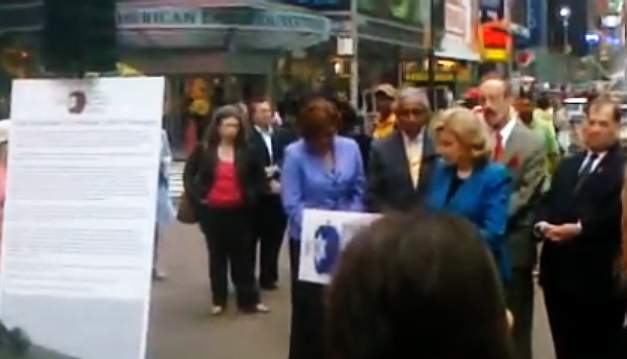
Last week, two eyewitnesses who were aboard the Turkish ship that was stormed by Israeli Naval Commandos told their stories at the Brooklyn’s historic House of the Lord Church. As many listeners know 9 unarmed passengers were murdered, the oldest, Ibrahim Bilgen, was 61, the youngest was 19, a U.S. citizen born in Troy , N.Y. This speaking event almost didn’t happen. Last Monday, June 14, City Council speaker Christine Quinn, Reps. Jerry Nadler, Anthony Weiner, Carolyn Mahoney, Charles Rangel and others, gathered in Times Square to demand the State Department investigate the invited speakers for “ties to terrorism.” They want to prevent or delay their entry the United States. Video
Bill Doares:
- U.S. filmmaker Iara Lee and British political organizer Kevin Ovenden, and Ahmet Unsal, a former Member of Turkey’s Parliament
- Their hands in my opinion are dripping with blood. Anthony Weiner actually called those on the ships “terrorists.” IHH Turkish Charity
- Every bullet fired by Israel is paid for by the United States.
Guest – Bill Doars with New York Labor Against the War / Al-AWDA New York
——–

24 Anti-Torture Activists Acquitted
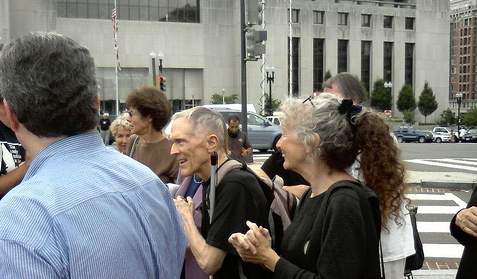
Last week, 24 anti-torture activists were acquitted in trial for protesting at the US Capitol, calling for Guantanamo’s closure and an investigation of deaths at the prisoner detention camp. The activists were aquitted of charges of (quote) unlawful entry with disorderly conduct which stemmed from demonstrations in January 21 of this year. The date President Obama promised to close Guantanamo prison. “With his decision, the judge validated the effort of the demonstrators to condemn the ongoing crime of indefinite detention at Guantanamo,” says Bill Quigley, legal adviser to the defendants and the Legal Director of the Center for Constitutional Rights. FDL story
Bill Quigley:
- There was a big protest on the day that Guantanamo Bay prison was supposed to be closed by Witness Against Torture.
- Witness Against Torture started in 2005 by going to Cuba and marching to the gates of Guantanamo asking that the people there be released.
- In January this year they had a number of people who did a water-only fast for 11 days, it ended on January 21, 2010. They put 20 something people on the steps of the Capitol who were in orange jump suits and black hoods, unfurled a banner with rose petals in the rotunda.
- About 35 people were arrested that day. They were charged with unlawful assembly with intent to breach the peace. The trial was last week, and they were given the option of paying a 50.00 fine. Most wanted to go to court and put Guantanamo on trial in the superior court.
- I prepared and argued for a necessity defense, an international law defense and the importance of the first amendment to what they were doing. I analagized their conduct to the people who resisted in Germany, the illegal crimes of Hitler and the like, the responsibility of citizens to challenge the crimes of their government.
- I think the judge didn’t want to get involved with this (activist work globally to shut down Guantanamo)
- Maybe a sign for a chance to turn the tide.
Guest – Bill Quigley, Legal Director for the Center for Constitutional Rights, a national legal and educational organization dedicated to advancing and defending the rights guaranteed by the United States Constitution and the Universal Declaration of Human Rights. Bill joined CCR on sabbatical from his position as law professor and Director of the Law Clinic and the Gillis Long Poverty Law Center at Loyola University New Orleans. He has been an active public interest lawyer since 1977.
——-


Seize British Petroleum Assets
As the blood red crude oil continues to gush from the bottom of the Gulf of Mexico, many industries and communities are being hit hard economically and environmentally. Meanwhile British Petroleum, Haliburton and Trans-ocean sidestep compensation and trade blame. Organizers of the Seize BP campaign say their demand is straightforward, “Seize assets of BP sufficient to compensate the people they harm.” There are several paths to compensation says Carl Messineo, attorney with the Partnership for Civil Justice and organizer of the Seize BP group. First, the BP claims process whereby BP determines what to cover and how much to pay. On this road all power rests with BP. Second, through the courts, where people can file litigation and lawsuits against BP. Both BP and the Obama administration want to push everyone seeking compensation down these two paths, but these two paths lead nowhere.
Third, the seizure of BP’s assets in an amount commensurate with estimated damages and the delivery of immediate and ongoing compensation to all those who have suffered and will suffer lost jobs, wages and business for years to come.
Attorney Carl Messineo:
- Seize BP is a campaign that was started of course a few weeks ago, around a single, simple demand, which is the US government needs to seize assets of BP. Place them in trust and make them immediately available for people in the Gulf coast who are in severe desperation at this time.
- People can’t pay the mortgage with rhetoric, they can’t eat rhetoric. The Obama administration can choose to take action. They can seize assets of BP.
- The president of the United States needs to request that Tony Hayward to please set aside some money? The president has legal authority, the Congress has legal authority. They can compel action.
- That’s their responsibility. Obama has acted like the calm captain of corporate interest within his presidency.
- He funneled health care through the corporations. Instead of serving the people, he’s really been subservient to corporate interest. This is a defining moment for his presidency.
- BP was the responsible party, this was avoidable, why do we turn to BP and ask them “please?”
- Right now, we know that BP can put aside 20 billion dollars. This is the same corporation that chose not to put the 500 thousand dollar safety valve.
- The US government has decided over the years to be willingly incompetent. This is something that they admit. They are incompetent technologically and using government resources.
- Obama can’t say that this is inertia from the bad policy of George Bush. He made personal decisions to expand offshore oil drilling. His administration is no worse than the others. There’s no change.
- Accidents happen, that’s why there needs to be independent redundant systems to respond to catastrophes.
- BP is a profit maximizer. It’s goal is to make as much money as possible, to limit its expenditures in order to maximize its profits.
- These handful of individuals hold in their hand, the safety and the ecology of clearly between 5 and 10 coastal states. It can’t be left to the profit making decisions.
- The largest share and holder of BP is the Chase Bank.
Guest – Attorney Carl Messineo with the Partnership for Civil Justice and organizer of SeizeBP
————————————-
Afghanistan War, Civil Liberties, Habeas Corpus, Human Rights, Surveillance, Targeting Muslims, Torture, Truth to Power
Podcast: Play in new window | Download

No End In Sight, Number One In War
What will you remember on Memorial Day? US law officially proclaims Memorial Day “as a day of prayer for permanent peace.” – However, the US is much closer to permanent war than permanent peace – writes Bill Quigley, legal director of the Center for Constitutional Rights in his recent article titled No End In Sight, Number One In War. The article outlines, the rising costs of war, the damage to country and who reaping massive profits. At what point do we begin to transition to permanent peace?
Bill Quigley:
- Yes, politicians are making hay from the permanent war, but there’s also a lot of people who are making an awful lot of money from the US military.
- We discount the role they’re playing, in keeping the US constantly fearful and preparing for and perpetrating war in every place across the globe.
- This is something that people are afraid to talk about.
- The “Axis of Evil” spends less than one percent of what the US spends. This coming year the US will spend 708 billion dollars on war and another $125 billion for Veterans Affairs.
- Al-Qaeda spends less than one percent of one percent of what the US spends.
- You have to ask yourself “why?” Why are people in the United States more afraid than anybody in the whole world? Fanning the flames of fear. Behind the scenes are huge corporations that are making billions of dollars.
- We talk about Blackwater, but there are a couple corporations that dwarf Blackwater.
- Lockheed Martin, a huge corporation that runs almost entirely on tax payer money. 140 thousand employees.
- A corporation totally reliant on the United States Congress. You spend 125 thousand lobbying Congress and Congress doesn’t get some benefit from that.
- The US is spending 10 times more on the military than China. Who is calling for accountability on this spending?
Guest – Bill Quigley. Bill is the Legal Director for the Center for Constitutional Rights, a national legal and educational organization dedicated to advancing and defending the rights guaranteed by the United States Constitution and the Universal Declaration of Human Rights. Bill joined CCR on sabbatical from his position as law professor and Director of the Law Clinic and the Gillis Long Poverty Law Center at Loyola University New Orleans. He has been an active public interest lawyer since 1977.
—


End The Korean War
Hosts get an update on the uneasy tensions between North and South Korea. A multinational investigation concluded last week that a North Korean submarine had torpedoed the 1200 ton warship called the Cheonan back in March killing 45 people. North Korea denies involvement in the sinking, South Korean defense ministry denies that any of its ships had crossed “Northern Limit Line.” Meanwhile, the threat of sanctions against the already oppressed North Korean population escalate. South Korea and the Obama administration have agreed to initiate joint anti-submarine military exercises near North Korean border. Right now, there are almost 29,000 U.S. troops in South Korea.
Eric Sirotkin:
- When you look into the history of the conflict, and we are still technically at war, as an armistice doesn’t technically end a war only stops the shooting.
- These kind of incidences occur because you don’t have a peace regimen to fall back on.
- There is a very conservative South Korean government. Very hawkish toward the North
- The intitial report of them torpedoing the boat, there are a lot of questions, there are people who are writing about Tonkin Bay, and thinking about.
- You have a choice to march toward war or go toward peace.
- The United States at this point is ramping up the rhetoric.
- Before this situation with the South and the North, we had a lot more exchanges and things were going in a positive direction. If you think there’s no exit strategy after Iraq, look at Korea, sixty years later.
- We’re working with a campaign to end the Korean War.
Guest – Attorney Eric Sirotkin, is a member of the National Lawyers Guild and helped found Korean Peace Project. Eric Sirotkin, the founder and Director of Ubuntuworks, LLC mixes his experience as a human rights lawyer, film producer, author and peacemaker. Over the years his peacemaking activities have taken him around the world, including India, Peru, Cuba, South Africa, Japan, North and South Korea, France, Netherlands, Canada and China. He contributed to dialogue on the new Constitution in South Africa, was a UN sponsored election observer at President Mandela’s election and coordinated an international monitoring Project of the South African Truth and Reconciliation Commission.
——


Omar Khadr, First Military Commission Trial Under Obama
Last week the first military tribunal opened under the Obama administration. It is the case of Omar Khadr, the Canadian citizen, military prosecutors say that Omar Kadr threw a grenade that killed a US Special Forces medic in Afghanistan and helped build roadside bombs to use against American soldiers. We look at why the Obama Administration is putting a detainee on trial who was 15 when he was captured and whether the self – incriminating statements he has made can be used as evidence. Unless the Prime Minister acts to request repatriation, Khadr could face conviction by a jury of U.S. military officers based on evidence extracted by torture.
Attorney Jonathan Hafetz:
- International law is very clear on how you treat child soldiers. In 2001, military commissions were struck down by the Supreme Court, in 2006 in the Hamdan Case, Congress created them again.
- The hope was that Obama was going to close this chapter and end military commissions.
- Obama suspended military commissions for 4 months and brought it back.
- You have huge issues in Khadr’s case. He was a child soldier. He was accused of killing an American soldier in a fire fight. Number one, the US doesn’t seem to have any credible evidence not derived from torture or other abuse that Khadr actually killed the serviceman.
- Even if they had evidence that Khadr was responsible for the death of this serviceman, it’s not a war crime. It’s part of war but not a war crime. The US government’s theory of war is totally distorted.
- On the day of the first war crimes trial of a juvenile in US history, the day its starts and new rules are handed out, I don’t think they had enough copies to give to all the council.
Guest – Jonathan Hafetz, attorney with the ACLU’s National Security Project.
——————————————————
Civil Liberties, Extraordinary Rendition, Guantanamo, Habeas Corpus, Human Rights, Supreme Court, Torture, Truth to Power
Podcast: Play in new window | Download
Updates:
—


Labor Relations at the American Red Cross and It’s Impact on Employee and Donor Safety (PDF)
Hosts look at a suprising report detailing the cost cutting efforts within America’s premier disaster relief and blood donor organization, the American Red Cross. Award winning Washington based reporter Philip Dine has put together an investigative summary titled – (PDF)Labor Relations at the American Red Cross and It’s Impact on Employee and Donor Safety that enumerates the effects of cut backs that have led to bad labor relations, bungled disaster relief, mishandled blood supplies and federal fines. The investigation examines a far less publicized issue that involves the treatment of Red Cross employees and the impact this has on the organization’s work, with high turnover, younger employees and lower wages.
Philip Dine:
- Over the years, the Feds saw that the Red Cross was not living up to its promises.
- Red Cross labor relations: For years the Red Cross has been intent on degrading the training and expertise of the employees.
- At one point you needed doctors on site for blood drives, then it became registered nurses, then it became nurses on call, and then non-medically trained supervisors.
- It seems that the Red Cross wants to have more management control and lower pay and that basically means a disposable work force.
- Management mess: 10 Executive directors in 12 years.
- High turnover at the top, a budget deficit, despite the main money maker – the blood supply which they get for free. It accounts for 2/3 of revenue. Calling for an audit
- Workers increasingly hired from fast food outlets with no experience, workers see co-workers improperly inserting needles into people. More articles
- I’ve been covering labor for 25 years/ Please contact Philip Dine directly at – philipmdine@aol.com
Guest – Philip Dine author of “State of the Unions: How Labor Can Strengthen the Middle Class, Improve Our Economy, and Regain Political Influence.” Philip Dine is teaching a labor-management course at the George Washington University School of Business this fall. State of the Unions has won honorable mention for best book about labor or work of the past five years from the United Association for Labor Education.
———–

Medical Students Advocate Against Health Professional Participation in Torture
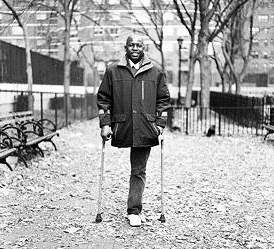
Last year it was confirmed that doctors and psychologists were directly involved in the supervision, design and execution of torture at U.S. military and intelligence facilities. This is a violation of state laws and professional ethics. These “health professionals” that were involved in the torture still hold their professional licenses to practice. Legislation introduced in New York by Assemblyman Richard Gottfried and Senator Tom Duane would reinforce existing ethical and legal responsibilities by prohibiting state-licensed doctors and other health professionals from participating in such practices. The law would also call for legal protection to resist and report any involvement in acts of torture and abuse. Last week, medical students and health professionals descended on Albany to meet with law makers to advocate the passage of this historic legislation. Physicians For Human Rights / When Healers Harm
Dr.Allen Keller:
- If you’re a health professional that participated in torture, you can lose your license.
- Health professionals were front and center and complicit in this policy of torture.
- Medical professionals provided sanitizing and rationalization for those infamous torture memos.
- During water-boarding there would be a doctor there. This is clearly a breach of medical and professional ethics.
- Licenses issued by the state. Torturers relied heavily on medical opinion.
- The state chapter of the New York Psychological Association has endorsed this bill.
- What I believe is that the interrogator looks at the health professional and says, well, if it gets out of hand, the medical professional will stop me.
- Suvivorsoftorture.org – The Bellevue/NYU Program for Survivors of Torture provides comprehensive medical and mental health care, as well as social and legal services to survivors of torture and war traumas and their family members. In the past year alone we provided these multidisciplinary services to more than 600 people from 70 countries.
Guest – Dr. Allen Keller, founder and director of the Bellevue/NYU Program for Survivors of Torture. In addition to serving as a primary care physician for many patients in the Program (Dr. Keller speaks French and Spanish). Dr. Keller oversees and coordinates the provision of medical services for Program patients, working with other primary care physicians and medical specialists affiliated with the program.
———————————————–
Civil Liberties, Criminalizing Dissent, Habeas Corpus, Human Rights, Military Tribunal, Supreme Court, Torture, Truth to Power
Podcast: Play in new window | Download
Updates:
——
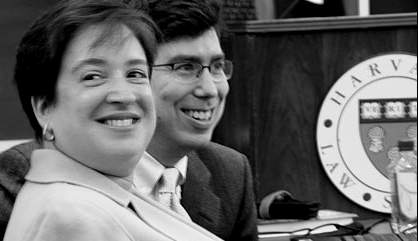
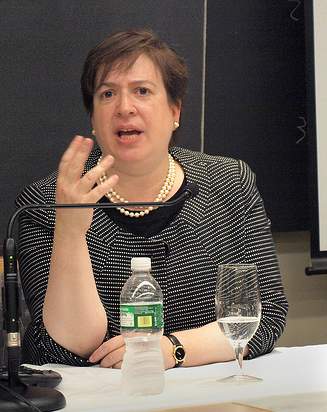
Kagan “Loves” the Federalist Society
Hosts discuss Elena Kagan’s background with Francis Boyle, Professor of law at the University of Illinois. Boyle is author of “Tackling America’s Toughest Questions.” In his article titled – – Supreme Court Pick: Kagan “Loves” the Federalist Society, – – Boyle notes Kagan explicitly endorsed the Bush administration’s bogus category of ‘enemy combatant,’ whose implementation has been a war crime in its own right. He also writes that “Kagan has actually said ‘I love the Federalist Society.’ Almost all of the Bush administration lawyers responsible for its war and torture memos are members of the Federalist Society. Read – Dean Elena Kagan: Harvard’s Gitmo Kangaroo Law School — The School for Torturers
Law Professor, Francis Boyle:
- She has fully defended the hideous Bush atrocities, civil rights, human rights, civil liberties.
- No retreat or abandonment of the Bush positions.
- She (Kagan) did write this tome in the Harvard Law Review, equivalent to the Federalist Society, unitary executive power theory of the presidency.
- She’d be a total disaster on the cases that really count for the future of the US Constitution and the Bill of Rights.
- She’s a neo-conservative and has no qualifications to speak of.
- (She) hired Jack Goldsmith, author of torture memos and helped set up kangaroo court system in Guantanamo. We are still fighting Kagan supporting the Bush war on terrorism.
- Kagan stated on National Public Radio on December 22, 2009, “I Love The Federalist Society”
- Obama and his people know that Kagan will be the spear carrier for presidential powers on the Supreme Court
- This is a very dangerous time for the future of our republic and Constitution. The statement that she cares for the common people. . . she’s an elitist snob.
- There she is promoting globalization at Harvard Law School?? Hiring people to teach “globaloney” just to lick the boots of Larry Summers? While dean at Harvard Law School, she was moonlighting at Goldman Sachs payroll.
- This is all incredibly incestuous. Unlike Bush who wasn’t a lawyer, Obama taught Constitutional Law at the University of Chicago Law School, he should know better.
Guest – Professor Francis Boyle, A scholar in the areas of international law and human rights, Professor Boyle received a J.D. degree magna cum laude and A.M. and Ph.D. degrees in political science from Harvard University. Prior to joining the faculty at the College of Law, he was a teaching fellow at Harvard and an associate at its Center for International Affairs. He also practiced tax and international tax with Bingham, Dana & Gould in Boston.
He has written and lectured extensively in the United States and abroad on the relationship between international law and politics. His eleventh book, Breaking All the Rules: Palestine, Iraq, Iran and the Case for Impeachment was recently published by Clarity Press. His Protesting Power: War, Resistance and Law has been used successfully in anti-war protest trials.
——-



In Memory of Attorney Rhonda Copelon
Hosts talk with Cathy Albisa, executive director of the National Economic and Social Rights Initiative. about the human rights legacy of Rhonda Copelon. Rhonda had a huge influence on changing international law for human rights. She founded the International Women’s Human Rights Law Clinic.
Lawyers You’ll Like series with Rhonda Copelon. Part 1 / Part 2.
Attorney Cathy Albisa:
- I worked with Rhonda at CUNY, we both co-counseled with CCR on a couple of cases.
- I met Rhonda on a car ride, a 25 hour car ride. We spent 25 hours talking about human rights in the United States. Rhonda had a huge influence on NESRI
- Rhonda never stopped lamenting Harris v McRae, she was still furious and outraged.
- The assumption embedded in that case is the court is saying, we’re not responsible as a society, the poverty of this woman. Copeland Fund For Gender Justice. Rhonda thought it was critical that a progressive gender perspective be embedded into some body of work that really looked at these gender issues in a cross cutting way, that understood the relevance of poverty, the relevance of race, the relevance of sexual minorities.
- Rhonda was not a wealthy woman, she was a law professor and saved her money. She gave 1 million dollars for this fund and that was everything. The case that she says always saved my life was Filártiga v. Peña-Irala.
- She founded the International Women’s Human Rights Law Clinic. What she did with that clinic is challenge the traditional model of human rights law coming out of the United States.
- She made no claims of being objective, she was on the side of victims, of people with similar politics to her own.
- This changed international law. Rhonda: Don’t disregard the banal, the ordinary things that actually represent deep violations.
- The way Rhonda went about things, she merged intellectual capital with a strategic ferocity and personal good will and relationship building.
- She thought it was very important that people understand they’re part of a broad social justice and human rights movement.Cathy Albisa joins us today to talk about her work with the National Economic and Social Rights Initiative and Rhonda’s work as legal adviser to the Women’s Caucus for Gender Justice.
Guest- Cathy Albisa, is a constitutional and human rights lawyer with a background on the right to health. Ms. Albisa also has significant experience working in partnership with community organizers in the use of human rights standards to strengthen advocacy in the United States. She co-founded NESRI along with Sharda Sekaran and Liz Sullivan in order to build legitimacy for human rights in general, and economic and social rights in particular, in the United States.
——————————————–
Afghanistan War, Civil Liberties, Human Rights, Iraq War, Targeting Muslims, Torture, Truth to Power, Uncategorized
Podcast: Play in new window | Download
Updates:
—–

Israeli Policy and Palestinian Children – Nora Barrows-Friedman
We talk today with the Nora Barrows-Friedman, she is the host of radio show Flashpoints at KPFA in Berkeley California. Nora spent the last month in the occupied West Bank and East Jerusalem. She’s been investigating stories about the ongoing violations of Palestinian human rights and has been frequently traveling to Palestine since 2004. Today we look specifically at the Israeli policy against children from arresting, detaining, interrogating, torturing, imprisoning and beating children, some as young as 10. Nora says International laws designed to protect children — including the UN convention on the rights of the child are being circumvented and violated on a daily.
Nora Barrows Friedman:
- Kids randomly picked off the street, allegedly for throwing stones. The Israeli punishment is 10 years in prison for a child.
- Israeli military can arrest (Palestinian only) children as young as 12. Right now there are 300 Palestinian children in Israeli prisons.
- Hebron is a city where settlers have been given half of the old city, a settlement colony is inside the Palestinian community
- These two young children were followed and taken into a military center inside the settlement colony.
- This whole family had been destoryed by these illegal actions against these 2 brothers. The only recourse this family has is to take it to the Israeli military court. Motive: trying to get Palestinian families to leave.
- This family lives in an area where settlers have their eye on, seems to be very deliberate.
- There are hundreds of women in Israeli prisons, there’s a story where a woman gave birth in the prison, and the baby is now a prisoner.
Guest – Nora Barrows Friedman: Senior producer and co-host of KPFA’s Flashpoints.
————-
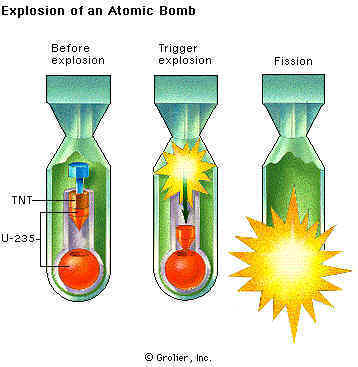

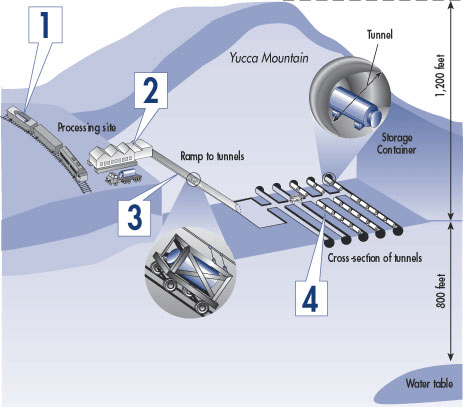
Obama’s Plan for Elimination of Nation-Controlled Nuclear Power
Nine nations now have a combined total of more than 22 thousand nuclear weapons. The United States has about 5 thousand nuclear weapons, 500 of them are land based warheads which can fly in three to four minutes after the order is given. President Obama recently hosted a nuclear security summit in DC with more than 45 foreign leaders, he traveled to Prague and signed a treaty that would cut the combined US and Russian stockpile by a third. Meanwhile, the US nuclear stockpiles have been shrinking for the last 40 years. We talk more about the current nuclear disarmament effort with attorney Peter Weiss is Vice-President, former President, of the International Association of Lawyers Against Nuclear Arms.
Peter Weiss:
- Leave the doomsday clock where it is. Reaffirming of the status quo. The agreement with Russia in reducing the nuclear weapons allowed to each country from 2200 to 1500. They count all the warheads on a bomber plane as one, instead of 10 or 12 weapons.
- Jimmy Carter: A single nuclear armed submarine had enough weaponry to destroy every Russian city of 100 thousand or more.
- Nuclear Posture Review – Zero document / “It’s difficult to operationalize a vision.”
- Obviously there is a great danger of loose nukes. No one seems ready to adopt an anti-nuclear convention except the countries that don’t have nuclear weapons.
- Conference in Riverside Church on May 1, 2010, United For Peace and Justice
- The anti-nuke movment will be re-energized.
- The US wants to be the sole repository of weapons grade nuclear material, committment from Chile, and Canada, to ship WGNM to the US. That’s kind of weird isn’t it?
Guest – Peter Weiss, former Vice President, Center for Constitutional Rights and Vice President, of the International Association of Lawyers Against Nuclear Arms.
——

Why Human Rights are Indispensable to Financial Regulation
Today we speak with Radhika Balakrishnan, Professor of Economics and International Studies at Marymount Manhattan College, about her recent article in the Huffington Post titled Why Human Rights are Indispensable to Financial Regulation. Balakrishnan enumerates the global human fallout from the world financial crisis. The World Bank estimates an additional 400 thousand children will die before their fifth birthday, while those responsible for the turmoil are benefiting from bailouts and promotions. She references the Universal Declaration of Human Rights and its inclusion of economic and social rights, that is the right to work, to education, to rest, to an adequate standard of living. Dr. Balakrishnan has also outlined steps for meaningful reform that we will also examine today. She is currently working on a project trying to use human rights norms to evaluate and construct macroeconomic policy.
Radhika Barakrishnan:
- We pretend there is no criteria regulating (economic policies) We argue in our piece, that human rights have a way to set up an ethical basis and framework. Most people don’t know that human rights include economic and social rights.
- In the United States the assumption is you can vote the people in to give you social and economic rights.
- The idea that the market is this Greek Oracle that we can’t question. . . is a problem.
- We’re saying there is a form of biased market regulation, where the state has the interest of the financiers and the banks.
- and not those of the working people and the working class. One example is the minimum wage.
- The Federal Reserve has a dual mandate, one is to have price stability, the other is the right to work.
- In the United States, we have not signed the Convenant on Economic and Human Rights.
- The Federal Reserve is a government agency and the fact that they act in a cloak of secrecy is a real problem.
- I think there is a great case to be brought, as far as freedom of information.
- What kind of financial models are they using to make their decisions? This cloak of secrecy because you independence to make monetary policy? But independence doesn’t mean secret.
- Their Board of Governors are from the commercial banks, whose interest will they work for?
- Bailout Bill – TARP / This went to financial agencies to give them the money. 720 Billion dollars overnighted to the Federal Reserve has not gone out? The Stimulus Money, for employment creation, though it was used for tax cuts.
- Congress did not extend unemployment benefits for Spring recess.
- The United States is coming up for the Universal Periodic Review in the Human Rights Council of Geneva
- The Center for Women’s Global Leadership
Guest – Radhika Balakrishnan, Executive Director of the Center for Women’s Global Leadership and Professor in Women’s and Gender Studies. She has a Ph.D. in Economics from Rutgers University. Previously, she was Professor of Economics and International Studies at Marymount Manhattan College. She has worked at the Ford Foundation as a program officer in the Asia Regional Program. She is currently the Chair of the Board of the US Human Rights Network and on the Board of the Center for Constitutional Rights. She has published in the field of gender and development.
——————————————————————————