Afghanistan War, CIA Sponsored Terror, Criminalizing Dissent, Human Rights, Iraq Veterans, Iraq War, Targeting Muslims, Torture, Truth to Power, War Resister
Podcast: Play in new window | Download
WBAI Listeners Please Click Here For This Week’s Rundown
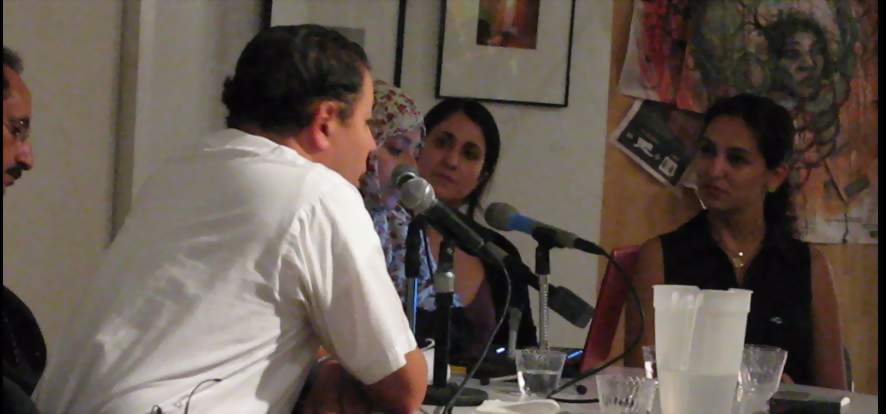

The United States and Yemen: Destroying Lives in the Name of National Security
We hear the voices of leading Yemeni activists and a Center For Constitutional Rights attorney speak on state violence, targeted killings, and human rights abuses enabled by the so-called “War on Terror” from the Brecht Forum event titled The United States and Yemen: Destroying Lives in the Name of National Security. The event was co-sponsored by the International Federation for Human Rights and the Brecht Forum. We hear first from Pardiss Kebriaei staff attorney at the Center for Constitutional Rights. Pardiss is working on a lawsuit to challenge a U.S. government kill-list and the targeting of a U.S. citizen now in Yemen and far from any armed conflict with the United States.
We hear from Tawakkol Karman chairwoman of the Yemeni non-government organization Women Journalists Without Chains, which campaigns for freedom of the press in Yemen and against human rights violations. She is a very prominent young activist, and Reporters Without Borders chose her in 2009 as one of the top seven women who have led change in the world. Karman is among the activists who in 2007 launched the “Phase of Protests and Sit-ins” in Yemen, holding regular sit-ins in the capital’s Freedom Square to demand democratic reforms and an end to human rights violations—including the harassment and imprisonment of journalists and dissidents, closure of critical newspapers, and censorship of news articles. A special thanks to Leili Kashani Education and Outreach Associate for the Guantánamo Global Justice Initiative at the Center for Constitutional Rights.
Also on the panel, to be heard soon, Ezz-Adeen Al-Asbahi, president of Human Rights Information & Training Center (HRITC), a non-governmental organization which seeks to enhance human rights in Yemen and the Arab World, focusing on the Gulf States in particular. HRITC has consultative status with the United Nations, offers training courses and forums on human rights, publishes a quarterly human rights magazine called Our Rights, and has published 30 books on law and human rights. Al-Asbahi is also the coordinator of a large regional network of human rights activists in the Gulf States and the Peninsula, and the president of a Yemeni network of human rights organizations which includes six Yemeni NGOs. A journalist and researcher, he has published eight books on literature and human rights. He is also the head of the civil society sector of the Supreme National Authority to Combat Corruption.
—-

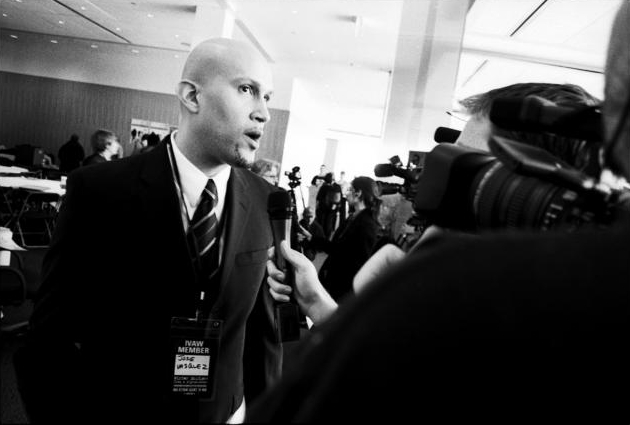
Troops out of Iraq, Permanent Bases and Privatizing the Occupation.
While many reports claim most US troops are leaving Iraq, there will still be 50 thousand troops remaining, 4 thousand will be replaced by 7 thousand security contractors. These are armed private contractors, former military with specialized skills in weaponry, radar and explosives. They will have less accountability in war zones. Meanwhile, massive permanent US bases remain including the world’s largest US Embassy in Bagdhad, Iraq. As the occupation in Iraq is privatized, veterans return back to the US. We’re joined today by conscientious objecter and Executive Director of Iraq Veterans Against the War, Jose Vasquez. Jose joined IVAW in June 2005 and co-founded the NYC chapter serving as the president. He also served on the interim board of directors and was elected to the first official board in 2006. He helped organize numerous actions and events including the Veterans’ and Survivors’ March to New Orleans, Operation First Casualty in NYC, and Winter Soldier: Iraq and Afghanistan.
Jose Vasquez:
- IVAW is a membership based organization, we are all folks who’ve served since September 11th.
- We call for the immediate withdrawal of all occupying forces from Iraq. We also have the same resolution for Afghanistan. We also want reparations for the Iraqis and full benefits for returning service members.
- I signed up right out of high school, graduated in ’92. I went straight in to active duty, I served 4 years as a Calvary Scout. Got out went to school and the Army Reserves as a medic.
- I had been in the military for a while before September 11th. I had a pretty good understanding of what our relationship was to Iraq. It was confusing to me, I was facing deployment. I stumbled across Democracy Now and I just started listening to that show religiously.
- By 2004, I was so upset about the Iraq War, I didn’t care what happened, I was not going to this.
- I started researching conscientious objection, six months later I filed for CO status. It took 27 months to get an answer.
- The Obama Administration has a finger on the pulse in terms of marketing hope. What they’re skimming over is how contractors are on the ground (in Iraq)
- From the perspective of an Iraqi, Americans running around with guns has not diminished that much.
- I think we owe the people of Iraq a lot. This mostly has to do with the US positioning itself to access the resources that they have.
- Stop the deployment of PTSD troops
Guest – Jose Vasquez, Jose was born in Bronx, NY and grew up in Southern California from the age of nine. After graduating high school in 1992, he enlisted in the U.S. Army serving over four years of active duty as a cavalry scout assigned to the 2nd Battalion, 69th Armor Regiment, 24th Infantry Division at Fort Benning, GA, and the 3rd Squadron, 4th Cavalry Regiment, 25th Infantry Division at Schofield Barracks, HI. He was honorably discharged in December 1996 at the rank of specialist (E-4).
Civil Liberties, Criminalizing Dissent, Habeas Corpus, Human Rights, Military Tribunal, Political Prisoner, Prison Industry, Supreme Court, Targeting Muslims, Torture, Truth to Power
Podcast: Play in new window | Download
Updates:
—
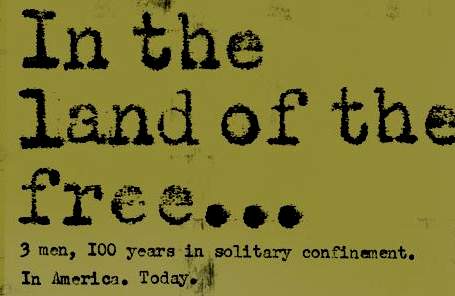
In the Land of the Free, a film by Vadim Jean
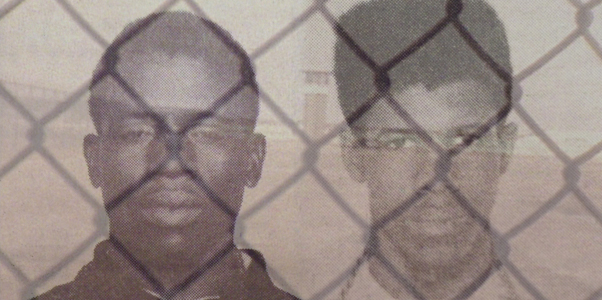
Director Vadim George joins us to discuss his recent documentary film “In the Land of the Free.” As many listeners may know, the Angola 3 are Robert King, Albert Woodfox and Herman Wallace. Each had arrived to the Louisiana State Penitentiary in the late 1960s. While in prison, and in contact with Black Panthers, the men helped build a prison chapter of the Black Panthers. They organized inmates to end systematic rape and violence and worked as jailhouse lawyers. The men have spent a combined century in solitary confinement in the Angola prison. Vadim’s powerful documentary explores the issues of accountability and examines the biases against the sentencing of African Americans compared to Whites and Latinos. The film is narrated by Samuel L. Jackson, and it’s noted toward the end, that there is a pending civil suit ‘Wilkerson, Wallace and Woodfox’ vs the State of Louisiana, ruled by the US Supreme Court and to go to trial based that their 30+ years in solitary confinement is “inhumane and unconstitutional”. This case could stop long-term solitary confinement in US prisons.
Vadim Jean:
- I was friends with Anita Roddick, she knew Robert King, and when she passed away in 2007, Robert King was one of the speakers at her memorial. They wouldn’t let me film in the prison.
- The Angola 3 came together in the New Orleans parrish prison in the 1970s.
- The criminals were put in with the Black Panthers and the Black Panthers educated the criminals.
- In the 1970s Angola was the bloodiest prison in America.
- Robert King was told why he was kept in solitary confinement after 25 years in CCR (solitary confinement)
- Because he was being investigated for the murder of Brent Miller, which happened when he wasn’t even in the prison. They’re incredible human beings. They’re strong men. They’re self educated, in prison.
- I think they have their side, the fact that they know they’re innocent, and that makes you strong, that’s made them incredibly strong. They refused to be beaten.
- Robert is free. His conviction was overturned in 2001. People have reacted strongly to the film.
- I’ve tended to make drama comedies. I made a completely mad film called Jiminy Glick in Lalawood with Martin Short.
- I made this film for Anita. (Anita Roddick) The Roddick Foundation.
Guest – Vadim Jean, began his career directing commercials for products such as Blockbuster Video, Woolworths, The Observer and Mercury 121 Mobile Phones. He then moved on to music videos for Elton John and Oasis before co-directing his first feature film, Leon the Pig Farmer (1992). For his work he won an Evening Standard British Film Award for Most Promising Newcomer, a Chaplin Award for Best First Feature at the Edinburgh International Film Festival.
——–
Law and Disorder Barack Obama Series – CCR Staff Attorney Shane Kadidal
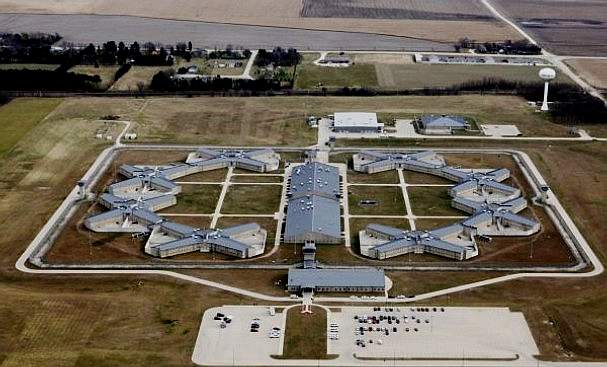
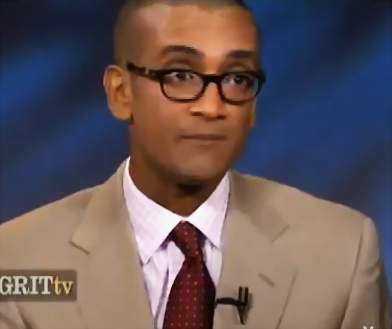
We’re joined by Center for Constitutional Rights staff attorney Shane Kadidal to give us an overview on several critical topics we’ve been following over the years here on Law and Disorder. We look at what is happening in Guantanamo right now, the Obama policy of preventive detentions and the state of Habeas Corpus in the United States. In January of 2009 Barack Obama issued orders to close Guantanamo Bay prison. There was talk of transferring prisoners to a supermax prison in the United States. Military tribunals move forward for Guantanamo prisoners.
Shane Kadidal:
- What we won is the right to get into court and challenge the legality of your detention. CCR won that in 2008
- Obama gets into office and says he’s going to close Guantanamo Bay Prison in a year.
- Obama to set up expert agency to decide what to do with people in Guantanamo prison
- About 50 cases have gone forward and we (CCR) won 72 percent of the cases
- About 180 left in Guantanamo. Obama has improved physical conditions for detainees in Guantanamo, but they’re still stuck there. Nothing much has changed, we see stasis, there isn’t much political movement.
- About a month into the administration, the Obama Department of Justice says our position is the same as the Bush administrations on Bagram AFB prison
- We’re taking the same legal position about executive power as the previous administration – state’s secrets about rendition
- Six hundred people in Bagram right now. Bagram is an active war zone, can’t have courts interferring
- About 30 of the remaining 180 in Guantanamo will be charged. Most of the people brought there were innocent. The victim of profiling policies.
- General Stone says 400 of the 600 hundred in Bagram Prison have done nothing and should be released immediately. Task Force report on Guantanamo prisoners. 10 percent leaders of Al-Qaeda, 20 percent had a logistics role, others are low level soldiers. This is false.
- There are innocent people in Guantanamo, who have been there for 8 years.
- We still have a military commissions, an indefinite detention system. Lieberman proposing to strip citizenship from terrorism suspects so they can be interrogated without Miranda warnings.
- Moving Guantanamo Prison to Thomson Prison in Illinois.
- Obama as committed to removing checks on executive power
Guest – Shane Kadidal senior managing attorney of the Guantánamo Global Justice Initiative at the Center for Constitutional Rights in New York City. He is a graduate of the Yale Law School and a former law clerk to Judge Kermit Lipez of the United States Court of Appeals for the First Circuit.
Past shows with Shane Kadidal
Civil Liberties, Human Rights, Torture, Truth to Power
Podcast: Play in new window | Download

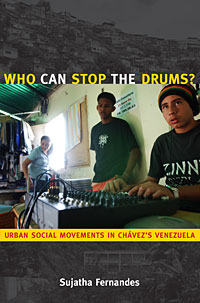
Who Can Stop the Drums?: Urban Social Movements in Chávez’s Venezuela
Who Can Stop the Drums?: Urban Social Movements in Chávez’s Venezuela is the title of Sujatha Fernandes’s new book. Sujatha is an author and assistant Professor of Sociology at Queens College and the Graduate Center, City University of New York. Her book looks at the transformations under way in Venezuela that are shaped by negotiations between the Chávez government and social movements using their own forms of historical memory and local organization. In her book, Sujatha shows everyday life and politics in the shantytowns of Caracas from the perspective of community-based radio, barrio assemblies, and the many interviews she conducted with activists and government officials. Most of the barrio activists in the book are Chávez supporters.
Sujatha Fernandes:
- There’s a real push back against neo-liberal reforms. Chavez who came into office in 1998, have been pursuing an anti-neoliberal agenda, trying to reverse the privatization and extend the social welfare net.
- The argument I make in the book is that Chavez has carved out a space within the global economy and Venezuela is a hybrid state containing both neo-liberal and anti-neoliberal elements.
- Who are these people, the large majority who live in the shanty towns, what do they think?
- The movements date back to before Chavez, the guerilla movements, cultural and community based groups. They trace their trajectory back to a long struggle in Venezuela. They’ve been reinvigorated by Chavez.
- The community based groups demand the very basics, running water, gas and electricity.
- Chavez in the middle between community groups and elite. Chavez has created institutions such as the missions, where some oil profits bypass the elite and toward community groups.
- I lived in a popular housing building, which are projects, (security problems, with gangs, violence and police)
- Bolivarian circles, Chavez’s first attempts to transfer power. 93 percent of Venezuelans are urbanized.
Guest – Sujatha Fernandes is Assistant Professor of Sociology at Queens College and the Graduate Center, City University of New York. She is the author of Cuba Represent! Cuban Arts, State Power, and the Making of New Revolutionary Cultures, also published by Duke University Press.
—-
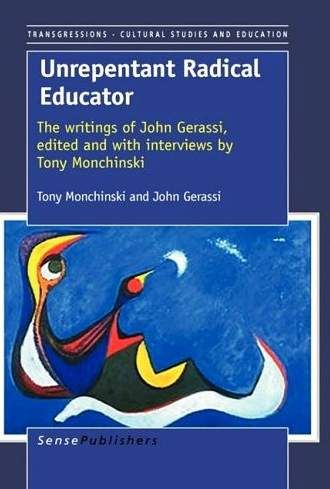
Unrepentant Radical Educator: The Writings of John Gerassi
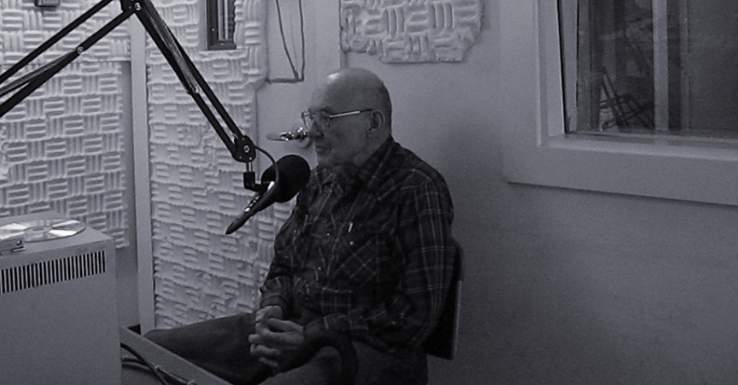
We’re delighted to welcome back Professor John (Tito) Gerassi, once an editor at Time magazine, then at Newsweek. He obtained his PhD at the London School of Economics and Political Science. He is a long time civil rights and anti-war militant and author / editor of ten books plus scores of articles and pamphlets published on both sides of the Atlantic. He is currently Professor of Political Science at the City University of New York. We talk with Tito today about his recent book, Unrepentant Radical Educator: The writings of John Gerassi, edited and with interviews by Tony Monchinski (Transgressions: Cultural Studies and Education) Indypendent Book Review
The book joins personal narratives from Gerassi’s days of journalism and activism, featuring Che Guevara, Fidel Castro, Jerry Rubin, Eldridge Cleaver and others of the era, with essays on figures such as Sartre, Camus, and Julius and Ethel Rosenberg. One review writes, ( Especially fascinating are the tales of deliberate misreporting by the major media outlets for which he worked, epitomized by the words of owner Henry Luce when Gerassi was hired: “We here at Time believe that objectivity is neither feasible nor desirable.”)
John “Tito” Gerassi:
- Time Magazine: I hear you’re coming aboard Mr. Gerassi. In the long run, it was great that I got kicked out
- Met Che Guevara in Uruguay, as a journalist for the New York Times, there was a fight with anti-Castro students, the police were scared, one man fired his gun in the air, it ricocheted and hit and killed a USIS Cuban.
- Che told me I don’t talk to the imperialist press. At the hotel, they had reserved a large table where all the left-wing characters sat around with Che. Argentines say chez vous, that’s how Che got his nickname Che.
- The Great Fear in Latin America – John Gerassi
- Che Where Are You? Eventually there will be many Che’s.
Guest – Professor John Gerassi, once an editor at Time magazine, then at Newsweek, who obtained his PhD at LSE, is a long time civil rights and anti-war militant. He is the author or editor of ten books and scores of articles and pamphlets published on both sides of the Atlantic. He is currently Professor of Political Science at the City University of New York.
———————————————–
CIA Sponsored Terror, Civil Liberties, Criminalizing Dissent, Habeas Corpus, Human Rights, Surveillance, Torture, Truth to Power
Podcast: Play in new window | Download
Updates:
—-
Puerto Rican Political Prisoner Released Today After 30 Years
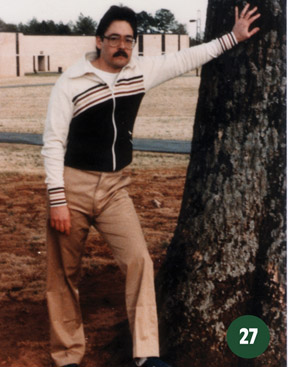
Last week Puerto Rican community activist Carlos Alberto Torres was released from a federal prison in Pekin, Ill after serving 30 years as a political prisoner. Torres was convicted of seditious conspiracy – conspiring to use force against the lawful authority of the United States over Puerto Rico. Torres was punished for being a member of an armed clandestine organization called the FALN – Fuerzas Armadas de Liberación Nacional (English: “Armed Forces of National Liberation) which had claimed responsibility for bombings in Chicago that resulted in no deaths. He wasn’t accused of the bombings only of being a member of FALN.
In 1898 Puerto Rico was ceded to the US by Spain as war bounty in the treaty that ended the Spanish-American War. Still, the US has occupied it since. Torres was sentenced to 78 years in prison but used international law in his defense. Torres argued that the courts of the colonizing country may not criminalize captured anti-colonial combatants, but must turn them over to an impartial international tributnal to have their status adjudicated.
There was an outpouring of support to free Carlos. His attorney, National Lawyers Guild member Jan Susler of Chicago, notes, “Carlos is being released from prison due to the unflagging support of the Puerto Rican independence movement and others who work for human rights. The more than 10,000 letters of support from the U.S., Puerto Rico, Mexico and other countries sent a strong message to the Parole Commission.”
Jan Susler:
- Carlos got a disproportionate sentence, a punishment for who he was politically. He did 30 years, standing tall and maintaining his political integrity.
- People stop him on the street, and embrace him.
- The bombing in which he was accused of was only property damage. If he had killed or injured someone and convicted as a social prisoner, he would gotten a less sentence and served far less time.
- He was always treated more harshly than the other prisoners.
- Right after 9/11, the US rounded up political prisoners and put them in the hole for months.
- You’re always watched, you’re always monitored. Every prisoner has access to email, Carlos did not.
Carlos Torres:
Guest – Attorney Jan Susler joined People’s Law Office in 1982 after a six year stint as Clinical Law Professor at Prison Legal Aid, the legal clinic at Southern Illinois University’s School of Law. Her long history of work on behalf of political prisoners and prisoners’ rights includes litigation, advocacy and educational work around USP Marion and the Women’s High Security Unit at Lexington, KY. Her practice at PLO focuses on police misconduct civil rights litigation, which has lately included wrongful conviction litigation on behalf of people exonerated after serving many years in prison, innocent. Her work with the Puerto Rican Independence Movement and with progressive movements challenging U.S. foreign and domestic policies has been a constant throughout her 30 years as a lawyer.
Guest – Carlos Alberto Torres member of Puerto Rico’s independence movement and the longest-serving Puerto Rican political prisoner. He was convicted and sentenced to 78 years in a U.S. federal prison for seditious conspiracy – conspiring to use force against the lawful authority of the United States over Puerto Rico. He served 30 years, being released on July 26, 2010.
—-
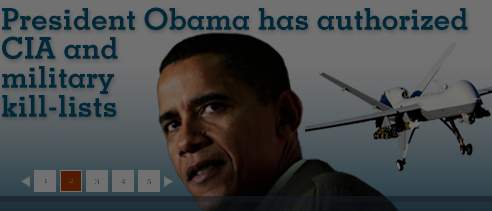
CCR and ACLU Sue Obama Over Limits On Lawyers Seeking To Represent Suspect on Administration “Kill List”
The Center for Constutional Rights and the ACLU have filed a lawsuit challenging the Obama administration’s authority to use the military and the CIA to kill the radical Muslim cleric Anwar al-Awlaki. He’s an American citizen, accused of terrorism but hasn’t recieved a trial. He is believed to be hiding in Yemen. Because it would be against the law to challenge the government’s attempt to kill al-Awlaki, the lawsuit was filed against the Treasury department, that challenged a regulation that would require the Center and the ACLU to obtain its permission in order to provide uncompensated legal services for Mr al-Awlaki.
Vince Warren, the executive director of the Center for Constitutional Rights, argued that international law did not permit a government to kill people far from combat zones, and in the case of a US citizen, Vince said that such a policy also violates the Constitution’s Fifth Amendment — and is a dangerous precedent.
CCR Attorney Pardiss Kebriaei:
- The case that we filed last week was a challenge to a regulatory scheme under the Department of Treasury and OFAC which prohibits transactions with anyone designated as a terrorist by the government. That includes pro-bono legal services.
- Al-Awlaki is the subject of an assassination order by the president, ordering and authorizing the CIA and Special Forces to target and kill him.
- OFAC powers go back to the 1970s IEEPA, the International Emergency Economic Powers Act.
- All we have against this guy are allegations.
- The CIA, which is one of the agencies that carries out these killings has primarily used drones. We think that drones would be the primary way that this killing would be carried out.
Guest – CCR staff attorney Pardiss Kebriaei joined the Guantánamo Global Justice Initiative at the Center for Constitutional Rights (CCR) in July 2007. She provides direct representation to several of CCR’s clients at Guantánamo and helps coordinate CCR’s network of hundreds of pro bono counsel representing other prisoners. She also focuses on using international human rights mechanisms to bring international pressure to bear on the U.S. government and hold other governments accountable for their role in the violations at Guantánamo.
———-


CCR Attorney Legal Observer Arrested in Arizona Immigration Protests
Legal observers from the National Lawyers Guild and the Center for Constitutional Rights were arrested last week during mass demonstrations of protesters who opposed Federal law 287G, Arizona law SB 1070. What happened? CCR Legal Director Bill Quigley told the media, Arizona is starting to act like Mississippi in the civil rights days. Among those arrested were National Lawyers Guild officer Roxana Orrell and CCR staff attorney Sunita Patel.
Sunita Patel:
- It was my first time in Maricopa County. Sheriff Joe Arpaio is known for branding the most horrible incarnation of 287G and ICE police collaboration.
- 287G is the statute by which this program is authorized by Congress. He also has what’s called a secure communities program which allows for the identification of anyone who is a non-citizen through a finger printing system. 287G allows for local agencies to implement immigration law through a memorandum of understanding with the federal government.
- At the same time he implements what’s called “crime suppression sweeps” Where he takes his units and regular citizens to sweep through neighborhoods.
- I spent the night in jail, I hadn’t planned on it. It was really an honor to be in solidarity with the rest of the protesters. I was charged with obstruction of a highway and public thoroughfare and failure to obey a police officer. People in Arizona call it a war zone when it comes to immigration enforcement.
- Arizona has also become the site for a spark of incredible activism and the growth of an incredible human rights movement.
Guest – CCR Staff Attorney Sunita Patel with racial profiling, immigrant rights and other human rights litigation. Prior to her position at CCR, she held a Soros Justice Fellowship at The Legal Aid Society, Immigration Law Unit in New York where she represented immigrant detainees in removal proceedings and worked with criminal justice and human rights groups to create independent community oversight for detention operations through public accountability boards. Sunita is a former law clerk for the Honorable Judge Ivan L. R. Lemelle in the Eastern District of Louisiana.
————————————————————————————————
CIA Sponsored Terror, Civil Liberties, Criminalizing Dissent, Guantanamo, Habeas Corpus, Human Rights, Targeting Muslims, Torture, Truth to Power
Podcast: Play in new window | Download
Updates:
———-
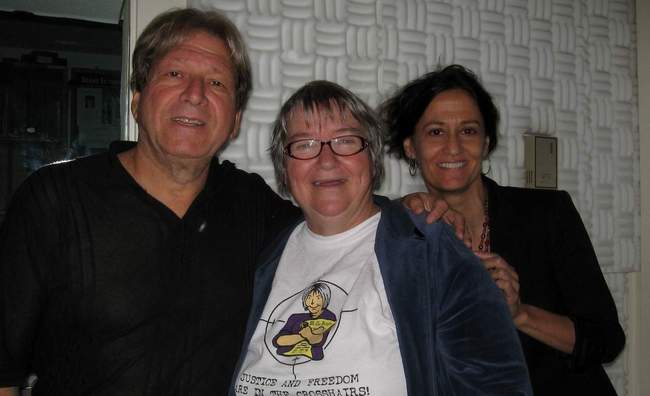
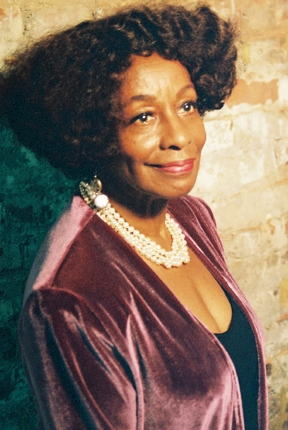
Lynne Stewart Heard A Death Sentence Today
As many listeners know Judge John G Koeltl sentenced defendant, Lynne Stewart: 120 months incarceration in the Danbury Federal Correctional Institution Connecticut on five counts to be served concurrently. Lynne Stewart is 70 years old, she’s a breast cancer survivor with other pending health issues. We’re joined by Vinie Burrows today, she is the UN representative for the Women’s International Democratic Federation and the founding member of the Granny Peace Bridgade. Vinie Burrows made powerful statements in her article titled Lynne Stewart Heard A Death Sentence Today that calls terrorism by its real name under the draconian Patriot Act.
Vinie writes, “over and over again in his remarks leading up to the sentencing, Judge Koeltl used the term “terrorist enhancement.” Those warning words bring up the specter of some of the nastiest aspects of the Cold War and its present re-incarnation in the Patriot Act which by expanding law enforcement’s surveillance and investigative powers represents a significant threat to civil liberties. Read the official text… “Uniting and Strengthening America by providing Appropriate Tools Required to Intercept and Obstruct Terrorism. The Sentencing of Lynne Stewart by Michael Steven Smith.
Vinie Burrows:
- Being at Lynne Stewart’s court hearing was useful to see the judge, to see the players, the 2 prosecuting lawyers and to see Lynne Stewart who made a marvelous opening statement. It was one of the great speeches before the bar
- I felt as he was reading, Judge Koeltl was responding to each dictate of the appellate court.
- We have to define terror. We can’t go by what the legislative, judicial and now executive define as terror. We’re looking in the wrong places for terror. A single mother with 3 children living in a shelter, she knows terror. When she doesn’t know where her next meal is coming from, that’s terror.
- When her home is foreclosed on, that’s terror, and of course our banks are the biggest terror of all.
- We can’t even think of Lynne Stewart when we talk of terror, she is a human rights defender. She’s been deprived of the ability to defend human rights.
- I think we have to go to “who are the terrorists?” who are the victims of terror?
- We have to talk about the state, the state usually the perpetrator of human rights violations.
- The state must recognize that poverty is a weapon of mass destruction.
- I think we need to talk about the Universal Declaration of Human Rights as a legal basis to mount some sort of appeal.
- Michael Ratner: This is the Time of the Toad (A Study of Inquisition In America)
- Lynne Stewart has another appeal against this severe sentence.
Guest – Vinie Burrows is an award-winning Broadway actress. She has been active at the United Nations Economic and Social Council on the issues of the status of women and Southern Africa. Burrows won the Paul Robeson Award in 1986. She was to appear in a show titled Sister! Sister! at the University of Delaware in Newark in November 1991. She was to be a panelist in the 2000-2001 African Diaspora lecture series at the Center for Ideas and Society in Riverside, California.
——–


Mountain Top Removal Activists Arrested For Direct Action In Virginia (Updated)
Last week 4 activists with Climate Ground Zero and Mountain Justice were arrested for using direct action to shut down a coal mining mountaintop removal effort in Virginia. Two of the 4 activists locked themselves to heavy machinery in the coal mining pit and were later arrested. The activists say they are drawing public attention to the dangers associated with the Brushy Fork Sludge Impoundment, which contain up to 8 billion gallons of toxic coal waste. The area is unstable, Brushy Fork’s foundation is built on a honeycomb of abandoned underground mines. If the foundation were to collapse, as others have, the toxic slurry could engulf communities nearly 14 miles away, according to Marfork Coal Co.’s emergency warning plan. Meanwhile, one of the activists, Jimmy Tobias was still in jail during this interview and is now released.
Dea Goblirsch:
- Mountain top removal is a destruction form of coal mining that uses explosives, that blow up the tops of mountains to get to the coal seams beneath. It’s cheaper and more efficient than underground mining, it also employs fewer miners.
- So far there have more than 800 miles of peaks flattened. They also take the rubble from the tops of mountains and dump it into nearby valleys. They are called valley fills. The creation of the valley fills cover up the headwater streams.
- A lot of these valleys feed into water systems that supply water to the Eastern United States.
- Brushy Fork is the largest earthen dam in the Western Hemisphere.
- Coal River Mountain was the highest elevation in the area that hadn’t been mountaintop removal mined.
- You can’t always see mountain top mining from the roadside, they tend to keep a veil of trees.
- The work we’re doing is primarily civil disobedience and direct action. Tree sits within the blast range. Bails and sentencing are widely uneven.
- Community groups to start sustainable energy initiatives in Appalachia, we see this happening in Kentucky, and Virginia and other parts of the coal mining region.
- A woman publicly slapped Judy Bonds, the director of Coal River Mountain Watch.
- A strip miner threatened to slit the throat of a child
—–
Katie Huscsza:
- We attached ourselves to the high wall miner (equipment) for 4 hours.
- Me and Colin were charged with trespassing, conspiracy and obstruction.
- There are around 30 people this summer actively working to stop mountain top removal.
- We I first learned about it (MTR) I almost didn’t believe that something so awful and destructive could be taking place
—–
Guest – Dea Goblirsch with Climate Ground Zero and Katie Huscsza, also with CGZ had locked herself to highwall coal mining machines, arrested and released on bail.
Music interludes in this segment by Canton Becker
——————————————————————————–
Civil Liberties, Criminalizing Dissent, Habeas Corpus, Human Rights, Iraq War, Supreme Court, Targeting Muslims, Torture, Truth to Power
Podcast: Play in new window | Download
Updates:
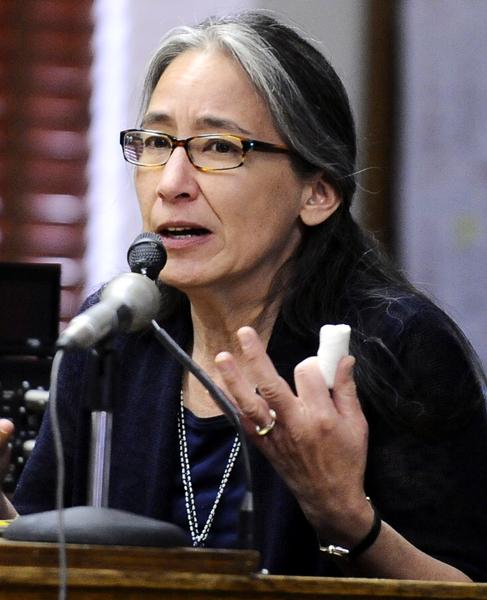
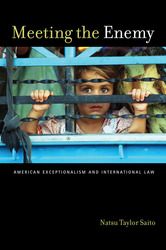
Natsu Saito, Meeting the Enemy: American Exceptionalism and International Law
Meeting the Enemy: American Exceptionalism and International Law is the title of Natsu Saito’s recent book, Natsu is an attorney and professor of Law at Georgia State University’s College of Law in Atlanta. The book boldly points out how the United States violated international law since its declaration of independence. As often discussed here on Law and Disorder, international courts and institutions have been at the forefront of holding the torture conspirators accountable. Meeting the Enemy gives disturbing insight into the origins of American exceptionalism.
Natsu Saito:
- The duality is that the US does exempt itself (from international law) very consistently and very frequently and yet promotes international law very strongly and relies upon it.
- It has relied upon certain premises that are fundamental to the whole outlook and paradigm of colonialism – which is that there is a higher good, a more civilized approach the US embodies.
- The law doesn’t apply because we have a higher aim of civilization and that justifies not playing by the rules.
- The United States making others comply with human rights standards while exempting itself.
- Moving humanity toward this higher goal is so critical because if you strip that away and you look at the realities on the ground, you see what has been termed Western civilization has been incredibly barbaric.
- In order to get around that analysis, you have to say it was for a higher good.
- I think the “left” tends to accept the general framework, and to make particular criticisms of policies and practices that are obviously problematic. The US government engaging in torture for example, but each instant is accepted as anomalous instead of the larger picture.
- It is too frightening even for the people on the left to deal with the reality that this is a country that sits on occupied land, illegally occupied by its own rules. People on the left want to make it a kinder, gentler colonialism.
- I started out thinking I was writing a book about the failure of the United States failure to comply with international law, as I got into it, the more interesting questions were the push / pull dynamics between reliance on international law
- The current system of international law evolved from the international law which was the agreement between the European colonial powers of how they were not going to destroy each other in the process of taking over the rest of the world.
Guest – Natsu Taylor Saito teaches international law and human rights, race and the law, immigration, criminal procedure, and professional responsibility, and is an advisor to the Asian American Law Student Association and the Hispanic Student Bar Association. Professor Saito’s scholarship focuses on the legal history of race in the United States, the plenary power doctrine as applied to immigrants, American Indians, and U.S. territorial possessions, and the human rights implications of U.S. governmental policies, particularly with regard to the suppression of political dissent. Read more.
——-
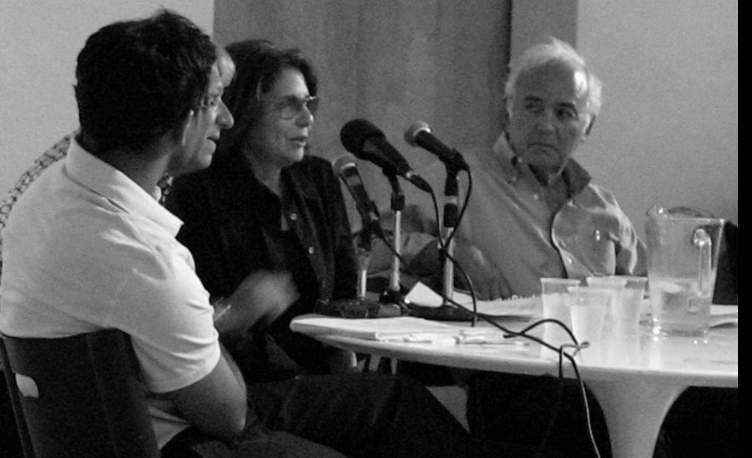
Elena Kagan and the Supremes – Brecht Forum
We hear excerpts from a discussion on the confirmation hearings of Elena Kagan, and how her position may influence the direction of the Supreme Court.
Panelists:
Martin Garbus – one of the country’s leading trial lawyers. Mr. Garbus aggressively represents his clients in the courts and in the media. He has appeared before the United States Supreme Court as well as the highest state and federal courts in the nation. His devotion to ethics, justice and the law has earned him respect among the legal community and beyond as well as prominent awards. Time Magazine has named him “legendary . . . one of the best trial lawyers in the country,” while Newsweek , the National Law Journal and other media agree that Mr. Garbus is America’s “most prominent First Amendment lawyer,” with an “extraordinarily diverse practice.” The National Law Journal named him one of the country’s top ten litigators.
Margaret Ratner Kunstler – former Educational Director at the Center for Constitutional Rights. She’s an attorney and leads the New York City chapter of the National Lawyers Guild and heads the William Moses Kunstler Fund for Racial Justice.
Anand Swaminathan – an associate at Vladeck, Waldman, Elias & Engelhard, P.C. He graduated from the University of Wisconsin in 2001 and the Harvard Law School in 2006. Prior to joining Vladeck he was a law clerk for the Honorable Theodore H. Katz of the United States District Court for the Southern District of New York.
Michael Steven Smith – Law and Disorder co-host, author and New York attorney. Michael Steven Smith is the author, editor, and co-editor of six books, including “The Emerging Police State,” by William M. Kunstler. He has testified before committees of the United States Congress and the United Nations on human rights issues. Mr. Smith lives and practices law in New York City with his wife Debby, where on behalf of seriously injured persons he sues insurance companies and occasionally the New York City Police Department.
———————