CIA Sponsored Terror, Civil Liberties, Criminalizing Dissent, Habeas Corpus, Human Rights, Political Prisoner, Prison Industry, Surveillance, Truth to Power
Podcast: Play in new window | Download
Updates:
—-
Economic Update: Professor Rick Wolff
We welcome back returning guest Professor Rick Wolff to get an economic update. Recent news of Janet Yellen emerging as a frontrunner to succeed Ben Bernanke as Federal Reserve chairman garnered the support of many Democrats in the House and Senate, yet she urged to lower payments for senior citizens on Social Security and voted to repeal the Glass-Steagal Act. Meanwhile, President Obama with the support of the Republican Party has targeted Social Security and medicare for cut backs. We talk about these topics and more with Professor Rick Wolff who hosts Economic Update on WBAI Saturdays at Noon.
Professor Rick Wolff:
- The Federal Reserve is an enormously important institution all of the time.
- It has nothing less than the mandate in this economy to control and manage and manipulate the monetary system.
- It is a wonderful reality to throw at anyone who thinks we live in a free market economy where the government plays a marginal role.
- When the government controls the quantity of money and the cost of borrowing it, its not a marginal role, its most central role a government can play.
- We have a dysfunctional Congress and President who can’t figure out what to do, unwilling to take serious steps to deal with this crisis, leaving it to the Federal Reserve.
- We are now in the worst economic crisis since the Great Depression.
- Clearly, now that we’re entering the 6th year of this calamity, and we have huge unemployment, huge foreclosures, the Federal Reserve also failed to make it short and shallow it is in fact long and deep.
- Ms. Yellen’s nomination would go through quickly and more smoothly than Summers would have. Obama and his folks don’t want a big review of how they manage the economic system since its an unmitigated disaster.
- Enough extreme right Republicans exist now in the House of Representatives to make serious the threat of denying the Federal Government the right to raise the debt ceiling.
- The President has already signaled his willingness to compromise with Republicans around Social Security, Medicare and Medicaid.
- There’s a long standing debate about measurements on the cost of living. That’s a very difficult thing to do and perfectly reasonable economists disagree.
- All they’ve done is picked the one that looks the smallest (cost of living for Social Security) to use as a benchmark to therefore give the smallest increase.
- The first thing you should understand, which is an outrageous injustice, is that the money for Social Security is only withheld from a wage or a salary.
- It’s not withheld if you earn interest income, if you earn dividend income or if you earn capital gain income.
- That’s why the tax for Social Security is called a payroll tax.
- Currently, its a payroll tax but its only on the first 113 thousand dollars a year that you earn.
- For every dollar above 113 thousand, you don’t pay anything.
- Saez and Piketty
- The inequality of wealth in the United States has gotten much worse in the last 30 years and more interesting has gotten worse across this crisis.
- That’s interesting because in the Great Depression, the crisis collapsed the gap between the rich and the poor.
- The top ten percent of American income earners this last year 2012, took home more than half the total income.
- Ten percent have half the income and the other 90 percent share the other half.
- The 400 richest people in America have more total net worth than half the population.
- There’s been movement of sheer outrage of what it means when you read about this extraordinary wealth that some people are earning 7.25.
- There are signs of upset within the United States beginning to build around this. (inequality of wealth)
- We have a minimum wage at the federal level, 7.25. We also have state minimum wages that vary all over the place.
- We have now a situation where wealth is so concentrated at the top that the folks who have that wealth understand perfectly the situation. They love the way the economy is going. They’re gathering the wealth into their own hands, but they’re not stupid.
- They understand that when you concentrate wealth that much you’re creating an impossible tension between an ostensibly democratic political system where universal sufferage means the mass of people vote on the one hand, and their concentrated wealth.
- “We have to worry that the political system will be used by the masses to undo politically the benefits we get economically.”
- A billionaire from California buys the Washington Post and a billionaire from Boston, buys the Boston Globe.
Guest – Richard D. Wolff is Professor of Economics Emeritus, University of Massachusetts, Amherst where he taught economics from 1973 to 2008. He is currently a Visiting Professor in the Graduate Program in International Affairs of the New School University, New York City. Democracy At Work.
—-

Lawyers You’ll Like – Attorney Jan Susler
Attorney Jan Susler joined the People’s Law Office of Chicago in 1982. Before that she worked as a Clinical Law Professor at the legal clinic at Southern University’s School of Law, Prison Legal Aid. Susler continues to her litigation and advocacy work on prisoner’s rights issues and also represents people wrongfully imprisoned, falsely arrested, strip searched or subjected to excessive force by police officers.
Attorney Jan Susler:
- The National Lawyers Guild was an amazing refuge. When I went to law school women were 10 percent of the class and really resented.
- It was a hostile environment, lots of rich white boys who thought they were all that.
- The GI Bill actually even things out class-wise which was a delight.
- I worked at Legal Aid, while I went through law school it kept me sane. My first job was at Law School Clinic.
- We provided civil legal services to state prisoners.
- Through the process of doing abortion rights work, anti death penalty work and prisoner’s rights work through the Guild, and then I met the folks at the People’s Law Office.
- Even to today, there’s only a handful of people who do that work and we tend to know each other.
- Michael Deutsch whose been my law partner for the last 3 decades called me up and said we have a couple of Puerto Rican radicals who have been sent to the state prison near where you’re doing your work and you need to go see them. They’re quite at risk the state considers them to be enemies.
- I knew nothing about Puerto Rico being a US colony, having been invaded, them resisting colonialism. I learned about international law making it a crime against humanity.
- They really opened my world, what gift its been for me.
- The National Lawyers Guild created a Puerto Rican project to work with Puerto Rican lawyers and activists in the Independence Movement and people who were trying to get the Navy out of the small Puerto Rican island of Vieques.
- It’s culminating in this wonderful convention we’re going to have in the middle of October in San Juan.
- There’s going to be a panel and workshop on the death penalty in Puerto Rico which the US imposes on its colony.
- There will be workshops about labor, and political prisoners.
- I think people in this country understand who Nelson Mandela is and what he stood for and sacrificed and what he meant for his country. These men and women are the same for the people of Puerto Rico.
- They were artists and working in universities. Most had college degrees, but really understood that colonialism is a crime against humanity.
- They organized clandestinely into an organization called the Armed Forces for National Liberation. They were arrested in the early 1980s and accused of seditious conspiracy.
- My job was to advocate for their human rights and educate about their situation. They refused to accept the jurisdiction of a US court.
- For the National Lawyers Guild, I’ve gone to the United Nations Decolonization Committee to present.
Guest – Attorney Jan Susler, In her 36 years as a lawyer, Jan Susler has worked with the Puerto Rican Independence Movement and with progressive movements challenging U.S. foreign and domestic policies. She was an adjunct professor of criminal justice at Northeastern Illinois University, and taught constitutional law at the University of Puerto Rico. Attorney Jan Susler joins us today as a guest on our Lawyers You’ll Like series.
——————————————————————
Civil Liberties, Criminalizing Dissent, Death Penalty, Habeas Corpus, Human Rights, Political Prisoner, Prison Industry, Surveillance, Torture, Truth to Power
Podcast: Play in new window | Download
——
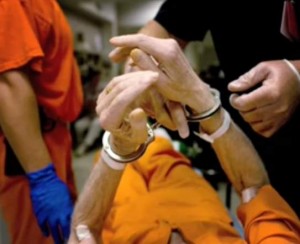

Corrections Association Program Releasing Aged Prisoners
Here on Law and Disorder we’ve reported about the Compassionate Release Program regarding Lynne Stewart’s condition. The CRP is designed to reduce the number of elderly and sick in prison, if they have a terminal health condition or a significant and permanent non-terminal health condition, disease or syndrome. This program is part of a larger effort to release aging prisoners in the United States. Nationally, the number of prisoners over age 55 nearly quadrupled from 1995 to 2010, eight times the pace of growth for the total prison population, according to a recent Human Rights Watch report. Because of long sentences handed out in the 70’s and 80’s, American prisons now serve as quasi-nursing homes, albeit lacking the long-term care we associate with geriatric facilities. We talk today about a major new initiative called the Corrections Association Program Releasing Aged Prisoners that’s working to make prison parole boards correctly assess elderly prisoner risk and get them out.
Laura Whitehorn:
- In New York State, there are about 9200 at the moment above the age of 50.
- By 2030, its estimated that about a third of the entire incarcerated will be over the age of 40. There will be at least 400 thousand.
- For the last 20 years this country has been drunk on the concept of lock em up and throw away the key.
- You lock em up and throw away the key. . .they’re gonna get old.
- Our project is called Releasing Aging People In Prison.
- These people have done a lot of time and the lowest rate of recidivism is in this group. They’re over the age of 50, have done 15-20 years in prison and have committed murder.
- This group is ready to be released without a threat to public safety.
- You’ve advocated for Lynne Stewart on this show for compassionate release. She’s in the Federal System.
- The Feds are very stingy with compassionate release, so is the state of New York. In 2011, I think it was, they let out 8 people on compassionate release, in a year when 200 people died in the system.
- I’m now 68, but I feel about 78 on some days.
- We don’t really need a new law to release the people we’re talking about.
- What we need is the parole board to follow the law. What we need is the state to follow the law for compassionate release for those who are ill.
- One thing we’re doing is we’re trying to join with other people in the state who’ve had enough of the way that parole board denies people over and over again and say use actual risk assessments that do exist.
- If the risk is low let them go.
- RAPP – Release Aging People In Prison – Harlem, NY – 2090 Adam Clayton Blvd, NY – 212-254-5700
- Email – mfarid@correctionalassociation.org
- www.nationinside.org/campaign/release-of-aging-people-in-prison
Mujahid Farid:
- The issue of mass incarceration has many facets. The impact on some communities is from the cradle to the grave.
- The prison population has somewhat stabilized. It’s still at a rate that beats out every other country. Although that rate has stabilized it hasn’t done so with the elderly.
- In New York State, the prison population has gone down 24 percent in the last 10 years.
- During that same 10 years the population of the elderly (in prison) increased by 64 percent.
- The zeitgeist in this country is about punishment and never giving up on punishing a person, especially those committed for serious crimes.
- In my own case, I had a sentence of 15 years to life, you would assume if I did the minimum sentence, if there were indications I had rehabilitated myself and shown that I was a changed person that I would’ve been released. But that didn’t happen. I served 18 years above and beyond that 15 year sentence.
- The sentencing structure that allows what we’re talking about is called an indeterminate sentencing structure. That means you’re given a minimum and a maximum.
- Some people get 10 to 20, some people get 10 to 15, and other with the most serious crimes get a number and on the end they get letters.
- In that indeterminate sentencing structure, there’s an indication that the prisoner should be released if they’re reformed or rehabilitated at that minimum posed term.
- In my case, I received a 15-life on attempted murder of a police officer. He didn’t get a scratch.
- That was the least amount imposed on me, I couldn’t get any less.
- So a person who is serving a sentence such as that would have an expectation of 15 years or whatever they have to be released if they change.
- To not give them a reason for the denial, saying its the nature of the crime, takes away hope from a person.
- I was arrested in 1978, I went upstate within 6 months. Before that 6 months came I had earned my GED. I did that while facing trial.
- I went upstate with no expectation of serving 15 years. I actually thought that because of the facts I was convicted for that I would eventually win on appeal.
- Within a few years, I had earned an Associates Degree in Business. I went on and got a Bachelor’s Degree in Liberal Arts.
- Shortly after that, I earned a Master’s Degree in Sociology and then I earned another Master’s Degree in Ministry.
- All of that happened before that 15 year period.
- None of that was considered by the parole board when I entered that 15 year mark.
- They simply denied me and didn’t give me any guidance of what I could do to better myself to earn release.
Guest – Laura WhiteHorn is an ex-political prisoner and native New Yorker, who was active in supporting groups such as the Black Panther Party, the Black Liberation Movement and was active with Students for a Democratic Society and the Weather Underground. Laura also worked to expose the FBI’s Counter Intelligence.
Guest – Mujahid Farid is investigating potential mechanisms for increasing release rates for incarcerated aging people at the Correctional Association in New York. He’s spent more than three decades incarcerated in New York and co-founded the Prisoners AIDS Counseling & Education program and helped design prison-based sociology and theology courses that allowed others to earn college-credited in prison. He also earned four college degrees and other certifications while in prison, including his paralegal certificate, New York State Department of Labor Certificate in Human Development Counseling, and New York City Department of Health Certificate in HIV/AIDS Counseling.
——-
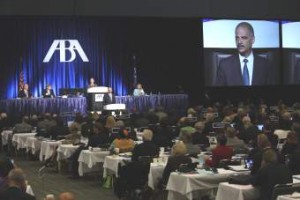
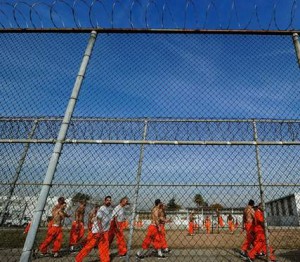
Mandatory Minimum Sentencing Circumvented For Non Violent Drug Offenders
When Attorney General Eric Holder announced that the Justice Department would begin reassess the harsh mandatory minimum sentences on non-violent drug offenders that unfairly target young African Americans and Hispanics, some drug reform advocates said it was a breakthrough. However, our guest Ethan Nadelmann, executive director of the Drug Policy Alliance, says there was no mention of clemency or pardons for those imprisoned with disproportionately long sentences. Attorney General Holder did mentioned that the United States represents about 5 percent of the world’s total population and it incarcerates nearly 25 percent of the world’s prison population. The Drug Policy Alliance has made great strides in criminal justice reforms and to help decriminalize marijuana in states such as Colorado and Washington.
Ethan Nadelmann:
- Early on in the first term, President Obama and Attorney General Holder working with Drug Policy Alliance and a whole range of allied groups did actually change the penalties, the mandatory minimum for crack cocaine.
- Then they dropped the ball. They did nothing in the following years.
- The substance of the speech (recent by Holder) was important. By saying he was going to issue explicit directives to US attorneys around the country that would effect the way they charge people especially low level players in drug trafficking organizations. They’re really pushing this through in a bipartisan way.
- I think he (Holder) does regard this as a legacy issue.
- Obama has recently mentioned incarceration and the need to reduce it in the context of memorializing Martin Luther King Jr.
- We’ve seen the drug law violators from 65 percent of the total of federal prisoners to 48 percent of the total even as the absolute numbers have gone up.
- I think we’re going to see low level drug violators charged in different ways. One thing about mandatory minimums is they shift the discretion from judges to prosecutors.
- Mandatory minimums empower prosecutors at the hand of judges.
- I think what we’ll see is a downshifting in how much prosecutors are looking for. We’ll see fewer people going to prison on federal drug charges.
- Legislators are notoriously resistant to having sentencing reforms be retroactive. They’re willing to say going forward we’ll reduce the sentence but we’re not going to touch the issue of the people who are locked up under the old laws.
- I bet we would see some movement on behalf of the people who are behind bars as well.
- Non violent drug law offenders, sitting there for 10 or 20 years. Statewide 20 percent of all inmates are in for drugs and in the federal prisons its 50 percent.
- Half of all drug arrests in America are for marijuana. Overwhelmingly for marijuana in small amounts.
- When states move forward with the ballot initiative process to legalize marijuana either for medical purposes, which 20 states have now done, or more broadly for all adults which Washington and Colorado have done, that presents a basic issue for the federal government.
- What the US attorney general’s office can do is offer guidelines saying to US attorneys around the country, here are our priorities, here’s how we think you should handle this.
- The feds are basically saying, we get it. That legally regulating marijuana may accomplish the objectives of federal drug control, more effectively than continuing an ineffective prohibitionist policy.
- New York was one of 11 states that decriminalized the possession of marijuana of less than ounce, back in the 70s. Which means you could have less than ounce in your pocket or home and its like a traffic ticket.
- But if its in public view, than you can be arrested. It’s a misdemeanor offense.
- New York is the only state in the Northeast that hasn’t legalized medical marijuana.
- Every 2 years we organize the leading gathering in the world of people who are against the drug war. (reformconference.org) Denver, CO – Oct 4, 5, 6
Guest – Ethan Nadelmann, founder and executive director of the Drug Policy Alliance, the leading organization in the United States promoting alternatives to the war on drugs.
——-
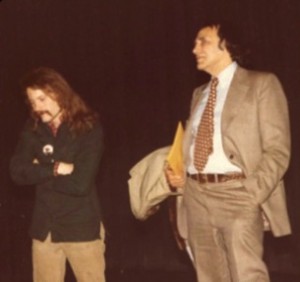
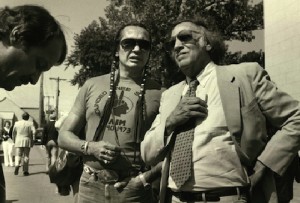
William Kunstler’s Performance at Caroline’ Comedy Club
We hear a part of William Kunstler’s presentation at Caroline’s Comedy Club. This was his last public appearance. He shares a great story about a particular dialogue with a judge and an envelope of marijuana.
———————————————————————–
Civil Liberties, Criminalizing Dissent, Human Rights, Iran, Military Tribunal, Targeting Muslims, Truth to Power, War Resister
Podcast: Play in new window | Download
Updates:
—-
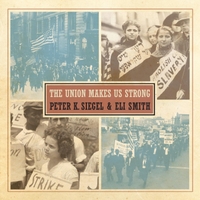
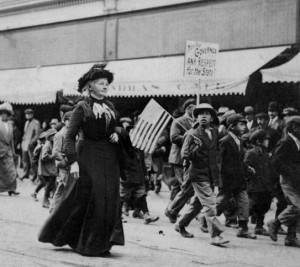
There Is Power In A Union: Labor Songs
Songs of the American labor movement called for fair wages, dignity and voiced grievances. Classic labor songs such as “Which Side Are You On” or “There Is Power In A Union” affirmed the value of the worker to society and expressed hope in their lyrics. Woody Gutherie, Pete Seeger and Joe Hill were leaders of the movement, and sang songs with a passion and love for their fellow workers.
Peter Siegel:
- I’ve been singing these songs all my life. My parents sang these songs. I got a guitar when I was about 13 years old. One of the first songs I learned was Talking Union, along with Bird Dog and Don’t Take Your Guns to Town.
- In recent years, when the state started cracking down on unions. The reporting that was coming through the media about these things, didn’t really explain what a union was and why there unions in the first place, and what the issues were.
- I think these songs do a very clear and direct job of explaining that.
- Many of the issues are still the same as they were when these songs were written. Eli and I talked about and got together and decided to make this album.
- Martin Luther King Jr., talk about the hottest places in hell being reserved for those in times of crisis do nothing.
- The Death of Mother Jones: I don’t think Gene Autry had a particular connection to that song, he apparently got the song from OK Records, which was his label.
- Eli plays the steel guitar on our record and sings it beautifully.
Eli Smith:
- One over-arching aspect of the songs is they give you a feeling of what its like to have a labor movement.
- And also now to give people a feeling of what it was like in the past because I think America is an amnesiac society.
- Most of the songs on our album are from 80 to 100 years ago.
- Which Side Are You On? It’s a song written by Florence Reece, in a traditional style from the heart of Appalachia, in the coal mining region and we rendered in a way that’s as authentic as we can be to that style.
Guest – Peter Siegel is a musician, a record producer and performance artist who has worked with Doc Watson, Hazel Dickens and Roy Buchanan. He’s produced a number of great albums for Nonesuch, Folkways and Rounder Records in the last 50 years.
Guest – Eli Smith is a banjo player, writer and promoter of folk music, living in New York City. Eli is a Smithsonian Folkways recording artist and produces two folk festivals every year.
—-
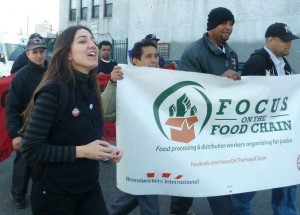
Brandworkers – Focus On The Food Chain
Nearly 35 thousand workers are employed to run New York City’s massive food processing and distribution. The vast majority are immigrant workers from all over the world, Latin America, the Caribbean, China and Nepal. They depend on this work for their livelihood yet they’re often exploited through wage theft, reckless disregard of health and safety, plus egregious discrimination. We welcome back attorney Daniel Gross, executive director of Brandworkers, a non-profit organization protecting and advancing the rights of retail and food employees. They’ve had numerous victories including recovering unpaid wages and forcing companies such as Flaum Appetizing into full compliance of workplace protections. The efforts to achieve these victories are based on the labor movement of the late 19th century using direct action and everyday solidarity.
Attorney Daniel Gross:
- That approach worked for several decades. Labor identified itself with having a seat at the table with government and business and frankly lost its sense of being a fighting movement.
- As many predicted, that arrangement among labor, capital and government wouldn’t hold.
- Capital and government understood that it was a temporary sessation of hostility to worker’s right to organize.
- What we see now is the NLRB system come undone.
- It’s very easy for an employer with the right union-busting attorney to quite effectively undermine the worker’s right to go through the traditional processes we’ve understood for a while to form a union.
- This multi-billion dollar global union busting industry which is led by law firms.
- These folks wake up every day in the morning and seek to undermine working people coming together to do better at work for their families.
- 93 out of 100 workers today are not in a labor union traditionally and have very little prospect getting in.
- Starbucks when I realized the traditional model was ineffective.
- Our members work as bakers, they process seafood, they drive trucks that deliver all kinds of food and beverages to the grocery stores and restaurants, where we all get our food.
- Our motto is empowering workers to build and lead their own campaigns for justice at work and in the food system.
- Most recently, we announced a campaign at the Tom Cat bakery.
- Workers marched and made declaration of dignity, demanding respect from management and an end to an under-payment scheme and hands off the benefits they’ve accrued.
Jose Romero:
- Flaum Appetizing was a kosher factory, we were working very long hours without being paid overtime, there were no benefits including no vacations.
- We decided to unite and came together one day during our break, we all met on the patio and decided we were going to confront the boss altogether.
- This manager would attack us, and yell, call us cockroaches, would hurry us and call us stupid.
Guest – Attorney Daniel Gross, Executive Director of Brandworkers, a non-profit organization protecting and advancing the rights of retail and food employees.
Guest – Juan Romero from Flaum Appetizing who works as a cook on the West side of Manhattan.
—-

Farm Workers: Coalition of Immokalee Workers
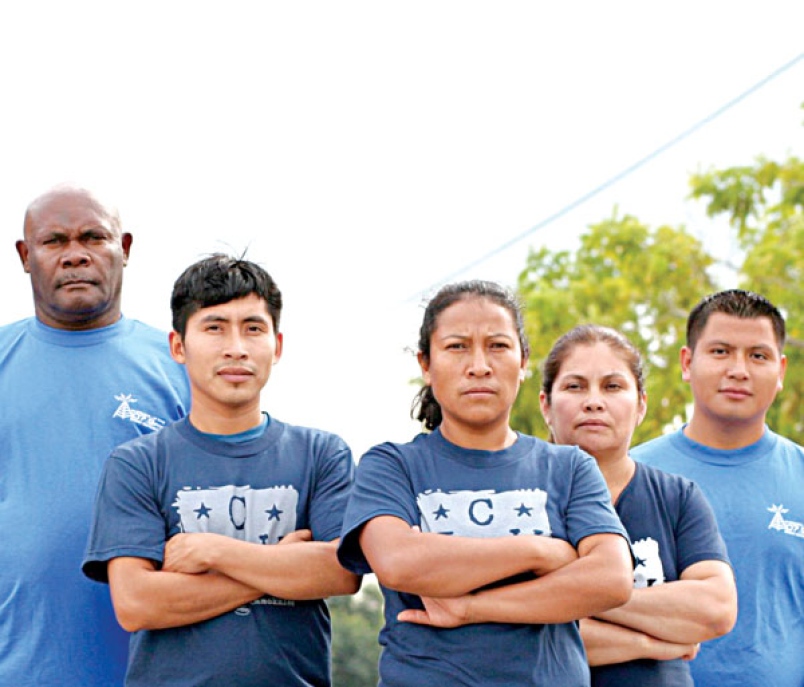
This year’s Labor Day, farmworkers with the Coalition of Immokalee Workers travel across Florida calling on Publix Supermarkets to join the Fair Food Program. Who are the Coalition of Immokalee workers? They’re a Florida based community organization of mainly immigrants from Latin America and the Caribbean including Mayan Indian and Haitian immigrants who have been working low wage jobs throughout Florida. The farm workers routinely face a number of different kinds of exploitation, poverty, wage theft, physical and verbal abuse as well as sexual harassment of many women working in the fields. Their campaigns focus on the big corporate buyers of the produce that they pick in an effort to improve wages and working conditions in the fields. They started with Taco Bell and from there launched campaigns with McDonald’s, Burger King, since then 11 other companies are cooperating to improving wages and working conditions in their supply chains. Last year Trader Joe’s and the Coalition of Immokalee Workers signed an agreement that formalized the ways in which the supermarket chain will support the CIW’s Fair Food Program. Their efforts continue to urge Publix and Wendy’s fast food to join up.
Silvia Perez:
- My experience as a woman working in the fields, its been very difficult for me, we often do the same work that men do in the industry.
- We face heat exposure and having to work long hours, under the Florida Sun, and also to over fill our buckets to keep extra tomatoes on top for which we were not paid.
- For many years before the CIW began its Fair Food Program, farm workers were paid an average of 45 cents per 32 lb bucket.
- That’s been the same wage that farm workers received in Florida for more than 30 years.
- There was no guaranteed wage that we would receive in the field, we were paid the bucket rate.
- While there should be a minimum wage and we should get that guarantee to get paid that minimum wage, often times we didn’t receive it.
- With our campaign for Fair Food, which brought on board 11 major corporations we developed the Fair Food Program, an initiative which is a partnership between farmers, farmworkers and the major retailers and because of that program things are changing.
- Our organization is not a union, we are a worker and community based organization that was formed by farm workers themselves.
- In addition to Wendy’s we’ve asked Publix the largest Florida based corporation to come on board as 11 other companies have. Specifically we ask for 2 things, to pay 1 penny more a pound for the tomatoes that they’re buying to go directly to farm workers, and to respect our rights.
Guest – Silvia Perez with the Coalition Immokalee Workers and also CIW campaign organizer Jake Ratner who will translate.
Guest – Jake Ratner, translater and son of co-host Michael Ratner. Jake traveled and studied in Cuba and Bolivia, South America. He now works with the Coalition of the Immokalee Workers.
—————————————————————-
CIA Sponsored Terror, Civil Liberties, Criminalizing Dissent, Habeas Corpus, Human Rights, Military Tribunal, Political Prisoner, Prison Industry, Surveillance, Truth to Power, Uncategorized, War Resister
Podcast: Play in new window | Download
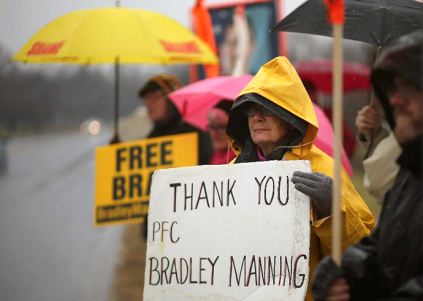
Army PFC Bradley Manning Sentenced To 35 Years
Our own Michael Ratner reports back from Fort Meade, Maryland on the day Army PFC Bradley Manning was sentenced to 35 years in prison for leaking classified information to Wikileaks. As reported by Michael Ratner, Manning faced a maximum of 90 years in prison after his conviction last month on charges of espionage, theft and fraud. Now, his sentence goes the Army Court of Criminal Appeals, where he may seek a reduction of his prison term.
Attorney Michael Ratner:
- 35 years is a completely off the wall sentence. First of all he shouldn’t have been prosecuted at all.
- That’s been the Center for Constitutional Rights position. That’s my position.
- He’s a whistle-blower, he exposed torture, criminality, killing of civilians.
- Then, they over prosecute him, charge him with espionage, make whistle-blowers into spies.
- They charge him with all these years, then people are relieved when gets 35 years.
- It’s a very long sentence for someone who actually gave us the truth about Iraq, about Iran, about the helicopter video that killed a Reuters journalist, about the diplomatic cables that gave us the secret war in Yemen, the revelations about the corrupt Ben Ali government in Tunisia that helped bring on the Arab Spring.
- He’s a hero. The people who committed the crime are sadly still in our government enjoying their lives, they’re the ones that ought to be prosecuted.
- We’re in a time where there is a sledgehammer taken to whistle-blowers.
- The demand now is that Obama pardon him or give him clemency. That’s from the Bradley Manning Support Committee.
- Because of Bradley Manning, people like Ed Snowden came forward. They understood that when they see criminality, they’re young people of conscience and they act on it, and we should be very proud of each of these people.
Law and Disorder Co-host Attorney Michael Ratner, President Emeritus of the Center for Constitutional Rights (CCR), a non-profit human rights litigation organization based in New York City and president of the European Center for Constitutional and Human Rights (ECCHR) based in Berlin. Ratner and CCR are currently the attorneys in the United States for publishers Julian Assange and Wikileaks. He was co-counsel in representing the Guantanamo Bay detainees in the United States Supreme Court, where, in June 2004, the court decided his clients have the right to test the legality of their detentions in court. Ratner is also a past president of the National Lawyers Guild and the author of numerous books and articles, including the books The Trial of Donald Rumsfeld: A Prosecution by Book, Against War with Iraq and Guantanamo: What the World Should Know, as well as a textbook on international human rights.
——-

Journalist Barrett Brown Faces 105 Years In Prison
Journalist Barrett Brown has spent more than 330 days in pre trial detention and faces charges that add up to a 105 year sentence. What Barrett Brown did was merely take a link from a chat room and copied that link then pasted it to a chat room for a wiki-based crowd source group called Project PM. The link was to the Stratfor hack information of 5 million emails. He needed help to sift through the data and posted the link that was already publicly out there to the attention of the editorial board of Project PM. There were unencrypted credit card numbers and validation codes within those emails and the government is claiming that Barrett Brown was engaged in credit card fraud. Why go after Barrett Brown? The backstory begins with the Bank of America being concerned that Wikileaks had specific information. They go to the Department of Justice who lead them to a big law firm in Washington DC, then to a private intelligence firm. Meanwhile, a defense fund for Barrett Brown continues to raise money for his case.
Kevin Gallagher:
- Barrett Brown is an investigative journalist and freelance writer who has had a career writing for the Huffington Post, the Guardian and many other places.
- Through his observing the media landscape over the last ten years in America, I think he grew very dissatisfied with things so when this phenomenon called anonymous popped up in 2010, making major news headlines, he attached himself to it.
- All he was doing was looking at this information leaked by Jeremy Hammond out of Stratfor as part of his journalistic inquiry into the world of private intelligence firms.
- The fact that they can indict someone on identity theft and credit card fraud just for sharing a link of information. . there’s no allegation that he sought to profit from it.
- Project PM over its lifespan was a number of different things but that’s what it eventually evolved into.
- A crowd sourced project with a wiki that was devoted to investigating soley, the state corporate alliance on surveillance. This was known as Team Themis, a consortium of these firms.
- This all started when Wikileaks said it had information from the Bank of America.
- Barrett was investigating. There are other journalists who do very good work on this. He was one of the most vocal who was involved in investigating all these relationships between the private intel firms and the DOJ. He was using leaked emails to do so.
- I think they were very upset to see these things revealed.
- Barrett recognized that this was a threat and he was looking into it.
- Before the court right now is a motion for a media gag order which was presented by the prosecution which would silence Barrett and his attorneys from making statements to the media.
Guest – Kevin Gallagher, writer, musician and systems administrator based in western Massachusetts. He graduated with a B.A. in English from the University of Massachusetts, Amherst. He’s currently pursuing activism on issues related to digital rights: freedom of information, privacy, and copyright; while also taking an interest in information security. He is the director and founder of Free Barrett Brown, a support network, nonprofit advocacy organization and legal defense fund formed for the purpose of assisting the prominent internet activist and journalist, Barrett Brown, who is the founder of Project PM.
——

Native Hawaiian Prisoner Transfer to Arizona Private Prison
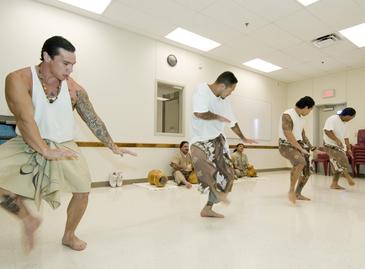
Hawaii is know for sending more prisoners across state lines than any other state. According to the Native Hawaiian Legal Corporation, a disproportionate number of those prisoners are Native Hawaiian inmates. Because of over crowding, Native Hawaiian inmates are transferred from a Hawaii state prison to a for-profit Corrections Corporation of America prison in Arizona. This particular CCA private prison however was built specifically for Native Hawaiian inmates, yet they’re denied cultural and religious rites. Additional transfer impacts include difficult reentry back into Hawaii, away from family and homeland, and no opportunity for proper atonement.
Attorney Sharla Manley:
- We’ve been involved in a lawsuit for 2 years concerning the impact of Hawaii’s policy of transferring inmates to the mainland. Native Hawaiians.
- Native Hawaiians are the indigenous people of the state of Hawaii. They have a similar experience to American Indians on the continent.
- Our firm focuses on Native Hawaiian rights and the focus on what self determination remains despite the history.
- Native Hawaiians are disproportionately incarcerated. They are transferred more often than any other racial group.
- The state of Hawaii creates a menu of prisoners, for private prisons to select.
- Our focus on the transfer is very narrow, the Native Hawaiian prisoners who still want to adhere to native traditions and practices.
- In Arizona you don’t have access to cultural teachers and spiritual advisers who could provide the kind of guidance or counseling, really the kind of instruction of passing on a tradition.
- The Native Hawaiian women were being transferred for a period of time, but there were so many sexual assaults, the state finally brought them back.
- You’re taking away the men, breaking the cultural transmission because many of these men are fathers, grandfathers. Yes they would be in prison here, but there is a difference when your family can see you on the weekends.
- In effect, it’s a form of cultural genocide.
- I’m beside myself as to why this hasn’t been rectified at this point. There’s not even a plan really.
- This is an issue that is personal for me. I am Native Hawaiian, and know what its like to have someone in your community, in your family to be effected by the criminal justice system.
Guest – Attorney Sharla Manley, with the Native Hawaiian Legal Corporation. Sharla Manley joined NHLC as a staff attorney in 2010. Before joining NHLC, Sharla was an associate at an international law firm in Los Angeles in its global litigation department for over three years. In addition to handling commercial litigation matters, she also took pro bono cases, involving voting rights, asylum, and California’s Unruh Civil Rights Act. Also, Sharla was an associate at a plaintiff-side class action firm where she primarily handled appeals of wage and hour cases before state appellate courts and the Ninth Circuit. Before law school, Sharla was a policy analyst on Native Hawaiian rights at the Office of Hawaiian Affairs. She focused on water rights and the impact of military activities on cultural resources in Makua Valley.
—–
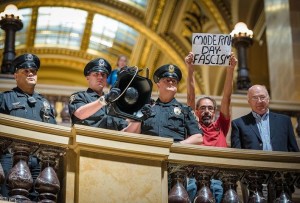
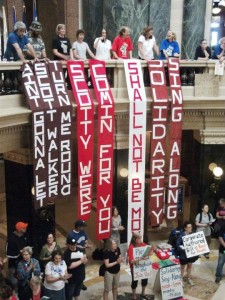
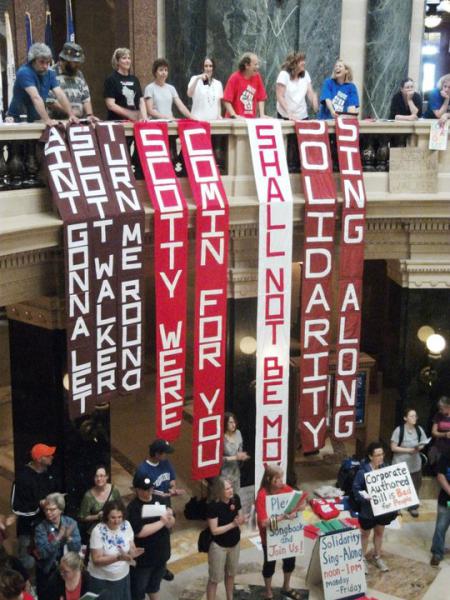
Solidarity Sing A Long: Wisconsin Labor Protests Continue
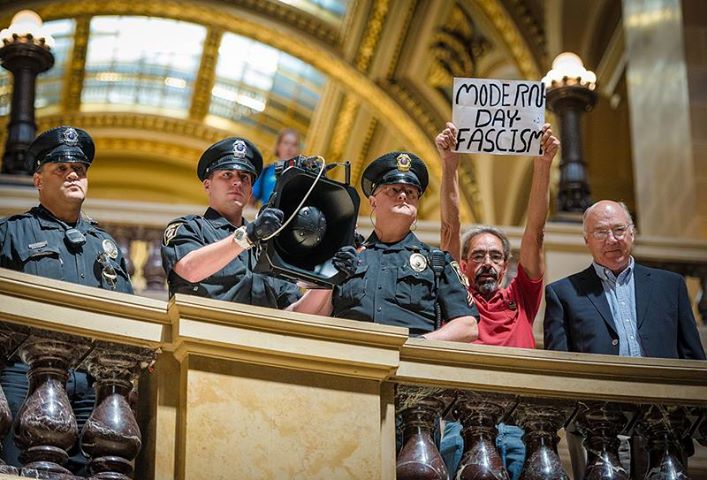
The noontime sing-along has protested Gov. Scott Walker’s policies daily at Wisconsin’s Capitol since March 11, 2011. However, a new round of arrests began two weeks ago and more than 100 citations have been issued to protesters by Capitol Police. But this is in addition to nearly 200 citations already since July 2012 when the Department of Administration began enforcing new permitting requirements for gatherings in state facilities. What is the noontime solidarity sing-along protest?
Attorney Jonathan Rosenblum:
- When you have a new governor who within weeks in office describes his legislation as a bomb, which was to end collective bargaining for public sector workers.
- This led to more than a hundred thousand people, multiple times on the square where I’m sitting right now here on Wisconsin Avenue.
- Beyond the anti-union agenda, this governor has come in with a pedigree from ALEC, the American Legislative Exchange Council. He as a legislator in the same building was a member of ALEC, was a proponent of its agenda.
- His agenda as it moved along, was to remove vast numbers of children from medicaid, of claiming a jobs agenda would bring Wisconsin to the top in the United States, instead it plunged to the bottom.
- He eliminated funding for high speed trains, instead the trains for Wisconsin are now sitting in Oregon.
- The main point about this governor is about closing the doors of this government to the public.
- Even the union legislation that led to the crowds was passed in violation of a Public Meetings Act.
- Let me take you to March 11, 2011 when it all started. I was standing there with my friend Steve Burns, folks had slept in the capitol for weeks, the anti-union legislation was passed and signed that day and Steve had printed up a few copies of a songbook that had the dome of the capitol opening up with musical notes on the cover of it and 10 tunes, the classics of the civil rights movement.
- Several of them modified in the great Wobbly tradition.
- This sing-along has preceded from that day March 11, 2011 without skipping a beat, every single week day since that date. More than 650 consecutive sing-alongs.
- The sing-along is a joyful conglomeration. It’s reached about 300-400 daily as the crack down has actually caused a surge of concerned citizens to join us.
- We Don’t Want Your Millions, Mister.
- A Long Range Acoustic Device is being used. The police have started to use the recordings of Chief Irwin’s declaration of unlawful assembly to blast into the rotunda so nobody misses it.
- They use the siren that ramps up to 150 db to disable people. They haven’t put it to that level yet.
- The State Capitol Police are in a bind. They have their orders, most are executing them with a little more zeal than they should. Some of them seem to be maintaining friendships that they had before with the singers.
Guest – Jonathan Rosenblum, PRWatch.org contributor, an author, award-winning journalist, and practicing lawyer. His book, Copper Crucible: How the Arizona Miners’ Strike of 1983 Recast Labor-Management Relations in America (Cornell University Press, 1995; Second Edition, 1998) was named as one of Princeton University Library’s “Ten Noteworthy Books in Industrial Relations and Labor Economics” in 1996.
——————————————————————————–
CIA Sponsored Terror, Civil Liberties, Supreme Court, Targeting Muslims, Truth to Power, War Resister
Podcast: Play in new window | Download
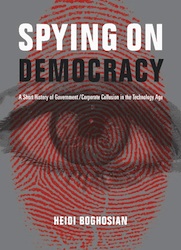
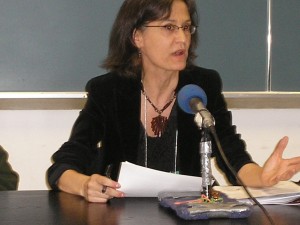
Law and Disorder Co-host and Executive Director of the National Lawyers Guild, Heidi Boghosian Recently Published “Spying on Democracy: Government Surveillance, Corporate Power and Public Resistance.”
—-


Israel-Palestine Peace Talks
Could the timing of the recent Israel-Palestine peace talks be related to the crisis erupting across the Middle East region? The escalating war in Syria and the massive coup in Egypt have reflected US strategic failures. Now, the U.S. led effort to re-start 22 year old peace talks with Israel and Palestine has again raised suspicion of again benefiting the side of Israel.
Interestingly, former U.S. ambassador to Israel and former deputy research director of AIPAC, the pro-Israel lobby, Martin Indyk will be acting as the U.S. envoy in the negotiations. The stated goals of these new peace talks according to our guest Phyllis Bennis, director at the Project Institute for Policy Studies will not end the occupation, or the siege of Gaza, or the decades of dispossession and exile of Palestinian refugees but only current tension and dispute.
Phyllis Bennis:
- 1947 is when the British really threw up their hands and said we don’t want to be the official colonial power in historic Palestine any more so we’re going to turn it over to the UN.
- At the end of November in 1947, the UN decided to divide Palestine and make two states.
- It started out incredibly unfair because what they decided to do is give 55 percent of the land to become a quote Jewish state but that was a time when the Jews amounted to 30 percent of the population.
- The Palestinians who were 70 percent of the population were supposed to get what was to become a state only 45 percent.
- The war that broke out that was as much against the British as it was against the Palestinians and what were to become the Israelis but were at the time Zionist militia, the war led to the expulsion, many at gun point of 750 thousand who were driven into exile, off their land. At the end of the war, the Palestinians were left with only 22 percent.
- The Israelis controlled 78 percent of historic Palestine and all of western Jerusalem. Jerusalem was supposed to be separate under international law, it was called corpus separatum, that was to be governed internationally and not governed by either of these states.
- That’s what led up to the period from 1948 and 1967. Jordan took over administering the West Bank, and East Jerusalem – and Egypt took over administering the Gaza Strip.
- In 1967, war breaks out, what became known as the Six Day War. The Egyptian Air Force is the first target of the Israeli military.
- The Israeli military was really good, they had gotten their arms mainly from France and Czechoslovakia. It’s interesting because in that period from 1948 and 1967, the U.S. supported Israel but it wasn’t the kind of special relationship we see now.
- At the end of 6 days, they now controlled 100 percent of historic Palestine. They now had been occupying what had been left to the Palestinians after 1948, which meant the West Bank, the Gaza Strip and East Jerusalem.
- We can look back at this particular process, it goes back 22 years to Madrid Conference of 1991.
- I was at Madrid, I was really young, Netanyahu, was the spokesperson for the delegation. I went head to head with him at a press conference in Madrid.
- That led to the Oslo process, and what we have now. We’ve had the “road map” we’ve had the Anapolis meetings, we had the Y-River Accord.
- In 1967, the US is desperate for allies it can rely on, against the Soviet Union, against the anti-colonial movements that are springing up across Africa.
- Here’s Israel that just trounced 6 Arab armies and the Pentagon looked at that and said, we could do business with these people.
- So the Pentagon starts to build this relationship with Israel that goes beyond joint training. Soon you have the beginning of the interlocking connection between the Israeli military, military producers, war profiteers, military corporations and that gives rise to the whole new influence to the long standing pro-Israel lobby.
- At the end of the cold war, the value of Israel begins to be a liability. That’s when you see some changes in US policy.
- Then you have 9/11 and the global war on terror and Israel is a great strategic ally again. It’s an asset again, not a liability anymore.
- This idea of land swap is the code word that the U.S. and Israel have been using for the last 7 or 8 years. That is based on the idea that Israel will keep all its major settlement blocs – about 80 percent of the current 600 plus thousand illegal Israeli settlers that are living in illegal Jews-only settlements in the occupied West Bank, and the occupied East Jerusalem.
- About 80 percent of the settlers would stay, all the major settlement blocs. These are cities of 40-50 thousand people with shopping centers and swimming pools and colleges and industrial zones, with industrial waste going down the hill into Palestinian villages at the bottom.
- Israel will all of those, Israel will keep all the major water aquifers of the West Bank, and they will call that “land swap” because in return they will give Palestine a few acres of desert land, abutting Gaza or some other land that’s not developed.
- The Coalition of the US Campaign To End the Israeli Occupation. EndtheOccupation.org
- The BDS movement. Boycott, Divest and Sanction which is aimed at stopping Israel’s violation of international law. If it doesn’t there will be consequences that we as a civil society can bring in stop buying settlement produced goods. In Europe, the BDS movement has pressured enough countries that the European Union has now issued new guidelines calling to an end of any European Union funding of any institutions or individuals in the occupied territories.
Guest – Phyllis Bennis, directs the New Internationalism Project at IPS. She is also a fellow of the Transnational Institute in Amsterdam. She has been a writer, analyst, and activist on Middle East and UN issues for many years. In 2001 she helped found and remains on the steering committee of the U.S. Campaign to End Israeli Occupation. She works closely with the United for Peace and Justice anti-war coalition, co-chairs the UN-based International Coordinating Network on Palestine, and since 2002 has played an active role in the growing global peace movement. She continues to serve as an adviser to several top UN officials on Middle East and UN democratization issues.
—–
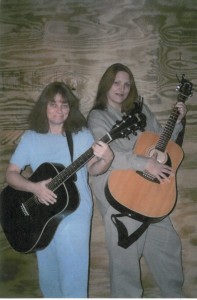
Green Scare Crackdown and Monsanto Political Prisoner Marie Mason
Long time activist in environmental and labor movements Marie Mason continues to serve out a harsh 22 year prison sentence based on her involvement in two attacks of property damage and arson. Marie Mason is considered an eco-terrorist and is serving the longest sentence of any convicted animal rights or environmental militant. In one of the attacks, Mason and her husband Ambrose set fire to a Michigan State University building, targeting a Monsanto funded office in charge of a genetically modified crop research program to create moth resistant crops for Africa. Marie Mason was later set up by her husband who recorded their conversation that led to her conviction. As we continue to report, since 9/11, environmental radicals have been labeled terrorists, and charged with overly long sentences. This is part of what’s known as the “Green Scare” campaigns that seek to put a chill on dissent.
Peter Werbe:
- Marie Mason was an environmental activist from the Detroit area.
- In January 2000 she committed a number of acts the government considered illegal. They were eco-sabotage. Frustrated by her lack of ability, her and others to mobilize great numbers of people to defend the environment against things like genetically modified organisms.
- She and her husband at the time entered a research lab at Michigan State University and set fire to these records. Arson under the law. She also damaged logging equipment in an area where they were doing clear-cutting.
- When you get these “frankenstein” genes into the environment, there’s no longer a debate. When you clear cut an old growth forest, that’s the end of debate as well.
- She was desperate. She actually escaped apprehension until her husband who actually became estranged from her was caught in another matter and ratted her out in 2007.
- She was brought to trial. He actually wore a wire taping her and going around the country, making 140 other recordings of environmental activists but was only able to ensnare her.
- She was tried for these acts in Federal Court, and found guilty. She pled guilty. The judge gave her 22 years.
- She is now the longest serving prisoner of this nature. (Federal Terrorism Enhancement Law) No one was ever injured in any of these.
- There are these Catholic peace activists who regularly go down to Tennessee to protest against nuclear facilities there and previously they were convicted under misdemeanors. They are now facing up to 15 years in prison on federal charges.
- Marie Mason appealed her sentence saying it was disproportionate to other federal guidelines for sentencing. Unfortunately, the right-wing Bush appointed judge wrote the sentencing guidelines so she didn’t get anywhere with the Circuit Court of Appeals.
- She was sent to a federal woman’s facility in Minnesota where she did good work. She was a model prisoner, but one day about two and a half years ago – in the middle of the night she was taken to administrative segregation. The hole. Held there for a couple of months and suddenly in the middle of the night in chains, taken in a small plane and took off. She said she thought she was going to Guantanamo or something like that.
- She wound up in the Special Administrative Unit in Carswell Federal Medical Center. Lynne Stewart is in Carswell but she’s in the general population. Women are sent there with medical difficulties but its a horror show.
- She was told she was moved because she was recruiting for the Earth Liberation Front, that she maintained a connection via email that was provided by the prison.
- They don’t want to restrict her communications, they want to see who is writing her.
- She has written extensively for the Fifth Estate Magazine.
- Marie’s support is worldwide. SupportMarieMason.org
Guest – Peter Alexander Werbe, American radio talk show host and a progressive political activist. His home is Detroit, where he has become a fixture spinning discs and hosting Nightcall Sunday nights on Detroit’s WRIF 101.1 FM. Peter Werbe’s tenure, having commenced in 1970 has resulted in 2 popular radio programs: Nightcall and The Peter Werbe Show. He currently hosts a Mon-Fri classic (webstream) rock show Deep Trax on WCSX. He is also a staff member of Fifth Estate magazine.
—–
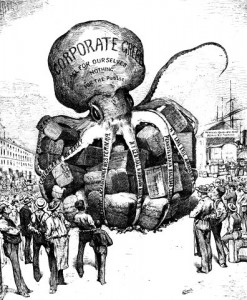
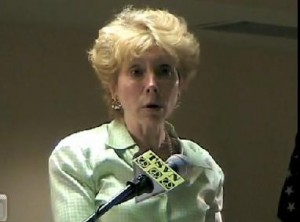
Left Forum 2013: Dr. Harriet Fraad
We hear an excerpt of a presentation from Harriet Fraad is a hypnotherapist & psychotherapist in Manhattan. She writes regularly for Truthout, Tikkun and The Journal of Psychohistory. Her blog with Richard D. Wolff, Economy and Psychology appears at HarrietFraad.com and RDWolff.com. Her latest book is Bringing It All Back Home ed. Graham Cussano. Her article on Emotional and Sexual Life in a Socialist America written with Tess Fraad Wolff will appear in the book Imagine A Socialist America- (Harper Collins 2013). This panel explores what Socialism could look like in the United States.
———————————————
Afghanistan War, Civil Liberties, Habeas Corpus, Human Rights, Iran, Iraq Veterans, Iraq War, Prosecution of the Bush Administration, Surveillance, Torture, Truth to Power
Podcast: Play in new window | Download
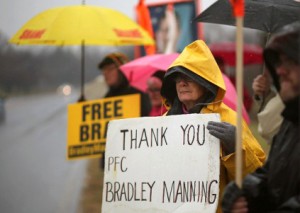

Michael Ratner: Bradley Manning Verdict Update
- I’ve been doing a lot of media on this lately, doing a lot of debates. I take a firm position. He should never have been tried in the first place.
- He’s a hero, he’s a whistle-blower. He publicly exposed the truths about the nature of this country particularly its human rights violations, its criminality and its corruption.
- That constitutes whistle-blowing and whistle-blowing is a legal defense to whatever kinds of crimes the United States wanted to try him. He shouldn’t have prosecuted at all.
- First we’ve all seen the collateral murder video. The killing of 2 Reuters journalists and I believe 10 civilians shot with a gung-ho blood lust.
- Those crimes were never really investigated, no one was prosecuted for them and yet it was cold-blooded murder taking place from an Apache helicopter on the streets of Baghdad.
- Think about what the Iraq war logs revealed. 20 thousand more civilians killed in Iraq then the U.S. said were killed.
- That fact alone caused the government of Iraq to not sign another Status of Forces agreement with the United States, because it would have given immunity to U.S. troops. Because there was no immunity for U.S. troops, the U.S. said we’re not staying in Iraq. Think about how important that is.
- Then there was a story last year taken from Wikileaks and Iraq war logs of torture centers run in Iraq in 2003-2004.
- The only reason we knew about that was because of Bradley Manning.
- That is a little example of what Bradley Manning has revealed to all of us of the criminality of our own country and information we ought to know and debate.
- The only reason we consider anything to be positive in this verdict is because Bradley Manning was so overcharged to begin with a ridiculous charge of aiding the enemy that was sustained by a judge with a motion to dismiss and let go til the end until she finally acquitted him of it – that we’re relieved that he wasn’t convicted of it.
- He was convicted of 20 charges. Six of them were espionage charges each of them carrying 10 years.
- Six of them were theft of government documents, each of them carrying 10 years.
- This is the first ever conviction of anyone in the United States who is a whistle-blower, who is a quote leaker for espionage. There is great fear being sown by Obama, Holder and others both in regard to whistle-blowers and to journalists.
Law and Disorder Co-host Attorney Michael Ratner, President Emeritus of the Center for Constitutional Rights (CCR), a non-profit human rights litigation organization based in New York City and president of the European Center for Constitutional and Human Rights (ECCHR) based in Berlin. Ratner and CCR are currently the attorneys in the United States for publishers Julian Assange and Wikileaks. He was co-counsel in representing the Guantanamo Bay detainees in the United States Supreme Court, where, in June 2004, the court decided his clients have the right to test the legality of their detentions in court. Ratner is also a past president of the National Lawyers Guild and the author of numerous books and articles, including the books The Trial of Donald Rumsfeld: A Prosecution by Book, Against War with Iraq and Guantanamo: What the World Should Know, as well as a textbook on international human rights.
———

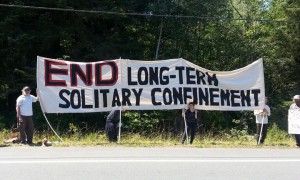
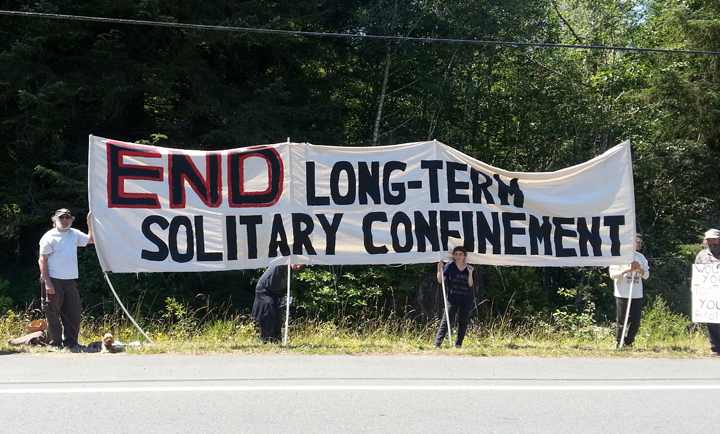
Pelican Bay Prison Hunger Strike
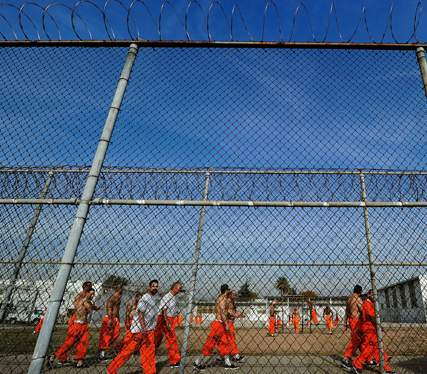
Last month, prisoners at Pelican Bay Prison went on another hunger strike to protest solitary confinement and security unit conditions. What does solitary confinement mean at Pelican Bay Prison? Well, prisoners spend 22 to 24 hours a day in a cramped, concrete windowless cell. The food is often rotten. Temperatures are extremely hot or cold. Within 15 days, these conditions can cause psychological damage.
Jules Lobel, who represents the prisoners at Pelican Bay in a lawsuit challenging long-term solitary confinement in California prisons says prisoners land in solitary confinement not for crimes they were convicted of, not for any rule violation or violent act while in prison, but based on the slimmest pretext of “affiliation” with a gang.
Attorney Jules Lobel:
- At any one time around the country there are about 80 thousand people that are in some form of solitary confinement.
- In California alone there are 4000. What makes California somewhat unusual is there are a large number of prisoners who’ve been in solitary confinement for over a decade and many over 20 years.
- In Pelican Bay Prison there are over 400 hundred who have been in solitary confinement for over ten years and about 80 for two decades.
- The conditions they’re place under are draconian.
- The cells my clients are in, there are no windows. People spend 20 years without seeing trees, birds, the grass.
- That’s unusual to have a whole prison without any windows.
- They put in thousands of people in solitary simply for gang affiliation. You don’t have to have committed any crime (disclipinary infraction) in prison.
- You get a birthday card from a member of a gang.
- There are things society will look back on, and say how could this have been done in a civilized society. We look back at slavery and segregation now and say that.
- They say that they will force feed only when the prisoner loses consciousness.
- These folks are on a no solid food hunger strike and they’ve been willing to take salt tablets, vitamins.
- We looked at the situation in California as I described and we also knew that 2 years ago hundreds of thousands of prisoners went on hunger strikes in California protesting this and were promised reforms that were never delivered.
- We decided that the time was right for a class action lawsuit.
- We brought the lawsuit in May 2012.
- We claim 2 things. To keep people in these conditions for over a decade is cruel and unusual punishment. It’s a violation of the Eighth Amendment.
- To keep someone in these conditions because they think they’re gang affiliated is disproportionate.
- The case only deals with one, and that’s the most notorious, and that’s Pelican Bay Prison.
- There are a thousand prisoners in solitary confinement at Pelican Bay.
- They deliberately place this prison where its 7 hours from any nearest major metropolitan area by car.
- It’s like a gulag there in that they don’t want any media exposure or attention being placed on them.
- It’s way more costly to put someone in solitary confinement. It’s a waste of tax payer resources.
Guest – Attorney Jules Lobel, has litigated important issues regarding the application of international law in the U.S. courts. In the late 1980’s, he advised the Nicaraguan government on the development of its first democratic constitution, and has also advised the Burundi government on constitutional law issues. Professor Lobel is editor of a text on civil rights litigation and of a collection of essays on the U.S. Constitution, A Less Than Perfect Union (Monthly Review Press, 1988). He is author of numerous articles on international law, foreign affairs, and the U.S. Constitution in publications including Yale Law Journal, Harvard International Law Journal, Cornell Law Review, and Virginia Law Review. He is a member of the American Society of International Law
—–
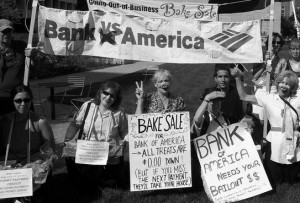
Who Will Bell The Cat? . . . Working People : Michael Zweig
2013 Left Forum Presentation by Michael Zweig is Professor of Economics at Stony Brook University and director of the Center for Study of Working Class Life. His most recent books are What’s Class Got to Do with It: American Society in the Twenty-first Century (Cornell University Press, 2004), and The Working Class Majority: America’s Best Kept Secret (Cornell University Press, 2000 – 2nd edition due December, 2011). In 2005-2006, he served as executive producer of Meeting Face to Face: the Iraq – U.S. Labor Solidarity Tour. He wrote, produced, and directed the DVD Why Are We in Afghanistan? in 2009.
————————————————————————–