CIA Sponsored Terror, Civil Liberties, Criminalizing Dissent, Human Rights, Military Tribunal, Political Prisoner, Prison Industry, Surveillance, Torture, Truth to Power
Podcast: Play in new window | Download
Updates:
—–
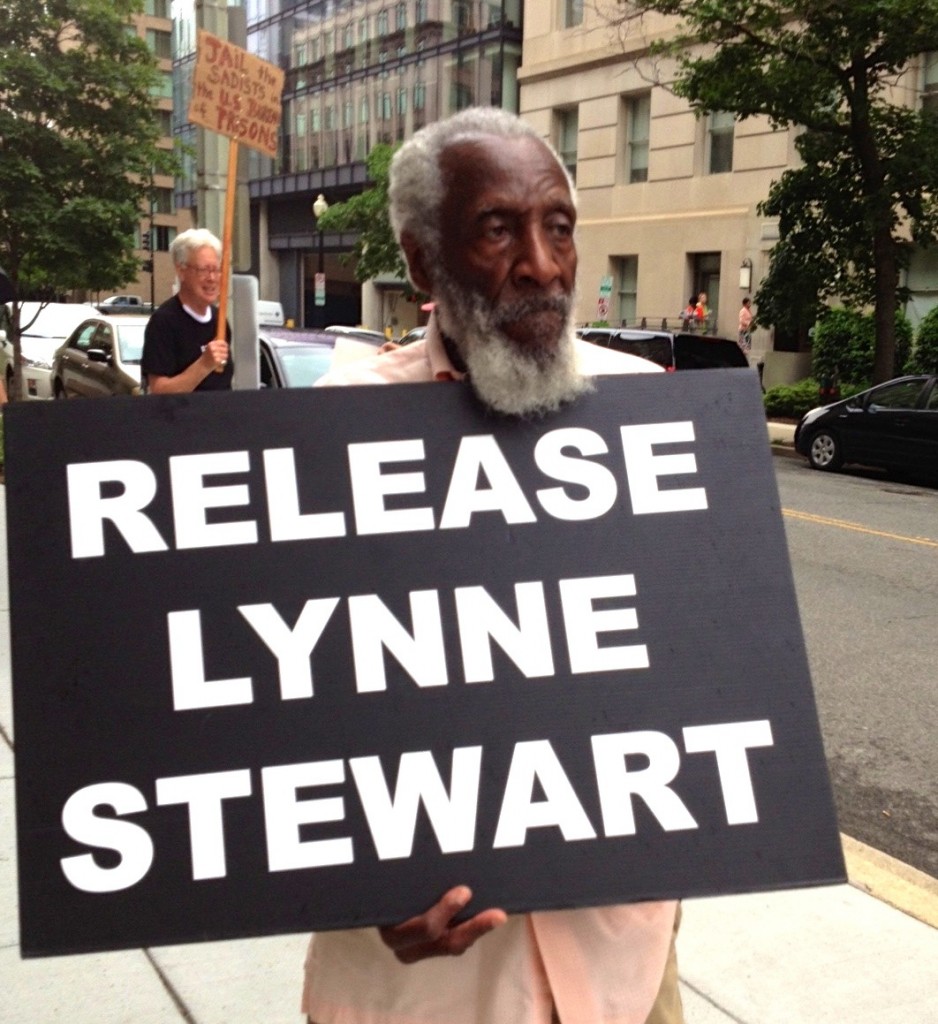
Lynne Stewart: Continued Support For Compassionate Release From Prison
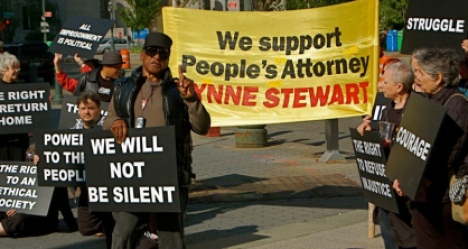
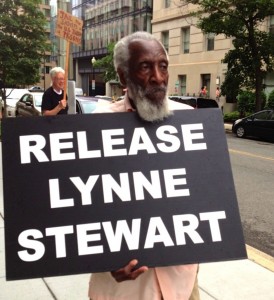
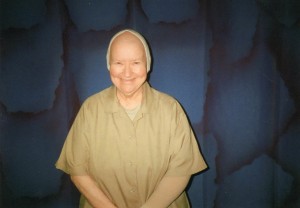
As many listeners know, political prisoner, attorney, activist and friend attorney Lynne Stewart was denied compassionate release on the grounds that her health is improving. Not only is that untrue, it’s cynical. Cancer has spread to her lungs as Lynne is held in isolation. Her white blood cell count is so low that she is at risk of generalized infection. Lynne was convicted on charges related to materially aiding terrorism, related to her representation of Omar Abdel Rahman. Her original 2 year sentence was increased to 10 years after the government pressured the trial judge to reconsider his sentencing decision.
Please call to push for Lynne’s release from prison.
- U.S. Bureau of Prisons Director Charles E. Samuels – 202-307-3198 Ext. 3
- U.S. Attorney General Eric Holder – 202-514-2001
- President Barack Obama – 202-456-1111
Guest – Ralph Poynter, Lynne’s husband and an activist.
——–
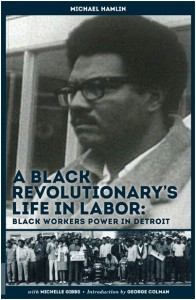
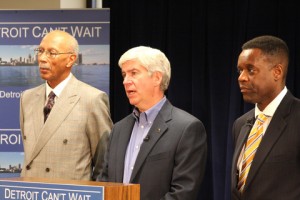
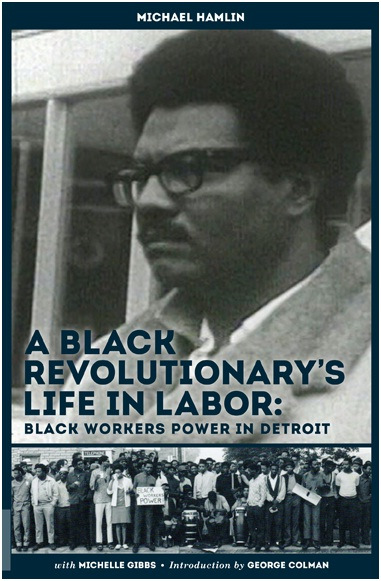
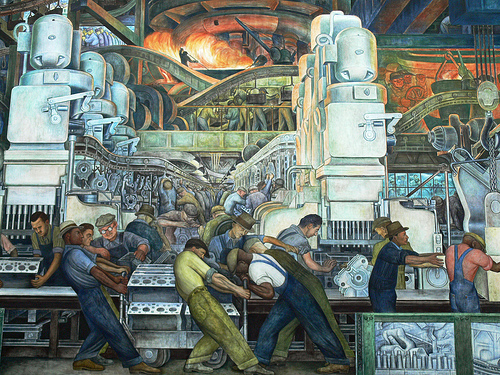
Michael Hamlin: Black Workers In Detroit
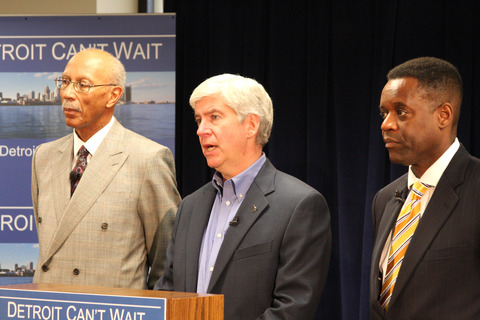
Last month, our guest, retired auto worker and activist Dianne Feeley discussed the plans of emergency manager of Detroit, Kevyn Orr that would wipe out the pensions and health benefits of all current and retired city workers. Nine billion in worker benefits are in the cross hairs of this plan that would impoverish 20 thousand retirees on fixed incomes. There are only 10 thousand city employees left in Detroit who’ve had their pay cut by 10 percent, and now their medical care. This has since made international news. Today we look at the history of workers in Detroit from the perspective of black workers and how what’s happening now can fit into the broader pattern of oppression.
Mike Hamlin:
- Well, I came here from sharecropping country in Mississippi. We landed in a suburb of Detroit that was segregated.
- My father was run out of Mississippi, just ahead of the sheriff. His sister lived out here. We lived in a project, 2 bedroom apartment. There were 8 of us in this 2 bedroom apartment. The people looked out and cared for each other. My mother was only 15 years older than me, so we grew up together.
- It was a peaceful community, sometimes interrupted by weekend drinking, arguing and spouse abuse.
- At that time we were so completely repressed and segregated. Those of us in the south were prepared for that because in the south you had to learn to keep your place.
- We’d submit and we played the game. Go to school or go to the factory.
- Most of my friends quit school and went into the factory. My father advised me to do the same but I wouldn’t.
- The factories at that time were hiring and he eventually got into Ford.
- Most of the workers there either worked at Ford or Great Lakes Steel.
- The typical pattern was they moved to the north got a job in the plant, bought a new car, I’m sure that created a lot -of angst.
- He used to be quite a cotton picker. The Ford job was like play to him. He worked a lot of overtime-kinda typical.
- The situation with the bankruptcy is kind of a culmination.
- If you know black history. . . there’s a history of destroying black communities that are prosperous.
- You look at Tulsa, Rosewood.
- There has always been bitter hatred in Michigan throughout on part of blacks toward whites.
- The racial aspect of this bankruptcy should not underplayed or underestimated.
- People outside of Detroit have been tearing it down since the 50s.
- There’s joy in Mudville now that Detroit is bankrupt.
- Quicken Loans gives his employees incentives to move into downtown lofts and apartment complexes.
- Detroit is going to prosper again.
- The population is changing. It was 85 percent black. It hasn’t been counted recently.
Guest – Mike Hamlin, co-founder of the Dodge Revolutionary Union Movement and the League of Revolutionary Black Workers. For 35 years, Hamlin worked as a social worker and addiction therapist. He is currently a professor of Africana Studies at Wayne State University.
——
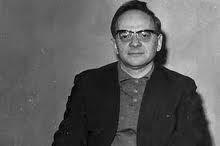

Remembering Journalist and Author, Henri Alleg
In November of 2007, we were fortunate to interview French-Algerian journalist Henri Alleg. Henri passed away last week. He was 91. We talked with him about his book, The Question, a moving account of his arrest and torture at the hands of French paratroopers during the Algerian War of Independence. The book became a bestseller and created major public debate in France. Jean-Paul Sartre wrote the preface that remains a relevant commentary on the moral and political effects of torture on the both the victim and perpetrator. The book was eventually banned by the authorities.
Professor Marnia Lazreg:
- I had worked on the issue of torture during the Algerian War 1954-62.
- I read Henri Alleg’s The Question. It really struck a chord with me.
- There were times in my research and writing where I lost complete faith in humanity or the notion of humanism.
- I lived in the Arab area in the city where I was going to high school and in the mornings I would see hundreds of men in line at the unemployment office.
- I read The Question and I realized he was speaking to me.
- He was tortured mercilessly, and he didn’t talk, he didn’t crack.
- He was the also the first French intellectual who blew the whistle on the hypocrisy of the colonial military establishment which was spreading this news that they were in Algeria to save this country.
- What Alleg wanted to do was show in a very powerful manner that France had not changed from the Middle Ages.
- In fact, France was engaging in the same practices 9 years after it fought fascism, Nazism in Europe.
- He was writing about what happened to him while it was still fresh in his mind. Memories become jumbled, the suffering is so intense.
- He was writing on cigarette paper and he had it smuggled out of the prison. It showed something about Alleg’s personality. He was not going to be muzzled, or silenced. He was going to continue to resist.
- What he said couldn’t be denied because he bore the signs of torture in his own flesh.
- Sarte asked how could such young men exhibit the same kind of hatred toward the Algerians and those that supported the Algerians.
- Alleg asked me to have dinner at his home. We had a marvelous dinner. With him I did not have to explain the premises of my views or my opinion.
- We never met before but I could talk to him and he could understand what I was talking about.
- We live in an age where humanism is a bad word. Anti-humanism is very well established in academic institutions.
- To me, Alleg represented perhaps one of the last figures of the humanist era. It was an era also when you had people who fought for what is human. What is worth dying for . . preserving that basic fundamental human dignity which characterizes all human beings regardless of their race, nationality.
Guest – Marnia Lazreg is professor of sociology at Hunter College and the Graduate Center of the City University of New York. Her books include Torture and the Twilight of Empire; From Algiers to Baghdad and The Eloquence of Silence: Algerian Women in Question.
Past Law and Disorder Interview with Henri Alleg
Past Law and Disorder Interview with Marnia Lazreg
———————————————————
Afghanistan War, CIA Sponsored Terror, Civil Liberties, Criminalizing Dissent, Extraordinary Rendition, FBI Intrusion, Habeas Corpus, Human Rights, Military Tribunal, Political Prisoner, Prison Industry, Surveillance, Targeting Muslims, Torture, Truth to Power, War Resister
Podcast: Play in new window | Download
Updates:
- Michael Ratner: Bradley Manning’s Defense Makes Case To Dismiss Aiding The Enemy Charge
- Freedom of the Press Foundation For Transcripts
- Update: Judge Upholds Aiding The Enemy Charge in Bradley Manning Trial
—
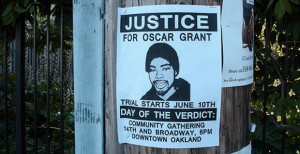
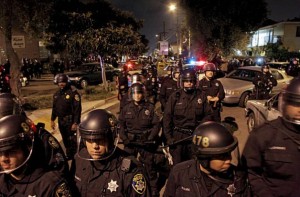
NLG Obtains $1.17M, OPD Reforms for Occupy Oakland Protesters and Journalists
In recent weeks, attorneys from the National Lawyers Guild achieved two significant victories for the rights of protesters faced with police brutality and unlawful repression. The first came when the city of Oakland settled a class action lawsuit for more than 1 million dollars. The second victory occurred in early July when Oakland City Council approved a settlement for 1.17 million in another lawsuit arising from police actions at protests. As part of these settlements, the Oakland Police Department is now legally obligated to follow a crowd control policy. This policy which already existed but lacked enforcement outlines limits on police department officer’s use of force and the ability to make mass arrests in protest situations.
Attorney Rachel Lederman:
- The first case has to do with the demonstration that had occurred on the day Johannes Mesterly was sentenced for the death of Oscar Grant. That’s the BART officer who shot Oscar Grant in the back as he was restrained facedown on the subway platform.
- There’s a movie out about the last day in the life of Oscar Grant called Fruitvale Station that I would highly recommend seeing it’s playing all over the country now.
- The death of Oscar Grant sparked a large number of demonstrations. November 5, 2010 was the date that Mesterly was sentenced and he was given a very minimal sentence of involuntary man slaughter of 2 years, 11 months with time served.
- There was a demonstration planned for that evening it was actually a very small demonstration. OPD had planned to not allow a march after dark.
- There was a rally that was permitted in downtown Oakland and then about 200 people started marching in the direction of Fruitvale Bart where the shooting had occurred. As soon as the march started the police began to set up for mass arrest.
- When a police line would be erected in front of the march people would naturally turn another direction. This went on for a while, where the march was re-routed.
- Eventually the OPD herded people to a residential area where they didn’t intend to go. The police announced it was a crime scene and began arresting everyone.
- The Oakland City Police have been under consent decree since January 2003 mandating reform process.
- We’ve had this crowd control policy in place but basically every single provision of the crowd control policy was violated in the Occupy Oakland incident and the Oscar Grant incident.
- We brought those cases to try to enforce the crowd control policy. A lot has changed in the last six months.
- There’s also been a new shake up of command (OCP) there’s a new acting chief.
Guest – Rachel Lederman, a California based National Lawyers Guild attorney who worked on both cases. Rachel first got involved in police misconduct civil rights cases as a result of her criminal defense work with political demonstrators. In 1989, Dennis Cunningham and Rachel Lederman successfully sued the San Francisco Police to obtain justice for AIDS activists who had been brutalized and unlawfully detained in what became known as the “Castro Sweep”.
—–
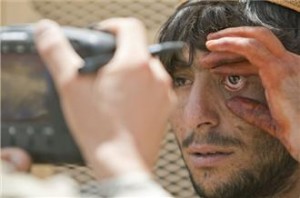

Surveillance Blowback: The Making of the U.S. Surveillance State, 1898-2020
What is the history and context of surveillance in the United States? Last week Scott Horton explained how the Foreign Intelligence Surveillance Act court devolved into a panel of judges making decisions in secret that influence federal law. Returning guest Alfred McCoy traces the US surveillance apparatus back to the late 1800s and brings us up to understanding the context of leaked NSA documents by whistle-blower Ed Snowden. In his latest article titled Surveillance Blowback: the Making of the U.S. Surveillance State 1898-2020, Al McCoy, Professor of History at the University of Wisconsin-Madison details the surveillance timeline beginning with the US occupation of the Philipines and makes the connection to US imperialism abroad and apathy at home.
Professor Alfred McCoy:
- Four years ago I published a book called Policing America’s Empire which started in the Philipines and started the history of US domestic surveillance through what I call surveillance blowback.
- It’s the trajectory of history that allows you to see this.
- In the late 19th century America had what I call our first information regime which was really a brilliant synergy of discoveries.
- Thomas Edison’s quadruplex telegraph, Remington’s typewriter allowed the transmission around the world, across the nation, absolutely accurately at 40 words a minute.
- The Gamewell Corporation for a half century during the 19th century was the world leader in the development of police telegraph and telephone communication – those police boxes that used to be on the streets of every American city.
- The Gamewell Corporation had 900 of these boxes in operation and collectively they sent 41 million messages in the year 1900.
- When we intervened in the Philippines we were suddenly faced with this massive insurgency, this guerrilla underground. We smashed the regular military formations but we couldn’t break the insurgency.
- The US military in order to pacify that country created the first field intelligence unit in its 100 year history.
- They appointed an obscure medical doctor Captain Ralph Van Deman to be the head of the division of military information.
- He decided he would map the entire Filipino political elite.
- William Howard Taft passed very draconian sedition and libel legislation and created a powerful colonial secret police called the Philipines constabulary. It took about 10 years to accomplish. 1898-1907
- We had to track down the politicians (Philipines) we had to manipulate them.
- 10 years after that process, the US joined WWI. April 1917.
- The United States was the only army on either side of the battlefield that didn’t have an intelligence service with any description.
- We turn now to Colonel Van Deman who applied his Philippines experience to developing a very elaborate counter-intelligence apparatus inside the United States.
- Mr and Mrs Van Deman ran a private intelligence service that had Army file clerks and regular FBI liason officers dropping by.
- And from their home they compiled files on 250 thousand suspected subversives.
- They divided the world. Basically, North America, Latin America became the purview of the FBI for counter-intelligence the rest of the world became purview of US military intelligence and of course the CIA and then NSA.
- That division of the word remain in effect until December 2011.
- 3 million Afghani iris scans and fingerprints are housed in a main frame computer in West Virginia.
- So, we developed then, this very efficient system of surveillance and digital monitoring overseas.
- During the war on terror we now know the Bush Administration beginning October 2001 authorized the NSA to start massive capping of all digital communications.
- In March of this year, it was 97 billion emails that were tapped by the NSA.
- This began migrating home very very quickly.
- When Obama came even though he criticized this illegal wiretapping, when he came in, instead of cutting it back like the Republicans did in the 1920s, he decided to build upon it.
- What he’s building upon it for is to build an architecture for the exercise of global power through a significant edge or advantage for information control and information warfare.
- Obama wants to cut back on the appropriations for the big behemoths, the heavy tanks, the big ships and he wants to shift us into an agile form of information warfare and global information control.
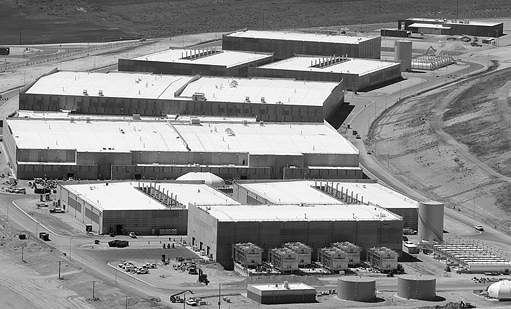
- The NSA is spending 1. 6 Billion dollars for the world’s biggest data farm in Bluffdale, Utah.
- The National Geo-spatial Intelligence Agency has a nearly 2 billion dollar headquarters with 16 thousand employees in DC.
- The Obama Administration has launched a new generation of light low cost, very agile satellites that can be remotely controlled from the ground, serving ground force commanders.
- The Obama Administration is also building an armada of 99 Global Hawk drones with 24 hour flight capacity. These are surveillance drones with a 100 mile ambit for sucking audio communications.
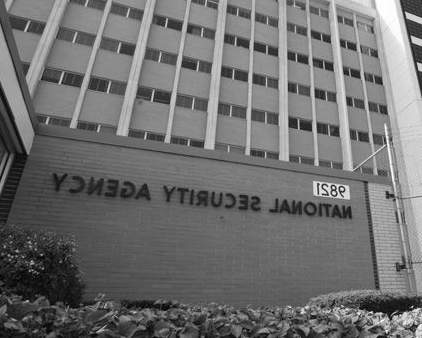
- With the combination of drones sucking up the local two way radio – cell phone communication with the tapping of the fiber optic cables within the US by the NSA, and internationally by the Five Eyes Coalition, Canad Australia, New Zealand and Britain, means that the NSA will have a total global surveillance system for the first time in human history.
Guest – Alfred McCoy, Professor of History at the University of Wisconsin-Madison. His recent book, Policing America’s Empire: The United States, the Philippines, and the Rise of the Surveillance State (2009), draws together these two strands in his research–covert operations and Philippine political history–to explore the role of police, information, and scandal in the shaping both the modern Philippine state and the U.S. internal security apparatus. In 2011, the Association for Asian Studies awarded Policing America’s Empire the George McT. Kahin Prize, describing the work as “a passionate, elegantly written book.” He’s also the author of “Torture and Impunity: The U.S. Doctrine of Coercive Interrogation.” Al is also the author of “A Question of Torture: CIA Interrogation, From the Cold War to the War on Terror” and “The Politics of Heroin: CIA Complicity in the Global Drug Trade. The first edition of his book, published in 1972 as The Politics of Heroin in Southeast Asia, sparked controversy, but is now regarded as the “classic work” about Asian drug trafficking.
—————————————————
CIA Sponsored Terror, Civil Liberties, Habeas Corpus, Human Rights, Political Prisoner, Targeting Muslims, Truth to Power, War Resister
Podcast: Play in new window | Download
Updates:
—-
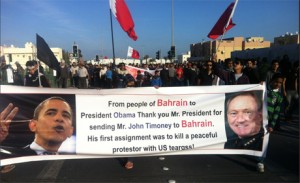

White-washing Human Rights Abuses and Suppressing a Popular Revolution
Two years since the Arab-Spring demonstrations erupted in Bahrain, human rights abuses continue to this day. In 2011, an independent report exposes these abuses that compelled the Kingdom of Bahrain to hire former NYPD police chief John Timoney to white was acts of political repression. Who is John Timoney and why was he outsourced to Bahrain? We ask legal worker and journalist Kris Hermes who recently penned the article John Timoney and Kingdom of Bahrain: White-washing Human Rights Abuses and Suppressing a Popular Revolution.
Kris Hermes:
- Shortly after the Arab Spring began in 2011, Bahrain followed in the footsteps of Tunisia and Egypt by demonstrating against the ruling monarchy that’s been in power for more than 200 years.
- Those protests were met with intense repression by King Hamad.
- The protests made of the Shiite population who argue they’ve been systematically discriminated against in employment, housing, education.
- The ministry of interior hired John Timoney as well as John Yates who is from the UK.from Britains metropolitan police department.
- John Timoney started with a long career in the New York City Police Department, he was probably most well known for his handling of the Tomkins Square Park riots in 1988.
- Regardless of what he did to clean up the Philadelphia Police Department, his handling of the Republican National Convention protests were abysmal. He came down very hard on protesters in 2000, essentially establishing a new form of policing in the United States that for the most part was intolerant of political demonstrations.
- He became the police chief of Miami in 2002 and oversaw one of the most violent police reactions in modern history. He not only used what he learned in Philadelphia, conducting preemptive raids, using infiltration and heavy surveillance, brutalizing protesters on the street, and wrongfully arresting hundreds of people.
- In Miami he used a whole panaply of weapons against protesters, including tear gas, pepper spray, rubber and wooden bullets, bean bag rounds, tasers and electric shields.
- He gained a reputation both in Philly and Miami.
- He’s been in Bahrain for a year and a half now and has a two year contract and its just about up.
- That’s the reason why the article was done, an assessment on how Timoney has done in Bahrain in terms of his crown control measures.
- Andrews International: Part of a security apparatus that is increasingly private in terms of policing and security personnel that are deployed around the world.
- It allows the US to expand its militia around the world as well.
- The death toll of political demonstrators has only increased since Timoney arrived on the scene. One of his favorite tools to suppress demonstrations in the United States is tear gas.
- Things are pretty dire for political dissidents in Bahrain.
Guest – Kris Hermes, activist who provides legal support work on cases involving political dissidents.
—-

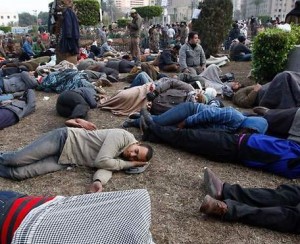
Egyptian President Mohamed Morsi Ousted Following Days of Massive Largest Anti-Government Protest
Last week, democratically elected President Mohamed Morsi was ousted following historic demonstrations by Egyptian protesters. Morsi and his advisors have been held under house arrest in the Egyptian Republican Guard Club, the highest Brotherhood leader, Mohammed Badie, and some associates of his have been arrested. Protesters accused Morsi of supporting Obama’s anti-Syrian agenda, ignoring critical economic problems and betraying his support for Palestinians. However, what are the some of the economic issues involved that led up to these massive protests?
Omar el-Shafei:
- We’re going through a real historic process. At least you had 20 million people in the streets expressing their anger in different Egyptian cities.
- This is a continuation of the process that started in January 2011, not just Egyptian but an Arab phenomenon.
- I think its a complete anger, bitterness and disillusionment of the rule of the Muslim Brotherhood.
- We have to remember that the Muslim Brotherhood has been the largest opposition force during the last decade of the Mubarack dictatorship.
- After one year in power they managed to alienate everybody. They were essentially ruling as a continuation of the old regime, and pro-imperialist foreign policy.
- The dominant image of the Arab Spring is purely political, middle class, youthful mobilization aiming at democratizing despotic regimes.
- The Mubarack dictatorship for years and sometimes decades have applied neoliberal economic policy that tremendously increased class divide, so the social element of this revolution was vital.
- In the case of Egypt, the revolution in 2011 came after five years of the biggest wave of workers struggle in the history of the country, since the 1940s.
- The continuation of the revolution is in large part of the worker mobilization. After the revolution we didn’t have independent trade unions, they incorporated by the state.
- More like the agent of the state against the liberal movement.
- Since then we’ve witnessed an emergence of thousands of trade unions and they are playing an important part in the revolution in social demands.
- The message from below even when it is apparently limited demands it has the potential of raising people’s confidence and enhance a process of self radicalization that can link these demands to a wider vision of transformation in society.
- What happened in Turkey a few weeks ago and Brazil more recently has very much has inspired the Egyptian struggle.
- What we are witnessing is a huge mobilization against the Muslim Brotherhood. The military prefer to remain in the background.
- We are in a prolonged revolutionary process and I think that the people are learning from their own experience.
Guest – Omar el-Shafei, political activist, and independent researcher currently living in NYC. He is a doctoral candidate of International Law at Paris VII University in France. Omar is a founding member of the “Committee of Solidarity with the Struggle of the Egyptian People” in Paris, France, and author of “Workers, Trade Unions, and the State in Egypt, 1984-1989,” Cairo Papers in Social Science, American University in Cairo Press (Volume 18, Monograph 2, Summer 1995).
———————————————————————
Civil Liberties, Criminalizing Dissent, Habeas Corpus, Human Rights, Prison Industry, Surveillance, Targeting Muslims, Torture, Truth to Power, War Resister
Podcast: Play in new window | Download
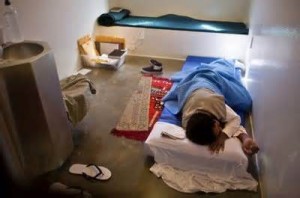
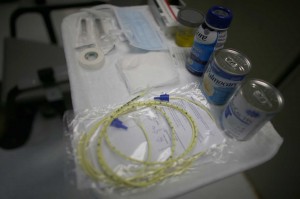
US State Department’s Office of Guantanamo Closure
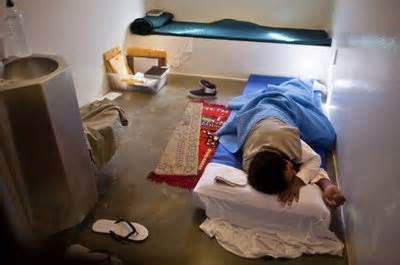
The US State Department’s Office of Guantanamo Closure was shut down in January and is now in the process of reopening. President Obama recently appointed Clifford Sloan, a Washington lawyer to run the special envoy. Meanwhile attorney Pardiss Kebriaei has recently returned from the military-run prison in Guantanamo Bay Cuba, and joins us to discuss the conditions there, including the hunger strike. Attorney Pardiss Kebriaei has represented men detained at Guantanamo in habaes corpus challenges.
Attorney Pardiss Kebriaei:
- CCR represents 8 men still detained at the base right now. We’ve represented dozens, we’ve coordinated the representation of dozens. Some men who’ve been cleared by the Obama Administration, who were cleared in 2009, and 2010, they include men who’ve never been charged, that’s the group we represent.
- There are 166 people who remain, more than half of them 86 have been told by President Obama and his people that they don’t need to be there.
- I met with 3 men, all Yemeni. 2 have been cleared. All of them are on hunger strike.
- It’s shocking to think of how much things have regressed since the strike has progressed.
- In 2008 when I started going down to the base, most people were held in solitary confinement. That is what conditions are again now in 2013. Right now in Camp 6 there are at least 76 men who are sitting in 22 hour a day isolation.
- Recreation time is 2 hours in a cage outside.
- There is also an access to council issue right now. Searches are humiliating, equivalent to being sexually assaulted when they’re moved out of their cells.
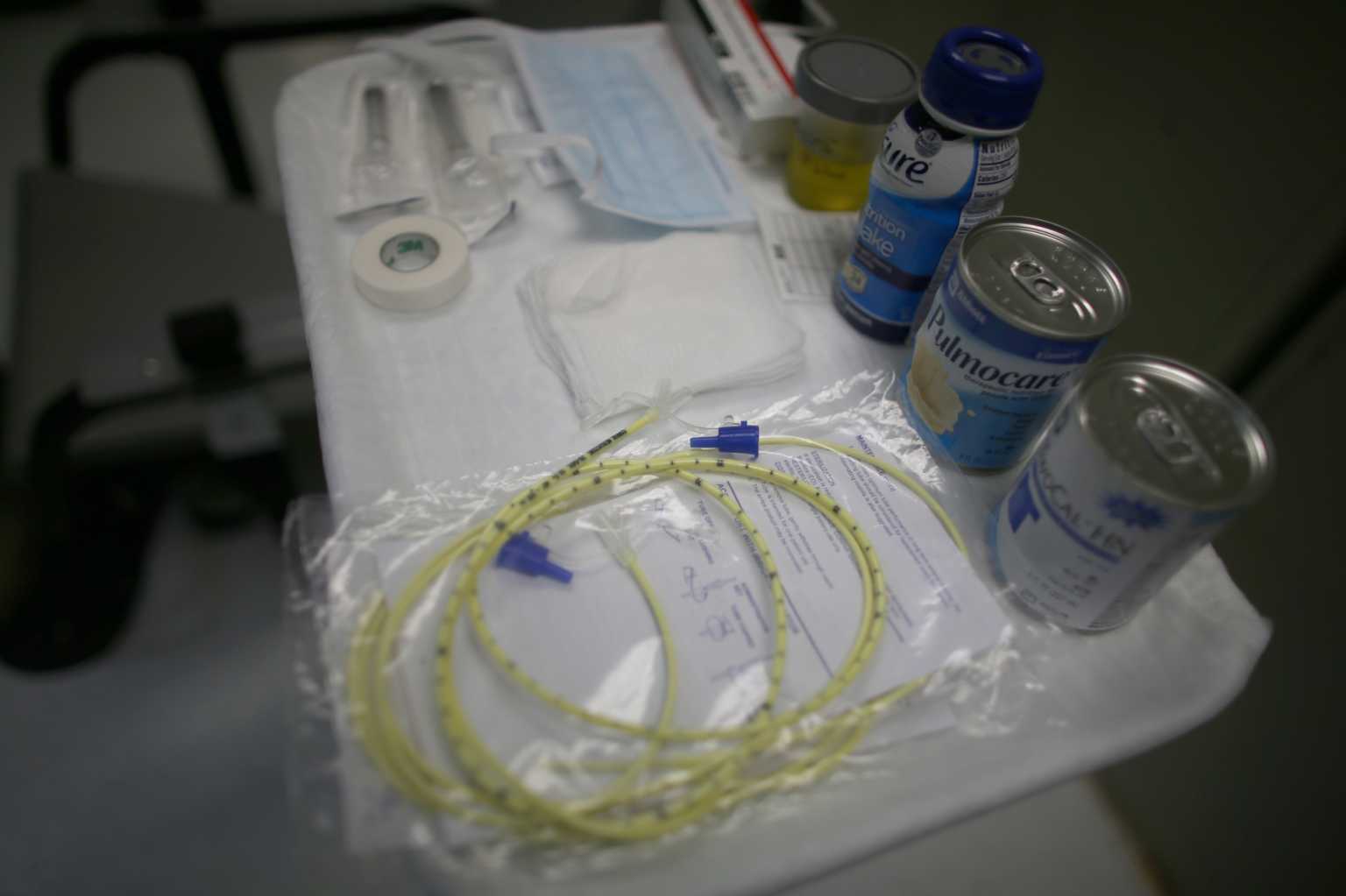
- The practice of force feeding is unequivocally a violation of international medical, ethical standards.
- The United States is alone in thinking this in its position that this is a humane and acceptable practice.
- Out of 800 held at Guantanamo, fewer than 2 dozen charged. The rest have all been held without charge.
- Obama pointed the finger at Congress and said Congress determined it would not allow me to close Guantanamo.
- Congress did pass the NDAA in 2011 that would make transfers more difficult but it didn’t take power away from the president.
- It specifically provided a national security waiver provision. Yet Obama has been saying for years because of the NDAA he has been effectively prohibited from transferring anyone and that’s is just not true.
Guest – Attorney Pardiss Kebriaei, she joined the Center Constitutional Rights in July 2007. Since then, her work has focused on representing men detained at Guantánamo Bay in their habeas corpus challenges, before international human rights tribunals, in diplomatic advocacy with foreign governments to secure resettlement for men who cannot return home, and in post-release reintegration efforts. Her clients have included men from Yemen, Syria, Algeria, and Afghanistan. Her work includes seeking accountability for torture and arbitrary detention at Guantánamo.
Past Law and Disorder Interview With Pardiss Kebriaei.
—-
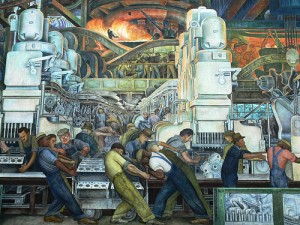
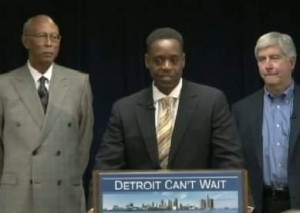
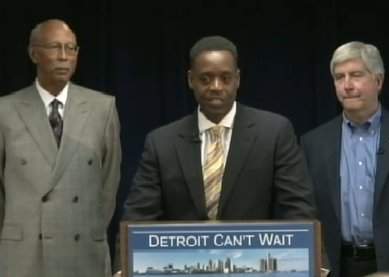
Why Does The City of Detroit Plan To Cut 9 Billion In Retiree Pensions and Healthcare?
The emergency manager of Detroit Kevyn Orr recently announced a plan that would wipe out the pensions and health benefits of all current and retired city workers. The plan eliminates 9 billion dollars in worker benefits, effectively condeming nearly 20 thousand retirees to poverty. Orr is a wealthy Wall Street lawyer who played a key role in restructuring the auto industry carried out by the Obama Administration. Many see this plan as part of the worldwide assault on working class people. How are workers responding to these aggressive cuts? We also listen to Dianne’s presentation at the Left Forum 2013 in New York City.
Dianne Feeley:
- He is attempting shock therapy. Basically he wants to take all of the resources that can be used in Detroit and outsource them and do away with them as in the case of the pensions and health care benefits.
- He suggested to make the city owned art work from the Detroit Institute of Arts available to also be used for this debt which grows by the day. They were talking about 15 billion dollars, now they’re talking about 20 billion.
- The neo-liberals plan is a 3 part plan. First to develop a cheaper and more flexible work force. Meaning reducing pensions, reducing the power of unions.
- The second is transferring public resources into private hands. The third is to appropriate profitable resources. For example we have a lighting department, which has been under funded for 40 years because DTE Energy has tried to prevent development of infrastructure. Now it’s in very bad shape.
- In many of these countries Greece, Portugal, Brazil, there’s a technocrat put in charge in our case its an Emergency Manager.
- More than 50 percent of the African Americans in Michigan have lost their vote through the imposition of Emergency Managers in our cities.
- It’s important to understand we only have 10 thousand city employees left. They’ve already had their pay cut 10 percent.
- Now what they’re trying to do is get rid of the medical care for the retirees.
Guest – Dianne Feeley, retired auto worker who currently serves as an editor of Against the Current, a socialist magazine. She is an advocate for auto workers and has written recently about the U.S. auto industry, arguing that the government should buy Chrysler and General Motors and turn them into a public trust.
——————————————————————–
CIA Sponsored Terror, Civil Liberties, Criminalizing Dissent, FBI Intrusion, Habeas Corpus, Human Rights, Prison Industry, RFID, Supreme Court, Surveillance, Targeting Muslims, Truth to Power, War Resister
Podcast: Play in new window | Download
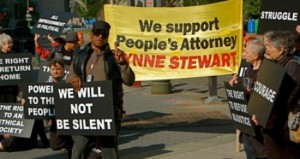
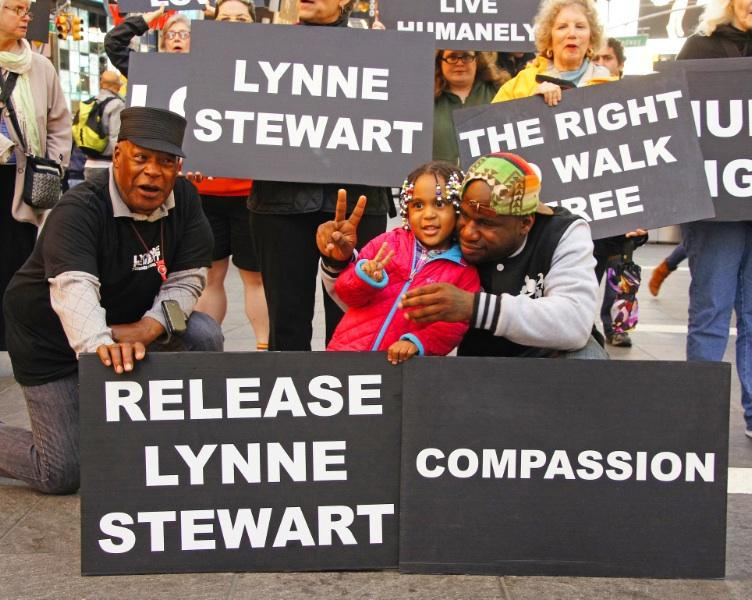
Historic Vigil And Compassionate Release For Lynne Stewart
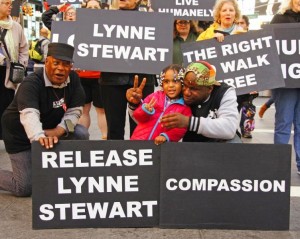
It’s been seven weeks since Warden Jody Upton of FMC Carswell approved Compassionate Release for Lynne Stewart. This decision was based on the medical findings of Stage 4 cancer that spread Lynne’s scapula, lymph nodes and lungs. A massive vigil was held last week for Lynne at Federal Bureau of Prisons Headquarters in Washington DC. We’re joined today by former Attorney General of the United States Ramsey Clark who is helping to get Lynne Stewart released from prison.
Attorney Ramsey Clark:
- The matter is now on the desk of the director of the Federal Bureau of Prisons, it’s been there for about five or six weeks which is intolerably long because everyday counts.
- Lynne is in physical desperate condition, her cancer is spreading. She has appointments at Sloan Kettering when she gets out that may extend her life.
- It’s slipping away while the director of the Federal Bureau of Prisons who seems to be opposed of Compassionate Release or any broad application of it, sits on her application.
- Charles Samuels, seemed to have isolated himself from this issue. Any letters to Director Samuels would be helpful and important.
- He’s being bombarded but for some reason, he’s holding out because he wants an interpretation of the compassionate release statute that would enable the release of only those who are going to die in the very near future, have no hope of living longer.
- Right now we have an urgent human matter, a very wonderful human being, mother and grandmother is dying in prison.
- Please Write to: Charles E Samuels Jr. / Federal Bureau of Prisons / 320 1st Street Northwest / Washington DC 20534
Guest – Attorney Ramsey Clark was the former Attorney General of the United States, under President Lyndon B. Johnson. He was the first Attorney General at the Justice Department to call for the elimination of the death penalty and all electronic surveillance. After he left the Johnson administration, he became a important critic of the Vietnam War and continued defending the rights of people worldwide, from Palestinians to Iraqis, to anyone who found themselves at the repressive end of government action.
—-
Whistleblower Cases Update
Attorney Michael Ratner:
- June 19th Anniversaries: Execution of the Rosenbergs. Julian Assange 1 year at the Ecuadorian embassy.
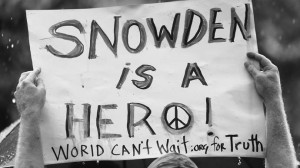
- Snowden, we don’t know where he is, massive revelations.
- The question you should be asking, is Dick Cheney a traitor? Is George Bush a traitor? Aren’t those the real traitors, the real people to be held accountable.
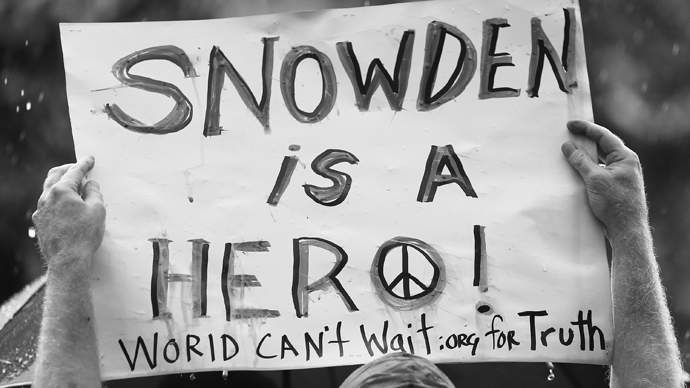
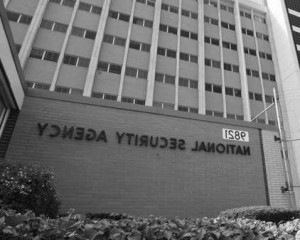
- We should look at what they told us. Ed Snowden told about a massive domestic surveillance operation.
- Their job is to tell the American people what they’re doing so we can debate it and discuss it and not put forward basically false stories of who they’ve purportedly stopped.
- This is about knowing where everyone of us is all the time.
- Freedom of the Press Foundation – Bradley Manning
- This is really a war on whistle-blowers and really a war on the United States trying to keep control on all of the information it can and control the internet from the top down.
Richard Falk, U.N. Rapporteur on Palestinian Rights, Calls for Close of UN Watch
——

Lakota Indians To File UN Genocide Charges Against US, South Dakota
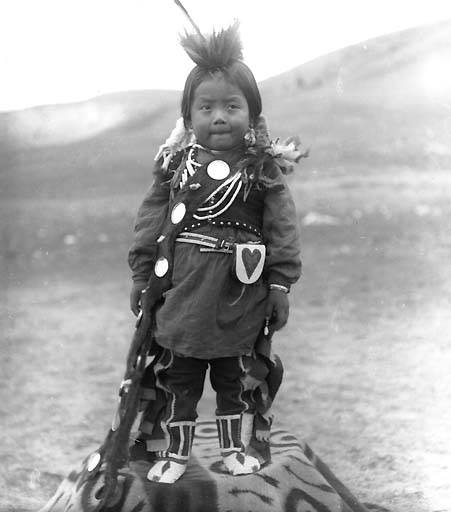
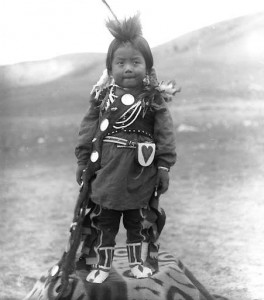
There was a time in the mid 1800s when the territory of Lakota Indians reached 90 million acres, now they’re separated into tribal councils and relegated to reservations. Their children are seized and put into foster homes of white families. During Republican administrations, more than 700 Lakota children are taken annually by a private corporation called the South Dakota Children’s Home Services. In April, a grassroots movement led by Lakota grandmothers touring the country built support for a formal UN complaint of genocide against the United States government and constituent states.
Attorney Daniel Sheehan:
- There’s basically a decade involved here during which the state of South Dakota engaged in a systematic program of the removal of Lakota children from their parents, from their extended families and from their entire tribe.
- Some 740 Lakota children a year during that period were taken from their families and tribes.
- Over half of them were never returned. 80-90 percent of those children were placed in white foster care.
- This is clear violation of the Indian Child Welfare Act which was the piece of legislation that mandated that if an Indian child were taken from the child’s parents they were required to be placed with Native American people.
- This is has been absolutely openly defied by the state of South Dakota.
- There has been an official notice of intent to file the complaint with the United Nations.
- We need to understand that there has been a longstanding policy in the Republican Party. When the Republican Party comes into power in Washington DC where they engage in this process to try and assimilate the native tribes.
- They’re constantly trying to eliminate the ownership of land and integrate them into society, basically to eliminate their culture.
- That was why the US Congress back in 1978 made the move to establish the American Indian Policy Review Commission and the Indian Child Welfare Act to stop the states from engaging in that type of activity of assimilation.
- What we’ve seen by William Janklow, a former South Dakota congressman, governor, and attorney general, is the process to attempt to take as many of the children away as they could possibly do and place them in huge group homes such as South Dakota Children Homes Services Inc.
- There is a subtext to this issue. We’ve discovered that during the Bush Administration from 2001 to 2009 there was systematic program of funneling federal funds into South Dakota to finance the seizure of these children and a substantial portion of that money from the Federal Government was transferred to the pharmaceutical corporations, who were in fact administering involuntarily to these children, pharmaceutical drugs Zoloft, and other psychoactive drugs to control their moods and attitudes.
- They refuse to give information about who the children are, where they’ve been taken, where they’ve been placed, some of them have been taken out of the state, we traced a number of them to Utah.
Guest – Daniel Sheehan is the lead attorney and general counsel for the Lakota People’s Law Project (LPLP). Currently, LPLP is working in South Dakota to stop violations of the Indian Child Welfare Act (ICWA) and rescue Lakota children from an abusive state care system. Award-winning journalist Laura Sullivan has just completed a hard-hitting investigative series on the situation in Lakota Country airing now on NPR. To learn more about Daniel Sheehan’s work with Lakota Indians, visit the Lakota People’s Law Project website. Sheehan traced the institutionalization of state kidnapping of Native children back to the late William Janklow, a former South Dakota congressman, governor, and attorney general notorious for his role in what the the Lakota refer to as the “Reign of Terror” on the Pine Ridge Reservation in the years following the American Indian Movement-led occupation of Wounded Knee in 1973. According to Sheehan, members of the George W. Bush administration tipped off Janklow on a Texas strategy to grab millions of dollars in federal subsidies by administering a psychological test devised by the Eli Lilly pharmaceutical corporation to children taken into protective custody. Replicating the strategy, South Dakota developed a mental health test failed by 98% of Native children, who then become “special needs” cases under federal law, with the state receiving up to $79,000 for each Indian child and the child being placed involuntarily on psychoactive drugs.
——————————————————————–
Afghanistan War, CIA Sponsored Terror, Civil Liberties, FBI Intrusion, Human Rights, Political Prisoner, Surveillance, Targeting Muslims, Torture, Truth to Power, War Resister
Podcast: Play in new window | Download
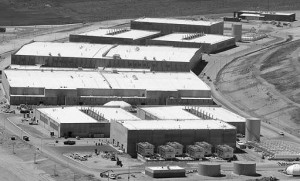

Hosts Discussion On Snowden and Manning Cases.
Attorney Michael Ratner:
- There’s a lot of support out there for what Snowden revealed.
- This big program of massive surveillance against all of us, internet surveillance, cyber wars, there’s a tremendous amount of support for him. Editorials in the times basically saying it’s not treason.
- NYTimes: Snowden not nearly as reckless as Bradley Manning (same position as Faiza Patel at Brennan Center)
- Protecting Snowden and throwing Bradley Manning and the war crimes he revealed, under the bus.
- This whole claim that it was a data dump by Bradley Manning that he went into the documents and dumped everything not knowing what was in them is false. I know its false from sitting at the trial.
- I heard Bradley Manning testify as why he did each set of documents. The Iraq war logs, the Afghanistan war logs, the collateral murder video, the State Department cables.
- In each case he came with a moral and political reason for doing them.
- The fact that people are still accusing Bradley Manning of a data dump is outrageous and actually the prosecutors position.
- Snowden did something really important, we’ve all known or suspected we’re under massive surveillance. We now have it confirmed and its as bad or worse as we could imagine. It’s every phone call we make, everyone, every single phone call in this United States. It’s a surveillance program against us.
- What Bradley Manning revealed was the U.S. committing war crimes against others.
- I think its easier for American people to hear, “we’re being surveilled than to care about the fact that America is committing war crimes all over the world” because that actually goes to the heart of an imperialist country.
- Cypherpunks predicted exactly what happened: Surveillance is now cheap. You get decent quality storage of all German telephone calls on a certain type of computer for 30 million Euros including administrative overhead for pure storage.
—-
Attorney Heidi Boghosian:
- It really does away with the standards of reasonable suspicion or probable cause to open an investigation.
- It’s saying that we’ll open an investigation and this will be on information that hasn’t even happened.
- Stored Data: The government has access to that. There’s data out there that you can never really get rid of. Corporate intelligence firms or military contractors working with the government comprise about 70 percent what’s given to the intelligence budget.
- The government has to hire out contractors because they’re the only ones able to use this sophisticated technology. The data that is collected, stored and resold, contains a high rate of inaccuracy.
—
Attorney Michael Smith:
- Booze Allen which is the private contractor that Snowden worked for is part of the Carlyle Group.
- The Carlyle group is a private equity firm that’s worth a 158 billion dollars. The ruling class in this country own a chunk of the Carlyle Group.
- Clapper who’s know the head of national intelligence used to be a big executive with Booze Allan.
- The head of Booze Allan used to be one of the main guys at the National Security Agency.
- Privatizing Intelligence, the private sector has a duty to its share holders.
—————–
Pardon Ed Snowden
Pardon or Free Bradley Manning
https://petitions.whitehouse.gov/petitions
—
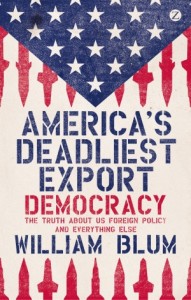
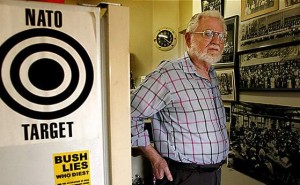
America’s Deadliest Export: Democracy
The United States war machine has been on auto pilot for the past 65 years says our guest William Blum he’s author of the recently published America’s Deadliest Export: Democracy – The Truth About U.S. Foreign Policy and Everything Else. This provocative book exposes the true motives of America’s foreign policy and outlines steps to take action.
William Blum:
- All this while I was looking to find reasons for it, to explain this weird record.
- What I was left with to believe that it’s world domination that the U.S. wants for various reasons.
- Once you understand that, many things become clearer, much less confusing.
- We’re dealing with a lifetime of indoctrination. It starts in kindergarten. People like you and I have a long battle on our hands to overcome this.
- We’re subjected to the indoctrination means well and its the most honorable and liberal government in the world.
- It’s reinforced in high school and college, on television, in the print media, it’s a major task for the likes of you and I to overcome this upbringing.
- It’s amazing the number of Americans that have seen through this upbringing despite this upbringing.
- I think the main to understand with this man called Barack Obama, is that there’s nothing that he strongly believes in except being President of the United States.
- The man doesn’t have any core beliefs. He’s not anti-empire, he’s not pro-empire, he likes being President.
- He’ll do and say whatever it takes to remain in that office. In my opinion, in Europe he’d be regarded as center-right.
- Look at the atrocities we carry out.
- Samantha Power is the author of a book on humanitarian intervention. Obama appointing these two women with that philosophy shows that he supports that philosophy. We have to assume they’re believers in humanitarian intervention.
Guest – William Blum, has been a freelance journalist in the United States, Europe and South America. His stay in Chile in 1972-3, writing about the Allende government’s “socialist experiment” and its tragic overthrow in a CIA-designed coup, instilled in him a personal involvement and an even more heightened interest in what his government was doing in various parts of the world. In the mid-1970’s, he worked in London with former CIA officer Philip Agee and his associates on their project of exposing CIA personnel and their misdeeds. His book on U.S. foreign policy, Killing Hope: U.S. Military and CIA Interventions Since World War II, first published in 1995 and updated since, has received international acclaim.
—
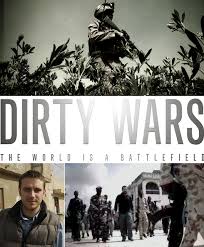
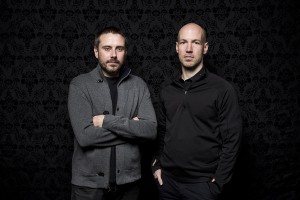
Dirty Wars: The World Is A Battlefield
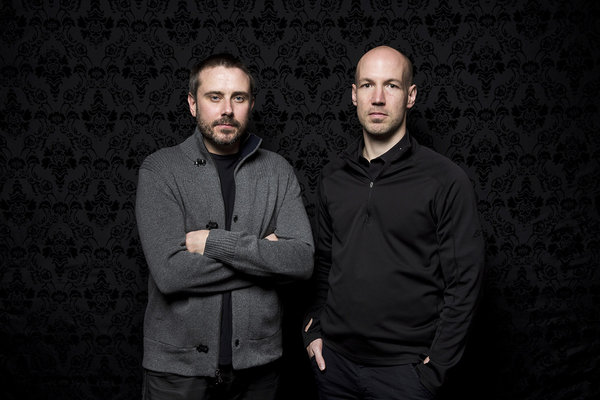
The new documentary “Dirty Wars: The World Is A Battlefield” is an unique look into the covert wars brought by the United States. The film follows investigative reporter Jeremy Scahill into Afghanistan, Somalia and Yemen and analyzes expanded US drone warfare and the foreign policy that has allowed this destruction to take place. The film’s director Rick Rowley and Scahill went into these covert war zones to speak with families about the what they’ve seen and bring those stories back. As we’ve reported on Law and Disorder, the Obama Administration has continued to normalize the Bush Administration policies by empowering the Joint Special Operations Command and the use of drones.
Rick Rowley:
- The film is about the global covert war on terror.
- Jeremy and I have war reporters for over a decade. I became a war reporter because I thought the global war on terror was the most important story of our generation – killed hundreds of thousands of people cost untold billions yet most of it was unfolding in the shadows.
- Around the world today there are dozens of wars being fought in our name but without our knowledge and meaningful oversight.
- When we started shooting this film we thought it was a film just about Afghanistan. What we were seeing is the covert war in Afghanistan was eclipsing the covert war.
- More Afghans are killed and captured by covert units than by the entire 100 thousand strong NATO force that’s there.
- So we began to film to see what was up behind that.
- This is a unit that initially amounted to a few hundred guys who’s supposed to the most high level strategic missions, hostage rescue missions. If a nuclear weapon is stolen from the Ukraine they’d go and recapture it. That’s what they’re supposed to do.
- They’re doing 15-20 raids a night across Afghanistan, thousands of raids a year, going after mid level Taliban field commanders.
- The entire war is being fought by this clandestine group that wasn’t really built for this operation.
- We started to trace where JSOC was operating, that brought us to Yemen, and Somalia. Under the AQNX order, JSOC was authorized to operate in 26 countries clandestinely. Now under Obama 78 countries.
- I was staggered by the massive scale of this, the wholesale assassination machine.
- Current kill lists: It’s a permanent cycle of violence that’s being managed around the world.
- We interview Ron Weiden from the Senate Intelligence Committee. He’s a guy who’s trying to push for more disclosure and transparency in the Senate, but the entire time there’s a lawyer an aide inside the office who has to keep stopping him.
- There are secret interpretations of laws that exist on the books but would be shocking to the American people if they knew about them.
- We knocked on so many doors of night raids in Afghanistan, families shared stories with us of the most painful time in their life.
- They think that if the American people could only hear their story and their story were proven to be true, that somehow it would matter and make a difference.
- When we started this film 3 years ago, WBAI was talking about drones and kill lists, but it took until 6 months ago for that to work its way to editorial page of the Times and the Post.
- I’ve been a war reporter for more than a decade.
- Jeremy got on camera a number of whistle-blowers who are former operators or parts of JSOC, CIA people who are saying these kinds of discussion about blow back are happening inside their institutions.
- A lot of them talk about this as “mowing the lawn” the jihadists, insurgency will rise up and you go and chop it off but the grass will rise again.
- That’s permanently managing a level of acceptable chaos and violence. This war remains secret for a reason, that if everyone knew about it there would be a popular outrage.
Guest — Rick Rowley, is a director and cinematographer. Over the course of fifteen years, Richard Rowley, co-founder of Big Noise Films, has made multiple award-winning documentary features including Fourth World War and This Is What Democracy Looks Like. His shorts and news reports are also regularly featured on and commissioned by leading outlets including Al Jazeera, BBC, CBC, CNN International, Democracy Now!, and PBS. Rowley is a co-founder of the Independent Media Center. Rowley has been a Pulitzer Fellow, Rockefeller Fellow, a Jerome Foundation Fellow, and a Sundance Documentary Film Program Fellow.
———————————————————-