Civil Liberties, Human Rights, Surveillance, Truth to Power
Podcast: Play in new window | Download

Data Collection Experiment: Google’s SideWalk Labs In Toronto
Last year Law and Disorder featured a segment on Sidewalk Labs, a data-oriented smart city in Toronto. Sidewalk Labs is a firm owned by Google parent company Alphabet. We covered critics’ concerned about residents’ privacy and how data would be used.
Last week, Sidewalk labs has released a 1,500-page development proposal for its planned “smart” neighborhood. They claim it will integrate physical, digital, and policy innovations to take on affordability, sustainability, quality of life and generate economic opportunity. Critics assert, this is an experimental model for a surveillance state and covert data collection.
Sidewalk Lab’s plan is a radical departure from the principles that have guided city planning in Canada since citizen participation and accountability came to the fore in the era of renowned Canadian-American urban planner Jane Jacobs.
Mariana’s recent article.
Guest – Mariana Valverde, Professor at the Centre for Criminology & Sociolegal Studies at the University of Toronto. She’s an urban studies scholar whose research interests include public-private partnerships, governance and infrastructure.
—-


Impeachment Analysis Of President Donald Trump
Special counsel Robert S. Mueller III’s May statement on his investigation and report revived calls to impeach President Donald Trump. Such calls rest on solid legal ground. There is already more than adequate evidence supporting at least seven articles of impeachment – four more than President Richard M. Nixon would have faced had he not resigned in 1974.
Trump obstructed the administration of justice by attempting to fire Mueller, to curtail his investigation; he ordered White House counsel Donald McGahn to falsify the record to conceal these attempts. He fired FBI Director James B. Comey because of “Comey’s unwillingness to publicly state that Trump was not personally under investigation. He also sought to protect himself from an investigation into his campaign,” because he knew it would uncover facts about the campaign and the President personally that Trump could have understood to be crimes or that would give rise to personal and political concerns.”
He tried to dissuade Michael Flynn, Paul Manafort, Michael Cohen, Roger Stone, and other witnesses from cooperating with the government. The non-cooperation of Manafort and Stone made it impossible to establish the exact nature of the relationship between the Trump campaign and the Russian government.
All of those are violations of Article I of the Constitution, and Trump has violated Articles II through VII, as well.
So the internal debates are not about the legal grounds. They pertain to strategy. And these debates are fracturing alliances among liberals and the left.
Guest – Attorney Abi Hassen is a criminal defense attorney, technologist and co-founder of the Black Movement-Law Project. He was formerly the Mass Defense Coordinator at the National Lawyers Guild and a union and community organizer. His podcast is Against the Law. Against The Law Podcast Link
———————————
———————————
CIA Sponsored Terror, Civil Liberties, Cuba, Human Rights, Truth to Power, War Resister
Podcast: Play in new window | Download
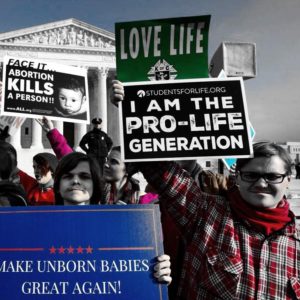
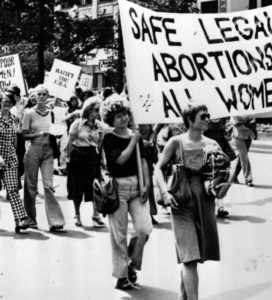
Analyzing Recent Abortion Legislation
Halfway through 2019 nine states have already passed bills to limit abortion. Louisiana recently passed a ban on the medical procedure after a fetal heartbeat is detected. That makes it the 9th state in 2019 year to pass abortion restrictions that could challenge the constitutional right established in Roe v.Wade.
Alabama legislators also recently voted to ban abortions in nearly all cases. Other measures, like Louisiana’s, have limited the procedure to earlier in pregnancy, typically around six weeks.
Georgia, Kentucky, Louisiana, Missouri, Mississippi and Ohio stopped short of outright bans. They’ve passed so-called heartbeat bills that effectively prohibit abortions after six to eight weeks of pregnancy. That’s when doctors usually start detecting a fetal heartbeat. Utah and Arkansas voted to limit the procedure to the middle of the second trimester.
Most other states follow the standard set by the Supreme Court’s 1972 Roe decision, which says abortion is legal until the fetus reaches viability, usually at 24 to 28 weeks.
The latest bans are not yet in effect (Kentucky’s was blocked by a judge), and all bans are expected to face protracted court battles. What does all this mean? More states are considering and will likely pass measures similar to that in Louisiana in an attempt to challenge Roe v. Wade.
Guest – Attorney Elisabeth Smith from the Center for Reproductive Rights. Elisabeth is their Chief Counsel for State Policy. Before that she was Legislative Director at the ACLU of Washington where she was the Legislative Director.
—-


Cuban Revolution 60th Anniversary And The 1996 Helms-Burton Act
July 26, 2019 marks the 60th anniversary of the Cuban revolution. On that date revolutionary troops led by Fidel Castro and Che Guevara marched into Havana. The American supported dictator Batista fled to the Dominican Republic. Other rich Cubans went to Miami. At that time the wealth of Cuba, it’s vast fertile sugarcane and tobacco fields, it’s oil refinery, its phone company, were owned by US corporations and a handful of wealthy Cubans.
To obstruct the revolution, the US owned oil refinery stopped providing oil so there was no gasoline. In response, the Cuban revolutionaries nationalized the refinery, then the phone company, the nickel mines, and the vast land holdings. This was the beginning of the Cuban revolution The Cuban government offered to pay the owners for the nationalized property in the amount that the owners had listed the properties for tax purposes. The owners refused to take the money. Since then the American government has waged economic warfare on Cuba.
In an escalation of this warfare Last week we saw the instigation of the dormant title III section of the anti-Cuba 1996 Helms-Burton Act. This law permits US citizens to sue anyone anywhere in the world in American Courts for using property legally expropriated by the Cuban government after the revolution. Expropriation of a foreign owned property is legal under international law so long as the owners are compensated.
In addition to the invocation of the Helms-Burton law the US government has ended people to people travel to Cuba and drastically reduced the amount of money Cuban Americans living in the US can remit to their families on the island.
Guest – Netfa Freeman, policy analyst with the Institute for Policy Studies and an Organizer in the International Committee for Peace Justice & Dignity.
———————————–
———————————–
Censorship, CIA Sponsored Terror, Civil Liberties, Criminalizing Dissent, Human Rights, Iraq War, NSA Spying, Political Prisoner, Prison Industry, Torture, Truth to Power, War Resister
Podcast: Play in new window | Download
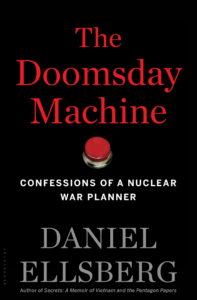

Daniel Ellsberg: Julian Assange’s Case And The Doomsday Machine
Two weeks ago the Trump administration announced it had indicted Julian Assange in the Eastern District of Virginia on 17 counts of violating the 1917 Espionage Act. Assange is currently in the Belmarsh prison hospital in London. If extradited, tried, and convicted he faces 175 years in prison.
The Espionage Act is a 102 year old law used initially to imprison the great socialist Eugene V Debs for an anti-World War I speech he gave in Canton, Ohio and also used to crush the industrial workers of the world, the IWW, a large antiwar union at the time.
In 1971 it was famously used against Daniel Ellsberg who released the Pentagon papers to the New York Times and other media outlets. Lately the Espionage Act has been used against many truth telling whistleblowers during the Obama and Trump administrations.
This is the first time it is being used against a journalist.
Wikileaks Defense Funds:
Guest – Daniel Ellsberg, educated at Harvard and Cambridge and has been an activist since the 1970s. Ellsberg’s latest book, The Doomsday Machine, is an extensive study of nuclear theory and nuclear policy. In 2018 he was awarded the Olaf Palme prize for his “profound humanism and exceptional moral courage.
From 1957-59 he was a Junior Fellow in the Society of Fellows, Harvard University. He earned his Ph.D. in Economics at Harvard in 1962 with his thesis, Risk, Ambiguity and Decision. His research leading up to this dissertation—in particular his work on what has become known as the “Ellsberg Paradox,” first published in an article entitled Risk, Ambiguity and the Savage Axioms—is widely considered a landmark in decision theory and behavioral economics.
———————-
———————-
CIA Sponsored Terror, Civil Liberties, Criminalizing Dissent, Human Rights, Political Prisoner, Supreme Court, Surveillance, Torture, Truth to Power, War Resister
Podcast: Play in new window | Download
Updates:
- Two MOVE9 Members Released From Prison
- Julian Assange Update
- Never Get Rid Of Newspapers…The Headlines Alone Make Them Worth Keeping
—
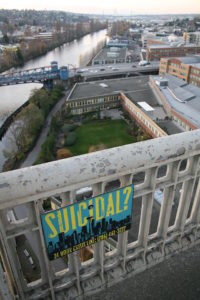
Suicide Increase In The United States
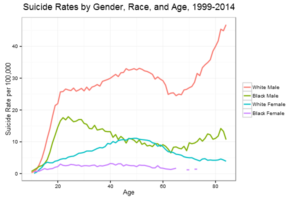
Suicide ranks among the top ten leading causes of death in the United States. As rates have generally fallen in other developed nations, the number of suicides per 100,000 rose over 30 percent between 1999 and 2015.
Those in midlife had the largest uptick in suicide. Researchers find that two social factors have contributed to this trend: the weakening of the social safety net and increasing income inequality.
One study of suicide in the U.S. found that the rising rates were closely linked with reductions in social welfare spending between 1960 and 1995. Such expenditures include Medicaid, a medical assistance program for low income persons; Temporary Assistance for Needy Families, which replaced Aid to Families with Dependent Children; the Supplemental Security Income program for the blind, disabled and elderly; children’s services including adoption, foster care and day care; shelters; and funding of public hospitals for medical assistance other than Medicaid.
While their suicide rates are on the decline, three European nations still have rates higher than the U.S. They are Belgium, Finland and France.
Guest – Stephen Platt, Emeritus Professor of Health Policy Research at the University of Edinburgh, UK. His research focuses on the social, epidemiological and cultural aspects of suicide, self-harm and mental health. He is an adviser on suicide prevention research and policy to NHS Health Scotland and the Scottish Government, the Irish National Office for Suicide Prevention and Samaritans.
——————–
——————–
CIA Sponsored Terror, Civil Liberties, Human Rights
Podcast: Play in new window | Download
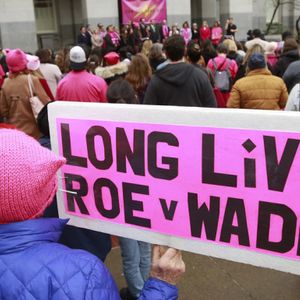

Roe v Wade And Recent State Abortion Legislation
In 1973 in the famous Roe versus Wade case the US Supreme Court ruled that a woman’s right to obtain an abortion was protected under the US Constitution.
The core holding in Roe, which remains the law today, is that the government may not prohibit a woman from obtaining an abortion prior to fetal viability and may do so after viability as long as abortion may be available to protect a woman’s life and health.
A woman’s right to make childbearing decisions is in essential part of women’s overall equality. Recent legislation in Ohio bans abortion as early as six weeks into a pregnancy, before many women even know they are pregnant. Kentucky and Mississippi have similar laws and 10 other states are considering them.
Will the Supreme Court take the Ohio case as an opportunity and use it to overturn the 45-year-old Roe versus Wade decision?
Guest – Dr. Vicki Breitbart in the last 40 years, Dr. Breitbart has worked as an educator, researcher, and activist, dedicated to sexual and reproductive justice. Presently, she is an Associate Professor at NYU Silver School of Social Work. Previously, she served as the Director of the graduate program in Health Advocacy at Sarah Lawrence College and has taught at Columbia and CUNY Schools of Public Health. She worked at Planned Parenthood of New York City for over 15 years in various roles including Senior Vice President and Director of the Clinician Training Initiative.
Guest – Lizzy Watson is a staff attorney at the ACLU’s Reproductive Freedom Project at the ACLU’s national office in New York. She litigates cases to defend the right to abortion and contraception for all people regardless of race, ethnicity, economic status, gender identity, or geographic location. Prior to joining the ACLU she provided legal services to low income individuals at the Homeless Action Center in Berkeley, CA.
—-
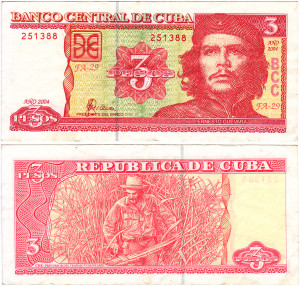

Recent United States Aggression Toward Cuba
The United States of America has ratcheted up its ongoing 60 year effort to overthrow the elected government of Cuba and restore an American dominated corporate capitalism to the island. This effort was relaxed a bit under the Obama Administration. That all has changed, dollar remittances from Cubans living in the U.S. to their relatives in Cuba have been drastically cut. Travel to Cuba by Americans which has been considerable is virtually banned.
The Helms-Burton Act of 1996 which was meant to strangle the Cuban economy wasn’t fully enforced until recently. Under the guidance of the ultra-right wing National Security Adviser John Bolton. A 23 year old dormant version of the Helms Burton Act has been invoked. It now allows Cubans who live in America to sue the government of Cuba in American courts to get back their estates, businesses and property holdings which were legally nationalized under the 1959 revolution.
This new aggression is meant to cause such severe hardship to the Cuban people that they will be willing to allow their government to be overthrown.
Guest – Walter Lippmann, editor of the Cuba News Yahoo News Group.
————-
————-