Afghanistan War, CIA Sponsored Terror, Civil Liberties, Crony Capitalism, Human Rights, Iraq War, Political Prisoner, Prison Industry, Torture, Truth to Power, War Resister
Podcast: Play in new window | Download
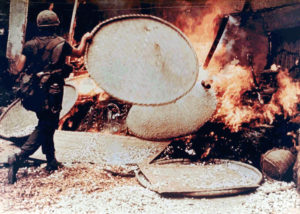

My Lai Memorial Exhibit
The aggressiveness of United States war machine has killed 500,000 people since 911, caused millions of people to be displaced, and all this at a cost of some $6 trillion.
President Trump has said that “all options are on the table” regarding sending troops to Venezuela. His National Security Adviser John Bolton said that Venezuela, Cuba and Nicaragua are part of the “troika of tyranny ” – in the US’s gun sites. After first promising to withdraw troops from Syria, Trump has reversed himself. Troops are still fighting in Afghanistan after 19 years. Iran remains the ultimate target in the Middle East. How did our country get to the state? What was done 50 years ago in the Vietnam era by millions of American citizens which help end in 1975 the American war in that country?
March 18 marks the 51st anniversary of the infamous My Lai Massacre in Vietnam. Their American troops murdered 504 Vietnamese women, old men, children and babies. It marked a turning point in the American peoples’ revulsion and consequent mobilization against the war.
Guest – former Navy Lieutenant Susan Schnall of Veterans for Peace. She became famous in 1968 when she dropped antiwar leaflets from an airplane on navy ships in San Francisco Bay.
Guest – Mac MacDevitt – is an associate member of Chicago Veterans for Peace and Committee Chair of the My Lai Memorial Project. He is an artist, storyteller and educator who came of age and was forever changed during the Vietnam War. He was radicalized by witnessing the wounded fellow protesters, beaten by US Marshals as night fell after the March on the Pentagon in 1967. In 1981 Mac did a social work internship at the VA Hospital in White River Junction, Vermont in the psych department where he experienced vets dealing with ghosts from Vietnam and earlier wars.
—-
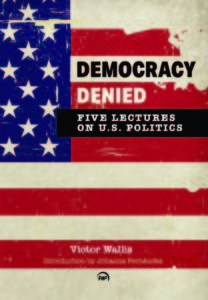
Democracy Denied: Five Lectures on U.S. Politics
The United States is unique among advanced countries in having the greatest inequality, highest poverty rate, highest portion of its population imprisoned, and highest proportion lacking healthcare.
Victor Wallis’ new book Democracy Denied offers a succinct history of several traits unique to the nation.
It came out of a lecture series in China and presents a historically grounded perspective on these traits, including chapters on “American exceptionalism,” on U.S. imperialism, the trajectory of African-descended people in the United States, efforts to develop a socialist alternative to the dominant institutions, and the current configuration of U.S. politics.
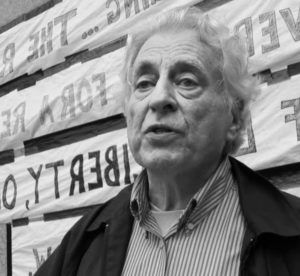
Guest – Victor Wallis is a professor in the Liberal Arts department at the Berklee College of Music in Boston. For twenty years he was the managing editor of Socialism and Democracy. He is the author of Red-Green Revolution: The Politics and Technology of Ecosocialism (2018) and of many articles on topics related to environmentalism, social justice, and radical politics. Victor’s activism dates from the 1960s and encompasses issues ranging from U.S. foreign intervention to prisoners’ rights.
———————–

———————–
Civil Liberties, Criminalizing Dissent, Human Rights, Political Prisoner, Surveillance, Truth to Power, War Resister
Podcast: Play in new window | Download

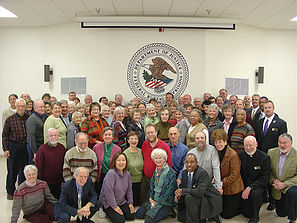
Prison Visitation and Support
In hundreds of correctional facilities across the nation, in person visits are being phased out. Instead, video technology run by Securus and other companies is used to replace these visits. One researcher at the Prison Policy Initiative has pieced together hard to gather stats that suggest at least 600 US prisons have video visitation programs in place. In Florida, for example, on retired prison inspector who writes about video visitation, says that over the past five years, most jails there are using only video visitation and have altogether stopped in-person visitation.
The Prison Policy Initiative’s data suggests that 74% of US correctional facilities that implement video calling end up either reducing in-person visits, or totally eliminating them. Is the elimination of prison visits a human rights violation? Most prisoners receive few, if any visitors, or human contact.
Guest – Steve Gotzler, executive director of the Prison Visitation and Support. Steve is the former program director at the Pennsylvania Prison Society, and he knows firsthand what it’s like to spend time in federal prison.
—-


Supreme Court Rules On Civil Forfeiture
In a unanimous decision, the U.S. Supreme Court recently ruled that the Constitution limits the ability of state and local law enforcement to seize and then use cash, property, and other assets that may have been used the commission of crimes, especially when used to fill the coffers of police departments. Law enforcement need only suspect the property has been used as a crime; they don’t need to charge you.
Ruth Bader Ginsburg wrote the opinion on her first day back at the court. Civil liberties organizations have criticized this practice for years. That’s because many local governments use these fines to raise revenue, increasing incentives for arrests.
Not surprisingly, civil asset forfeiture disproportionately affects vulnerable communities, notably African Americans and lower-income neighborhoods. In the state of South Carolina, for example, The Greenville News reported that the state took $17 million from seizures from 2014 to 2016. Sixty-five percent of those targeted were African American. The high Court said that fines may not be excessive, and that states are currently using excessive fines for improper purposes, including for raising revenue.
Guest – Josie Duffy Rice is a lawyer and writer in New York. Josie is a former research director with the Fair Punishment Project.
Civil Liberties, Human Rights, NSA Spying, Political Prisoner, Surveillance, Truth to Power, War Resister
Podcast: Play in new window | Download
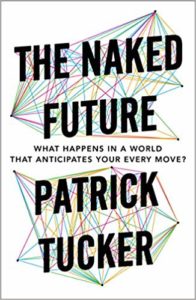

Cyber Threats And US Cyber Security
Russian hackers need only 19 minutes after breaking into a computer to wreak greater destruction and data theft, according to a recent CrowdStrike report. The Kremlin beat out North Korean and Chinese hacker groups who needed two and four hours respectively to go from breaching one computer to another. Cyber threats from Russia are sophisticated and aggressive, according to earlier findings and many experts. As a results Russian saboteurs have moved beyond network intrusion into data manipulation and taking down power systems.
Guest – Patrick Tucker, technology editor for Defense One. Patrick is the author of the 2014 book, The Naked Future: What Happens in a World That Anticipates Your Every Move? Previously, Tucker was deputy editor for The Futurist. He has written widely about emerging technology for such publications as Slate, MIT Technology Review, and BBC News Magazine.
—-


10 Years Since Operation Cast Lead
Last month marked the 10 year anniversary of Israel’s illegal massive deadly attack on the Palestinian people living in the open air prison of the Gaza Strip along the Mediterranean sea in the south of Israel-Palestine.
The attack was carried out with the political and military support of the George W. Bush regime during its final few days. Some 1200 Palestinians were killed including 500 children. This has been documented in the United Nation’s sponsored Goldstone Report.
Israel’s continuing illegal settlement of Palestinian land and it’s dispossession of Palestinian people is made possible by American political, military, and economic support. But this support is coming under increasing challenge with Israel’s violation of human rights and of international law being more widely exposed and discussed.
Guest – Helena Cobban is the publisher of Just World Books and is active through her new not-for-profit organization Just World Educational. She works in broad community education campaigns on matters of war, peace, and justice in the Middle East.
——————-
——————-
CIA Sponsored Terror, Civil Liberties, Death Penalty, Guantanamo, Habeas Corpus, Human Rights, Iraq War, Prosecution of the Bush Administration, Targeting Muslims, Torture, Truth to Power, War Resister
Podcast: Play in new window | Download
Updates:
- Hosts Discuss the Recent Film – Vice
—-
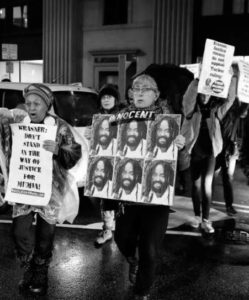
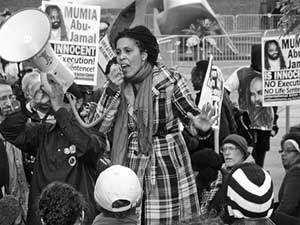
Philadelphia Judge Rules Mumia Abu-Jamal Can Reargue Case
We are pleased to begin the new year with a major development that might pave the way to freedom for former Black Panther Mumia Abu-Jamal, the award-winning journalist convicted in the 1981 murder of Philadelphia police officer Daniel Faulkner.
In late December, a Philadelphia Common Pleas Court judge ruled that Mumia can reargue his appeal in the case before the Pennsylvania Supreme Court. The decision hinges on a recent Supreme Court Decision with similar facts. Then presiding Chief Justice Ronald Castille failed to excuse himself due to his prior role as Philadelphia district attorney in Mumia’s earlier appeal. Mumia’s attorneys argued that Castille made statements related to persons accused of killing police officers that indicated he should have recused himself. His campaign speeches and letters urged capital punishment in police-killing cases.
As we’ve long reported, Mumia spent nearly three decades on death row before his sentence was thrown out over flawed jury instructions. In 2001, prosecutors agreed to a sentence of life without parole.
Judge Leon Tucker’s decision this past December was split; he denied Mumia’s claim that Castille had, “personal significant involvement” in the case while in the DA’s Office.
Guest – Professor Johanna Fernandez, is a native New Yorker. She received a PhD in History from Columbia University and a BA in Literature and American Civilization from Brown University. Professor Fernández teaches 20th Century U.S. History, the history of social movements, the political economy of American cities, and African-American history. She has previously taught at Carnegie Mellon University in Pittsburg, PA and Trinity College in Hartford, CT and is, most recently, the recipient of a Fulbright Scholars grant to the Middle East and North Africa that will take her to Jordan in spring 2011, where she will teach graduate courses in American History. She is with the Campaign to Bring Mumia Home.
—-

Anti-War Movement Gains Traction Amid Perpetual War
American wars undertaken in the Middle East have been raging for an historically unprecedented 17 years, ever since the attack on the World Trade Center and the Pentagon on September 11, 2001.
President George W. Bush understood that being at war president would boost his sagging popularity. First, he ordered the attack on Afghanistan on the pretext that it harbored Osama bin Laden and would not give him up.
Then, in 2003, with designs on Iraq’s oil, the United States of America unleashed an illegal war on that country. It was falsely claimed that Iraq had weapons of mass destruction and ties with Al Qaeda. The war involved the bombing of cities and was supposed to be of short duration. Americans were advised that the Iraqi people would welcome the American intervention. Their president Saddam Hussein was captured and executed. Hundreds of thousands of people were killed and hundreds of thousands we’re made refugees.
The entire Middle East was destabilized as the wars spread under the Obama administration. His secretary of state Hillary Clinton planned the aggression against Libya, where its leader Mohamar Qudaffi was captured and bayoneted to death. The country was destroyed. Clinton said at the time “we came, we saw, he died.“
The war was extended Syria, which the United States had coveted since World War II. The United States and Israel failed to kill its leader Bashar Assad but reduced much of the country to ruins and created thousands of refugees Then the United States militarily backed and supplied its Allie Saudi Arabia in its war in Yemen where 85,000 children have died of starvation.
All in all the United States made war on seven middle eastern countries simultaneously. Then, recently, fulfilling a campaign promise, President Donald Trump, the commander-in-chief, ordered the withdrawal of troops from Afghanistan and Syria. He has been opposed in this by the entire establishment, the military, the media, the intelligence agencies, and both the Republican and Democratic parties.
Guest – Ajamu Baraka, an initiator and leader of the Black Alliance for Peace, an organization which is part of the coalition. He has also just returned from a meeting of international leaders because the USA’s involvement of a possible overthrow of the government of Venezuela. Ajamu Baraka helped organize a conference in Baltimore Last month concerning USA’s 800 bases abroad particularly the new ones in Africa.
Civil Liberties, Human Rights, Surveillance, Targeting Muslims, Torture, Truth to Power
Podcast: Play in new window | Download
Death with Dignity
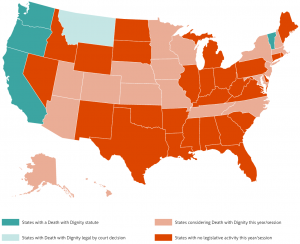
Seventy percent of Americans support the end-of-life option permitting qualified terminally ill people to end their lives through physician-prescribed medications. Despite this, forty-four states don’t have statutes outlining the procedure, and safeguards, for getting medications to hasten inevitable death.
Death with Dignity is a growing movement that works to ensure terminally ill Americans have the freedom to control their end-of-life options, including how they die. Its state-by-state campaign strives to change that.
California, Colorado, Hawaii, Oregon, Vermont, Washington and the District of Columbia have assisted dying statutes. They allow mentally competent, terminally-ill adult state residents to request and receive a prescription medication enabling them to die in a place and time of their choosing.
Guest – Mark Glaze is a strategist in public affairs, advocacy and politics. His clients have included the Open Society Institutes, the American Federation of Teachers, the Human Rights Campaign and Amnesty International. Mark is the former executive director of Everytown for Gun Safety, the nation’s largest gun violence prevention group. After the Newtown mass shooting the Wall Street Journal called him “the face of the gun control movement.”
—-
Strongmen
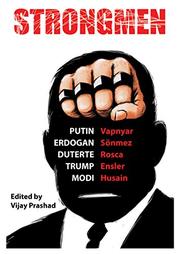
The spectacle and recent emergence of the strong man leader has been seen in a number of countries across the world, not only in the United States. We have witnessed the rise of Modi in India, Duterte in the Philippines, Erdogan in Turkey and Putin in Russia. In the 1920s and 1930s fascist dictators emerged in Germany, Spain, Portugal, and Italy. These men were monsters. The new kind of strongmen are not fascist dictators, but monsters nonetheless. We welcome professor Vijay Prashad who has edited and introduced the recently published book titled Strongmen. The book is a collection of five essays, some of them in the form of a fable, which explains the phenomena of the strong men.
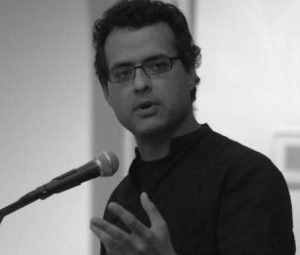
Guest – Professor Vijay Prashad, is the executive director of Tricontinental: Institute for Social Research. He is the author and editor of several books, the most recent is titled Red Star Over the Third World.